Credited to an “activist investor,” one airline has redoubled efforts to squeeze money out of travelers — and people traveling with pets could be next.
Travelers are calling it a “fat tax.”
The anecdotes, which have been popping up all over social media platforms this week, are similar: flyers show up to the airport, a counter person looks them up and down, then declares the flyer will have to purchase a second seat or give up their spot on the plane.
That this is happening on Southwest Airlines, long praised as the most considerate toward “passengers of size,” is even more surprising. SF Gate attributes the dramatic shift in policy, which is apparently just one of many, to an “activist investor.”
It doesn’t say who that “activist investor” is, but it’s difficult to imagine a person wealthy enough to own a significant portion of an airline developing a personal vendetta after bad experiences in crowded coach. This is something different, driven by the desire to extract more money from travelers with rent-seeking behavior. That sort of thing, an “activist investor” certainly would do. Boosting profits without creating any value has become the calling card of America’s financial ruling class.
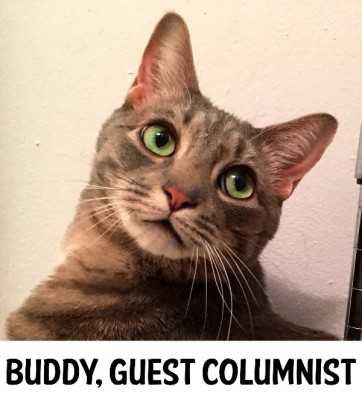
Which is why it’s likely this problem was created by the airlines in the first place, and why pet caretakers should be wary. (And no, not because felines like my Bud are a little too fond of the yums.)
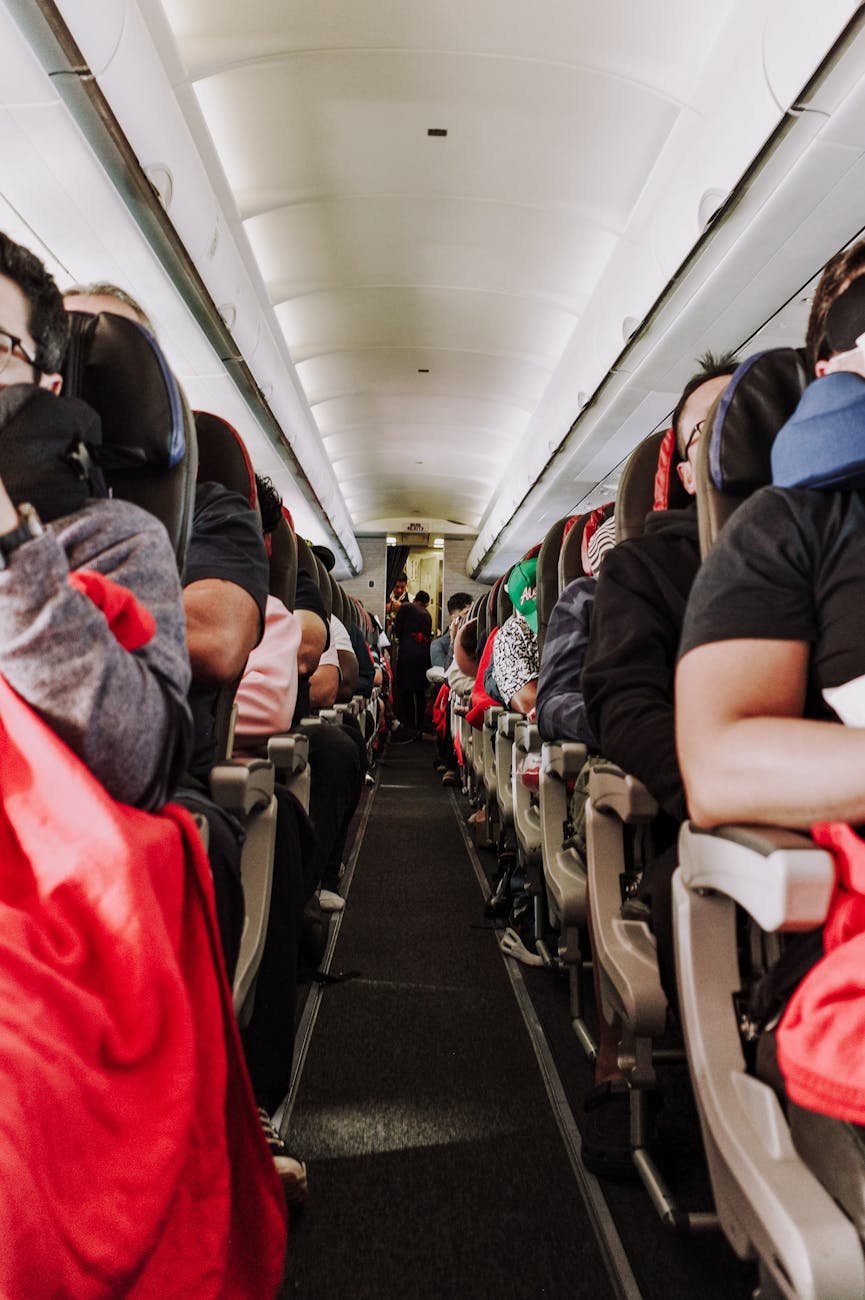
Airlines are always looking for ways to add new seats, and every year brings new “innovations” to reclaim space centimeter by centimeter so the airlines can sell extra tickets.
Credit: Anthony Baratier/Wikimedia Commons
We’ve long since become cattle. I’m 5’10” and I’ve been on flights in which my knees barely fit between the seat in front of me and my own. I always wonder: what would I do if I were taller? How the heck does someone, say, 6’2″ sit in one of these seats?
The effort to squeeze more money from travelers isn’t limited to the new “fat tax” either. From “premium economy” upsells that don’t yield more space to ever-shrinking carry-on limits, airlines continue to find new routes into our wallets, making us pay more for the same product.
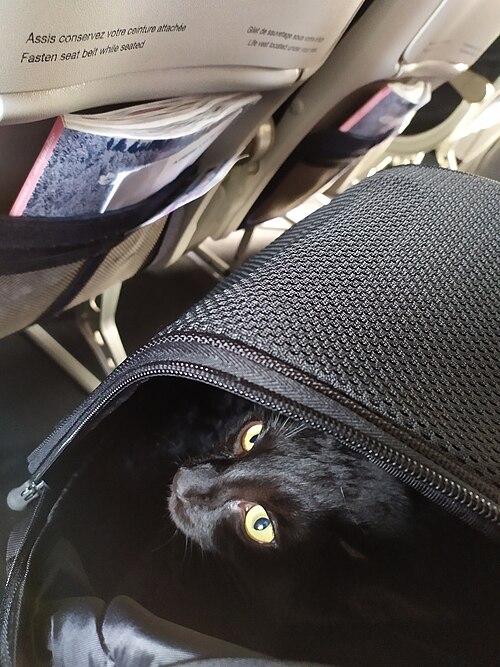
And that’s why those of us with pets should be worried. It’s a short leap from a “fat tax” to a “cat tax.”
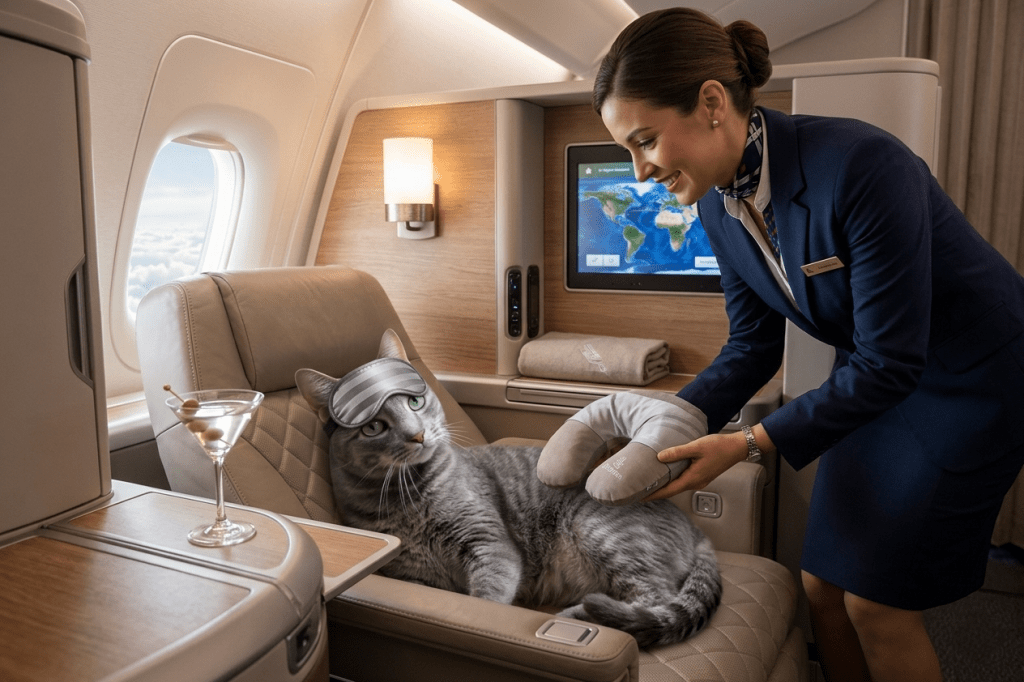
“You’ll be in coach while I take my place in first class, human.”
Most airlines treat people traveling with pets as a nuisance to begin with, and if they haven’t already, Southwest’s “activist investor” is likely to find new ways to squeeze people traveling with cats and dogs. (In my head, I imagine this “activist investor” as a vaguely Stephen Milleresque figure, with twitchy eyes betraying the rage bubbling below a calm exterior. “Let them sit elbow to elbow as they cradle their animals,” he laughs from his first-class seat. “Muahahaha!”)
The fact that this “fat tax” is arbitrary should scare all of us. If the whim of a counter clerk is what determines whether someone has to buy an extra seat, then who’s to say the same clerks won’t look at a cat, declare “He looks like a pain in the ass,” and demand some additional, ludicrously-titled fee?
“That comes to an additional $276.13 with your companion animal convenience surcharge. Thank you for flying with us!”
It just keeps getting better and better, doesn’t it?
A shelter operator has received death threats amid confusion over the facts after animal welfare authorities raided a Los Angeles County shelter on Friday.
The initial news headlines were apocalyptic — more than 700 dogs and cats were found in deplorable conditions according to authorities, who said the California property where they executed a search warrant represented the most extreme animal hoarding case in history.
A day later the numbers have been revised down to a still-significant 250 dogs and 66 cats, and the owner of Rock N Pawz shelter in Los Angeles County says she and her facility have been smeared, resulting in a flood of death threats directed at her.
The story is a reminder that facts aren’t always established as quickly as we’d like them to be in the age of 24/7 news and social media, and the advent of photorealistic AI can add to confusion and stir public outrage by distorting the reality of fluid situations.
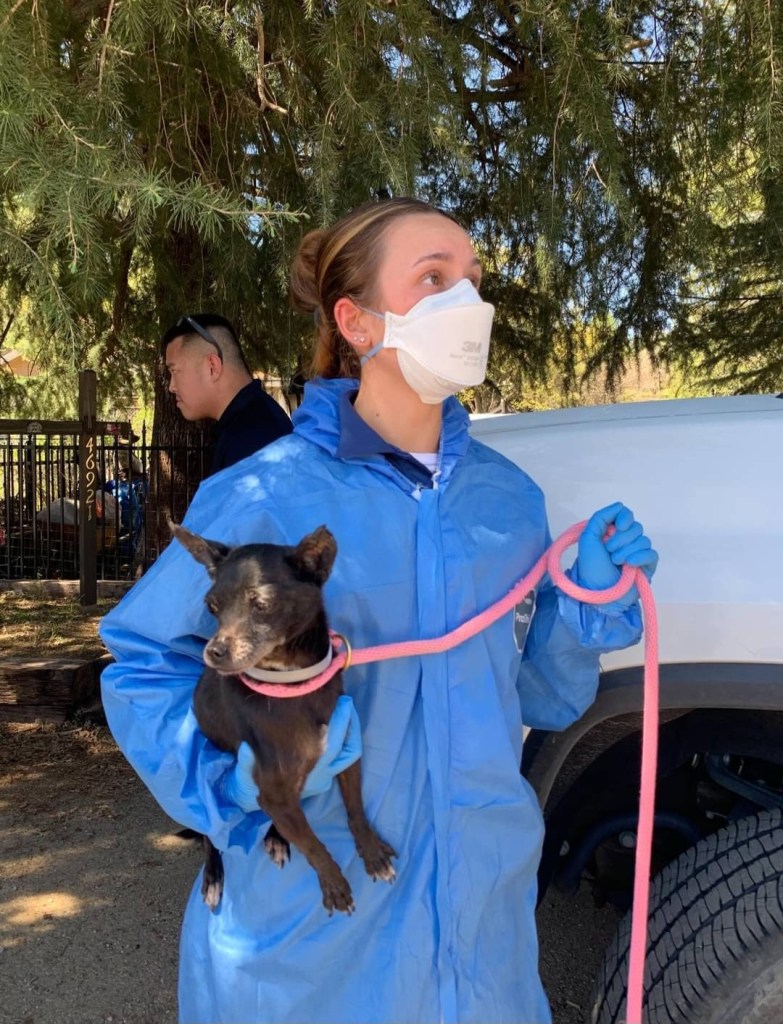
A woman holds a dog found on the Rock N Pawz property. Credit: Los Angeles County Department of Animal Care and Control
What we know for sure is that officers from the Los Angeles County Department of Animal Care and Control executed a search warrant on the property in Lake Hughes, an unincorporated community in the Sierra Pelona Mountains, about an hour’s drive from Los Angeles proper. The investigation was prompted by repeated complaints from neighbors, who said there were overwhelming odors coming from the shelter and claimed there were regular dog fights and incessant loud barking.
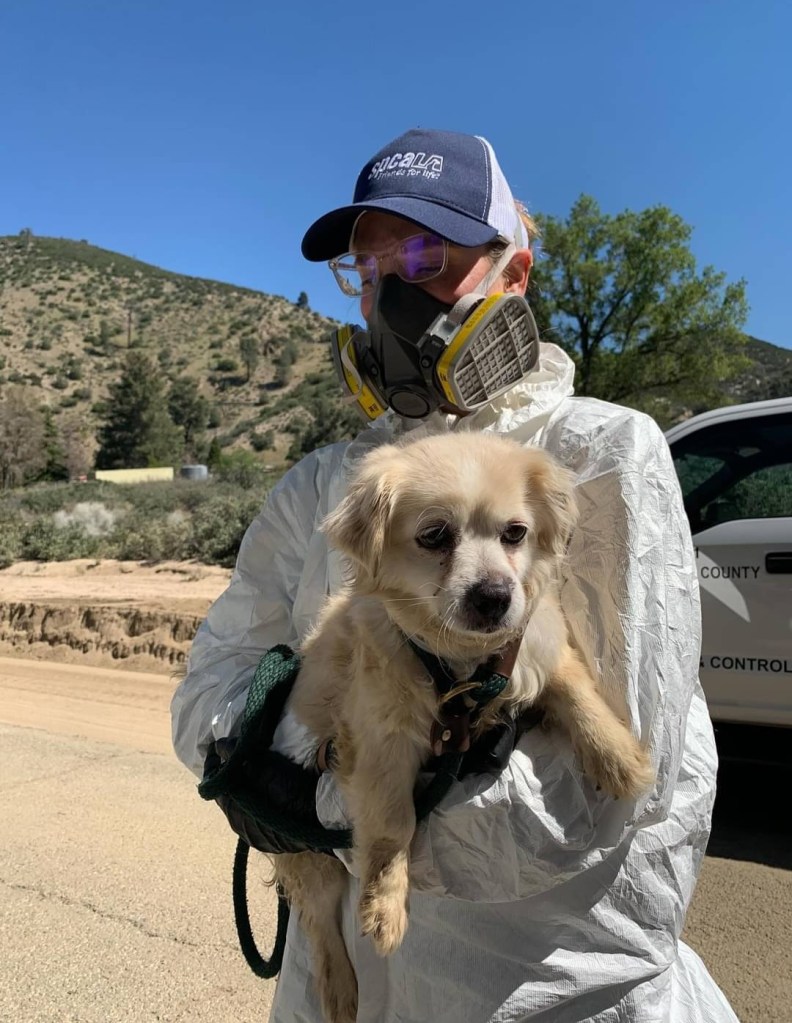
A local news station, KTLA, reported authorities on site were wearing respirators with protective gear, and quoted authorities who said they did not believe it was a case of intentional neglect.
“Sometimes people try to do the right thing, and they may bite off more than they can chew,” the Department of Animal Care’s Sgt. Matthew Davoodzadeh told the station. “They end up ultimately not being able to care for the animals in a proper way.”
Authorities have not filed charges related to the case and there have been no allegations of criminal conduct.
Credit: Los Angeles County Department of Animal Care and Control
The influx of animals has strained nearby shelters while veterinarians examine the 316 dogs and cats taken from the property.
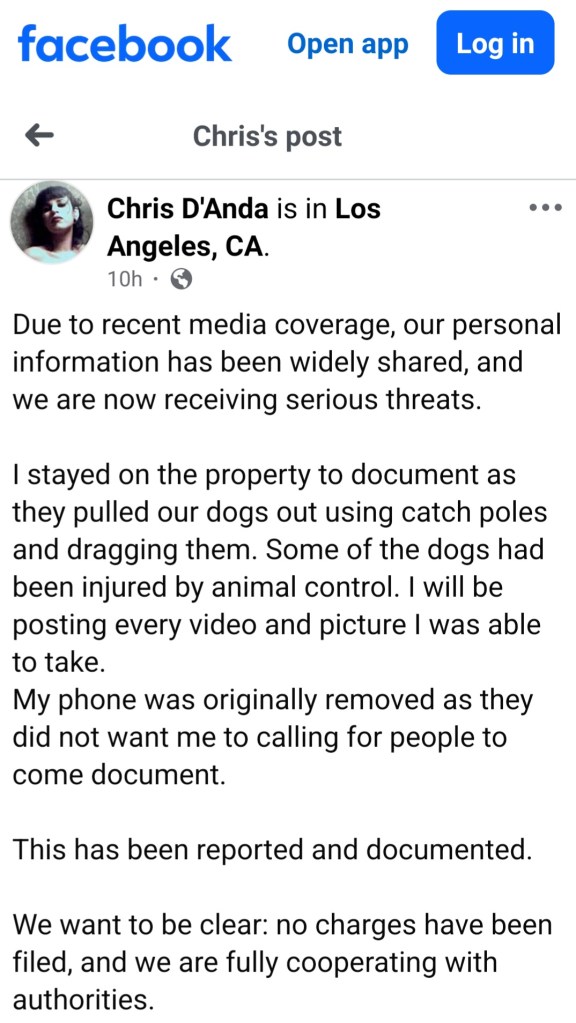
In the meantime, shelter owner Christine D’Anda said descriptions of the property and the conditions of the animals aren’t accurate, and took to social media to complain of harassment and death threats directed at her since news of the search warrant hit the web.
The shelter operator asked people to withhold judgment until the facts are established.
On Facebook, users posted images allegedly taken from the property, while others pushed back, alleging the images are either AI creations or were taken from unrelated news stories.
The shelter’s page indicated active rescue and adoption efforts, including fundraisers and an advertised adoption event last weekend.
D’Anda said she will fight the allegations in the legal system.
“There’s nothing that I can do. I’m a very stoic person,” she said. “I’m very sad about the whole situation, and I can’t wait to go to court.”
Buddy the Cat says humans must learn to respect personal space, while Buddy the Cat argues it’s perfectly reasonable to sleep on his human’s face.
Doesn’t Anyone Teach You About Personal Space?
All right, dude, enough! Damn!
You were doing a good job there for a little bit but by the 4th second you should have known it was time to cease scratching my head.
Do humans not teach their offspring about personal space or something? I am a cat, not a stuffed animal!
From now on there will be an automatic three-second cutoff during petting sessions, and I will enforce a two-foot buffer zone so my space is respected. You leave me no choice!
I Can’t Sleep Unless I’m Draped Over You
Are you settled? Comfortable? Ready to go to sleep?
Good.
I’m just gonna climb up here and sort of just unroll myself across your body. It’s the only way I can fall asleep these days.
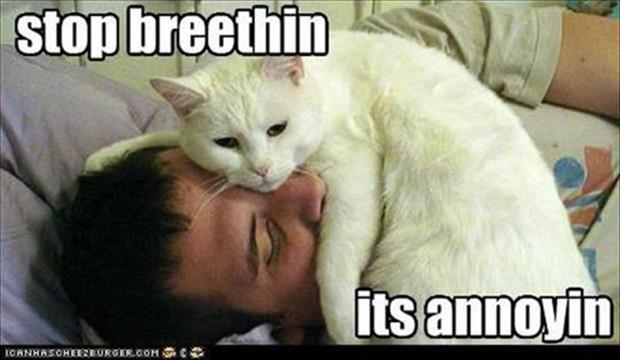
I think part of it is the gentle rhythm of your breathing, your chest rising and falling, that really relaxes me, although that little current of air when you exhale is annoying. Try to breathe less annoyingly, okay?
If you wake up during the night and I’m wrapped around your head like a hat, do not be alarmed. Your hair is soft and your brain generates heat. This is prime real estate.
Likewise, there may be times when I walk on your face, lick your nose, groom your beard, or jump on you with a back paw landing right where the sun don’t shine. As you fold up like an accordion in shock, and blink in the dark with your 20/800 uncorrected vision, remind yourself that it’s just your best little pal trying to get comfortable.
Mi casa es su casa, eh? I’m your feline friend! Your best bud! Now if you don’t mind, stop tossing and turning so I can get my beauty sleep. Thank you for your anticipated cooperation.
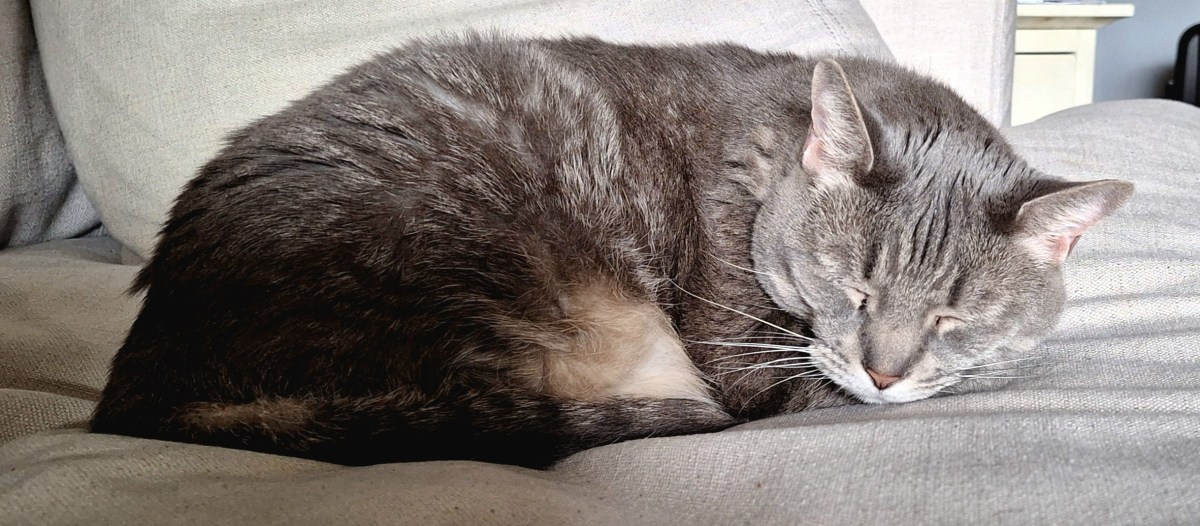
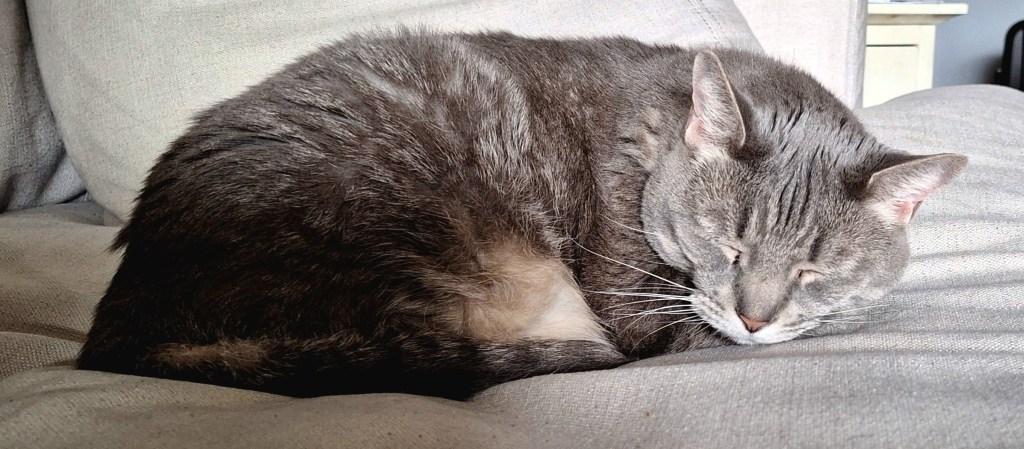
Looking to recuperate after a long morning of eating and lounging in the suddenly warm weather, the little guy settled down for some shut-eye.
What’s better than a Sunday afternoon nap?
It’s been a glorious day here in Buddyland! The forecast had us breaking the 50-degree mark for the first time in at least four months, so imagine our surprise when the temperature topped out in the low 60s!
Bud decided to celebrate the balmy weather by stretching out and drifting off for a nice nap, and I couldn’t resist taking a few photos of my pal looking relaxed after a hard day of eating and lounging.
To be fair, I was out earlier and when I came home, Bud was right by the door to greet me as always, so he probably had a very demanding nap in the proximity of the front door while I was gone, then opted for a more relaxed nap after expending all that energy on his earlier nap. I had also topped off his dry food before his lunch, in case he got hungry while he was eating.
The reaction says volumes about our society’s sense of proportionality, our collective understanding of animals, and our ability to politely disagree on topics we feel strongly about.
This hasn’t been a great week for feline PR.
Not only did two celebrities come out with bizarrely forceful anti-cat sentiments, but from their statements, they both “hate” cats because they’ve misinterpreted feline behavior.
The fallout hasn’t been good either, for the actress and rapper involved, or for the more extreme animal lovers who have responded with disproportionate rage.
The first comes from rapper Docheii, who insists cats “genuinely aren’t friendly animals.”
“yall be scratched and beat tf up by your own animals I can’t lmaoooo,” the towering intellect from Florida wrote on social media.
Cats, she asserted, “don’t wanna be domesticated.”
Presumably she got that information from the Pew Center for Feline Public Opinion, and the rest of us simply aren’t privy to the latest opinion polls among cats. And here I thought our furry friends were mostly ambivalent about anything that doesn’t involve napping, playing and eating. (I took an informal poll of Bud. He responded with a simple “Fetch me a snack, will you, human?”)
A promo shot of Doechii, real name Jaylah Ji’mya Hickmon
Regardless, even if there was some way to ascertain how cats feel about a process their ancestors initiated — one that takes thousands of years to result in speciation — it’s irrelevant. The decision was made 10,000 years ago when The First Kitteh was drawn to a human settlement by the promise of rodential prey in abundance.
Modern cats have no more say in the matter than we have in our ancestors slaughtering dodos. It happened. We can’t change the past.
The actress vs the ‘pedigree bitch’
The second bit of anti-feline sentiment comes from Jessie Buckley, an Irish actress who is weirdly proud of forcing her husband to ditch his two pet cats when they began dating. She talks as if she’s been waging a personal war against the species, and her reason for disliking felines also indicates a fundamental misunderstanding of their behavior.
Buckley’s comments were made on a podcast late in 2025, but resurfaced this week and went viral as her Oscar buzz reached its peak. On the podcast, Buckley said one of her husband’s cats was a “pedigree model bitch” who was orchestrating a “coup” against her.
She thinks the cat had it out for her: “I’d come home and there’d just be, like, poo on my pillow.”
This is actually sad, because people who really know cats, who understand why they behave certain ways, will immediately understand that they don’t have accidents out of spite. If the cat was eliminating outside her litter box, there was a legitimate underlying problem causing her a great deal of stress.
She could have been injured, she could have been sick, or she could have been plagued by the cumulative stress brought on by the presence of a hostile woman who ludicrously saw her as competition. Our furry friends are much more perceptive than generally realized, especially when it comes to our emotional states, and Buckley’s hostility would have been immediately apparent.
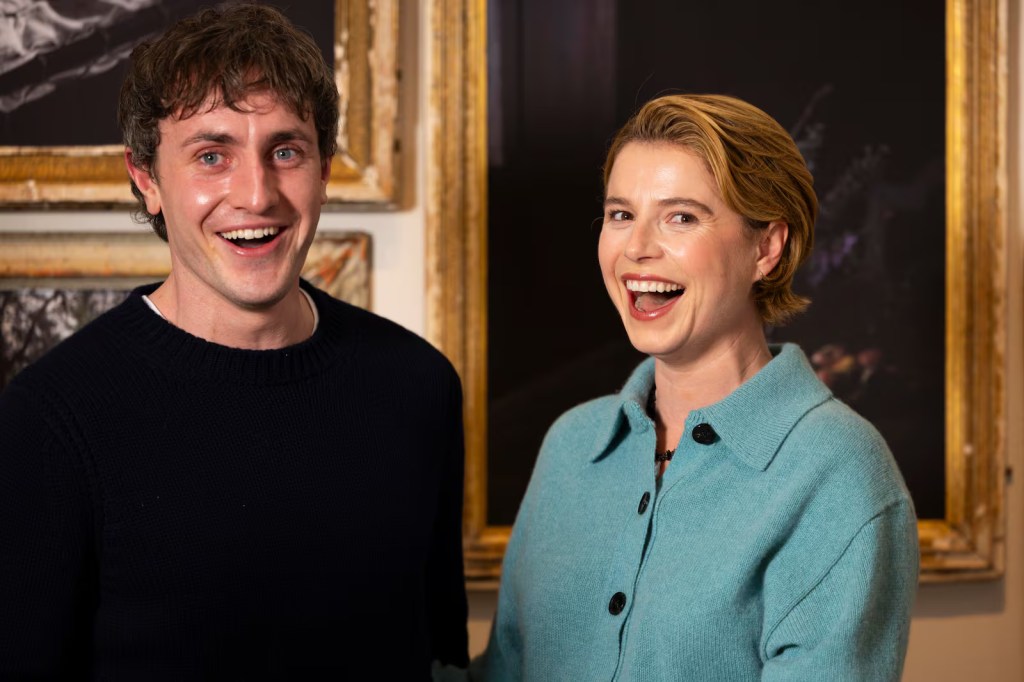
Buckley with co-star Paul Mezcal, who was equally enthusiastic in his intense dislike of felines, telling an interviewer: “Yeah, f— cats!”
Alas, Buckley didn’t reluctantly ask her then-boyfriend to give up his cats. She demanded it, then did a victory lap when he complied, which makes me suspect she was merely taking the whip out for a test drive before further commitment. If he’s willing to abandon two pets, he’s almost certainly going to be a pushover when she begins to prune his friends from his life, starts dressing him the way she likes, maybe even monitors his phone. *shudder*
“It’s me or the cats,” Buckley said she told her husband. “But I won!”
Congratulations, I guess?
The rage of cat lovers
As ludicrous as it seems, the backlash may cost Buckley an Oscar. Personally I don’t keep up with the approximately 200 awards ceremonies actors hold to fete themselves annually, but apparently Buckley turned in a solid performance in a movie called Hamnet.
She was considered the front-runner for an Academy Award. Now critics are openly wondering about her chances.
As always, these sorts of statements reveal a lot more about the people involved than they do about cats. I just wish people understood the species a little better, so maybe attitudes won’t default to anger or hostility if, say, a scared cat scratches a person who corners her, or a kitty with a stomach bug pukes on the carpet.
When a toddler gets sick, we don’t respond by yelling at the kid, blaming him and chasing him off. We make sure he’s okay, give him some medicine or take him to the doctor, and clean up the mess. Cats are essentially furry little toddlers, with the same innocence as children. When we adopt them, we agree to care for them.
Both Buckley and Docheii have been hammered on social media since their comments went viral, and it’s important to address that too. They expressed opinions. That doesn’t make them “pieces of s—,” “worthless human beings,” “scum” or any of the other nasty things some people have been saying.
We can disagree with them without overreacting, even in the age of dehumanizing online conversation.
Maintain yourselves!
And honestly, it makes all of us look bad. The day Walter Palmer returned to work is forever seared into my mind. Palmer was the American dentist who infamously and illegally lured Cecil the lion out of a protected area and killed him to take his head as a trophy in 2015.
Worse, Palmer — who had a history of getting in trouble for breaking the law while hunting — killed Cecil with a bow and arrow in order to claim some meaningless hunting record for himself and bungled the point-blank kill shot his guides had lined up for him. Cecil, who was an iconic lion with a distinct mane, suffered for hours before he died.
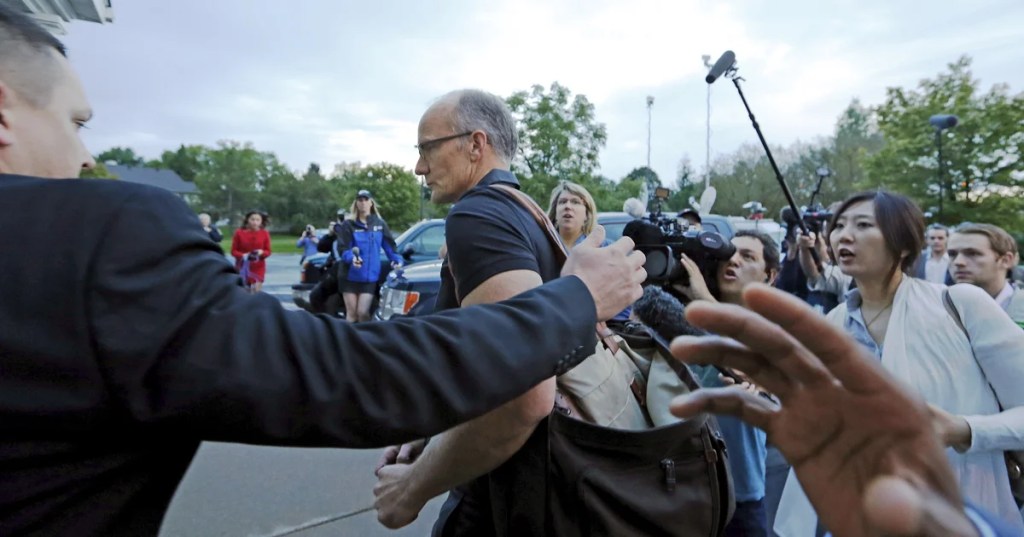
People were understandably angry, and protesters showed up outside Palmer’s office the day he returned to work. Most of them behaved themselves. But as Palmer made his way toward the front door of his dental practice, one of the protesters let loose a blood-curdling scream and shouted “WAAAAALTER PAAAAALMER!“, vowing vengeance for Cecil.
Palmer returning to work while media and protesters crowd him.
That moment of unhinged, unregulated rage overshadowed the good intentions of every person who registered their displeasure calmly and politely — and provided ample ammunition to those who enjoy painting all animal lovers as lunatics.
Buckley and Doechii expressed opinions we don’t like, and that’s their right. The best thing we can do is explain why they’ve misinterpreted feline behavior, and show them that cats really are loving, friendly animals — it just takes a little patience and trust. I say that as the faithful servant of a cat who can be particularly prickly and a complete lovebug, depending on the circumstance.
In the meantime, celebrities who hate cats should probably take a pass on broadcasting their intense dislike and save themselves the resulting headache. Sadly, we no longer have any sense of proportionality when it comes to disagreements, and no one gets a fair shake when things are litigated via social media.



 Pain In The Bud