Cats were built by mother nature to stalk by starlight.
From the African savannas to the Andean mountains, the jungles of the Amazon to the Hollywood hills, and everywhere in suburban America, cats of all types and sizes prowl the night. With eyes that are up to eight times more sensitive in the dark, incredibly sensitive hearing, and whiskers that can pick up the slightest change in air density, felids were built by mother nature to stalk by starlight.
Some cat species are crepuscular, some are nocturnal, but as ambush predators, they’re all at their best when hunting under the cover of darkness.
Image credits, top to bottom: Per Karlson/PVKFoto, Reddit r/natureisf***inglit, Cockscomb Basin Wildlife Preserve, Wikimedia Commons, Steve Winter/National Geographic, National Park Service, Colorado Parks and Wildlife
Roadside zoos persist despite recent law changes, but even the best zoos fail to provide adequate facilities and enrichment for big cats, the report found.
The Amur tigress at Bearsdley Zoo is the lone occupant of her enclosure, which is large by the zoo’s standards, outfitted with a pool, toys and other enrichment, but small compared to what her natural range would be.
When I visited last summer, I spent the better part of an hour watching her pace the perimeter of her enclosure, walking in an endless loop as if in a daze, never stopping, altering her stride or reacting to anything.
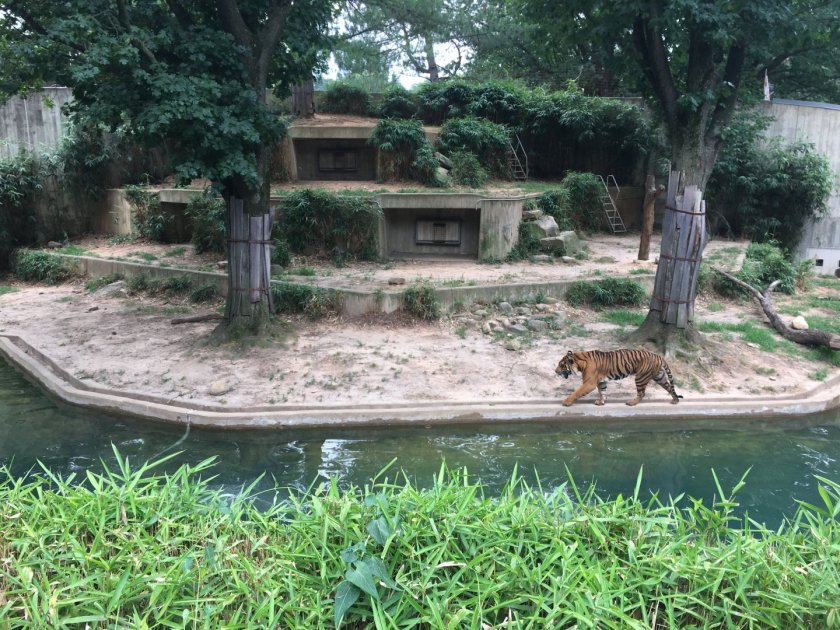
But what made me realize how bad captivity really is for big cats was what I saw at the Smithsonian National Zoo, a well-funded world class facility. The tigers there have two outdoor enclosures with a topographic design: they’re vertical spaces separated into tiers, with large trees and narrow “caves” for shelter from the elements. Both enclosures are surrounded by wide moats that ring the perimeter just inside the security fencing.
One of two similar Bengal tiger habitats in the Smithsonian National Zoo in Washington. Credit: ZooChat
It was feeding time on a hot summer day. Lionesses chowed down on large slabs of meat and licked blocks of ice, but the lone male tiger next door was pacing in a circle. He paced and paced, covering the same 10 to 12 feet, ignoring his food. I watched him for a long time. His behavior was a clear sign of zoochosis.
If a tiger in a national accredited zoo — where an entire team of keepers and caretakers is responsible for enrichment and welfare — suffers from clear signs of captivity-induced distress, what chance do tigers in other facilities have?
When we think of big cats suffering in captivity, we think of the roadside zoos where the Joe Exotics and Doc Antles of the world exploit them for financial gain, drug them, force them to take selfies with visitors and keep them in cruel conditions. But a new report from Born Free USA goes beyond roadside zoos and says big cat arrangements, even in the best zoos, are inappropriate, unhealthy and demoralizing for the animals.
“Unable to escape the crowds of humans, unable to follow some of their fundamental urges such as hunting and roaming over large distances, unable to fulfil their social needs – whether that be living solitarily or forming a pride with others – big cats show us their mental anguish by adopting abnormal behaviors,” reads the report [PDF], Clawing at the Cages. “These behaviors, known as stereotypies, manifest in obsessive pacing. Some big cats spend most of their days tracing the same, short, tedious route around their enclosures. This behavior is a recognized sign of stress, and only documented in captive animals.”
A captive jaguar. Credit: Yigithan/Pexels
The wild lives of animals like tigers are fundamentally at odds with the concept of zoos. In the wild, tigers range up to 50 miles in a single day, occupying vast ranges. Male tigers protect their home ranges, their mates and their cubs from other males as well as threats of all sorts.
That sort of lifestyle, which is hard-coded into their DNA, is not compatible with a guest-oriented operation in which habitats are designed primarily to give people the best view of the animals.
Lions might have it slightly better, though that’s arguable. As a social species they can interact with each other and they tend to have larger enclosures, but zoos rarely group animals according to their preferred family units or prides, instead matching individuals according to breeding plans as part of conservation efforts.
Yet even the conservation aspect is iffy, according to Born Free USA. Because of restrictions on “importing” animals and a population that is descended from just a handful of big cats, inbreeding is rampant. There’s a lack of scientific research on the captive zoo-held population, but the authors cite a 1983 study that found “six animals out of the approximately 1,000 Siberian tigers held in zoos in 1983 were responsible for 69.4% of the founder representation of the living population at that time. 70% of the population had a positive inbreeding
coefficient.”
Because little has been done to remedy that genetic bottleneck, “genetic viability remains low, and inbreeding of big cats in zoos can only have increased in the intervening years since these studies,” the report states.
Inbred cats suffer more health problems, don’t live as long and are much more susceptible to birth defects.
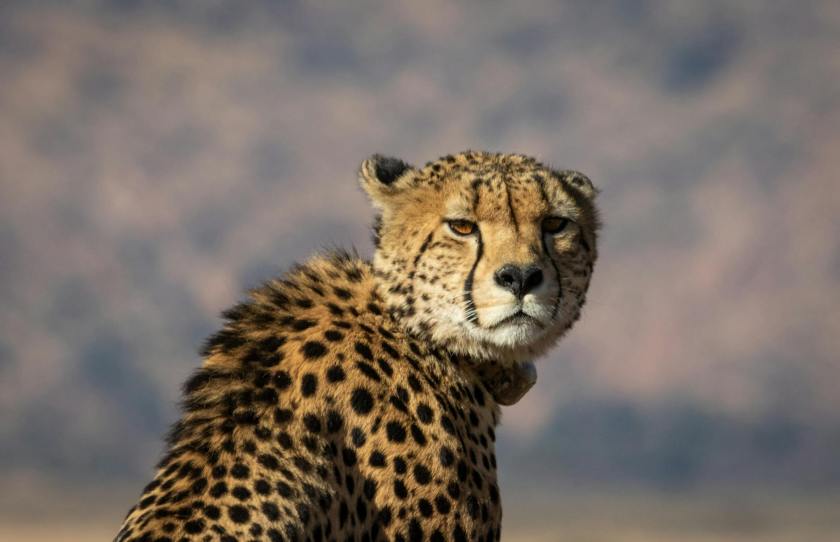
A cheetah. Credit: Magda Ehlers/Pexels
Despite the passing of the Big Cat Public Safety Act, Born Free USA’s report notes, roadside zoos still exist, and many of them have simply ignored the new laws because their operators know inspectors are overworked and lack manpower. Years can elapse between inspections, even at roadside zoos operated by serial offenders with long histories of keeping animals in abysmal conditions.
For example, Single Vision of Melrose, Florida — which bills itself as a “conservation” facility — openly flaunts its mistreatment of big cats with enormously popular video content from “Safari Sammie” on Youtube, TikTok and Instagram, despite the fact that it’s been the subject of dozens of violations and has an ignominious record when it comes to the health of its big cats. The facility was charged with 20 violations of animal rights laws in the previous two years, and has had multiple cases of animals dying due to neglect, yet continues to sell “experiences” in which “guests” can interact with heavily sedated tigers, jaguars, cheetahs and other wild cats.
In her videos, “Safari Sammie” — an employee of Single Vision — is routinely seen interacting directly with the apex predators, treating them like house cats and creating dangerous situations.
Other roadside zoos and animal “experience” operators continue to intentionally inbreed big cats to create “exotic” white tigers as well as ligers, tigons and other hybrids that aren’t found in the wild but are big attractions.
Overall, the report found:
Zoos fail to provide adequate environments for big cats, including lack of space, lack of ability to hide from public view, and the regular practice of locking big cats in tiny night quarters during the hours when zoos are
closed. The latter often results in big cats spending the vast majority of their time significantly confined.
Social and behavioral needs are not met in zoos. For example, solitary big cats are often forced to live with conspecifics, and social big cats are prevented from creating natural prides. Big cats are prevented from
hunting live prey – a behavior fundamental to them – while often housed alongside prey animals who also suffer stress from being forced to live near predators.
Inbreeding of big cats has become commonplace due to limited genetic diversity among captive populations, as well as unethical and deliberate inbreeding of color morphs such as white tigers and lions,
resulting in significant health issues for the cats involved.
Due to the inbreeding of big cats in zoos, as well as their habituation to humans, big cats kept in zoos are generally not candidates for release to the wild. As such, extensive and ongoing breeding programs simply serve to ensure that zoos remain “stocked” with these animals.
Monitoring of data on big cats in captivity is incomplete, with significant numbers of individuals disappearing from studbooks – the databases ostensibly responsible for tracking living big cats in captive facilities.
The licensing system intended to implement the Animal Welfare Act in the United States only achieves superficial monitoring of big cats in zoos, due in part to its risk-based assessment protocols as well as lack of meaningful
information in reporting that would allow effective public understanding and external expert oversight.
Despite the introduction of the Big Cat Public Safety Act in the U.S. in early 2023, some facilities continue to engage in dangerous activities with big cats, both in violation of, and in compliance with the new law.
Zoos around the world have killed healthy big cats due to overcrowding and lack of perceived usefulness to breeding programs. Other healthy big cats have been killed when human error or enclosure failure allowed their escape, or when attacked by conspecifics in their enclosures.
Due to all the issues above, and others, the overall health and welfare of big cats is compromised in zoos. This results in high mortality (particularly in infants), and recognizable signs of stress in the form of significant occurrences of stereotypic behaviors.
The report includes detailed anecdotes of typical problems in captive situations involving jaguars, lions, tigers and cheetahs, documents persistent problems with habitat design and security, and outlines loopholes and other problems with existing laws, which still don’t go far enough to ensure some of the world’s most iconic apex predators aren’t exploited and forced to endure lifelong misery.
You can find the report’s landing page, with links to a petition, a summary and the full text here.
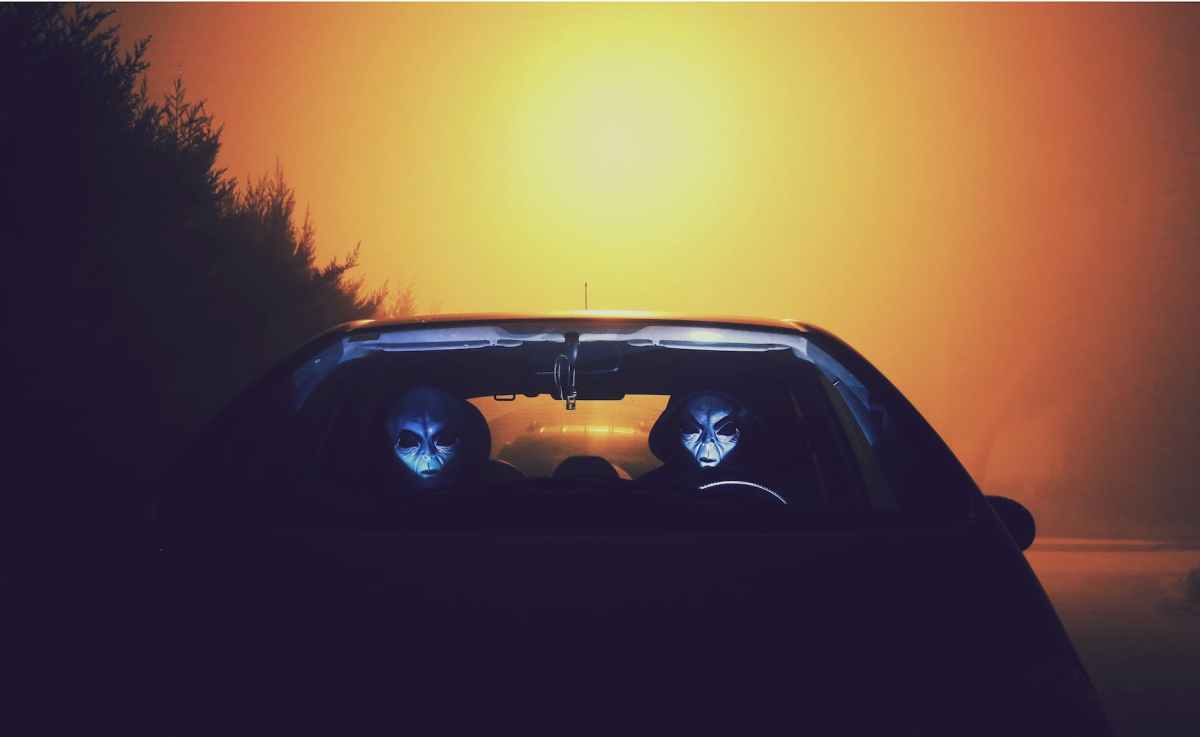
What do felines make of the spy-slash-UFO drama that has consumed the popular imagination for the last week?
The humans have been freaking out about a big balloon flying over Humanland, believing other humans sent it to spy on them. But some humans think aliens are behind the nefarious balloons, and they’re not balloons at all — they’re super sneaky alien craft sent here to scout ahead for an invasion. What do you think?
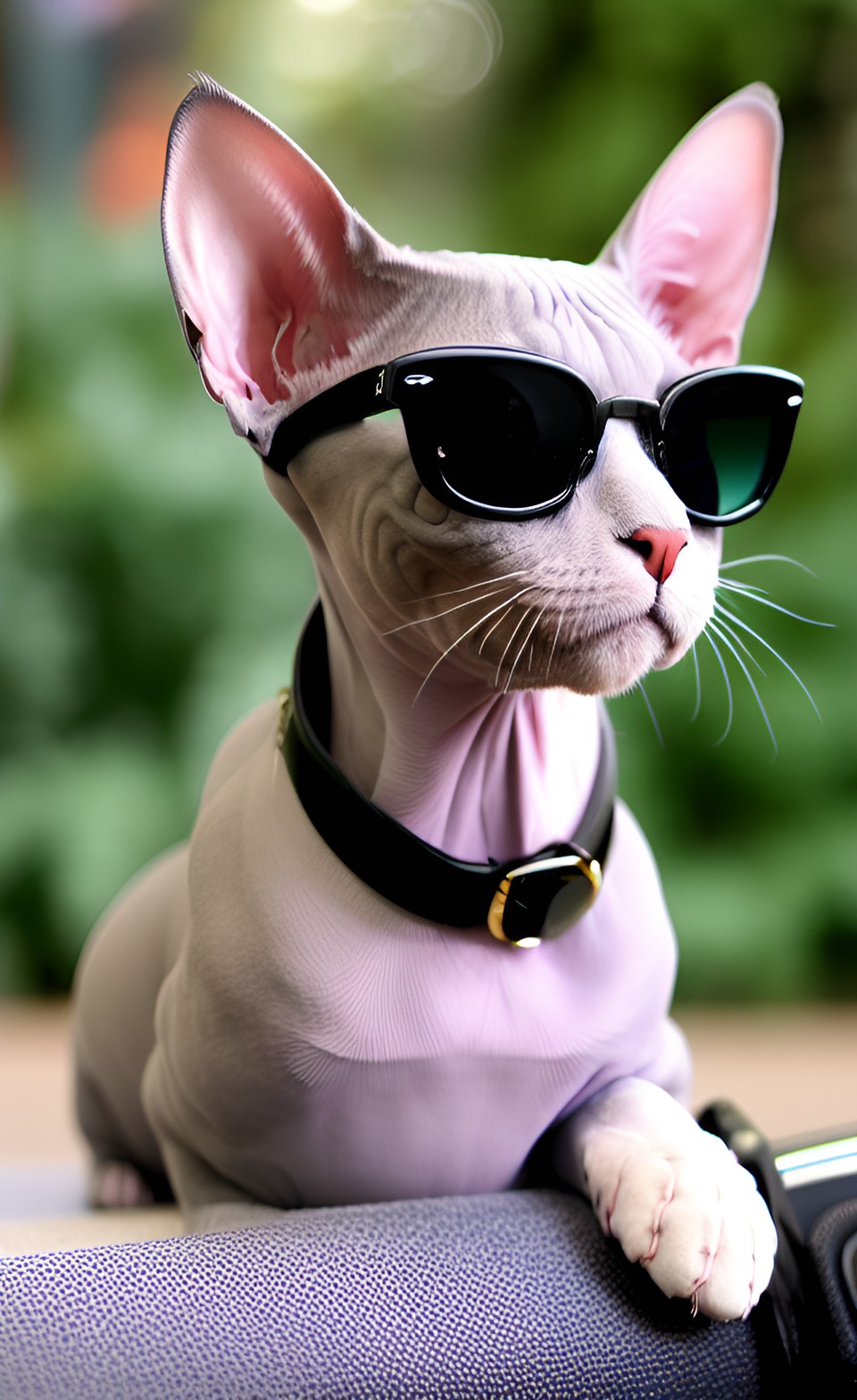
“If I wanted caviar for breakfast, I would have told you. Stick with the schedule.” – Versace, 13, show cat
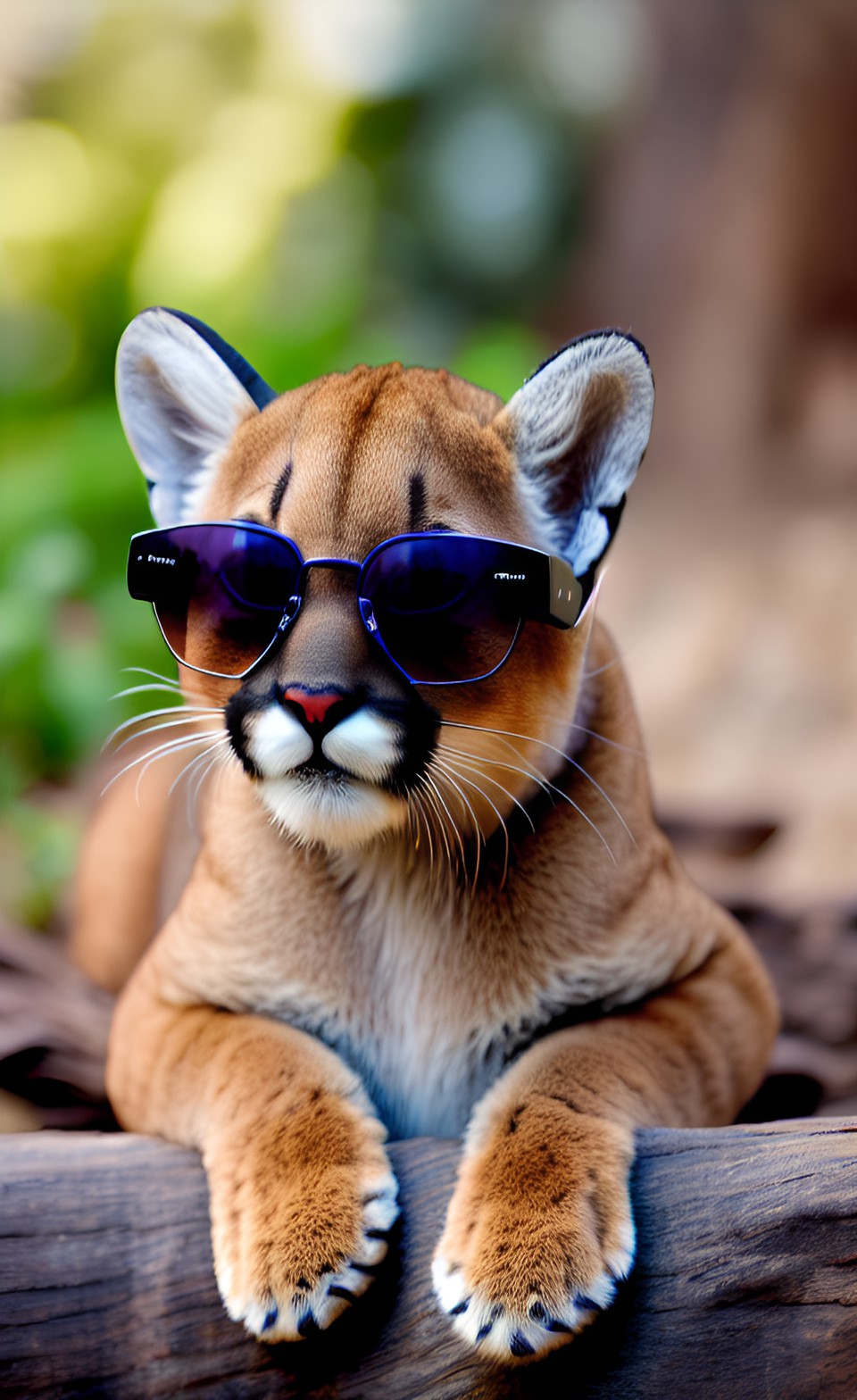
“You gonna eat that hedgehog?” – P-84, 1, puma
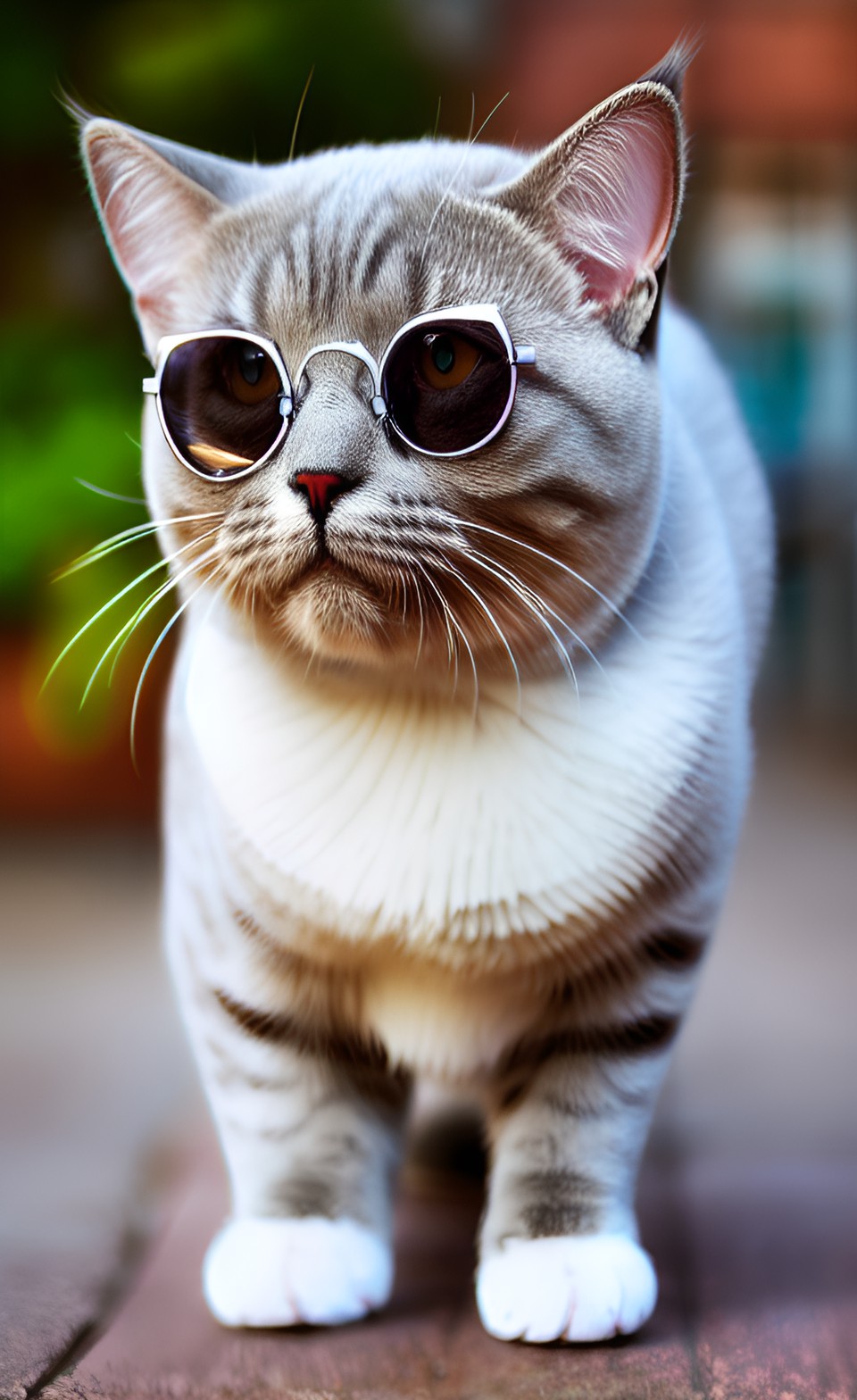
“Hey up, mates. What’s this, then? Can’t we just fire a few fecking missiles at them and get on with it?” – Liam Gallagher, 8, British cat
“Allow the aliens to land. They look delicious.” – Zanzibar, 5 months, apprentice murderer
“We need a bunker, do we have a bunker? Well why didn’t you BUILD a bunker? Do I have to think of everything?!?” – Buddy the Cat, 8, ex-president of Americats
“This is clearly the work of the aggressive regime in Luxembourg. We should invade, confiscate all their cheese and make them a vassal state.” – Cicero Nash, 4 1/2 months, couch stylist
Wolfe complained to Tucker Carlson when, instead of the praise he expected, online commenters blasted him for killing an animal that was merely surviving.
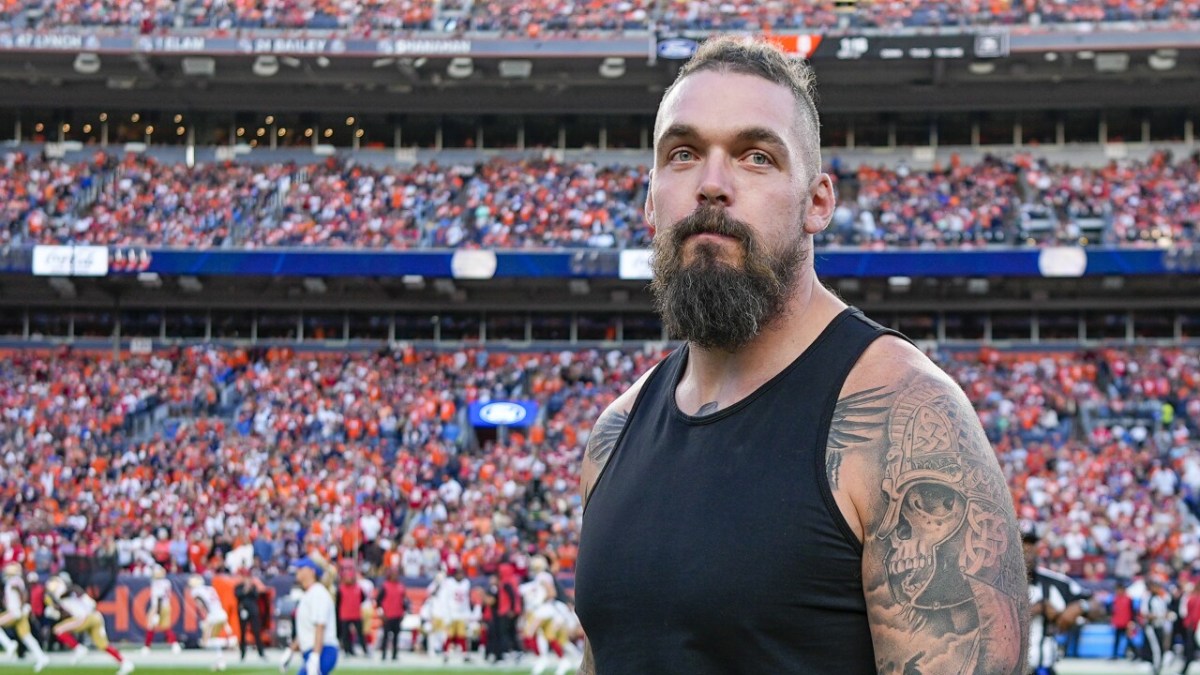
Derek Wolfe is a badass.
The 295-lb former NFL lineman recently got a license to kill mountain lions, so when he heard about a puma that was “terrorizing” a Colorado community by existing near it, he packed his weapons of war, rounded up his hounds and set off, trailing testosterone like a beefed up Jim Corbett gone to deliver justice to the Champawat tiger.
First he spoke to a local homeowner, who had an ominous warning for him.
“And when we had talked to the landowner, they said, ‘Hey, we have house cats. And the cats are acting weird.’
No doubt the cats were agitated and wanted to get out there to cause havoc with their feline brother by existing and eating stuff. The cats would have to be dealt with later.
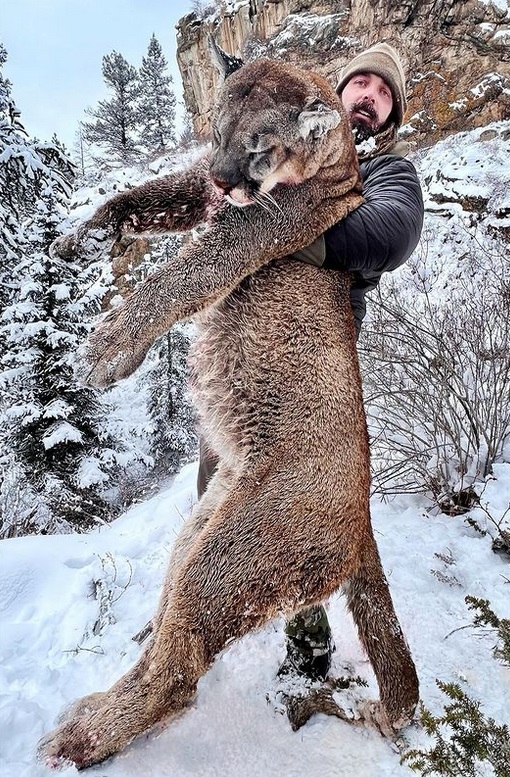
Arriving at the scene, Wolfe (what a badass name) found the remains of a recently-killed deer and knew the evil mountain lion hadn’t reformed its ways. By continuing to exist despite the discomfort of people in the area, and continuing to eat, the defiant cougar was practically asking to be hunted down and killed.
Moving downwind of the fearsome predator so that it wouldn’t smell the pheromonal cloud of machismo that permanently surrounds him, Wolfe began climbing. The ascent was exhausting — not only is the 6’5″ Wolfe almost 300 pounds, but he was also carrying his sword, his health elixirs and his Bow of Righteous Smiting, a 1,000-DPS legendary weapon he obtained after slaying the Goblin King of Dreadmoore. Wolfe was carrying more than 400 pounds up the slope when he caught sight of the puma and did what men of testicular fortitude do: he released the hounds, who cornered the cat and chased it up a tree.
Then, with righteous fury, Wolfe drew his bow and killed — excuse me, “harvested” — the mountain lion, whose species is notoriously averse to conflict with humans and has killed fewer people in a century than dogs do in a week. But what are a few inconvenient facts between friends, amirite?
When Wolfe descended the treacherous slope with the corpse of the mighty cat like Geralt of Rivia toting the trophy from a monster hunt, the villagers applauded and sang songs of his bravery, then feasted in his honor.
But all was not well, for when Wolfe posted the manly photos of himself posing manfully with the corpse of the big not-quite-big cat, a contingent of insignificant peons criticized him on Instagram for killing an animal that was allegedly “just surviving.”
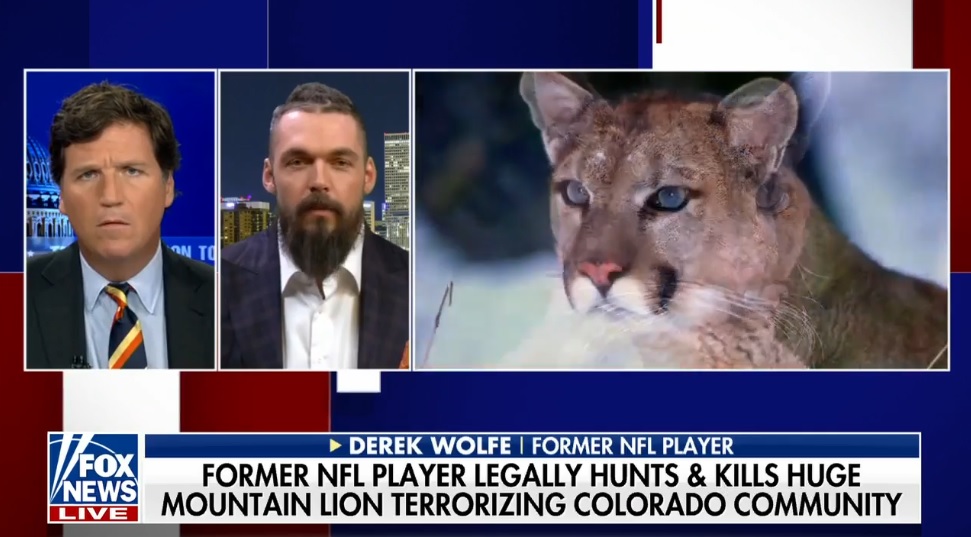
So Wolfe did what men of his stature do, and went on Tucker Carlson’s show to cry about the rodential men and women nipping at his heels.
Wolfe on Carlson’s TV show. Credit: Fox News
It is said that the combined testosterone of Wolfe and Carlson created a vortex of badassery that threatened to spark untameable hair and muscle growth in anyone who ventured too close. Female assistants had to be ushered out of the studio before the segment began, and the lesser men manning the cameras had to sign waivers absolving Wolfe and Carlson of blame if they were transformed into hulking man-beasts by the combined presence of the former lineman and the scion of a TV dinner empire.
“I’ve been through some tough training camps, brother, but this hunt was – man – it beat me up bad. I was beat up bad. I’m all cut up and scraped up. I was in full-body cramps [and] barely made it up there,” Wolfe told Carlson.
Wolfe proceeded to regale Carlson with tales of how dangerous mountain lions are. Puma concolor, the scientific name for the species, is responsible for a whopping 27 deaths in the last century. That’s one person every four years, and most of those people triggered the confrontations by getting too close to puma cubs or cornering the animals. By comparison, dogs kill 25,000 people a year via attacks, and another 25,000 by spreading disease, the latter mostly in third-world countries. Cows killed 655 Americans over a nine-year period from 1999 to 2007. More than 40,000 Americans are killed in car crashes annually.
In other words, pumas rank extremely low on the list of potential dangers to people, despite their size and their superficial resemblance to much more dangerous African lions. Pumas/mountain lions, also known as catamounts and cougars, actively avoid humans and try to steer clear of conflict with people. When they kill a deer or even a pet, it’s not because they’re “terrorizing” communities — it’s because they’re obligate carnivores who need to eat meat to survive.
A mountain lion. Credit: Nicky Pe/Pexels
Wolfe explained that it’s important to “tree” mountain lions in order to do recon on them and make sure they’re appropriately big and impressive-looking.
“Those full-grown males will kill kittens as well, they’ll kill kittens to get the females to go back into heat,” Wolfe said, confusing terms and the dominance behavior of African lions with American pumas, which are not the same species. “It’s important to manage that herd, right? You have to manage every population of animal out here, especially mountain lions. So we got the dogs on ’em.”
Who knew cats were herd animals? Who knew pumas had decided to give up their solitary lifestyles and live in prides? Who knew former NFL linebackers arbitrarily killing random pumas qualifies as ‘managing a population’? Someone call the wildlife biologists so they can rewrite their field guides!
Despite his ability to scale mountains and slay (mountain) lions, Wolfe was wounded by the backlash when he posted photos of himself with his “harvest.”
“I can’t believe what’s happening to me…They’ve had 200 calls to Colorado Parks and Wildlife trying to turn me in like I did something wrong,” Wolfe complained. “I’ve been harassed.”
Disclaimer: Since this is the internet, and this post is bound to bring in readers unfamiliar with PITB and the fact that we’re sarcastic jerks, allow us to state for the record that Wolfe did not kill the Goblin King of Dreadmoore, does not own the legendary Bow of Righteous Smiting, and we’re not exactly sure if the villagers in the unidentified rural Colorado community threw a feast in Wolfe’s honor after he returned with the corpse of the cat that had been “terrorizing” their community. I mean, they probably feasted him, but we haven’t confirmed it.
The orphaned lion cubs are among many wild animals brought safely out of Ukraine as the war there continues to rage.
As the brilliant but depressing Pride of Baghdad documented in horrific detail, war isn’t just hard on humans, it’s hell on animals too.
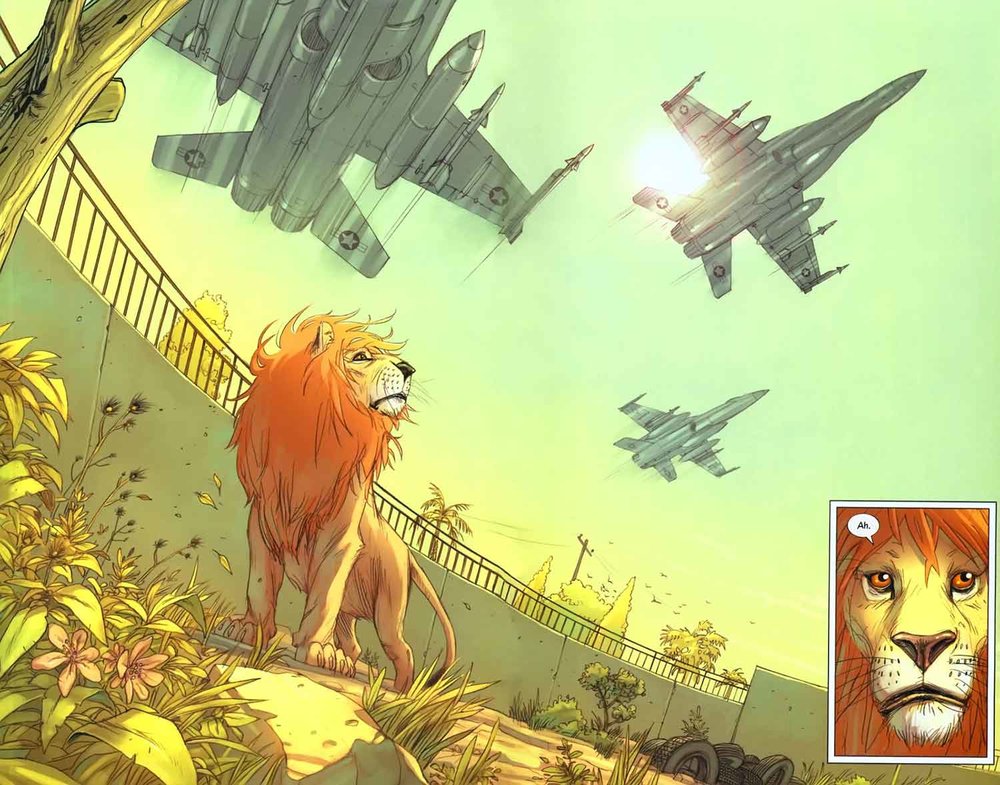
The real-life lions in that drama were left to fend for themselves when American and coalition aircraft began pounding Baghdad in 2003, and their harrowing journey began when an errant missile literally opened a path for them to walk right out of the otherwise abandoned zoo.
As Russian soldiers began pouring over the border into Ukraine and Moscow’s missiles and artillery struck population centers earlier this year, Ukrainian activists sought to avoid a similar fate for their animals and worked on getting wildlife out of the zoos and the country, but there was only so much capacity at sanctuaries in countries like neighboring Poland.
At the same time, remaining in Ukraine was untenable. After Russian forces suffered a series of humiliating ground defeats to a Ukrainian counteroffensive — fueled by weapons systems and tactical intelligence from the US and other NATO countries — Russian President Vladimir Putin has ordered heavy and sustained missile strikes on civilian targets and critical infrastructure in already war-torn Ukraine.
One of his goals is to completely destroy the Ukrainian power grid via missile attacks on coal and gas plants as well as electricity substations, perhaps believing Ukraine might give up its opposition as its population freezes during the region’s harsh winters. The attacks have reached far into Ukraine, hitting the capital of Kyiv and cities like Lviv, which is more than 1,000 km from Russian territory, and some missiles have even disrupted power to neighboring Moldova. The Ukrainian people have not given up despite already enduring months of Russian artillery shelling, occupation and brutality.
But without electricity or reliable access to basics like clean water, caring for the remaining animals has become an impossibility as most people struggle just to keep warm, fed and hydrated.
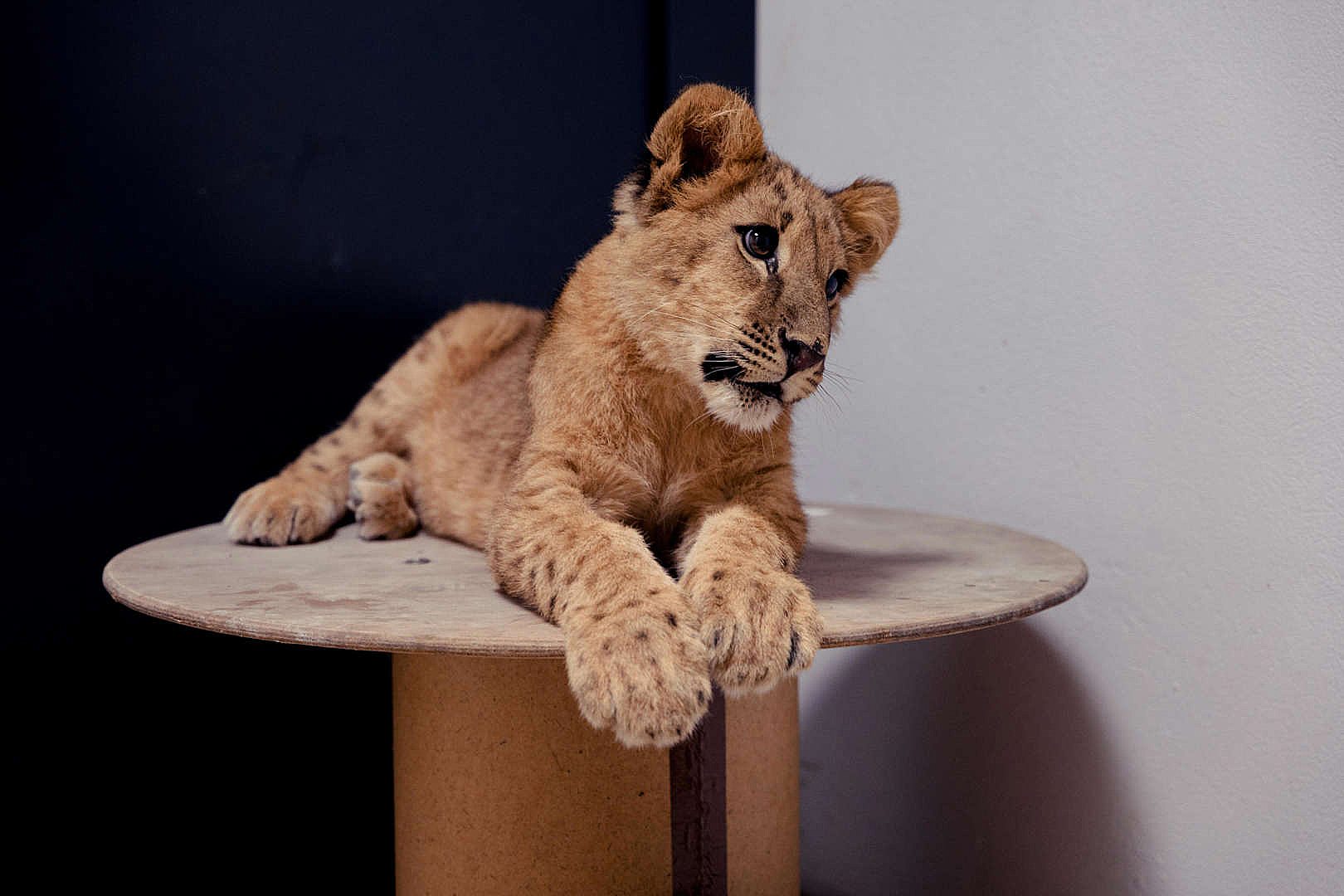
One of the cubs rescued from Ukraine, now living at The Wildlife Sanctuary in Sandstone, Minnesota. Credit: The Wildlife Sanctuary
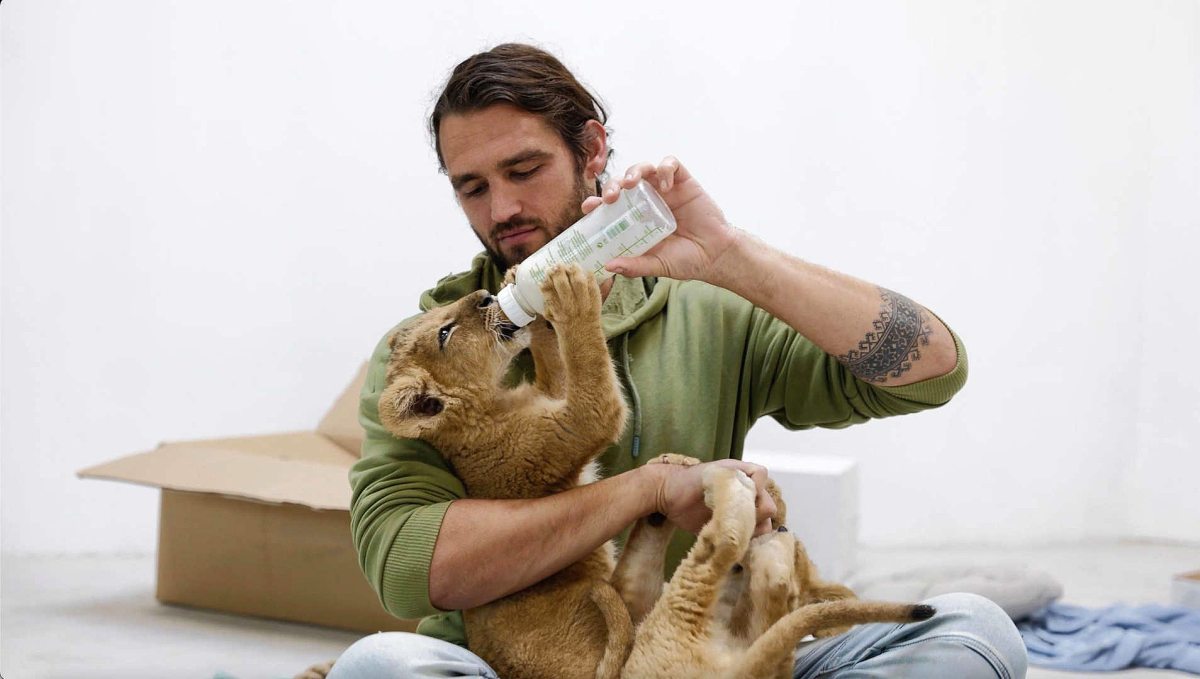
As a result, a quartet of lion cubs born several months into the war had to endure an epic, 36-hour journey that took them from Ukraine to Poland and finally to Sandstone, Minnesota, where they’re easing into their permanent home at The Wildlife Sanctuary. The facility is a non-profit and entirely funded by private donations, which means it’s not open to the public. Animals aren’t put on display, and their enclosures are built entirely for them, not for the benefit of visitor sight lines.
The lion cubs, who are all orphans, have already been indelibly impacted by the war.
“These cubs have endured more in their short lives than any animal should,” said Meredith Whitney of the International Fund for Animal Welfare, which facilitated the transport of the young cats some 5,000 miles from Ukraine to the central US.
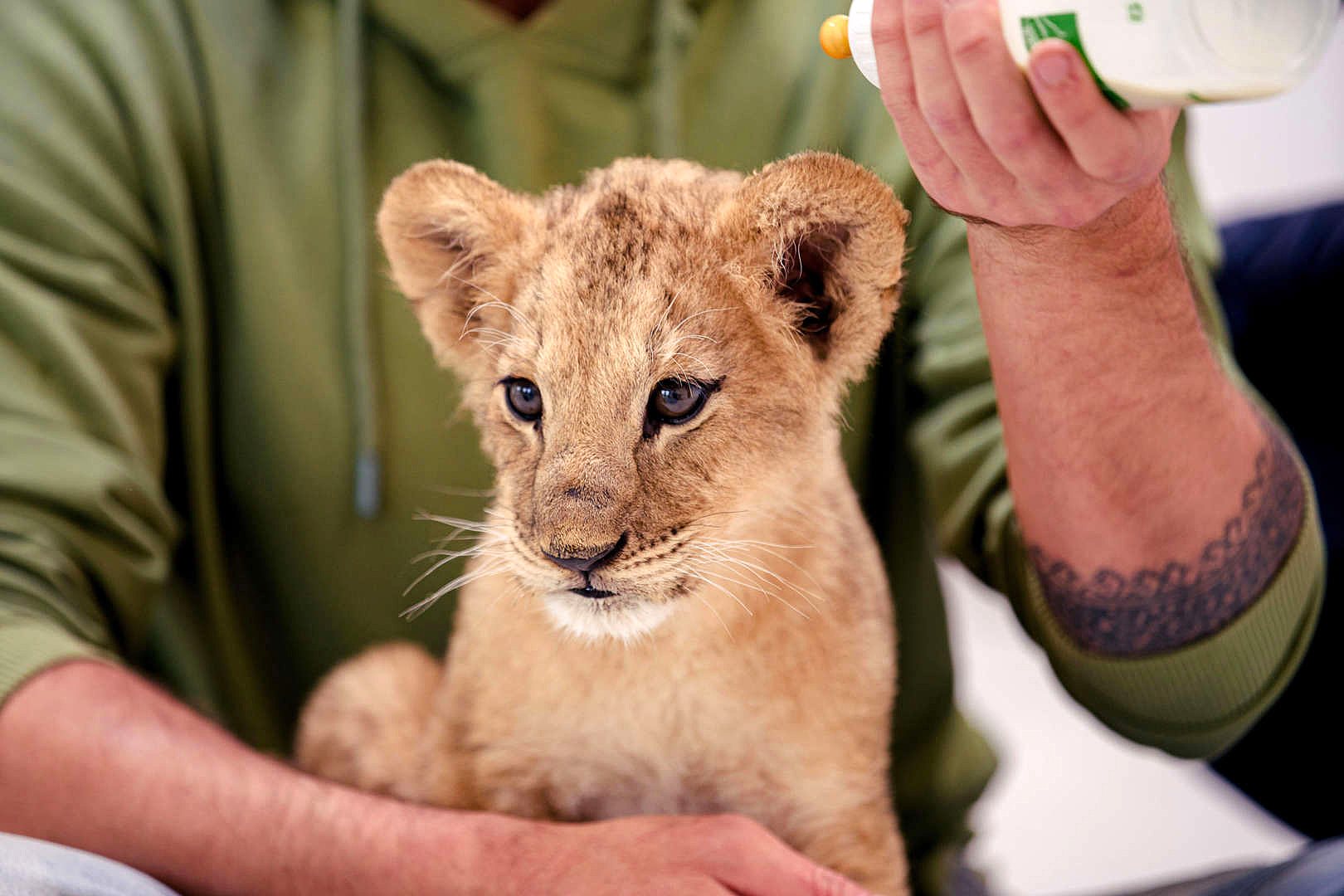
The cubs, all between four and five months old, are named Taras, Stefania, Lesya and Prada. Taras is male while the others are female.
“We’ve cared for 300 big cats at TWS and are acutely aware of the trauma many big cats around the world experience,” said Tammy Thies, the sanctuary’s founder. “From the moment IFAW reached out to request our partnership, we knew these cubs had found their forever home at our sanctuary. They have a custom, open space to explore and soft grass or hay to rest their tired bodies on. Because of the generosity of our supporters, we can provide lifelong care to big cats at our sanctuary.”
Bottle babies: The cubs are all between four and five months old and were not weaned before they were orphaned. Credit: The Wildlife Sanctuary
Pride of Baghdad is a 2006 graphic novel based on the true story of four lions who escaped Baghdad Zoo during coalition airstrikes in 2003. It’s poignant, beautifully illustrated and wonderfully told, but also harrowing and deeply upsetting.

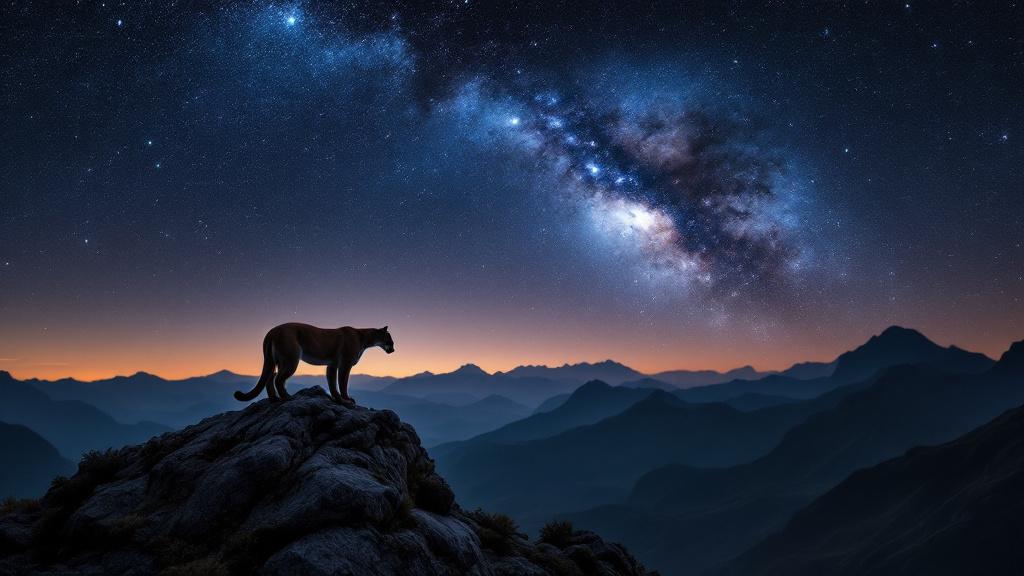


 Image credits, top to bottom: Per Karlson/PVKFoto, Reddit r/natureisf***inglit, Cockscomb Basin Wildlife Preserve, Wikimedia Commons, Steve Winter/National Geographic, National Park Service, Colorado Parks and Wildlife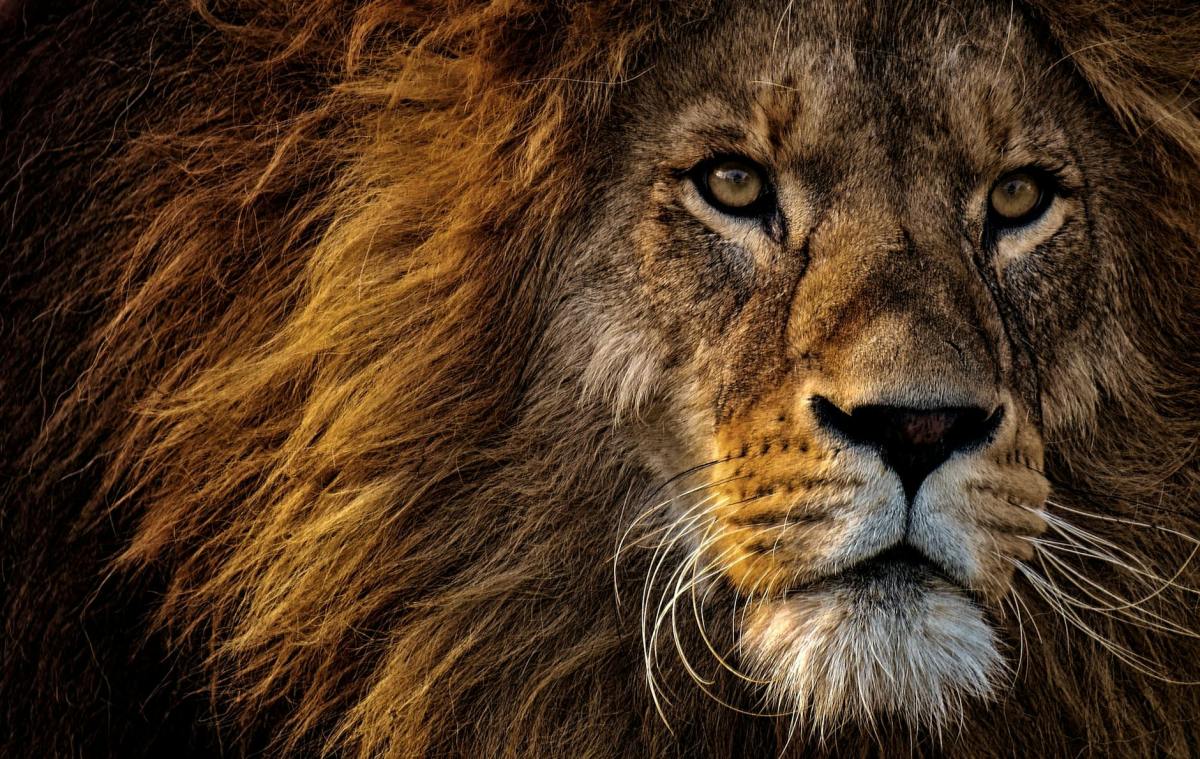



 Pain In The Bud