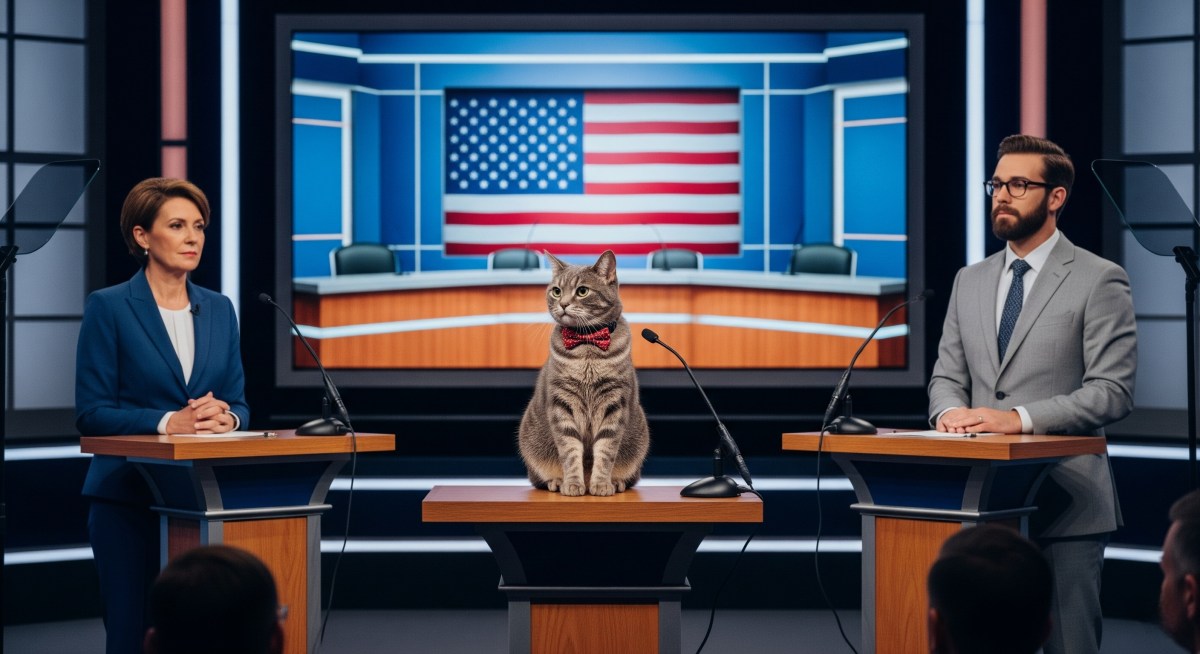
A Queens woman is urging voters to support her cat as a write-in candidate for city council District 30 in an attempt to spoil a term-limited councilman’s “cronies” from sailing into office without opposition.
It’s an interesting time for politics in New York, and not just because of a mayoral race in which voters have apparently rejected Republicans and mainstream Democrats.
Over the last several weeks, stickers urging voters to cast their ballots for a house cat for a city council seat have been appearing in a Queens district.
In a story about the write-in campaign, the New York Post devotes most of the ink to political disagreements between Leo the cat’s human and the district’s councilman, Robert Holden. (He’s a moderate Democrat, she doesn’t think he’s progressive enough, but the things they’re arguing over are above the paygrade and influence of a city councilman.)
But the more interesting issue, for us at least, is what happens if Leo rides a wave of populist support and actually wins as a write-in candidate.
When asked what would happen if the nine-year-old feline earns an improbable victory at the polls, a humorless Board of Elections official asked a Post reporter if he was drunk, then told him “we can certainly say that only a human being — specifically a US citizen — can hold elected office in NYC.”
Oh well. It would be amusing if some clever attorney found a loophole to pave the way for a feline councilman, and there isn’t much chance Leo would be less productive than the rest of the council. He might even provide some fresh perspective on how to deal with the city’s eternal rat problem.
The woman has been dubbed a “serial killer” of animals after eight of her pets and one of her horses met early ends, and several others simply disappeared. She’s part of an unfortunate trend of influencers and quasi-celebrities popularizing exotic pets, with “ownership” of the animals frequently leading to tragedy.
So apparently Katie Price is some sort of proto-Kardashian, a pioneer of the “famous for being famous” genre of hybrid reality/online celebrity, to use the term loosely.
Wikipedia says she got her first taste of fame in the 90s posing topless for British tabloid newspapers before moving on to loftier pursuits, like appearing on Big Brother and holding court on important topics, like whether toes have bones.
The background really doesn’t matter, except to establish that Price is someone with a lot of money, minimal common sense and extraordinarily poor judgment who has gotten so many of her pets killed or injured, PETA and other animal rights groups in the UK have begged politicians to write new laws preventing serial pet-killers from purchasing more animals.
Sort of a “10 strikes and you’re out” rule, if you will.
Four of Price’s dogs have been hit by cars, including one killed by a pizza delivery driver on her property. Another got stuck in an electric armchair and was crushed after Price gave him cannabis oil, pleading ignorance on its effects.
Previously, one of her breed cats was euthanized under mysterious circumstances at five months old, her rare chameleon fell ill and died because he wasn’t kept in a properly heated enclosure, and her “guard dog” was apparently intentionally killed by someone, although the information on that death comes from Price so there’s no way of telling what the actual circumstances were.
A horse Price owned was killed on the same road where two of her dogs met their end, which would bring the tally to nine depending on whether you consider a horse a “pet.”
Price, pictured this year.
There have also been animals — kittens, puppies, animals gifted by boyfriends, fiances, and friends — who were featured on Price’s social media feeds as babies and never heard from again, according to the UK’s Mirror. Some of them were given away to assistants and acquaintances. The fates of the others are unknown.
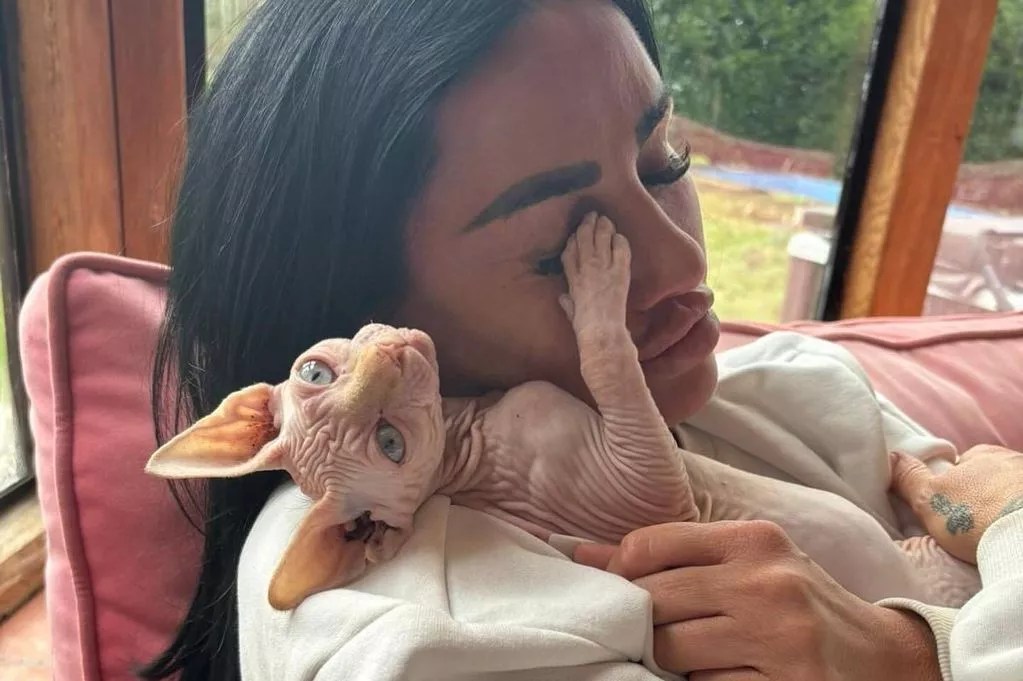
Price currently owns at least four chihuahuas and five Sphynx cats. An incident with one of the Sphynxes has animal lovers and welfare groups renewing calls to prevent her from buying new pets. (Price, like so many social media influencers, exclusively purchases breed pets for thousands of dollars each.)
In a new video posted online, Price — who has been dubbed a “serial killer” of animals by PETA — makes duck lips at the camera and rubs one of her Sphynx cats, Kevin, explaining that the little guy suffered sunburns.
“Oh Kevin you have been in the sun today, you have got sun burnt despite us putting sun cream on you… look at his little face,” Price said in the video. A caption written by Price claims “Trying to keep the cats out of the sun is hard work.”
A screen shot from Price’s recent video in which she shows one of her cats who suffered sunburn during the ongoing heat wave.
The latest incident is drawing fresh attention to a petition that calls for the UK government to step in to stop Price from owning animals.
As of July 10, there were 37,728 verified signatures on the Change.org petition, which mentions a number of additional disturbing incidents involving Price’s pets. One accusation claims Price’s guard dog — it’s not clear if it was the dog who was killed, or a new guard dog — bit the tail off one of her cats.
“Anyone who warns Katie not to hurt the animals she takes in might as well be screaming into the wind, for all she seems to care,” PETA’s Elisa Allen said. “And here we go again: her cat is sunburnt – something she was likely warned about when acquiring a gimmick cat, bred to look odd and be hairless.”
For her part, Price claims the deaths and unfortunate incidents that have befallen animals in her care are simply the result of bad luck and circumstances outside her control. Her representatives have also accused animal welfare groups of using the influencer’s fame to raise money.
That has not changed the narrative as new incidents continue to pile up. In a 2023 live TikTok stream, Price allegedly slapped her then-puppy, Tank — who she’s since discarded — for sitting on a hoodie. “Get off! You’re sitting on my jumpers, my jumpers that I love,” Price said after the sound of a loud slap off camera, leaving viewers fuming.
Price is not alone in the world of influencers, quasi-celebrities, Real Housewife types and entertainers who apparently view animals as disposable amusements.
Hilaria Baldwin, Alec Baldwin’s wife, has earned the nickname “Cruella Seville” from her detractors for her alleged treatment of her breed cats and dogs. The nickname is a play on the character Cruella de Vil from 101 Dalmations and the Spanish city of Seville, where Baldwin claimed to have roots before claiming she was born in Mallorca.
Baldwin with two of her Bengal kittens. New kittens have appeared in her Instagram posts several times in recent years, apparently replacing older Bengals she’d purchased previously.
Baldwin, you may recall, was enthusiastically Spanish until she wasn’t. She was essentially exiled from celebrity-adjacent society in 2020 after Twitter users dug up videos of her fluctuating accent and performative “forgetting” of English words like cucumber, outlet and onion. Former classmates, acquaintances and friends came forward to say she was the Boston-born Hillary Hayward-Thomas and didn’t go by Hilaria — or speak with an accent — until around 2010, when she met Alec Baldwin.
But the actor’s wife never stopped posting to social media, and in addition to animal lovers calling foul on videos that show her allegedly mishandling her dogs, her online posts show a rotating cast of Bengal kittens. Critics have called for action against Baldwin for her alleged treatment of animals, as well as buying Bengals despite the fact that it’s against the law to keep them as pets in New York City. PETA, which previously worked with Alec and Hilaria Baldwin on a publicity campaign, also called on the couple to stop buying exotic pets.
In the music world, mainstream pop artists like Justin Bieber and Rihanna have both come under fire for purchasing baby monkeys — a capuchin in the case of Bieber, and a slow loris for Rihanna.
The Rihanna incident, in which she shared a photo of herself with a slow loris pet to social media, resulted in raids on illegal wildlife markets in Thailand, where Rihanna allegedly acquired the animal. There are nine subspecies of slow loris, ranging from vulnerable to critically endangered in conservation status, per the World Wildlife Fund.
Rihanna posing with a slow loris, a nocturnal, arboreal animal that is notably the world’s only venomous primate. The venom glands are removed from slow lorises sold on the illegal wildlife market. People continue to poach and sell them despite their declining numbers in the wild.
Bieber named his monkey Mally OG and famously ditched the then-infant in Germany in 2013, when officials there seized the primate from his private plane after it touched down in Munich, citing his lack of permits and purchase records for the animal. (They essentially accused Bieber of buying Mally on the illegal wildlife market.)
“Honestly, everyone told me not to bring the monkey. Everybody,” Bieber told GQ magazine in an interview several years later. “Everyone told me not to bring the monkey. I was like, ‘It’s gonna be fine, guys!’ It was the farthest thing from fine.”
Bieber with his pet capuchin monkey, Mally OG, who was just an infant when he was ripped from his mother’s arms so he could be sold to the pop singer.Bieber with another capuchin monkey as part of a skit in which he joked about German authorities seizing his first monkey pet.
The singer said he’d return for his pet after retrieving the paperwork from one of his US homes, but he never did, and Mally OG was placed in a sanctuary after a long rehabilitation period.
In a follow-up story five years later, Asta Noth of Serengeti Wildlife Park said Mally was still trying to imitate human speech, and didn’t know how to communicate with his own species. That’s a common problem with monkeys who are former pets, as they do not understand the complex social dynamics of troops and family units.
His developmental problems stem from the fact that “he was taken away from his mother and natural family way too early,” Noth said. “He did not learn to be a monkey.”
The plan would allow bodega owners to certify their cats, eliminate city fines for keeping them, and help find homes for working felines if their stores shut down
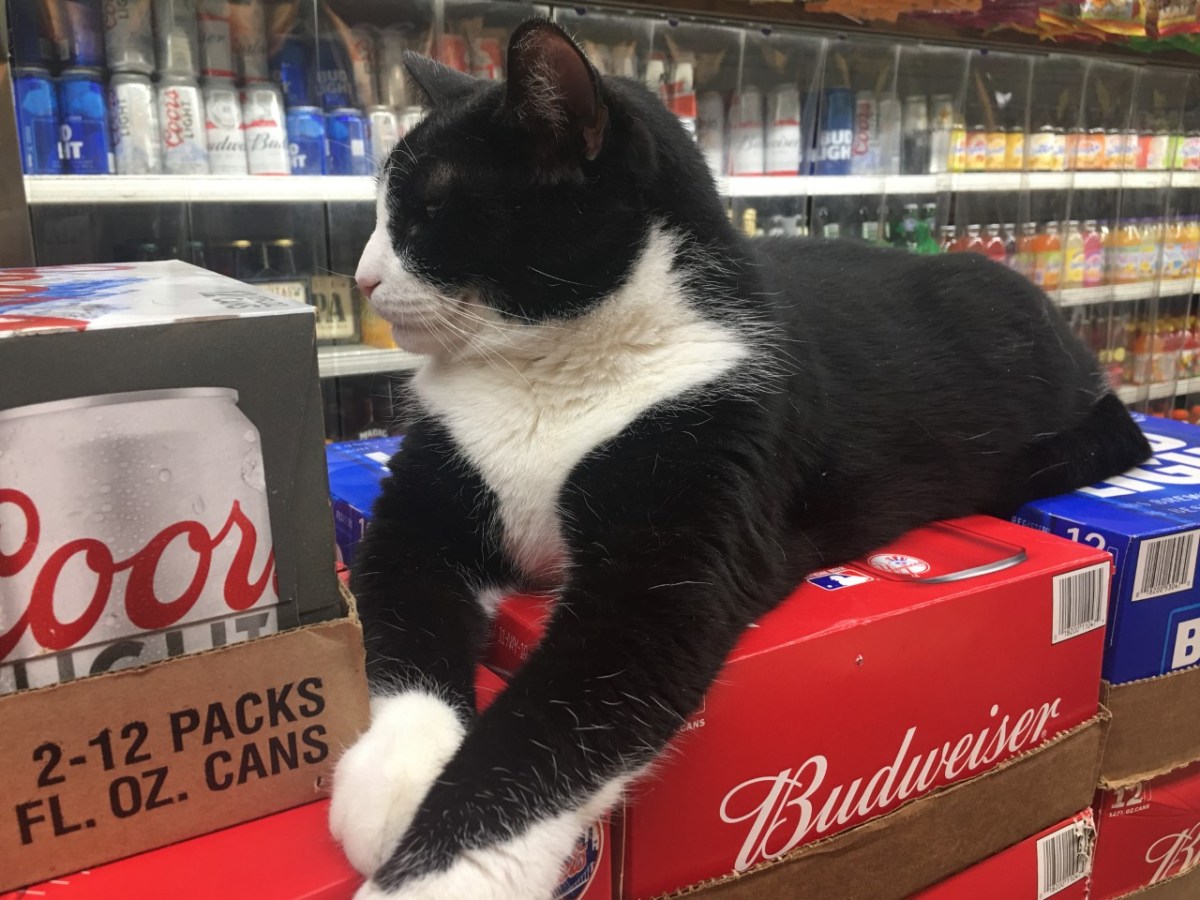
Cats have been a fixture in New York City’s bodegas for decades, but technically they’re illegal.
The fact that they’re so widespread, and owners of the small groceries/delis don’t try to hide them, underscores the absurdity of the situation. The fine for keeping a cat in a bodega in New York is $200 for the first offense, capping out at $300, but the fine for a rodent infestation starts at $300 and can rise to as much as $2,000 for repeat offenses. That’s in addition to the cost of bringing in pest control to get rid of the rats, which can easily add hundreds or more to an expensive problem.
So given the option between a maximum $300 fine with a clean, rodent-free shop, and potentially crippling fines — plus infestation — for rodents, thousands of bodega owners opt for the former. It’s a no-brainer.
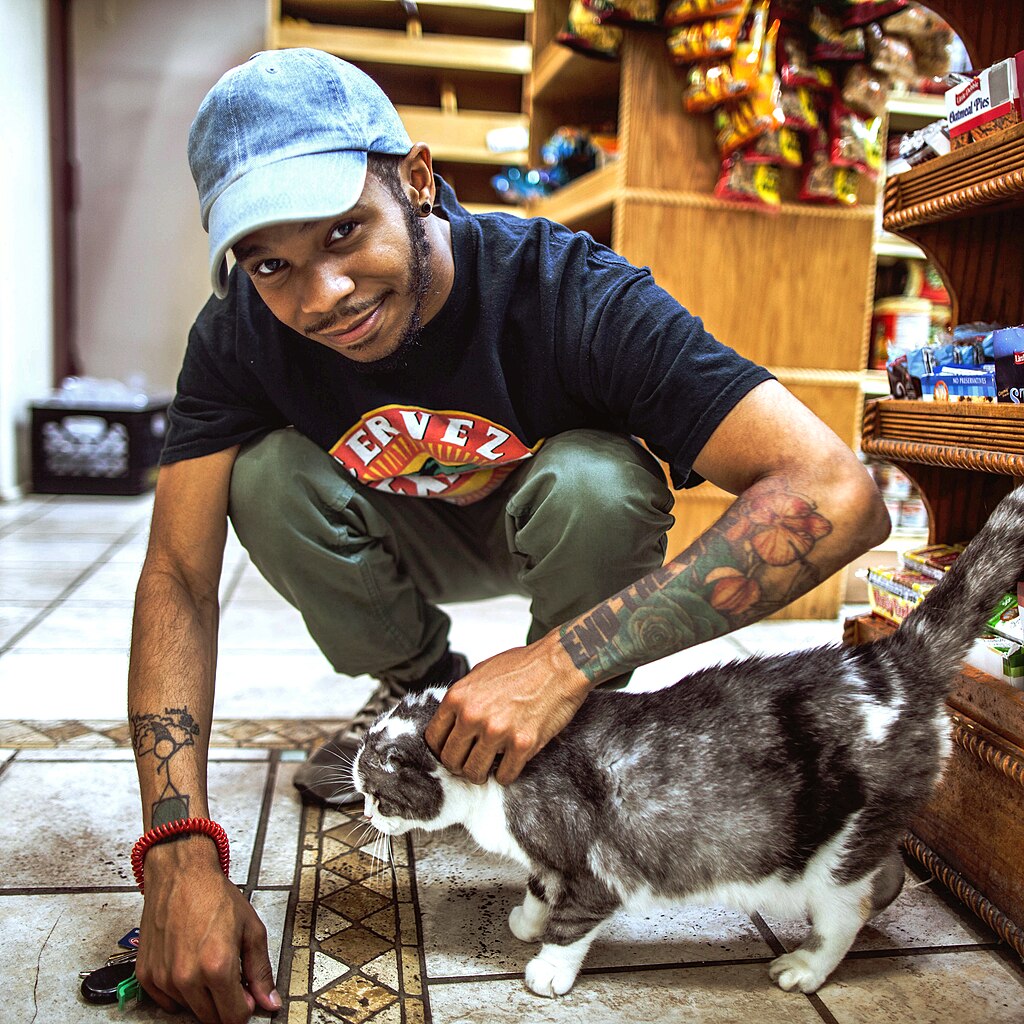
Kota, a bodega cat from Brooklyn. Credit: Wikimedia Commons
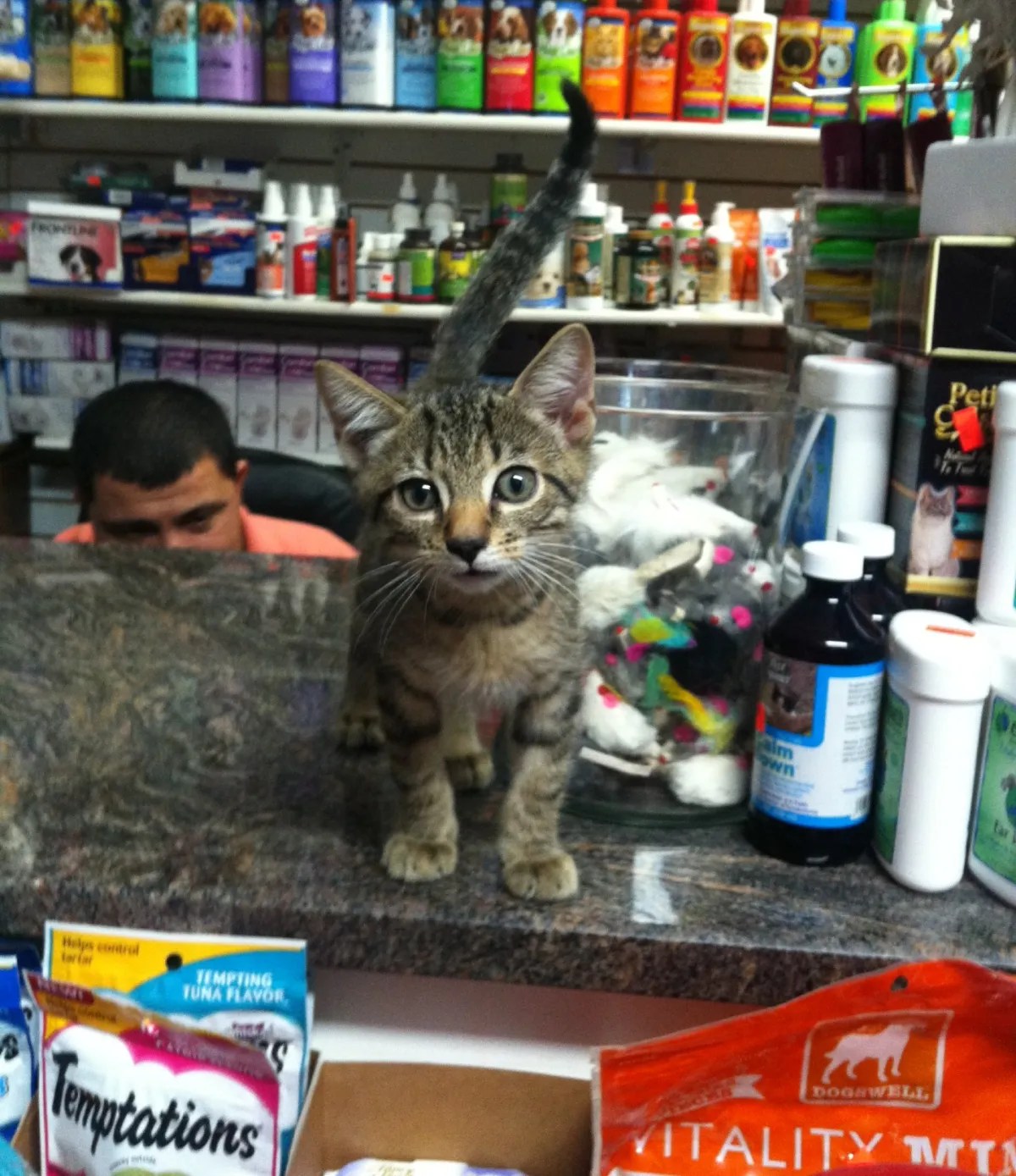
The cats are also favorites of customers, and bodega owners don’t hesitate to talk to media when their cats go missing, nor do they turn down Dan Rimada, who runs the extremely popular @bodegacatsofnewyork Instagram page.
Now Rimada is the man behind a petition that seeks to eliminate fines for the store-dwelling felines, establish a voluntary shop cat certification, and help bodega owners get veterinary care for their little helpers.
Rimada proposes soliciting seed money from city government as well as deep-pocketed donors in the pet food industry — “think Purina, Chewy, PetCo” — to establish a veterinary care fund for the city’s working cats.
“Through years of hands-on experience, I’ve witnessed both the charm of well-cared-for bodega cats and the harsh reality of neglect when standards aren’t met,” Rimada wrote in the petition, which has almost 5,000 signatures as of Feb. 28. “In conversations with rescue organizations and experts in public policy, business, and technology, we’ve designed a realistic, community-driven solution.”
Credit: @bodegacats_/Twitter
The fund would help cover the costs of care, with additional “micro-loans” available for emergencies.
Rimada envisions it as a triple win for the shop owners, rescuers who will be compensated for their time, and most importantly, the cats. If city leaders are willing to engage, Rimada says he hopes to conduct a year-long pilot program to see what works and what would need tweaks, with input from rescuers, veterinarians and the people who care for the cats.
The petition and resulting plan was inspired by cases like that of Kobe, a Hell’s Kitchen bodega cat who almost died of a urinary infection when the owners of the bodega balked at paying veterinary bills.
The store’s owner says he’s not interested in having anyone prosecuted and he just wants his cat back.
Another day, another person who decided to steal a cat instead of adopting one of the estimated 3.2 million languishing in shelters and waiting for homes.
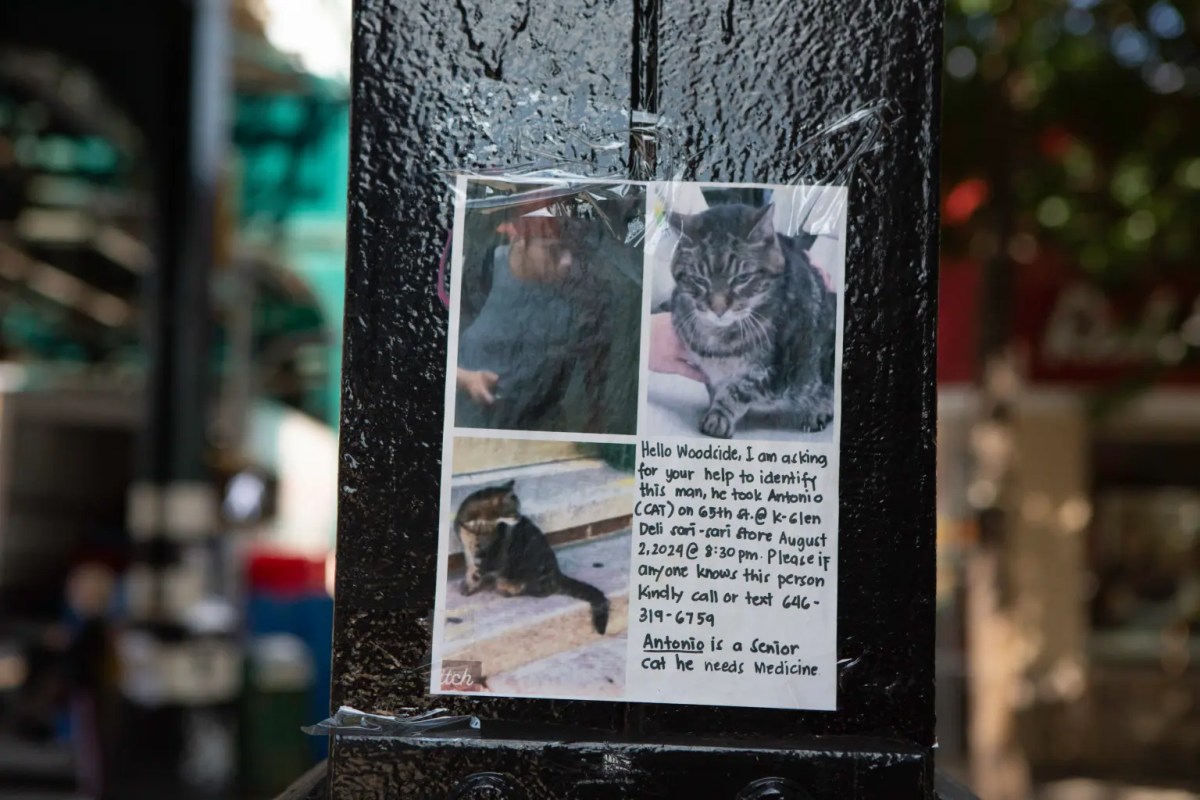
This time, a man made off with Antonio, a well-loved bodega cat who was the unofficial mascot of K’Glen Deli and Sari Sari Store in Woodside, Queens. When store owner Glen Alagasi couldn’t find Antonio and the tabby failed to show up for meal time, Alagasi panicked.
Sure enough, footage from security cameras showed a man picking Antonio up right in front of the store’s entrance and walking away earlier that day, on the afternoon of Aug. 2. As the man walked off, Antonio managed to squirm out of his hands and was trying to get back to the bodega. The man scooped him up again and Antonio was last seen in his arms as they headed toward Woodside Avenue.
Credit: Glen Alagasi
Like others who have had their feline friends taken from them, Alagasi said he’s much more interested in getting his cat back than any form of retribution or punishment.
“We’re not asking for any criminal prosecution,” Alagasi told CBS New York. “Just, we need the cat back. [The thief] stole a precious thing here in this community.”
For people unfamiliar with city living, especially in New York, bodegas are a daily part of life and often the only places to buy food in neighborhoods that are otherwise “grocery deserts.” When you live in Manhattan or a borough, the concept of big-time grocery shopping just doesn’t exist, because chances are you’re hauling your purchases back on foot and ascending stairs or an elevator to your apartment.
Technically, the Department of Health forbids the keeping of cats in bodegas and delis, which almost always have hot food and sandwiches prepared on-site. But the fine for a rat infestation is the same as it is for having a cat, and inspectors can’t be everywhere, so most bodega owners figure it’s better to have a little pal who keeps the rats away than cede territory to rodents, especially in a city that struggles with a perpetual rat problem.
The laws are so openly flouted that there are entire social media accounts dedicated to bodega cats, and the operators don’t bother to hide their cats from customers or the press. If the inspectors are going to come, they’ll come.
Alagasi says he’s lost a friend, and customers like Pia Tracy are used to seeing the little guy every day.
Antonio, who often plays with Tracy’s cat, is “part of our everyday life.”
Tracy says she’s “devastated and heartbroken because I don’t know if he’s okay. We just hope he’s okay.”
A rare prequel that matches or exceeds the original, Day One explores relationships feline and human in a harrowing, life-or-death situation. With its Manhattan setting and post-apocalyptic vibe, the film also invites comparisons to the chaos and insanity of 9/11, when shocked survivors were just beginning to grapple with what they’d experienced.
If there’s one thing director Michael Sarnoski knows about cat people, it’s that putting a feline in danger is a reliably manipulative way to ratchet up tension.
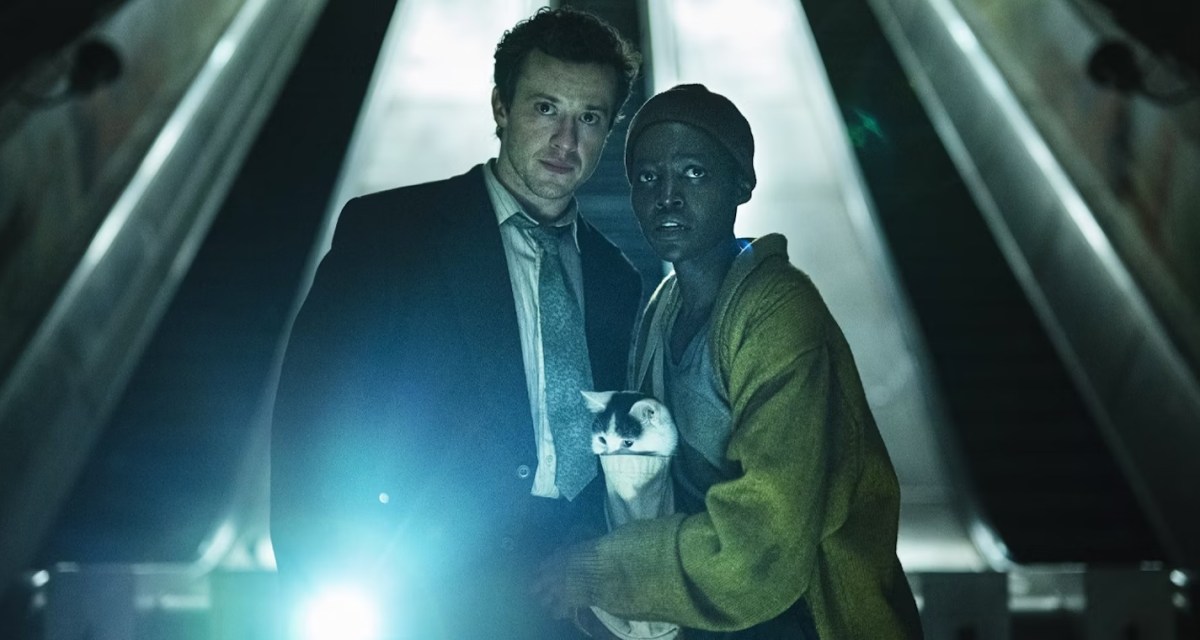
Frodo the cat, therapy pet to Lupita Nyong’o’s Sam in A Quiet Place: Day One, is every bit the handsome co-star.
In a story about a woman and her cat trying to survive an apocalyptic event in New York City, the cat gets plenty of screen time. There are entire sequences following the little guy as he dashes away from danger (and sometimes toward it) and as he follows his feline instincts, which might not be the right instincts in a world that suddenly has its rules rewritten.
Nyong’o’s Sam, right, introduces Frodo to a young admirer in a Manhattan theater during the early minutes of A Quiet Place: Day One. Credit: Paramount
A Quiet Place: Day One is the third installment of the Quiet Place films. The first one thrilled audiences with a tight script, tense acting and a quiet/loud dynamic that made the absence of sound more sinister than sound itself.
A Quiet Place (2018) and its sequel (2020) take place about 16 months after the arrival of monstrous creatures of indeterminate origin. The aliens are blind, but that doesn’t impede their ability to rampage through human cities. They have an unearthly sensitivity to sound and can echolocate. Even a whisper can be enough to draw their attention if they’re in relatively close proximity.
We meet the Abbott family (John Krasinski, Emily Blunt and their children) some 16 months after the initial invasion, when they’re living silently on their isolated farm in upstate New York.
The audience is told nothing about where the creatures came from or what they are, and except for a short sequence in the very beginning of the sequel, we don’t see their arrival. The first two films deal exclusively with the aftermath, with scattered survivors trying to eke out an existence.
A curious Frodo watches Quinn’s character, Eric, emerge gasping from a flooded subway station. Credit: Paramount
Day One is a different beast entirely, both from a plot perspective and through the lens of Sarnoski, who leaves his fingerprints all over the franchise and imbues the prequel with a surprisingly poignant relationship between Nyong’o’s Sam and Joseph Quinn’s Eric, a young British student who moved to New York for law school. (If you’re a fan of Stranger Things, you’ll know Quinn as Eddie Munson, the D&D-playing metalhead and stand-out character from the show’s fourth season. He also had a brief appearance in the seventh season of Game of Thrones, and will appear in the upcoming sequel to Ridley Scott’s Gladiator.)
Sam and Eric are strangers thrown together by circumstance and quickly grow close. Eric, overwhelmed by the world being turned upside down in a country he’s not yet accustomed to, needs someone to latch onto. Sam, who has isolated herself as she wastes away from cancer, finds the companionship she didn’t know she needed.
While tens of thousands of New Yorkers heed the US military’s call to head to South Street Seaport for evacuation via boats, as the Death Angels apparently cannot swim, Sam is determined to reach Patsy’s pizzeria in Harlem, where she believes the world’s last slice of their beloved thin-crust pizza awaits. Unlike the other survivors, she doesn’t have the possibility of a future if she makes it to safety.
Walking from Chinatown in lower Manhattan to Patsy’s in Harlem is a hike, about nine miles as the crow flies. It would take most people the better part of three hours to walk under normal circumstances. In an invasion, when the slightest sound can mean death, it’s an extraordinarily dangerous and long journey.
Still, being determined to get the very last slice of pizza in an apocalypse is precisely the sort of ridiculous thing I’d do, so I sympathize with Sam.
In an amusing scene early in the film, a man in a bodega tells Nyong’o’s Sam she can’t have a cat in the store — while his own shop cat lounges on the counter next to him. Bonus point for the Knicks hat. Credit: Paramount
As for Frodo, he’s one cute little dude! I appreciate the fact that Michael Sarnoski elected to have an adult cat rather than a kitten, not because I have anything against kittens, but because Frodo is a reminder that felines of all ages are beautiful, and there are plenty of Frodos in shelters.
Nico and Schnitzel, the cats who play Frodo, are great animal actors. In one scene Frodo sees Quinn emerge from a flooded subway and stops, curiosity playing across his little face. He looks at the stranger and his mouth opens ever so slightly, as if in shock. How many takes did Sarnoski need to get that?
Nico and Schnitzel split duties as Frodo. Credit: Paramount
Frodo is also a survivor. His hunting instincts kick in when he sees a rat, drawing him closer to danger, and at one point curiosity beckons him toward the ruined shell of a building where the Death Angels are apparently nesting.
Incredibly, he never meows. There are times when he freaks out and runs, as cats are known to do, but he reliably finds his way back to Sam, and he has a knack for remaining absolutely still and silent when he needs to be.
There were so many moments when I imagined myself in Sam’s shoes and Buddy in Frodo’s paws, and we’d have been dead in all of them. As I noted in my post about the “Quiet Place Challenge” trend on social media, the Budster and I would have a life expectancy of approximately 60 seconds in the film’s world. Death by Buddy would be my fate, as inescapable as his mealtime screeching.
There is also a visceral 9-11 feel to the opening sequences of the invasion, and any New Yorker old enough to remember that day will be reminded of it. It’s impossible not to with the scenes of ash-covered survivors huddled inside buildings, crowds of dead-eyed people walking away from disaster and the eerie sight of a sooty Manhattan bereft of its usual bustle and life.
There are of course plot holes in Day One, or at least unanswered questions to things that don’t seem to make sense. When the military’s helicopters sweep over Manhattan, announcing via loudspeakers that survivors should head to the ports because “the enemy cannot swim,” I wondered: did these aliens just land in Manhattan? If so, why? Surely they don’t recognize the arbitrary municipal boundaries of humanity, and the whole area is one seemingly endless metropolis.
Quinn, left, and Nyong’o, right, panic as a Death Angel crashes down from above, listening for its prey. Credit: Paramount
The Death Angels are obviously sentient, but whether they’re sapient is another matter. They don’t seem to have much in the way of a sense of self-preservation, and there is no method to their madness. During the aforementioned helicopter scene, the characters watch as hundreds of Death Angels race toward lower Manhattan, drawn by the sound of the choppers and the loudspeaker. It’s impossible not to think it would be trivial to draw the lot of them with the loudest possible sound, then drop a few daisy cutters on them and call it a day.
Of course if any of that happened there would be no movie and no drama, so as with most stories like this, it’s best to let the film pull you along without stopping to over-analyze what you’re seeing.
If you’ve watched the first two films, you also know the reasons for the invasion are nebulous. The Death Angels don’t eat their kills, as Krasinski’s Lee Abbott learned, and if they’re the vanguard of a more intelligent species, doing all the dirty work before the masters arrive, well, we’ve yet to see who’s pulling the strings.
Overall, like horror master Mike Flanagan taking on a sequel to the tepid Ouiji earlier in his career, Sarnoski doesn’t view the fact that Day One is a prequel as an excuse to phone in a performance. He approaches the film with enthusiasm and energy as if it’s one of his own creations, and that’s evident in every frame. It’s a Sarnoski movie that happens to be a genre film, not the other way round.
There’s a surprising poignancy to Day One that makes it more than the sum of its parts. We’re not here to spoil anything, but if you’re a cat lover, we will say that Day One doesn’t pull an I Am Legend. You can watch the film with reassurance that Sarnoski has better tricks up his sleeve for stirring your emotions than gratuitous animal-involved violence.
It’s rare when a sequel or a prequel reaches the same heights as the original. How many of us wish franchises like Alien and The Matrix stopped at one film? Thankfully that’s not the case here. There’s life in A Quiet Place yet, and like the best science fiction, it’s a film that uses extraordinary circumstances to tell a very human story.
Perhaps the best part is the experience has made a cat lover of Nyong’o. In a short promo (below), she explains that she’s always been afraid of cats, viewing them as miniature lions.
“Now,” she says with a laugh, “somehow, I love them!”
She’s not just saying that either. After filming Day One, she adopted her own cat, Yoyo, and it takes just a glance at her Instagram page, which is festooned with photos of the orange tabby, to know that she really does love the little guy.








 Pain In The Bud