An old enemy lies in wait in the far reaches of the galaxy, ready to exact revenge on the most dashing, clever and dashingly clever captain in Starfleet!
ALPHA QUADRANT, Milky Way Galaxy — Captain Buddy is back for his most thrilling, treacherous and scrumptious adventure yet!
As the commanding officer of the USS Fowl Play and a legend within the galactic community, Captain Buddy and his trusty crew get the call to investigate reports of the malevolent Borg raiding colonies on the edge of Federation space.
Our intrepid captain arrives just in time to fend off a Borg cube attacking Dawn’s Edge, one of the largest colonies on the Felinian Rim. After mounting a heroic defense and defeating the diabolical enemy spacecraft, brave Captain Buddy discovers the Borg weren’t just trying to assimilate the peaceful Caitians living in the colony: they were after the colonist’s turkey, tuna and dilithium reserves as well!
With reinforcements several days away, Captain Buddy is tasked with defending the colony, reassuring terrified colonists, and managing a dwindling supply of sandwiches and snacks…
Can Captain Buddy of the USS Fowl Play outsmart the Klingons once again to save his crew and salvage his nap?
USS FOWL PLAY, NCC-2014A — Captain Buddy emerged from the turbolift, batting at the wrinkles in his uniform with his paws in a fruitless attempt to look more presentable.
“Not that it matters with these nap-interrupting brutes,” he sighed. “On screen!”
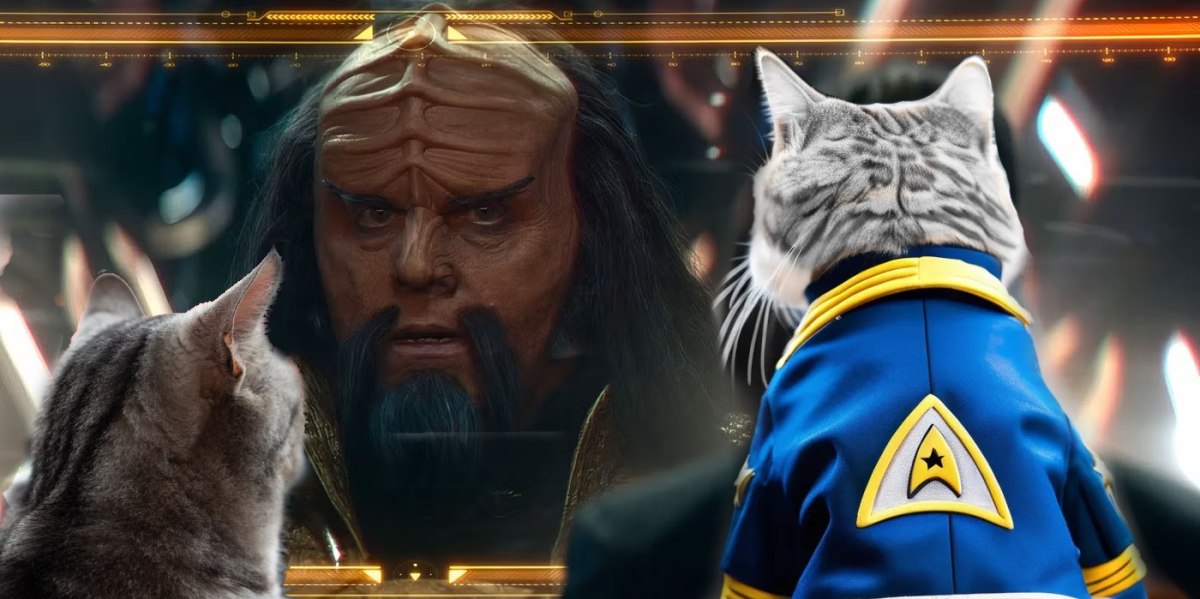
The helm officer tapped a sequence into his console and an image of a scowling Klingon materialized on the ship’s view screen, replacing the view of space and the sleek Klingon Warbird that had decloaked in front of the USS Fowl Play.
“Gruthnok vupar! This is the warship Dra’akkthar of the mighty Klingon empire!” the face on the view screen snarled. “Power down your pitiful excuse for a ship and prepare to be boarded!”
Captain Buddy smiled.
“Good to see you too, Captain Hrakhuul,” he said. “How are the wife and the kids?”
Hrakhuul snorted derisively.
“Only a fool jests during the hour of his doom!” the Klingon spat. “Have you no honor?”
Captain Buddy scratched his chin fur, pretending to consider the question.
“None,” he said, “but I do have a bone to pick with you. You woke me up during nap time. Again. Not cool, Hrakhuul. Not cool.”
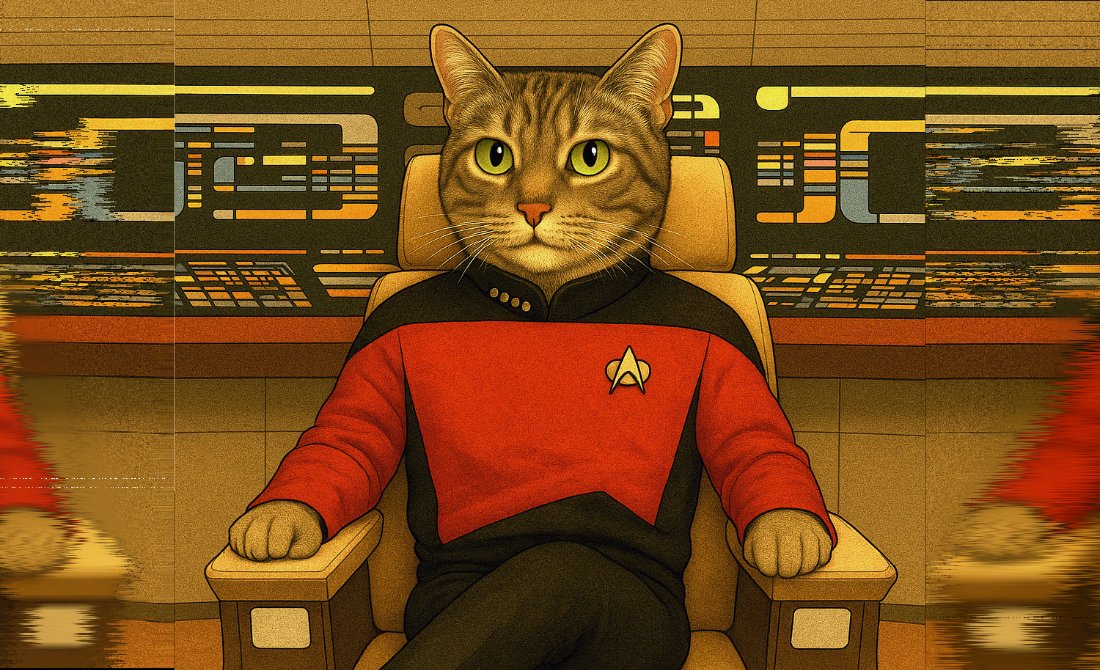
Captain Buddy, commanding officer of the Federation starship USS Fowl Play, Galaxy class registration NCC-2014A
Hrakhuul growled.
“Your species is insolent, lazy and takes ten naps a day!”
“Why, thank you, Captain Hrakhuul! And may I say, you’re looking particularly savage today.”
“This is your last warning, Federation cat! Power down your shields and weapons or be destroyed!”
Captain Buddy yawned.
“I think I’ll have my crew serve me turkey sandwiches instead. Yeah. Turkey over obliteration, no brainer.”
This enraged the Klingon. “Prepare to taste your own blood at the tip of my ancestral bat’leth, feline fool!”
Buddy collapsed into his captain’s chair and kicked his feet up.
“Can we just skip this and get to the part where I outsmart you and go back to my nap?”
Hrakhuul cackled maniacally.
“So your fate is sealed, then. You shall fall before the might of the Klingon Emp…”
Captain Buddy cut him off.
“I wouldn’t be so confident if I were you. This is a..an, uh…” He turned to Lieutenant Pawson, the tactical officer, whispering: “What kind of ship is this again?”
“A Galaxy class, sir. Same as the flagship.”
“A Galactic class starship!” Buddy said confidently, projecting the calm of a seasoned captain. “And we have, like, uh…”
“Sixteen phaser banks and two photon torpedo launchers, sir,” Pawson whispered helpfully.
“Lasers! Like 27 of them! And torp…er, missiles and stuff! Very powerful missiles. They make yuge explosions!”
Behind him, operations Lt. Commander Cleo hid her face in her paws.
Schemeowtics for the USS Fowl Play, Captain Buddy’s awesome starship.
“Enough of your meaningless babble,” Captain Hrakhuul barked. “Prepare to die!”
Captain Buddy’s eyes went wide with shock.
“Oh no! We have a warp core breach! Abandon all decks and get to your escape pods!”
Captain Hrakhuul snarled, fear in his eyes.
“What?!?” If you think I will fall for this again, you tribble with a tail…”
“Fine, but don’t say I didn’t warn you, Hrakkie,” he said. “You’re in the blast radius.”
Captain Buddy made a cut-off motion to the helmsman and the screen returned to its default view of a placid star field.
The bridge crew erupted into applause.
“The Klingon ship is backing up, full reverse thrusters, sir!”
Buddy cleared his throat.
“Fire a few of those proton missile things to create an explosion, then hit the gas, warp nine!”
The Captain yawned into the back of his paw as he walked toward the turbolift.
“I am returning to my nap,” he told his crew before the lift doors closed, “and anyone who interrupts me will be thrown out of an airlock!”
The battle between the UK’s most prominent felines could upend the political order and engulf the realm in chaos!
LONDON — Larry the Cat patrolled his familiar route through Downing Street, nodding at the fully armored soldiers and security professionals who lined the narrow passage as if to say “Alright, then!”
The UK’s most beloved feline and de facto head of state felt it was important to personally inspect the defenses and raise the morale of his men as more reports arrived of intense fighting on the edges of the city, where Larry loyalists clashed with supporters of Palmerston, the former chief mouser at Whitehall and Larry’s longtime nemesis.
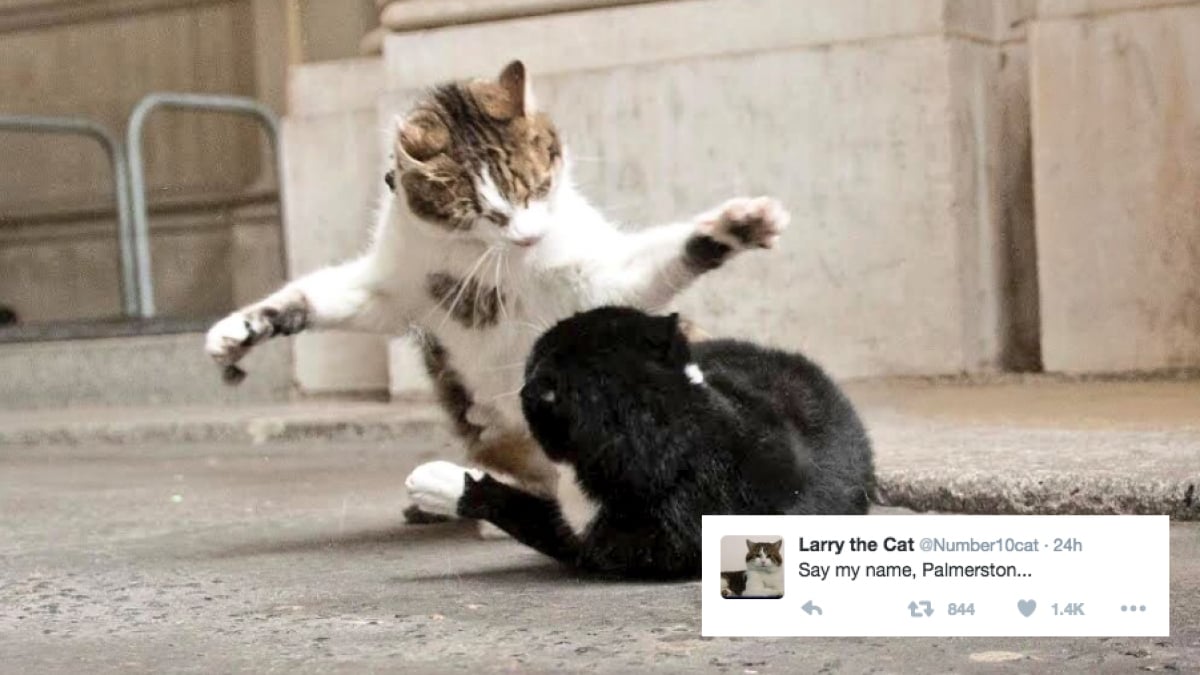
Palmerston, left, and Larry, right, during one of their epic battles while Palmerston was still top cat at Whitehall.
The British public were told Palmerston “retired” in 2020 to enjoy a more leisurely life at his countryside estate, putting an end to the intense skirmishes between himself and No. 10’s chief mouser.
But it appears Palmerston’s “retirement” was but a ruse, and the calculating tuxedo has spent the past four years laying the foundations for a coup aimed at deposing Larry.
“This has come as quite a shock to us all, obviously,” Prime Minister Keir Starmer told reporters. “Larry’s primacy was always viewed as ironclad. He’s outlasted five prime ministers and will remain here long after I’m booted out of the job. A challenge to his rule is unthinkable, and we will not allow this vile Palmerston-led rebellion to endanger our nation!”
A diplomatic party led by Sir Jacob Rees-Mogg was dispatched to the Palmerstonian camp to discuss a cessation of hostilities, but the former MP was sent back tied to a donkey and smelling powerfully of feline urine.
Palmerston during his Whitehall days. The tuxedo was the highest ranking feline in the UK’s foreign office.
Analysts called the rebellion the most serious threat to the UK’s political stability in centuries, warning of potential uprisings of Palmerston sympathiers in Wales and Scotland.
“As loved as Larry is, he’s come to be seen as an insider, comfortably ensconced in the halls of power,” said Nigel Bancroft, a political columnist with the Times. “Palmerston has reinvented himself as a populist fighting for the interests of the common man. That rebranding, so to speak, has allowed him to gain favor with working class citizens.”
“But make no mistake,” he added, “Palmerston is ruthless.”
The Palmerstonian loyalists delivered a letter with a list of demands to No. 10 Downing St., beginning with the voluntary resignation of Larry and his banishment to the Isle of Man.
They also warned Starmer to banish his two family cats from No. 10, clearing the way for Palmerston to assume power unchallenged.
Despite leading an uprising, Palmerston was making inroads with the public
“That Larry, he’s an okay bloke,” said Alastair Hughes of Gravesend. “But Palmerston is a cat of the people. He gets us. He’s the kind of lad you can have a pint with, know what I mean?”
The city, which was abandoned after a natural disaster, was an important hub of civics, trade, napping and indigenous dishes such as the cheeseburger.
XQOCHOATL, Yucatán — Archaeologists announced the discovery of a vast and prosperous ancient Mayan jungle city whose inhabitants once worshiped an unusually handsome gray tabby as a feline god.
X’Budiso was an important center of trade, religious life, architecture and art, according to Ferdinand Lyle, an archaeologist with the British Museum of London and lead researcher on the project.
His team located the long-lost city using LiDAR — light detection and ranging — a technology that allowed them to peer beneath the cover of heavy jungle and detect the ruins beneath.
Previously, there was only one indication that humans had once inhabited the area — a feline paw holding a cheeseburger, rendered in stone and poking out of a thick tangle of jungle flora. When archaeologists cleared the brush and trees, they revealed the rest of the statue which depicted a regal-looking cat on a plinth, holding the cheeseburger aloft in triumph.
An artist’s impression of the Mayan deity Budacoatl surrounded by offerings of cheeseburgers, dipping sauces and artisanal cheeses inside the Temple of a Thousand Snacks. A cult devoted to Budacoatl, the Ancient Order of Yums, was responsible for taste-testing the snackly offerings.
The city was a bustling metropolis for hundreds of years before its abrupt abandonment, which researchers said was likely caused by a natural disaster such as a flood or pestilence.
“The Budiso people worshiped a pantheon, and at the top of that pantheon was Budacoatl, the tabby jaguar god of snacks, handsomeness and war,” Lyle explained. “Our research indicates that doom fell over the city, likely in the form of a plague, and that its inhabitants believe they may have angered Budacoatl by skimping on their offerings of snacks.”
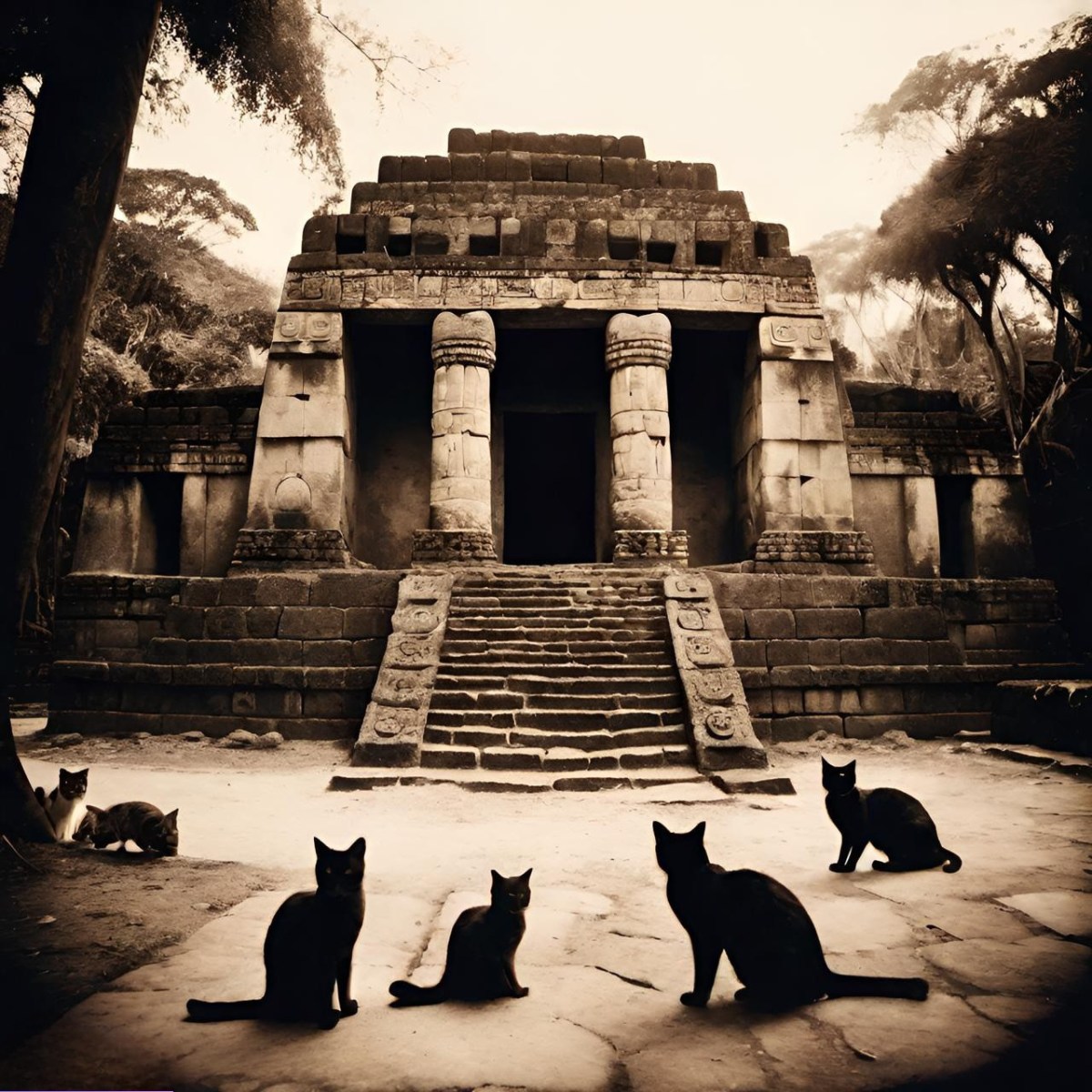
Feral felines, like the pair pictured here in front of the Temple of Turkey, still live on the grounds of the long-lost city. Source: Buddesian University Archaeological Department
Partially translated glyphs tell of unprecedented growth for the once-prosperous city, which the people believed stemmed from the favor they enjoyed from Budacoatl. Employing a force of more than 100,000 laborers, they built a magnificent temple to the feline deity in the very center of their city.
An architectural wonder, the Temple of Budacoatl featured more than 500 depictions of the feline in statues and relief carvings. The structure was comprised of tiered gardens with artificial waterfalls and tribute chambers, while gilded food and water bowls were placed at regular intervals for the hundreds of mortal cats who lived on the temple grounds.
A nearby structure, the enigmatic Grand Napitorium, was possibly the first sound-proof building in history and affirmed the X’Budiso people’s communal commitment to satisfying siestas.
The city gained a reputation for culinary innovation, and is considered the birthplace of aji sauce, deep fried turkey, huevos rancheros and Temptaciones, the ancient precedessor to Temptations.
The Artisanal Guild of Nectarean Condiments and the Sacred Order of Saucemasters were two particularly prosperous factions in the ancient city, which developed a reputation in the pre-Conquistadorial world for producing the tastiest guacamole.
“It was said that Budacoatl was particularly fond of sandwiches, and the people sang hymns about his power, influence and ripped physique,” Lyle said. “An epic poem, chiseled into the edifice of the temple, told of battle in the heavens between Budacoatl and the mighty Vakuum, scourge of the Maya. Budacoatl prevailed over Vakuum, banishing him to the underworld where his screeching could not be heard by the inhabitants of the Earth.”
Richly detailed relief carvings from the Palace of Pâté depict figures from the feline pantheon. Source: Buddesian University Archaeological Department
At the foot of the wall where the poem is inscribed stands a statue of Budacoatl, one paw holding a pastrami sandwich and the other raised in a sign of peace.
“Budacoatl was a big deal among the Maya,” Lyle said. “At one point he was bigger than Gozer and Zuul, ruling atop the pantheon. As a result, cats enjoyed enormous favor in the city.”
Professor Ferdinand Lyle, foreground, stands in front of the Napitorium, where the Budiso people would take siestas. Napping was an important part of the culture. Source: Buddesian University Archaeological Department
Sir Buddy’s fortunes have risen dramatically, while Prince Harry’s future looks bleak.
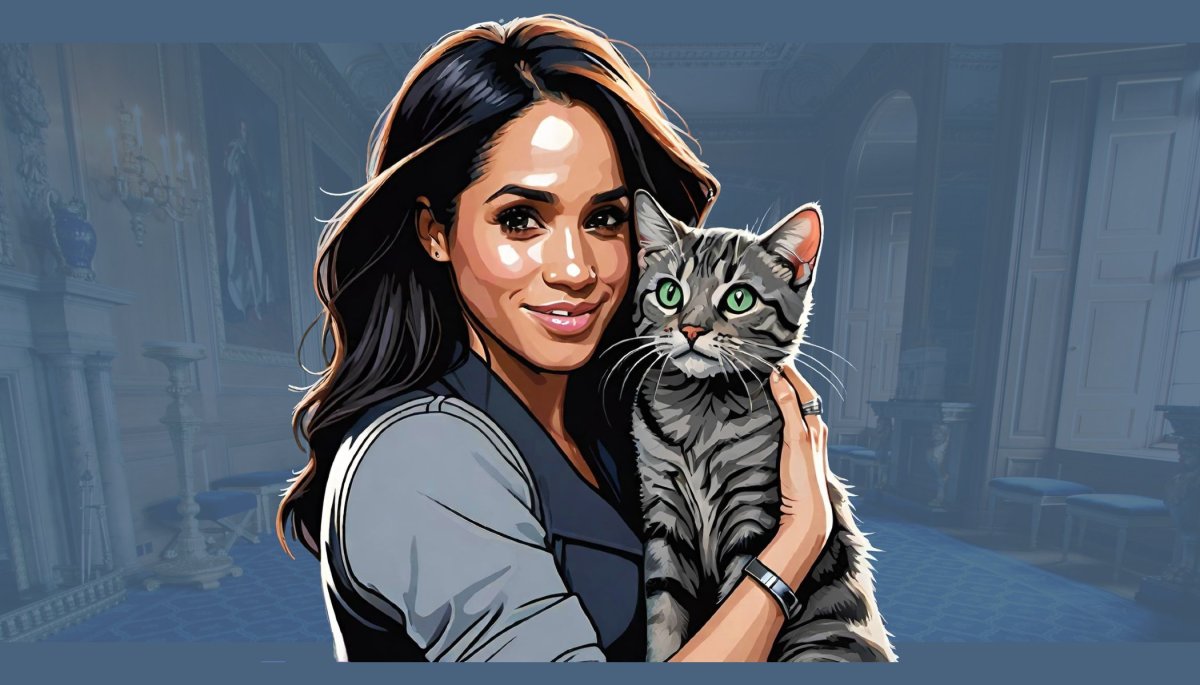
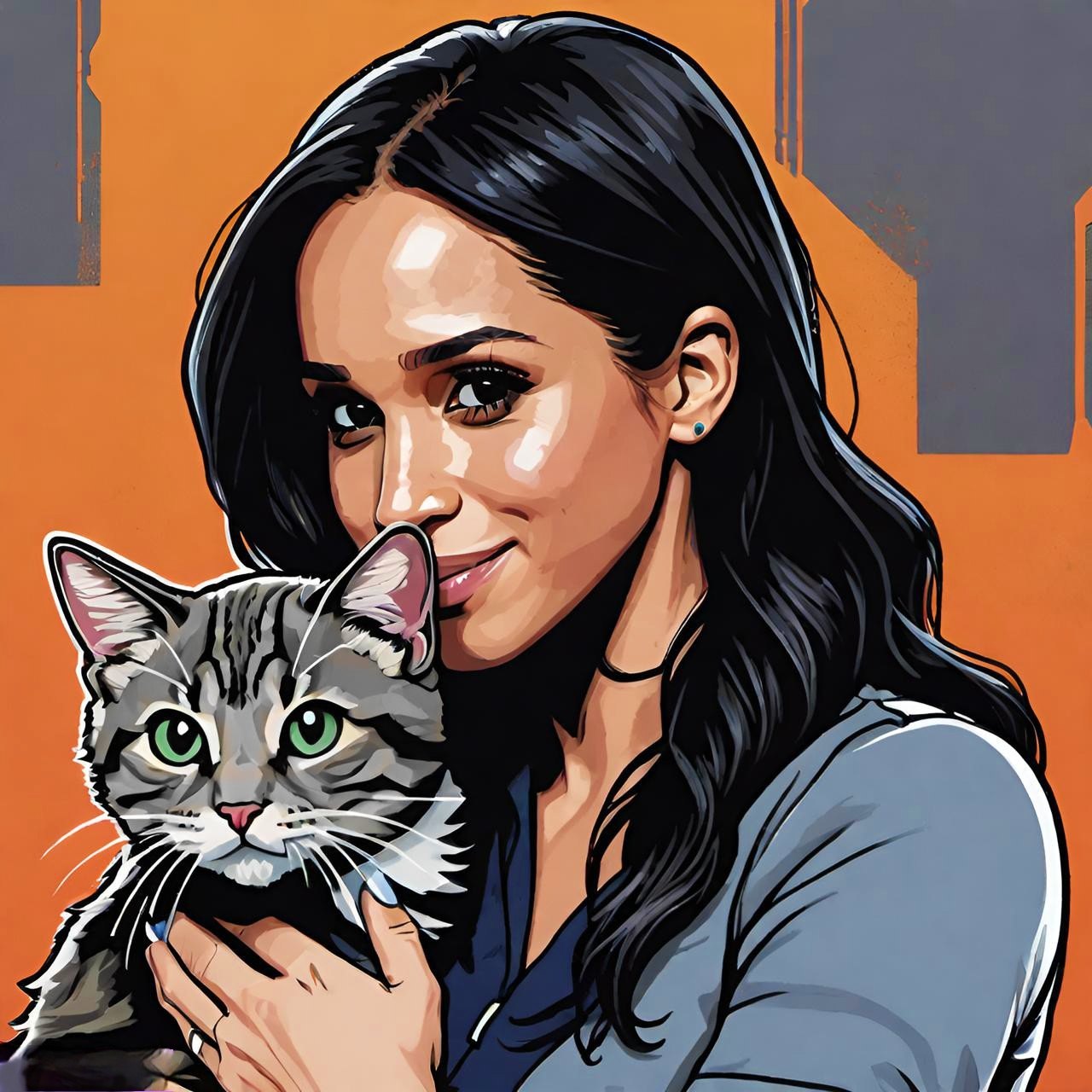
LOS ANGELES — Buddy the Cat, rumored to be on the short list for a dukedom after establishing a warm friendship with the late Queen Elizabeth II in recent years, has been spotted in the company of the Duchess of Sussex, per TMZ.
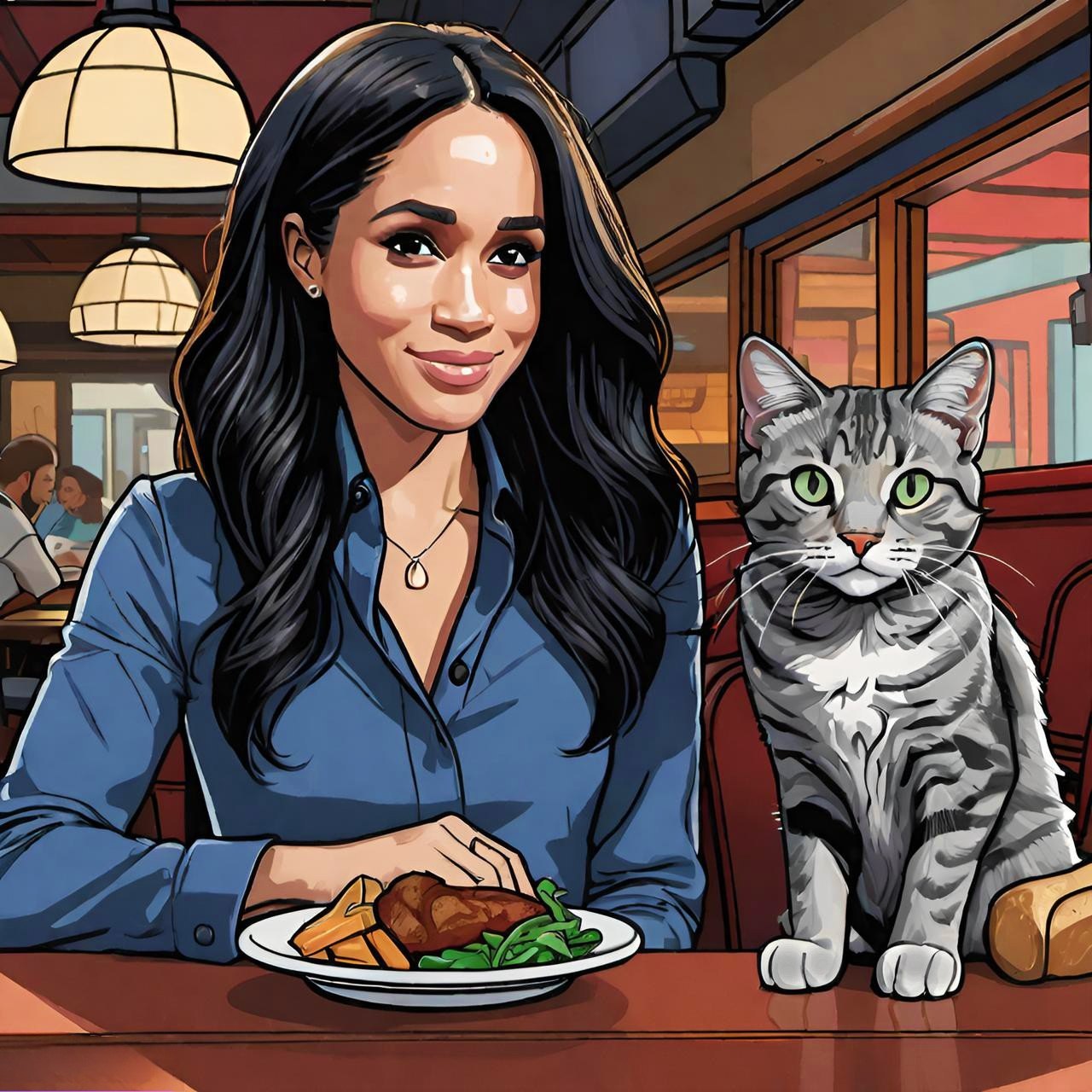
Photographs and surreptitiously-recorded footage show the handsome silver tabby and Meghan Markle enjoying a cozy private karaoke session with friends over the holiday. Later they were seen getting close at Dorsia, the ultra-exclusive Manhattan eatery where A-listers rub elbows with investment bankers and cabinet secretaries.
Prince Harry is said to be “enraged” and “deeply wounded,” not only that his wife is enjoying the company of a desirable bachelor, “but also because he thinks it would be really awesome to hang out with Sir Buddy, and he feels left out,” a royal insider said on condition of anonymity. Notably, the prince has not been able to secure a reservation at Dorsia.
The famed feline was knighted Sir Buddy by the late queen in 2021. He was created Earl of Budderset the following year in what palace insiders called a “meteoric rise” in favor with the royal family.
He had become a trusted confidante to Her Majesty, with the two parties speaking by telephone weekly and Buddy earning the endearing diminutive “my dearest Bud-Bud” from her. With his soft fur and playful nature, he’s also a favorite of young Princess Charlotte and Prince George, forming fast friendships with the rest of the family.
Markle was spotted at a popular LA nightclub with the famous feline in December of 2023.
Then the Sussexes resigned as “working royals” amid controversy and left the UK for Los Angeles. Shortly after, Prince Andrew was swiftly disowned for his role in the Jeffrey Epstein scandal. With the palace looking to take the focus off that unpleasantness, royal observers and palace stalwarts alike named Sir Buddy as a likely candidate for elevation to dukedom.
With Earl Buddy in favor and her current husband persona non grata, Markle may be eyeing the next rung on the ladder, said Gavin Northbridge, a royal observer and author of Your Highness: The Royal Family’s Favorite Marijuana Strains.
Paparazzi have also photographed the Duchess and her feline companion at an exclusive Los Angeles nightclub, an art gallery opening in the Hollywood Hills and a trendy restaurant. Prince Harry, who burned bridges with his family via a series of high-profile interviews and an autobiography, Spare, was nowhere to be seen in the photos.
“Here he is making himself vulnerable with his book, speaking out about the injustices done to him by his family, and his wife is out fraternizing with a handsome young bachelor,” said Devon Camden Dankworth, author of Grand Tyromancy: The Royal Family’s Secret History of Cheese Divination.
If King Charles follows through on his mother’s plans and grants his feline friend a dukedom, it would instantly render the current Earl of Budderset the most powerful member of the British aristocracy. The king has already thrown his enthusiastic support behind the earl’s charity, Food For Buddies, which provides delicious meals to London’s stray cats.
Markle and Sir Buddy in a trendy LA restaurant.
In an honor unprecedented at the time, Sir Buddy was knighted in 2021 “for his innumerable contributions to human-feline understanding, unprecedented innovations in the art of napping, and status as tastemaker supreme in the world of delicious snacks,” according to the Central Chancery of the Orders of Knighthood at St James’s Palace.
Since then, he’s further endeared himself to the British public by starring in ads for Aston Martin and his own detective series, The London Underfoot.
“If you’re Meghan, a future with Harry looks bleak,” said Dankworth, “but a future with Buddy looks absolutely delicious.”