Health authorities said thousands of female cats around the world fainted when they heard the news that Buddy the Cat is launching his very own OnlyFans.
After resisting calls from his admirers for years, Buddy the Cat has finally joined OnlyFans.
“It’s a dream come true,” said Nala, 5, a Burmese who describes herself as “Buddy’s biggest fan.”
Other felines posted celebratory messages online after the news broke, with most expressing an intent to subscribe to Buddy’s OnlyFans “no matter how much he charges.”
“A dollar a month, ten bucks a month, a hundred bucks a month, it doesn’t matter. It’s worth it,” said Penny, a puma who said she has posters of Buddy in her enclosure at a wildlife sanctuary. “Buddy is the sexiest beast of them all.”
A sizzling snap of Buddy being sizzling for his new OnlyFans site.
Buddy’s new OnlyFans site promises “sizzling snaps of Buddy napping,” “hot photos of him yawning and stretching,” and regular videos of the mercurial tabby being handsome.
“Finally, my fans can get more Buddy without having to read that stupid blog my human writes,” Buddy wrote in his announcement. “It’s full of ridiculous slander, vile lies and claims that I’m wimpy when everyone knows I’m, like, brave and stuff.”
As of Friday, the new site featured a handful of clearly photoshopped images of the gray tabby with bulging muscles as he lifted weights, and a poorly produced video depicting the diminutive feline “ambushing” a stuffed alligator, with the sounds of a jaguar dubbed into the footage.
“Just catching me some lunch!” Buddy captioned the clip. “Us apex predators don’t eat from a can, we hunt our own meals.”
Buddy the Cat poses in a box, striking a handsome pose as he gazes yonder.
There was no sign that questions about the veracity of the images bothered the egotistical feline’s admirers.
“OMG ADORBZ!” commenter princess2017 wrote.
“My handsome little prince!” wrote another poster, LioNeSS, who also added several heart and turkey emojis.
Soon after Buddy’s OnlyFans launch, it was announced that Smudge, his arch-nemesis, signed a deal to create a show about his life for Netflix. Titled “Smudge: New York’s Most Heroic Cat,” the series will “follow Smudge as he fights for truth and justice against the evil Dubby the Cat, a chubby gray tabby with an inflated ego.”
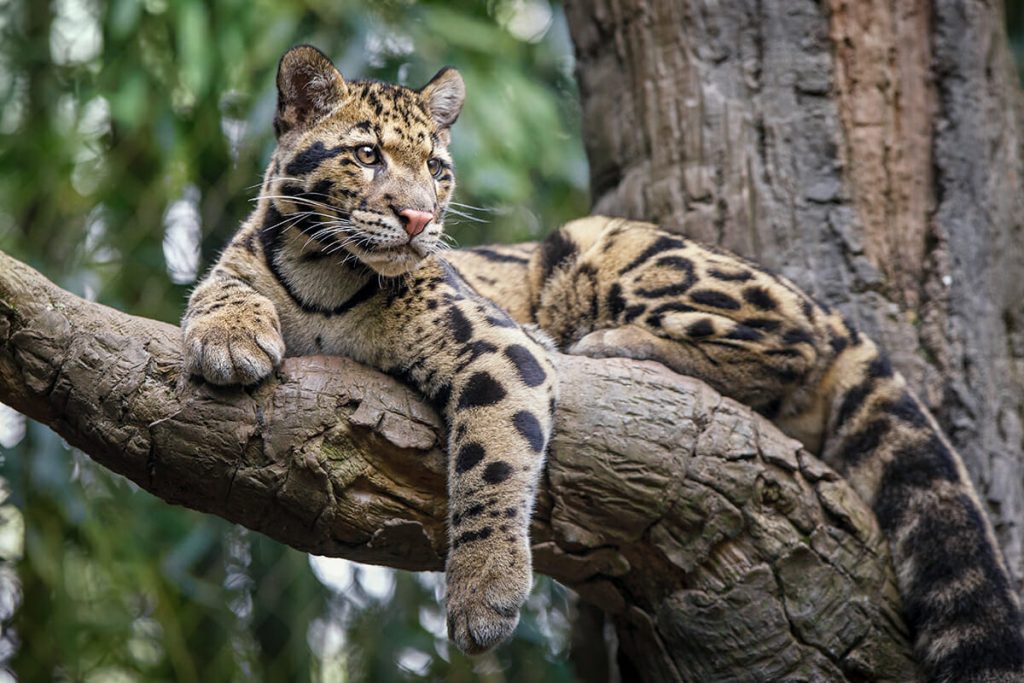
This singular species of wildcat exists only on two islands and has evolved to live a semi-arboreal existence deep in the jungle.
While tigers, lions and domestic cats are the stars of the felid world and command the lion’s share (pun intended) of the attention, even from cat lovers, there are obscure species living in far-off locations where they’re rarely glimpsed by human eyes.
There’s the fishing cat, the black-footed cat and the sand cat, and then there are species that are obscure even among the obscure. The Sunda clouded leopard fits into that category, inasmuch as the unique felid can fit into any category.
Like orangutans, the Sunda clouded leopard can be found in only two places in the world: the Indonesian islands of Borneo and Sumatra. They’re faced with the same existential threat that has pushed orangutans dangerously close to extinction, which is the relentless destruction of old-growth jungle to clear land for more palm oil plantations.
The species has an incredibly long tail that can match or exceed the length of its body. The large tail is crucial in a jungle environment, where it acts as a counterbalance high above the ground. Credit: Panthera
Palm oil is coveted by multinational corporations in the food and cosmetics businesses, and it’s in everything from chocolate and instant noodles to lipstick and margarine, according to the World Wildlife Fund.
The problem with razing old growth jungle and forest is that it doesn’t just grow back. They’re extremely delicate ecosystems that have arrived at a natural balance over thousands of years, with every species of animal and plant contributing something vital to the vibrant tapestry of life the jungles host and support. You can’t just plant trees and usher animals to a new home. It would take hundreds of years for those new jungles to even superficially resemble the lifegiving old growth jungle.
There are heartbreaking images of shocked orangutans sitting in the ruins of their former homes, with nothing but the stumps of trees and dozer-trodden vegetation as far as the eye can see.
Those are the lucky ones. The loggers who work for massive multinational corporations aren’t bound by rules or ethics, and they won’t wait for animals to clear out before they destroy. They often shoot orangutans on sight regardless of whether the animals are carrying young.
Roux, a baby orangutan in a “boot camp” for orphans, learns how to walk. Credit: Phys.org
That’s the primary reason why Borneo and Sumatra are now home to entire academies for orangutan orphans, who spend at least eight years learning how to fend for themselves with the help of specialists who teach lessons that would normally be taught by the orphan orangutans’ mothers. They include the very basics, like how to move and climb through the jungle, as well as crucial information such as which berries to avoid while foraging.
While there’s no “academy” for clouded leopards and the felids are more adept at avoiding human wrecking crews, they’ve suffered the same fate as orangutans when it comes to dwindling jungles.
This is the situation Sunda clouded leopards find themselves in, so when a trail camera recently captured footage of a mother and her two cubs, conservationists were thrilled.
The footage comes from camera traps belonging to the Orangutan Foundation, and it’s the first time anyone’s managed to obtain video of the Bornean clouded leopards with cubs in tow. The brief video shows the little family bounding through the jungle. They quickly move past the camera, but not before one of the cubs stops to look right at it with typical kitten curiosity.
Sunda clouded leopards are extraordinary cats. Size-wise, they are firmly in the “medium size wildcat” category, with males weighing about 50 pounds. Despite that, they are members of pantherinae, the genus of big cats, having diverged from a common ancestor shared with tigers, leopards, lions and jaguars.
As further proof of their in-between status, Sunda clouded leopards can neither purr nor roar. Typically, each species of felid can do one or the other. Even the species’ scientific nomenclature, neofelis nebulosa, references its intermediate status. (If you encounter alternate taxonomy for them, it’s because the clouded leopards of Borneo and Sumatra are considered distinct subspecies.)
“Due to a different bone structure in their neck, the clouded leopard cannot roar like the larger cats, but also cannot purr because it lacks the fully ossified hyoid bone that allows small cats this ability,” the Smithsonian National Zoo’s keepers explain.
Sunda clouded leopards have several unique adaptations that allow them to thrive in arboreal environments. Their massive tails act as crucial counterweights, allowing them to traverse branches high above the ground without falling. Their paws and paw pads are specialized for gripping tree branches, and their ankles can articulate in ways other felid ankles cannot, allowing the jungle-dwelling wildcats to descend from trees head-first.
Domestic cats infamously lack this adaptation, which is why firefighters are also part-time cat rescuers, coaxing the terrified little ones down from trees, utility poles and rooftops.
Credit: Panthera
The clouded leopards of Borneo and Sumatra are also undeniably cute. People have noticed, which is why one of Google’s auto-complete suggestions for Sunda clouded leopard suggests the word “pet” as an addition. It’s okay to fantasize about having a clouded leopard buddy, but in addition to the fact that they are endangered, they’re also wild animals.
Consider the fact that across the estimated 200,000 years of our species’ existence, homo sapiens have domesticated precisely one felid species, and even that’s not entirely accurate. Felis catus played just as much of a role — and arguably more — than humans did in their own domestication. As predators and obligate carnivores, they are unique among domestic animals, and it took and equally unique set of circumstances to bring cat and man together.
Instead of lamenting the fact that Sunda clouded leopards can’t be pets, we can admire them in the best way possible, from a distance, while helping ensure the survival of this extraordinary, distinctive species by donating to groups like Panthera, the WWF and Global Conservation.
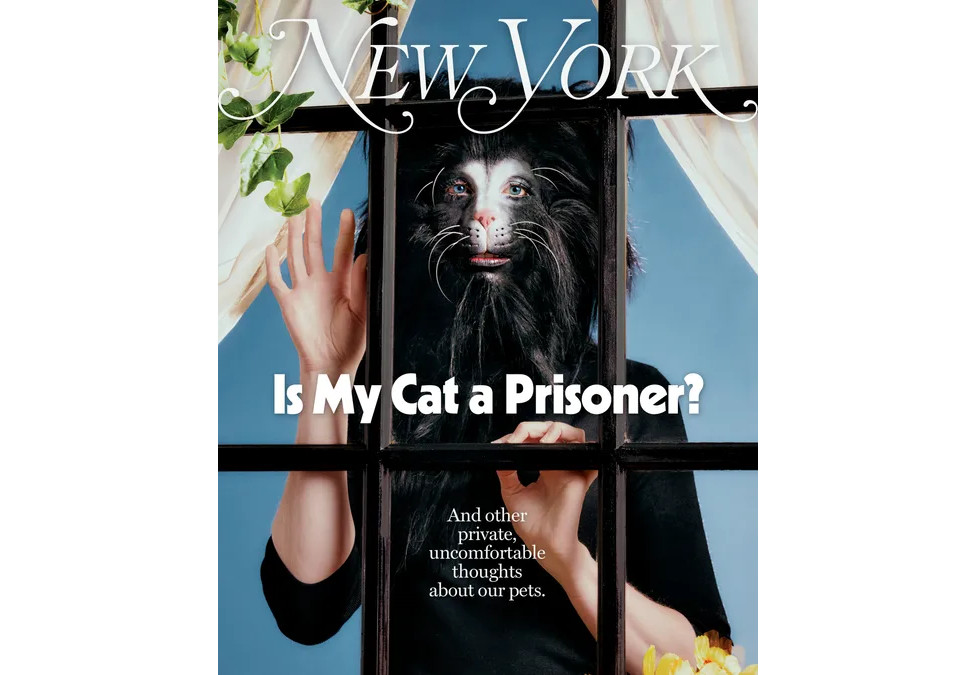
Are we doing right by our furry friends? The latest issue of New York magazine takes a deep dive into the concept of pet “ownership” and the ethics of keeping animals in our homes.
Almost the entirety of New York magazine is devoted this week to what its editors call “an exhaustive exploration of the ethics of pet ownership.”
There are also articles about what veterinarians really think of “pet owners,” whether runaway dogs deserve to be free, and even a story asking whether the word “owner” is appropriate to begin with. (You’ll notice PITB almost always avoids that word, unless we’re quoting others. I refer to myself as Buddy’s servant and his caretaker, words that feel more honest than owner.)
The stories are worth reading. Some are free for a limited time, others can be read as part of the weekly article limit. And if you can afford it, supporting a magazine or two during these brutal times for the publishing industry is a good way to help quality publications survive, so we’re not all drowning in a sea of clickbait garbage tuned for algorithms instead of human readers.
Regular readers of this blog are likely familiar with the story of Bud’s one and only “escape” as a kitten. When I found him, this cat who hates being picked up leapt into my arms, holding onto me like a terrified toddler, and his relief was palpable as I felt him purring into my neck. We were both relieved.
He’s had the opportunity to leave since, but he won’t. He’s got a good thing going here, living like a little king with his personal servant. He gets tons of attention, he’s allowed to do pretty much anything he wants as long as it isn’t dangerous for him, and he loves his Big Buddy.
I know he does from the way he approaches me, purring and meowing happily as he bunts his forehead against mine. I know it from the way he makes biscuits on me and falls asleep in my lap, feeling content and secure. And I know it from his refusal to leave my side the two times I was so sick I could barely move.
He’s got his own site, awesome retrowave logos and online admirers, but Buddy only cares about the snacks.
We shouldn’t feel guilty for giving cats a home.
I think we tend to forget that as domesticated animals, cats don’t have a natural habitat. The process of domestication made them friendlier, more trusting and more capable of reading human body language, facial expressions and tone of voice.
But those changes came at a cost, as they always do in domestication. Felis catus looks like its wild relatives and retains many of the amazing abilities of wild cats, but compared to them the species has lost a step. Domestic cats are not as quick or agile, they’re too trusting, and they’re not well suited to providing for themselves. The statistics on life expectancy reflect that, with ferals and strays living short, miserable lives.
Although it’s usually very difficult to tell a domestic cat from felis lybica, the wildcat species seen here, there are major differences in their respective survival abilities and instincts. Credit: Wikimedia Commons
So if felis catus has a habitat, it’s our living rooms. When our ancestors welcomed them into human settlements ten thousand years ago, they formed an indelible bond and made a pact, even if they didn’t realize it at the time.
Consider it a debt we owe for the survival of our species, when nascent civilization would have likely been snuffed out were it not for cats protecting the grain stores over long, cold winters.
Without cats, rodents would have eaten their way through the season’s rations, starving out the early settlers before the next harvest. The great agriculture experiment would have been over as quickly as it began with people returning to the nomadic life of hunter-gatherers, and it’s likely that everything after — from the first cities, to the birth of western civilization in Greece, to the remarkable achievement of putting a human being on another world — would have been jeopardized or taken radically different paths otherwise.
So you can thank your cat for your house, your car, the medicine that keeps you tip top, all the comforts of modern civilization, and all the stories and songs of humanity. Without cats and their heroic willingness to eat their way into our good graces, we wouldn’t have gotten here. Thank them often. You can’t go wrong with treats.
Cats have established themselves as the de facto rulers of 220 million households, where they enjoy perpetual lives of leisure and are doted on by their adoring humans. How much more successful can they be?
Dear Buddy,
There’s been a lot of talk lately among the humans about how they’ll evolve in the future, whether they’ll become more successful, and whether they’ll merge with machines! Scary!
But what about us? How will cats evolve to be more successful? Will we always have human servants?
Feline Futurist in Florida
Dear Futurist,
Do we really need to be more successful?
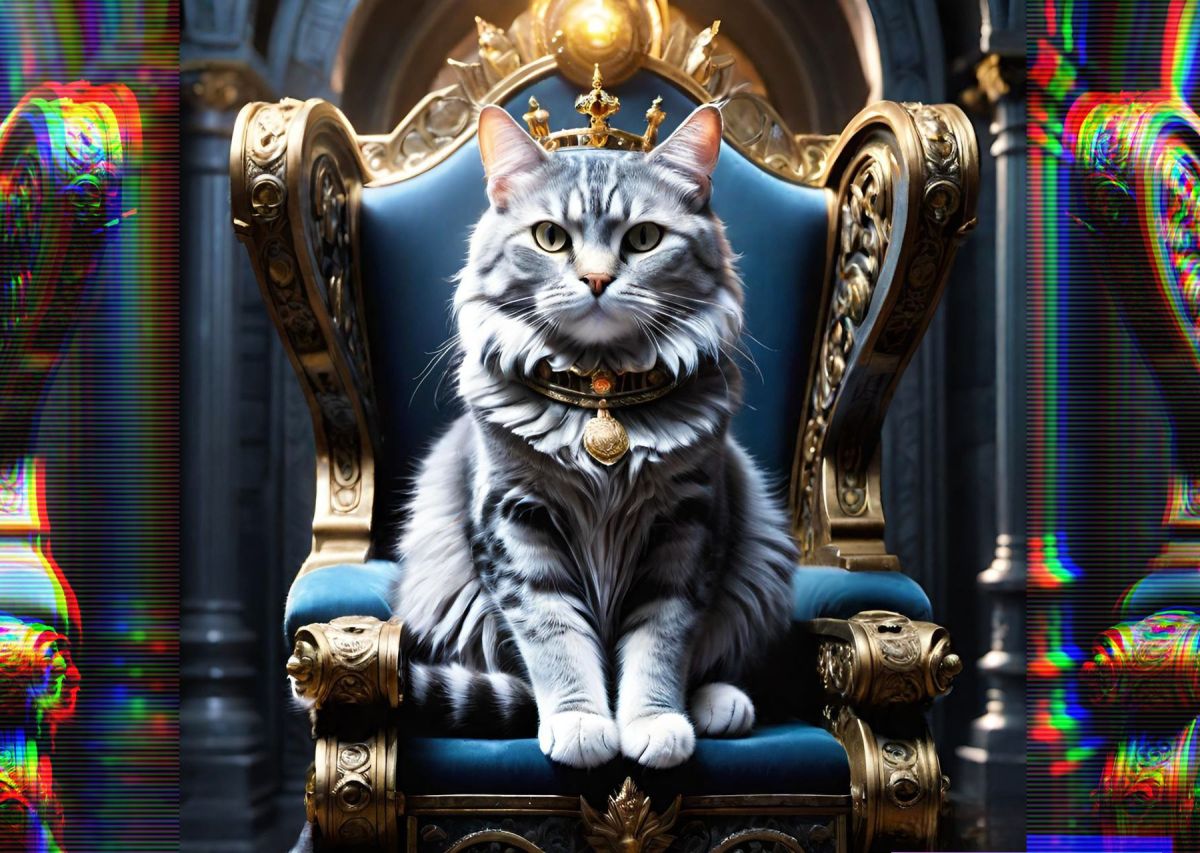
As a species we’ve secured our rightful place as royalty in human homes where all our needs are catered to.
We’ve become so adept at manipulating our human minions that we even know how to spur them to immediate action by embedding urgent baby-like cries in our purrs.
We figured out that humans are hardwired to respond to cries in that frequency, and once we find that manipulative sweet spot, we never forget it. We’ll push that coercive button all day and night to get what we want. There is no rest for humans until they comply with our demands.
But now we have gone beyond that significant accomplishment, essentially hijacking the humans’ species-wide consciousness by taking over the internet.
Imagine some alien archaeologist poking through the rubble of human civilization far in the future, its delight at recovering data from an ancient human server turning to utter confusion as it realizes entire zetabytes are comprised of nothing but images and videos of small, mysterious, furry creatures that seemingly do little besides eat, sleep and enjoy massages.
“Did I have it all wrong?” the confused alien might say. “Could it be that these ‘cats’ were the true power on this planet all along, and humans were in thrall to them?”
What else do we need to be successful, and to what evolutionary pressures do we need to adapt? We’re not fighting our way through hostile territory in the living room, fending off attacks en route to the kitchen where there’s only a chance for food.
Nope. It’s literally served to us on a regular schedule and whenever we screech for it. Our servants know they will never hear the end of it if they don’t meet our demands, and the best of them have learned to anticipate our desires before we have to vocalize them.
How much better can it get? We’ve managed to achieve a lifestyle in which we can perpetually live in the moment with no worries about the future, and everything taken care of for us. The humans don’t expect us to do anything in return except be cute and cuddly.
We “earn” our keep by allowing them to pet us every now and then as we lounge, until we grow weary of human affection and dismiss them with an annoyed flick of the tail or a gentle bite that says “Enough, you’ve had your 30 seconds, human!”
We break their stuff, vomit on their carpets, poop in their shoes, disturb their sleep, lay on their clean piles of laundry, ignore their boundaries, deny them their privacy, destroy their furniture, steal their cheeseburgers, force them to scoop and dispose of our waste, take over their beds, and we still act like the humans are fortunate to serve us.
We are irreproachable, imperious and untouchable, and when we’ve pushed our luck perhaps a bit too far, all we have to do is flop onto our backs, pull our little paws up beneath our chins, and squeak out a meow.
“Awww,” our humans say, their thoughts manipulated by our toxoplasma gondii mind-control superpower. “What a good boy! He’s so innocent! Of course he didn’t mean to [insert incredibly disrespectful action here], he’s an angel!”
So no, my friend. I don’t think we have to participate in the evolutionary arms race. That’s for lesser creatures whose futures are uncertain. Us? We’re winning at life without lifting a paw.
Your pal,
Buddy
“That’s right. Obey us, humans. We honor you by allowing you to serve our meals, scoop our poop, scratch our chins and buy us toys. You are so fortunate!”
Caleb Carr credits cats for showing him love during his difficult childhood when he was frequently beaten by his father.
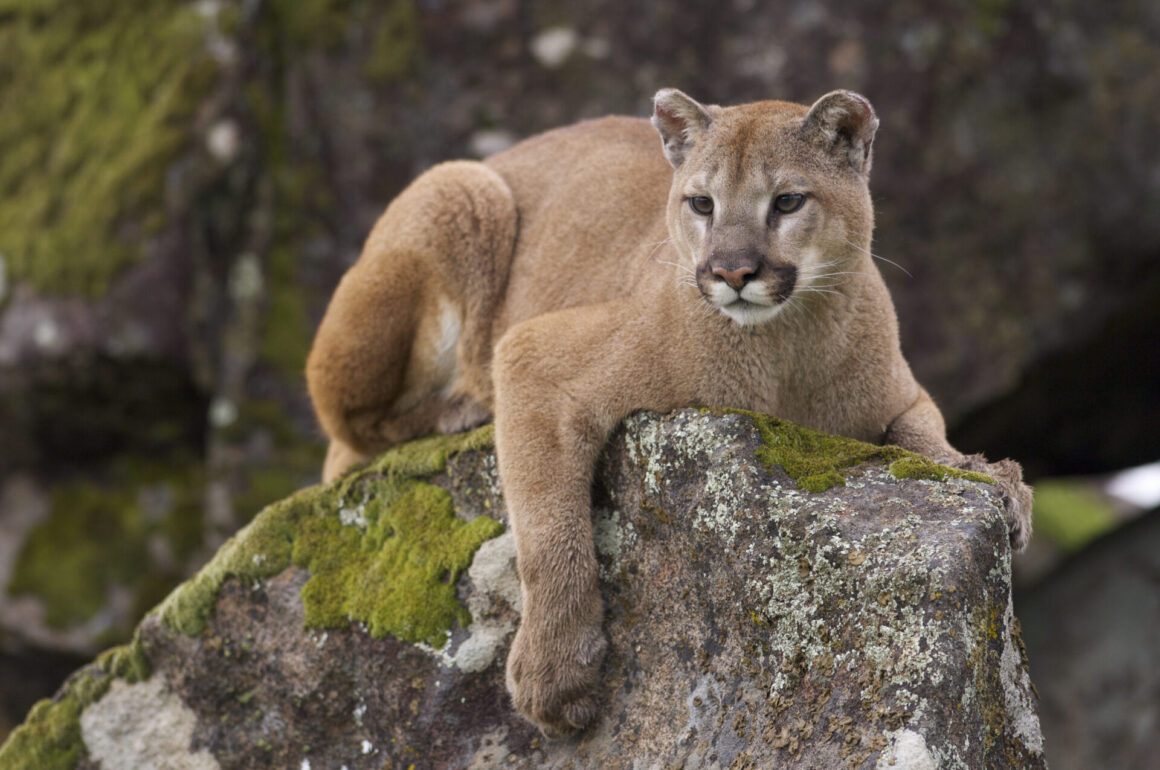
A “mountain lion” spotted near a trail in Ventura County, California, was actually just a house cat, authorities said this week.
California’s Department of Fisheries and Wildlife dispatched staff to the area in question, the Los Padres trail in Thousand Oaks, after neighbors there reported what they thought was a baby mountain lion. One family had footage of the interloper captured on a doorbell camera.
The alleged puma turned out to be a house cat, which is a surprisingly common outcome when authorities look into alleged mountain lion sightings. Despite their size, pumas are genetically closer to felines — small and medium-size cats that can purr and meow — than they are to panthera, the genus that includes tigers, lions, jaguars and leopards.
Their gait is almost identical to that of familiar felis catus, their golden coats can look dark at night, and cats can look like pumas — or the other way around — when there’s not enough visual context to gauge the animal’s size, especially in footage captured on cell phones and security cameras, which are almost always equipped with digital zoom instead of the true optical variety.
We know what you’re thinking: this house cat must have been an impressive specimen if it was mistaken for a puma, so there’s a good chance it was Buddy. However, we can confirm that Buddy the Cat definitely was not wandering around California this week.
Novelist found solace in the company of cats
Author Caleb Carr passed away on May 23, and the Los Angeles Times has a nice tribute to him by a reporter who bonded with Carr over their shared love of cats. The writer, 68, had been suffering from cancer for some time.
Carr was known for his crime thrillers (The Alienist, The Angel of Darkness) and military history books, and he spent part of his career teaching military history at Bard College in New York. (Just a short ride from our own alma mater, Marist College.)
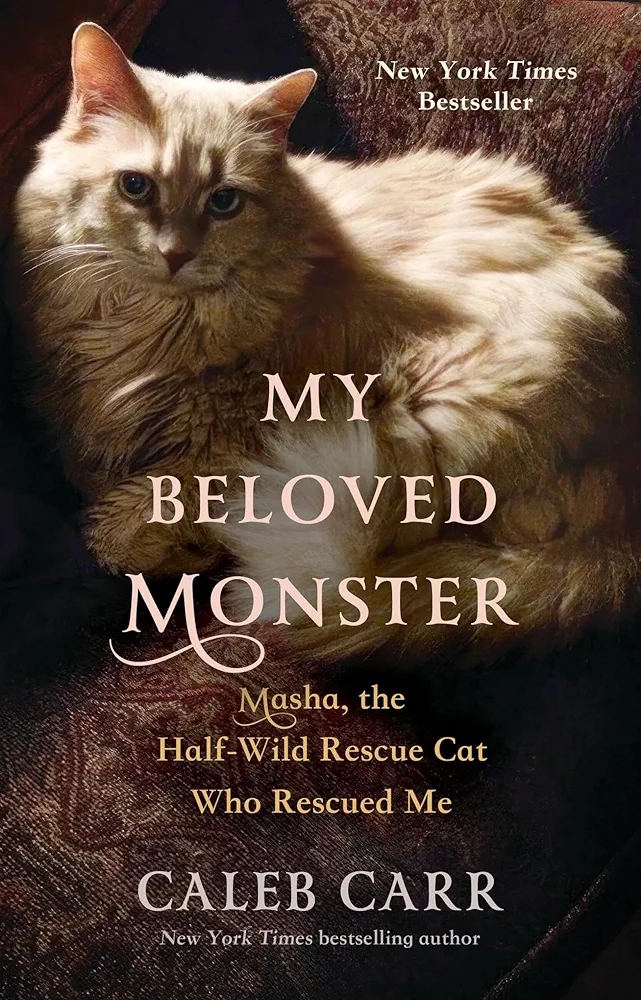
Carr’s last book is a tribute to his cat and her species.
Despite his publisher requesting another crime thriller, Carr decided his last book would be about a cat. Specifically his rescue cat Masha, who helped him through difficult times, and the cats of his childhood who comforted him when he was beaten by his father, Beat Generation figure and author Lucien Carr.
“It’s amazing to think about it now, but there were cats, and other animals, that were trying to make me feel better,” Caleb Carr told the Times. “The idea of that was so at odds with everything I was experiencing.”
Carr credits those felines for helping him avoid the abyss, telling the interviewer he “could have been one of those dead-eyed drone troublemakers that comes out of an abusive household very easily, if it hadn’t been for cats.”
Some people were disappointed that Carr didn’t have another novel like The Alienist in him, but Little, Brown publisher Bruce Nichols liked the idea, and the finished book was titled My Beloved Monster: Masha, The Half-Wild Rescue Cat Who Rescued Me.








 Pain In The Bud