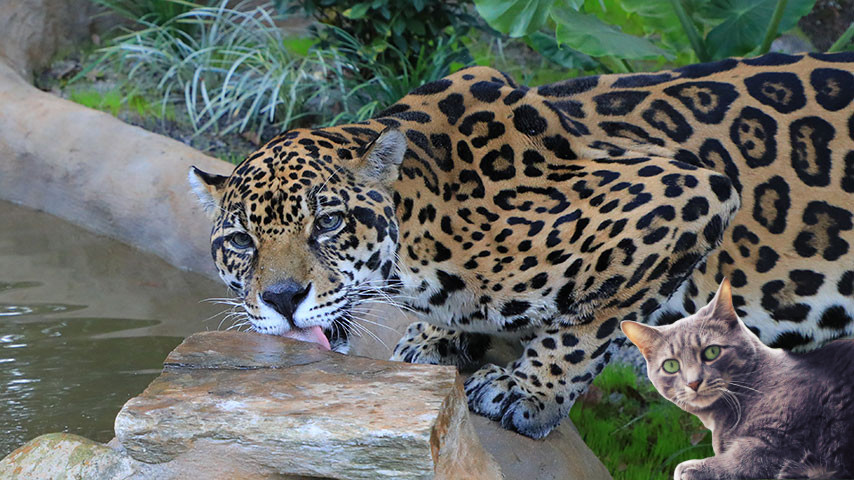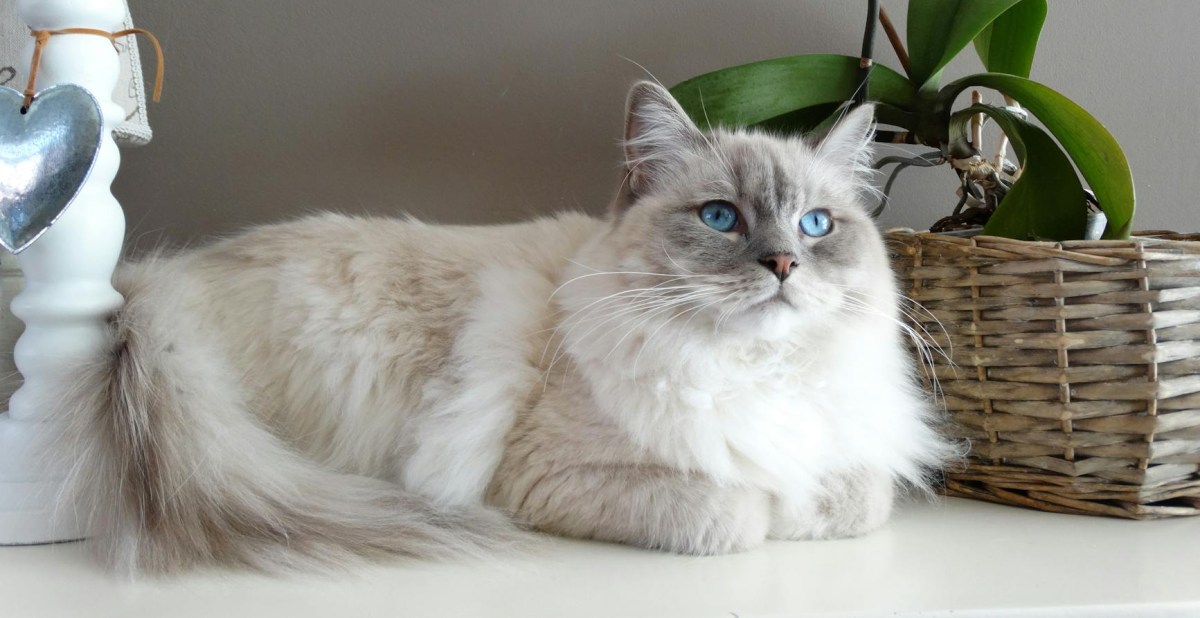
Matt Damon rescued a stray living on the periphery of a Costa Rican jungle.
Matt Damon stopped by the Late Show With Stephen Colbert this week, and somehow they got on the topic of Damon’s cat.
The Oppenheimer actor described how he and his wife gained the feline’s trust while staying at an AirBnB in Costa Rica. The cat, who was living on the edge of the nearby jungle and “fighting for his life every night,” gratefully accepted food from the Damons and grew to trust them over the month they spent at the rental.
“By the end we were like, ‘We have to take this cat. This guy’s gonna die. Now he’s relying on us.'”
It turns out the little brawler was done with living rough and enthusiastically took to the life of a pampered house cat.
“He moves into our house, and I’m thinking ‘I have a little yard out in LA, it’ll be great out there [for him],'” Damon told Colbert. “He never went outside ever again.”
Damon’s cat had a serious health scare, but the story has a happy ending and it’s better to hear Damon tell it, so turn up your speakers/headphones:
Yes, Damon’s cat may be “jacked,” and he may even be the Arnold Schwarzenegger of felines, but surely he doesn’t compare to the OG of ripped and meowscular cats.
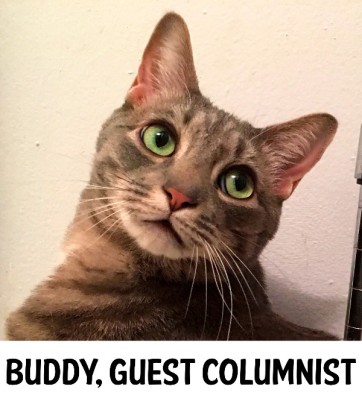
It’s that time of year when Buddy sprouts huge rabbit ears and becomes a cabbit– a hybrid cat-rabbit — for exactly 24 hours.
“I’m a rabbit?!? And a cat?!?! I’m the Easter Buddy!”
Although he’s preoccupied with thoughts that he probably tastes delicious, the Easter Buddy would like to wish all of you a Happy Easter!
The Budster and I would like to thank all of PITB’s readers, and we hope you’re getting to spend some time with your family if you celebrate Easter.
You can’t have a jaguar pet and you can’t have Buddy the Cat, but what if you could have a breed that combines the best features of both? You’d pay a lot for that, wouldn’t you? Good, ’cause they start at $10k!
SATIRE/CAT HUMOR
Inspired by the exclusive Ashera cat, we proudly present to you the Buddinese Jaguar, the pinnacle in feline luxury.
Why settle for a pedestrian Bengal or Savannah when you could own the ultimate in feline status symbols?
Our Buddinese Jaguars feature royal lineage, the finest genetic modifications, and they’re extremely handsome!
– Ultra exclusive luxury cat
– Available in hypoallergenic variants
– Version 2.15 now available!
– Patented SilkySmooth™ technology results in a luxuriously soft coat
– Eye colors available in Neon Emerald, Viridescent Beryl, Azure Sky, Amber Glow, Flecked Gold, Elvis Pink Cadillac, Crystal Cobalt and Electric Sapphire
– Optional moon roof
– Easy to use Quiet Mode™ technology guarantees your Buddinese Jaguar will shut up when you want it to
– Extended 5-year warranty
Each Buddinese Jaguar comes with a rapid USB 3.0 charger, a V8 engine that provides plenty of power for HyperZooms, and an Apple AirTag-enabled collar.
From kittenhood until adulthood, Buddinese Jaguars are exemplars of handsomeness.
In addition to guaranteed software updates for at least five years, your Buddinese Jaguar is equipped with onboard analog algorithms ensuring it downloads exclusively in its litter box and nowhere else.
Base models start at only $9,950! Hypoallergenic models with patented Fel-d-1 Guard™ technology available starting at $12,495.
We are an officially authorized retailer accredited by the Buddinese Jaguar Association and the Buddinese Authorized Distributor Association Service Standards (BADASS), awarded only to retailers who maintain the highest breed standards.
Like its jaguarundi forebears, the Buddinese Jaguar is an apex predator and is awesome at stalking the jungle.
About the breed:
The Buddinese Jaguar was developed by Buddesian Labs. Lead scientist Buddy the Cat tirelessly and selflessly engaged in coitus with 217 jaguarundi females, producing the magnificent offspring that would comprise the first generation of these extremely handsome cats. Using pioneering techniques in CRISPR gene-editing, Buddy did the impossible and improved upon perfection by eliminating allergens and adding even more meowscle mass.
Note: Buddy the Cat himself is not available for purchase, although he will entertain offers for his human.
Chief scientist Buddy recovers after selflessly and heroically engaging in coitus with 217 jaguarundi females in the name of science.
Cats have exceptional hearing abilities and can detect sounds in frequencies well beyond what the human ear is capable of hearing, but can they appreciate music?
The question of whether cats appreciate music is an interesting one, and we still don’t have definitive answers despite attempts to make music for our furry friends and study the way they respond to sound.
We’ve mentioned the ongoing efforts to make tunes for felines on this blog before, and previously experimented by playing composer David Teie‘s “Music for Cats“ for our brave volunteer, Buddy.
Excited by the possibility of music specifically designed for cats, and a study in the Journal of Feline Medicine and Surgery that found it had a calming effect on the species, we queued up a track and watched the Budster’s reaction:
“Using Buddy as my test subject, I went to Youtube, selected the track Cozmo’s Air from “Music for Cats” and sat back, expecting Bud to start nodding his furry head at any moment.
Instead his ears pricked up, did their radar-dish swivel toward the speakers, and his eyes went wide. As the song gained volume and intensity, Bud’s ears and whiskers snapped back and he let out a clearly anxious “yerrrrrrrrrrppp!” I tried to calm him down, to no avail, and a second track didn’t improve things.
He wasn’t having it.”
Over at Catster, Christopher Bays writes about his cat, Olga, and her relationship with music.
Olga “has listened to classic rock, jazz, blues, classical, heavy metal, punk (or new wave?), and accordion tunes from Hungary, and it all sounds the same to her,” Bays concludes.
“Spinning the megamix, bro.”/PITB
Noting that our tastes change as we age, Bays said he’s thankful Olga wasn’t around during his teenage punk and metal phase (ditto), and notes she’s not particularly interested in any sounds coming from electronic devices, with the exception of the roaring MGM lion. (Fun fact: The famous “lion’s roar” is actually a recording of a tiger played over footage of a lion yawning. The creators apparently felt lions don’t sound sufficiently badass enough.)
Bays points out our cats don’t exactly have control over what we play, and while that’s true, if you’re a genre-hopper like me, you’ve probably observed your furry friend’s reaction to various types of music.
Given the fact that the small amount of research done so far indicates cats do respond to tunes — and the existence of music-loving animals like Kiki and Snowball — I think felines probably are capable of enjoying the organized, rhythmic arrangements of sounds we call music.
I can’t say whether a favorite track can unleash a wave of emotion, nostalgia or energy the way it can for us humans, but I’ve played a lot of music around Bud and even played music for him on my guitar and keyboard.
He seems very comfortable with old jazz, soul and funk, he comfortably loafs when I’m in the mood for classic 90s hip hop, and he seems to tolerate the prog rock of Coheed and Cambria well enough. More recently he’s been on a 90s nostalgia trip with me: Blues Traveler, the Spin Doctors, Nirvana, Oasis, Better Than Ezra, Letters to Cleo, Ash, Weezer, Blur, The Roots.
And he seems especially chill in the sonic presence of synthwave, also called retrowave, an EDM-inflected genre that evokes nostalgia for an era that never really existed outside of 80s retrofuturism. It’s highly rhythmic, with steady 4/4 beats and vintage synthesizers cranking out arpeggios that rise and fall like waves, which may be a source of comfort to a species that likes things just the way they are without any big surprises.
Have you noticed your cats responding to music? What’s your kitty’s favorite genre or song? Is there anything they clearly don’t like?
A cat eating at the table with his humans? Let’s hope Bud doesn’t get any ideas!
File this under “Information that must be hidden from Buddy at all cost, lest he get ideas.”
Franklin, a cat who lives in Brooklyn, has gone from fending for himself on the streets of New York to a very comfortable indoor existence with two humans who are happy to let him sit at the table with them for meals. Bowls? Pfffft. Franklin drinks from his own glass:
Credit: Andrea and Alice via Newsweek
As the dutiful servant to a cat who most definitely believes he’s a human — or should have all the privileges and none of the responsibilities of one — this makes me uneasy. If Bud were to somehow find out about this, all hell would break loose and before I know it he’ll be demanding custom cutlery and a silk pillow on which to rest his behind and elevate him to the level of the table.
As a vegetarian I don’t necessarily have to worry about Bud eating my food, but he sure does love sticking his face in it and giving it an exploratory lick or three.
“Is that…? Dude, let me in there, I just wanna stick my face in your mashed potatoes and confirm I don’t like them,” I imagine him saying. “Yep. Still don’t like them. Oh stop being so dramatic, you can pick the fur out!”
A reasonable take on the kitten/climate change claims
The Grist has a new story about the alleged connection between an “increase” in kittens and climate change, and while it unfortunately links to one of the bunk studies that uses meta-analysis to make wild claims about feline impact on the environment, it does include the most measured and reasonable take so far on the claims:
“Others, like Peter J. Wolf, a senior strategist at the Best Friends Animal Society, think the increase comes down to visibility rather than anything biological. As the weather warms, Wolf said people may be getting out more and noticing kittens earlier in the year than before. Then they bring them into shelters, resulting in rescue groups feeling like kitten season is starting earlier.”
As we noted on Sunday, the claim that there are more kittens, or that kitten season is longer, is entirely dependent on anecdotal evidence. Unfortunately no one has any data for baseline population numbers when it comes to cats in the US, let alone historical data that allows us to say there are more kittens born in recent years.
The best we’ve got is the excellent but single-city DC Cat Count, and to establish a convincing link between climate change and kittens we’d not only need hard data, but we’d also need to eliminate dozens of other potential factors like ever-increasing light pollution, urban heat islands and wave effects from 2020, when society went into lockdown and animals were mostly left to their own devices.
Once again, there’s only one measurement that really matters in the end, and that’s the number of cats euthanized annually because there aren’t homes for them. Spaying/neutering and education efforts have driven that number down dramatically over the past 20 years, and ultimately that’s the best solution we have.