The huge Bengal may be the biggest tiger in India, and has already become a draw for tourists visiting from other parts of the country.
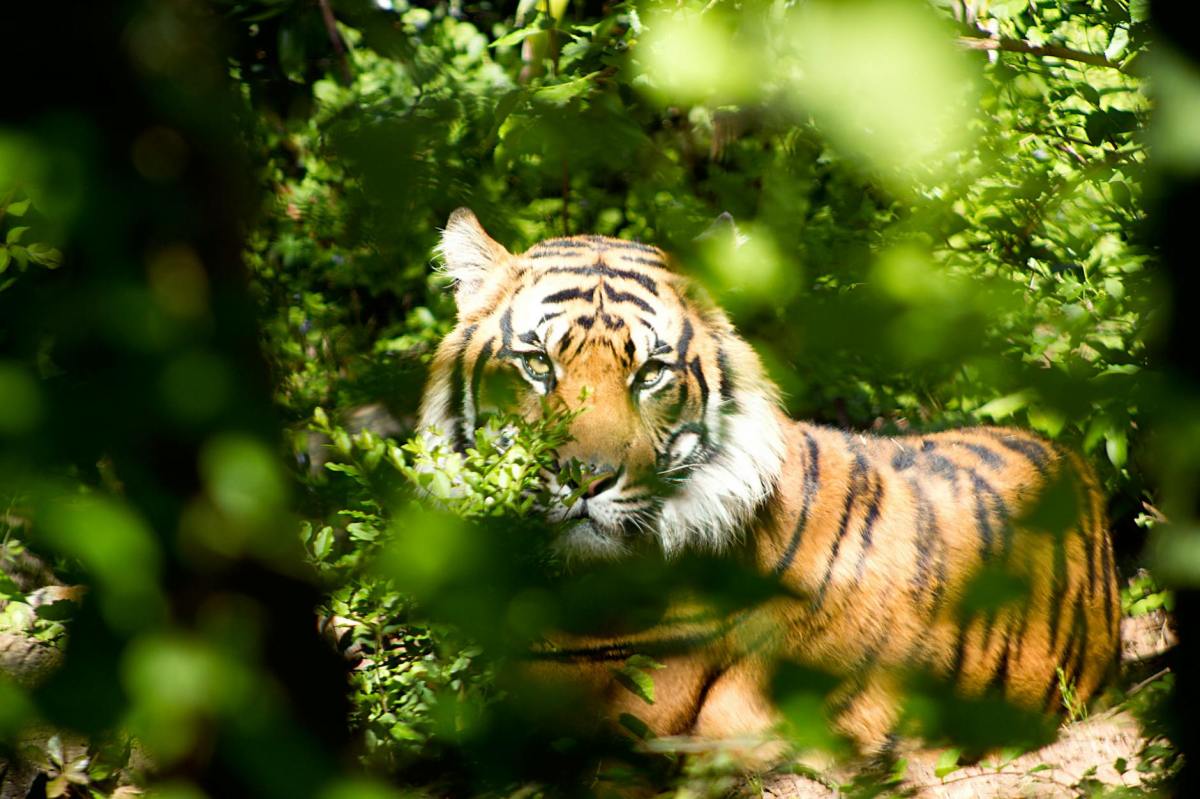
Hercules looks like a heavyweight boxer reincarnated as a tiger.
The massive apex predator was virtually unknown outside of India’s Kumaon district until this week, when a tourist posted a short video of the nearly 700-pound animal lumbering out of the brush and into clear view as he crossed a dirt path between rural villages.
The Bengal, who may be the biggest cat in India, is majestic. His gait is leisurely, as if he knows that anyone or anything he may encounter will clear a path the moment they see him. His fur doesn’t hide the rippling muscle underneath, and as he spots a group of tourists with cameras aimed at him, he bares his teeth momentarily, then pretends as if they don’t exist as he takes his sweet time crossing the path.
“In my entire career, I have never seen such a giant tiger,” Prakesh Arya, a divisional forest officer, told the New Indian Express.
For conservationists, tourists and the government of India, whose national animal is the Bengal, Hercules’ existence is proof that Project Tiger is on the right track. The project is a national effort to save the iconic species, grow its population, and protect it from poachers.
Hercules’ territory includes Ramnagar, a town in northern India known as they gateway to Jim Corbett National Park. The preserve is named after the renowned tiger hunter who took down the Demon of Champawat, a tigress who had killed at least 435 people during a decade-long rein of terror.
Corbett, who described tigers as “large-hearted gentlemen” who were unfairly maligned, was known for his prowess in hunting down man-eating tigers and leopards, but later in life he turned to conservation, realizing that Earth’s biggest cats were in danger of extinction if drastic efforts weren’t taken to save them. That was a century ago.
Now India devotes significant resources to their protection and well-being, with an entire corps of dedicated professional rangers and anti-poaching teams tracking the animals and constantly patrolling the vast country’s 58 tiger preserves, which cover 82,836.44 square kilometers.
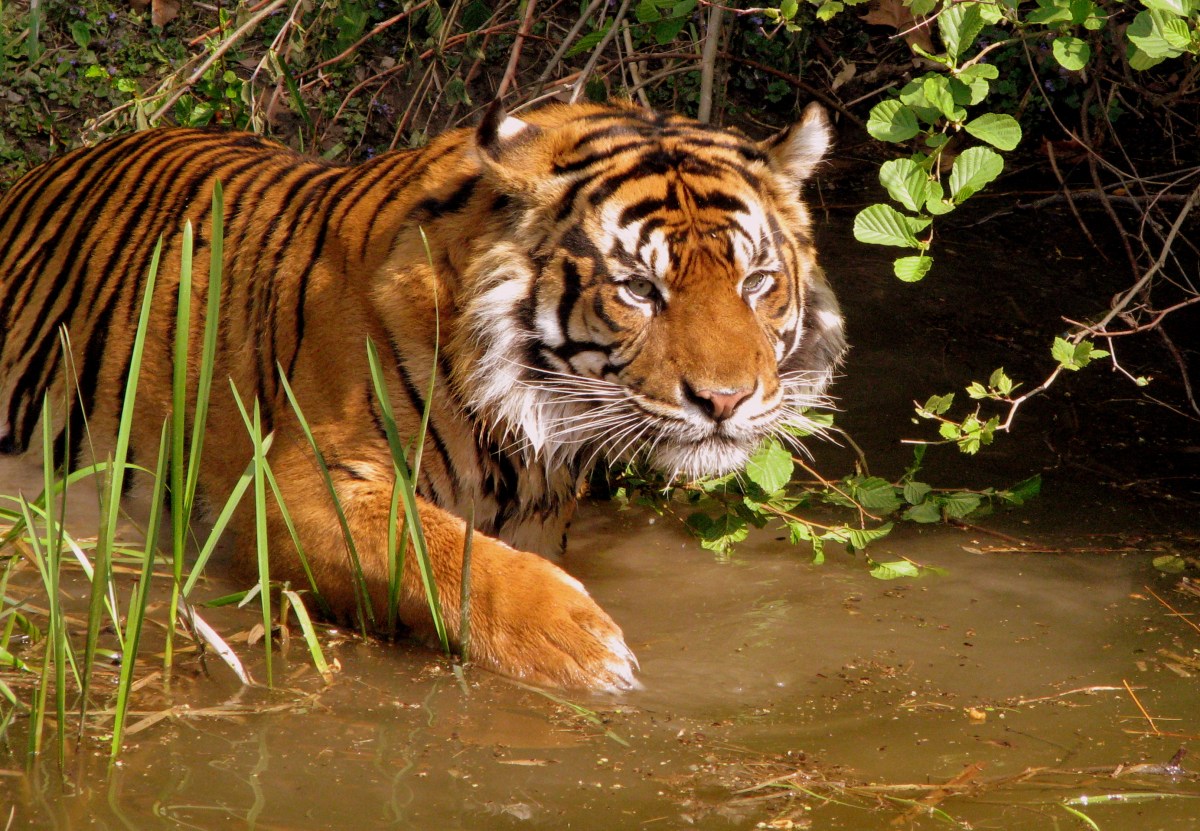
A large tiger cools off in water on a hot day. Credit: Warren Garst/Wikimedia Commons, Colorado State University Library
For tigers like Hercules, having large contiguous ranges gives them the chance to live the way nature intended. Experts say the abundance of prey in the reserves, especially in the region Hercules calls home, has resulted in larger, more robust cats of the type that were once a memory.
“This is a clear symbol of the rich biodiversity and the success of our management efforts in this forest area,” Arya said.
In turn, the presence of the iconic cats has revitalized tourism. Tourists who have seen Hercules described the experience as “overwhelming.”
“Seeing ‘Hercules’ was an unforgettable experience,” Priya Sharma, a tourist from Delhi, told the Express.
For tigers, going for a dip on a hot day is pure bliss.
Most cats wouldn’t go near water if even if you lured them with a giant spread of catnip and Temptations on an inflatable table.
But tigers? They love it. Here are some shots of the world’s biggest cats taking a dip.
A Malayan tiger named Azul going for a swim at the Bronx Zoo. Credit: Julie Marsen Laher, Wildlife Conservation Society
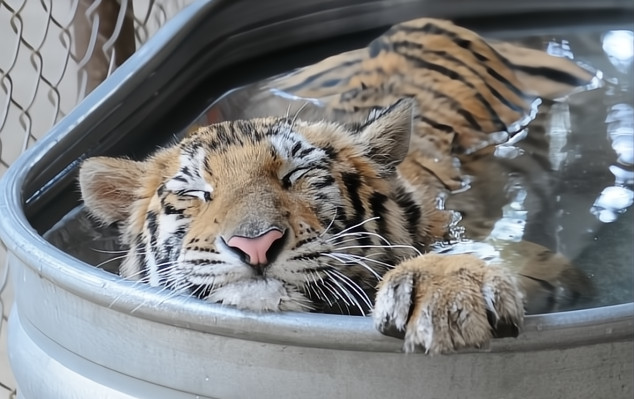
Siberian tigers in a tub at a sanctuary in Russia. Credit: digger03/Flickr
This meme made me laugh.
Aasha was rescued from a traveling circus after an inspector found her sickly, suffering from ringworm and only 30 pounds at 8 months old. She’s flourished since she was brought to a sanctuary where she’s been given proper care, a good diet and a calm environment. Aasha is also pictured in the feature photo up top.
A tigress and her cubs cooling off in a river in India. Credit: Sandesh Kadur
Sundarban tigers are a subspecies of the Bengal who live in mangrove forests and are well-adapted to swimming. This Sundarban tiger was spotted on a wildlife tour in India. Credit: Soumyajit Nandy/Wikimedia Commons
This tiger cooled off on a hot day at the Dortmund Zoological Garden in Dortmund, Germany. Credit: Hans Stieglitz/Wikimedia Commons
Tiger attacks are a real danger in rural India, where the big cats kill people and livestock. To protect the species, the government pulls off a difficult balancing act aimed at minimizing inter-species conflict.
In his memoir, Man-Eaters of Kumaon, legendary tiger hunter (and later staunch conservationist) Jim Corbett described how he and his men arrived to find a ghost town when they tracked a man-eating tiger to a rural village.
Every door was closed and locked, shutters were closed tight, and despite the fact that it was harvest time, not a single person was working the nearby fields.
The people who lived there had good reason to be petrified. The infamous Champawat tigress had killed more than 430 people by that point, including a young woman from the village just a few days earlier. Usually the tigress would vanish from an area after a kill, frustrating locals and hunters by popping up virtually anywhere in a 50-mile radius, but for some reason she stuck around the village and sat on the outskirts at night, keeping the local people awake with her calls.
Corbett’s famed hunt of the “demon of Champawat” happened in 1907, and although it might sound like a problem from the past, it’s current reality for people in parts of India, Nepal and, to a lesser extent, the sparsely populated mountain forests in eastern Russia.
In Garwha and Ranchi, two towns in eastern India about 215km (133 miles) apart, “villagers have stopped using forest routes to reach markets and are reluctant to leave their homes for work,” the Times of India reported on Monday.
That’s because hungry tigers have been on the prowl, demonstrating little fear of people as they help themselves to livestock. Between Jan. 1 and Jan. 6, the tigers killed and ate three cattle and a buffalo.
Tigers require large, contiguous tracks of land measuring in the hundreds of square miles. India and Russia have both set aside massive preserves for the apex predators to increase their numbers in the wild. Image credit: Wikimedia Commons
So far they’ve eluded camera traps, but forest rangers say they believe there are two tigers because of the distance between Garwha and Ranchi, which is almost three times the typical tiger range.
In places where big cats live in proximity to humans, especially farmers, the government pays compensation to the owners of livestock killed and eaten by the predators.
There’s also a separate, more controversial compensation program for the families of people killed by tigers. Recent court cases in the country have hinged on the cold calculations of attaching monetary value to human life, and whether families are owed compensation if their relatives knowingly entered tiger preserves.
For India, it’s part of a delicate balancing act between conserving the country’s national animal and one of nature’s most beloved species, and avoiding the ire of people who are impacted by their presence. When big cats prey on livestock, if the government does not address the situation, locals will eventually take matters into their own hands and try to kill the apex predators. That usually doesn’t work out well for either side.
On average, about 60 people are killed each year by tigers in India, according to government statistics. There’s been a sharp increase in victims in recent years, with tigers taking 110 human lives in 2022 and 83 in 2023, although it’s not yet clear why.
As for livestock, a 2018 study by wildlife biologists with the Corbett Foundation documented 8,365 reported instances of big cats killing cattle, buffalo and other animals between 2006 and 2015. That works out to about 830 per year, with tigers responsible for 570 livestock kills on average and leopards responsible for the rest.
To reduce the number of inter-species conflicts, the government of India has relocated thousands of families away from the country’s 27 tiger preserves in addition to compensating farmers for their losses.
A tiger cub on a preserve in India. Credit: Wikimedia Commons
On a tangential note, this is another reason why the persistent claims of big cats stalking the British countryside strain credulity.
To paraphrase wildlife conservationist Egil Droge of the University of Oxford, when big cats live in an area, you know it because the signs are everywhere — massive and unmistakable pug marks (paw prints) on the ground, trees left with deep gauges by males marking their territory, and dung also serving as a territorial marker.
“I’ve worked with large carnivores in Africa since 2007 and it’s obvious if big cats are around. You would regularly come across prints of their paws along roads. The rasping sound of a leopard’s roar can be heard from several kilometres,” Droge wrote in a 2023 post about alleged big cat sightings in the UK.
Last but not least, big cats eat. A lot. A reliable supply of large prey animals is necessary to support even the smallest of breeding populations, and felids of all species are known to go for easy meals — in this case livestock — when the opportunity presents itself.
Still, the idea refuses to die, and there are still regular reports from people who have seen large cats and insist they’re not our domesticated friends.
“So we left the sheep there at the edge of the field and made sure the lady saw us before we buggered off over the fence. Next day, we was in all the papers! A right laugh that was, mate.”
Cats of all kinds are at risk of avian flu infection if they hunt birds outdoors, consume raw meat or drink unpasteurized milk.
In a tragedy that underscores how vulnerable cats of all types are to bird flu, more than half the big cats residing at a sanctuary in Washington were killed by the virus in less than a month.
Twenty cats in total died at the Wild Felid Advocacy Center, including five servals, four bobcats, two Canada lynx and a Bengal tiger.
Only 17 cats are left at the sanctuary, according to its operators.
Mark Matthews, the sanctuary director, called the H5N1 avian influenza a “wicked virus” that killed the cats in his organization’s care within 24 hours of each animal contracting it.
“We’ve never had anything like this,” Matthews said, adding that he and his staff are accustomed to cats in their care dying of old age after living long, happy lives.
In California, Gov. Gavin Newsom declared a state of emergency on Dec. 18 after infected birds were found at more than two thirds of the state’s dairy producers.
California’s dairy industry has been hit hard by the spread of bird flu, with more than half the state’s dairy producers impacted. Credit: Ralf R/Pexels
As of Dec. 26, bird flu had infected 65 Americans, the majority in California.
And the virus has now resulted in its first pet food recall, with Northwest Naturals pulling its turkey recipe “raw diet” food. A cat in Oregon died after consuming the food, according to the Oregon Agriculture Department.
As we noted in our earlier post about the variant of avian influenza, there’s no reason to panic. Even if you live on the west coast, the chances of your cats being infected are small.
But it’s probably a good idea to make sure your cats remain indoors, as health authorities warn cats can contract the virus directly by catching and eating birds. In one case, health officials believe three indoor cats may have caught the virus after killing mice in their home.
In addition, the American Veterinary Medical Association advises caretakers to avoid giving their cats milk, which they should not be drinking anyway, and raw meat. Domestic cats are generally lactose intolerant, and while cats can be infected with bird flu by eating raw poultry, they can also contract the virus by eating raw meat from other animals.
Roadside zoos persist despite recent law changes, but even the best zoos fail to provide adequate facilities and enrichment for big cats, the report found.
The Amur tigress at Bearsdley Zoo is the lone occupant of her enclosure, which is large by the zoo’s standards, outfitted with a pool, toys and other enrichment, but small compared to what her natural range would be.
When I visited last summer, I spent the better part of an hour watching her pace the perimeter of her enclosure, walking in an endless loop as if in a daze, never stopping, altering her stride or reacting to anything.
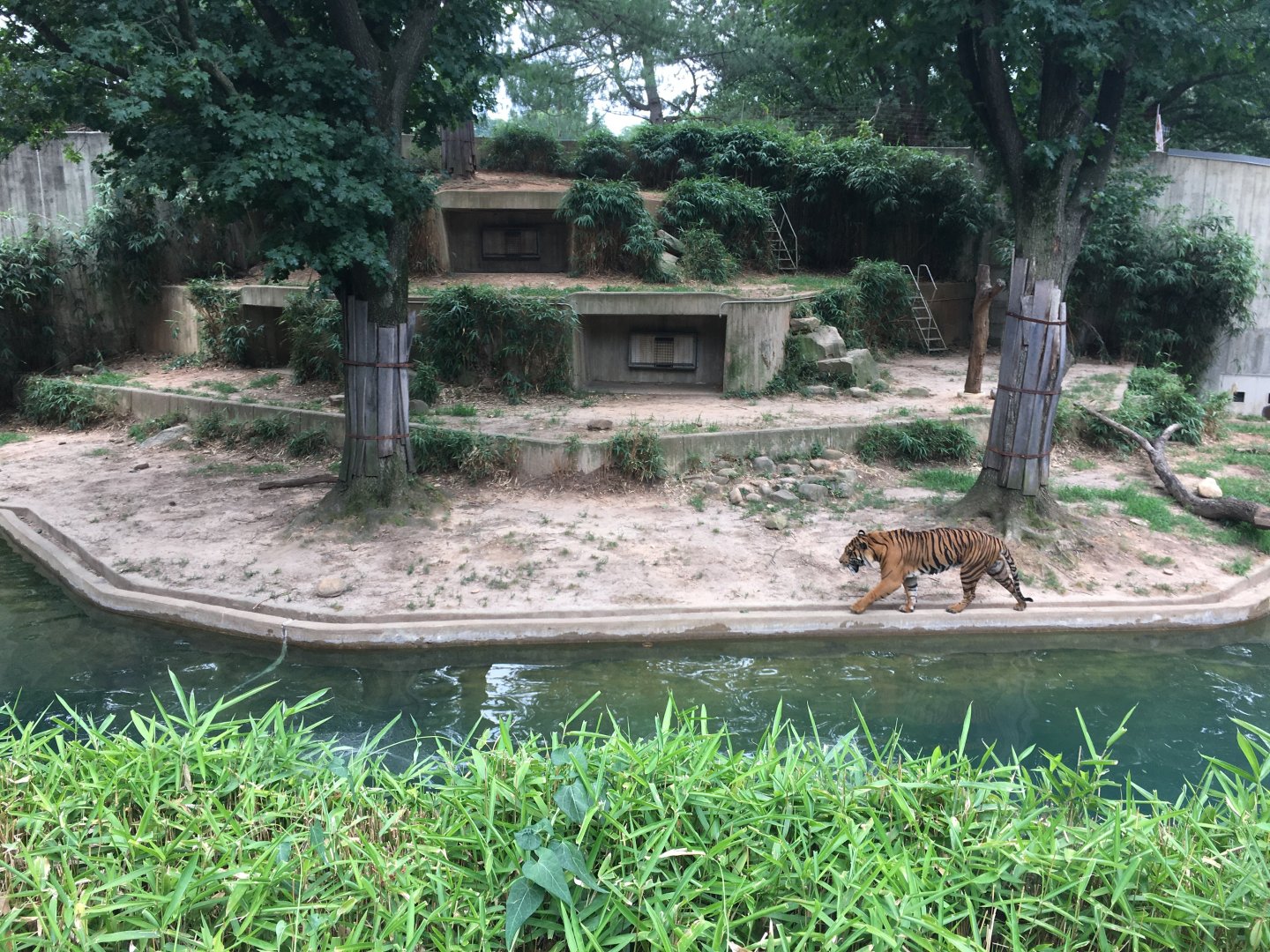
But what made me realize how bad captivity really is for big cats was what I saw at the Smithsonian National Zoo, a well-funded world class facility. The tigers there have two outdoor enclosures with a topographic design: they’re vertical spaces separated into tiers, with large trees and narrow “caves” for shelter from the elements. Both enclosures are surrounded by wide moats that ring the perimeter just inside the security fencing.
One of two similar Bengal tiger habitats in the Smithsonian National Zoo in Washington. Credit: ZooChat
It was feeding time on a hot summer day. Lionesses chowed down on large slabs of meat and licked blocks of ice, but the lone male tiger next door was pacing in a circle. He paced and paced, covering the same 10 to 12 feet, ignoring his food. I watched him for a long time. His behavior was a clear sign of zoochosis.
If a tiger in a national accredited zoo — where an entire team of keepers and caretakers is responsible for enrichment and welfare — suffers from clear signs of captivity-induced distress, what chance do tigers in other facilities have?
When we think of big cats suffering in captivity, we think of the roadside zoos where the Joe Exotics and Doc Antles of the world exploit them for financial gain, drug them, force them to take selfies with visitors and keep them in cruel conditions. But a new report from Born Free USA goes beyond roadside zoos and says big cat arrangements, even in the best zoos, are inappropriate, unhealthy and demoralizing for the animals.
“Unable to escape the crowds of humans, unable to follow some of their fundamental urges such as hunting and roaming over large distances, unable to fulfil their social needs – whether that be living solitarily or forming a pride with others – big cats show us their mental anguish by adopting abnormal behaviors,” reads the report [PDF], Clawing at the Cages. “These behaviors, known as stereotypies, manifest in obsessive pacing. Some big cats spend most of their days tracing the same, short, tedious route around their enclosures. This behavior is a recognized sign of stress, and only documented in captive animals.”
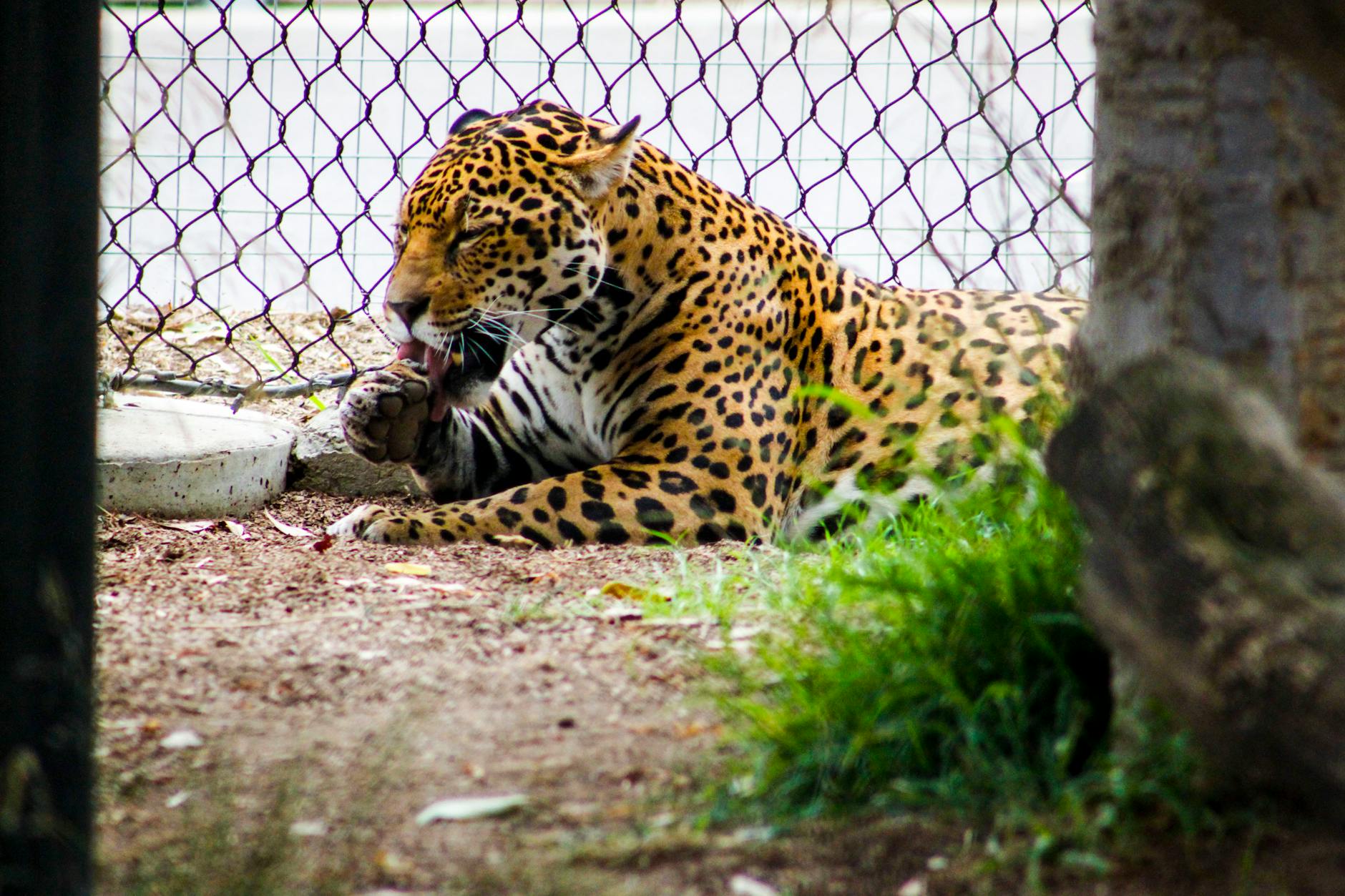
A captive jaguar. Credit: Yigithan/Pexels
The wild lives of animals like tigers are fundamentally at odds with the concept of zoos. In the wild, tigers range up to 50 miles in a single day, occupying vast ranges. Male tigers protect their home ranges, their mates and their cubs from other males as well as threats of all sorts.
That sort of lifestyle, which is hard-coded into their DNA, is not compatible with a guest-oriented operation in which habitats are designed primarily to give people the best view of the animals.
Lions might have it slightly better, though that’s arguable. As a social species they can interact with each other and they tend to have larger enclosures, but zoos rarely group animals according to their preferred family units or prides, instead matching individuals according to breeding plans as part of conservation efforts.
Yet even the conservation aspect is iffy, according to Born Free USA. Because of restrictions on “importing” animals and a population that is descended from just a handful of big cats, inbreeding is rampant. There’s a lack of scientific research on the captive zoo-held population, but the authors cite a 1983 study that found “six animals out of the approximately 1,000 Siberian tigers held in zoos in 1983 were responsible for 69.4% of the founder representation of the living population at that time. 70% of the population had a positive inbreeding
coefficient.”
Because little has been done to remedy that genetic bottleneck, “genetic viability remains low, and inbreeding of big cats in zoos can only have increased in the intervening years since these studies,” the report states.
Inbred cats suffer more health problems, don’t live as long and are much more susceptible to birth defects.
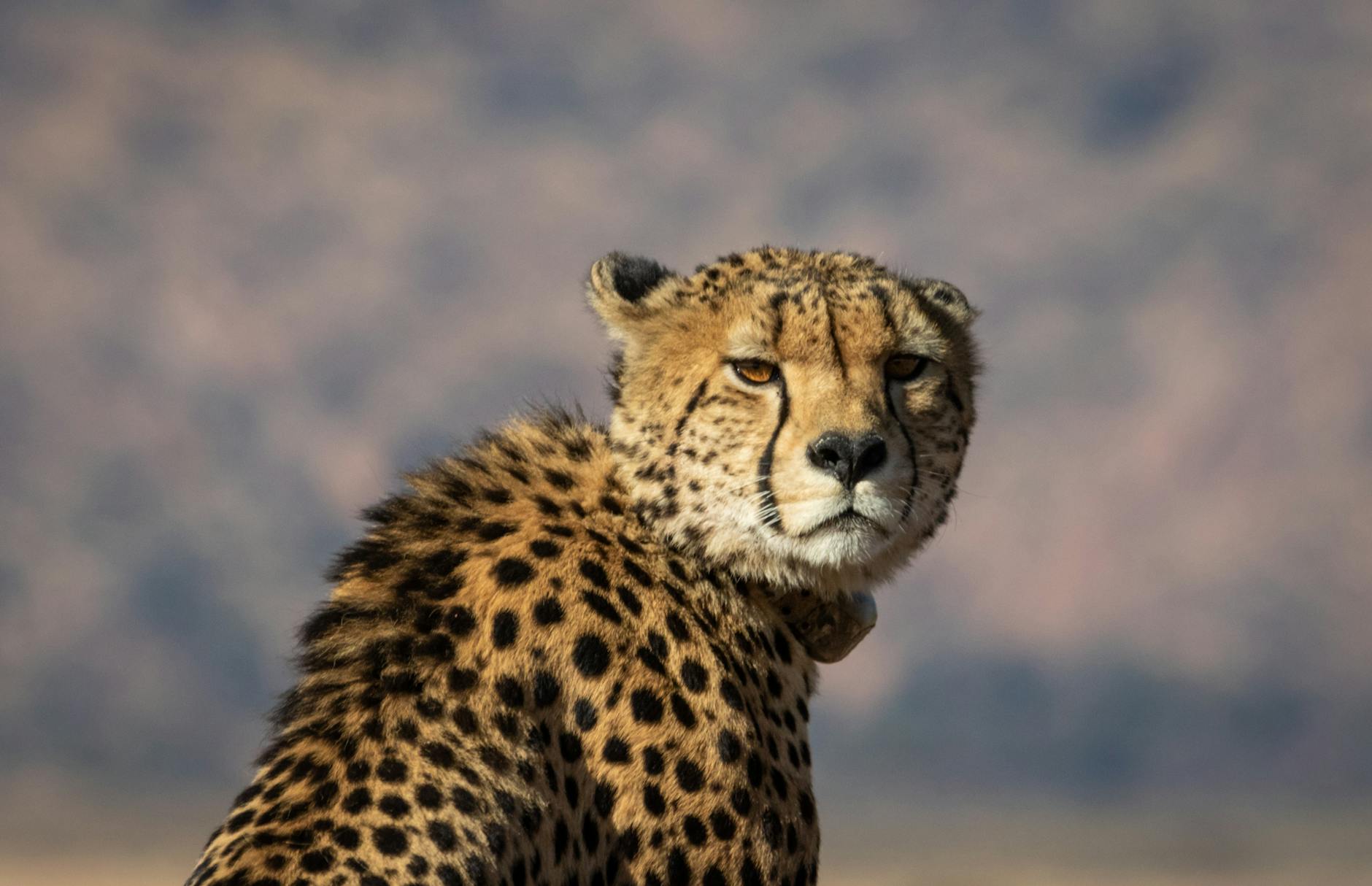
A cheetah. Credit: Magda Ehlers/Pexels
Despite the passing of the Big Cat Public Safety Act, Born Free USA’s report notes, roadside zoos still exist, and many of them have simply ignored the new laws because their operators know inspectors are overworked and lack manpower. Years can elapse between inspections, even at roadside zoos operated by serial offenders with long histories of keeping animals in abysmal conditions.
For example, Single Vision of Melrose, Florida — which bills itself as a “conservation” facility — openly flaunts its mistreatment of big cats with enormously popular video content from “Safari Sammie” on Youtube, TikTok and Instagram, despite the fact that it’s been the subject of dozens of violations and has an ignominious record when it comes to the health of its big cats. The facility was charged with 20 violations of animal rights laws in the previous two years, and has had multiple cases of animals dying due to neglect, yet continues to sell “experiences” in which “guests” can interact with heavily sedated tigers, jaguars, cheetahs and other wild cats.
In her videos, “Safari Sammie” — an employee of Single Vision — is routinely seen interacting directly with the apex predators, treating them like house cats and creating dangerous situations.
Other roadside zoos and animal “experience” operators continue to intentionally inbreed big cats to create “exotic” white tigers as well as ligers, tigons and other hybrids that aren’t found in the wild but are big attractions.
Overall, the report found:
Zoos fail to provide adequate environments for big cats, including lack of space, lack of ability to hide from public view, and the regular practice of locking big cats in tiny night quarters during the hours when zoos are
closed. The latter often results in big cats spending the vast majority of their time significantly confined.
Social and behavioral needs are not met in zoos. For example, solitary big cats are often forced to live with conspecifics, and social big cats are prevented from creating natural prides. Big cats are prevented from
hunting live prey – a behavior fundamental to them – while often housed alongside prey animals who also suffer stress from being forced to live near predators.
Inbreeding of big cats has become commonplace due to limited genetic diversity among captive populations, as well as unethical and deliberate inbreeding of color morphs such as white tigers and lions,
resulting in significant health issues for the cats involved.
Due to the inbreeding of big cats in zoos, as well as their habituation to humans, big cats kept in zoos are generally not candidates for release to the wild. As such, extensive and ongoing breeding programs simply serve to ensure that zoos remain “stocked” with these animals.
Monitoring of data on big cats in captivity is incomplete, with significant numbers of individuals disappearing from studbooks – the databases ostensibly responsible for tracking living big cats in captive facilities.
The licensing system intended to implement the Animal Welfare Act in the United States only achieves superficial monitoring of big cats in zoos, due in part to its risk-based assessment protocols as well as lack of meaningful
information in reporting that would allow effective public understanding and external expert oversight.
Despite the introduction of the Big Cat Public Safety Act in the U.S. in early 2023, some facilities continue to engage in dangerous activities with big cats, both in violation of, and in compliance with the new law.
Zoos around the world have killed healthy big cats due to overcrowding and lack of perceived usefulness to breeding programs. Other healthy big cats have been killed when human error or enclosure failure allowed their escape, or when attacked by conspecifics in their enclosures.
Due to all the issues above, and others, the overall health and welfare of big cats is compromised in zoos. This results in high mortality (particularly in infants), and recognizable signs of stress in the form of significant occurrences of stereotypic behaviors.
The report includes detailed anecdotes of typical problems in captive situations involving jaguars, lions, tigers and cheetahs, documents persistent problems with habitat design and security, and outlines loopholes and other problems with existing laws, which still don’t go far enough to ensure some of the world’s most iconic apex predators aren’t exploited and forced to endure lifelong misery.
You can find the report’s landing page, with links to a petition, a summary and the full text here.







 Pain In The Bud