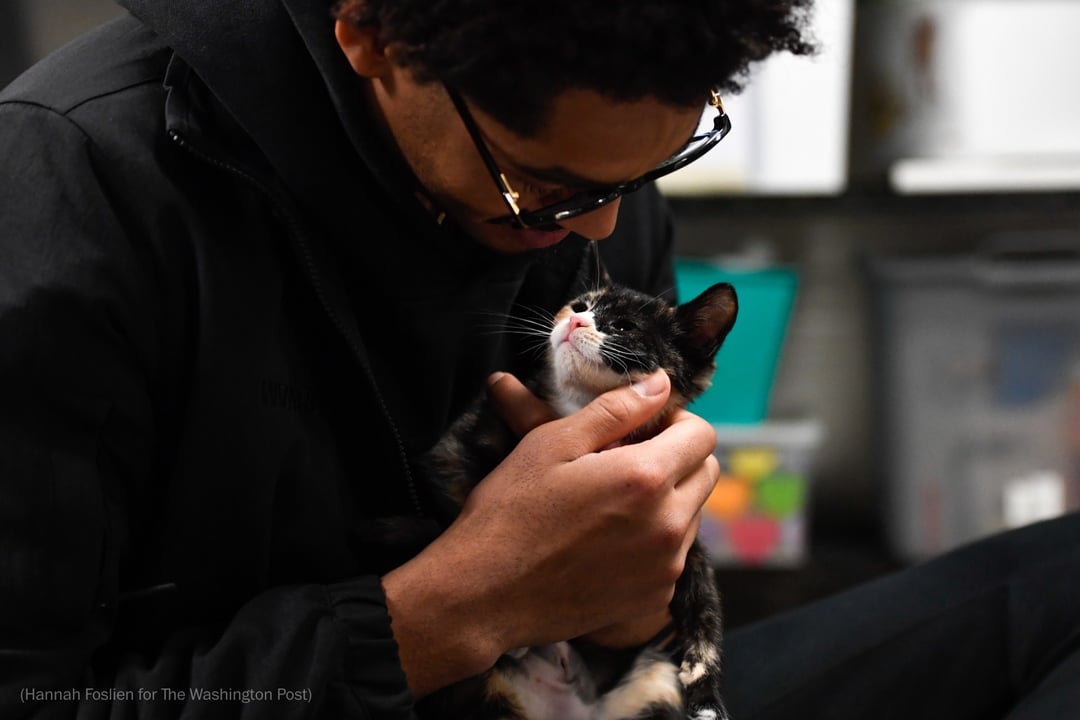
The Washington Wizards’ Jordan Poole loves cats, and he’s showing his fellow NBA players what awesome little buddies they can be.
Jordan Poole finds it difficult to leave the Falls Church, Va., animal shelter where he volunteers.
He likes the staff and fellow volunteers, but most of all he hates leaving while knowing the cats he’s interacted with still need homes.
“Every time I come, it’s: ‘Let me leave with all of them! Give me 14 of them right now!’” he joked to the Washington Post’s Candace Buckner, who calls him “the lead crusader of the Secret Society of NBA Cat Dads.”
Some aren’t so secret: teammate Tristan Vukcevic recently adopted a cat after Poole converted him to the dark side, and a coy Poole says he “may have” convinced NBA superstar Stephen Curry to adopt a feline friend.
Poole with one of his tabby cats, brothers he adopted together from a California shelter when he was with the Golden State Warriors. Credit: Jordan Poole/Instagram
In a 2022 profile in The Athletic, Poole’s mother Monet says her son adopted his first cat when he was in high school.
“And when I tell you he fell in love with cats,” she said. “He loves his cats. … And he’s got some pretty cats too.”
When Poole was drafted by the Golden State Warriors in 2019, his cat stayed with his mom back in Michigan because she wouldn’t have adjusted well to the move to the west coast, as well as an empty apartment when Poole was on road trips with the team. Later that year, the then-rookie adopted brother cats who had been abandoned by their former owner.
Since he was traded to the Washington Wizards, Poole has volunteered at a Virginia shelter.
His enthusiasm is one reason why he’s been able to get teammate and friends interested in adopting. The NBA has other notable cat dads, including twins Brook and Robin Lopez, whose cats hilariously can’t stand each other. But Poole takes it to another level.
“A lot of guys are dog people, but just the energy [and] the way I talk about [cats], the pictures and videos and stuff that I show them, it just gives them a little bit more interest,” Poole told the Post. “So I give them a different perspective. Maybe they’re not as much maintenance, but they’re still a really dope companion and friend to have. You don’t have to really take them out three or four times a day. You can still get your rest. Normally [my peers] like to explore it. I’ve had a lot of friends and teammates who are also cat people.”
Former Knicks center Robin Lopez, pictured with his cat Edward, says his brother’s cat is sneaky and evil for attacking Edward: “The second I lay eyes on him, he’ll act like, ‘I’m a cherub. I’m innocent.’ I’m not buying it.”
The 25-year-old Poole is averaging 20.3 points, 4.8 assists, 3.1 rebounds and 1.5 steals per game this season while shooting an excellent .391 on three-point attempts. The 6’4″ guard spent his first four seasons with Golden State before he was traded to Washington.
A report commissioned by the Scottish government blames cats for killing 27 million birds annually in the country.
“They may take our lives, but they’ll never take our freedom! Except maybe to keep pet cats.”
Mel Gibson’s iconic pre-battle rallying cry as Braveheart’s William Wallace might have to be amended if some Scottish politicians get their way and restrict the ownership of pet cats.
Cat lovers in Scotland were up in arms this week after several reports in Scottish and UK media said the Scottish National Party — Scotland’s most powerful political party, which controls almost half the seats in its parliament — is looking to ban cats in a bid to protect local wildlife.
They point to a recently released Scottish Animal Welfare Commission (SAWC) report that claims there are some 800,000 outdoor cats roaming the country, and those felines are responsible for 27 million birds every year, in addition to small mammals.
Meanwhile, other Scottish press pushed back on the claim, saying the SNP hasn’t voted to ban cats yet and isn’t really looking to stop people from having pet cats.
A report from the Scottish government recommends restricting cats to indoors, among other measures. Credit: Wikimedia Commons
In addition to a law requiring people to keep their pet cats indoors, the report suggested curfews and, yes, legislation that would forbid people from keeping pet cats if they live in certain places deemed “vulnerable” to feline predatory habits. That means if wildlife biologists identify an endangered bird that nests in an area, for example, people who live there would not be permitted to have pet cats.
However, the report does not call for a general or widespread ban, as some media reports suggested.
The report credited Australia, where several states have enacted strict measures forbidding people from allowing their cats outside, prohibiting them from owning cats in some places, and even embarking on an infamous campaign to kill three million domestic cats by air-dropping sausages laced with a poison that is lethal to felines, but supposedly not harmful to other animals.
That measure preceded several years of “biblical” rodent plagues, with hordes of mice rampaging across entire swaths of the country and causing billions of dollars in damage to residential and commercial property. Cats are, of course, the natural predators of rodents, and domestic cats wouldn’t exist as a species if they weren’t attracted to human settlements where mice and rats feasted on grain reserves.
CreditL Wikimedia Commons
I haven’t had the chance to take a deep dive into the SAWC report yet, so I don’t know precisely how the commission arrived at the numbers it did, or if the research is original. Hopefully I’ll have a follow up on that soon.
While the truth is somewhere in the middle, so is the solution. People who love cats are happy to voluntarily meet certain guidelines, and they should be, because if we’re uncooperative, someone will eventually turn to compulsion through law. Likewise, concern for the welfare of cats and wild animals aren’t mutually exclusive.
In the meantime, Scotland’s government is likely to spend more money studying the problem before acting.
Dissatisfied with the limited variety of flavors and textures in his regular meal rotation, Buddy the Cat unveiled a sweeping new sanctions package designed to force his human to do better.
NEW YORK — Angry over his servant’s failure to broaden his selection of regular meals, Buddy the Cat announced new sanctions on Saturday aimed at forcing the uncooperative human to comply.
“President Buddy feels he’s been patient and magnanimous in dealing with his human’s shortcomings, but even a saint’s patience has limits,” Buddy’s spokesman told reporters. “This new sanctions package clearly communicates President Buddy’s disappointment and ensures swift compliance.”
The sanctions include prohibitive measures against sleep duration and quality, with Buddy promising to yowl at regular intervals and to wake his human by slapping him in the face every morning.
In addition, affection will be cut by 50 percent, increasing to 75 percent within two weeks if there is no improvement in the variety of flavors and textures of wet food served to Buddy.
“Buddy has made it clear that he expects more than a simple rotation of turkey, chicken and salmon pate,” the feline’s spokesman said. “He wants chunky tuna, he wants beef, he wants shredded duck served in gravy.”
President Buddy had threatened to pull his ambassadors and enact legislation declaring all shoes, sneakers and boots as legal litter boxes if the cheese sharing protocol was not observed. Credit: Wikimedia Commons
The latest round of sanctions follows the Buddesian Diplomatic Crisis of 2023, when Buddy threatened to begin using his Big Buddy’s shoes, boots and sneakers as litter boxes in retaliation for the latter failing to “equitably share cheese as per article IV, sub-clause C of the gastronomic distribution protocol.”
All-out war was avoided when both parties agreed that Little Buddy’s share of Gouda, American, provolone and other cheeses, excluding ricotta, feta and mozzarella, would be increased by 15 percent.
Angry locals say they’ll kill the tiger if forest rangers do not after the predator ambushed and ate a mother of two in southern India on Friday.
Forest rangers are on the hunt to capture a man-eating tiger who killed a woman and dragged her body into a forest on Friday, while frustrated locals say they’ll destroy the predator if the government does not.
The victim, a 45-year-old woman named Radha, was employed by a local coffee plantation in Mananthavady and was harvesting coffee beans when the big cat ambushed her, according to multiple reports in local media. Mananthavady is a city of about 47,000 people in southern India surrounded by rural farmland.
A Thunderbolt team — a special forces unit trained in counter-insurgency — was patrolling the area when they found blood and signs of a struggle. They followed the tiger’s pug marks into a nearby forest, where they found Radha’s body “half eaten,” the New Indian Express reported.
The attack and the livid response of people in the area highlight the conflicts that India must manage as it works to save tigers, the country’s critically endangered national animal, while also protecting the public. India’s government has relocated thousands of families away from the vast country’s 27 tiger preserves, but the big cats are oblivious to the boundaries of the preserves.
Earlier this month, people living in several contiguous towns over a stretch of more than 130 miles in eastern India barricaded themselves indoors, refusing to leave for work or to travel to local markets, after a pair of hungry tigers had drifted off a preserve and had begun to feast on local livestock.
A tiger who was seized and relocated from a roadside zoo operated by Joseph “Tiger King” Maldonado-Passage. Credit: Wikimedia Commons
In Mananthavady, locals threatened a hartal, a form of strike aimed at gaining concessions from the government, if the tiger is not killed. Forest rangers and local government leaders said they would capture and relocate the tiger, who has been spotted on a trail camera, but the locals say that’s not good enough.
“If you can’t shoot the tiger, then shoot us instead,” one protester told forestry officials.
Others said they’d take matters into their own hands if authorities don’t kill the tiger. It’s not an empty threat: in 2019, a mob of enraged villagers beat a tigress to death after she attacked a person.
Radha was the third person to be killed by tigers in the area since 2023, when two farmers were killed by the endangered apex predators in incidents about 11 months apart.
In addition to the anger and grief felt by family and friends of the victims, the government’s compensation program is also controversial. Radha’s family will receive ₹11 lakh, according to reports, which was about $12,800 in USD according to exchange rates on Jan. 25.
The program has been condemned by people who say the government is wrong to put an arbitrary monetary value on human life, and in recent years there have been attempts to provide families with resources like job training in addition to monetary compensation. The issue remains a sore spot and a topic of ongoing litigation because the government did not compensate victim families for decades, and does not automatically provide compensation if the victims trespass onto preserve land.
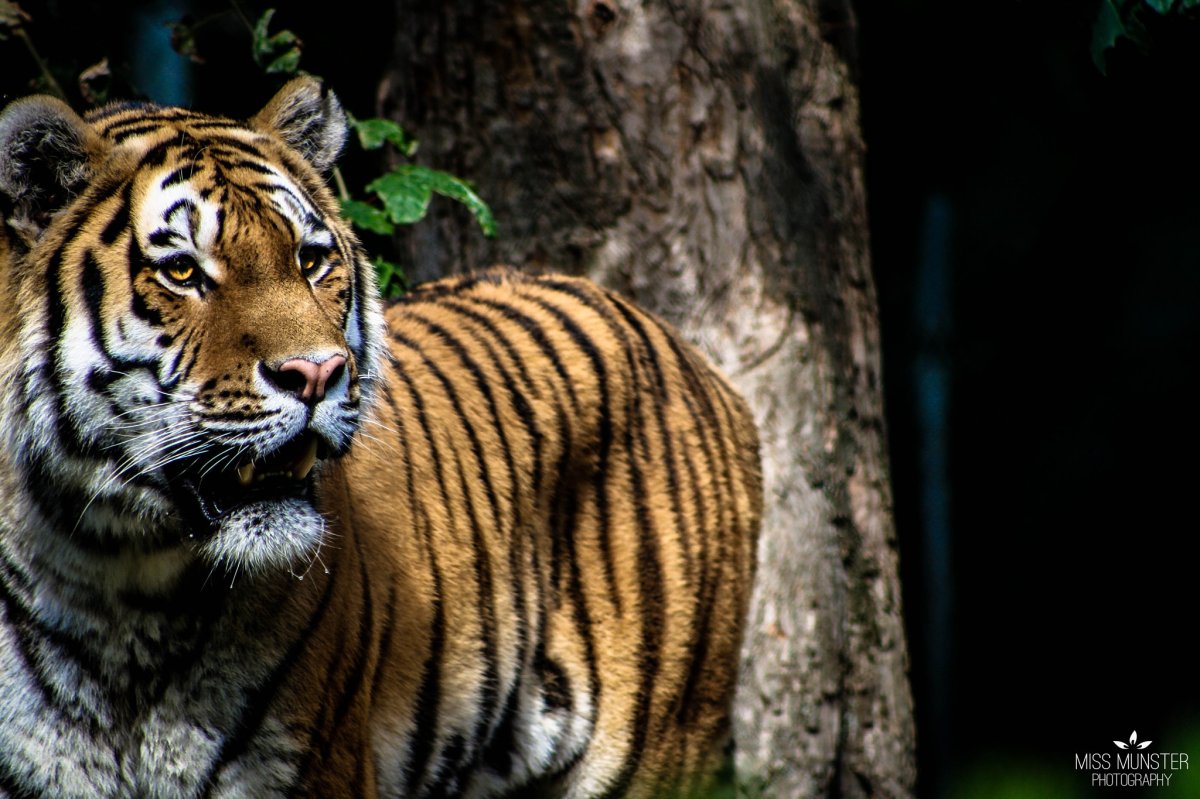
Tigers are the largest and most dangerous of all cat species, and are arguably the most dangerous land animal on the planet, but the vast majority of them do not attack humans and give people a wide berth. Unlike most other felids, they enjoy water and swimming, especially in warm climates. Credit: Warren Garst/Wikimedia Commons
In the meantime, a team comprised of rangers, veterinarians, expert trackers and others — totaling about 100 people — was racing to get to the tiger before the mobs do, utilizing drones, traps and thermal imaging cameras to find and capture the elusive predator.
“The animal is still roaming in the same vicinity, and we are strengthening local patrols to prevent further casualties,” KS Deepa, chief conservator of forests in the region, told local media.
Most tigers who turn man-eater do so because they can no longer take down their usual prey without difficulty, either due to old age or because their teeth are damaged. The infamous Champawat tigress, who killed 436 people during a decade-long reign of terror from the late 1890s through 1907, turned man-eater when a hunter’s bullet shattered one of her canines.
It’s wasn’t clear what forestry officials planned to do with the tiger if it’s captured, but they told reporters they are forbidden by law from killing the animal unless other options are exhausted.
“There are three ways to capture the tiger,” A.K. Saseendran, India’s minister of forests and wildlife, told The Hindu. “We will try to cage it as the first step. If that fails, we will try to tranquilize it and move it out of Wayanad. Killing the tiger is the last resort.”
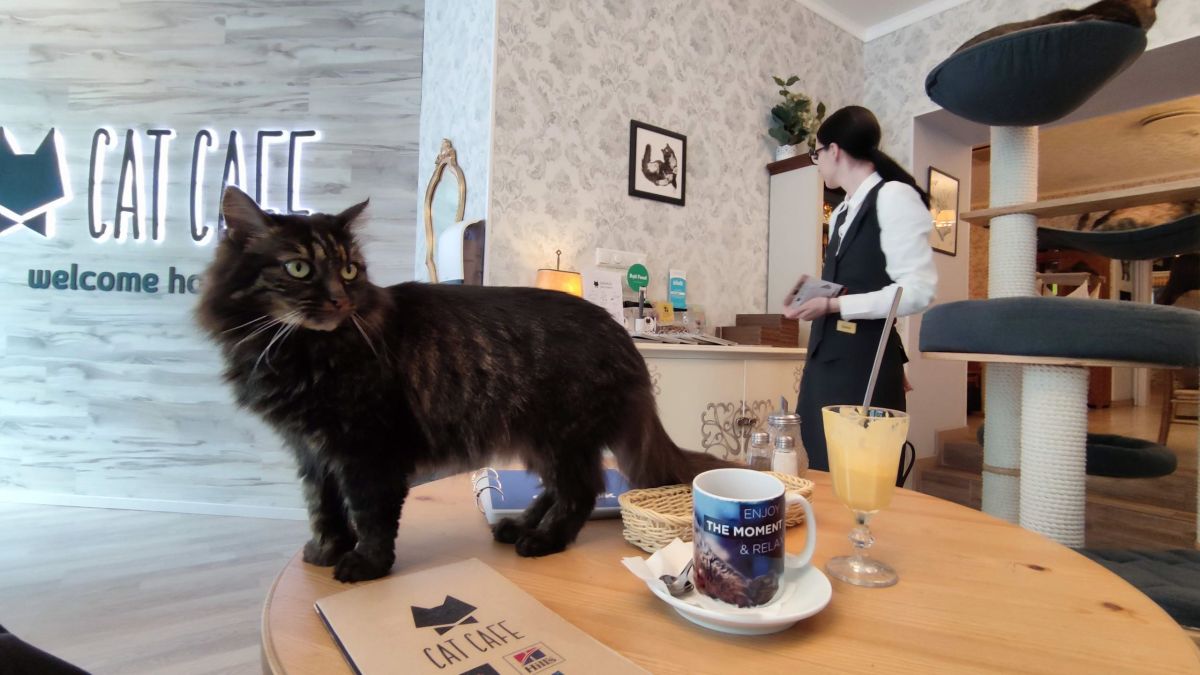
People who frequent cat cafes say they feel relaxed among the little ones. Hundreds of thousands of felines find their forever homes via cafes in the US, which are typically integrated with local shelter and rescue networks.
You may have noticed that most journalists don’t actually interview anyone these days, and the majority of “news” stories are either rewrites or lazily-assembled, 300-word virtual birdcage liners about which celebrity or influencer is “clapping back” at haters for “throwing shade” at them, with quotes directly copied and pasted from X or Instagram.
It’s cheap, easy content — far cheaper than funding war correspondents or impactful investigative journalism — and it doesn’t require reporters to leave their desks, speak to sources on the phone, or even fact-check what they’re writing.
“Well, they said it” is good enough for modern newsrooms, which is why we can’t have a national story or a disaster like the wildfires without waves of misinformation getting amplified by press and influencers alike. And the executives of the handful of remaining news companies wonder why trust in media is at historically low levels.
So these days, a veterinarian warning about laser toys via a TikTok video is considered international news. Nina Downing, a veterinarian with UK pet charity PDSA, took to the social media platform to warn about “laser pointer syndrome,” which she says can result in obsessive compulsive behavior in cats and dogs.
Our furry friends can become frustrated that they never actually capture the elusive red dot, according to proponents of the theory, and too much laser pointer play can result in a pet who barks at shadows or tries to tackle anything that moves.
“Cats have a hunting sequence to follow which is replicated in play, however if it doesn’t come to a successful capture at the end, this can cause them to become really agitated,” Downing warns.
Credit: WIkimedia Commons
Happily, Buddy is impervious to this alleged syndrome because he doesn’t actually have a “hunting sequence.” Born indoors, he’s known nothing but warmth and comfort, and food is something that’s served to him on a precise schedule, not something that needs hunting.
Accordingly, when we play with wand toys, Bud’s version of a “kill” is to grab the plush toy or feathers while dancing around on his back paws. He bobbles the toy while he dances, lets it go and resets the game.
The concept of a kill bite is completely alien to him, and apparently not even his feline instincts are enough to tell him there’s another step to “winning” the game. Still, I tell him he’s a good boy and a fierce little tiger because we can’t have fragile egos getting bruised.
That said, if you find lasers are one of the few reliable ways to get your kitty moving, it’s probably a good idea to wind down by switching to a wand toy. Let the little one simulate a kill, get a few rabbit kicks in and feel like a champ. There’s little or no research supporting the concept of laser pointer syndrome, but it still couldn’t hurt to give your feline overlord something tangible to “kill” at the end of a play session.
Cat cafes are more popular than ever in the US
USA Today has a story today about the apparent ubiquity of cat cafes in the US, and how they’re changing things for the better, for felines as well as people.
Using data from Yelp, the newspaper found there were 200 cat cafes, give or take, across the country at the end of 2024, up from about 75 in 2020.
“When we started, people weren’t quite sure what they were, there was a lot of explaining how they worked and what they were,” said Laura Konawalik, owner of a chain of three cafes featuring felines in North Carolina. “Nowadays people come in knowing the general concept.”
The same data shows searches for strings like “cat cafes near me” have increased 78,700% between February of 2020 and February of 2024, USA Today reported.
Patrons playing with cats at a cafe in Osaka, Japan. Credit: Wikimedia Commons
While cafes in some other countries are populated by felines owned by the proprietors, most cat cafes in the US are integrated with their local shelter and rescue networks, so patrons can adopt if they fall in love with the little ones they meet while having a cup of coffee or tea.
That means some of the oldest cat cafes in the country have facilitated thousands of adoptions and continue to find forever homes for their animals.
About 330,000 cats were euthanized in the US in 2023, the most recent year for which complete statistics are available, according to Shelter Animals Count, a national database that keeps track of shelter intakes and cat/dog euthanasia figures. Data for the first half of 2024 showed a decrease from the previous year’s numbers, but numbers from the latter half aren’t available yet.
Jet Taylor, a regular at Konawalik’s Mac Tabby cafes, says he keeps coming back to destress and feel calm.
“I would be willing to bet,” he said, “you could put a heart rate monitor on me and when I’m sitting there petting a cat, my heart rate goes down.”










 Pain In The Bud