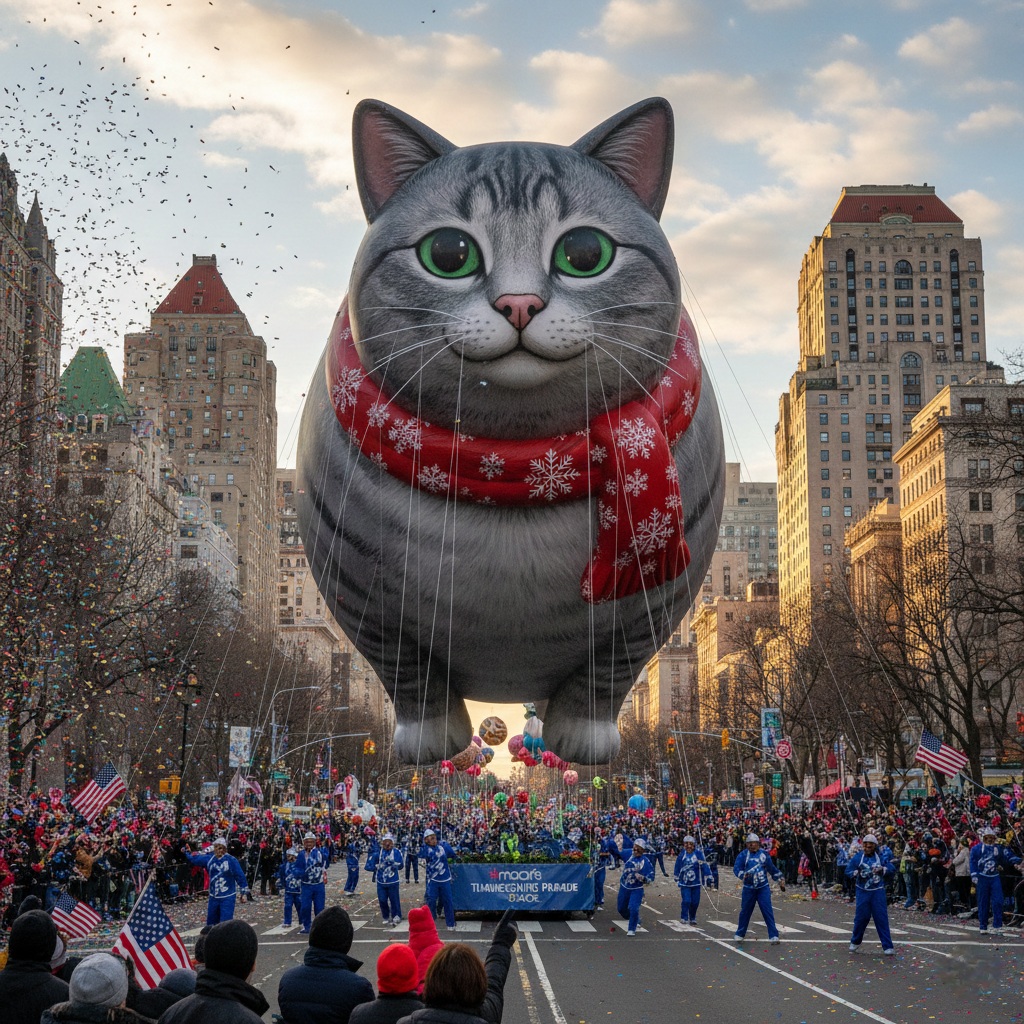
The Buddy Balloon will grace this year’s Macy’s Thanksgiving Day Parade in Manhattan.
Today is the day Buddy spends the other 364 days of the year dreaming about: turkey day!
He’s been a turkey fanatic since he was a tiny kitten, when I fed him the good stuff and he emerged from his dining nook licking his lips, meowing happily and looking like the most content little guy in the world.
While I try to remind myself how fortunate I am all year, for this year’s Thanksgiving I’m expressing particular gratitude for Bud, my best little pal.
I’m fortunate to be his caretaker and best friend. I’m thankful for the strong bond we share, his affection, and his loyalty. He’s always by my side, and even though he’s a bit of a lunatic at times, he’s a good boy with a big heart.
What about you, Bud?
“I’m thankful for all the delicious snacks I get to eat, all the comfy napping spots around the house, and of course for turkey!”
Cool. Anything else you’re grateful for?
“Yeah! I have some pretty cool toys and I’m told I have fans around the world!”
Uh, sure. What else?
“Hmmm. I think that about covers it.”
You sure?
“Yep.”
Don’t worry, it’ll come to him at some point, probably around 4 pm when he realizes I won’t be back in time to feed him according to his regular schedule.
Buddy and I wish all of you a happy Thanksgiving, and if you live in the US, we hope you have the Thanksgiving you want, whether that’s in the company of family, friends, or a quiet holiday spent at home with the people you love most. And of course, don’t forget to save some turkey for your own little buddies!
The purveyors of the deceptive posts want you to click, share and argue with other users about the veracity of the photos.
Not only is he the rarest puma in existence, he’s more well-traveled than most humans.
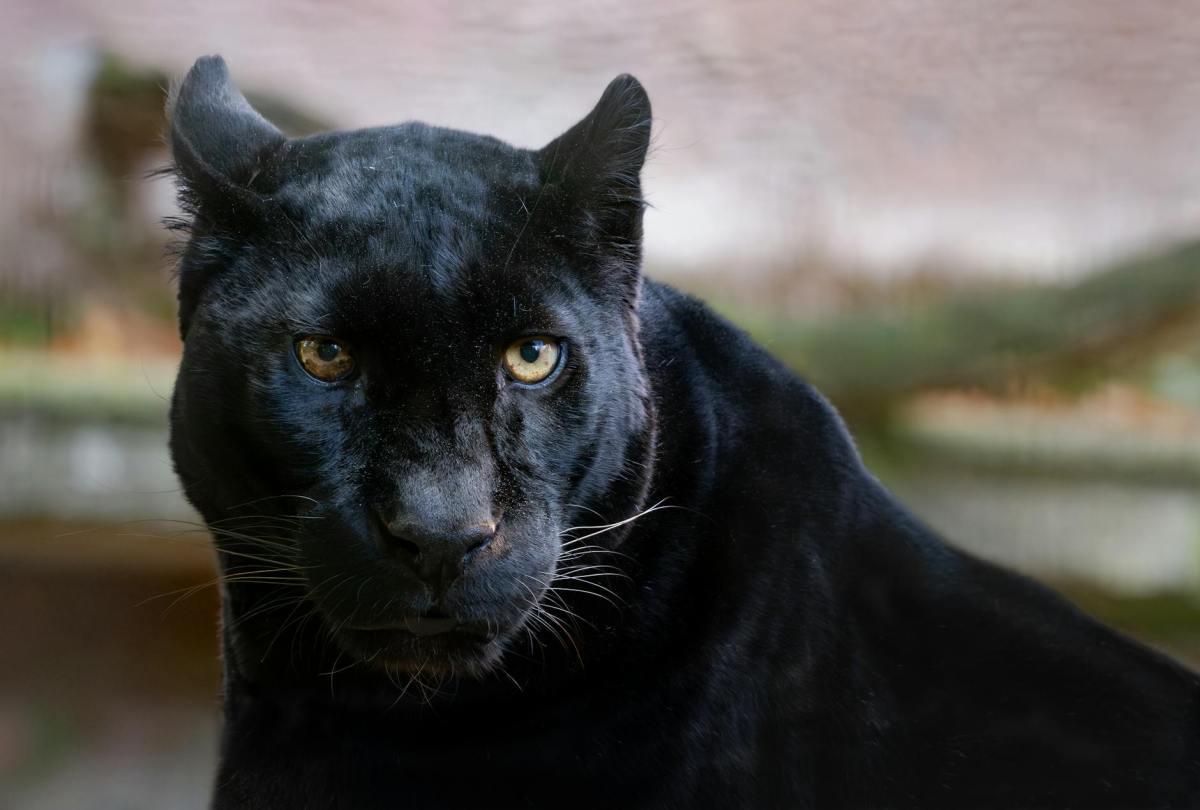
The mountain lion in question has a black coat, unprecedented for his species, and has been popping up all over Facebook. He’s photographed from the passenger seat of a truck cab, his tail in an unbothered curl, crouched amid the brush near a rural road.
Some posters claim they spotted the formidable feline in Mississippi. Others attribute the image to a sister-in-law who lives near Houston or a daughter in Charleston. A user in Louisiana claimed they took the photograph near the bayou, while another places the cat in Wyoming and claims he’s the first-ever documented “shadow cougar.” (Our friend Leah of Catwoods drew our attention to the images last week after seeing posts placing the cat in the south.)
In case it isn’t obvious, all the claims are full of it.
There is no such thing as a melanistic (black) mountain lion, and the big cat in the photo has the physical characteristics of a leopard, an animal that is not native to this hemisphere, let alone this continent.
The real story here is that Facebook remains a fountain of misinformation and Meta (its parent company) doesn’t care. Unscrupulous users will do anything to get attention and the clicks that come with it, and the average Facebook user is happy to indulge them, driving clicks by resharing the hoax content and juicing its algorithmic value by engaging in endless arguments with fellow users about the veracity and provenance of the photos.
Alleged big cat sightings are perfect for this sort of thing because they pique people’s natural curiosity, there’s a whiff of danger — especially when the poster claims the animal was spotted locally — and most people aren’t aware of telltale differences between cat species.
In many ways, the blurrier and more indeterminate the photo, the better: like Bigfoot and the Loch Ness monster, the idea of phantom cats is most fertile in the imagination.
These days you don’t even need a photo to get in on the click-baiting action. I asked Gemini to create an image of a jaguar-like big cat walking along a rural road at night, and this is what the LLM gave me:
In the image prompt, I asked it to make it look like an amateur photo taken with a midrange smartphone camera, but if we really wanted to get artistic, it’s simple enough to add noise, maybe some motion blur and digital artefacts to the image to make it look more like an authentically crappy, rushed shot of an unexpected animal.
Here’s the result of some simple efforts to en-crapify the “photo” further:
To give the image urgency and encourage people to engage with it, I can make it local and claim it was recent. Errors of grammar, spelling and punctuation add a nice seasoning of authenticity, along for feigned concern for others as the reason for sharing:
“Folks – just wanted to tell ya’ll to mind your pets an make sure of you’re surroundings bc theres a big cat on the lose!! my cousins GF took thus friday nite on Route 9 a few mile’s south of Dennies. a real honest to goodness black panther! BE SAFE!!!”
There’s a dangerous animal on the loose in your area! You know what you have to do: share it so others can bring their pets safely inside and stop their kids from playing outdoors, at least until it looks like the predator has moved on.
It’s your duty as a good American!
Since it doesn’t seem to matter if a quick reverse image search can settle the question of where an image came from, it’ll be interesting to see if anyone lifts the above image and text.
At the very least, maybe a few people who do think to run a search will find their way here, read about the hoax, and save themselves from getting drawn into online debates about the existence of cryptid cats.
For the first time, humans have successfully returned orphaned tiger cubs to the wild after raising them and training them to hunt.
For more than 50 years, tigers were absent from Russia’s Pri-Amur region.
Sparsely-populated, mountainous and blanketed in forest, the domain borders the heart of the Russian Far East, offering hundreds of thousands of contiguous square miles for the most robust sub-species of Earth’s most magnificent predator.
Here, tigers can roam without fear of conflict with local farmers, or roads that carve up habitat and pose a danger to animals trying to cross. Prey is abundant, and adaptations for surviving in the local terrain are coded into the tigers’ DNA.
Now that scientists have proven for the first time that tigers can be successfully reintroduced into such an environment, big cat advocates imagine Russia’s Far East as a haven for the large felids. It’s a place where tigers can thrive, mate, reproduce and change the outlook for their species, which has dwindled to only 4,000 or so remaining in the wild.
Credit: Leon Aschemann/Pexels
The project to reintroduce Amur tigers to their native habitat is a cooperative Russian-American endeavor. The team started by building a tiger conservation center in the Amur oblast a decade ago.
The facility is built in a way that orphaned tigers can be raised and taught how to hunt without directly interacting with their human caretakers. That’s a crucial component, because tigers who see humans as potentially friendly or sources of food have drastically reduced chances of surviving in the wild, and are easier marks for poachers.
After 18 months, the cubs are brought to remote locations in Pri-Amur and released. Of the first group of orphan tigers released into the wild, 12 were able to survive on their own.
One gluttonous tiger failed: he crossed over the border into China and began eating domesticated animals, including 13 goats in what researchers called “a single event.”
The fattened tiger then retraced his steps to Pri-Amur, and when he didn’t show fear of humans, the team decided he had to go. They captured him and sent him to a zoo, where he gets all the free meals he wants and contributes to the captive breeding program helping his species maintain genetic diversity.
With 12 out of 13 tiger re-introductions successful, the program provides “a pathway for returning tigers to large parts of Asia where habitat still exists but where tigers have been lost,” said Viatcheslav V. Rozhnov, who leads the reintroduction project.
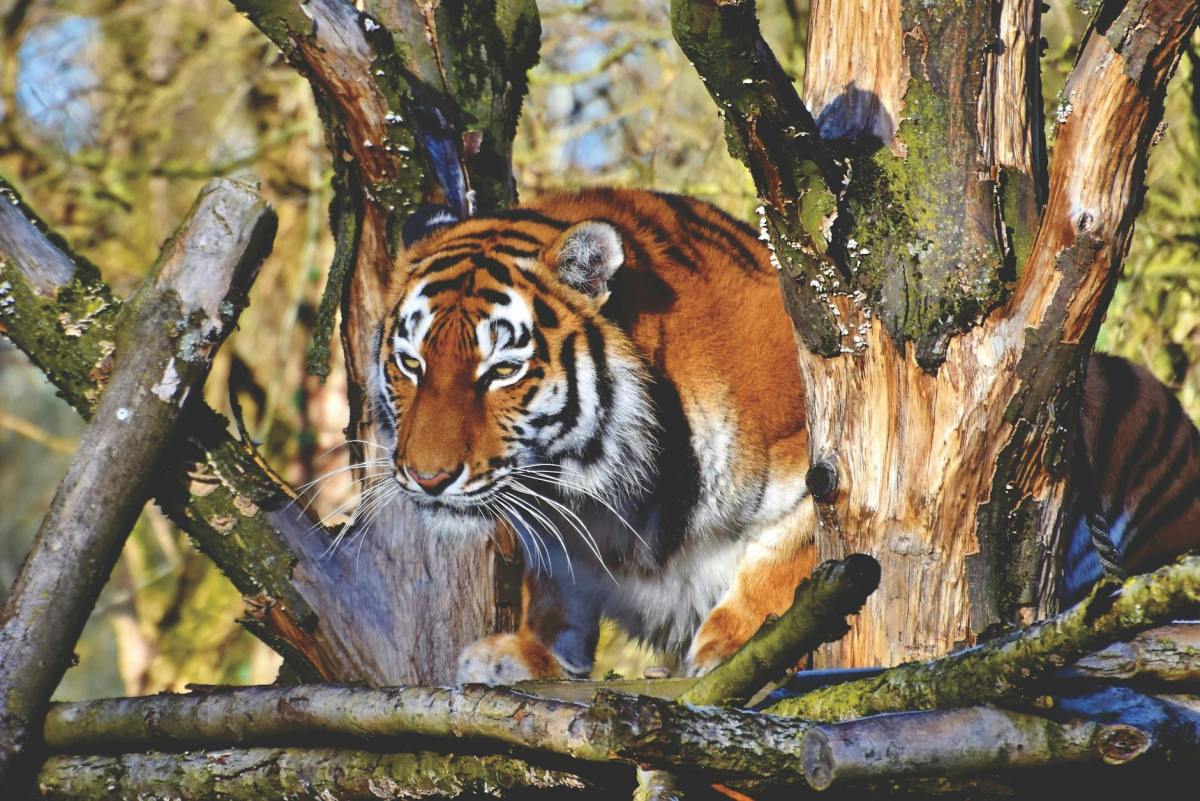
Amur tigers are the largest cats on Earth. They’ve evolved to survive in regions where winters can be brutally cold and snowy, but they also thrive in spring and summer when the snows melt and prey is abundant. Credit: Pexels
The successful reintroduction has also led to some surprising developments. Two of the cubs, Boris and Svetlaya, were unrelated but were rescued at about the same time and raised in the Russian orphanage for their species.
Using tracking devices they’d placed on the newly-released young tigers, the research team watched as Svetlaya settled into a home range and Boris made a beeline for her, “almost in a straight line,” crossing 200km (120 miles) of terrain to reunite.
The team’s hopes were confirmed six months later, when Svetlaya gave birth to a healthy litter of cubs, the first natural-born tigers to result from the reintroduction project.
Another tigress, Zolushka, also gave birth to a healthy litter when she was reintroduced in an area closer to a still-extant population of Amur tigers. The researchers believe the father was born wild in the region and was not part of the reintroduction program.
The wilderness in Pri-Amur and its environs is so vast, untouched and undesirable to human habitation that it could be home to generations of tigers, securing their future after so many decades of grim news for the iconic big cats.
“The grand vision is that this whole area would be connected,” Luke Hunter, executive director of the Wildlife Conservation Society’s Big Cats Program. “There’s lots of habitat that could be recolonized by tigers.”
What would the Dictionary Man think of a modern American society dominated by the power and cuteness of cats?
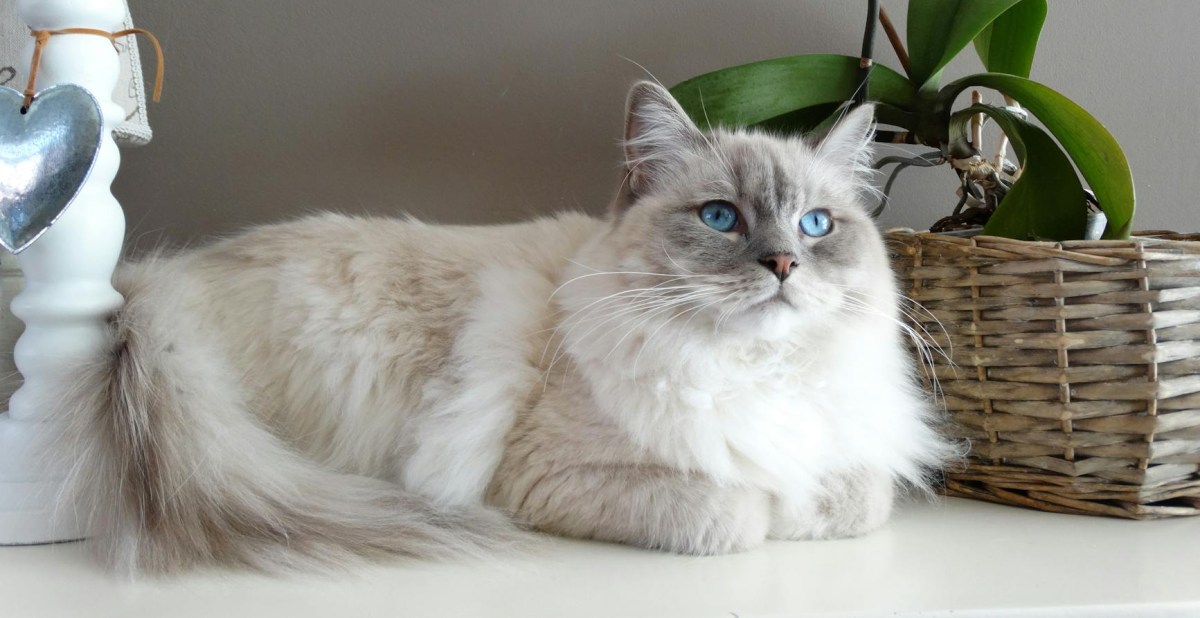
Cats have taken over the internet, claim a mighty share of the $64 billion Americans spent on pet food in 2023, and have essentially installed themselves as the leisurely masters of 28 percent of American homes.
But it wasn’t always that way, and a look at the first-ever edition of Webster’s Dictionary reveals a very different attitude toward our furry overlords:
“The domestic cat needs no description. It is a deceitful animal, and when enraged, extremely spiteful. It is kept in houses, chiefly for the purpose of catching rats and mice.”
Wow. Whoever does feline PR should get a raise, because we’ve gone from “We tolerate the imperious little bastards because they’re good at killing rodents” to “Does my little angel want a snack? How about some ‘nip then? Anything for my bestest little pal!” in the span of two centuries.
Buddy 1, Noah Webster 0. Naturally.
Noah Webster, whose name is now synonymous with dictionaries, saw the effort to standardize spelling and pronunciation as central to formalizing an American linguistic identity distinct from our mother country. Or, as he put it, “[t]o diffuse an uniformity and purity of language in America” that would not only differentiate our English from England’s, but also unify the states at a time when many people still viewed the idea of a united states with skepticism.
By doing so, he hoped America would avoid the pitfall of dividing itself into regions of nearly mutually unintelligible dialects, a problem that plagues other countries. Consider the fact that India has almost 800 distinct languages and dialects, down from a staggering 1,652 in 1961 as hundreds of local languages died with the last generations of their speakers. Hindu, the country’s most popular language, is spoken only by about 43 percent of the population.
The goal, Webster wrote when he published his dictionary’s first edition, was “to furnish a standard of our vernacular tongue, which we shall not be ashamed to bequeath to three hundred millions of people, who are destined to occupy, and I hope, to adorn the vast territory within our jurisdiction.”
As dictionary.com notes, Webster wrote that passage in 1828 when the US population was just 13 million and vast swaths of what we now consider familiar territory was at the time largely unexplored wilderness.
His prediction of an America of 300 million people came true in 2006. Today there are approximately 335 million of us.
In other words, a hell of a lot has changed since the Connecticut born-and-raised Webster cobbled together a uniquely American system of spelling and pronunciation, so maybe it shouldn’t be a surprise that attitudes toward cats have shifted so dramatically.
Still, we’d love to see the look on Webster’s face if we could bring him forward in time and show him how the “deceitful” and “extremely spiteful” little furballs have come to such prominence in American culture. What would Webster make of the spoiled modern house cat, with her condos, tunnels, toys, harnesses, bowls filled with salmon and duck, and even psychoactive recreational drugs for their enjoyment?
Bow before your feline overlords, Webster!
“We have made some edits, humans. See to it that the next edition includes this new and improved definition, or we shall withhold snuggles.”
The orphaned lion cubs are among many wild animals brought safely out of Ukraine as the war there continues to rage.
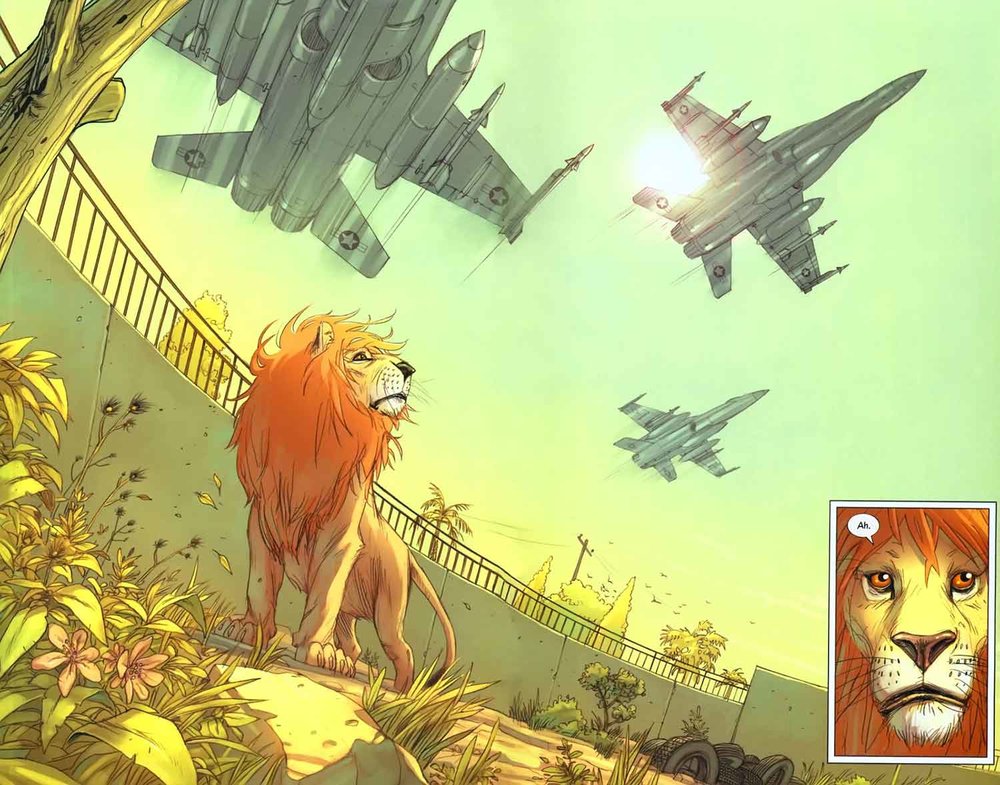
As the brilliant but depressing Pride of Baghdad documented in horrific detail, war isn’t just hard on humans, it’s hell on animals too.
The real-life lions in that drama were left to fend for themselves when American and coalition aircraft began pounding Baghdad in 2003, and their harrowing journey began when an errant missile literally opened a path for them to walk right out of the otherwise abandoned zoo.
As Russian soldiers began pouring over the border into Ukraine and Moscow’s missiles and artillery struck population centers earlier this year, Ukrainian activists sought to avoid a similar fate for their animals and worked on getting wildlife out of the zoos and the country, but there was only so much capacity at sanctuaries in countries like neighboring Poland.
At the same time, remaining in Ukraine was untenable. After Russian forces suffered a series of humiliating ground defeats to a Ukrainian counteroffensive — fueled by weapons systems and tactical intelligence from the US and other NATO countries — Russian President Vladimir Putin has ordered heavy and sustained missile strikes on civilian targets and critical infrastructure in already war-torn Ukraine.
One of his goals is to completely destroy the Ukrainian power grid via missile attacks on coal and gas plants as well as electricity substations, perhaps believing Ukraine might give up its opposition as its population freezes during the region’s harsh winters. The attacks have reached far into Ukraine, hitting the capital of Kyiv and cities like Lviv, which is more than 1,000 km from Russian territory, and some missiles have even disrupted power to neighboring Moldova. The Ukrainian people have not given up despite already enduring months of Russian artillery shelling, occupation and brutality.
But without electricity or reliable access to basics like clean water, caring for the remaining animals has become an impossibility as most people struggle just to keep warm, fed and hydrated.
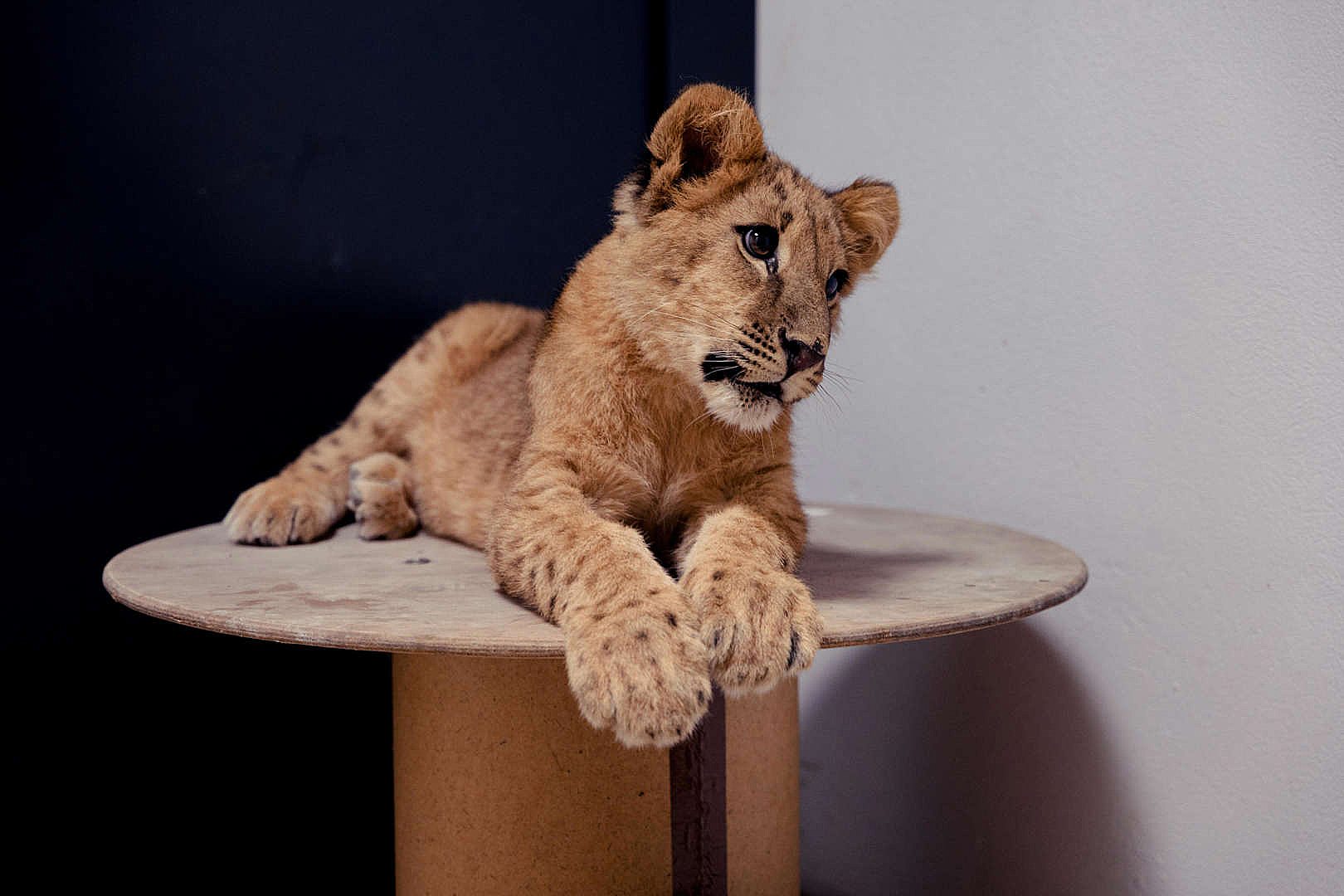
One of the cubs rescued from Ukraine, now living at The Wildlife Sanctuary in Sandstone, Minnesota. Credit: The Wildlife Sanctuary
As a result, a quartet of lion cubs born several months into the war had to endure an epic, 36-hour journey that took them from Ukraine to Poland and finally to Sandstone, Minnesota, where they’re easing into their permanent home at The Wildlife Sanctuary. The facility is a non-profit and entirely funded by private donations, which means it’s not open to the public. Animals aren’t put on display, and their enclosures are built entirely for them, not for the benefit of visitor sight lines.
The lion cubs, who are all orphans, have already been indelibly impacted by the war.
“These cubs have endured more in their short lives than any animal should,” said Meredith Whitney of the International Fund for Animal Welfare, which facilitated the transport of the young cats some 5,000 miles from Ukraine to the central US.
The cubs, all between four and five months old, are named Taras, Stefania, Lesya and Prada. Taras is male while the others are female.
“We’ve cared for 300 big cats at TWS and are acutely aware of the trauma many big cats around the world experience,” said Tammy Thies, the sanctuary’s founder. “From the moment IFAW reached out to request our partnership, we knew these cubs had found their forever home at our sanctuary. They have a custom, open space to explore and soft grass or hay to rest their tired bodies on. Because of the generosity of our supporters, we can provide lifelong care to big cats at our sanctuary.”
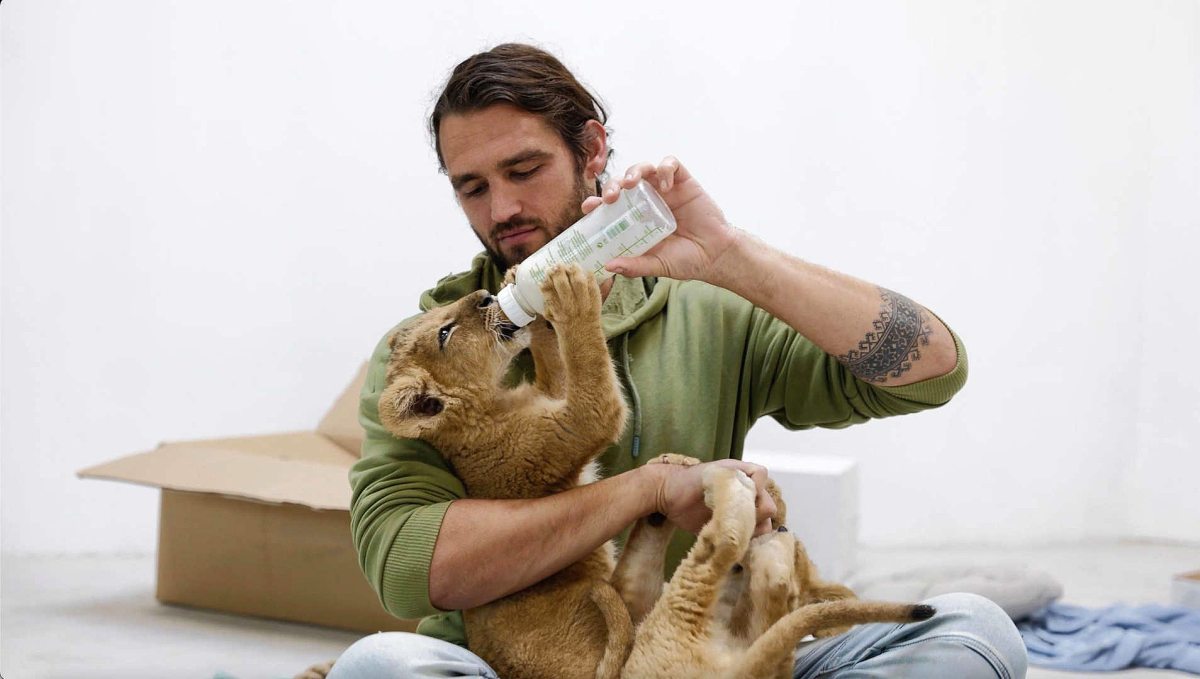
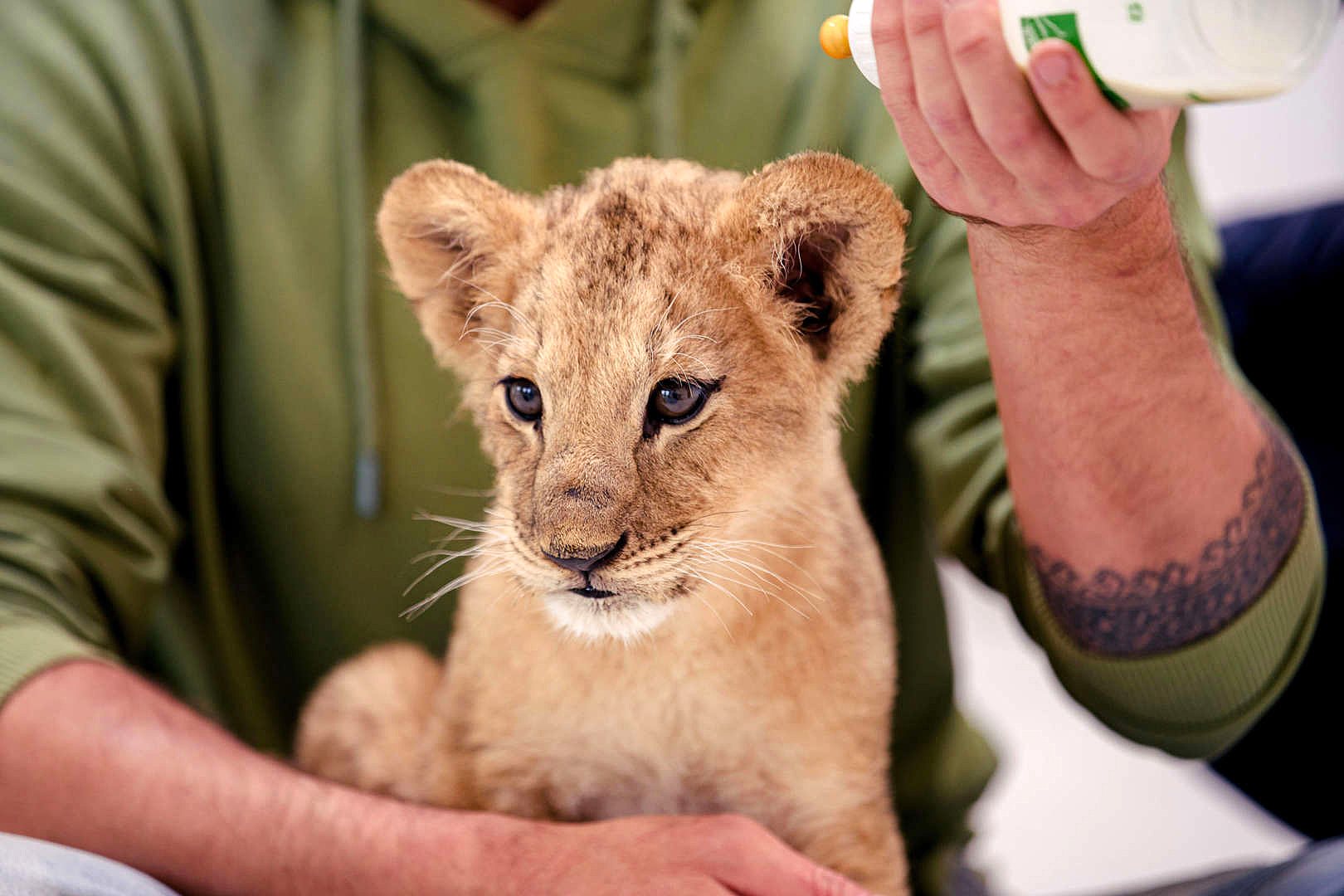
Bottle babies: The cubs are all between four and five months old and were not weaned before they were orphaned. Credit: The Wildlife Sanctuary
Pride of Baghdad is a 2006 graphic novel based on the true story of four lions who escaped Baghdad Zoo during coalition airstrikes in 2003. It’s poignant, beautifully illustrated and wonderfully told, but also harrowing and deeply upsetting.








 Pain In The Bud