The Dividing Line Between Human And Animal Has Been Blurred Again As AI Reveals Startlingly Complex Whale Language

By unlocking the mysteries of how sperm whales communicate and demonstrating their impressive cognitive abilities, researchers hope to get people invested in the fate of these endangered animals.

Sperm whales are chatty.

Their language is markedly different from the deep cetacean moans associated with other whales, taking the form of Morse code-like clicks that boom through the ocean in a decibel range almost twice that of jet engines.

And while we’ve long known animals like monkeys assign specific meaning to short vocalizations varying from alarm calls to affirmations of social rank, sperm whale conversations can endure for an hour or more, with participants exchanging complex strings of clicks that vary depending on context, environment and even which pod family is speaking.

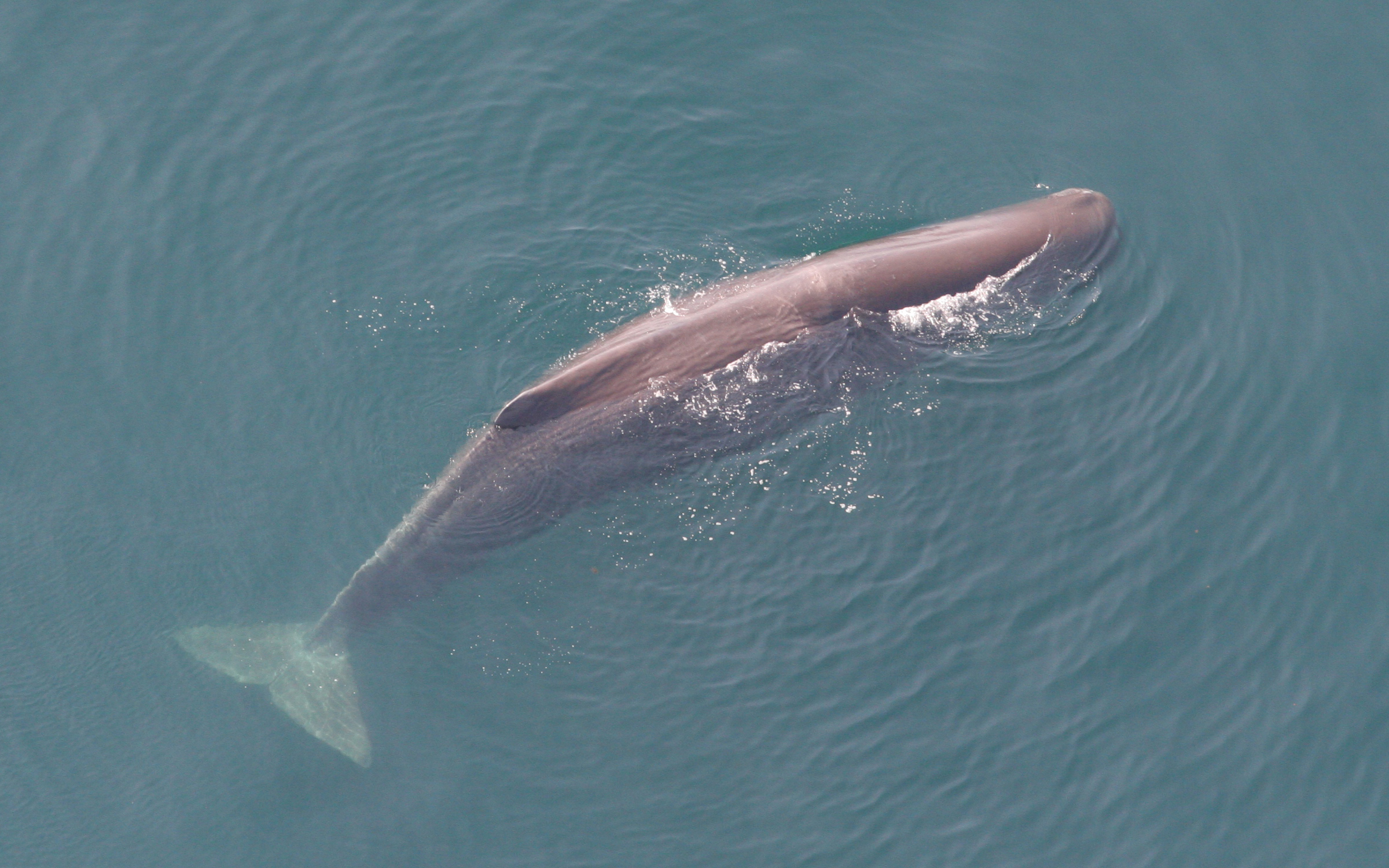
Sperm_whale_Tim_Cole_NMFS_crop
An aerial view of a sperm whale near the ocean surface. Credit: Wikimedia Commons

While artificial intelligence has been maligned over the past few years as people grapple with its rapid progress and potential for abuse, it remains the best tool we have for teasing out patterns that our human minds can’t discern, especially from large quantities of data.

With more than 9,000 recordings of sperm whales, Project CETI — Cetacean Translation Initiative, a non-profit effort to decode and translate sperm whale communication — had precisely the kind of huge data cache that AI excels at analyzing.

By feeding the recordings into specially trained machine learning algorithms, the research team was able to identify a wealth of new language patterns. While human languages are composed of quantized morphemes — prefixes, suffixes and root words — whale communication is broken down into sequences of clicks and pauses called “codas.”

Like Morse code, codas make a distinction between short clicks and long clicks. Sperm whales also vary the tempo of the clicks, which could represent inflection, “dialects” or concepts completely alien to the human mind.

“Some of what they’re doing might be totally different from our way of communicating and we’re probably never going to be able to fully grasp those differences,” Oregon State postdoctoral marine researcher Taylor Hersh told NPR.

sperm whale fluke
A sperm whale fluke visible above the surface of the ocean. Credit: Wikimedia Commons

Researchers believe the “inter-click intervals” — akin to ghost notes in music — may be as significant as the clicks themselves. Importantly, while human ears were able to identify and catalog some of the codas, the machine learning algorithms found many that human analysis missed.

That’s not surprising considering sperm whales — the loudest animals on Earth, capable of generating sounds up to 230 dB — took a much different evolutionary course and, as ocean-dwelling creatures weighing up to 90,000 pounds (40,800 kg) likely have a radically different sensorium compared to humans.

The comparisons to music go further than ghost notes.

“This study shows that coda types are not arbitrary, but rather that they form a newly discovered combinatorial coding system in which the musical concepts of rubato and ornamentation combine with two categorical, context-independent features known as rhythm and tempo, by analogy to musical terminology,” CETI’s team wrote on May 7 while unveiling the most recent study.

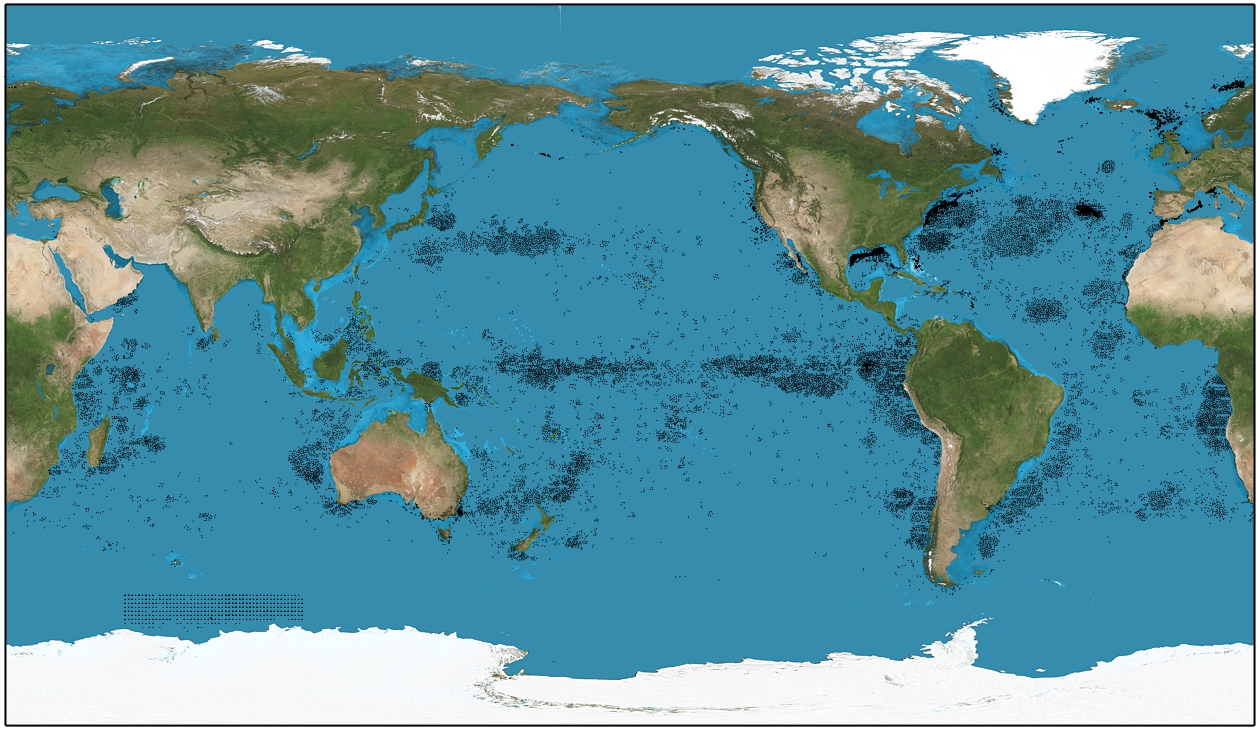
Sperm_whale_distribution_(Pacific_equirectangular)
Sperm whale distribution based on human sightings. Sperm whales freely travel the oceans except in cold, ice-packed environs. Credit: Wikimedia Commons

While people have used many abilities to mark the dividing line between humans and animals over the years — including the ability to use tools, experience emotions, and demonstrate self-awareness — human capacity for authentic language with syntax and context-dependent meaning was one of the stalwarts, standing the test of time as new research toppled the other dividers by showing animals do indeed use tools, experience rich emotions and have complex inner mental lives.

With this research, scientists are assembling a “sperm whale phonetic alphabet” that will make it easier to discern and catalog whale codas.

To be clear, there’s still a lot of work ahead before scientists can prove sperm whale codas are comparable to human definitions of language, but whether they strictly meet that definition may not matter. After all, it’s clear the clicks and pauses of whale codas are imbued with meaning, even if it remains elusive to us for the moment.

Indeed, “sperm whale communication has both contextual and combinatorial structure not previously observed in whale communication,” the team wrote.

Proving sperm whale codas are tantamount to human language isn’t the goal anyway. The team has two overriding priorities — decode the meanings behind the codas, and get the wider public invested in the fate of these endangered animals by showing they’re not so different from us.

“Our results show there is much more complexity than previously believed,” MIT AI lab director Daniela Rus told NPR, “and this is challenging the current state of the art or state of beliefs about the animal world.”

The Buddinese Jaguar: A Fitting Feline For The One Percent!

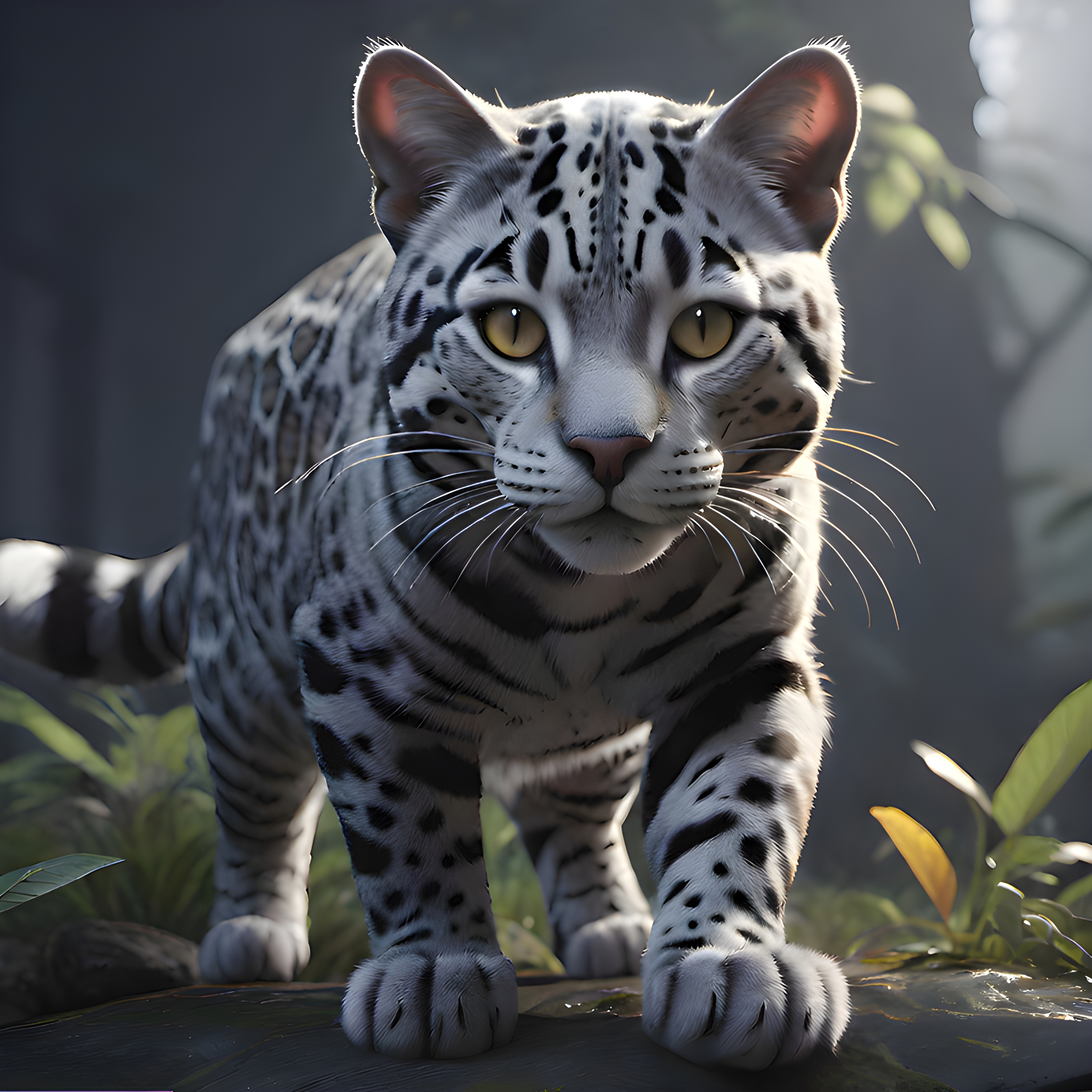
You can’t have a jaguar pet and you can’t have Buddy the Cat, but what if you could have a breed that combines the best features of both? You’d pay a lot for that, wouldn’t you? Good, ’cause they start at $10k!

SATIRE/CAT HUMOR

Inspired by the exclusive Ashera cat, we proudly present to you the Buddinese Jaguar, the pinnacle in feline luxury.

Why settle for a pedestrian Bengal or Savannah when you could own the ultimate in feline status symbols?

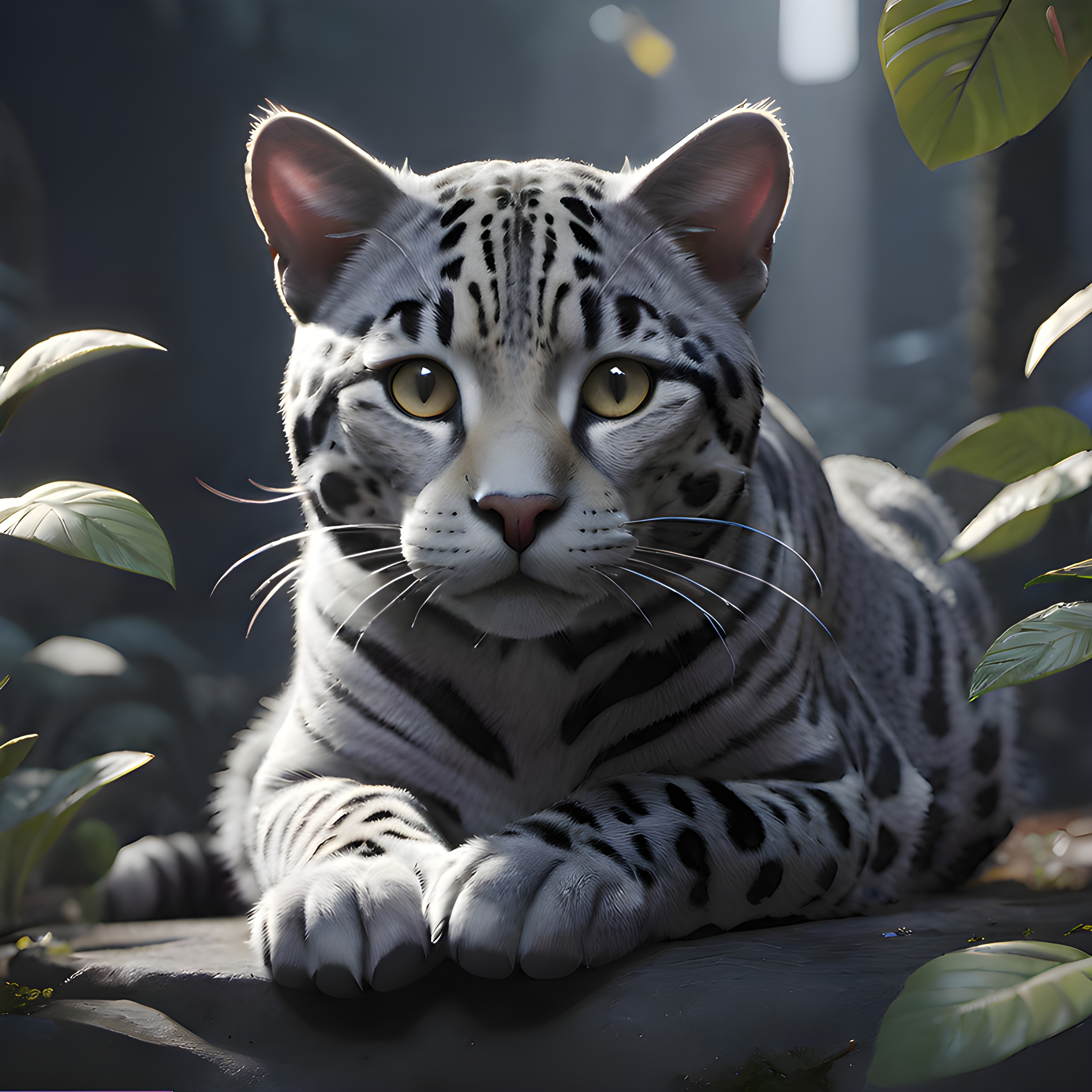
Buddinese Jaguar

Our Buddinese Jaguars feature royal lineage, the finest genetic modifications, and they’re extremely handsome!

– Ultra exclusive luxury cat
– Available in hypoallergenic variants
– Version 2.15 now available!
– Patented SilkySmooth™ technology results in a luxuriously soft coat
– Eye colors available in Neon Emerald, Viridescent Beryl, Azure Sky, Amber Glow, Flecked Gold, Elvis Pink Cadillac, Crystal Cobalt and Electric Sapphire
– Optional moon roof
– Easy to use Quiet Mode™ technology guarantees your Buddinese Jaguar will shut up when you want it to
– Extended 5-year warranty

Each Buddinese Jaguar comes with a rapid USB 3.0 charger, a V8 engine that provides plenty of power for HyperZooms, and an Apple AirTag-enabled collar.

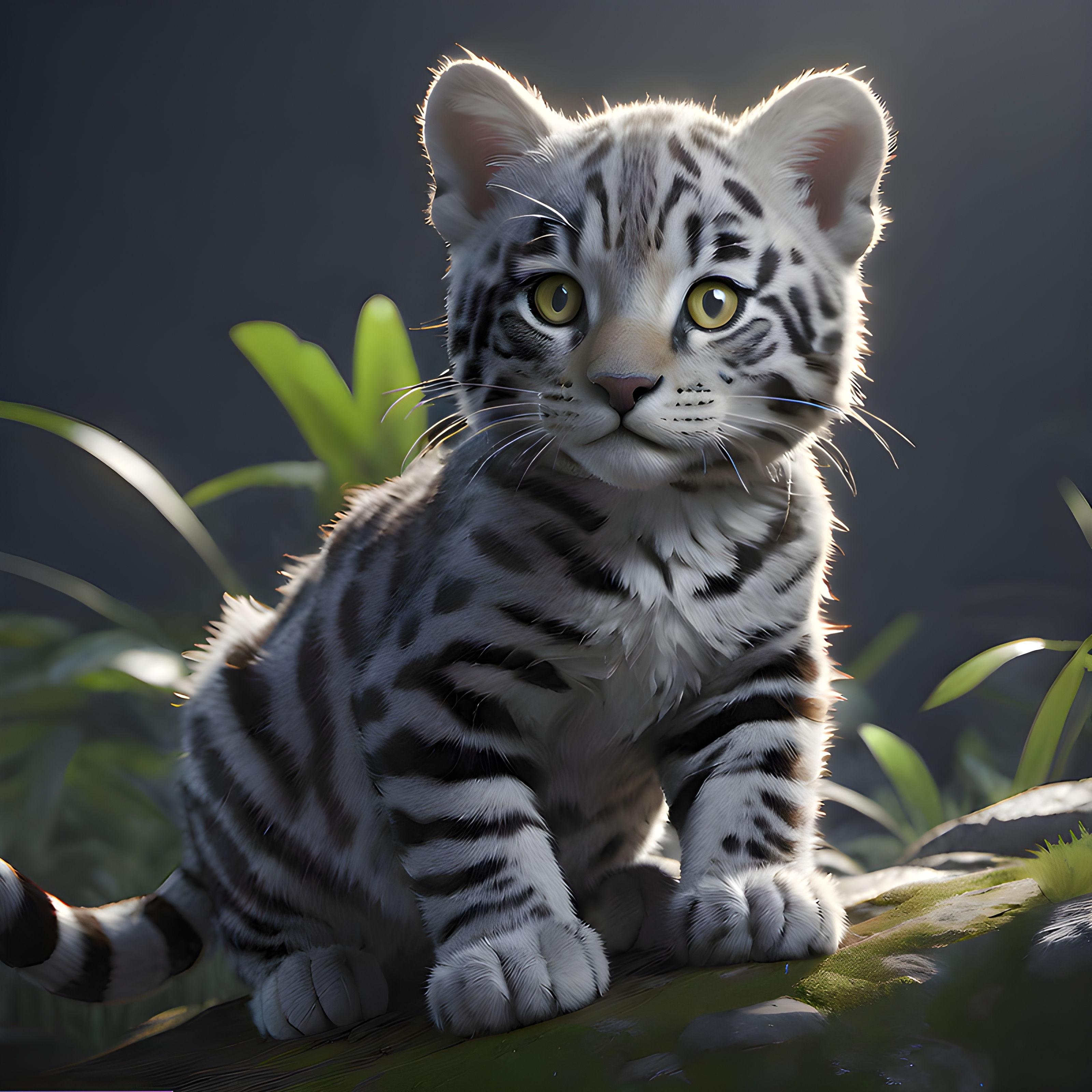
Buddinese Jaguar kitten
From kittenhood until adulthood, Buddinese Jaguars are exemplars of handsomeness.

In addition to guaranteed software updates for at least five years, your Buddinese Jaguar is equipped with onboard analog algorithms ensuring it downloads exclusively in its litter box and nowhere else.

Base models start at only $9,950! Hypoallergenic models with patented Fel-d-1 Guard™ technology available starting at $12,495.

We are an officially authorized retailer accredited by the Buddinese Jaguar Association and the Buddinese Authorized Distributor Association Service Standards (BADASS), awarded only to retailers who maintain the highest breed standards.

Buddinese Jaguar
Like its jaguarundi forebears, the Buddinese Jaguar is an apex predator and is awesome at stalking the jungle.

About the breed:

The Buddinese Jaguar was developed by Buddesian Labs. Lead scientist Buddy the Cat tirelessly and selflessly engaged in coitus with 217 jaguarundi females, producing the magnificent offspring that would comprise the first generation of these extremely handsome cats. Using pioneering techniques in CRISPR gene-editing, Buddy did the impossible and improved upon perfection by eliminating allergens and adding even more meowscle mass.

Note: Buddy the Cat himself is not available for purchase, although he will entertain offers for his human.

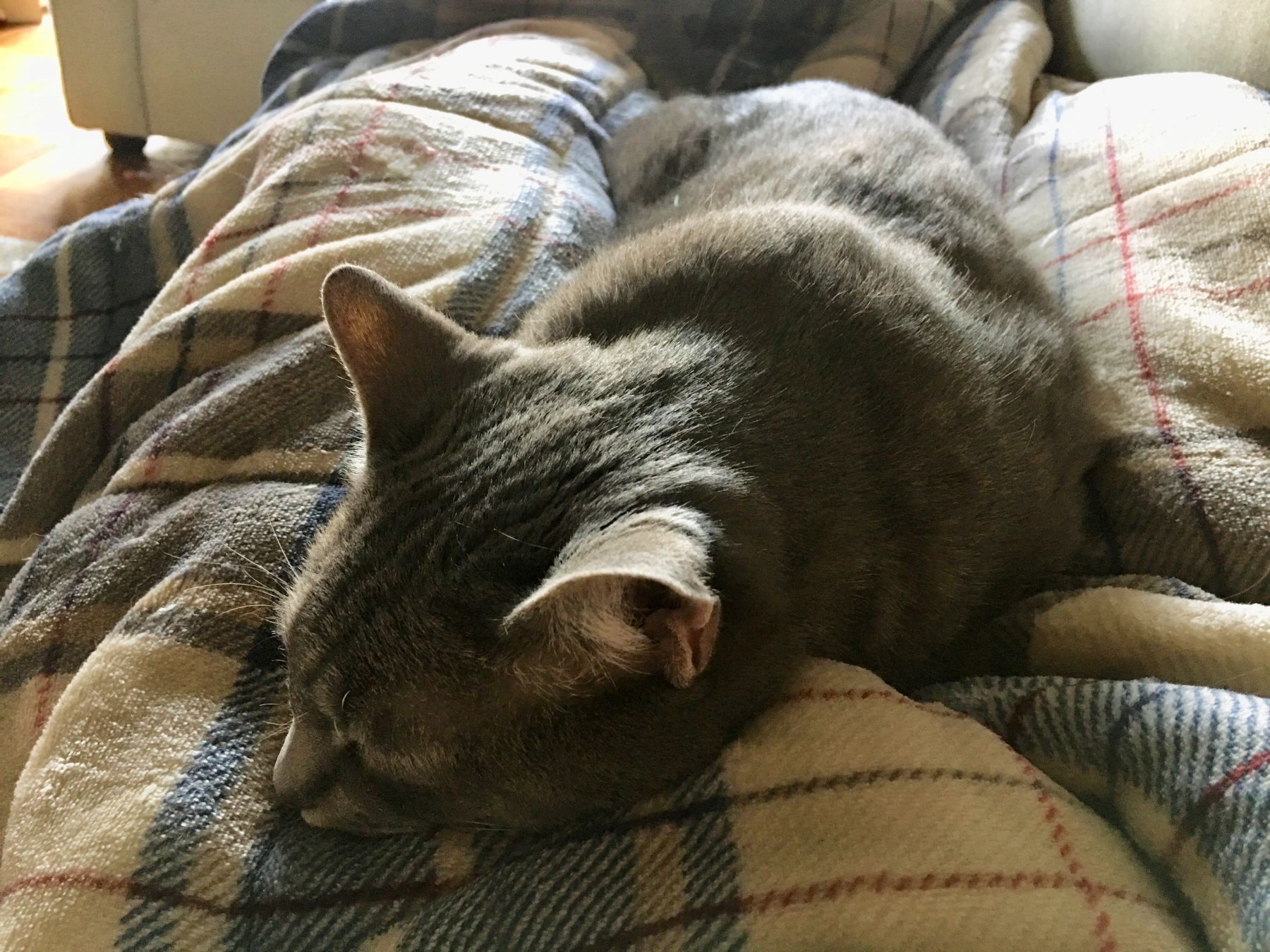
Buddy sleeping
Chief scientist Buddy recovers after selflessly and heroically engaging in coitus with 217 jaguarundi females in the name of science.

The First HD Video Streamed From Space Is A Clip Of A Cat Chasing A Laser

In Netflix’s Three Robots, a trio of intelligent wise-cracking machines tour post-apocalyptic Earth after humanity nukes itself out of existence. While humans are long gone from the planet, felines are not, and before long the robots encounter a gray tabby.

“What’s the point of this thing?” one robot asks its friends, looking skeptically at the yawning cat.

“Apparently there’s no point, they [humans] just had them,” the second robot says.

“Well, that’s underselling their influence,” the third robot says. Humans, it explains, “had an entire network that was devoted to the dissemination of pictures of these things.”

The ongoing joke that the internet and modern telecommunications systems were invented solely for the purpose of sharing cat photos and videos won’t die any time soon now, thanks to NASA.

To inaugurate and test its new Deep Space Optical Communications (DSOC) system, which uses lasers instead of radio signals to transmit data, the famed space agency streamed a high definition video of a cat named Taters chasing a laser.

The 15-second clip took half a second to transmit from the spacecraft Psyche and 101 seconds to cross the 19 million miles (30 million kilometers) between Psyche and Earth. For context, that’s a journey about 80 times as long as the distance between Earth and the moon.

So why is NASA doing this? Why create a new communications network when the old one still works? And why send a video of a cat?

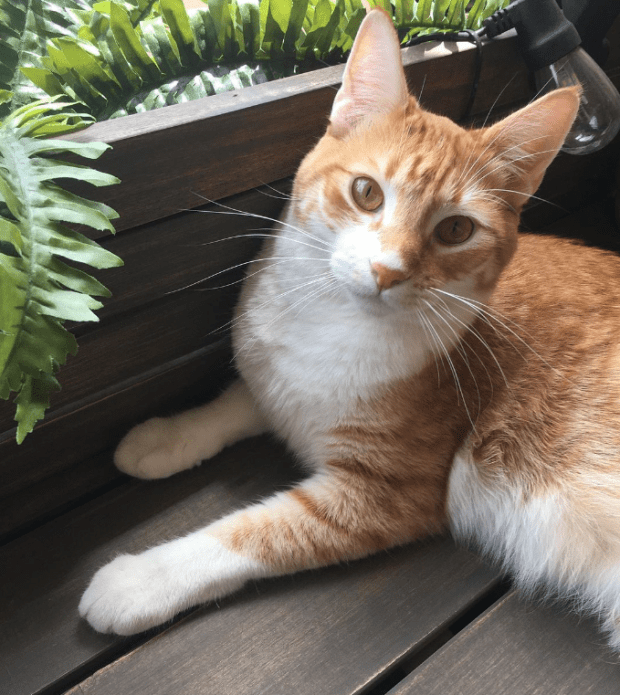
Taters
Taters the cat. Credit: NASA

The answer to the first question is simple: Our machine proxy explorers need more bandwidth to send back data and ultra high definition photos/video of the strange worlds they’re exploring.

We send robotic probes to destinations like the asteroid belt and Venus because we can’t go ourselves, and because it’s the most efficient way to explore. The indomitable human spirit drove us to explore our own planet, and it’s expected that eventually human eyes will see the oceans of Europa and the surface of Mars. But we still have some big engineering challenges ahead of us, like figuring out how to build ships that adequately shield astronauts from radiation, and medical/biological challenges like how to prevent vision, bone density and muscle loss in low or zero gravity.

So in the meantime robotic probes are our ticket, and their numbers are growing quickly.

There are more than 30 active probes exploring our star system now. Most belong to NASA, but others belong to space agencies from the EU, South Korea, Japan, Russia and India, among others. Another 27 new spacecraft are expected to launch this year, headed to destinations like Venus, Mars and the many moons of Jupiter, and at least that many are scheduled to join them in 2026.

That’s a lot of probes.

Each of those craft will have to transmit data back to Earth — scientific data, but also high definition photos and videos of planetary and moon surfaces, asteroid compositions and more.

There isn’t a traffic jam — yet. But there will be soon if every probe’s data is bottlenecked by the lower-bandwidth radio system.

While laser and radio transmissions both travel at the speed of light, the shorter wavelength of laser light allows more data transfer. In simple terms, the DSOC network is like upgrading from an old phone modem to broadband.

As for why NASA chose a video of Taters chasing a laser, there are two main reasons: Fun and honoring history.

Taters’ human, Joby Harris, works for NASA as a visual strategist. When NASA employees were talking about the significance of sending the first high-def video from a probe to Earth, one staffer mentioned that one of the first — or perhaps the first — test videos in the dawn of television was a simple video of a statue of Felix the Cat.

The rest fell into place. Transmitting a video of a cat chasing a laser seemed like the natural choice to test a laser-based comms system. Taters has become something of a celebrity in the process.

One thing we can be sure of: if aliens are watching us from afar, there’s a good chance they’ll conclude felines are the ones running things down here. They may not be wrong.

Newest TikTok Trend Has People Terrorizing Their Cats To Taylor Swift Songs

TikTok is a major security risk to the country, a danger to the people using it, and a platform that encourages animal abuse. It’s time for the US government to take action.

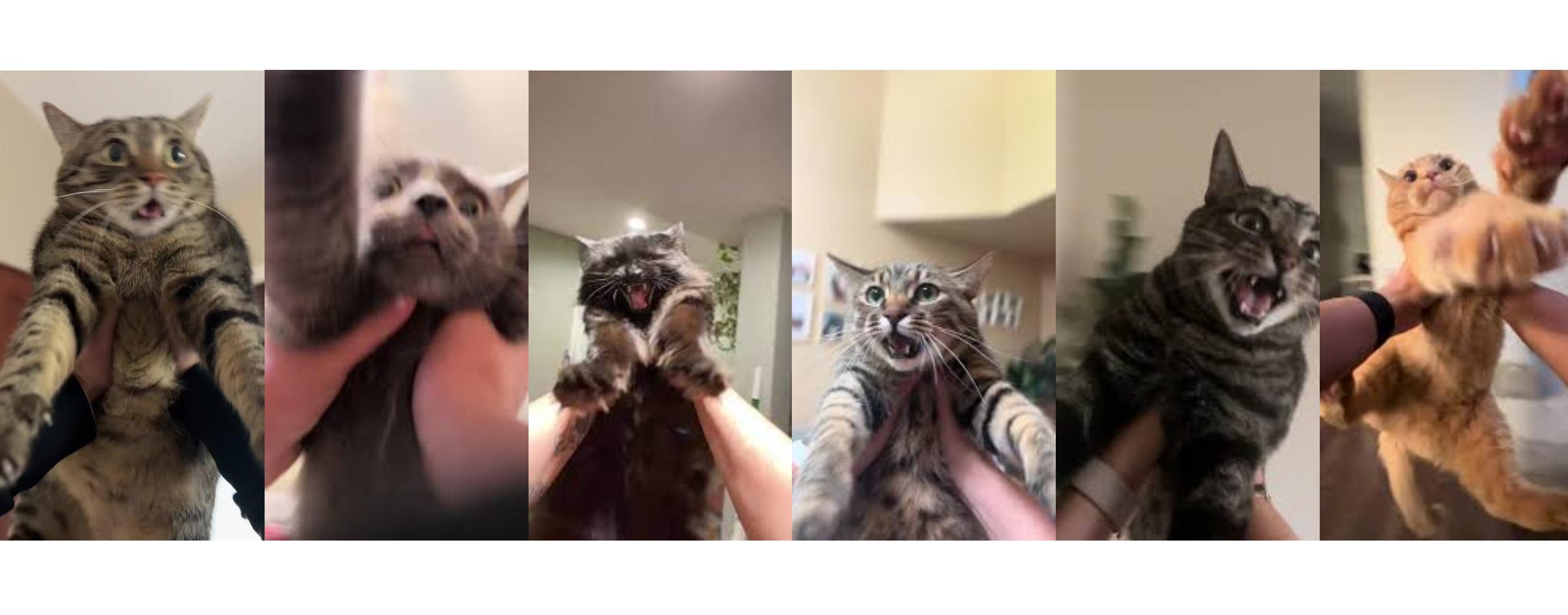
The cat is wide-eyed with terror, his mouth moving in protest as his human picks him up.

“Spock already hates me so why not torture him more?” reads the caption on the TikTok video as the woman spins him around to Taylor Swift’s saccharine ballad August.

In another, a man in his 40s stares into the camera, snatches his cat up in one quick motion and then cackles gleefully as he spins his cat, who squirms in his grip and meows plaintively. One woman admitted her cat “hated every second of this” as she twirled her to the Swift track.

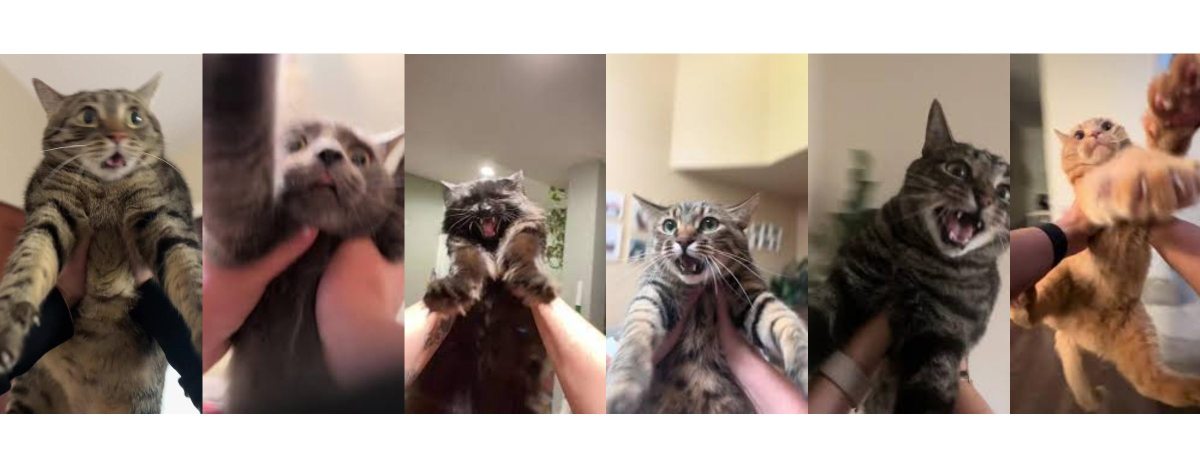
tiktokcatstrend
Cats subjected to the Taylor Swift “cat spinning” trend on TikTok.

There are hundreds, perhaps even thousands of these videos on TikTok, the Chinese government-controlled social media platform. Inexplicable as the trend is, it’s far from the first time people have abused and terrorized their cats for “lulz” and the approval of strangers on TikTok.

Previous trends had TikTok users picking their cats up upside-down and one-handed, then “answering” them as if they were telephones while reciting a line from the movie The Princess Diaries.

The 2021 holiday season saw the invention and propagation of a “hack” by someone who claimed that if you chase your cat around and brandish your Christmas tree like a weapon so the cat thinks you’re going to hit her with it, “it’ll be too scared to f**k with” the tree. Classy. The video of the woman terrorizing her cat piled up more than 25 million views and spawned innumerable imitators.

Then there was the “influencer” who smacked his cat around and uploaded footage of it, not by accident but because he says that’s how people properly “discipline” their pets. There are one-off abuse videos, and then there are trends that just won’t die, like the “prank” in which people frighten their cats half to death by placing cucumbers behind them while they’re eating.

TikTok is legitimately evil

More than any other platform, aided by an insidious algorithm that expertly keeps its users glued to the screen and scrolling, TikTok is a vehicle for social contagion, elevating the crass, the outrageous and the destructive as it lavishes clicks and revenue on people who behave abominably.

Just look at the case of Chloe Mitchell, the popular TikToker who nearly destroyed a non-profit animal shelter single-handedly when she threw a tantrum earlier this year. Mitchell enjoyed in excess of 50 million views on videos in which she invented wild stories painting the shelter as some sort of criminal operation run by “scammers” who, she claimed, enrich themselves by adopting out animals.

It would almost be funny for its absurdity if not for the fact that the shelter’s operations were crippled for two months as Mitchell’s followers called in death threats, review-bombed the shelter to ruin its reputation online and made its volunteers fear for their safety.

A major security risk

It baffles me why anyone would continue to use TikTok — or sign up to use it in the first place — when its operators admitted under oath that sensitive data belonging to American users is routinely accessed by the company’s headquarters in Beijing, despite many public assurances that the data was compartmentalized and available only to software engineers in TikTok’s US offices.

The company was also caught spying on journalists and is the subject of a Department of Justice investigation into its misuse of user data.

And if that isn’t reason enough for some people to uninstall the app, consider the fact that TikTok’s Beijing-based parent company, ByteDance, added code that makes the app an extremely malicious piece of spyware software capable of capturing every tap or keystroke by its users.

For those who aren’t well-versed in technical matters, this means having the app on any of your devices is tantamount to handing China’s government the keys to all of your online accounts, including banking and credit, as well as all your text, email and in-app correspondence. ByteDance can read the private texts you exchange with family members, see precisely what you’re doing on sites like Facebook and Youtube, and help itself to users’ most private information.

Some people might not understand the scope of the security risk because they may not know that every organization in China is subservient and ultimately accountable to the Chinese government and the communist party. The communist government can access data from Chinese companies at any time, force them to hand over their proprietary technology and research, and compel them to cooperate with cyber attacks on US citizens and infrastructure. In fact, it’s written into Chinese law. The government has total control over every Chinese corporation and, under President Xi Jinping, has tightened its grip on every layer of society.

It’s not difficult to imagine the Chinese government using the wealth of data collected by TikTok to compromise the devices of people who work on critical US infrastructure, like the power grid or defense systems, and use that access to retrieve their employee login credentials, providing access to the systems they work on.

Imagine cyberattacks that shut down power plants in Texas and across the southern US during severe weather like the deadly heat dome the country experienced this summer. Or Chinese government-sponsored hackers crippling US banking systems, leaving Americans without access to currency for days or weeks.

Then there are the “smaller” risks that are devastating on an individual level: A hacker compromises your devices and locks photographs of deceased loved ones that are priceless to you, or threatens to blast details about your private life to everyone in your contact list if you don’t pay them $10,000 in cryptocurrency.

Or maybe your information isn’t used in any particularly dramatic way, but in the aggregate becomes part of the great data pool the Chinese government uses to build and refine the most invasive social surveillance system in human history.

All that to use an app that promotes videos of people abusing their pets? No thanks. I hope the US government comes to its senses and bans the app from the US entirely before something catastrophic happens because if they don’t, it’s not a matter of if something disastrous will happen, but when.

Fred The Cat Is Back With His Human And His Brother, Thanks To Police

Fred went missing last summer and another person tried to claim ownership of the little guy by attempting to change details on his microchip.

Beryl Edwards was overjoyed when her microchipping company contacted her to inform her that her cat Fred, missing since the summer of 2022, had been found.

Then her joy turned to frustration as the company asked her to confirm a change in Fred’s ownership.

“Can you imagine the range of emotions from, ‘Fred! He’s alive, he’s OK’ to ‘transfer of ownership? What’s this all about?’” the UK woman told the BBC earlier this week.

A rep from Identibase told Edwards the company couldn’t provide any information on the person or people who currently had Fred due to data privacy laws, so Edwards called the police, who handled it swiftly.

“I’m totally over the moon,” Edwards told the BBC on Wednesday. “I can’t praise Market Drayton police enough, they got on to the case on Sunday, contacted the people on Monday, and by 10:45 on Monday evening they brought Fred home.”

The police are able to access data the public cannot if it pertains to an investigation, and law enforcement had said earlier they considered Fred’s predicament a case of theft. It’s not clear if they charged the other party with a crime.

As for Fred, Edwards said he’s happy to be home with her and his litter mate, Gino.

“He’s roaming around the house, obviously he’s kept in doors,” she said. “He’s playing, he’s eating, having lots of cuddles, lots of love, he’s great.”

UK legislators recently passed a law that will require all cat owners to have their felines microchipped by June 10, 2024. Advocates say the law will greatly increase the chances that missing cats are reunited with their people. It will also help hold people to account if they abandon their pets, and will help authorities settle questions of ownership in cases where it’s disputed. Edwards said she’d like to see changes to the way information is shared as well so people in her situation can more easily resolve their problems.