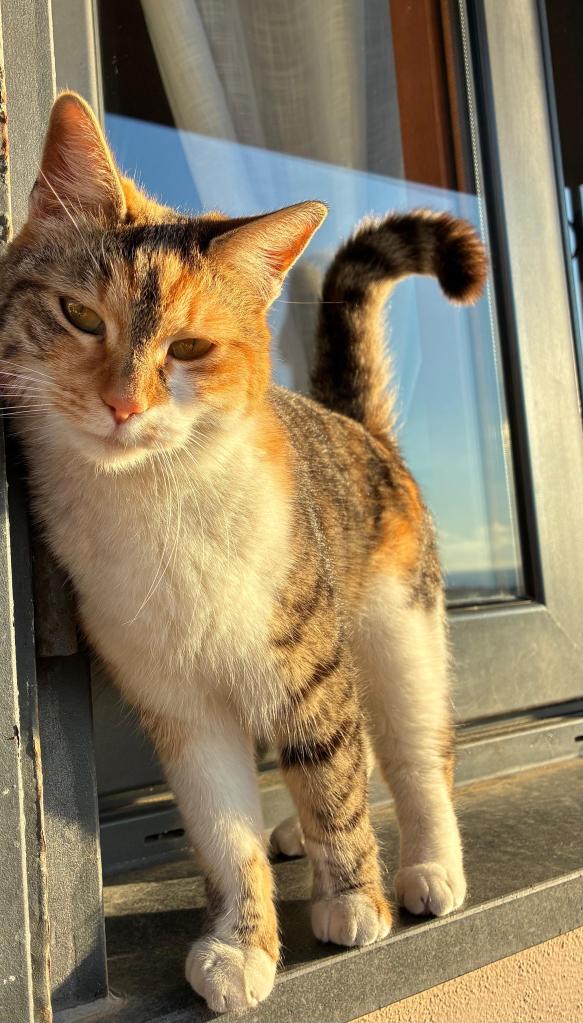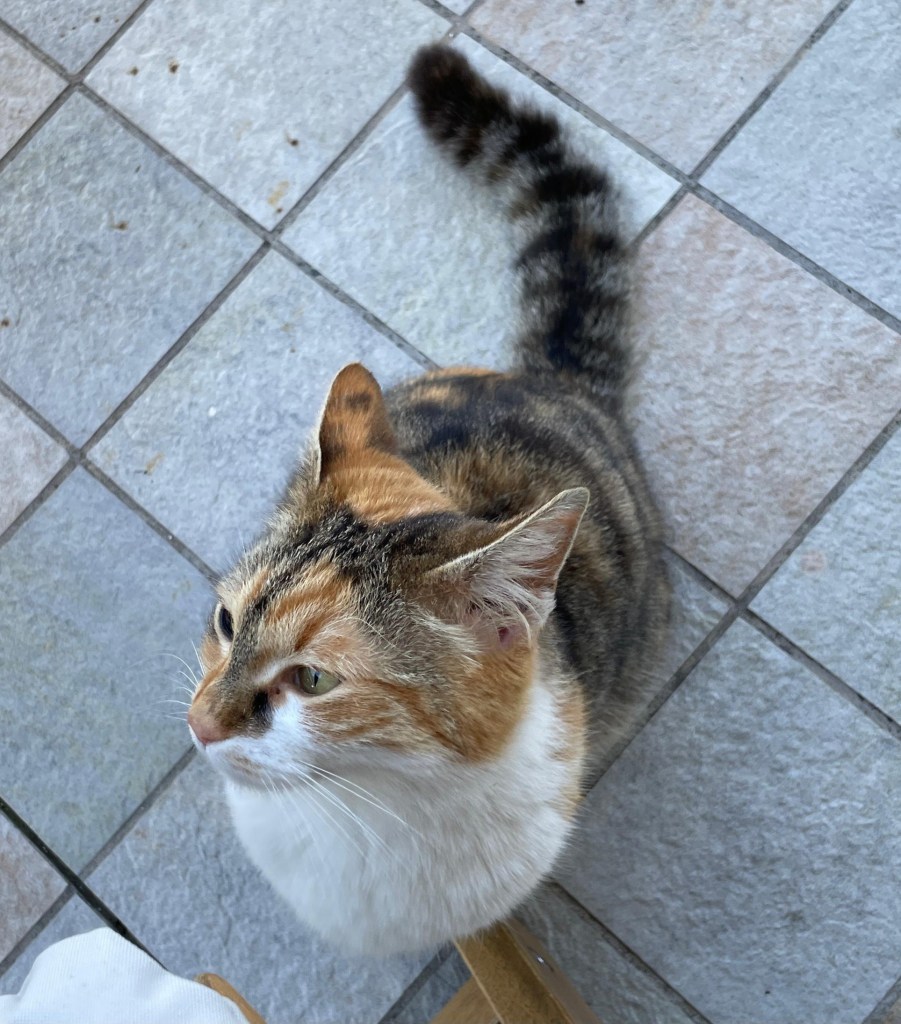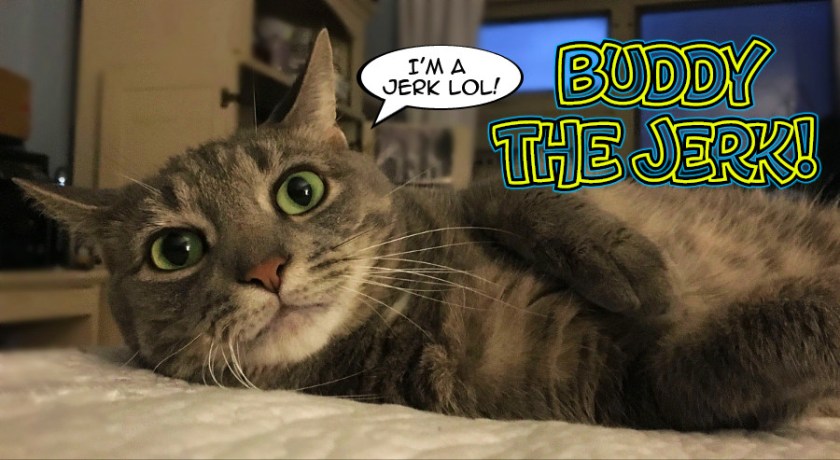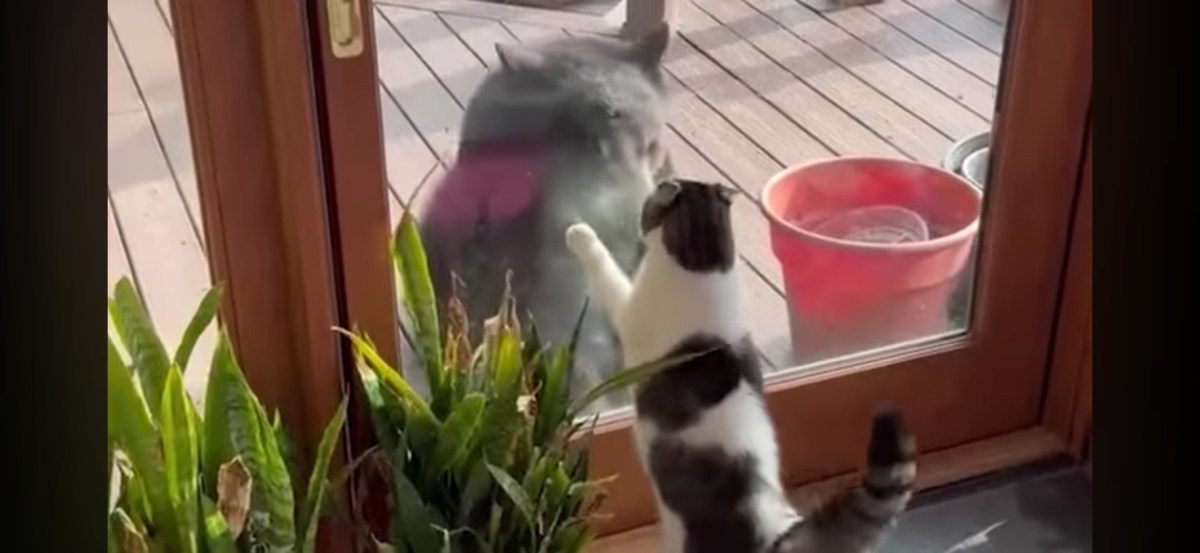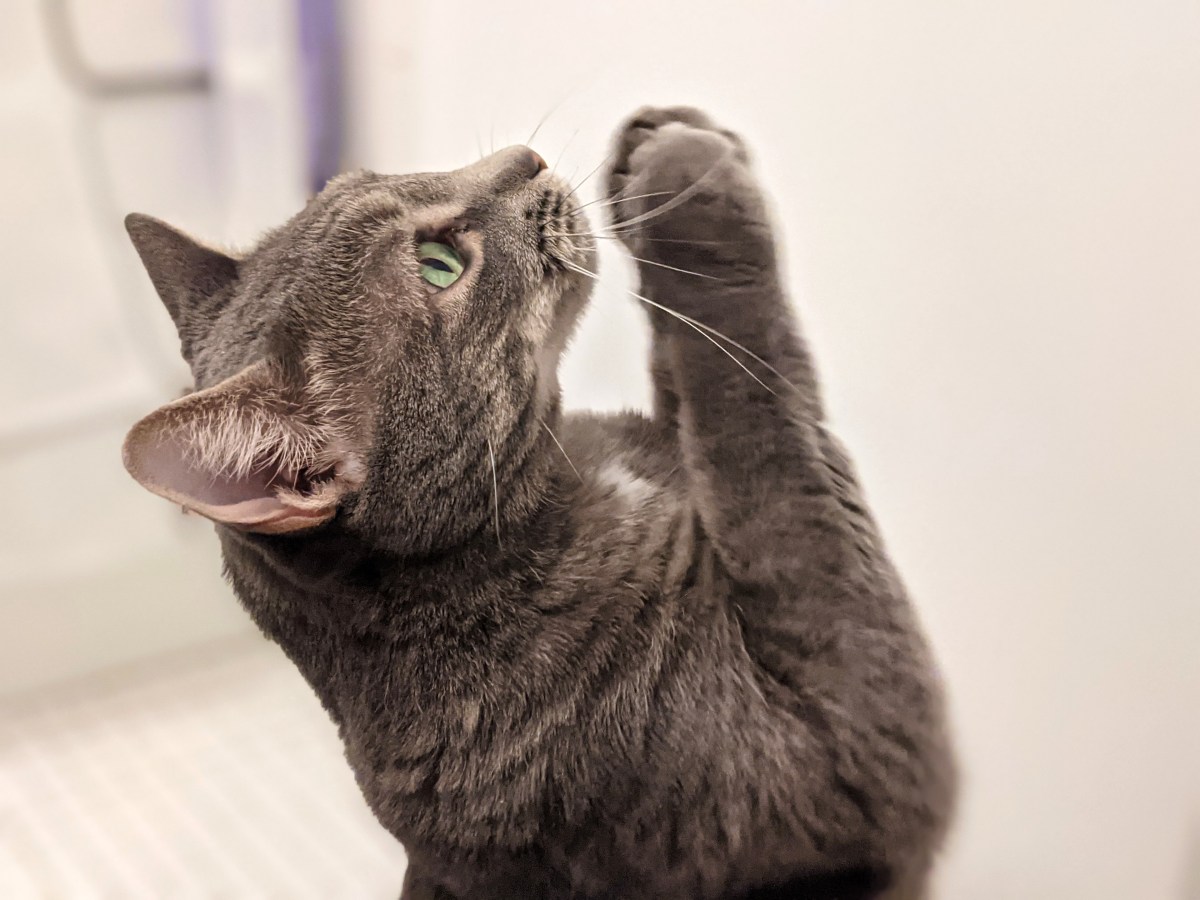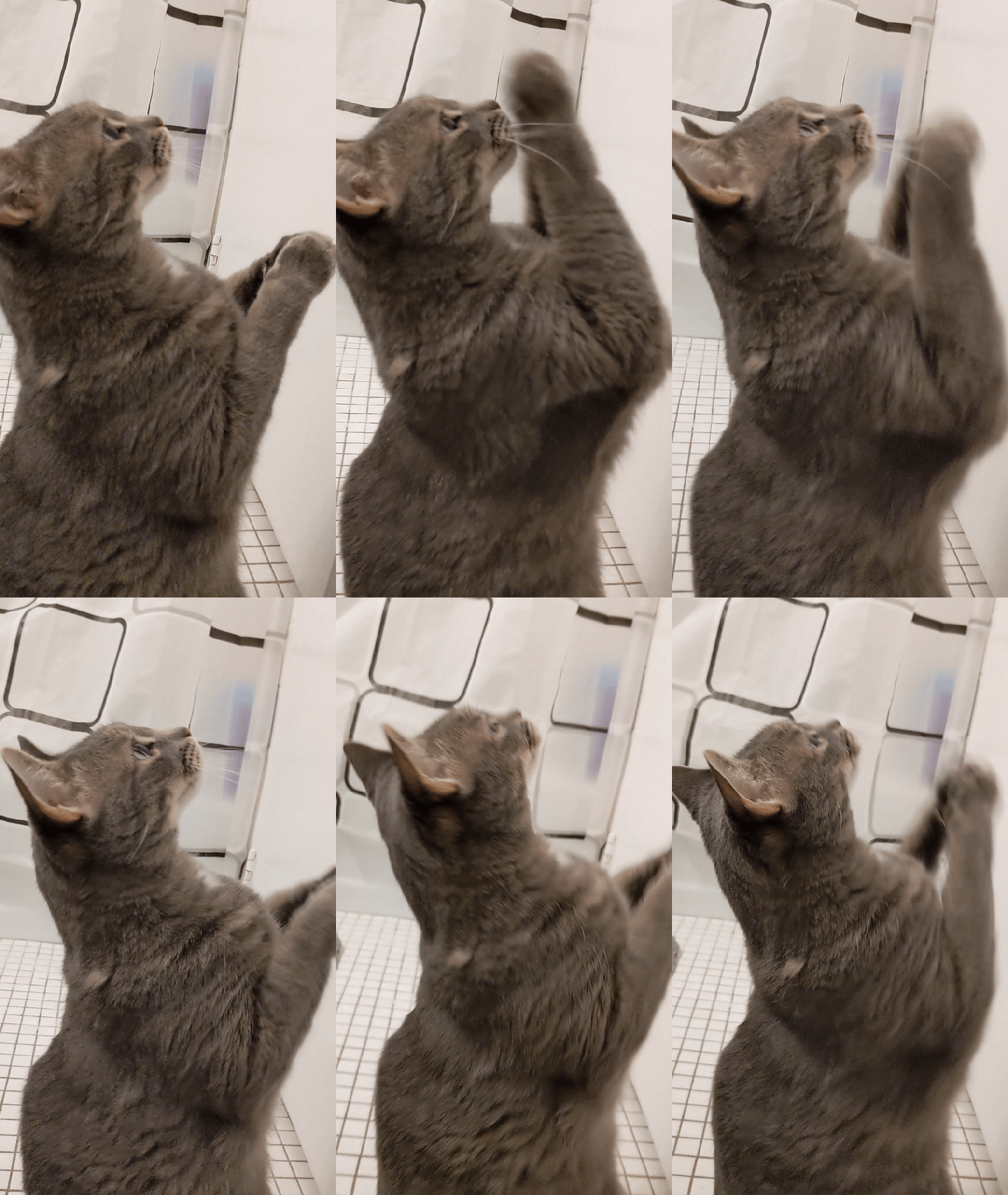
Buddy the Cat says humans must learn to respect personal space, while Buddy the Cat argues it’s perfectly reasonable to sleep on his human’s face.
Doesn’t Anyone Teach You About Personal Space?
All right, dude, enough! Damn!
You were doing a good job there for a little bit but by the 4th second you should have known it was time to cease scratching my head.
Do humans not teach their offspring about personal space or something? I am a cat, not a stuffed animal!
From now on there will be an automatic three-second cutoff during petting sessions, and I will enforce a two-foot buffer zone so my space is respected. You leave me no choice!
I Can’t Sleep Unless I’m Draped Over You
Are you settled? Comfortable? Ready to go to sleep?
Good.
I’m just gonna climb up here and sort of just unroll myself across your body. It’s the only way I can fall asleep these days.
I think part of it is the gentle rhythm of your breathing, your chest rising and falling, that really relaxes me, although that little current of air when you exhale is annoying. Try to breathe less annoyingly, okay?
If you wake up during the night and I’m wrapped around your head like a hat, do not be alarmed. Your hair is soft and your brain generates heat. This is prime real estate.
Likewise, there may be times when I walk on your face, lick your nose, groom your beard, or jump on you with a back paw landing right where the sun don’t shine. As you fold up like an accordion in shock, and blink in the dark with your 20/800 uncorrected vision, remind yourself that it’s just your best little pal trying to get comfortable.
Mi casa es su casa, eh? I’m your feline friend! Your best bud! Now if you don’t mind, stop tossing and turning so I can get my beauty sleep. Thank you for your anticipated cooperation.
We’ve made enormous mistakes in our reconstructions of prehistoric creatures, including dinosaurs and mammals. Would paleontologists of the future misinterpret the clues our civilization leaves behind?
Imagine if, far in the future, humanity has spread across a healthy swath of space, colonizing worlds across dozens of light years.
Academics at a prominent science institute, looking to learn more about the humble beginnings of our species, fund a scientific expedition to Old Earth, where radiation and toxicity have finally declined to a point which allows teams to poke through the ruins of our civilization.
As they piece together clues from the rubble, they find references to companion animals who have been domesticated while their wild counterparts continued on.
What does a cat look like? they wonder. Then they find the bones, beginning with a handful of incomplete skeletons…
Critics have long argued that our depictions of dinosaurs are like skeletons wrapped in flesh, with modern representations doing a poor job of representing complete animals. What if the paleontologists and historians of the future mistranslate a word like “fur” or don’t realize the skeletons of cats are the same furry creatures that were human companions?A tiger imagined as a semi-aquatic animal with scales instead of fur, and a skull interpreted in much the same way we interpret dinosaur skulls. “Surviving texts make clear the tiger was comfortable in water, and like its distant cousin the crocodile, would remain mostly submerged, looking for opportunities to ambush prey.”No fur, just musculature, as if an anatomy book of animals is one of the few texts to survive in hard copy.A cat with magnificent plumage: “Research shows felines engaged in elaborate mating rituals, using their vivid colors and patterns to demonstrate virility to females in heat.”Finally, a winged cat. Outlandish? Maybe. But what if of the scraps of mythology to survive is a statue of a manticore, or paleontologists discover the bones of a cat species mingled with those of a large bird that died alongside it in a tar pit? In our time we’ve accidentally invented entire species of dinosaurs by mistakenly matching skulls from one species onto the spines of others, or wildly misinterpreting clues in the body plans of new and unfamiliar creatures.
Cats spend most of their time sleeping, which leaves them in a vulnerable position.
Aubrey Plaza is delightfully weird.
Anyone who’s seen her on a late night talk show or in an impromptu interview knows what I’m talking about. Instead of the practiced, carefully crafted anecdotes celebrities tell to make themselves seem more interesting, or the hard focus on promoting a particular project, Plaza seems to revel in awkward pauses, bizarre responses and stories that most people would never tell about themselves.
She does it all with a deadpan expression so you can never quite tell if she’s joking. That’s part of the fun.
I hadn’t seen her in much until Emily the Criminal, about a woman whose frustration at trying to make ends meet with dead-end jobs leads her down a highly illegal path, revealing a talent for deception she never knew she had.
Plaza in Emily the Criminal.
Now she’s starring in Kevin, an animated show about an eponymous tuxedo cat who decides that when his humans break up, he’s going to break up with them too. Instead of going with one of them, Kevin decides to move “into a local pet rescue in Astoria, Queens, where a band of misfit animals helps him discover what he truly wants out of life,” according to the series’ logline.
Plaza co-created the series with Joe Wengert, and Jason Schwartzmann, who we loved in Bored To Death, will voice Kevin. The show will premiere on April 20 on Prime Video.
A still from Kevin.
Cats prefer sleeping on their left side, but why?
Two out of three cats prefer sleeping on their left side, which immediately raises two questions: why do they prefer sleeping that way, and how do we know such a seemingly obscure piece of information?
In 2025, a team of scientists from Italy and Germany analyzed more than 400 random online videos of our furry overlords in their rest state, and the numbers were consistent. Cats definitely have a preferred side to sleep on, and it’s the left.
As for why, in a research paper published in Current Biology last summer, the scientists say there are several reasons, but the primary one is that the right side of the brain processes shapes and visual sensory input.
Since the right hemisphere of the brain controls the left side of the body in mammals, due to the way nerve fibers cross at the base of the brain, a cat opening its eyes and seeing the world from the left side is able to more quickly assess information and react.
Credit: Min An/Pexels
That’s a pretty big deal for cats, as a story in Science Focus notes. As both predator and prey, felines have to respond quickly not only to potential threats, but also potential lunch.
That is especially true for a species that spends the majority of its time sleeping deeply or napping, meaning they’re physically vulnerable to attack most of the time. That explains why our cats are able to spring to alertness immediately from a nap, and why their most restful sleep comes when they’re absolutely sure they’re safe.
Anecdotally, that makes sense. Bud clearly feels safest when he sleeps on me or burrows between my knees, and it’s subsequently harder to rouse him from slumber compared to, say, when he catches some Zs on the couch by himself or retreats to another favorite napping spot.
Perhaps unsurprisingly, he also bucks the trend and likes to sleep on his right side. We are, after all, talking about a cat who still hasn’t figured out that wand toy games simulate hunting, and that they should end with a “kill bite” rather than Bud’s favored method, which is bouncing happily on his back paws while bobbling the toy in his front paws.
He may have the instincts of his wild ancestors, but all he knows is the comfort and warmth of human homes.
“Can’t find your keys, human? That’s terrible. I don’t know where they are, but perhaps I could recall that information if, say, there were treats involved. Take your time, I’m in no rush even if you are.”
A new study shows dogs and human toddlers are eager to help when their adult caregivers are looking for a missing item, but cats don’t seem to care.
The study, which involved running the same experiment for young children, dogs and cats in their own homes, made it clear cats were fully aware of what was happening and understood their humans were looking for the missing object.
They just didn’t care.
There was one notable exception, of course. If the missing items were important to the cat — a favorite toy, for instance, or a bag of treats — the felines were motivated to help search or direct their humans to the missing objects, the research team from Eötvös Loránd University in Hungary found.
But at all other times, feline observers were content to hang back and watch, even when they understood their humans were getting frustrated.
By contrast, young children and dogs actively tried to help and signaled to adults when they thought they’d found the object.
“Lookin’ for something? No, I’ll just watch, thank you. Warm, warmer…oh! Cold…colder…that direction doesn’t look promising, human.” Credit: Gord Maclean/Pexels
So does this mean cats are jerks? Probably. Are we surprised by the results? Not at all.
We still love our furry friends, who do have their own unique ways of demonstrating they care about their humans beyond seeing them as providers of food, shelter, and safety, as well as playmates, minions and servants.
Besides, testing whether dogs or cats were helpful or not wasn’t the point. As the authors note, “[t]hese three species provide an important comparison because they share a similar anthropogenic environment but differ in their ecological and evolutionary backgrounds.”
In other words, they’re interested in figuring out how evolution plays a part in how species behave in particular situations. Although it’s yet to be conclusively proven for this behavior, a likely reason is because domestic cats are the descendants of a mostly solitary wildcat species, whereas we humans and our canine friends have long evolutionary histories of living in social groups and cooperating with each other.
The study is included in the March 2026 issue of Animal Behavior.
Last night I was in the kitchen looking for something, anything, to satisfy a sudden craving for sugar when Bud padded up and gave me one of the standard greetings in his Buddinese repertoire.
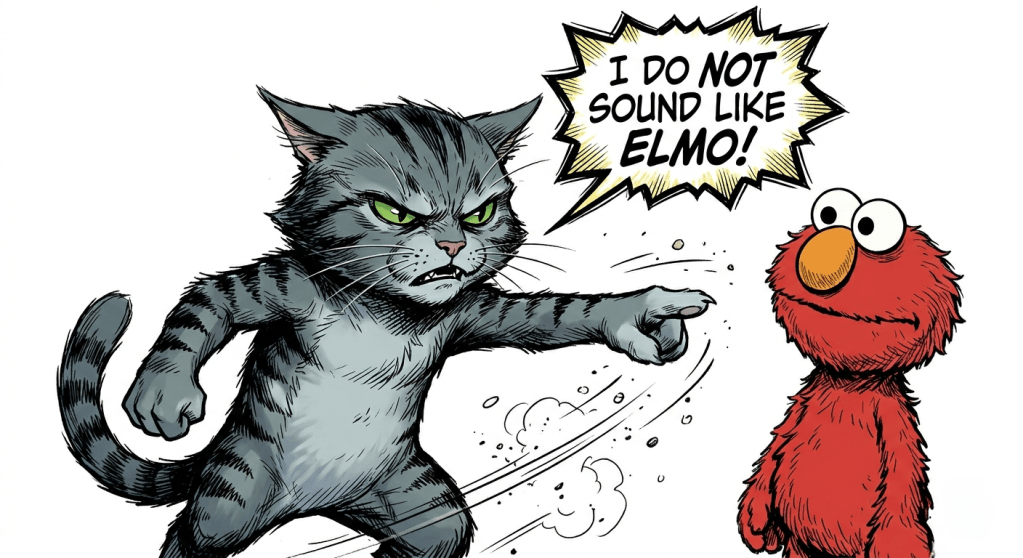
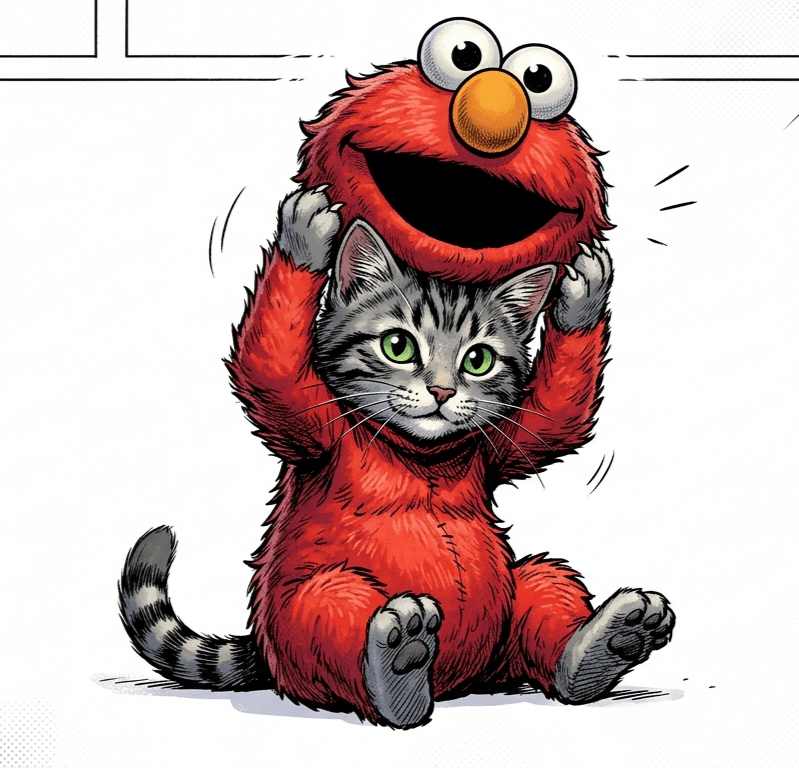
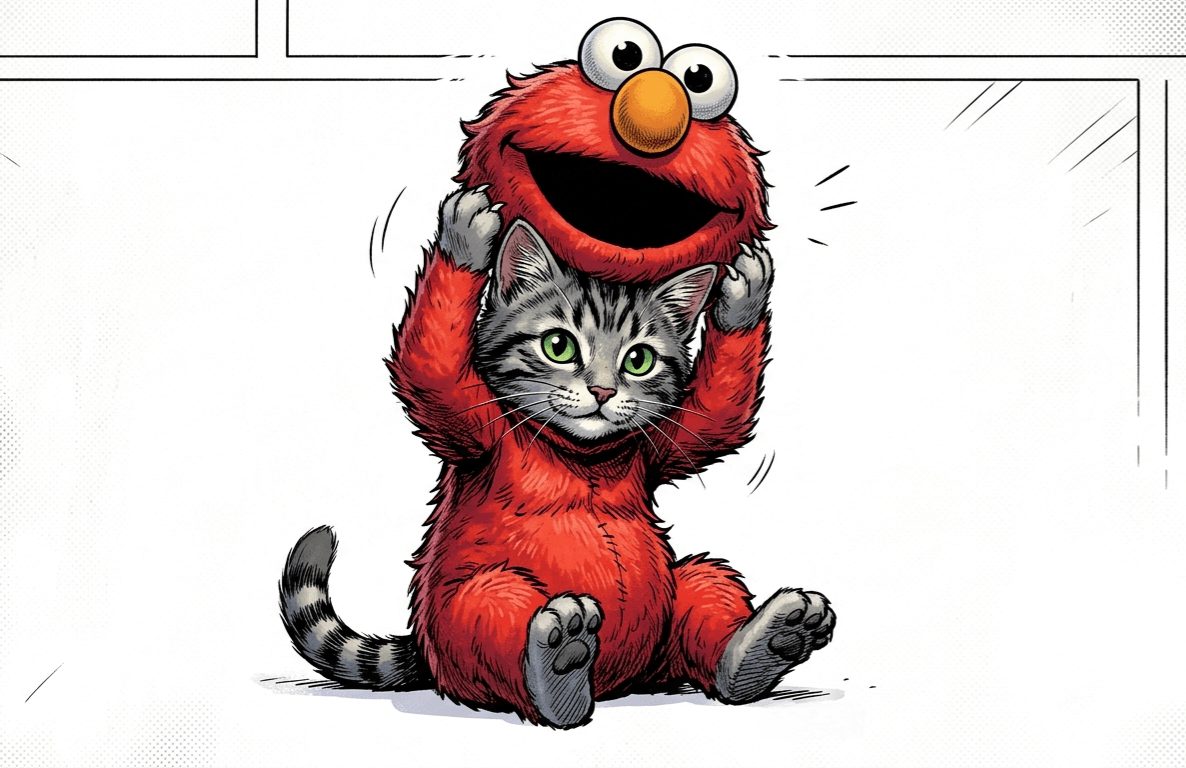
It’s just a “Hmmmmph!” in his high, Elmo-like voice, an acknowledgement that he sees me and he’s watching with interest, but without any of the typical demands or strong opinions attached.
“Hmmmmmph!” I replied.
“Hmmmmmph!” he said again, and we went back and forth until he stopped, tilted his head curiously, and gave me a look that said “Are you making fun of me again?”
I couldn’t help myself and busted out laughing, bending down to mess up the fur on top of his head as he rubbed up against my leg.
Of course I can’t actually prove that he understands our little exchange, but I know in my heart that he does. Sometimes he gets indignant when I laugh at him. Sometimes I get indignant when he gleefully smacks me or tries to chew on my glasses.
But mostly we laugh together, and he understands that human laughter is a happy sound, even when he’s deeply confused about what exactly I find so funny.
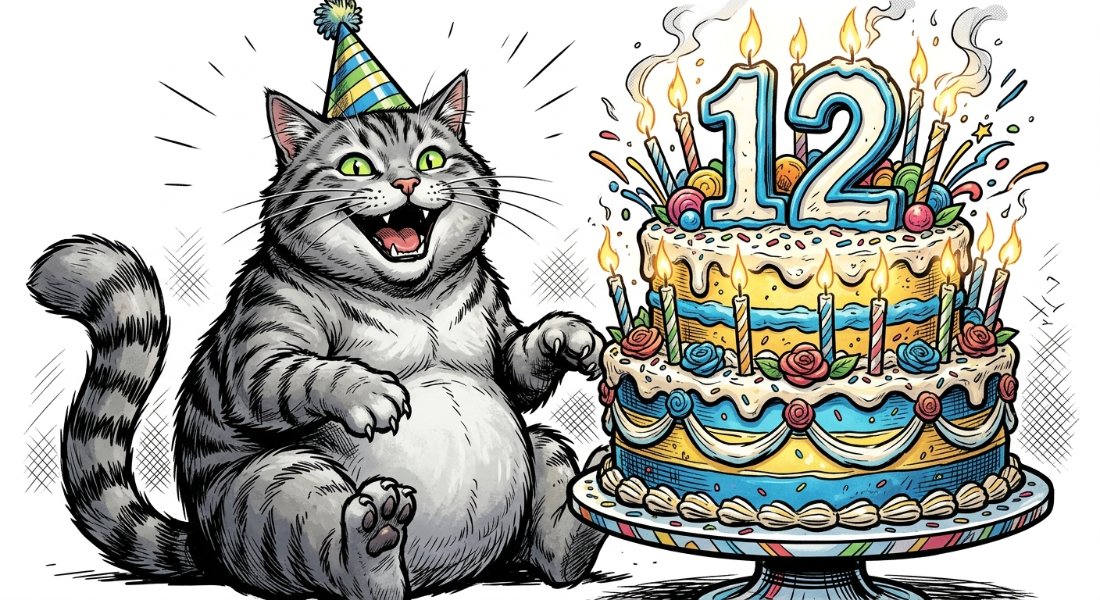
Will I ever have this kind of bond with another cat? I don’t know. It’s taken more than a decade to get here, a decade of being inseparable and understanding each other on a fundamental level.
But I’m not going to spoil it by spending too much time thinking about it. That would ruin the joke.