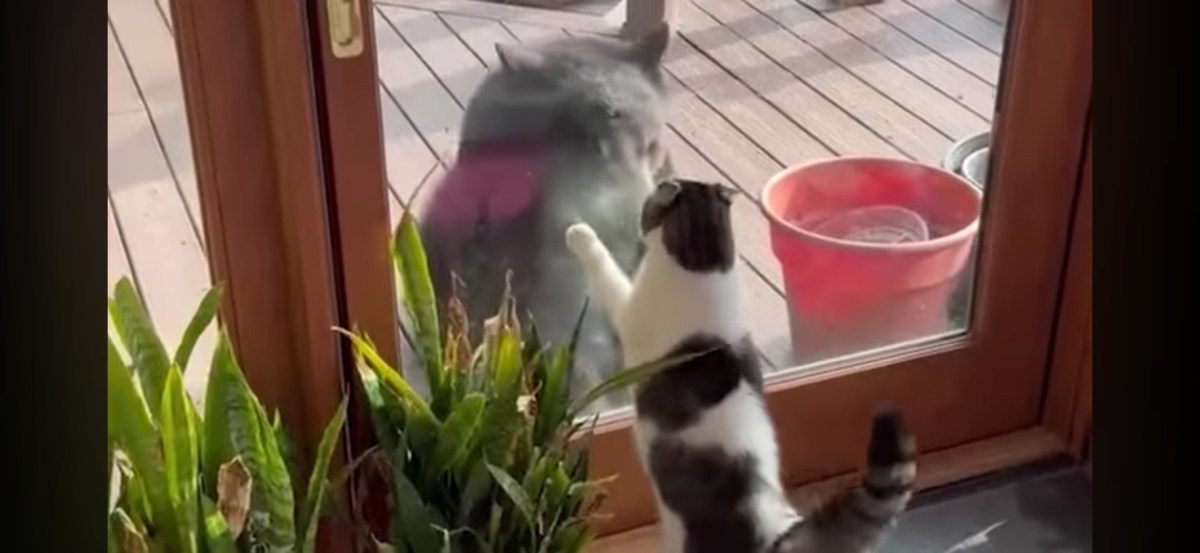
“Scooter does not like bears,” the fearless feline’s human said.
Scooter is one brave little dude!
The tuxedo cat from Asheville, North Carolina, wasn’t even phased by a pair of young bears who unwisely entered Scooter’s territory. Sure, Scooter had the benefit of a glass door between him and the ursine invaders, but Buddy here would have bravely and valiantly defended his home run screaming and taken up a position behind my legs while moaning pathetically.
Plus, I mean, they’re bears. Young bears, yes, but Scooter and his human placed an awful lot of faith in the strength of that glass.
Will Jones, Scooter’s human servant, made the understatement of the year when he posted the video and said flatly “Scooter does not like bears.” Ya think?
Regardless, the little guy clearly had the big animals spooked. They flinched from his hiss-accompanied flurry of rapid paw jabs, then decided it wasn’t worth dealing with the furry lunatic behind the glass and promptly left Scooterland.
Maybe they should be grateful Scooter couldn’t break through the glass instead of the other way around.
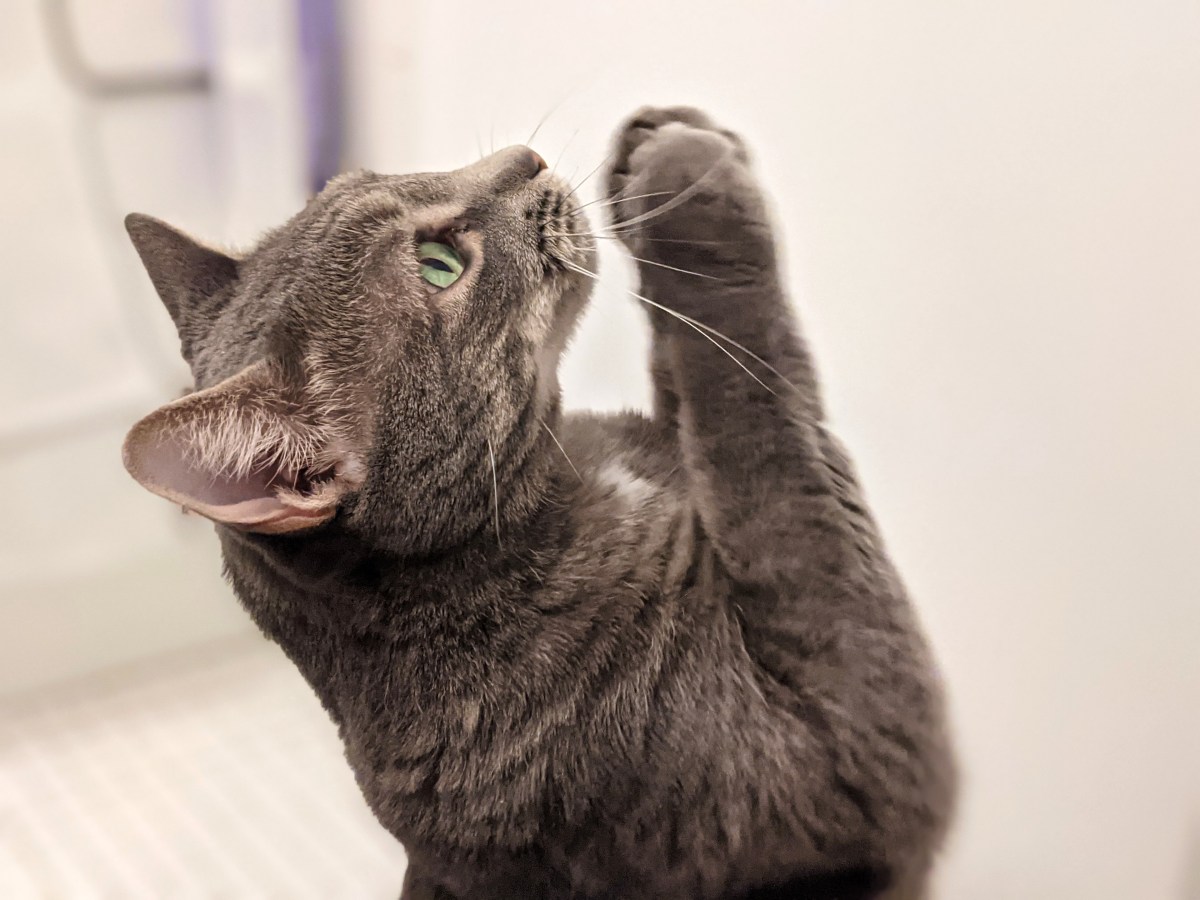
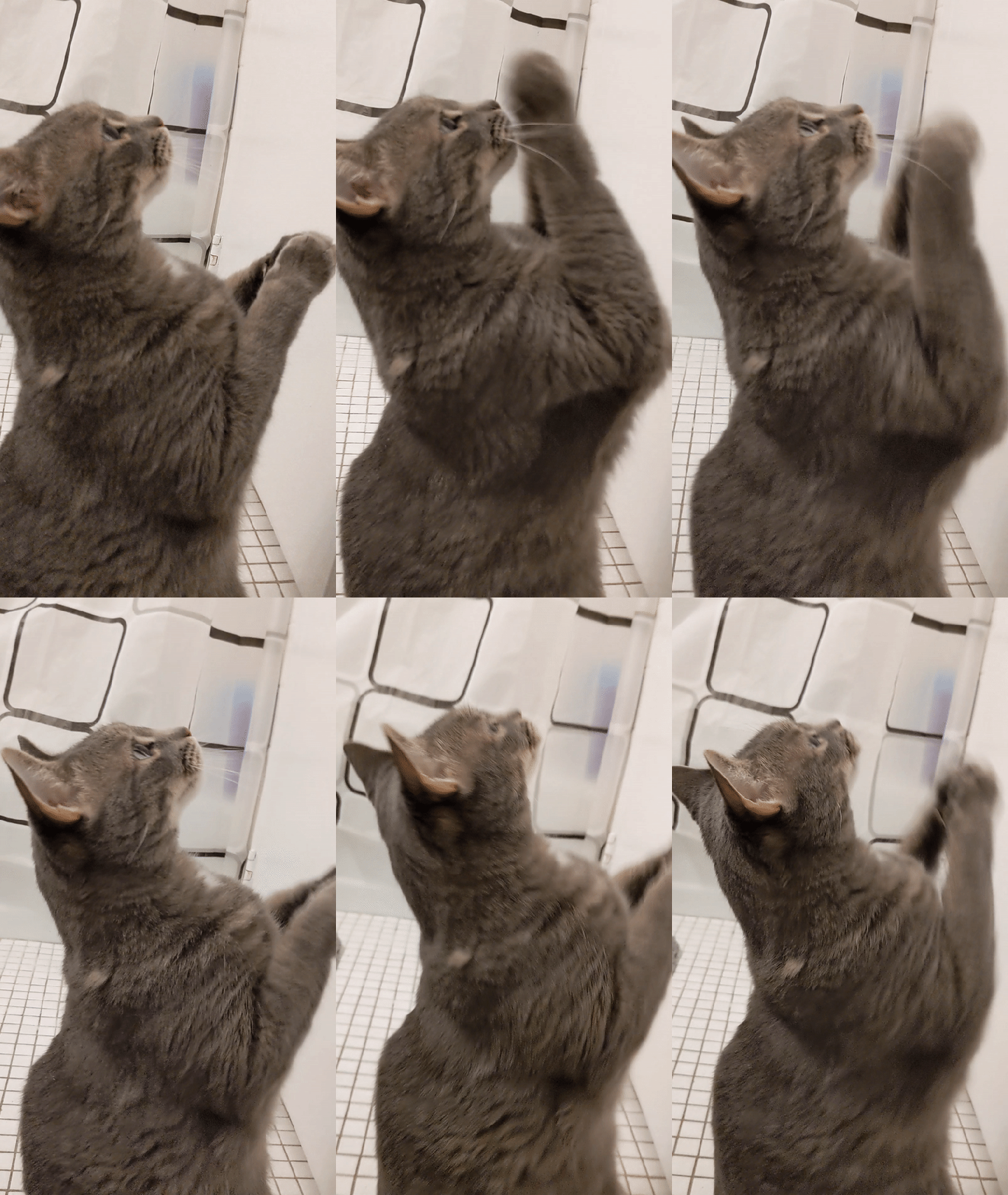
For the uninitiated, it’s a quirky behavior in which a cat sits upright on its back feet, then places the front paws together and moves them up and down as if fervently at prayer — or begging for something. (Though that’s undoubtedly our anthropomorphic interpretation of a distinctly feline quirk.)
Our post about the begging paws has become one of the most popular stories on this site, with people regularly finding us via search engines as they try to learn more about this strange behavior.
The last time we asked around, several veterinarians and behaviorists were happy to speak to us about the subject, but no one could say for sure what the begging paws motion means.
We’re going to give it another shot and hopefully get some answers by comparing notes with people whose cats engage in the behavior. If your cat does the begging paws/praying gesture, we’d love to hear from you!
Please comment here or email paininthebud at gmail along with:
The name, age and gender of your cat
How frequently your cat does the gesture
Anything patterns or related behavior you’ve noticed: does your cat “pray” at certain times or in response to something she sees? Do you reward the behavior with treats, affection or attention? Has your cat always done it, or did the behavior emerge at a particular time?
Any detail could help uncover what exactly our furry friends are doing.
If you have photos or video of your cat “praying,” we’d love to include those clips in our follow-up story as well.
Hopefully by working together we can understand this quirky behavior and finally solve the mystery of why our cats do it!
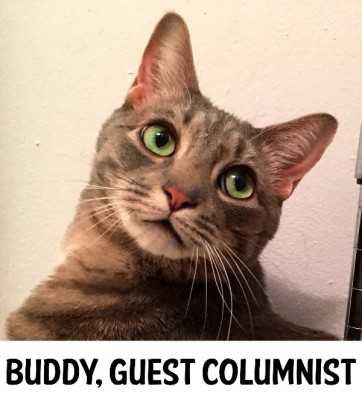
Buddy the Cat asserts he is a powerful apex predator who fears no man or beast, while Buddy the Cat runs and hides the moment there’s an unfamiliar sound in his domicile.
I Am An Apex Predator!
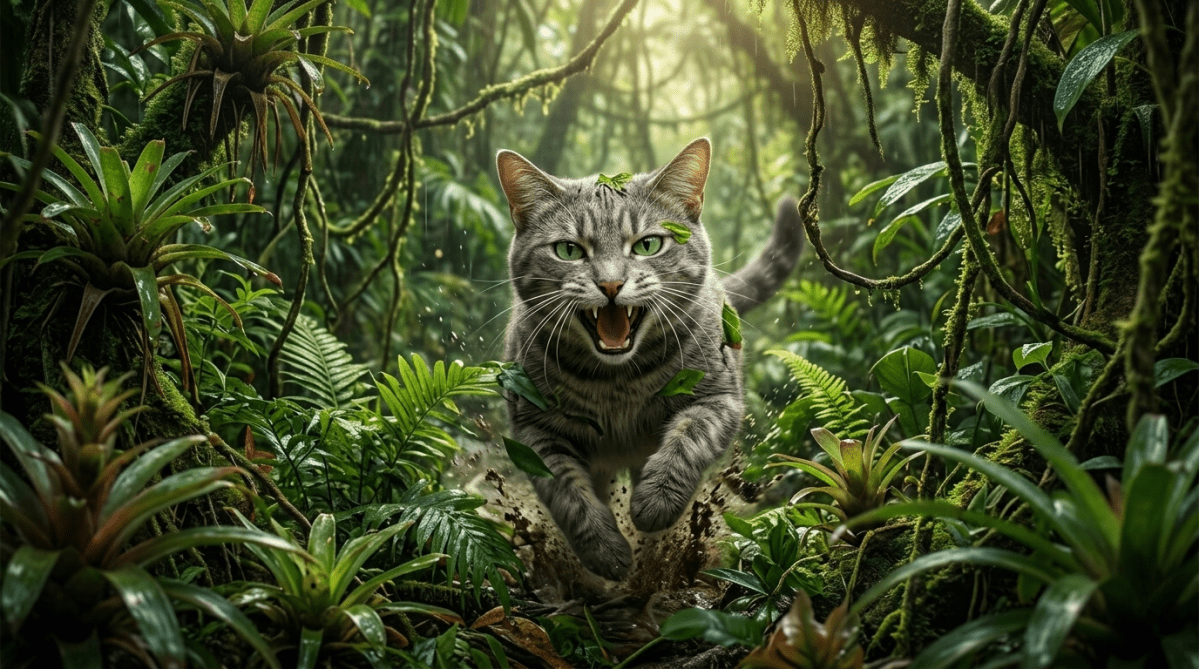
Behold! I have the gait of a lion, the bite force of a tiger, the stealth of a jaguar, and the relentlessness of a leopard!
My meowscles ripple meowscularly as I stalk my prey by moonlight! One second all looks safe and calm, and the next I’m leaping from cover in a burst of feline power to ambush my unfortunate prey!
Lesser creatures have nightmares about me. Indigenous cultures celebrate my legend in oral traditions. Craftsmen carve bas reliefs illustrating my mastery over all beasts. Shamans invoke my speed and strength. My toys quake at the mere mention of my name!
I am Buddy, and I am a ferocious cat! RAWRRR!!!
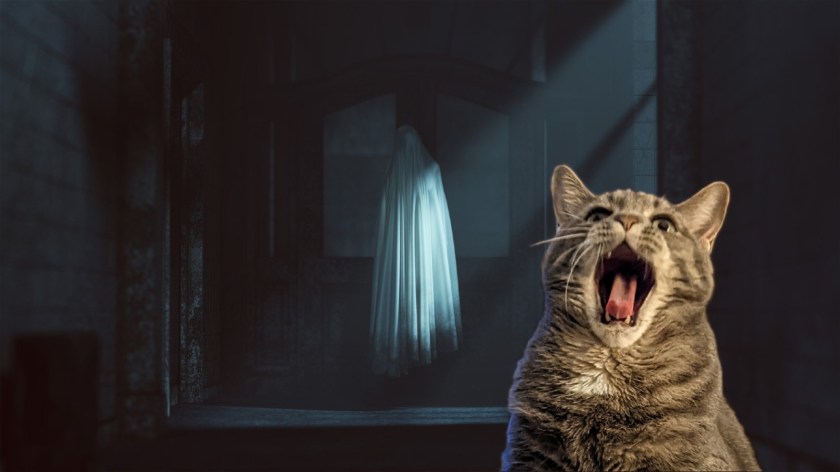
‘OMG, What Was That Noise?!? Go Check It Out, Human!’
Holy crap, dude! What the heck was that?
I’m just gonna run and hide under the bed while you investigate that awful, terrifying noise! No, YOU check it out. Are you crazy? I’m not going anywhere near there! What if it’s, like, a serial killer or a chalupacabra?
Where’s it coming from? The kitchen? The bathroom? Oh God! I told you, there are monsters living in the toilet and they can emerge at any second to murder us in our naps! We should have nailed the toilet seat down years ago! You didn’t listen to me, so you’re gonna have to fend off the monsters while I lend you moral support from three rooms away.
What? Duuuude.
Was it really your smartphone alarm on vibrate? Whew! For a moment there, I thought we were in trouble.
Now I’m gonna need you to rub my head while I sit in your lap and you tell me what a good, brave boy I am. If it really had been monsters, they would have gotten their butts kicked by me. I was brave, wasn’t I?
If you slander me by claiming I freaked out and ran to hide under the bed, I will be forced to accuse you of peddling fake news!
Point-Counterpoint presents two essays taking opposing positions on a topic. Join us again next week, when Buddy the Cat will debate Buddy the Cat on another important topic.
Buddy the Cat says humans must learn to respect personal space, while Buddy the Cat argues it’s perfectly reasonable to sleep on his human’s face.
Doesn’t Anyone Teach You About Personal Space?
All right, dude, enough! Damn!
You were doing a good job there for a little bit but by the 4th second you should have known it was time to cease scratching my head.
Do humans not teach their offspring about personal space or something? I am a cat, not a stuffed animal!
From now on there will be an automatic three-second cutoff during petting sessions, and I will enforce a two-foot buffer zone so my space is respected. You leave me no choice!
I Can’t Sleep Unless I’m Draped Over You
Are you settled? Comfortable? Ready to go to sleep?
Good.
I’m just gonna climb up here and sort of just unroll myself across your body. It’s the only way I can fall asleep these days.
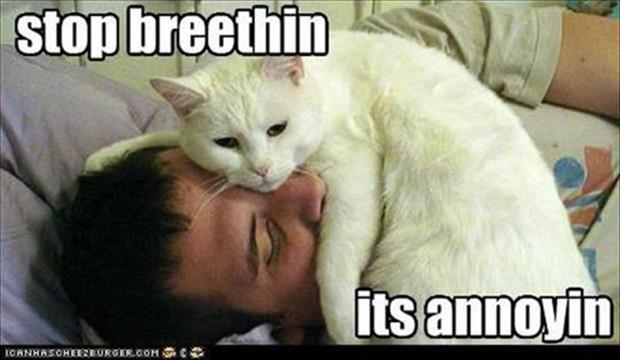
I think part of it is the gentle rhythm of your breathing, your chest rising and falling, that really relaxes me, although that little current of air when you exhale is annoying. Try to breathe less annoyingly, okay?
If you wake up during the night and I’m wrapped around your head like a hat, do not be alarmed. Your hair is soft and your brain generates heat. This is prime real estate.
Likewise, there may be times when I walk on your face, lick your nose, groom your beard, or jump on you with a back paw landing right where the sun don’t shine. As you fold up like an accordion in shock, and blink in the dark with your 20/800 uncorrected vision, remind yourself that it’s just your best little pal trying to get comfortable.
Mi casa es su casa, eh? I’m your feline friend! Your best bud! Now if you don’t mind, stop tossing and turning so I can get my beauty sleep. Thank you for your anticipated cooperation.
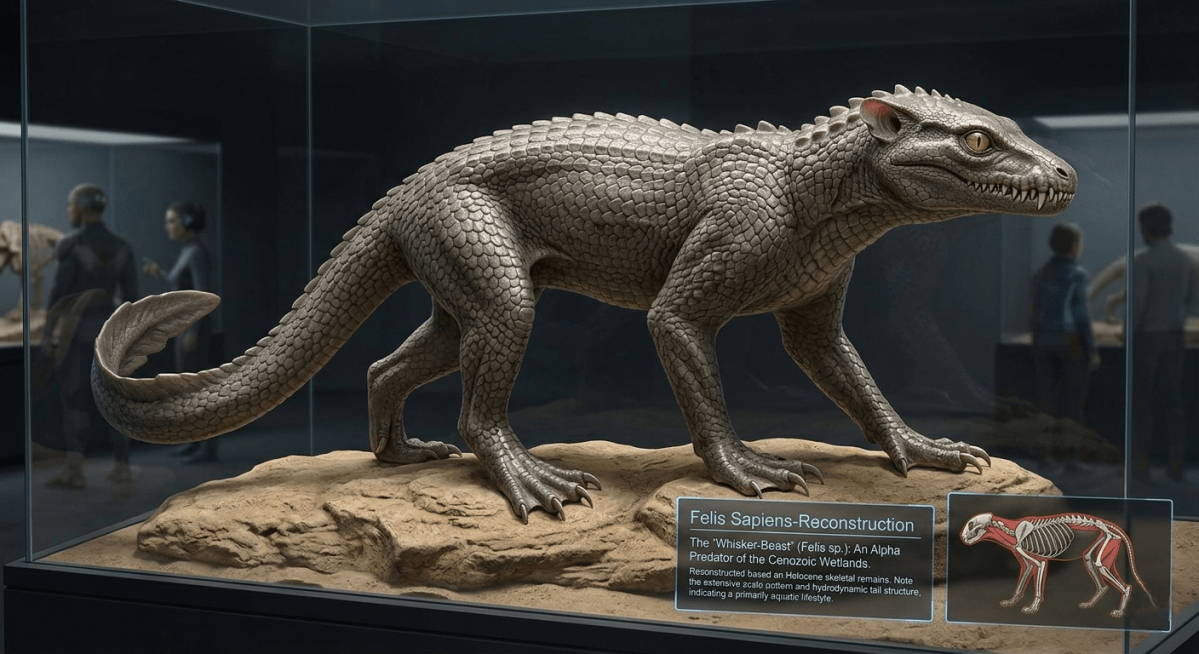
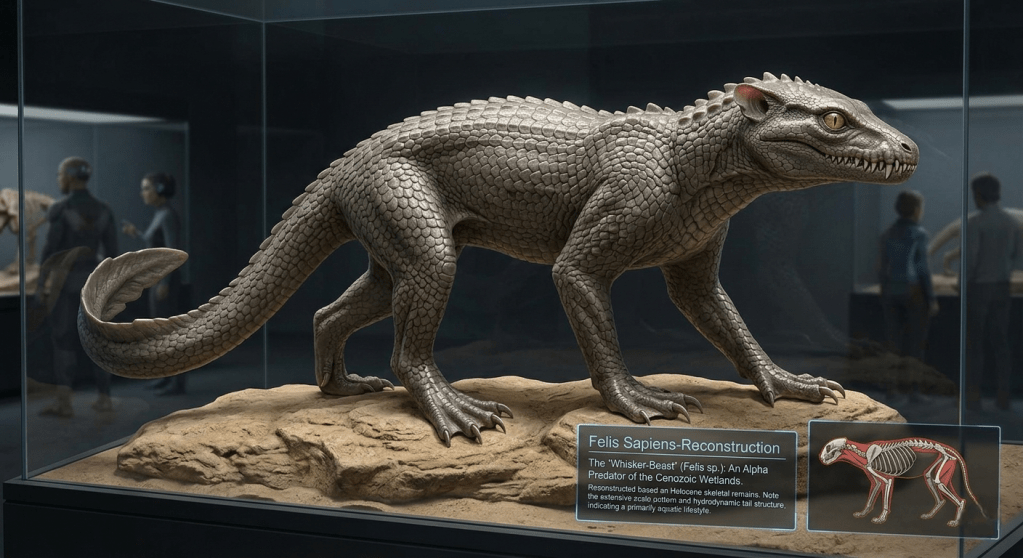
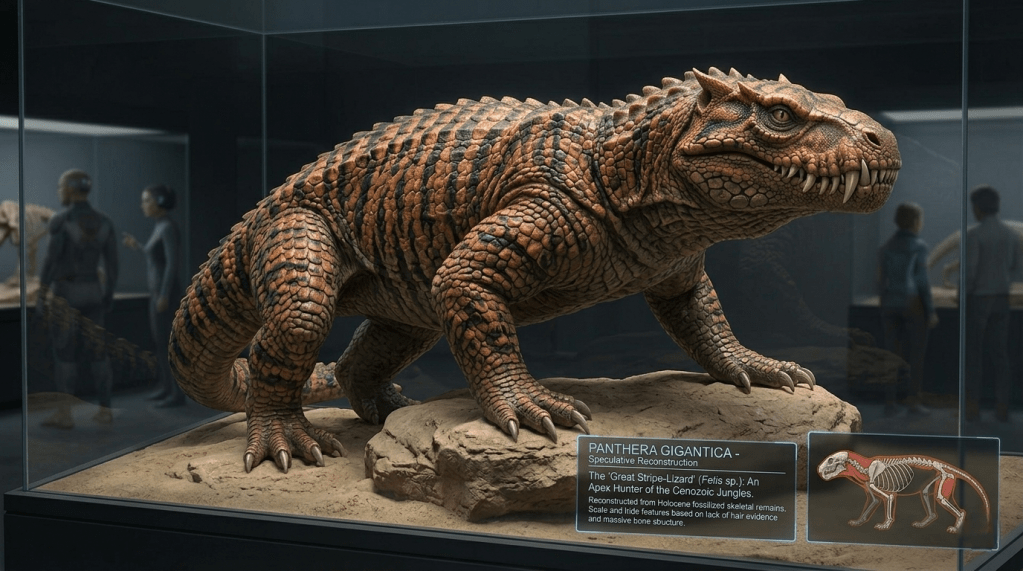
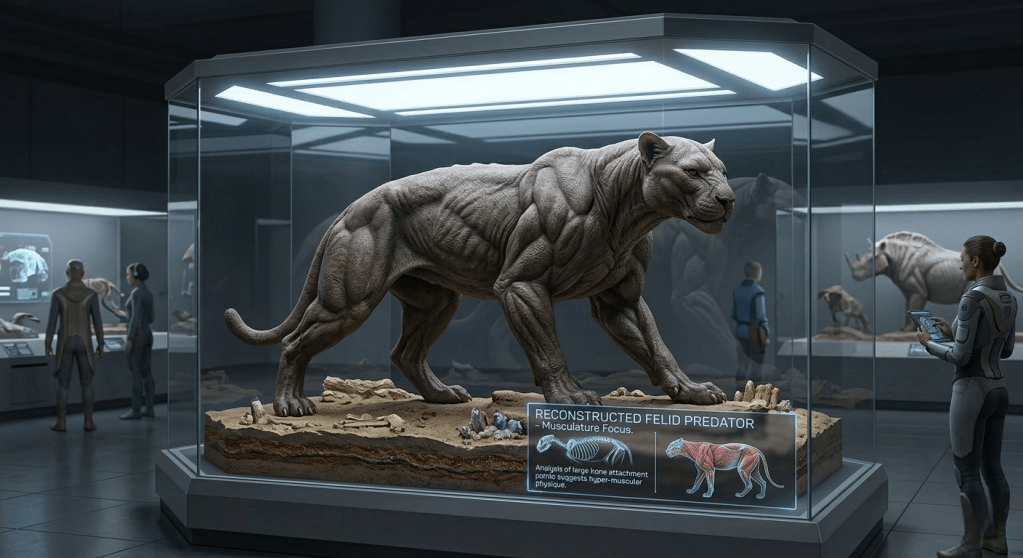
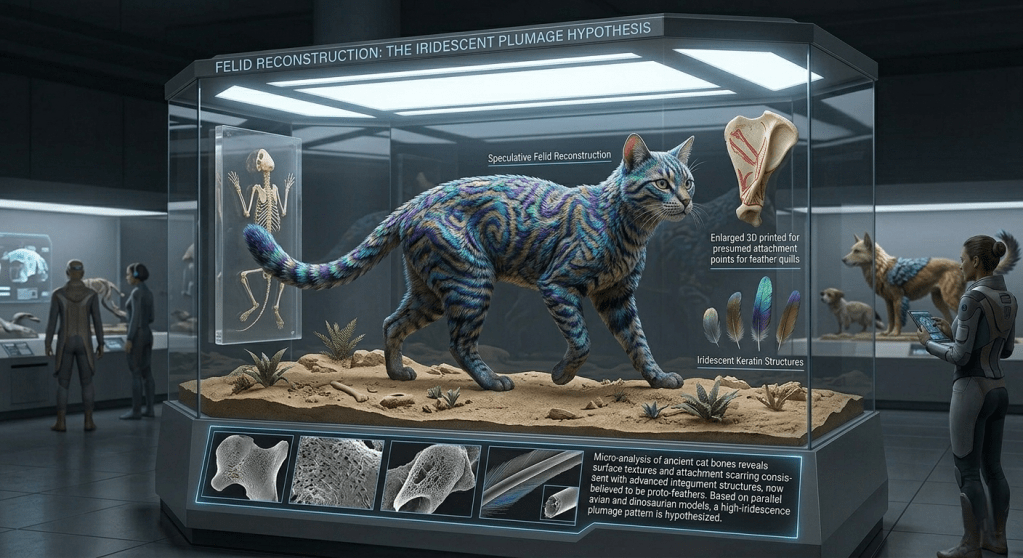
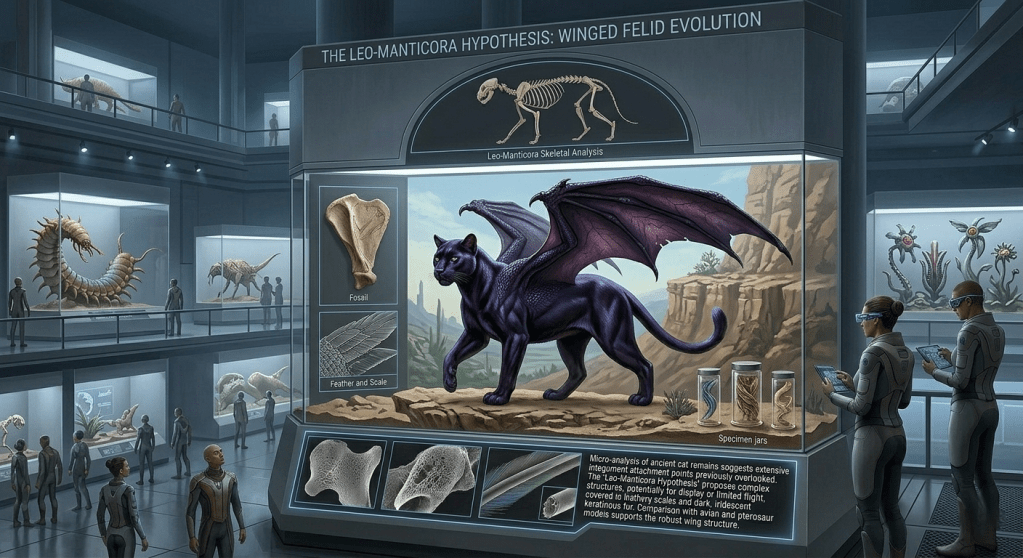
We’ve made enormous mistakes in our reconstructions of prehistoric creatures, including dinosaurs and mammals. Would paleontologists of the future misinterpret the clues our civilization leaves behind?
Imagine if, far in the future, humanity has spread across a healthy swath of space, colonizing worlds across dozens of light years.
Academics at a prominent science institute, looking to learn more about the humble beginnings of our species, fund a scientific expedition to Old Earth, where radiation and toxicity have finally declined to a point which allows teams to poke through the ruins of our civilization.
As they piece together clues from the rubble, they find references to companion animals who have been domesticated while their wild counterparts continued on.
What does a cat look like? they wonder. Then they find the bones, beginning with a handful of incomplete skeletons…
Critics have long argued that our depictions of dinosaurs are like skeletons wrapped in flesh, with modern representations doing a poor job of representing complete animals. What if the paleontologists and historians of the future mistranslate a word like “fur” or don’t realize the skeletons of cats are the same furry creatures that were human companions?A tiger imagined as a semi-aquatic animal with scales instead of fur, and a skull interpreted in much the same way we interpret dinosaur skulls. “Surviving texts make clear the tiger was comfortable in water, and like its distant cousin the crocodile, would remain mostly submerged, looking for opportunities to ambush prey.”No fur, just musculature, as if an anatomy book of animals is one of the few texts to survive in hard copy.A cat with magnificent plumage: “Research shows felines engaged in elaborate mating rituals, using their vivid colors and patterns to demonstrate virility to females in heat.”Finally, a winged cat. Outlandish? Maybe. But what if of the scraps of mythology to survive is a statue of a manticore, or paleontologists discover the bones of a cat species mingled with those of a large bird that died alongside it in a tar pit? In our time we’ve accidentally invented entire species of dinosaurs by mistakenly matching skulls from one species onto the spines of others, or wildly misinterpreting clues in the body plans of new and unfamiliar creatures.

 Pain In The Bud