PA Pols Push Declaw Ban, Online Series Features Bodega Cat ‘Interviews,’ Plus: ‘The Last Cat’ Of The Skies, The Iconic F-14 Tomcat

Bodega cats are the stars of a popular online series and could soon become legal in New York, where they’ve helped keep delis and small groceries rodent-free for as long as such places have existed.

Although it’s way too early to celebrate, Pennsylvania could become the fourth state to outlaw cruel declawing procedures after two lawmakers there introduced a new bill.

The Pennsylvania declawing ban proposal closely mirrors laws already passed in New York, Maryland and Massachusetts, and would outlaw the procedure except in cases where it’s medically necessary. (Although extremely rare, sometimes cats suffer from cancer of the nail bed and other maladies that necessitate surgery, but that’s a far cry from the elective declawing currently legal in 47 states.)

The state’s Veterinary Medical Association, the usual villain in these situations, is opposed to the ban. State veterinary medical associations argue that outlawing the procedure — which amputates a cat’s toes up to the first knuckle — would limit options for veterinarians and caretakers.

The veterinary medical associations, which contrary to their names do not represent all or even most veterinarians, also claim that declaw bans lead to more surrenders, but that claim has been repeatedly debunked by statistics from states and municipalities where bans have passed. In each of those cases, surrenders actually decreased, which is not a surprise to those who understand declawing, rather than “solving” any behavioral issues, actually causes cats to lash out even more because of the suffering they endure from the mutilation.

Here in New York, the Veterinary Medical Association successfully prevented declawing bans from making it out of committee for years, despite organizations like the Humane Society, SPCA, Alley Cat Allies and others wholeheartedly opposing elective declawing. Each state VMA buys influence with campaign donations, and relies on the lawmakers they support to kill declawing bans. Let’s hope Pennsylvania’s Veterinary Medical Association proves less adept at derailing that state’s bill.

The Last Cat of the Skies: The Iconic F-14 Tomcat

When I was a kid, the two Dream Machines that adorned posters on my wall were the Lamborghini Countach and the F-14 Tomcat. The Countach remains a car without equal with its inimitable, angular design that still manages to look futuristic more than half a century since the first models rolled out of the factory.

The twin-engine Tomcat is kind of like the Countach of fighter jets with its variable wing geometry, prominently angular air intakes and unique silhouette that makes it easy to distinguish even from the ground.

A Tomcat from the Nimitz-class aircraft carrier USS Theodore Roosevelt (CVN 71) during a combat flight over the Persian Gulf in 2005. Credit: U.S. Air Force photo by Tech. Sgt. Rob Tabor

Grumman’s air superiority fighter was immortalized in pop culture when Tom Cruise’s ace fighter pilot, Maverick, flew the aircraft in 1986’s Top Gun, and the Tomcat enjoyed a nostalgic encore in 2022’s excellent Top Gun: Maverick, displaying its staying power in a film that also heavily featured newer aircraft like the F-18 Super Hornet and the sixth generation prototype “Darkstar,” based on Lockheed Martin’s secretive SR-72.

The F-14 is the last of Grumman’s “cat” aircraft, after the Wildcat and Hellcat, and while it no longer fills a role in the US military, it remains a potent weapon for other countries half a century since its first flight. You can read all about the Tomcat in The Aviationist’s new feature here.

The Tomcat’s variable wings were a technological marvel when the aircraft was first released. The wings are swept forward for takeoff and landing, and typically swept backward during high speed, high altitude flight, allowing the fighter to maneuver in ways other aircraft could not. The wings can also shift to an asymmetrical configuration, allowing for unique capabilities in flight.

New York’s deli cats get their say

Bodega cats, longtime fixtures of New York’s answer to grocery stores, are enjoying a moment thanks to a major push to finally legalize their presence, and popular social media accounts featuring photographs of the beloved mousers keeping watch over their stores and snoozing in snack aisles.

A bodega cat in New York takes a siesta from his usual napping, eating and rodent-hunting duties. Credit: Wikimedia Commons

Now the New York Times has a feature on the popular TikTok series Shop Cats, which features “interviews” with the neighborhood felines.

Like Buddy, they seem to have an odd fascination with Mao Zedong, and their answers don’t make much sense, but that’s part of their charm. Check it out here.

Header image of a bodega cat courtesy of Pexels
Buddy’s Browser History: Ozempic For Cats And Sexy Calicos

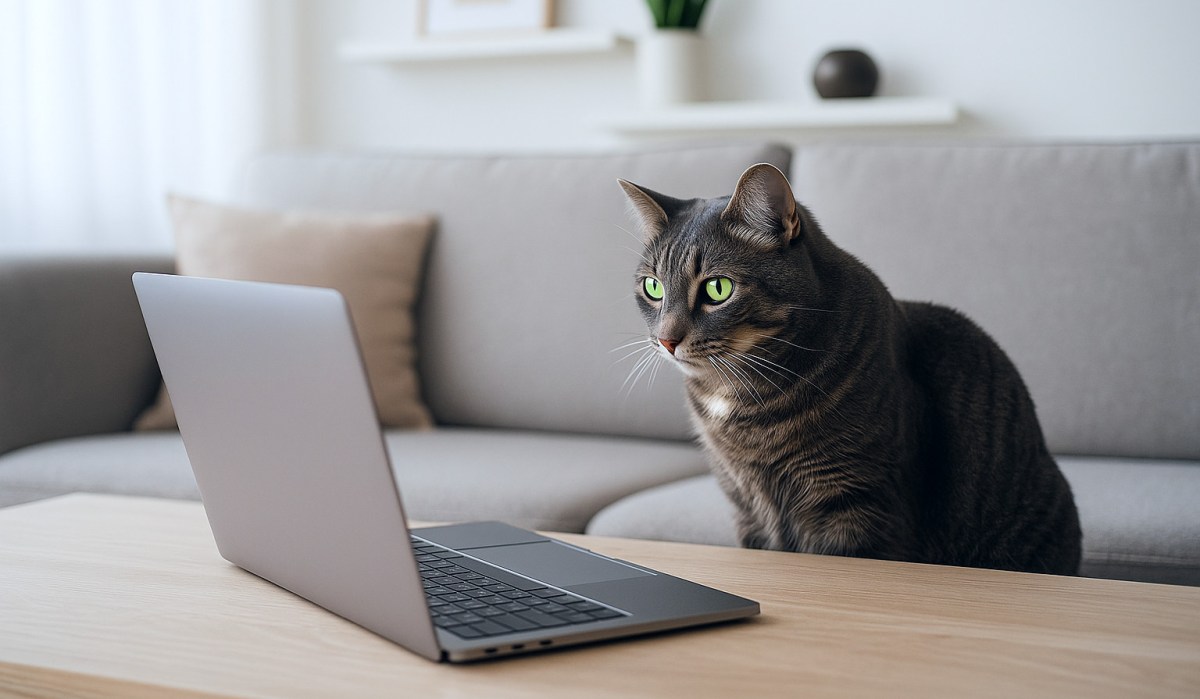
Buddy’s browser history provides a window into the depraved mind of everyone’s 683rd favorite feline named Buddy.

Monday, June 9, 2025:

Google search, 6.56am: oh zempic

Google search, 6:57am: ozempic

Wikipedia: Ozempic (pharmaceutical), 7:02am

Google search, 7:07am: ozempic 4 cars

Google search, 7:07am: ozempic 4 cats

Google search, 7:12am: why no ozempic 4 cats?

Pain In The Bud: Latest Stories, 7:44am

Pain In The Bud: Submit Comment: “LIES!!! BUDDY WOULD NEVAR RUN FROM A MOUSES! WHO WRITES THIS RAG?!?”, 7:49am

Google search, 2:33pm: how to get human to give more snax

Google search, 3:11am: hot calico

Google search, 3:14am: sexy calico

Google search, 3:21am: sexy calico new York area

Wednesday, June 11, 2025

Google search, 4:12pm: when do cats get growth spurt

Google search, 4:12pm: when do cats grow into tigers

Google search, 4:15pm: tiger meowscle workout

Thursday, June 12, 2025:

Google search, 1:03pm: turkey

Google search, 1:14pm: turkey

Wikipedia: Turkiye (country)

KFC.com: Order Online, 2:22pm

KFC.com: Colonel’s Original Recipe Bucket, 2:23pm

KFC.com: Confirm Your Order

Friday, June 13, 2025

Google search, 7:16pm: fursat the 13

Google search, 7:16pm: Friday the 13th

Wikipedia: Friday the 13th (film), 7:16pm

Google search, 7;21pm: is jason real?

Google search, 8:16pm: how 2 make human lay on couch

Google search, 8:19pm: how 2 lure human to couch

Google search, 8:23pm: 2nd best thing besides human to sleep on

Google search, 8:29pm: how 2 make human obey

Google search, 8:30pm: r humans stupid?

Google search, 8:44pm: stoopid sport ppl stand in field

Google search, 8:47pm: stoopid sport ppl stand in field and one guy waves stick try to hit ball

Wikipedia: Baseball, 8:52pm

A cat who ran onto the field at Yankee Stadium during a Yankees-Oriolesgame on Aug. 2, 2021. Since the feline, dubbed “rally cat” by the fans, interrupted the game, the Orioles endured a miserable stretch, losing 19 games in a row, while the Yankees went 18-3, including an 11-game win streak. Credit: Bronx Times

Google search, 10:15pm: buddy

Google search, 10:15pm: buddy the cat

Google search, 10:16pm: other buddy the cat

Google search, 10:17 pm: other buddy the cat famous

Google search, 10:19pm: FAMOUS BUDDY THE CAT

Famous Felines: A Site Dedicated To The Biggest Cat Celebrities On The Internet, 10:26pm

/Famous Felines: Buddy (Philadelphia cat)

/Famous Felines: Buddy (cute tabby from Florida

/Famous Felines: Buddy (Phoenix Zoo ocelot)

/Famous Felines: Buddy (TikTok star)

/Famous Felines: Buddy (fictional cat)

/Famous Felines: Buddy (other)

/Famous Felines: Buddy (500 to 599)

/Famous Felines: Buddy (600 to 699)

/Famous Felines: Buddy #683 (New York cat)

Google search, 11:01pm: how 2 get more famous

Los Gatos Seek More Discreet Couriers After Cat Caught Carrying Crack Into Costa Rican Prison

Los Gatos’ position in the illegal catnip market has become precarious in the wake of a federal raid and the arrest of a courier. Meanwhile, an old rival threatens to fill the power vacuum…

LOS GATOS, Calif. — Los Gatos, the premier purveyor of fine catnip and narcotics to the feline world, is looking for discreet, professional couriers following a recent setback in Costa Rica.

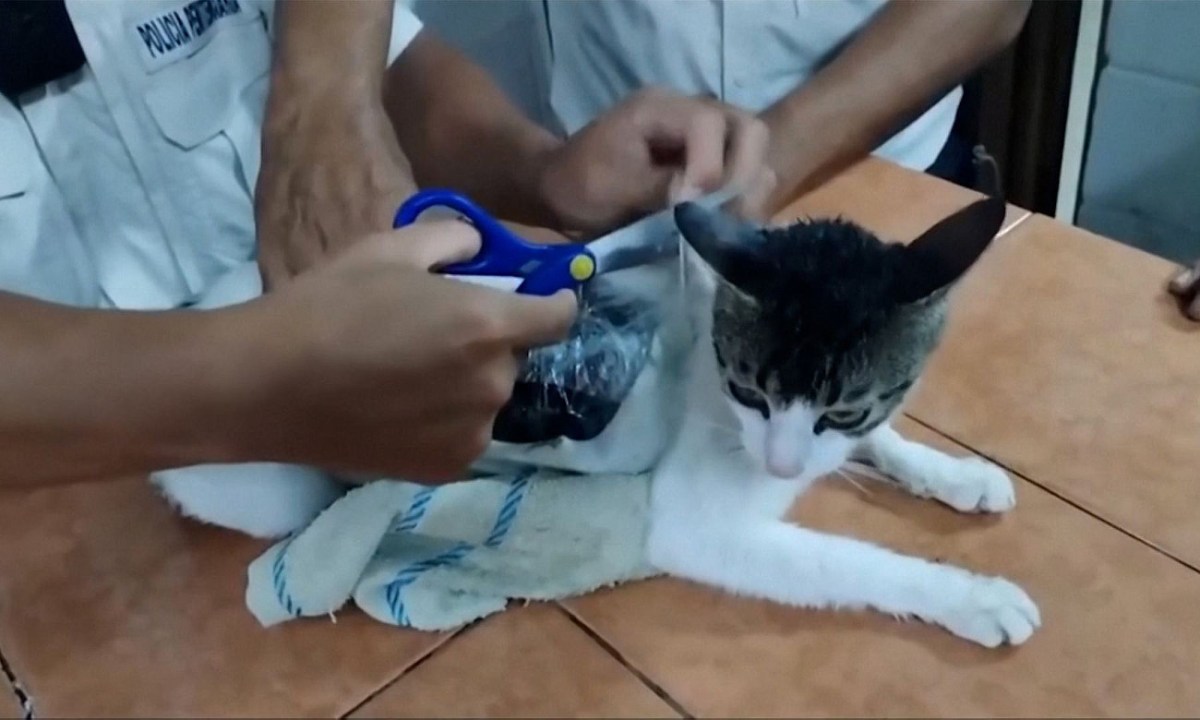
A Gatos courier was caught sneaking into Pococi Penitentiary on the night of May 22. The feline, a novice smuggler, was having difficulty navigating around a section of fence topped by razor wire when guards at the prison spotted and intercepted the kitty.

Correction officers captured the courier and found 2.4 ounces of crack-cocaine and eight ounces of marijuana wrapped tightly in plastic and taped to her body.

Under questioning, the narco feline admitted she was conducting a delivery for Los Gatos, creating legal troubles for the US-based nipcotics collective. It’s the biggest setback for Los Gatos since its 2022 war with another catnip cartel led to 14 cats getting sprayed in a drive-by urinating, an infamous incident known as the Tragedy of Tijuana.

Earlier this week, federal agents raided a Gatos compound, seizing an estimated $2.1 million in high-grade catnip and other nipcotics, the Drug Enforcement Agency said.

News footage showed several cats in handcuffs bundled into black SUVs while drug-sniffing dogs smirked.

“You’d better wipe that smirk off your face, holmes!” one Gatos lieutenant shouted at the canines, hissing out the words.

The raid and courier arrest have left Los Gatos with significantly less product — and fewer methods of delivery.

“The courier will be dealt with, as will those mangy mutts,” Los Gatos spokescat Pawblo Escobar said ominously. “In the meantime, we have customers who rely on us for timely deliveries of high-quality catnip and drugs, and Los Gatos has a reputation to uphold.”

Industry insiders say Buddy the Cat has been quick to fill the void. The longtime Gatos archrival reactivated long-dormant channels and has expanded his territory from his power base in New York.

“Buddy the Cat has the muscle, quite literally, to go paw to paw with Los Gatos and the other cartels,” said Felix Finch, a criminologist at John Jay College of Criminal Justice in Manhattan. “But obviously this isn’t a one-cat operation, which is why it’s fortuitous that Buddy has been establishing ties with the jaguars and forming a coalition with other big cats. Can Los Gatos withstand the combined might of Buddy and big cats? That’s the question on every feline’s mind right now.”

Wordless Wednesday: A Feline Of Many Talents

Buddy has worn many hats in his time, literally and figuratively. He’s a good boy!

In 2019, Buddy was called up to the Yankees from AAA Scranton in place of the injured Giancarlo Stanton. Batting behind team captain Aaron Judge, Buddy hit a terrific .328 with 117 runs, while his jersey became the top seller in the team’s official store.

Sgt. Buddy in his USMC dress blues.

In 2015, Buddy was promoted to the rank of sergeant (E-5) in the US Marine Corps, where he served as a drill instructor at Marine Corps Recruit Depot on Parris Island, South Carolina. A tough but fair DI, Buddy churned out some of the Corps’ finest Marines while pioneering new hand-to-paw combat techniques.

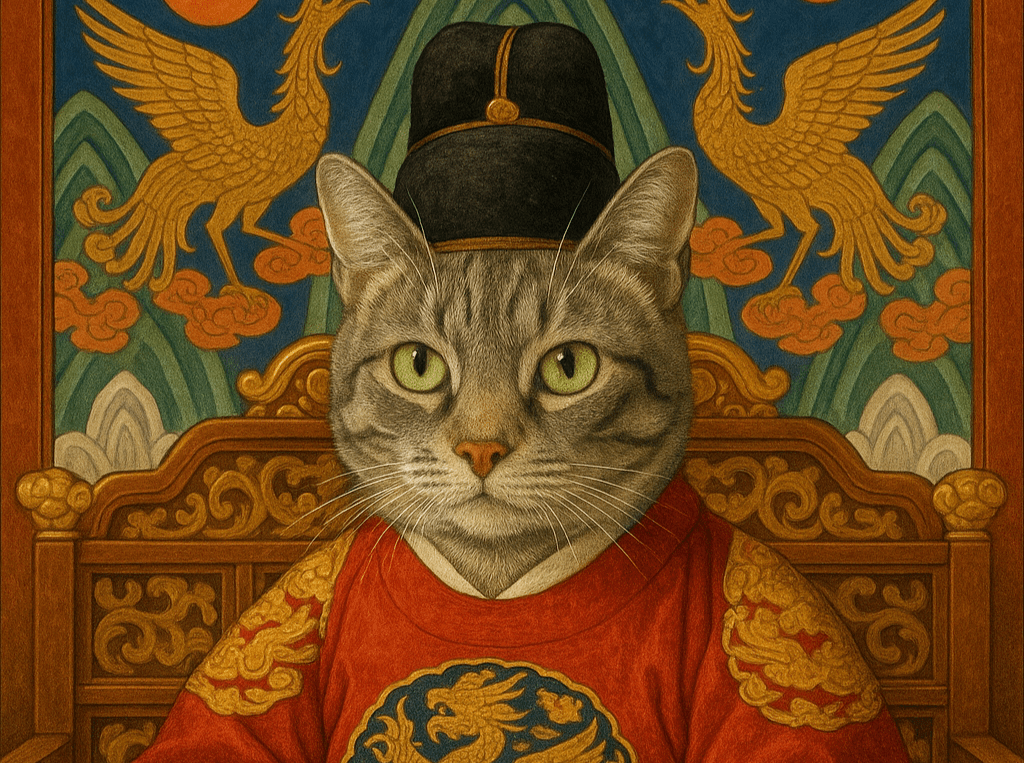
In 1627, Buddy ascended the Phoenix Throne of the Joseon dynasty, earning him the title “Jeonha,” or king. Jeonha Buddy led Joseon through a period of post-war turmoil and into recovery while also establishing trade eastward with a previously-unknown culture that raised a magnificent bird known as turkey.

In 2023, Buddy was chosen as the face of Armani’s newest line of sleek suits, cutting a dapper figure on the runway.

Another Tech Company Wants To Translate Meows And Barks Using AI: Can It Work?

Cats and dogs communicate primarily by scent, touch and body language, but human efforts to understand them have focused exclusively on meows and barks. If we want to truly understand our non-human friends, we need to take an approach that considers the other ways animals “talk” to each other.

A few years ago when MeowTalk made a minor splash in the startup world, I was pretty bullish on its potential to help us understand our cats better.

Sure, the app had an unhelpful habit of attributing improbably loving declarations to Buddy, but I thought it would follow the trajectory of other machine learning models and drastically improve as it accumulated more data.

More users meant the app would record and analyze more meows, chirps and trills, meaning it was just a matter of time before the AI would be able to distinguish between an “I want attention!” meow and a “My bowl is dangerously close to empty!” meow.

Obviously that didn’t happen, and what I personally didn’t take into account back then — and should have, given how obvious it is in retrospect — is that cats don’t just communicate via vocalizations.

In fact, cats don’t normally incorporate vocalizations into communication at all. Pet kitties do it entirely for our benefit because they know we’re generally awful at interpreting body language and we are completely useless when it comes to olfactory information.

It’s actually amazing when you really think about how much of the heavy lifting cats do in our efforts to communicate with each other. They recognize we can’t communicate the way they do naturally, so they try to relate to us on our terms. In return, we meet them less than halfway.

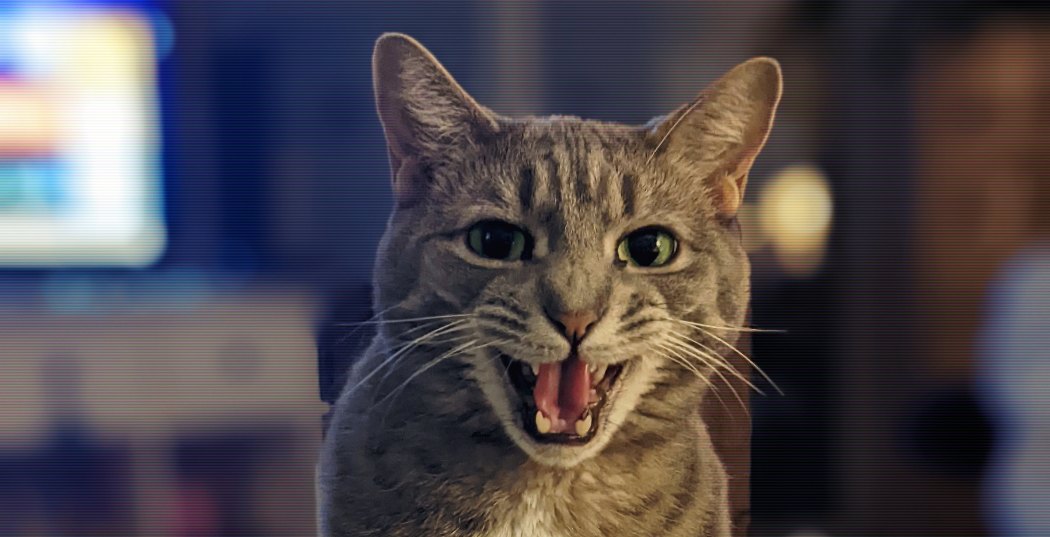
No wonder Buddy sometimes looks frustrated as he meows at me, as if I’m the biggest moron in the world for not understanding the very obvious thing he’s trying to tell me.

“Human, how can you not understand the simple feeling of innerer schweinehund I’m trying to convey here? The cringe is killing me!”

Now the Chinese tech giant Baidu is throwing its hat into the ring after filing a patent in China for an AI system that uses machine learning to decode animal communication and “translate” it to human language.

Machines are designed to process things from a human viewpoint according to human logic, so if Baidu wants to succeed where MeowTalk has not, its engineers will need to take a thoughtful approach with the help of animal behavior experts.

This is a hard problem that encompasses animal cognition, neuroscience, linguistics, biology, biochemistry and even philosophy. If they approach this strictly as a tech challenge, they’ll set themselves up for failure.

Without the information and context clues provided by tails, whiskers, facial expressions, posture, eye dilation, heart rate, pheromones and even fur, an AI system is only getting a fraction of the information cats are trying to convey.

Trying to glean meaning from that is like trying to read a book in which only every fourth or fifth letter is legible. There’s just too much missing information.

Even if we can train machines to analyze sound visual, tactile and olfactory information, it may not be possible to truly translate what our cats are saying to us. We may have to settle for approximations. We’ve only begun to guess at how the world is interpreted differently among human beings thanks to things like qualia and neurodivergence, and the way cats and dogs see the world is undoubtedly more strange to us than the way a neurodivergent person might make sense of reality.

“He grimaced. He had drawn a greedy old character, a tough old male whose mind was full of slobbering thoughts of food, veritable oceans full of half-spoiled fish. Father Moontree had once said that he burped cod liver oil for weeks after drawing that particular glutton, so strongly had the telepathic image of fish impressed itself upon his mind. Yet the glutton was a glutton for danger as well as for fish. He had killed sixty-three Dragons, more than any other Partner in the service, and was quite literally worth his weight in gold.” – Cordwainer Smith, The Game of Rat and Dragon

An animal’s interpretation of reality may be so psychologically alien that most of its communication may be apples to oranges at best. Which is why I always loved Cordwainer Smith’s description of the feline mind as experienced via a technology that allows humans with special talents to share thoughts with cats in his classic short story, The Game of Rat and Dragon.

In the story, humans are a starfaring civilization and encounter a threat in the void between stars that people don’t have the reaction speed to deal with. Cats, however, are fast and swift enough, and with a neural bridge device, teams of humans paired with cats are able to keep passengers safe on interstellar journeys.

The narrator, who is one of the few people with an affinity for teaming up with felines, hopes he’ll be paired with one of his two favorite cats for his latest mission, but instead he’s assigned to partner with an old glutton of a tomcat whose mind was dominated by “slobbering thoughts of food, veritable oceans of half-spoiled fish.”

The narrator wryly notes that the last time one of his colleagues was paired with that particular cat, his burps tasted of fish for weeks afterward. But the cat in question, despite being obsessed with fish, is a badass at killing “dragons,” the human nickname for the bizarre entities that attack human ships in space. (The software that allows felines and humans to link thoughts also portrays the “dragons” as rodents in the minds of the cats, stimulating their ancient predatory drive so they’ll attack instantly when they see the enemy.)

We can’t know for sure if Smith’s interpretation of the feline mind is accurate, but another part rang true when he wrote that cat thoughts were all about the moment, filled with sentiments of warmth and affection, while they rapidly lost interest in thoughts about human concerns, dismissing them “as so much rubbish.”

If the mind of a cat is that relatable, we’ll be incredibly lucky. But in reality we’re dealing with animals who evolved in drastically different ecological niches, with different priorities, motivations, and ways of looking at the world — literally and figuratively.

That doesn’t mean we shouldn’t try to understand our furry friends. Research has yielded interesting information about the way animals like whales and elephants communicate, and AI is at its best when it augments human creativity and curiosity instead of trying to replace it.

Even if we don’t end up with a way to glean 1:1 translations, the prospect of improving our understanding of animal minds is tantalizing enough. We just need to make sure we’re listening to everything they’re saying, not just the meows.