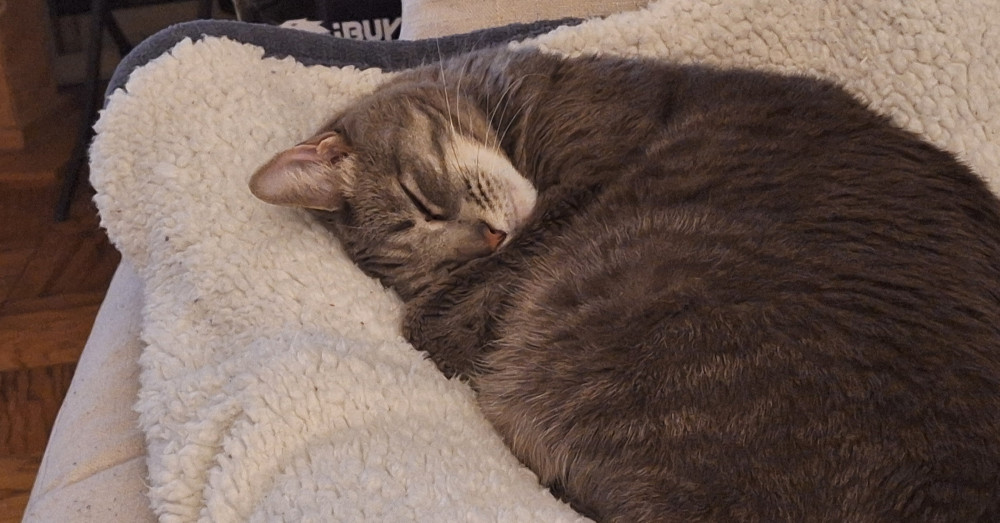
Terry Lauerman literally sleeps on the job, and cats love him for it.
Seven years ago, Terry Lauerman and the Safe Haven Cat Sanctuary went viral.
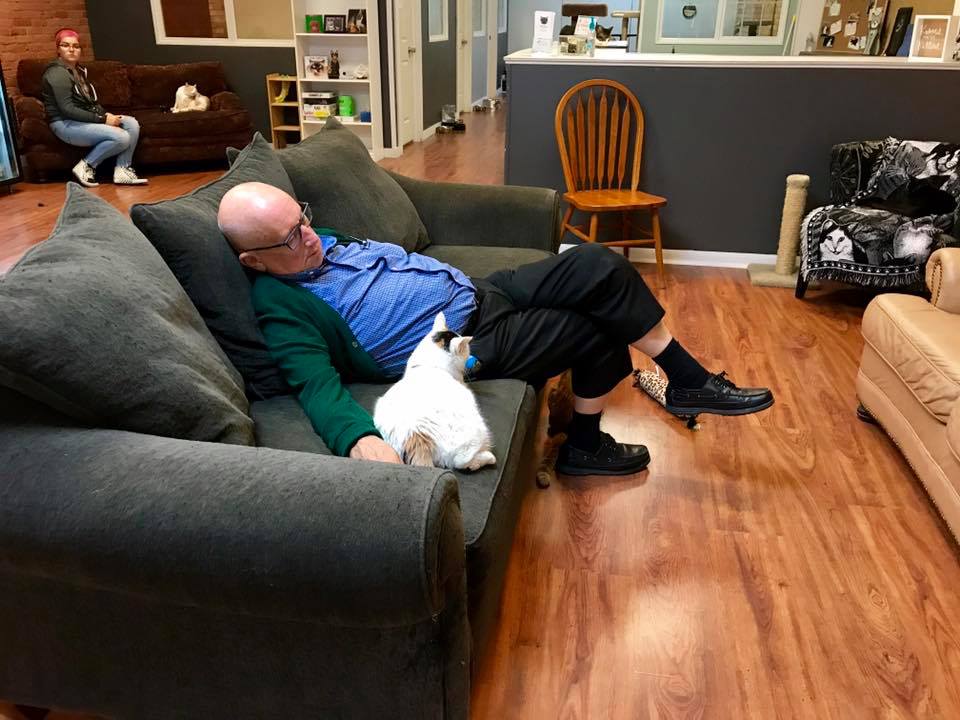
Lauerman, then 75, walked into the Green Bay, Wisconsin, rescue one day and told the staff he liked to brush cats. They welcomed him as a volunteer, he immediately curled up with a cat — and fell asleep.
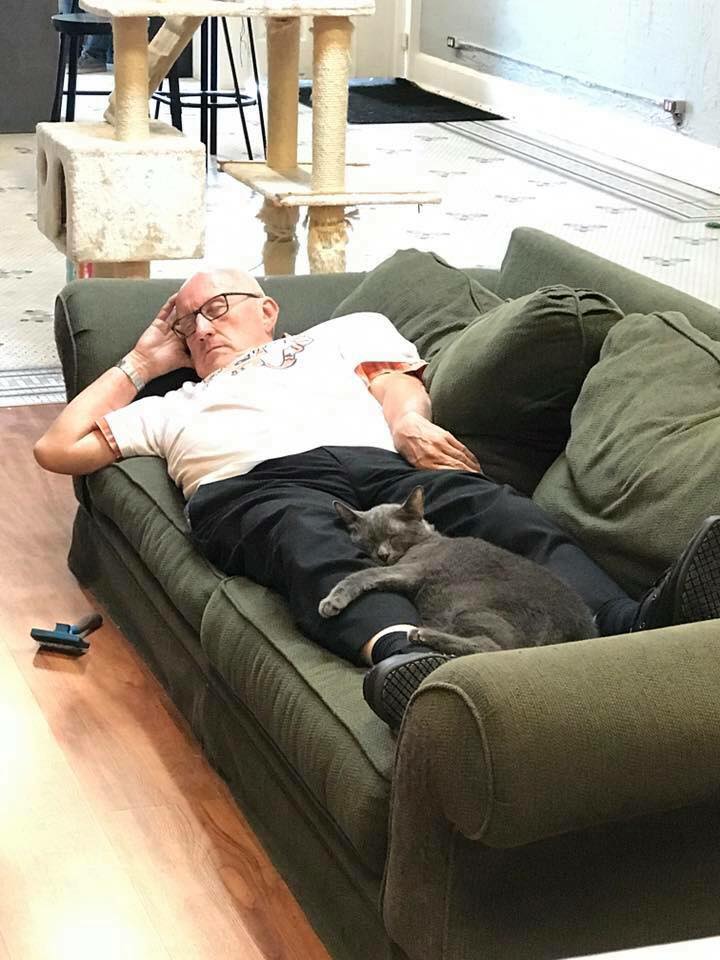
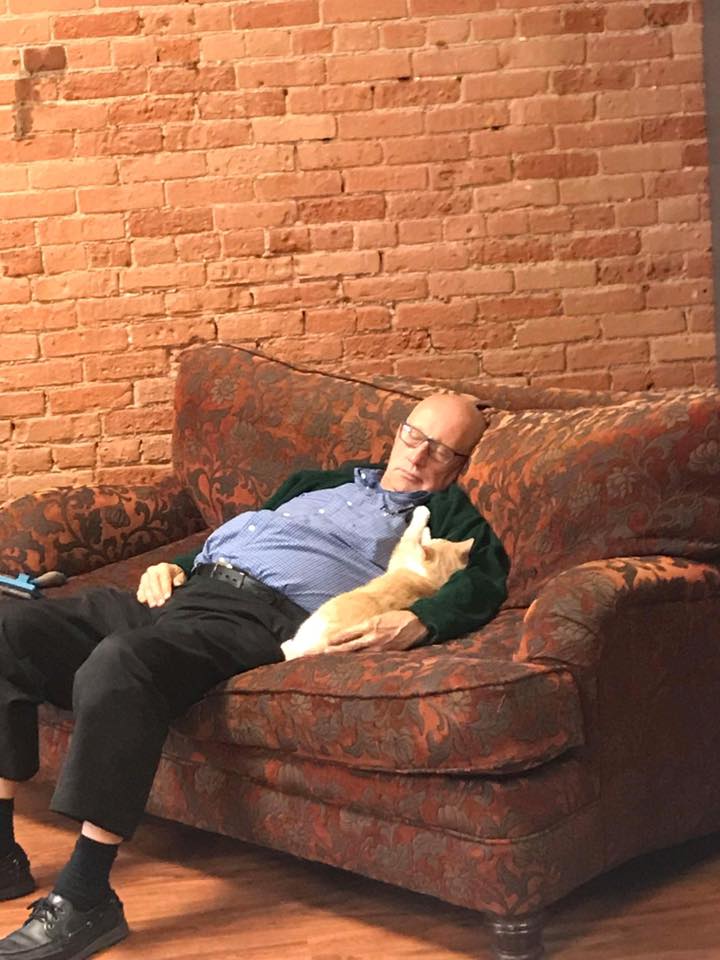
Since then, Lauerman’s been going to Safe Haven every day, brushing his feline friends, then yawning and passing out with a cat in his arms.
Lauerman usually spends an hour sleeping on the couch with a cat, then wakes up and moves to another couch to nap with the next cat, WCCO reports. He did this for six months straight before Feldhausen eventually told him he had become an official volunteer and had him fill out a form.
Now CBS went back to check on Lauerman and the shelter. He’s still at it, napping away the hours with the shelter’s cats, giving a comfort they wouldn’t normally have until finding their forever homes.
“We’re very lucky that he walked in here,” said Elizabeth Feldhausen, Safe Haven’s executive director.
Lauerman, who is also a brother at a nearby abbey, said he senses God in our four-legged friends, which is a notion he probably shouldn’t share with them lest they become even more imperious.
“I’ve always been a cat person,” he said. “To me it’s a blessing to be touched by creation.”
As a CBS reporter put it: “You sleep on the job.”
“Yes,” Lauerman said, “that’s exactly it.”
Bud and I salute Mr. Lauerman. Years ago we heard a friend observe that “there are two kinds of people in the world: those who take naps, and those who don’t even understand how that’s possible.”
At the time, I agreed with her. But napping starts to seem like a great idea as the years pass by, and when you have a cat, well, sometimes you don’t have a choice. With 11 years now under my belt as Bud’s pillow, I can safely say there are few things more relaxing than opening a book, reading a few chapters as your little buddy curls up in your lap, and easing into some Zs.
Images via Safe Haven Cat Sanctuary.Header image via Pexels.
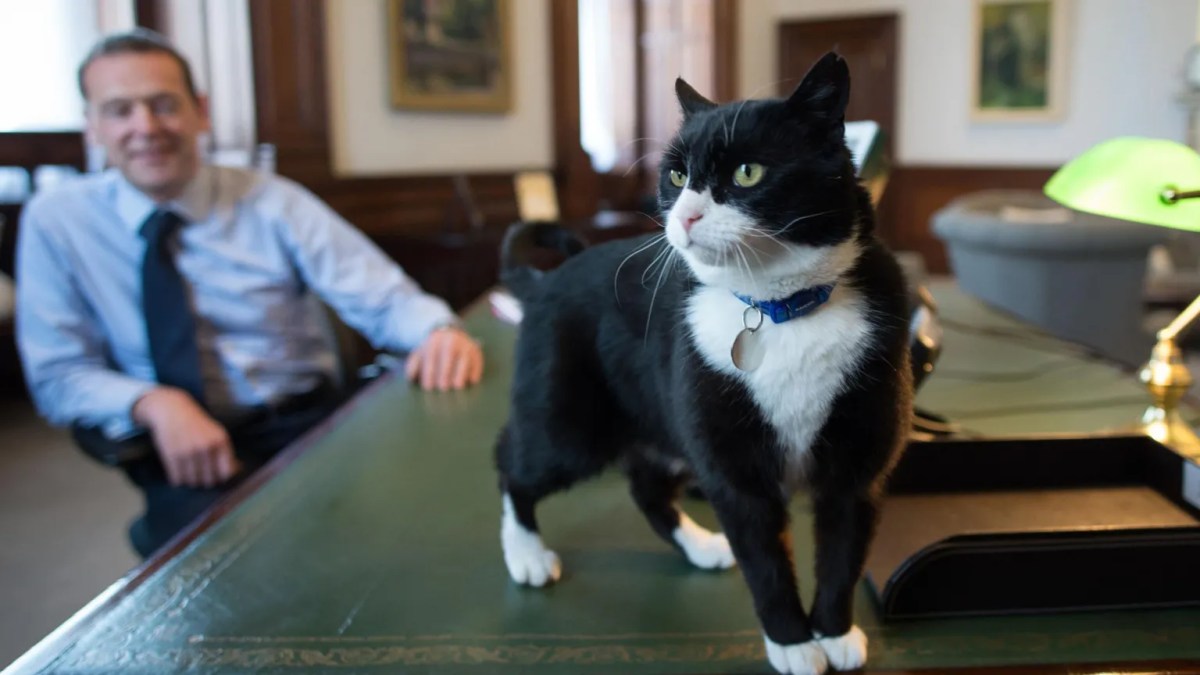
Named after a powerful prime minister, Palmerston was a hungry stray who was found on the streets of London and quickly made his mark when he was appointed mouser to the UK’s Foreign Office.
Some sad news today: Palmerston, the UK Foreign Office’s strong-willed mouser and foil to Larry the Cat, has passed away.
Palmerston was scooped up in 2016 “as a hungry, underweight stray wandering the streets of London, with no owner traced and no microchip,” London’s Battersea Cats and Dogs noted in a post.
The Foreign Office staff were looking for a new mouser to keep rodents at bay in Whitehall when Battersea recommended the cute tuxedo, and recognizing greatness, the staff brought the little guy on immediately and named him after Henry John Temple, better known as Lord Palmerston, who served as prime minister in the 1850s during the height of the British Empire.
Palmerston the cat, just two years old at the time, took to his new job with enthusiasm — perhaps too much so. The territorial tuxedo quickly developed a reputation for turf battles with his rival mouser, No. 10 Downing St.’s Larry the Cat.
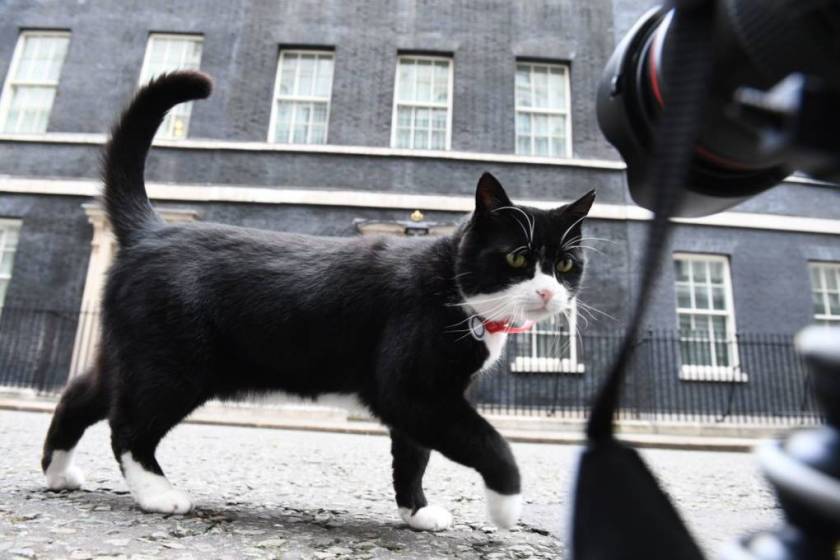
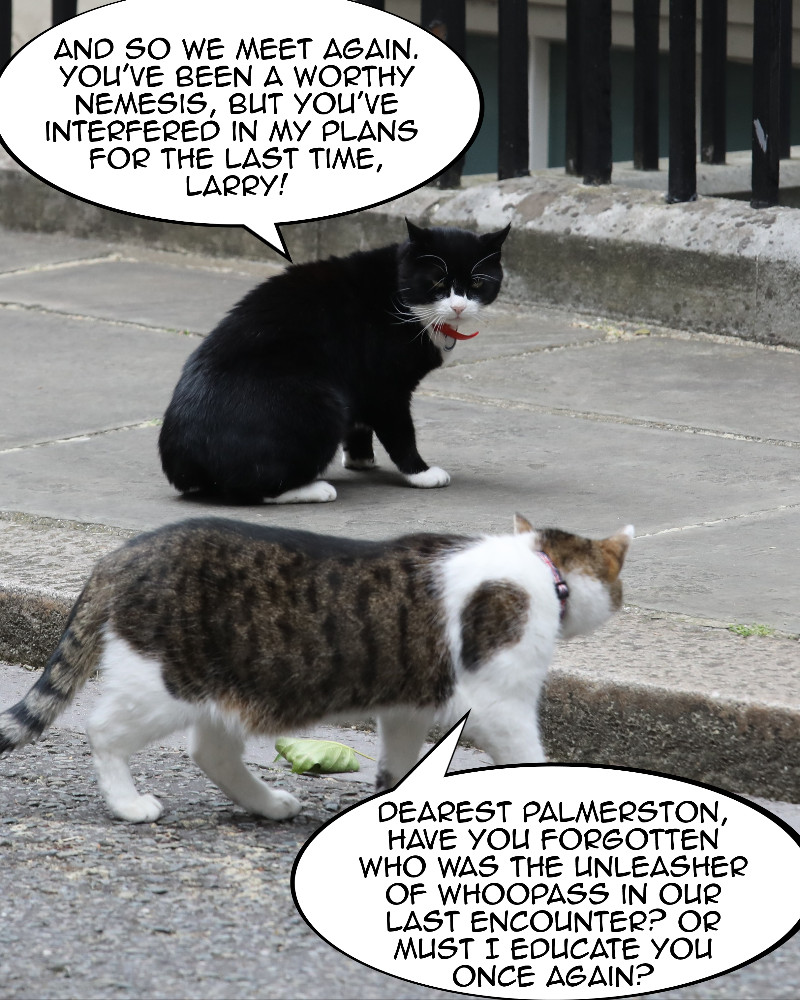
Their skirmishes, which often occurred within the full view of reporters and photographers covering UK government, soon became the stuff of legend, producing several iconic images of the two felines in battle in their eternal struggle for status as top cat in the UK government.
The fearless feline’s hijinx included invading Larry’s inner sanctum in 2016 when he snuck through an open door at No. 10, and while Larry was known for visiting his “lady friend,” Maisie, Palmerston struck up a relationship with Freya, another mouser with a post on Downing Street.
When society’s gears grinded to a halt with the 2020 lockdowns in response to the COVID pandemic, Palmerston “retired” to the countryside with his loyal human, former Royal Navy officer Andrew Murdoch.
Little Lord P enjoyed the quiet life for several years before thrilling fans a year ago with his announcement that he was returning to public life as “feline relations consultant” to Murdoch in his new post as governor of Bermuda.
Admirers followed Palmerston’s antics in the tropical locale via updates on social media. He was living the high life, free of Larry’s evil machinations.
Palmerston patrolling Downing Street.
Palmerston died on Feb. 12, Murdoch wrote in a post on the famous feline’s X account.
“‘Palmy’ was a special member of the Government House team in Bermuda, and a much loved family member,” the post reads. “He was a wonderful companion, with a gentle nature, and will be sorely missed.”
A reply from Larry’s account indicated the former rivals had called a truce: “Farewell old friend,” Larry’s servants wrote on his behalf.
Palmerston, left, and Larry, right, during one of their epic battles while Palmerston was still top cat at Whitehall.We had a lot of fun with the Palmerston-Larry rivalry here on PITB, admiring both mousers.
While this is sad news, Palmerston will not be forgotten, and we’re confident he’ll take to his new post across the rainbow bridge with the same zeal he applied to his work on behalf of the people of the UK. RIP, little guy.
Hat tip to our friend Platypus Man, who notified us of today’s sad news. If you enjoy photos of far-flung locales, check out his blog, which features posts about his many travels around the world. Thanks, P!
I expected something truly extravagant when a reader wrote to Slate’s advice column to say she was considering doing something “wildly elitist” involving her cat.
What could it be? I wondered. Pure gold or silver eating and drinking bowls, a la Choupette? A fashionable $600 pet stroller like the young, childless women of Tokyo favor for their felines? Feeding premium meat from the butcher exclusively to her cat?
None of the above, it turns out. The allegedly “wildly elitist” thing this woman was deliberating was simply paying a veterinarian to have dental work done on her cat, with costs estimated at between $800 and $2,000, depending on the extent of the kitty’s cavities.
To make matters even stranger, the letter writer says the cost won’t be a financial hardship for her family. Their cat is only three years old, she notes, and the family has had him since he was found on the street as a kitten.
“I guess I didn’t think that part of taking him in would entail thousands of dollars to keep him alive at this stage of the game,” she wrote. “At what point do people draw the line on what it costs to save a cat’s life?”
Credit: Wikimedia Commons
The writer was essentially looking for “permission” to have the cat put down, for Slate’s advice columnist to virtually pat her on the head, say “There, there!” and agree that taking care of your own cat is “wildly elitist.”
Thankfully, Slate columnist Athena Valentine was having none of it, telling the woman seeking advice that “when you adopt an animal, you take financial responsibility.” Spending money on veterinary care when needed, Valentine noted, is “exactly what you signed up for” by adopting the little guy. A cat who, by the way, could easily live another decade at least.
“If you do not want to pay for your cat’s treatment, please surrender him to a rescue that will,” Valentine wrote. “The rescue will raise the funds you do not want to part with to pay for his teeth and will then adopt him out to a new home that understands the responsibilities of pet ownership. I also advise you to not adopt any more animals until you’re fully ready to accept the financial obligations that come with it.”
Cheers to Valentine for not taking the bait.
Do your feline overlords use their own beds?
One of the first things I bought for Bud, along with his litter box, bowls and toys, was a bed. It’s nothing extravagant, but it does look pretty comfortable.
He has never used it.
Or rather, he lounged on it a handful of times when he was a kitten, but he claimed my bed as his own. He was very clear on the new ownership situation, and generously allowed me to continue sleeping on my his bed as long as I accepted the fact that he would use me as a pillow, which he has been doing for more than a decade now.
A Newsweek story details the efforts of a woman who bought her cat a new bed, hoping he’d let her sleep at night, only for the feline overlord to drag his new bed onto her bed. Essentially, she bought him a new pillow.
Do cats ever do what we want them to? That’s a rhetorical question, by the way.
A cat whose fantasy soccer team ranked 222 out of 13 million players
At The Athletic, Conor Schmidt writes about creating a fantasy football (soccer) team for his cat, and letting the little guy choose who to draft and trade by writing the names of players on a dry erase board and putting treats next to each name. The first treat his cat goes for is the one whose associated player is dealt or drafted.
He says his cat reached an astonishing world ranking of 222 out of almost 13 million players on the same platform worldwide, which means either the little dude has incredible luck, or he’s a genius who knows a lot more than he lets on.
Maybe I should register a fantasy basketball or baseball team for Buddy, smear turkey gravy next to players’ names, and see how he does.
Orangey the Cat enjoyed a suspiciously prolific career as Hollywood’s top feline actor for almost two decades. What’s the story behind the iconic moggie?
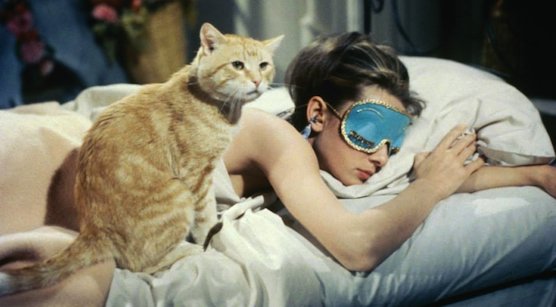
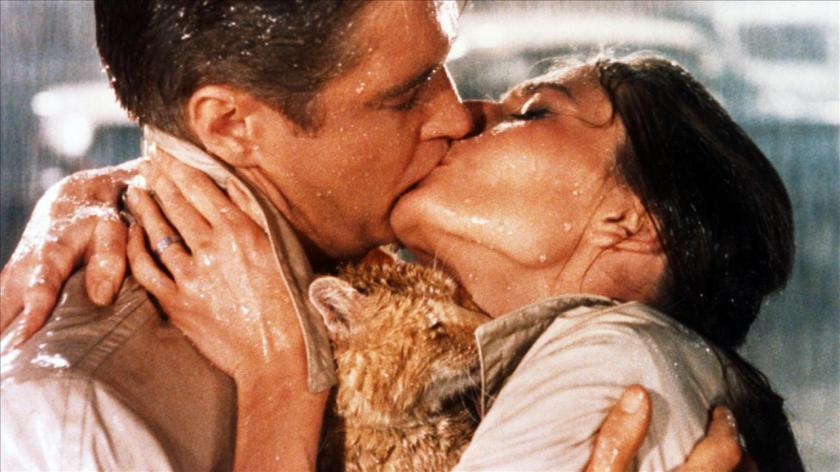
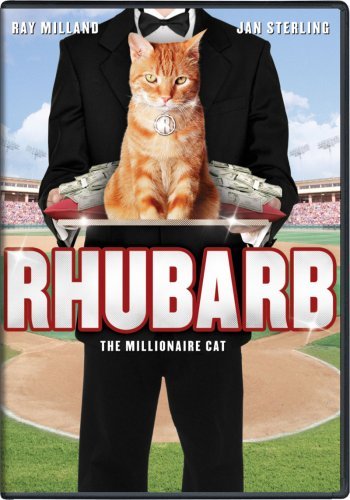
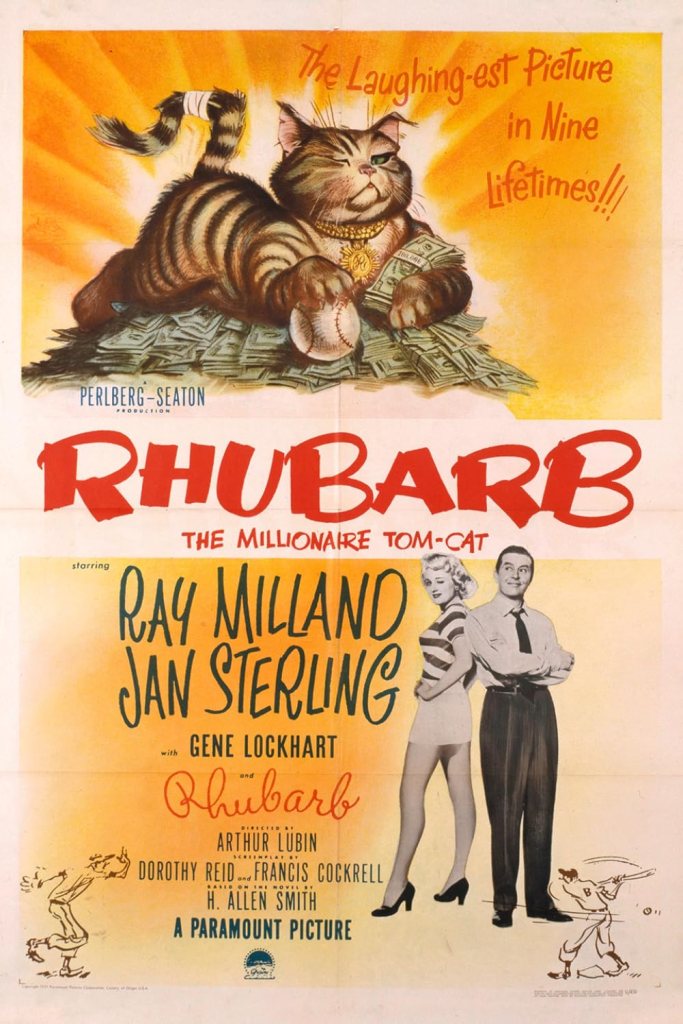
Orangey, the cat who famously belonged to Audrey Hepburn’s character in Breakfast at Tiffany’s, had an impressive and improbable film career beginning with 1951’s Rhubarb and ending with roles in TV series like Green Acres and The Flying Nun almost two decades later.
A new story in The Guardian charts Orangey’s film career and attempts to reconcile conflicting information about the famed feline. At least two cats played Orangey in Breakfast at Tiffany’s, while potentially dozens were used for Rhubarb, a comedy about a cat who inherits his wealthy late owner’s fortune and assets, including a baseball team.
“Watching the cat performances both within the movies and across the different titles certainly lends credence to the idea that Orangey was more a cat type, provided by trainer Frank Inn, than a specific animal,” The Guardian’s Jesse Hassenger writes.
Orangey had a prolific career in film and TV, one that would have been very difficult for a single cat to manage due to the number of appearances and the unlikely length of his tenure as Hollywood’s top cat.
In fact, color mattered less than resemblance because most of Orangey’s appearances were in black and white, so it’s possible Orangey wasn’t always Orange. (Later performances were filmed in color and some films were subsequently colorized.)
Using more than one cat for a role is pretty standard in Hollywood films that feature felines. Keanu, the 2016 Key and Peele comedy about an eponymous kitten who is stolen by drug dealers, cycled through several kittens as the pace of production was simply too slow compared to the rapid growth of real life kittens. In 2024’s A Quiet Place: Day One, two very similar-looking cats, Nico and Schnitzel, shared the role of Frodo, the cancer-stricken protagonist’s emotional support animal.
Why do people steal cats?
In early 2023, more than 50 cats in and around Kent, England, were abducted and returned with patches of fur shaved off.
At first people suspected the perpetrators were engaged in some bizarre form of animal cruelty — and some later copycats, for lack of a better word, across the UK may have been motivated to cause distress — but authorities later said they believe the catnappers were checking to see if the felines were spayed or neutered.
If they weren’t, those cats were kept for breeding, while the others were dropped off where they were found.
A cat shaved during spay/neuter surgery. Credit: jp_the_man/reddit
That rash of disappearances and other cases of car abductions factored into a staggering report from the Royal Kennel Club’s lost pets database: of the 25,000 pets reported missing in the UK between January 2023 and June 2024, more than 20,000 were cats.
Those cases and others are highlighted in a report from The Telegraph published on Thursday detailing the increase in reports of stolen felines. While the actual number of police reports are unknown due to discrepancies in the way such cases are classified by police, data from the Kennel Club and microchip companies, as well as anecdotes, indicate a concerning spike in cat theft even as the UK has mandated microchips for every pet cat.
Some, like the recent case involving an Amazon delivery driver, are crimes of opportunity. They’re spur-of-the-moment decisions by people who encounter cats they might want for themselves or people close to them.
Others, like the mass pet thefts in Kent, could have ties to larger organized crime operations.
And some are attempts to make a quick quid by petty thieves who count on the emotional bond between plpeople and their animals to demand ransom for the four legged family members, like one couple who abducted a woman’s cat and ransomed her for the equivalent of a few hundred dollars.
That woman, who was identified only by the pseudonym Helen in the story, said she was torn between getting her cat back and encouraging the people who took him.
“I was worried the same thing would just keep happening,” she told the newspaper. “It’s not something you want to encourage – paying to get your cat back – in case they do it again.”
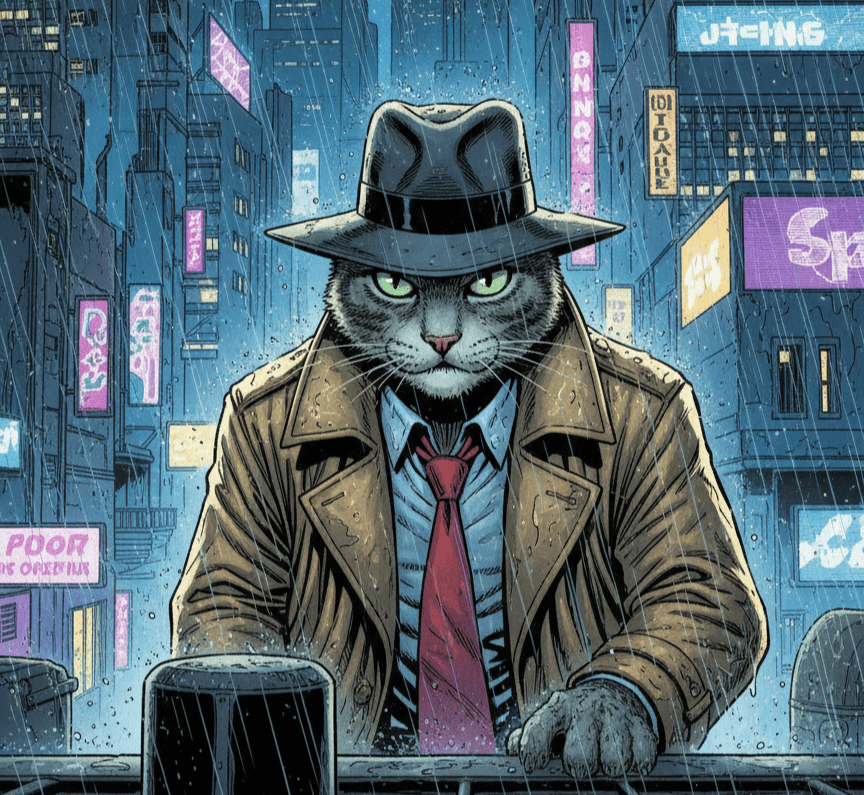
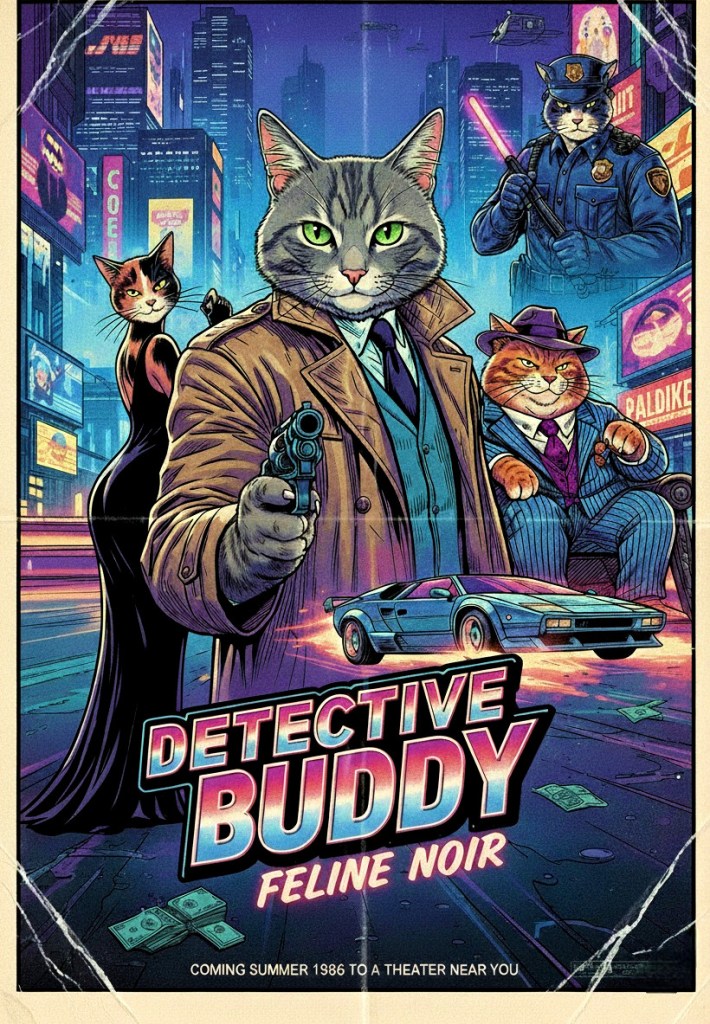
In the seedy underbelly of Paw City, where niplords run kitty crack empires and feral gangs fight eternal turf wars, one unshakable detective brings the bad cats to justice.
The call came in after midnight.
Shots fired near Burmese Boulevard, with witnesses reporting one party fleeing the scene in a car while another took off on foot.
Normally I’d tend to other biz and let one of the kids in the detective bureau have their shot, but the commissioner’s on my ass and the mayor is worried about what the headlines will do to the tourism economy.
Leave it to the leaders of a dump like Paw City to care more about the scratch in their pockets than the felines they’re supposed to protect.
But I’m a grizzled detective. I know where the real power naps, and it ain’t city hall.
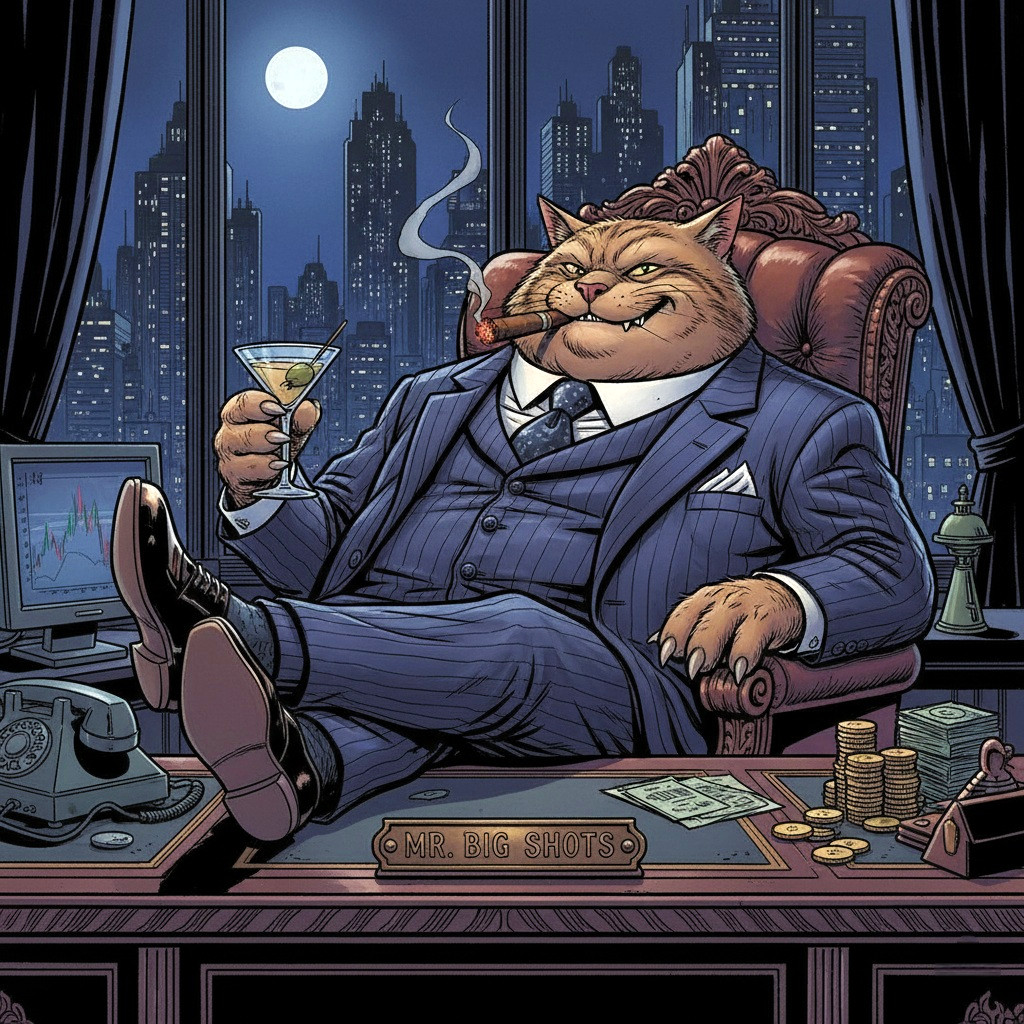
It’s Scratcher Tower, home of the international consortium that runs Big Yums, controlling the flow of every last morsel of kibble into this forsaken city. The Fat Cats on the top floor, they call the shots, control the mayor and have their paws in every pie. If it’s biz, the Fat Cats get their cut.
The feds? They talked a big game last year when they popped Angelo Felinzino and nailed him on a racketeering charge that earned him 15 to 20 in the slammer. But the Fat Cats are a hydra, and even though Felinzino was rumored to be the consortium’s top earner, the fellas in Scratcher Tower’s penthouse didn’t miss a beat.
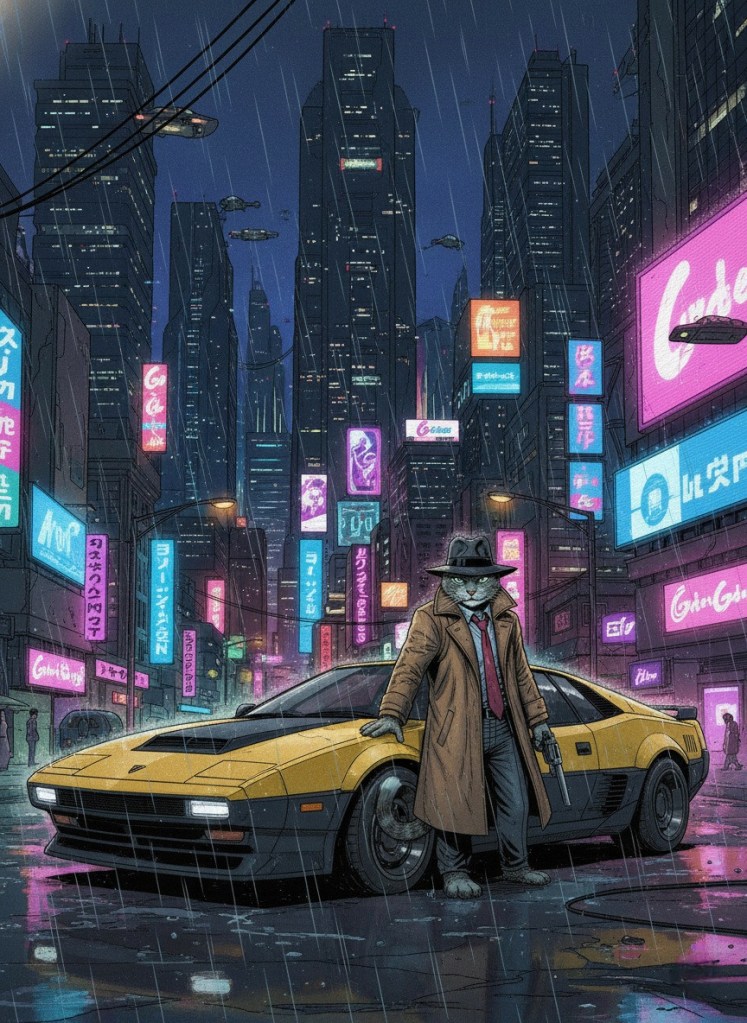
It was pouring by the time I pulled up near the corner of Tortoiseshell Street and Burmese Boulevard. I padded out of the warm comfort of my ride, the Budmobile, and told it to watch my back. The Budmobile’s AI chimed in acknowledgement and miniature silos opened on each rear quarter panel, ejecting a pair of drones. One drone circled above me in a defensive posture while the other zoomed ahead, scouting my path.
I tasted wet rain and something else. My nose wrinkled, pulling me toward a funky scent. I crouched, sniffing the sidewalk, and that’s when I saw them: crumbs made soggy by the downpour, their addictive chemicals turning a shade of toxic lime as they interacted with the acid rain.
Tempheads are dangerous. They’ll do anything to get their fix, even if it means stealing from littermates or breaking into homes to raid the treat cupboards.
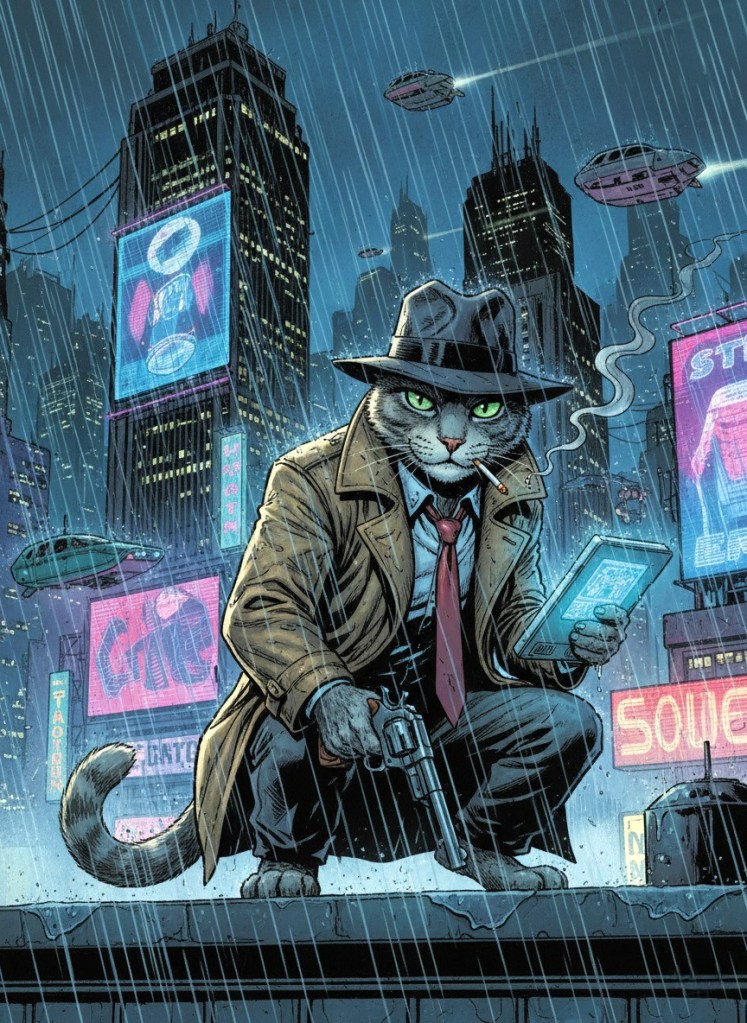
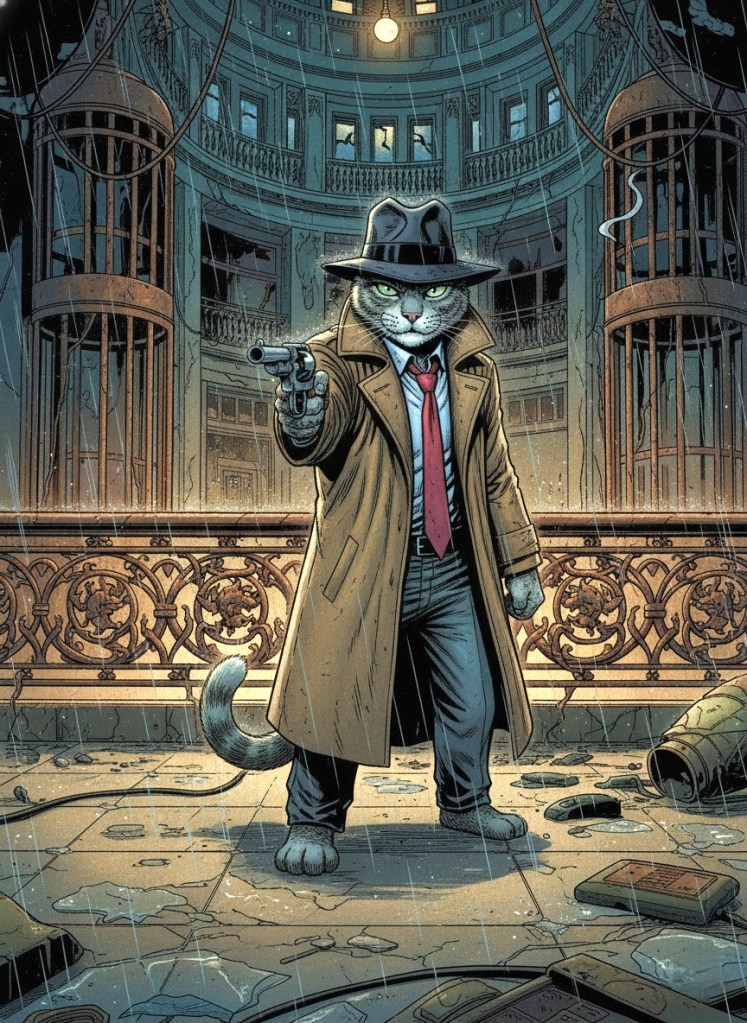
No Temphead was going to catch me off guard, I thought as I placed a paw on my holster and felt the reassuring grip of Thunderclaw. The old revolver was reliable and had legitimate stopping power. The sight of it alone was often enough to get bad guys to back down.
Lightning cracked the sky as I followed the crumbs down Burmese Boulevard, under the old wrought iron bridge and into a back alley.
I paused and sniffed. The Temphead had lingered here at the door to a shady-looking ripperdoc clinic, probably trying to get them to buzz him in. The ripperdoc was smart, didn’t want anyone bringing heat down on his clinic, so he turned the Temphead away.
My keen sense of smell and my detective’s intuition told me the Temphead quickly moved on, and sure enough, there were more crumbs ahead, where the alley made a sharp right turn toward a cross street.
I padded ahead, nose leading the way, and looked up.
The Bradbury Building.
Once a symbol of commerce in the city’s gilded age, now a dilapidated microcosm of Paw City, its former glory obscured beneath decades of grime and decay.
Patting Thunderclaw again for reassurance, I pushed against the heavy bronze doors and into the gloom inside.
My ears prickled in the funereal silence, and my whiskers felt movement in the air currents. There!
A shadowy figure was heading for one of the exits.
Justice is my job, and what kind of cat would I be if I didn’t have the swiftness of a cheetah and the bravery of a tiger?
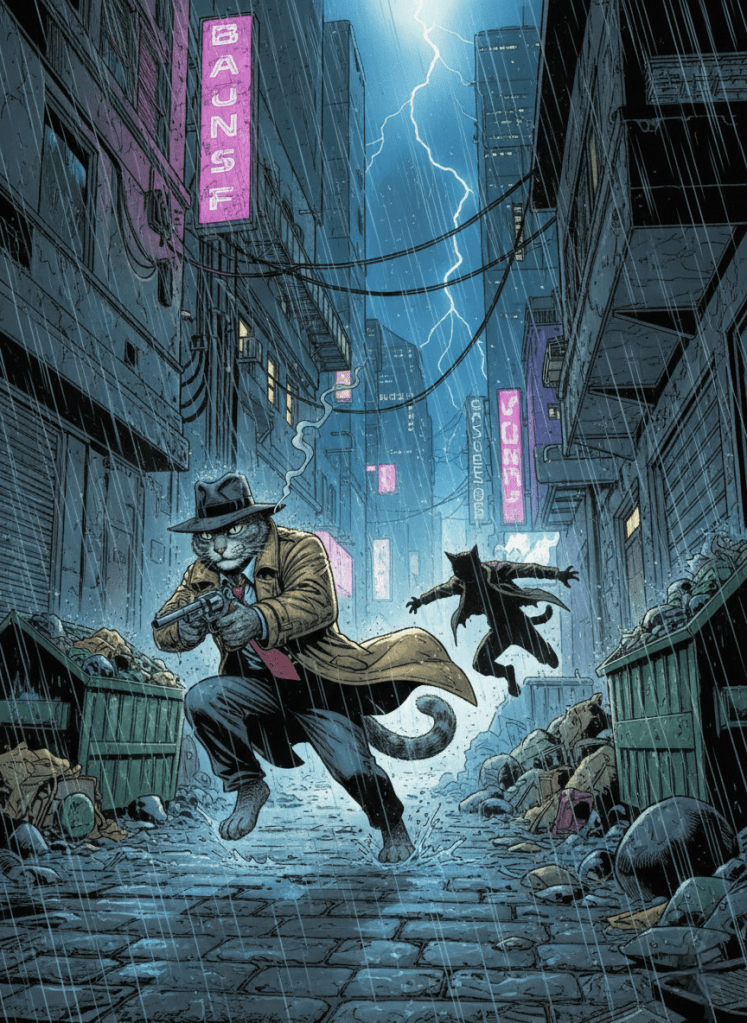
I leaped the railing, landing gracefully on my feet as I always do, and followed the shadow through the door. The rain was coming down hard, battering my trenchcoat and cap.
Where’d that cat go?
He was clever, I’ll give him that. Lightning lit the alley, and he used the crackle of thunder to mask the sound of his feet splashing through the puddles before he leaped.
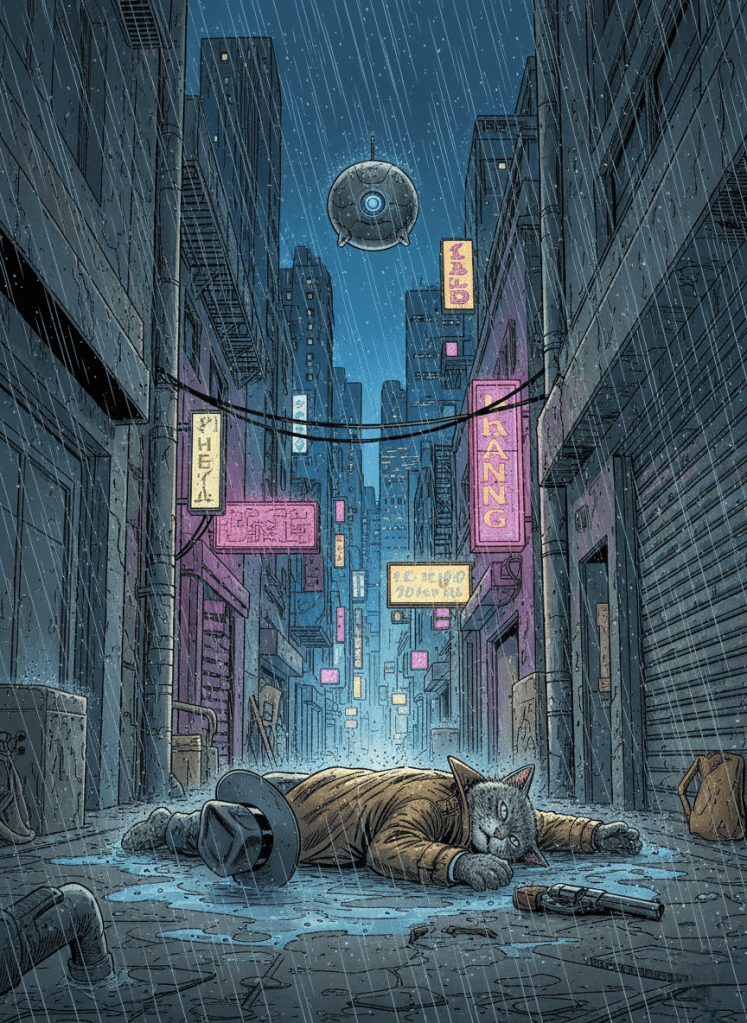
I never even saw it coming. It’s been a long time since anyone’s gotten the jump on me. Maybe I was too confident. The attacker barreled into me, knocking me off my feet, and was already propelling himself up a nearby fire escape as I landed in a puddle of rain water.
Thunderclaw was torn from my grip with the impact and went skidding across the concrete.
The Budmobile’s follow drone chose that moment to reappear, making a lazy loop around the alley before stopping to hover in front of me, its ventral nozzles firing whispers of propellant to keep it stabilized.
“Oh dear,” the drone said, “you seem to have fallen, sir. Shall I bring the car around?”
“This,” I told myself, “is undignified.”
The drone chimed.
“Is that a yes, sir?”
I resisted the urge to paw smack the useless machine.
“Yes! Call the Budmobile to the end of the alley.”
I might have been Paw City’s greatest detective, but I wasn’t going to catch criminals with my clothes and fur all wet, smelling like a dirty mutt.
I retrieved Thunderclaw from the ground, slipping the trusty revolver back into its holster.
That’s when I saw it — a scrap of torn clothing on the end of the fire escape, black as night. Black like the absence of light.
I ran a paw pad over the material, feeling its familiar weave and texture. There was only one shop in this section of Paw City that sold zero albedo clothing. Could the Shadow Void be back to stalk the seedy underbelly of Paw City once again? I put him in the slammer once. Now I may have to do it again.
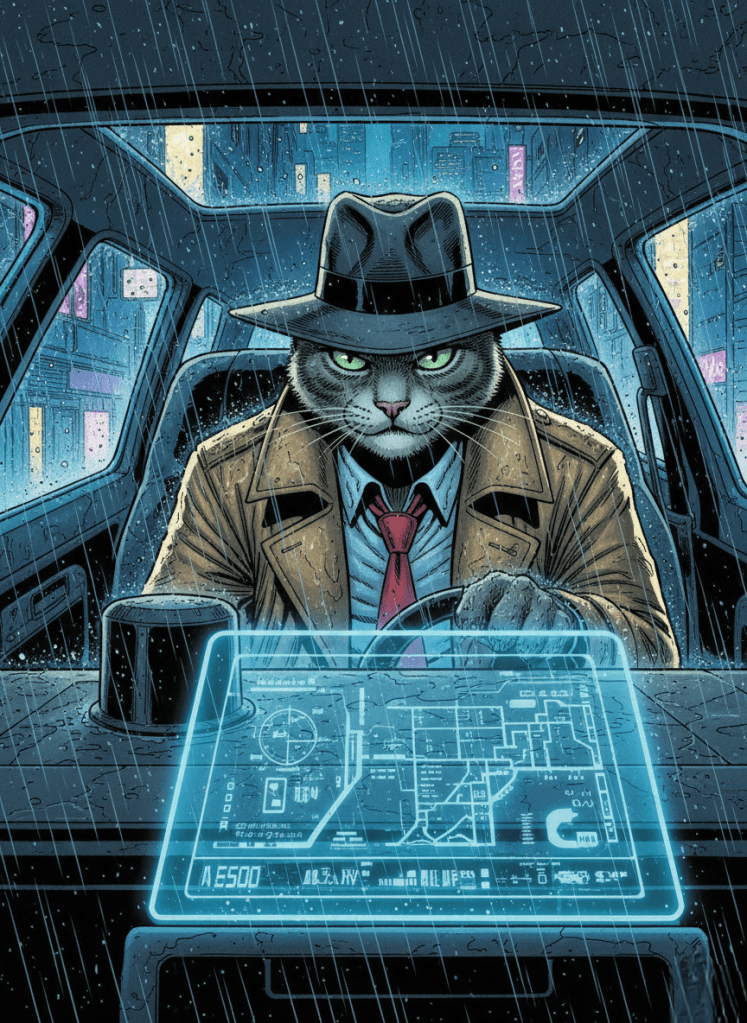
I climbed back into the Budmobile, grateful for the blast of heat from its dash. It was time to pay Tommy the Tailor a visit…
Check back for the next episode of Detective Buddy: Feline Noir!