The cat food cupboard is bare, and Buddy the Cat is not amused.
NEW YORK — The unthinkable happened on late Thursday night when Buddy the Cat’s human servant opened the very last package of chicken pate only to realize the meat inside had gone bad, probably from a hole in the damaged container.
It was a catastrophe. For the first time in 10 years, poor Buddy was bereft of wet food!
Making matters worse, and signaling a deep betrayal, Big Buddy elected not to potentially lose his parking space to make a late night run to a 24-7 store to buy emergency cat food for his feline overlord.
He is required to do so under the terms of the Cat Servant Agreement of 2014, which stipulates that running out of food is “unacceptable” and supplies “must be replenished when the Strategic Yums Reserve is reduced to five (5) cans or three (3) packages of Perfect Portions remaining in the Cupboard of Yums.”
Poor Buddy was left with nothing except Blue Buffalo dry food, Friskies dry treats, Rachael Ray Nutrish soft treats, chicken puree from a squeeze tube, diced gouda cheese, and a bowl of fresh water.
“Oh why Big Buddy have ye forsaken me?” Buddy asked, collapsing from the lack of meaty caloric energy his meowscular frame relies on to fuel his finely-tuned physique. “Et tu, Big Buddy? Et tu?”
Sources say Little Buddy vowed to exact bitter revenge on his irresponsible, traitorous, callous, selfish, non-empathetic, backstabbing, inconsiderate, terrible human…if he makes it through the night.
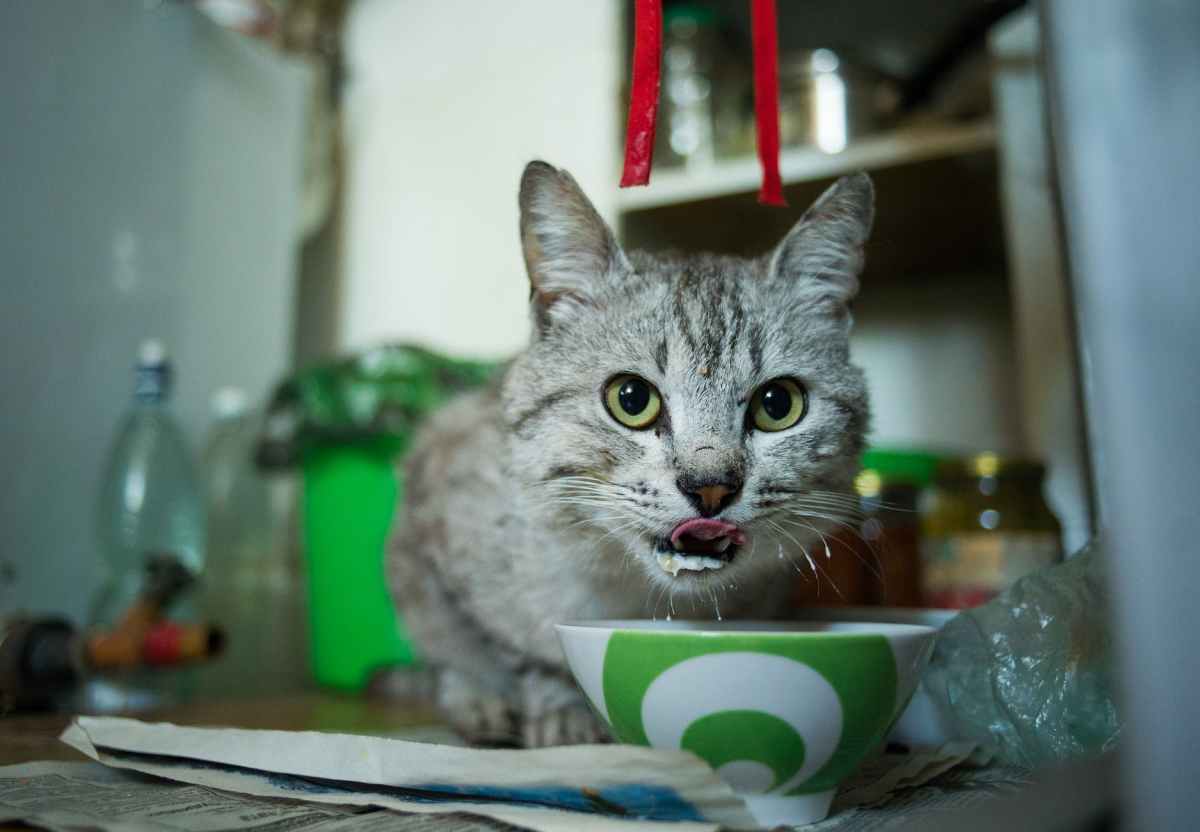
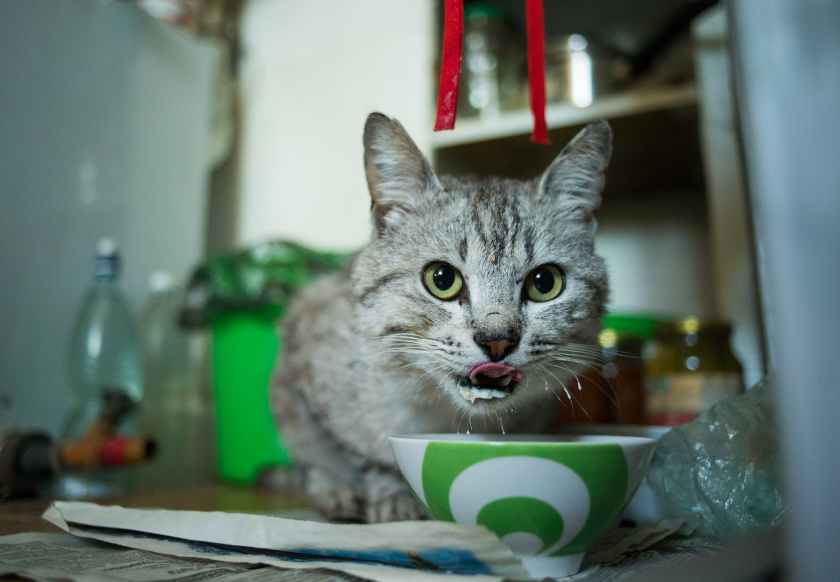
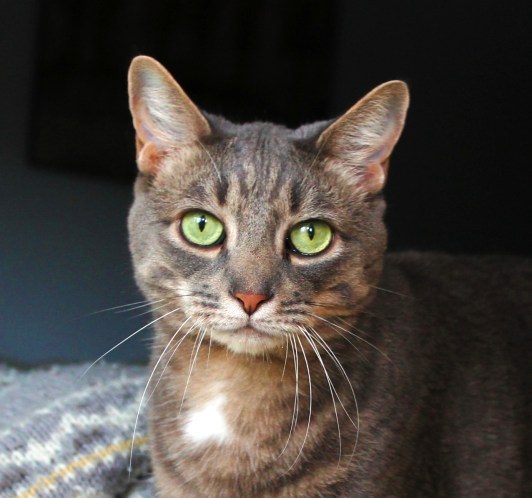
A visibly angry Buddy, pictured above, was in danger of starving on Thursday night due to lack of wet food.
A new paper claims cats are healthier when fed human diets, but the “study” is activism masquerading as science.
We have a science problem in this country.
Tens of millions of adults are scientifically illiterate and cannot articulate a simple definition of the scientific method.
That includes the usual suspects, the people who don’t understand the difference between anecdotes and hard data and say things like “Evolution’s just a theory” or “I don’t believe in science” as if it’s an ideology or religion. It also includes people who like to declare they’re “into science” as if it’s a band or a genre of cinema, and often post articles from sites like “I F—-ing Love Science,” which routinely mistakes natural phenomena like stars, interstellar space and the animal life for “science.”
To quote Sam Kriss’ wonderful essay on the subject: “‘Science’ comes to metonymically refer to the natural world, the object of science; it’s like describing a crime as ‘the police,’ or the ocean as ‘drinking.'”
Science is a formalized method for studying the natural world. That’s it. No more, no less. It isn’t natural phenomena itself, it isn’t something that requires faith. It’s meant to be challenged, with each piece of knowledge hard-won as the scientific community collectively chips away at the vast edifice of things we don’t understand.
The lack of scientific literacy is an indictment of the American education system, but the science and journalism communities are also big contributors. A flawed academic publishing system encourages researchers to make grandiose claims in abstracts and press releases to increase the chances their work will get positive coverage in the press. Few journalists are more scientifically literate than the general population, so they report dubious claims credulously and present individual studies as the final word on subjects instead of tentative first steps in contributing to the corpus of human knowledge.
We see this all the time with reporting on the environmental impact of felines, but it’s certainly not limited to that subject. How many times have you seen your local news anchors or newspapers tout studies saying coffee is healthy, only to report the next week that a new study says coffee isn’t healthy after all?
“Those scientists can’t make up their minds,” they’ll say with a forced chuckle before handing the broadcast over to the weatherman, oblivious to their own failure to provide context.
The effort to rebrand cats as vegans
A new “study,” given prominent play today by major news outlets like Newsweek and aggregators like Drudge, is a classic example of misleading claims given the veneer of scientific authority. The paper claims vegan cats are “healthier” than their meat-eating counterparts. The study — which is actually a survey — says no such thing, and its authors are surely aware that the way it’s been packaged for media consumption will cause confusion, but they’ve gone ahead with it anyway.
The research involved asking 1,369 cat owners to fill out surveys about their cats, the cats’ diets, and their veterinary health histories.
Of those surveyed, there were 123 reported “vegan cats” in their households (about nine percent of the total), and while the abstract and media pitches claim the surveys show vegan cats are healthier, the differences are statistically insignificant. The sample size is too small to draw any conclusions from, and the fact that the details are self-reported means the “data” is worthless: People who put their cats on vegan diets despite knowing felines are obligate carnivores have a vested interest in defending their decision. They’re not impartial, and their survey answers aren’t either. (The paper acknowledges that 91 percent of the respondents are female, and 65 percent are vegans, vegetarians or pescatarians themselves. Those are admirable choices for a human diet, but not for a cat.)
Relying on self-reported “data” also means the research team doesn’t actually know the true veterinary histories of the cats in question, nor does it know anything about the nutrient content of the vegan “cat food” given to the 123 cats who have been deprived of meat. It also cannot account for possibilities like the so-called vegan cats slipping out at night to hunt rodents.
Credit: Engin Akyurt/Pexels
That’s especially important because of “vegan cat food’s” dubious history. Evolution, the brand that popularized the concept, is owned and operated by a man named Eric Weisman, who has been prosecuted and repeatedly sanctioned for misrepresenting himself as a physician, veterinarian and scientist — and continues to misrepresent himself.
Weisman, a chiropractor by trade, racked up a long list of violations in his chosen field before his chiropractor license was pulled, then was charged and convicted criminally for, among other things, practicing veterinary medicine and regular medicine without a license. Weisman’s list of offenses include “treating” cancer patients, “treating” and misdiagnosing animals, and posing as a physician for years, including in advertisements and literature related to his pet food and fake veterinary practices.
Weisman is still calling himself a physician in violation of his plea agreement, and he’s still selling “vegan cat food.” Would anyone in their right mind weigh the claims of that man against the tens of thousands of veterinarians and pet nutritionists who are horrified at the idea of restricting cats to vegan diets?
(In case you’re tempted to think chiropractors are legitimate to begin with, you should know that chiropractor was founded by a lifelong quack who claimed its methods were taught to him by the ghost of a physician, which allegedly appeared to him during a seance. Chiropractor’s founder dodged accountability for years by claiming his practice was a “religion.” The fact that it’s now a $15 billion industry despite its origins, and decades of research that has found no benefit to the practice, illustrates how eager people are to believe just about anything.)
The consequences of bad science
Not only will the “study” and press coverage of it mislead people into believing its claims, it’s another black mark on the scientific community. Trust is hard-won, easily lost, and for better or worse the misdeeds of a few scientists reflects on the entire field.
Others will simply believe it, especially when major news outlets like Newsweek report the results without question, without acknowledging that it’s a lazy effort masquerading as science by a research team that already knew what result it wanted before handing out the surveys. (The “study” was funded by ProVeg, an NGO that promotes plant-based consumption and is involved in the development of plant-based foods.)
Lastly and most tragically, cats will suffer for it. Cats who are denied meat suffer slow and agonizing deaths, with health problems accumulating due to the lack of certain proteins until they go blind, become chronically malnourished and eventually suffer organ failure.
And for what?
Because some people believe human morals apply to cats?
Because, despite all common sense, they think they can change a species that has been dependent on meat for so long in their evolutionary history that their bodies literally cannot synthesize certain proteins and cannot extract nutrients from most plant material?
How would we like it if we were dependent on giants to feed us, and those giants decided we could and should live on a diet of marshmallows? We’d suffer horribly and we’d die, but at least we’d know why.
Cats don’t have that luxury. They depend on us to do right by them, and when we adopt them it’s our basic responsibility to keep them healthy and well-fed. Let’s not fail our little friends by pretending human ethics is applicable to a species that can’t understand it, or consent to participating in it.
More people are abandoning their pets, saying they can no longer afford to care for and feed them amid historic inflation.
Unless you’ve been living under a rock you’ve experienced sticker shock in the last six or seven months, especially in grocery stores.
Staples like milk and bread cost two or three times what they did pre-inflation, some retailers are taking the opportunity to arbitrarily hike prices even higher, and a perfect storm of economic uncertainty and a rampaging bird flu caused the price of eggs and poultry to skyrocket.
By late 2022, almost 50 million chickens and turkeys had been killed by avian flu or culled because of it, and almost 10 million more were lost to the virus in the first 12 weeks of 2023, according to the CDC. That breaks the record for most birds lost to avian flu, which was set in 2015 when 51 million died or were culled.
Pet food prices are up too, mirroring grocery inflation, as are veterinary costs and medicine for cats and dogs.
Inflation has squeezed so many people that shelters in the US and UK are reporting unprecedented surrenders from people who believe they can’t afford their pets anymore. In some areas it’s so bad that local shelters have waiting lists — or surrender queues, as they’re called in the UK — for people parting with their pets.
“We get between 10 and 12 surrenders per week, so we’re looking at anywhere between 30 and 50 a month,” Ashley Burling of Montana-based Help For Homeless Pets said. “When you’re talking about inflation, you’re talking about vet bills, pet food, pet supplies and pet rent. I think inflation, I think people going back to work after the pandemic, there’s other reasons that they’re surrendered.”
More than 70 percent of adoptable pets at the Nevada SPCA previous had homes, executive director Lori Heeren told the local NBC affiliate. Her organization is on pace for 2,500 surrenders in 2023.
News outlets tell the same story in local markets across the country, and the Humane Society is seeing the same trend nationally, CEO Kitty Block told CNN. While pet-related costs increased sharply in 2022 — with food and supplies increasing by as much as 30 percent, according to NielsenIQ — statistics show they haven’t relented yet this year. In fact, prices are still edging up, albeit at a slower rate than the previous year.
To cope, more people are leaning on pet food pantries. In Iowa, for example, the Animal Rescue League gave away more than 40,000 pounds of pet food in 2020 and 2021, and a whopping 146,000 pounds in 2022.
Shelter operators say they want people to know there are options so they don’t feel they have to part with cats and dogs who have become family.
“This is bigger than dogs or cats in shelters,” Block said. “It’s about the people who love them.”
PITB readers are the kind of people who dote on their cats and most of us couldn’t imagine abandoning them even in hard times, but chances are we all know someone who’s thought about parting with their fluffy overlords.
They don’t have to give their beloved cats and dogs up. There are resources to help them meet their animal’s needs to prevent them from surrendering:
– Many local chapters of the Humane Society and SPCA, as well as private shelters, offer free spay/neuter clinics and free or low-cost veterinary exams. A guide from the Humane Society notes PetFinder allows users to search for pet-specific food pantries and low cost veterinary services
– There are programs that provide pet food to people who can no longer afford it
– Some shelters will place pets in temporary foster homes to help relieve the burden until their owners can take them back
– Buying food and medicine online is significantly cheaper than in grocery stores. Some offer deep discounts on meds to existing customers and prices from online retailers have remained relatively stable, especially when buying in quantity
– Social services programs may include provisions for pets
It’s in the best interests of shelters and animal welfare programs for cats and dogs to stay with their people, and not only because they don’t have the resources to house hundreds of abandoned pets on top of their usual intake.
Keeping people and pets together benefits both. Cats and dogs obviously don’t understand that their people are tearfully, reluctantly giving them up. All they know is they’ve been abandoned by the people who made them feel safe and loved. For the mental health and overall well-being of humans and their furry companions, they should stay together.
For some people, like Patricia Kelvin of Poland, Ohio, that means scrounging up whatever she can and cutting back on her own expenses before she will allow her cat to go without.
“There’s just no question in my mind. If my diet was going to be more beans than something else, I wouldn’t hesitate,” Kelvin told CNN. “If I had to sell my sterling silver, which I’ve had for 60 years, that would go before my little ‘Whiskers’ would be deprived.”
Two new reports estimate the cost of caring for a cat over a typical 15-year lifespan.
Two stories published in recent days give wildly varying estimates of how much it costs for the privilege of serving a cat.
First we should note that both reports assume the cats are adopted in kittenhood and the average lifespan of a cat is 15 years. That’s in line with current data showing well cared-for, indoor-only cats live between 12 and 18 years, with outliers on both ends. It’s not uncommon to hear about cats living well into their 20s just as some cats sadly pass on before their time, whether due to natural causes, illness or accidents.
A Texas cat named Creme Puff is the Guinness World Record holder for longest-lived house cat, holding on for an astonishing 38 years until her death in 2005.
Caring for a house panther can cost between $4,250 and $31,200 over kitty’s lifetime, according to an analysis of associated costs by The Ascent, a vertical of financial literacy site The Motley Fool.
The estimates break costs down into recurring expenses — which include food, treats, litter and veterinary care — and fixed expenses like scratching posts, toys, additional cat furniture, bowls, grooming tools and similar items.
Not surprisingly, the biggest expense is food, the cost of which has been exacerbated by inflation, rising fuel costs and lingering supply chain issues that caused a cascade effect during the pandemic. Everything from sourcing metal for cat food tins to meat availability was impacted as ports were closed and meat processing plants were shuttered at various points since early 2020.
An unrelated estimate from OnePoll, based on a survey commissioned by pet food company Solid Gold, put the lifetime estimate of cat servitude at $25,304. Like the Motley Fool analysis, OnePoll’s respondents cited food as the primary expense, followed by veterinary care.
The wide range from the Motley Fool analysis could be attributable to geography, how well the cat is fed, and how many extra things caretakers do for their cats. A person who lives in Manhattan, splurges on bespoke feline furniture and buys ultra-premium cat food at almost $3 a can is going to spend significantly more than an eastern European cat servant who feeds raw or home-cooked food and builds their own ledge loungers and scratching apparatus.
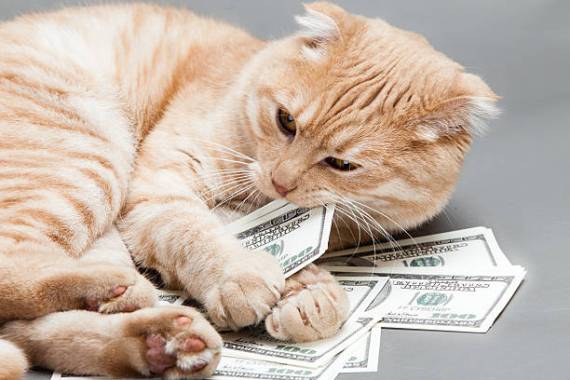
“Welcome to Teh Bank of Kitteh, you may make a deposit but not withdraw!” Credit: @catsandmoney/Twitter
Here in New York the cost of cat food in local grocery stores has spiked dramatically, but online prices have remained steady. Keeping in mind we’ve never really endorsed any particular brand or vendor on PITB, I switched from occasionally buying food online to Chewy auto-shipments during the pandemic because Bud’s favorite food was becoming very difficult to find locally, and that arrangement has worked out cost-wise as well.
Bud’s a true Pain In The Bud when it comes to “leftovers” so his primary wet food is Sheba Perfect Portions. It’s reasonably priced, comes in variety packs and helps avoid waste since each meal comes in its own 1.3oz recyclable blister-like plastic package. (Recycling is especially important with these single-serve packages, tiny as they are.) His dry food is Blue Buffalo Wilderness Adult Chicken recipe, although occasionally I’ll buy the weight control version of the same dry food when it looks like Little Man has gotten a bit chubby. He doesn’t protest, thankfully.
I feed him two 1.3oz wet meals a day and fill his dry bowl less than halfway at night so he can have his late snack and doesn’t have to wake me up if and when he gets hungry overnight. Sometimes I’m dimly aware of him sliding off me, padding over to his little dining nook and munching on dry food before hopping back onto the bed and dozing off again.
Overall it works out to about $21 a month, so I’d call it an even $25 with treats. You can schedule your auto-ship at any interval you choose, edit it at any time, and prompt the shipment immediately if you’re running out of food, so you can save more by ordering a few months’ worth of food at a time and taking advantage of free shipping on orders of more than $50.
Has inflation impacted cat food prices in your local area? How much does it cost to feed your cat(s) every month?
Oblivious humans didn’t seem to realize how valuable the truck’s cargo was, providing a prime opportunity for sneaky cats.
SHELBINA, Missouri — Standing in the shade of his command tent on the side of a rural highway, Buddy the Cat holds a pair of binoculars up to his face with both paws early Thursday morning, scanning for cat food.
“I don’t see a damn thing,” the silver tabby cat says, squinting.
A four-year-old striped ginger cat, an assistant, clears his throat. “You have to take off the lens caps, sir.”
Buddy turns, glares at his assistant, then makes a show of removing the lens caps as if that had been his idea all along.
“Aha!” he says triumphantly. “I see the cans!”
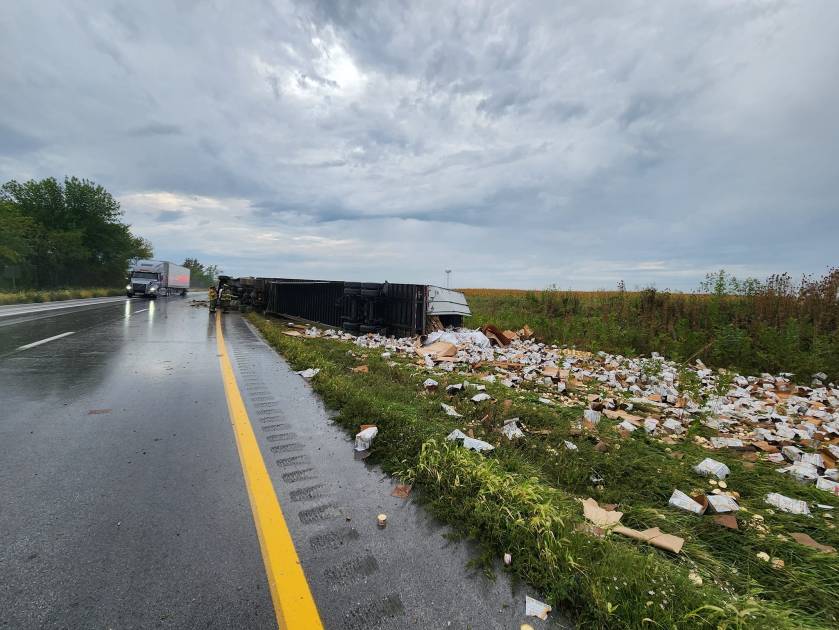
Valuable cans of delicious yums were scattered off the shoulder of the highway, with stupid humans oblivious to their value. Credit: Shelbina Fire Protection District
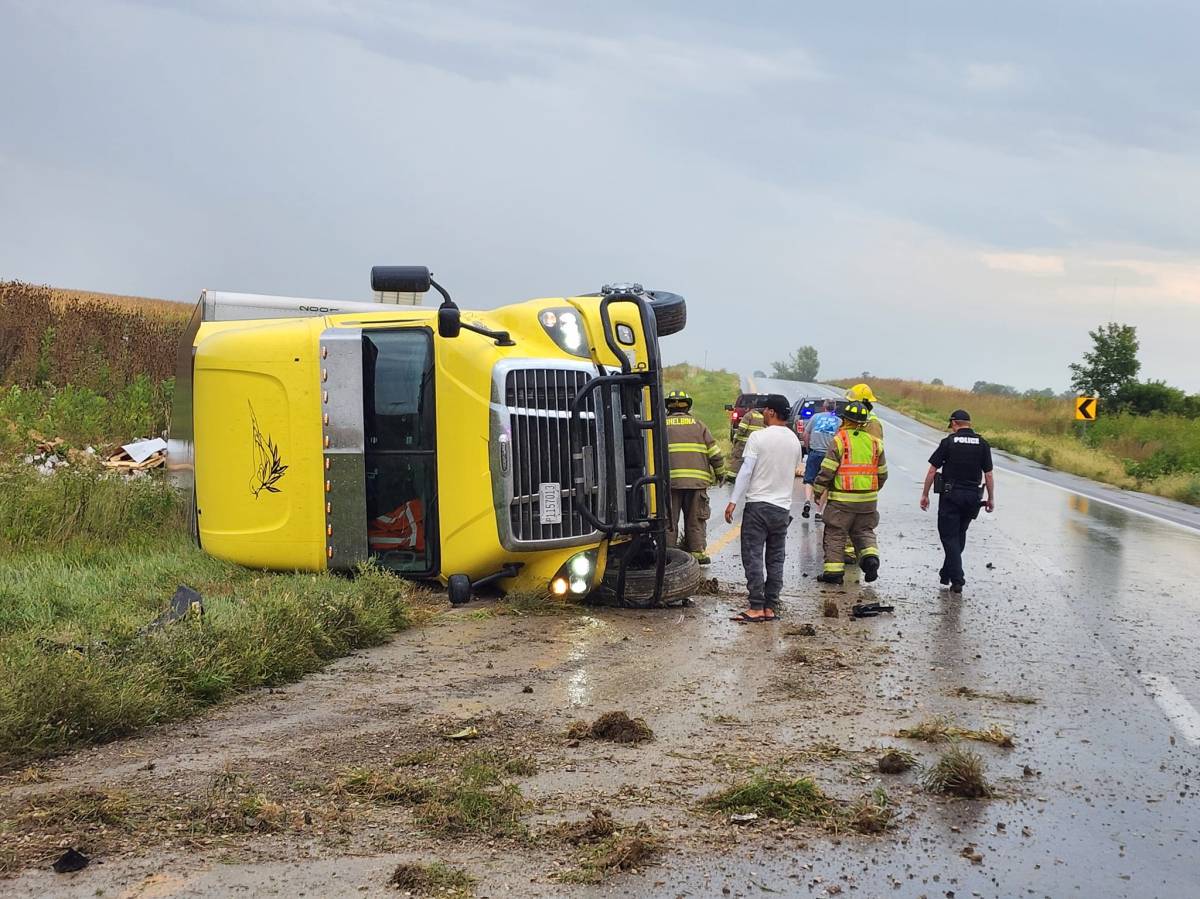
That was the scene at what the mercurial feline is calling Operation Yums HQ, less than a half mile from the site of an overturned tractor trailer on Missouri’s Highway 36. The truck, which had been headed east, drifted onto the right shoulder of the highway and tipped over into a ditch, spilling its glorious, delicious, must-be-acquired cargo onto the surrounding grass and concrete.
“Look at it,” Buddy said, surveying the scene as firefighters, police and paramedics saw to the driver, closed down one lane and directed traffic around the accident. “Soon, it will be all mine. Er, I mean ours. Muahaha!”
Authorities weren’t initially sure what caused the tractor trailer to tip over, but said rain and a slick road could have been factors. They’re still investigating.
In the meantime, the human emergency services personnel were oblivious to the cats huddling just out of view, licking their lips and preparing to raid the site under the cover of darkness.
“Stupid humans, they don’t even know they’re sitting on a gold mine!” said Buddy’s second-in-command, Smushface McCutiePants. “Take heart, dear companions, for tonight we dine on Fancy Feast!”


 Pain In The Bud