Archaeologists Uncover Ancient Mayan Jungle City Where Buddy Was Once Worshiped As A Feline Deity

The city, which was abandoned after a natural disaster, was an important hub of civics, trade, napping and indigenous dishes such as the cheeseburger.

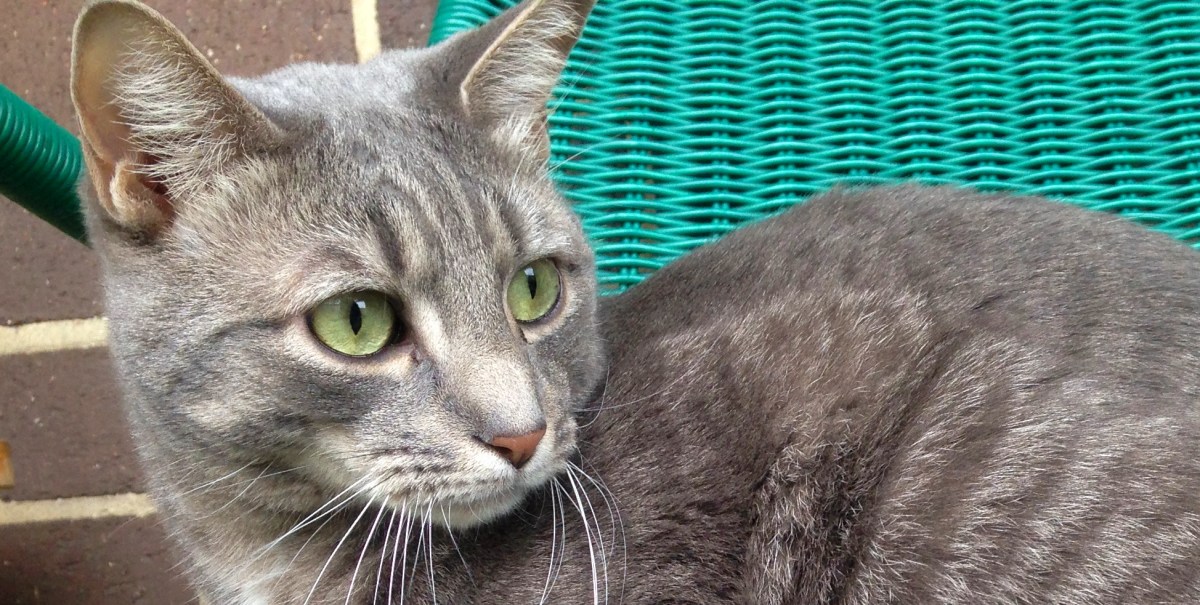
XQOCHOATL, Yucatán — Archaeologists announced the discovery of a vast and prosperous ancient Mayan jungle city whose inhabitants once worshiped an unusually handsome gray tabby as a feline god.

X’Budiso was an important center of trade, religious life, architecture and art, according to Ferdinand Lyle, an archaeologist with the British Museum of London and lead researcher on the project.

His team located the long-lost city using LiDAR — light detection and ranging — a technology that allowed them to peer beneath the cover of heavy jungle and detect the ruins beneath.

Previously, there was only one indication that humans had once inhabited the area — a feline paw holding a cheeseburger, rendered in stone and poking out of a thick tangle of jungle flora. When archaeologists cleared the brush and trees, they revealed the rest of the statue which depicted a regal-looking cat on a plinth, holding the cheeseburger aloft in triumph.

Budacoatl with offerings
An artist’s impression of the Mayan deity Budacoatl surrounded by offerings of cheeseburgers, dipping sauces and artisanal cheeses inside the Temple of a Thousand Snacks. A cult devoted to Budacoatl, the Ancient Order of Yums, was responsible for taste-testing the snackly offerings.

The city was a bustling metropolis for hundreds of years before its abrupt abandonment, which researchers said was likely caused by a natural disaster such as a flood or pestilence.

“The Budiso people worshiped a pantheon, and at the top of that pantheon was Budacoatl, the tabby jaguar god of snacks, handsomeness and war,” Lyle explained. “Our research indicates that doom fell over the city, likely in the form of a plague, and that its inhabitants believe they may have angered Budacoatl by skimping on their offerings of snacks.”

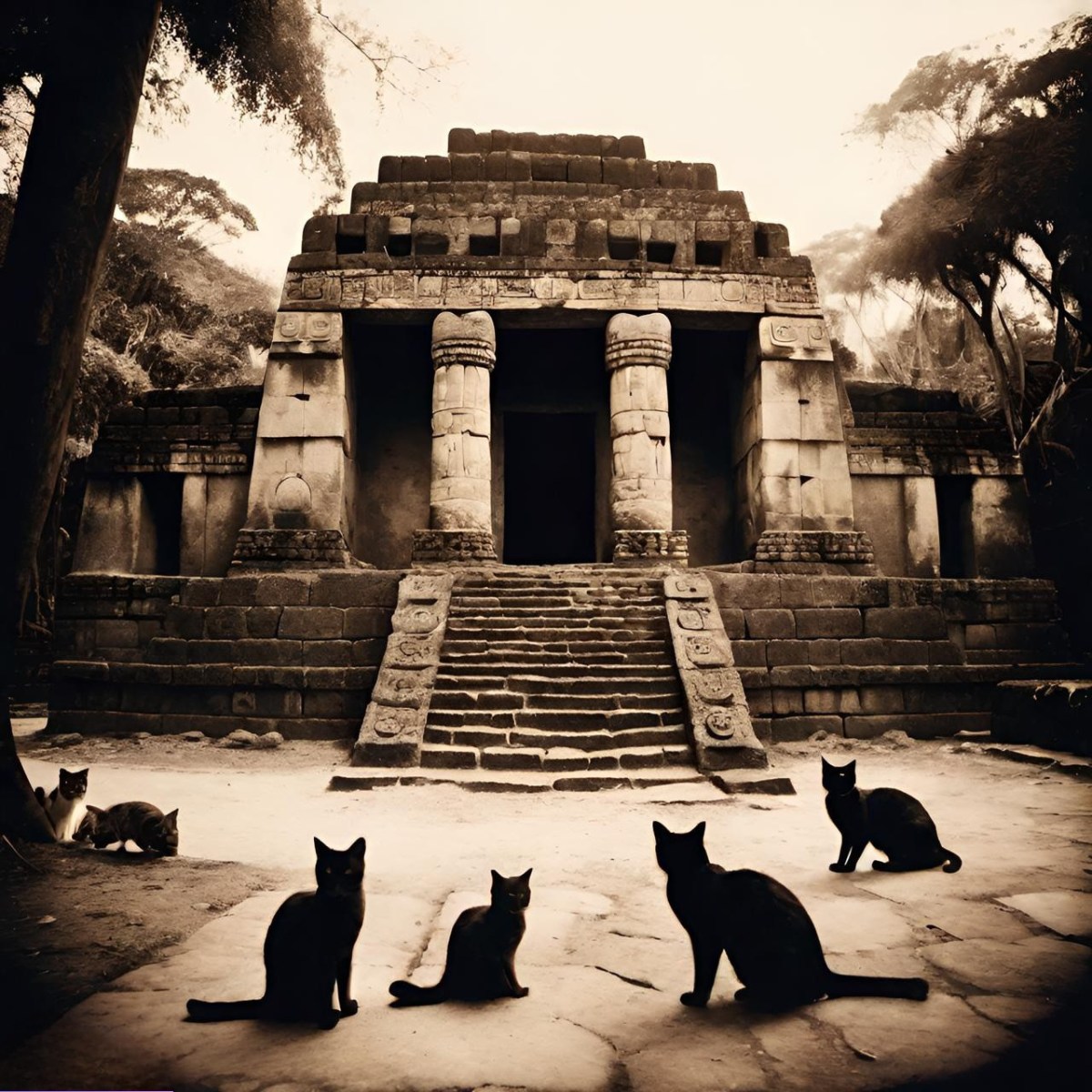
Cats in front of the Temple of Turkey
Feral felines, like the pair pictured here in front of the Temple of Turkey, still live on the grounds of the long-lost city. Source: Buddesian University Archaeological Department

Partially translated glyphs tell of unprecedented growth for the once-prosperous city, which the people believed stemmed from the favor they enjoyed from Budacoatl. Employing a force of more than 100,000 laborers, they built a magnificent temple to the feline deity in the very center of their city.

An architectural wonder, the Temple of Budacoatl featured more than 500 depictions of the feline in statues and relief carvings. The structure was comprised of tiered gardens with artificial waterfalls and tribute chambers, while gilded food and water bowls were placed at regular intervals for the hundreds of mortal cats who lived on the temple grounds.

A nearby structure, the enigmatic Grand Napitorium, was possibly the first sound-proof building in history and affirmed the X’Budiso people’s communal commitment to satisfying siestas.

The city gained a reputation for culinary innovation, and is considered the birthplace of aji sauce, deep fried turkey, huevos rancheros and Temptaciones, the ancient precedessor to Temptations.

The Artisanal Guild of Nectarean Condiments and the Sacred Order of Saucemasters were two particularly prosperous factions in the ancient city, which developed a reputation in the pre-Conquistadorial world for producing  the tastiest guacamole.

“It was said that Budacoatl was particularly fond of sandwiches, and the people sang hymns about his power, influence and ripped physique,” Lyle said. “An epic poem, chiseled into the edifice of the temple, told of battle in the heavens between Budacoatl and the mighty Vakuum, scourge of the Maya. Budacoatl prevailed over Vakuum, banishing him to the underworld where his screeching could not be heard by the inhabitants of the Earth.”

Relief carvings
Richly detailed relief carvings from the Palace of Pâté depict figures from the feline pantheon. Source: Buddesian University Archaeological Department

At the foot of the wall where the poem is inscribed stands a statue of Budacoatl, one paw holding a pastrami sandwich and the other raised in a sign of peace.

“Budacoatl was a big deal among the Maya,” Lyle said. “At one point he was bigger than Gozer and Zuul, ruling atop the pantheon. As a result, cats enjoyed enormous favor in the city.”

Ferdinand Lyle
Professor Ferdinand Lyle, foreground, stands in front of the Napitorium, where the Budiso people would take siestas. Napping was an important part of the culture. Source: Buddesian University Archaeological Department

Radio Broadcast Details Buddy’s Incredible Accomplishments

Did you know Buddy the Cat invented the George Foreman Grill and diffused the Cuban missile crisis? Me either!

I was looking through some of my old files the other day when I came upon this forgotten radio broadcast, which provides just a taste of Buddy’s heroics and adventures:

Of course I live with the little guy, so it’s easy to forget how accomplished he actually is. In addition to serving a term as president of the Americats, Buddy has won multiple gold medals at the Olympics, led the New York Yankees to a World Series championship, single-handedly took on the meowfia, and holds the Guinness World Record for most stylishly executed nap.

To me he’s just my Buddy, my fluffy little friend who likes to hang out, meows a lot, and enjoys purring and making biscuits while I rub his head and tell him what a cool dude he is.

Still, it’s nice to know that if I need him to take on evil robots or win a competitive eating contest, he’s got that covered too.

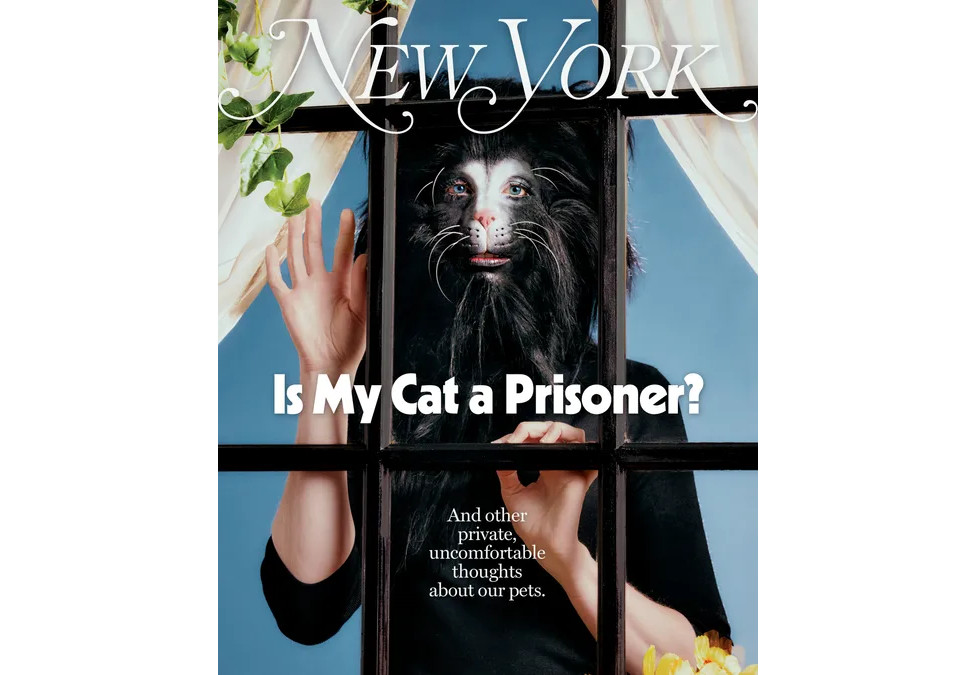
Mag Asks: ‘Is My Cat A Prisoner?’

Are we doing right by our furry friends? The latest issue of New York magazine takes a deep dive into the concept of pet “ownership” and the ethics of keeping animals in our homes.

Almost the entirety of New York magazine is devoted this week to what its editors call “an exhaustive exploration of the ethics of pet ownership.”

The magazine treads a minefield with articles like “Why Did I Stop Loving My Cat When I Had A Baby?“, “Am I a Terrible Pet Parent?“, and “Was I Capable Of Killing My Cat For Bad Behavior?

There are also articles about what veterinarians really think of “pet owners,” whether runaway dogs deserve to be free, and even a story asking whether the word “owner” is appropriate to begin with. (You’ll notice PITB almost always avoids that word, unless we’re quoting others.  I refer to myself as Buddy’s servant and his caretaker, words that feel more honest than owner.)

The stories are worth reading. Some are free for a limited time, others can be read as part of the weekly article limit. And if you can afford it, supporting a magazine or two during these brutal times for the publishing industry is a good way to help quality publications survive, so we’re not all drowning in a sea of clickbait garbage tuned for algorithms instead of human readers.

Regular readers of this blog are likely familiar with the story of Bud’s one and only “escape” as a kitten. When I found him, this cat who hates being picked up leapt into my arms, holding onto me like a terrified toddler, and his relief was palpable as I felt him purring into my neck. We were both relieved.

He’s had the opportunity to leave since, but he won’t. He’s got a good thing going here, living like a little king with his personal servant. He gets tons of attention, he’s allowed to do pretty much anything he wants as long as it isn’t dangerous for him, and he loves his Big Buddy.

I know he does from the way he approaches me, purring and meowing happily as he bunts his forehead against mine. I know it from the way he makes biscuits on me and falls asleep in my lap, feeling content and secure. And I know it from his refusal to leave my side the two times I was so sick I could barely move.

pitblogoretro
He’s got his own site, awesome retrowave logos and online admirers, but Buddy only cares about the snacks.

We shouldn’t feel guilty for giving cats a home.

I think we tend to forget that as domesticated animals, cats don’t have a natural habitat. The process of domestication made them friendlier, more trusting and more capable of reading human body language, facial expressions and tone of voice.

But those changes came at a cost, as they always do in domestication. Felis catus looks like its wild relatives and retains many of the amazing abilities of wild cats, but compared to them the species has lost a step. Domestic cats are not as quick or agile, they’re too trusting, and they’re not well suited to providing for themselves. The statistics on life expectancy reflect that, with ferals and strays living short, miserable lives.

Wildcat
Although it’s usually very difficult to tell a domestic cat from felis lybica, the wildcat species seen here, there are major differences in their respective survival abilities and instincts. Credit: Wikimedia Commons

So if felis catus has a habitat, it’s our living rooms. When our ancestors welcomed them into human settlements ten thousand years ago, they formed an indelible bond and made a pact, even if they didn’t realize it at the time.

Consider it a debt we owe for the survival of our species, when nascent civilization would have likely been snuffed out were it not for cats protecting the grain stores over long, cold winters.

Without cats, rodents would have eaten their way through the season’s rations, starving out the early settlers before the next harvest. The great agriculture experiment would have been over as quickly as it began with people returning to the nomadic life of hunter-gatherers, and it’s likely that everything after — from the first cities, to the birth of western civilization in Greece, to the remarkable achievement of putting a human being on another world — would have been jeopardized or taken radically different paths otherwise.

So you can thank your cat for your house, your car, the medicine that keeps you tip top, all the comforts of modern civilization, and all the stories and songs of humanity. Without cats and their heroic willingness to eat their way into our good graces, we wouldn’t have gotten here. Thank them often. You can’t go wrong with treats.

Caption Contest: What’s Bud Thinking?

Caption a photo of the world’s most Buddinese feline!

Is he yawning? Screaming in terror before dashing behind my legs? Reacting to someone spilling the tea about a friend? Awestruck at a giant turkey?

Well, that’s up to you!

funny buddy
Your witty caption goes here.

Would Your Cat Survive The ‘Quiet Place Challenge’?

Buddy is many things, but he’s NOT quiet. His incessant chattiness can kill my sleep and my peace and quiet, but in the world of A Quiet Place, it would kill me! Would your cat get you killed in the movie franchise’s monster-stalked reality?

As a cat lover, big time science fiction fan and appreciator of the first two A Quiet Place installments, the very first thing I thought when I saw the trailer for A Quiet Place: Day One was “I hope the cat doesn’t meow!”

My second thought? Bud and I would be so, so dead.

Dead immediately. Dead a thousand times over.

Apparently I’m not the only one, because fans have taken to social media to participate in the “Quiet Place Challenge,” which involves reenacting some of the scenes from the movie with their own cats to see if their furry overlords can stay silent.

As PITB readers know, Buddy never shuts up. He’s got something to say about everything, he often narrates his activities in real time, and he’s got an entire meowing ritual that starts at least a half hour before Food O’Clock, gaining in volume and annoyingness until a fresh bowl of turkey is placed before him. His personal patois, the Buddinese dialect, makes heavy use of trills, chirps, grunts, chuffs and sniffs to elaborate on his meows.

If you’re unfamiliar with the Quiet Place movies, they imagine a world that’s been invaded by so-called Death Angels, dread creatures of extrasolar provenance who are completely blind, but have extraordinarily sensitive hearing. The first movie, about a family surviving on their farm in upstate New York months after the initial invasion, was universally lauded for its taut script, effective tension and novel use of a quiet/loud dynamic that is a marked departure from the usual horror-thriller formula.

A Quiet Place (2018)
John Krasinksi directs and stars in the original A Quiet Place as Lee Abbott, a father who survives the invasion along with his wife (real life spouse Emily Blunt) and their two children. Credit: Paramount Pictures

In A Quiet Place (2018), its 2020 sequel and the recently-released prequel, Day One, entire minutes pass soundlessly. As a viewer you can’t help but wince and tense up when a character errs and makes noise, knowing the consequences can be immediately tragic.

There’s simply no way Bud and I would survive more than five minutes, and if I had to put money on it, I’d wager we’d probably be dead within 60 seconds of the terrifying monsters showing up.

Indeed, the movie doesn’t dither: the Death Angels make planetfall at around the 12 minute mark. Mild spoilers from the beginning of the film follow:

12:31 – On Chinatown’s ruined Pell Street, within a haze of dust so thick you can’t see more than a few feet in any direction, a man shouts loudly into his smartphone, telling the person on the other end that something meteor-like had landed just a few hundred feet away. He’s pulled suddenly and violently into the smog, his scream ending as abruptly as it began. Verdict: Death by Buddy. He’d probably meow in protest at the dust and get us both killed immediately.

12:53 – A female National Guard soldier sees Nyong’o’s Sam and shouts at her to take cover. The guardswoman’s radio crackles with the panicked screams of her comrades saying the enemy is everywhere, and then she’s dispatched as quickly as the guy on the phone. Verdict: Death by Buddy. He’d almost certainly huff derisively at the soldier’s order to take cover, and we’d both be crushed underneath the foot of one of the lumbering beasts.

13:34 – Sam huddles behind a vehicle with another woman when a panicked man screams, drawing the aliens like moths to a flame. Verdict: Death by Buddy. Little dude’s default reaction when he’s scared is to run screaming and hide behind my legs. He’d draw the monsters right to us and we’d die.

13:50 – Sam wakes up inside a theater several minutes after an explosion knocked her out. She’s about to speak when Djimon Hounsou’s Henri clamps a hand over her mouth and raises a finger to his lips. Unfortunately that doesn’t work with a cat. Verdict: Death by Buddy. Attempts to get him to shut up would be fruitless, and while I’d know my only chance for survival would be to throw him like a football so the aliens track his indignant screech, I wouldn’t have the heart to do it. We’d die together.

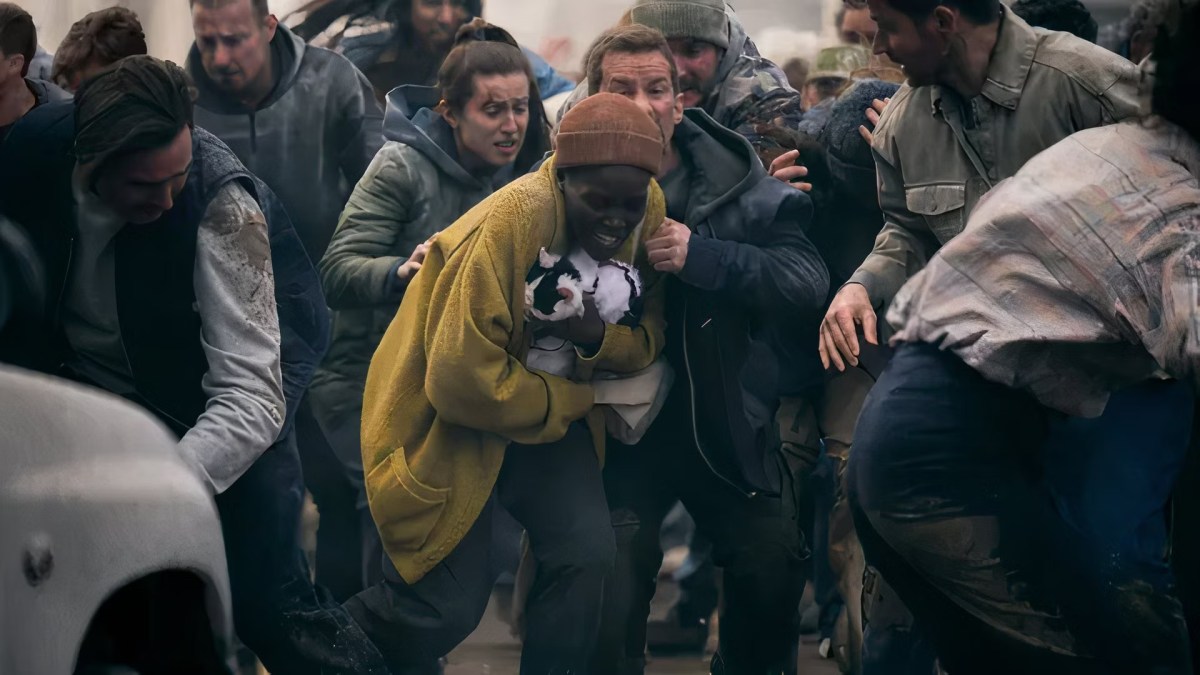
Frodo, the feline co-star of Day One and “service cat” to Lupita Nyong’o’s Sam, is precisely the opposite. He’s a Good Boy extraordinaire, consistently calm in his mother’s arms and reliably silent when he needs to be.

Frodo the Cat
Frodo is a handsome and resourceful little guy, and much of Day One’s tension comes from putting him in danger. Credit: Paramount Pictures

Without meows to rely on, director Michael Sarnoski gets quite a performance out of Nico and Schnitzel, the two cats who play Frodo. They’re expressive felines who could teach Nicolas Cage a thing or two about how to emote with subtlety, as in one scene when Frodo sees a man emerge gasping from a flooded subway station. Frodo regards the stranger with curiosity, his little face registering surprise at the man’s sudden appearance with just the slightest twitch of his mouth and whiskers.

It’s effective and very cute, but we never forget about the incredible danger that faces Frodo and Sam as they return the One Ring to Mount Doom navigate the ruins of New York City amid blind predators with extraordinarily sensitive hearing.

buddyroarbanner
“LOL I got you killed, dude! Hey! Wake up! I’m hungry! Turkey time! I’ll take my evening meal on the balcony and dine al fresco this evening, okay? Big Bud? Dude?”

If Day One’s world was reality — and I’m extremely thankful it’s not — I suppose it’s possible I’d get lucky if we were in a deep subterranean level of a building for some odd reason, and if Bud decided it’s not worth disturbing his nap to investigate the ruckus above.

But the moment his belly rumbles and he starts screeching for yums, or the second he gets it into his little head that he just has to tell me his latest theory regarding entangled subatomic particles, it would all be over, for me at least. I could totally see Bud making noise, then dashing to his customary hiding place behind my legs while a “Death Angel” impales me with one of its giant claws.

What about the rest of you? Is your cat a Frodo, a Bud or another sort entirely? Would you be dead as quickly as we would be, or do you think you could survive with your furry pal?