“I’m a damn cat!” Brimley said. “Beverly, can you believe I’m a cat?!”
SALT LAKE CITY — American actor Wilford Brimley was reincarnated as a kitten this week, retaining his trademark mustache — and his beloved diabeetus — in his new feline form.
Brimley, who is known for appearing in films like 1982 classic The Thing, 80s sitcom Our House and decades of commercials raising awareness about diabeetus, said he went to bed Tuesday night feeling sick and fatigued.
“I thought I had that there Corona flu,” the 85-year-old American actor said. “I had me one of them dreams about heaven, where I met Jesus and we talked about diabeetus. Then when I woke up I went to reach for my glasses and realized, ‘Holy mackerel, I’ve got paws!‘”
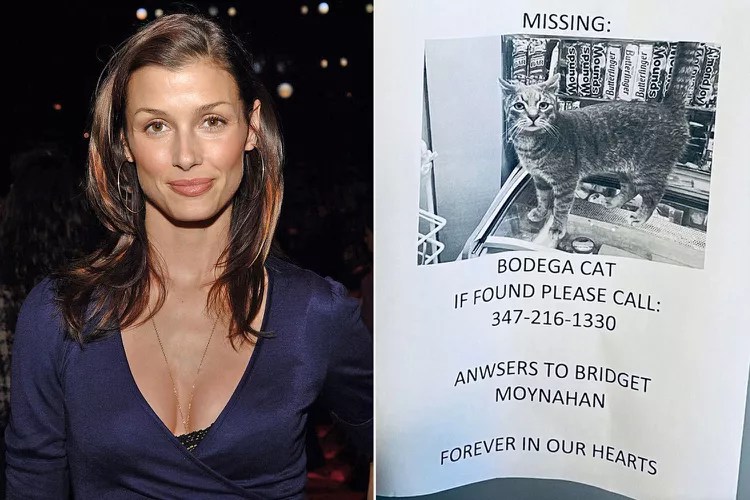
(American actor Wilford Brimley in his human form, left, and as a kitten.)
Brimley, who is known to generations of Americans as a Quaker Oats spokesman, said he suddenly had an urge for raw meat.
“But that don’t sit well with my diabeetus,” he said. “So I went downstairs and I called to my wife Beverly, and I says ‘Beverly, I’m a kitten!’ And Beverly, she says ‘Wilford, is that you? Oh my stars, you still have your mustache!’”
Although it’s been years since Brimley’s days as a pitchman, the actor says he’ll return to TV — this time in commercials for Blue Buffalo canned food.
“Blue’s all natural ingredients will keep your cat healthy,” Brimley says in one of the new adverts, “whether she has diabeetus or not.”
An Australian team decided to look for DNA evidence in a novel place: cat fur. Their findings could give law enforcement a powerful new tool to identify crime suspects.
When you think of a crime scene, you probably picture uniformed officers manning the perimeter, crime scene tape cordoning off the room where the deed was done, detectives trying to reconstruct what happened, and techs collecting evidence.
Those techs might swab surfaces for traces of a suspect. Drinking cups and water bottles might be dusted for fingerprints, stray hair might be bagged and sent back to the laboratory for analysis. Discarded cigarette butts, door handles, buzzers — they can all yield evidence, to say nothing of cell phones, USB sticks and smart appliances.
But what about the pets? If a suspect was especially careful not to leave prints or touch anything at the crime scene, could the fur of a cat harbor DNA?
A team comprised of scientists from Australia’s College of Science and Engineering at Flinders and the Victoria Police Forensic Services Department wanted to know if cat fur could indeed hold critical evidence at crime scenes, so they conducted a study involving 20 pet cats from different homes, and what they found could provide an important tool for law enforcement. Their findings were published in the journal Forensic Science International.
If detectives are trying to piece together the identities of robbers who, say, broke into a home, brutalized the people there at gunpoint and stole their valuables, they can’t interview the victims’ pet cats about what they saw, but it turns out they can swab the kitties’ fur and have an excellent chance of retrieving useful DNA.
Blacksad is a famous feline detective in his own series of comic books. He may have to be careful not to leave his stray fur all over his own crime scenes.
The research team swabbed the fur of pet cats in their test households, took DNA samples of the adults living in those homes — who were the stand-ins for victims — and asked the human participants to fill out surveys asking about their cats, what they do on a typical day, and whether or not they have interaction with people outside the home.
After the team conducted DNA analysis on the fur swabs “[d]etectable levels of DNA were found in 80% of the samples and interpretable profiles that could be linked to a person of interest were generated in 70% of the cats tested,” the study authors wrote.
While most of the samples matched the DNA of people who lived in the homes — as expected — samples from six cats revealed the presence of DNA from other people. The research team didn’t take DNA samples of minors, and two of the positive fur swab samples came from cats who lived in a home with a child and slept in that child’s bed most evenings. But four other samples turned up “mystery” DNA even though no one else had visited those homes for at least several days.
For DNA from pets to have any real evidentiary value, prosecutors have to prove a “chain of custody” of sorts, establishing that suspects could not have had contact with the animals in question unless they were inside a home where a crime has taken place. If the cat is allowed to roam outdoors every day, for example, it becomes much more difficult to prove a suspect’s DNA was transferred to a pet inside a home rather than on the street.
That’s why the research team is hopeful, but also cautions that their study is a first step toward understanding more about how human DNA is transferred to fur, whether it requires a person to be physically present (as opposed to their DNA being passed along secondhand in stray hair or skin cells), how long a cat’s fur can harbor human DNA, and other questions prosecutors will have to answer.
“This type of data can help us understand the meaning of the DNA results obtained, especially if there is a match to a person of interest,” said study co-author Mariya Goray, a DNA transfer expert. “Are these DNA finding a result of a criminal activity or could they have been transferred and deposited at the scene via a pet?”
The team recommends more research “on the transfer, persistence and prevalence of human DNA to and from cats and other pet animals and the influences animal behavioral habits, the DNA shedder status of the owners and many other relevant factors.”
If they do answer the aforementioned questions and prosecutors believe they can establish a suspect’s presence at a crime scene thanks to feline-provided evidence, it might not be too long before we see a cat-centric episode on future seasons of Law & Order or CSI, both of which are scheduled to be revived as police procedurals enjoy a resurgence on TV.
As dedicated cat servants know, cats rub against everything and everyone. The behavior is instinctual, and cats have pheromone glands on their faces, sides and paws, which they use to transfer their scent..and fur.
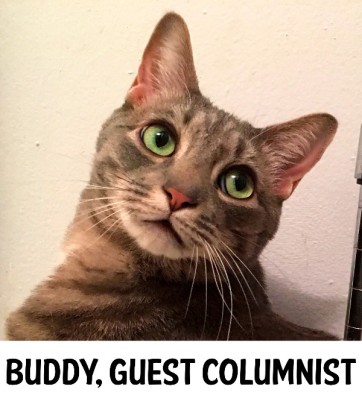
As much as Bud can be a wimp fearless protector of the apartmental realm, he’s also very friendly when he feels confident, and he loves Halloween.
Every Halloween since kittenhood, little man has answered the door with me, standing right by my side as I hand out candy. He’s just as curious about the kids as they are about him.
“Your kitty is so cute!” one girl of about 10 said tonight as Bud looked up at her.
“Thanks!” I said. “He loves answering the door.”
The little girl, dressed as a witch, was the third trick-or-treater to compliment Bud tonight. That may not seem like much, but we had surprisingly few kids this year. I expected a lot more since the last two Halloweens were muted by the threat of COVID, but for whatever reason the little ghouls and goblins have not returned to pre-COVID levels.
For what it’s worth, when I was a kid we used to love going to apartment buildings, which offered the best time-to-candy ratio. You could knock out an entire floor of 20 apartments in 10 or 15 minutes, then walk up the stairs and do it again. By the end of the night, you were guaranteed to have overflowing bags of candy.
Things have really changed in two decades. My brother, my friends and I would just go out by ourselves in our Batman, ninja and robot costumes. Mom would tell us to be careful, but we weren’t chaperoned. Nowadays every trick-or-treater has a parent in tow. I’m not sure if that’s a smart precaution or a sad reflection on our society.
Alas, Bud didn’t wear a costume this year. Usually I’m able to get him to tolerate a simple bandana or his little tuxedo, at least for the time it takes to answer the door. I couldn’t find either of them this year, so I tried to bribe him into wearing a little penguin hat from an old costume.
Despite the payoff in snacks, Bud tugged the hat off three times. It was a bit too small, and he’s too smart. The hat didn’t have a chance.
Happy Halloween! I hope all PITB readers and their feline masters are having a great night. Have fun polishing off the leftover candy!
Cats are at the heart of one of the most famous thought experiments in science.
If you’ve spent time around physics types, listened to media appearances by science educators like Michio Kaku and Brian Greene, or even watched episodes of The Big Bang Theory, you’ve almost certainly heard of Schrödinger’s cat.
But what is it, why is it important, and what does it really have to do with cats? Most importantly, if you’re a cat lover, does it involve harming cats?
I promise you, if you stick with me and have a little patience, you’ll not only understand Schrödinger’s cat, but a hugely important element of physics will be demystified for you.
Let’s take a step back. First, we all learned in school that Isaac Newton was the “father of physics,” and Albert Einstein came along about two centuries later, revolutionizing physics by adding to Newton’s work and coming up with his own, more accurate model.
To this day, Newton and Einstein are in a class by themselves among physicists because they single-handedly changed everything we know about the natural world.
We all remember the famous story about Newton watching an apple fall from a tree, wondering why the apple fell down instead of up, and eventually developing his theory of gravity. Newton went on to develop his theories, which describe everything we see in the natural world, from that apple falling to the complexities of orbital mechanics.
Everything seemed to work perfectly, until a physicist named Max Planck came along in 1905 and published a paper introducing quantum physics.
What is quantum physics?
Now the word “quantum” has been incorporated into practically everything these days and has been so utterly abused as a marketing buzzword, a way to add a veneer of science to things that are otherwise nonsense, that it’s essentially a meaningless word to most people. Practically everything is described as quantum, from deodorants to claims of psychic telepathy.
But the gist of it is this: While Newtonian physics does indeed describe everything we see with our own eyes accurately, it does not accurately describe things at the subatomic level.
In other words, there are two sets of rules in our universe. Everything larger than an atom behaves according to one set of rules in our universe, and everything the size of an atom or smaller — which includes subatomic particles — behaves according to a different set of rules.
Not only that, but at the quantum scale, things get really, really weird.
They behave in ways that are completely at odds with everything we intuitively understand about reality, so much so that even Einstein himself was disturbed by what he found. Einstein famously described quantum entanglement — the ability of two different objects to be linked and share properties, regardless of how far apart they are — as “spooky action at a distance.”
So what the hell does this have to do with cats?
Ready to get even weirder?
Thanks to Planck, Einstein, John Stewart Bell and innumerable physicists — who are still studying these concepts, and still winning Nobel prizes for them in 2022 — we know that two particles can be “entangled” and will remain that way no matter how far apart they are.
You could take one particle, transport it 10,000 light years away, and it would still be entangled with the other particle.
But it gets even stranger than that.
Our entangled particles have certain properties, such as their spin, which are unknowable until we measure them. In fact, they exist simultaneously in all possible states until the moment when we observe them, at which time the wave function “collapses.” It’s called quantum superposition.
Not only that, but when we measure one particle in an entangled pair, the second particle’s wave also “collapses” (settles on a certain state) and we know its spin instantaneously, regardless of how far apart the particles are.
If I measure an entangled particle here on Earth and find its spin is up, I know the corresponding particle that’s been moved to, say, Epsilon Eridani, 10.47 light years away, is spin down.
You can see why this would be profoundly disturbing to scientists. It violates the speed of light, and it’s completely counterintuitive. How can the mere act of observation change something in the physical world, and how can it change something else potentially thousands or millions of light years away? Everything we know, every gut instinct we have, screams that this should not be true.
But it is true.
These aren’t just ideas kicked around by scientists smoking the sticky stuff, by the way. They’ve been proven experimentally many times over. No matter how much we might dislike the idea, no matter how weird or spooky it may seem, it’s true.
Enter Erwin Schrödinger, an Austrian physicist. He devised a thought experiment that goes like this:
Imagine you have a sealed box with a cat inside. Inside the box are two buttons: One button feeds the cat a yummy treat, the other button kills the cat. There is an equal (50/50) chance of the cat pressing either button. (Other versions use a more complex system involving radioactive material, or poison, that could kill the cat, again with a 50/50 chance.)
We don’t know if the cat is alive or dead until the moment we open the box. So in this thought experiment, we can think of the cat as both alive and dead until we “measure” or “observe” by opening the box.
That’s what’s happening in the above example of quantum entanglement and the idea that a particle is neither in one position or another until we measure it.
Why is measurement the key here? No one knows. Scientists are still arguing about that. Some believe that there’s some special quality of consciousness that interacts with the universe, so the mere act of observing something can change physical reality.
Others scoff at that idea and insist we’re missing something, that it’s not the act of observation that determines the final state of a particle at all.
Regardless, the important thing here for cat lovers is that Schrödinger’s cat is just a thought experiment.
Schrödinger never had a cat, as far as anyone has been able to ascertain, and no one has used an actual cat in an attempt to reconstruct the thought experiment because 1) You wouldn’t learn anything, since cats are not subatomic particles, and 2) Anyone intelligent enough to be a physicist is presumably intelligent enough to understand how absurd, pointless and cruel it would be to use a living being in an experiment that can’t give you any answers.
For those of us who aren’t geniuses, here’s Sheldon explaining the thought experiment as a child (in Young Sheldon) and as an adult (in The Big Bang Theory):
Happy National Cat Day! PLUS: Some changes to PITB.
Larry the Cat, official mouser in chief at 10 Downing Street, is now on his fifth prime minister.
After the disastrous and short-lived tenure of his predecessor, Lizz Truss, new PM Rishi Sunak officially moved into the UK prime minister’s residence earlier this week — and walked right past Larry without acknowledging him:
Note the reporter doing a live broadcast, which you can hear in the background.
“He is arriving now…the new prime minister of the United Kingdom!” the reporter said as Larry padded his way down the sidewalk and stopped.
Failing to acknowledge the true power at No. 10 is an ill portend for Sunak and the UK. What kind of person doesn’t greet his boss on his first official day of work? Larry will get him sorted in short time, undoubtedly.
Big and small cats from Ukraine find homes in Poland and the US
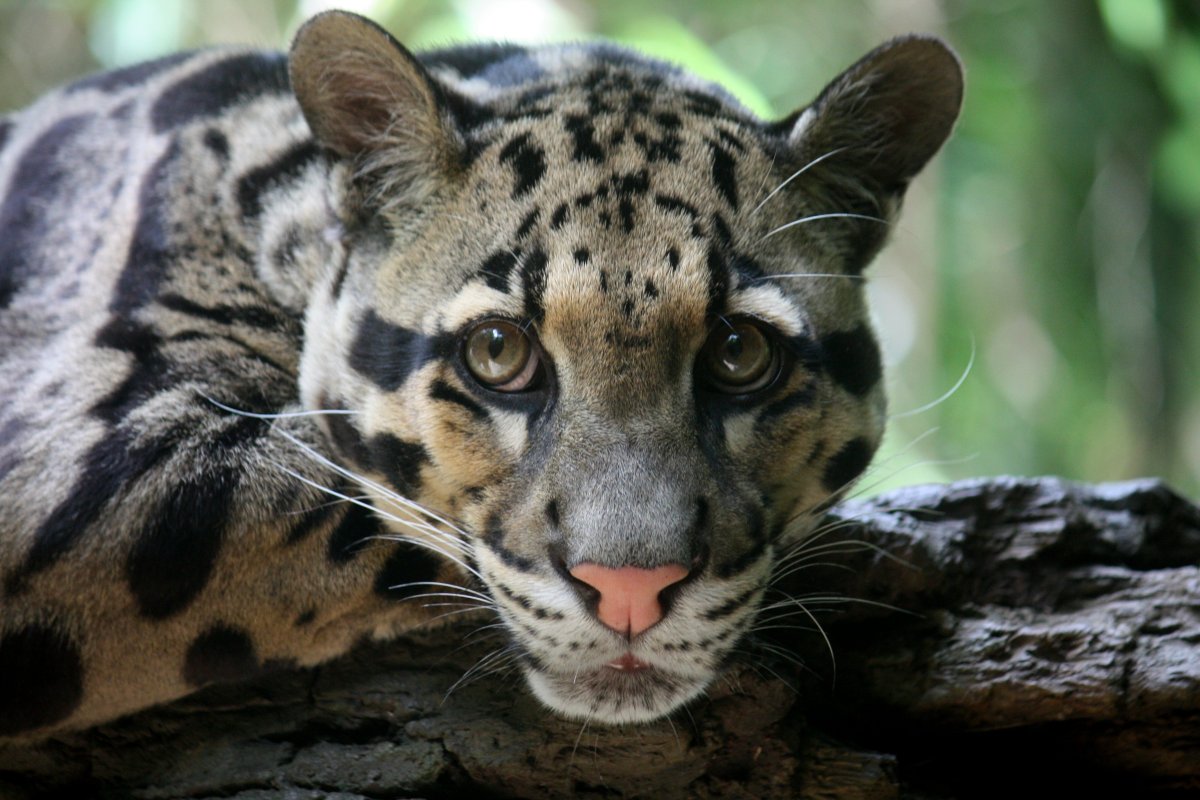
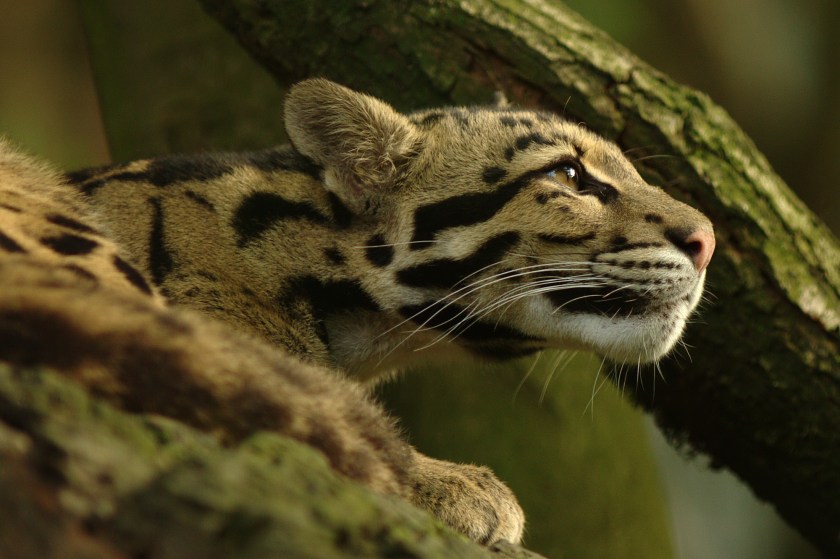
During the opening phase of the Ukraine war, there was an Indian national webcasting from Donbas, constantly asking for money to keep his “pet jaguars” — actually leopards — safe from the advancing Russians.
It was one of the most infuriating aspects of the young war. The guy was keeping the big cats in an apartment, referred to them as his “children” despite not even knowing their species or how to care for them, and he lied to his audience, claiming he’d purchased them from the Kyiv Zoo. He didn’t. Zoos don’t sell big cats to people. He got them on the illegal wildlife market.
I don’t know if those particular leopards are among the big cats rescued from Kyiv in recent weeks, but a new report says illegally kept pets are among the felids who were rescued from Kyiv and Odessa — two of the hardest-hit cities — and brought to sanctuaries in Poland.
That’s good news. Hopefully any remaining wild animals are taken out of the hands of private owners and put in sanctuaries where they belong. Big cats don’t belong in a war zone, and they don’t belong in private hands.
Meanwhile, Homeward Trails Animal Rescue in Washington, D.C., has house cats from Ukraine up for adoption.
Most of the little ones were rescued from warn-torn areas in the eastern part of the country, and the rest were moved from a Ukrainian shelter just in time, as the building was hit by Russian missiles shortly after the animals were cleared out. Some of the cats were found wandering amid the ruins and destruction in towns and villages that had been hit hard by the invading Russians, Homeward Trails’ Sue Bell told WTOP.
The US non-profit will continue to work with a shelter in Ukraine, which rescues cats from heavily impacted areas.
“Right now, Homeward Trails is the only organization taking cats from this new Ukraine shelter,” Bell said. “And so, for every cat that we took from the shelter, that not only gave that cat an opportunity for a home, but it created a space in that shelter for the team to go out there and bring more cats in.”
A belated happy National Cat Day!
There are so many cat days, I lose track, so apologies for missing this one.
Happy National Cat Day to all PITB readers and your beautiful kitties! It’s a good excuse to spoil our little buddies and remind them how much we appreciate them.
Changes to PITB
You may have noticed, if you don’t have ad blockers installed on your browser, that I enabled ads in mid-September. I strongly dislike ads and I don’t like clutter on the site, but after three years of operating and publishing PITB, I decided to enable a limited number of ads in an effort to get PITB to pay for itself and hopefully a few upgrades that would be helpful in making the site more accessible, while also providing the tools to expand PITB’s content offerings.
Please send us your feedback. If you see an ad that covers the content, let me know. If you see an inappropriate ad, let me know. You should see ads for cat-related products and/or ads for things you may have expressed interest in before — due to the way ad networks use cookies and data from services you use, which is perfectly normal — but I want to make sure no one’s having a bad experience here.