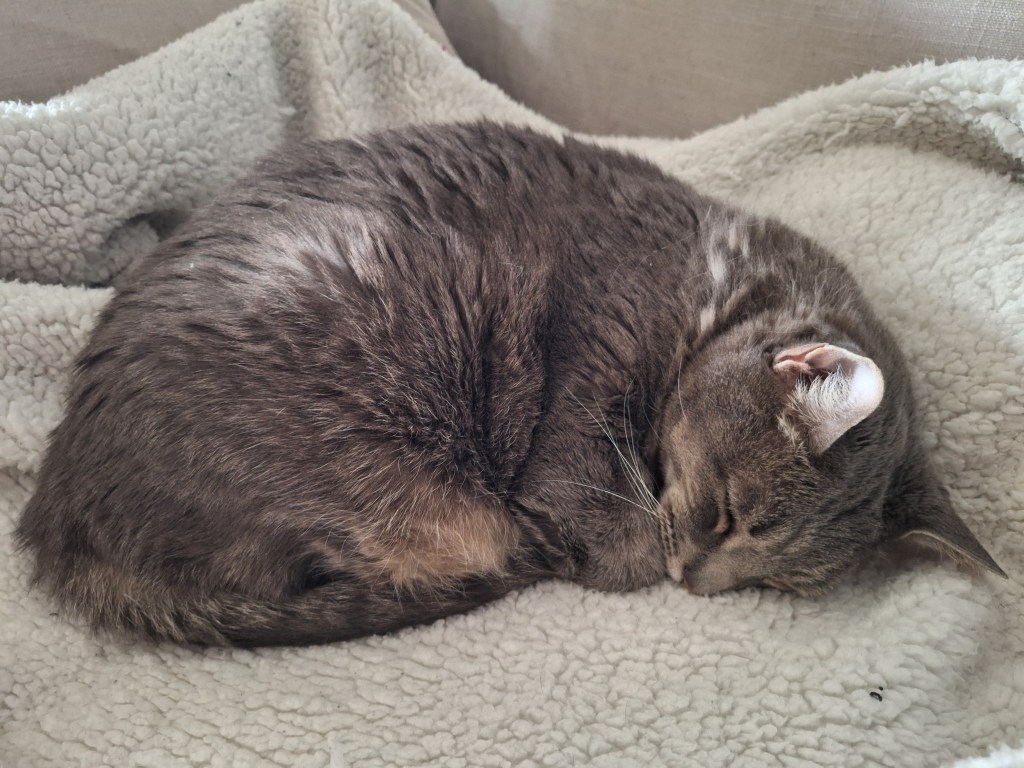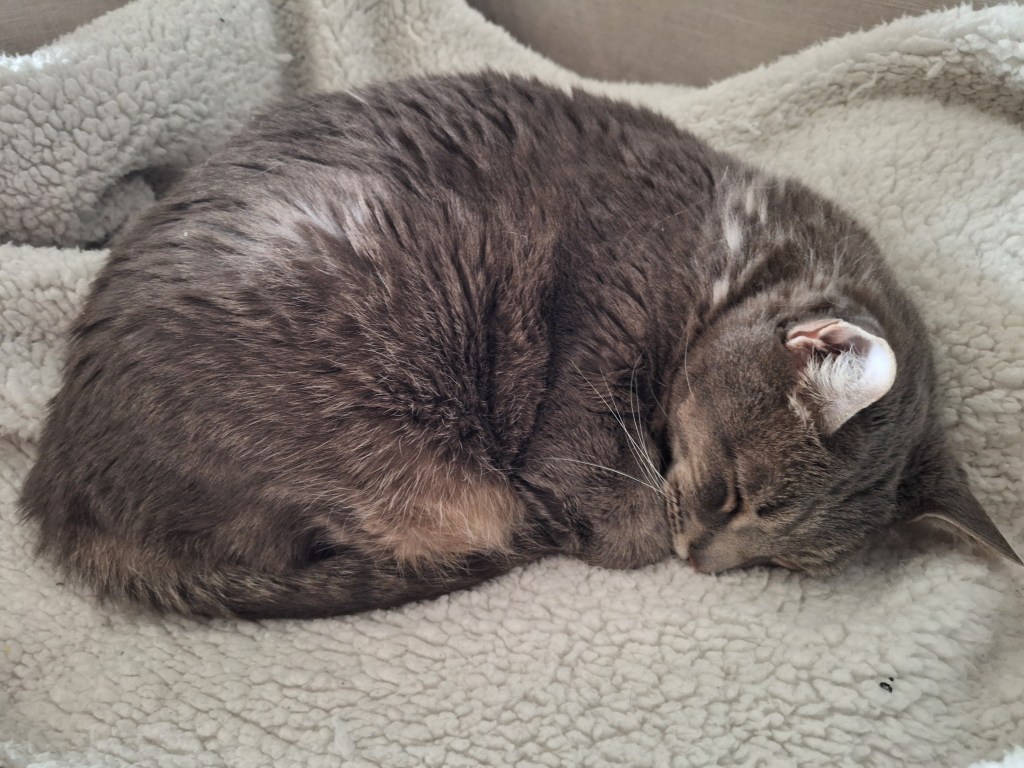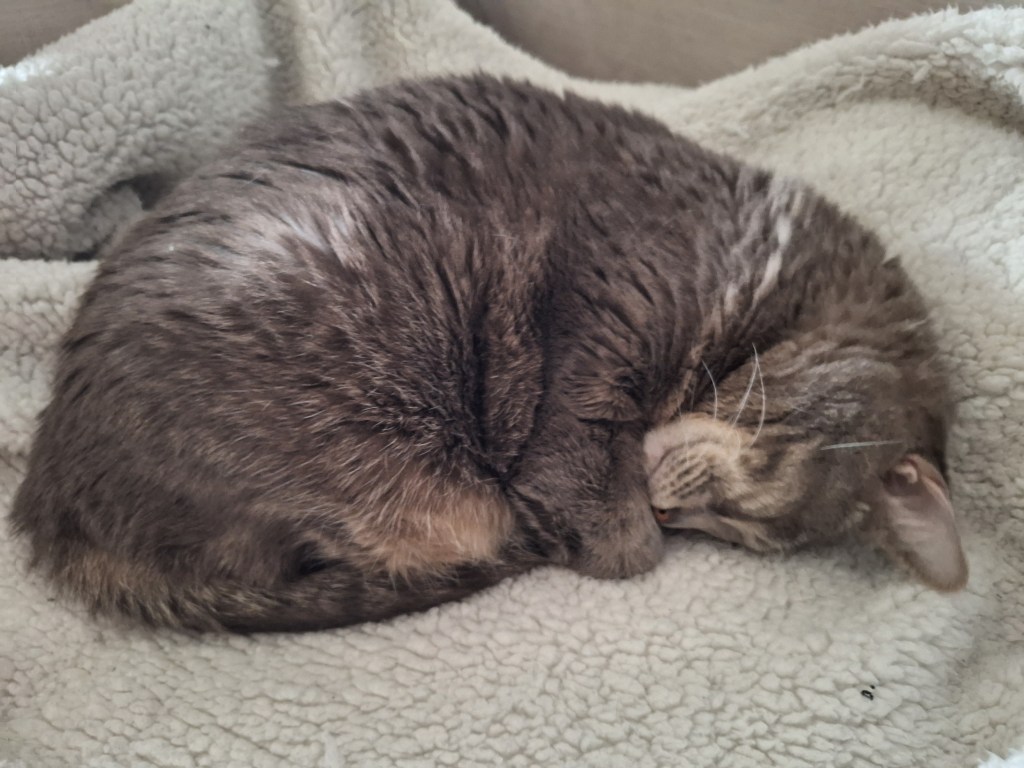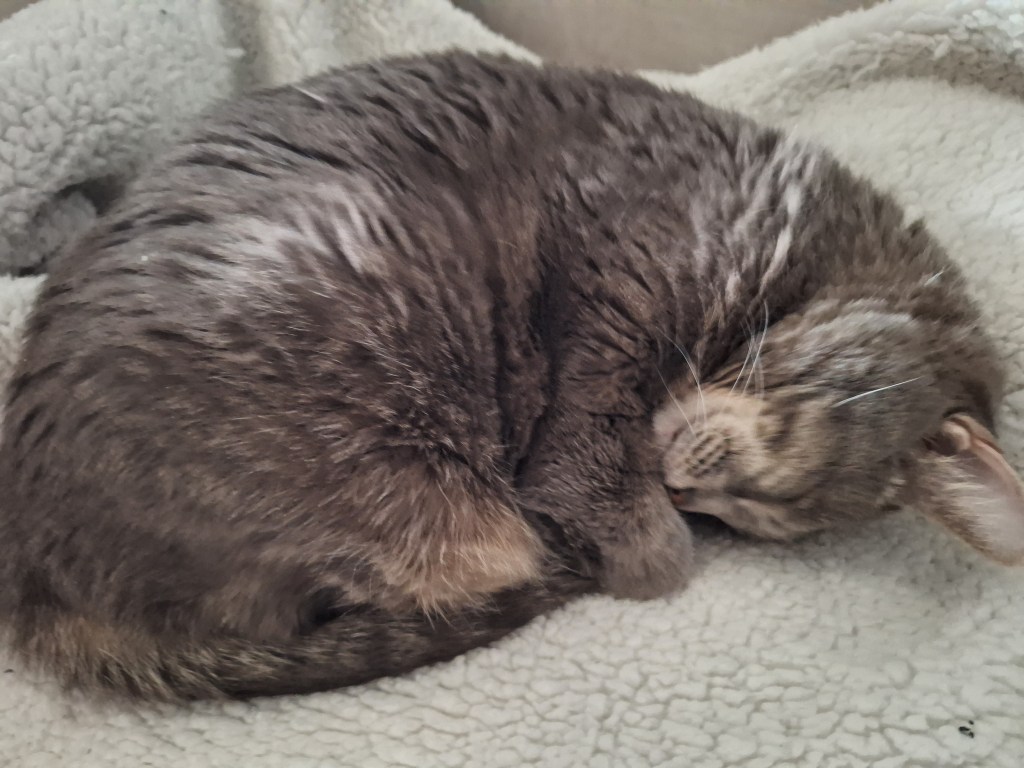
Bud Will Now Be Known As ‘Mike’

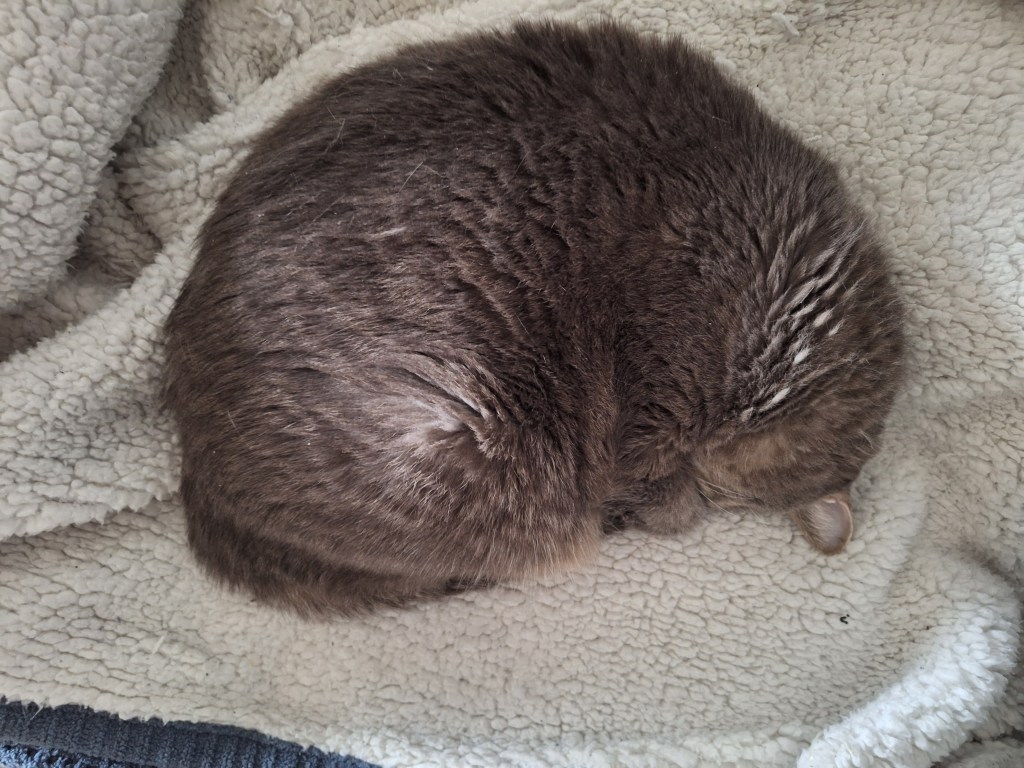
My mom called my cat by my brother’s name, and that is hilarious!

My mom has always disliked cats, but some magical bonding moment must have happened the last time she watched Buddy for me because he’s grown in her estimation from a “crazy man” to “a cute cat” and a “good boy.”

A few weeks ago she even excitedly told me she’d gotten a Christmas gift for him. That’s two toys from her in two months! She was so happy to give him the toy — one of those balls that zips around on its own with sensors, changing direction and mimicking prey — when she and I exchanged presents, and beamed as she encouraged him to chase it down.

What the heck is going on here? Feline sorcery?!

And then there was the cherry on top, when she accidentally called Bud “Mike.”

Mike is my brother’s name.

“Oh geez,” my brother replied when I informed him via text.

So now I’m gonna call Buddy Mike, because it’s hilarious and diminishes my brother while elevating Bud. Not all the time, mind you. I can’t be confusing the little guy, and besides, my brother lives overseas, so I’ll only get the opportunity via Facetime. But it’ll be just enough to get under my brother’s skin and remind him every so often that, to our mom, he’s on my cat’s level.

A Colorado Woman May Have Been Killed By A Puma, But We Should Wait For The Facts

There are lots of questions but very few answers so far related to the death of a woman on a hiking trail in northern Colorado. Authorities have not confirmed a puma attack.

A woman who was found dead on a hiking trail may have been killed by a mountain lion, state authorities say.

Several hikers were making their way along the Crosier Mountain Trail in northern Colorado at noon on Thursday when they came upon a woman laying on the ground and a puma about 100 yards away from her, according to police.

The hikers made noise and tossed rocks to scare the cat off, then one of them — a medical doctor — checked the woman and found no vital signs.

They notified authorities, who launched a massive search by air and ground, closing down the neighboring trails and bringing search dogs into the effort.

The search teams found and killed two mountain lions, who will be autopsied to determine if either had human remains in their stomachs. If they do not, rangers and police will keep looking, as they say Colorado law requires them to euthanize animals who have killed humans, local news reports said.

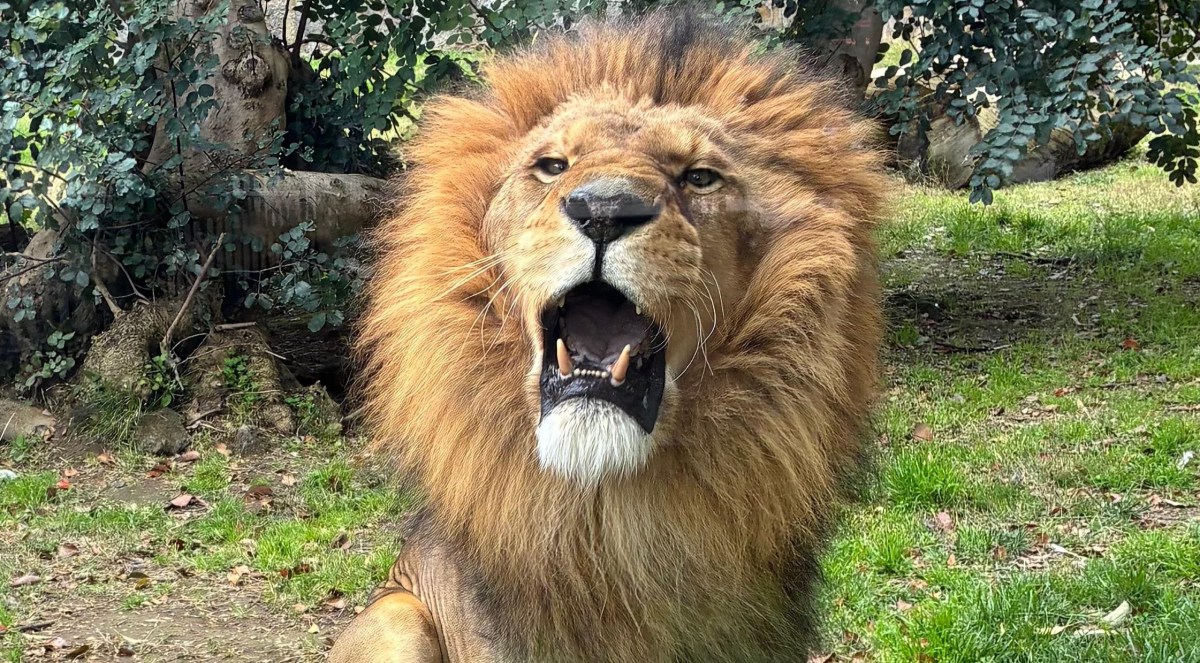
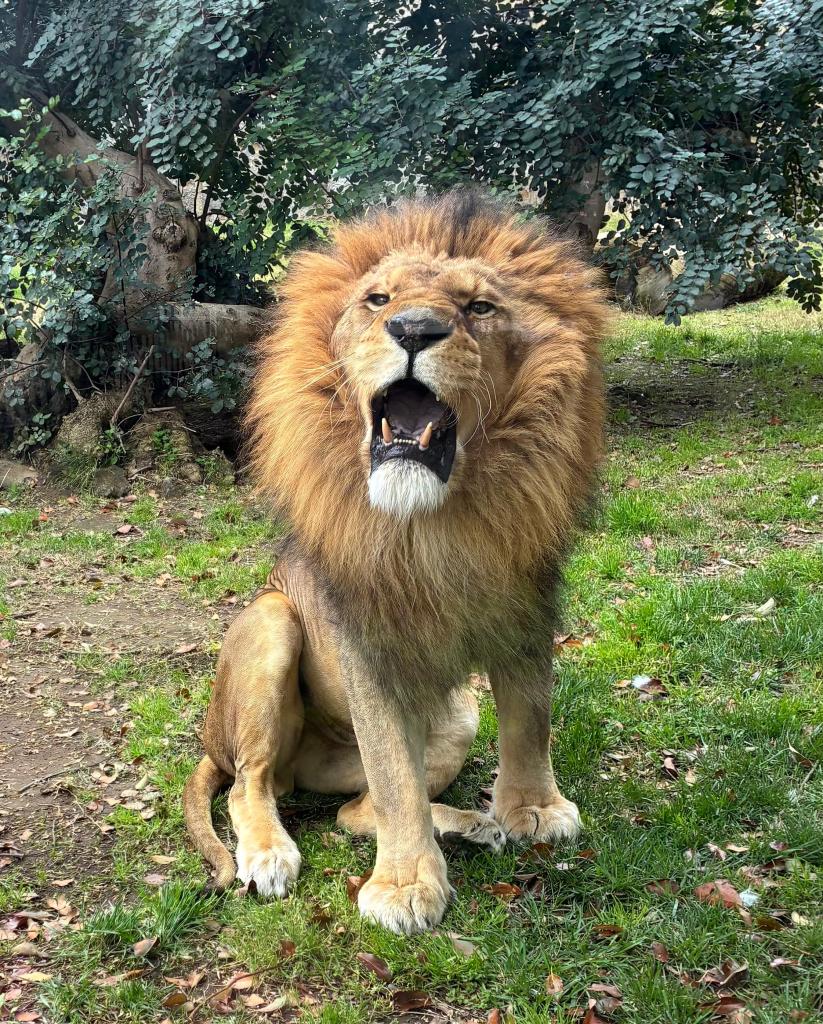
Pumas, also known as mountain lions, cougars, catamounts, screamers and many other names, are the widest-ranging cats on Earth, found throughout South America, the west of the US, and southern Canada. Credit: Charles Chen/Pexels

It’s important to note that there are no autopsy reports so far. Police don’t know how the woman died, if she was killed by the puma spotted near her, or if the animal approached after her death.

If an investigation does determine a puma was responsible, it’s crucial to place the incident in context. The last recorded fatal mountain lion attack in Colorado was in 1999, and was not confirmed. The victim, a three-year-old boy named Jaryd Atadero, wandered away from the hiking group he was with and was never seen again.

Search efforts in the following days and weeks didn’t turn up anything, but in 2003 another group of hikers found part of Atadero’s clothing. His partial remains were later found nearby.

Police said Atadero could have been killed by a mountain lion, but there’s no definitive evidence and his cause of death remains a mystery.

Aside from that incident, there have been 11 recorded, non-fatal injuries attributed to pumas in Colorado in the past 45 years despite as many as 5,000 of the wildcats living in the state’s wilderness.

Nationally there is some discrepancy in record-keeping, but most sources agree there have been 29 people killed by mountain lions in the US since 1868. By contrast, more than 45,000 Americans are killed in gun-related incidents per year, about 40,000 Americans are killed in traffic collisions annually, and between 40 and 50 American lives are claimed by dogs per year.

Americans are a thousand times more likely to be killed by lightning than by a puma, according to the US Forestry Service.

Despite their size, pumas are more closely related to house cats and small wild cats. They can meow, but they cannot roar. Credit: Caleb Falkenhagen/Pexels

Cougars are elusive, do not consider humans prey, and the vast majority of the time go out of their way to avoid humans. Most incidents of conflict are triggered by people knowingly or unknowingly threatening puma cubs, or cornering the shy cats.

Despite that, there’s confusion among the general public. Mountain lions are routinely confused with African lions, so some Americans believe they are aggressive and dangerous.

Pumas, known scientifically as puma concolor, are part of the subfamily felidae, not pantherinae, which means they are more closely related to house cats and smaller wildcats than they are to true big cats like lions, tigers, jaguars and leopards.

Pumas can meow and purr, but they cannot roar. Their most distinctive vocalization is the powerful “wildcat scream,” leading to nicknames like screamer.

In the Colorado case, police say they believe the victim was hiking alone. Her name hasn’t been released, likely because authorities need to notify next of kin before making her identity public.

This is a tragedy for the victim and her family, and we don’t wish her fate on anyone. At the same time, we hope cooler heads prevail and this incident does not spark retaliatory killings or misguided attempts to cull the species.

Happy Birthday, Flossie: World’s Oldest Cat Turns 30!

Despite her advanced age and loss of hearing, Flossie is still “affectionate and playful,” her human says.

When Flossie was born, Mariah Carey, Coolio and Pearl Jam ruled the airwaves alongside a band called Deep Blue Something with their hit, “Breakfast At Tiffany’s.”

Robert Deniro and Al Pacino were kings of the box office for their film, Heat, alongside Robin Williams’ Jumanji and Steve Martin’s Father of the Bride Part II. Bill Clinton was still serving his first term as president, and the internet was in its infancy as a network available to the wider public after years of use by the military and academics, with users connecting via cumbersome and painfully slow modems.

Your humble correspondent was just a kid, and Buddy wouldn’t be born for almost another 20 years.

Yet Flossie’s still going and just celebrated her 30th birthday on Dec. 29. The tortoiseshell was officially named the world’s oldest cat in 2022 when she was 26 years old. Flossie, originally a stray living near a hospital, was adopted by her first human, a healthcare worker. When that woman passed away, her sister became Flossie’s caretaker. And in August of 2022, having outlived two of her humans, Flossie was taken in by the UK’s Cats Protection, who carefully screened applicants until settling on Victoria Green, who lived in Orpington, UK.

“I’ve always wanted to give older cats a comfortable life,” Green said when she was chosen as Flossie’s caretaker.

Flossie was deaf and had “limited eyesight,” veterinarians noted when they helped Guiness World Records verify the long-lived feline’s age. But despite that, Flossie remains “affectionate and playful,” Green said.

“I feel like I’m not sharing my home with the oldest cat. I feel like this is her home and I’m encroaching on her space,” Green told Guinness World Records at the time. “She’s a very nice roommate and we get on very well. I don’t feel like I’m living with a senior.”

The oldest cat on record was Creme Puff of Austin, Texas, who was born in August of 1967 and lived until 1995, when Flossie was born.

We wish the birthday girl a happy one and hope she’s got at least a few more birthdays in her.

While New Zealand’s Vigilantes Slaughter Cats, The Country Has Pledged To Eradicate Free-Roaming Felines By 2050

Convinced that culling cats will prevent local wildlife from going extinct, despite no evidence supporting that idea, New Zealand’s authorities have pledged to wipe out ferals and strays.

A recent RNZ story about efforts to exterminate cats in New Zealand starts with an anecdote about a man named Victor Tinndale, describing the way he bludgeons a cat to death as casually as if he’s sipping a cup of coffee.

Tinndale has taken it upon himself to kill cats even though the country’s wildlife management authorities told him not to. Why? Because he thinks cats are responsible for driving native species toward extinction.

He doesn’t know that, of course. No one does. No one’s bothered to do the research, and the driving force behind the claim that cats are responsible is a series of meta-analyses by birders who literally invented numbers to align with their predetermined conclusions about predatory impact.

To date there is not a single study that accurately measures feline predatory impact, nor is there a shred of evidence that slaughtering cats — whether beating them to death, shooting them with shotguns or poisoning them — has any beneficial impact on endangered bird species.

Yet there are vigilantes aplenty slaughtering cats across New Zealand, youth hunting contests encouraging kids to shoot cats and kittens, and government-sponsored extermination programs, like a particularly ghastly effort on a small island off New Zealand’s coast, where members of a team tell themselves they’re doing good work by sniping animals who are doing what they were born to do.

Ferals and strays already have tough lives without being hunted for sport or at the behest of government officials who aren’t in full possession of the facts. Credit: Mohan Rai/Pexels

The RNZ story describes Tinndale merrily skipping through the Aotearoan wilderness, singing songs and cracking jokes like a perverse Tom Bombadil as he murders cats unfortunate enough to get caught in his traps.

RNZ cameras follow Tinndale as he finds a terrified feline in one of the his traps. Tinndale describes the cat’s impending death at his hands as some sort of inevitable cosmic justice. He didn’t sentence the cat to die, he argues. He’s just the man who carries out the sentence.

“This cat is just an utter killing machine,” Tinndale says, addressing a camera as he repeats rhetoric from birder Peter Marra — who has advocated for the destruction of the entire species — almost word for word. “I’d hate to think what this cat has slayed to survive. So this guy has got to go, you know?”

The next scene shows Tinndale walking along the shore, the cat now hanging dead in his hands. He is judge, jury and executioner.

Tinndale buries his victims in a “graveyard” he made near a hut, admitting the graveyard is a “little bit of a laugh.” Tinndale was shocked, the story says, when New Zealand’s Department of Conservation didn’t pat him on the head for his vigilante efforts.

“I thought they’d have a chuckle, you know, and be pleased, but it was nothing of the sort,” he told RNZ.

Thought they’d have a chuckle?

This man thinks bludgeoning animals to death is hilarious. He is a psychotic vigilante who has taken it upon himself to violently end life. Why is he allowed to own weapons? Why is he not in prison or on a court-mandated mental illness management program?

Brad Windust with a trophy hunter’s expression as he shows off a Maine Coon mix he killed with the help of his hunting dog. Credit: Supplied to NRZ

The story goes on to quote Jessi Morgan of the Predator Free New Zealand Trust, who flat-out admits she can’t say how many cats there are in the country, let alone measure their predatory impact.

“I’ve seen estimates from two-and-a-half million to 14 million, which basically tells us we’ve got no idea what those numbers are,” Morgan said before immediately relaying anecdotes from hunters and farmers who say they’re “seeing more.”

This is not how we make decisions between life and death! This is not science, not by any definition of the word. This is not public policy. This is vigilantism and a mob mentality, amplified by the fact that it’s easier to blame a defenseless species for our own conservation failures and humanity’s impact on wildlife.

It is gross, utter disrespect for life under the guise of conservation, by people who not only can’t articulate what sort of damage they think felines are doing to their country, but have not a scrap of evidence that vigilantes running around bludgeoning cats to death are doing anything other than causing needless suffering.

Worse, it’s clear at least some of these self-appointed nature guardians are enjoying the task of murdering cats. It’s evident in their smiles as they show off their prizes and in the way they talk about their “work” — not as a solemn duty after all other options have been exhausted, but as something to “have a chuckle” over.

Credit: Dianne Concha/Pexels

This is also a failure of journalism, a failure to follow the most basic best practices and rules, to ask for proof when people assert opinions and call them facts. Those who call themselves journalists, who credulously spread the bunk studies about feline impact on native species, should be ashamed of themselves for not even taking a few minutes to read the studies they cite. Anyone who reads the research would immediately understand that the “studies” — which are really meta-analyses of old data — don’t provide any proof that cats are responsible for pushing endangered species toward extinction. They do nothing of the sort.

What we do know, and have confirmed over more than half a century of rigorous science, is that we are responsible for wiping out wildlife — more than 73 percent of the world’s monitored wildlife populations in the past 50 years alone, according to the World Wildlife Fund’s annual report.

Cats did not render more than half the rivers and lakes in the US unsuitable for swimming or collecting drinking water. Cats did not dump PCBs in the Hudson River, test nukes on desert ranges and in the ocean, create vast stormfronts of smog that shut down entire cities for days, or bleach coral reefs around the planet. Cats didn’t overfish the oceans, build the skyscrapers that kill innumerable birds every year, or bulldoze vast stretches of jungle in places like Borneo, Sumatra and the Amazon.

We did that.

Aside from the fact that they don’t have homes, these cats are no different than pet felines. They are the same species. Credit: Wikimedia Commons

Animal welfare groups have never disputed the idea that cats probably do have a part in endangering small mammals and bird species. They are predators. Hunting is their role.

But that is a far cry from proving they have a measurable impact, let alone are the primary drivers. In rare cases when research teams did the hard work of taking a feline census, as Washington, D.C.’s Cat Count did, the population numbers turn out to be considerably lower than expected.

Data from the Cat Count also confirmed what we know, that cats do not stray more than a few hundred feet from their territory, whether it’s a human home or a small shelter in a managed colony. In urban and suburban environments, the study found, cats have minimal impact through hunting unless they’re living directly adjacent to wooded areas.

Sending a bunch of lunatics out, dancing and skipping as they arbitrarily slaughter sentient creatures with real emotions, is the kind of monstrous behavior only humans are capable of.

Human-made devices and structures kill innumerable birds annually, a fact that isn’t accounted for in studies and news stories blaming cats for bird species extinctions. Credit: Amol Mande/Pexels

But it isn’t enough for New Zealand’s government to have vigilantes killing cats, or community-sponsored cat hunts. Now the government has pledged to eradicate feral cats by 2050. Because feral cats are the same species as stray and pet cats, and there is no way to determine by sight if a cat is feral or just frightened, that means any feline found outdoors will be killed.

“In order to boost biodiversity, to boost heritage landscape and to boost the type of place we want to see, we’ve got to get rid of some of these killers,” says Tama Potaka, the country’s conservation minister.

Note the language in the linked story, which describes domestic cats as if they’re a separate species. That’s the kind of ignorance that drives these cruel efforts.

New Zealand is heavily reliant on tourism, with visitors accounting for almost six percent of the country’s GDP before COVID-19, a number the country’s leaders expect to match in late 2025 as the tourism industry recovers. It’s part of New Zealand’s overall shift to services instead of products in an effort to diversify its economy.

Anyone who loves cats, who thinks men shouldn’t play God, who thinks we ought to demand at least something in the form of proof before allowing socially maladjusted vigilantes to brutally kill animals, should boycott New Zealand as a travel destination.

If you enjoy PITB’s content and want to help us keep the lights on, please consider whitelisting this site on your ad blocker.

Header image: Tinndale walking with a cat he killed via RNZ