Pity the poor pets who must endure being called Shmubbles, Miss Hissy Cakes and Mr. Oo Oo Ah Ah.
In a viral Reddit thread, a user reveals she’s given her cat more than 20 nicknames, and a surprising number of fellow Redditors have weighed in with long lists of names they call their furry friends.
Another: “Luna, which turns into Lu, Fluff, Fluff Bucket, Fluff Butt, Fuzz Butt, Fuzz face, or various meowing sounds.”
Most of the people who responded to the thread have handles that mark them as female, and I’m going to go ahead and assume the vast majority of the others are too.
You just can’t call your cat Shmubbles or Mr. Grumpidy Bumpidy and retain your man card. It is not possible.
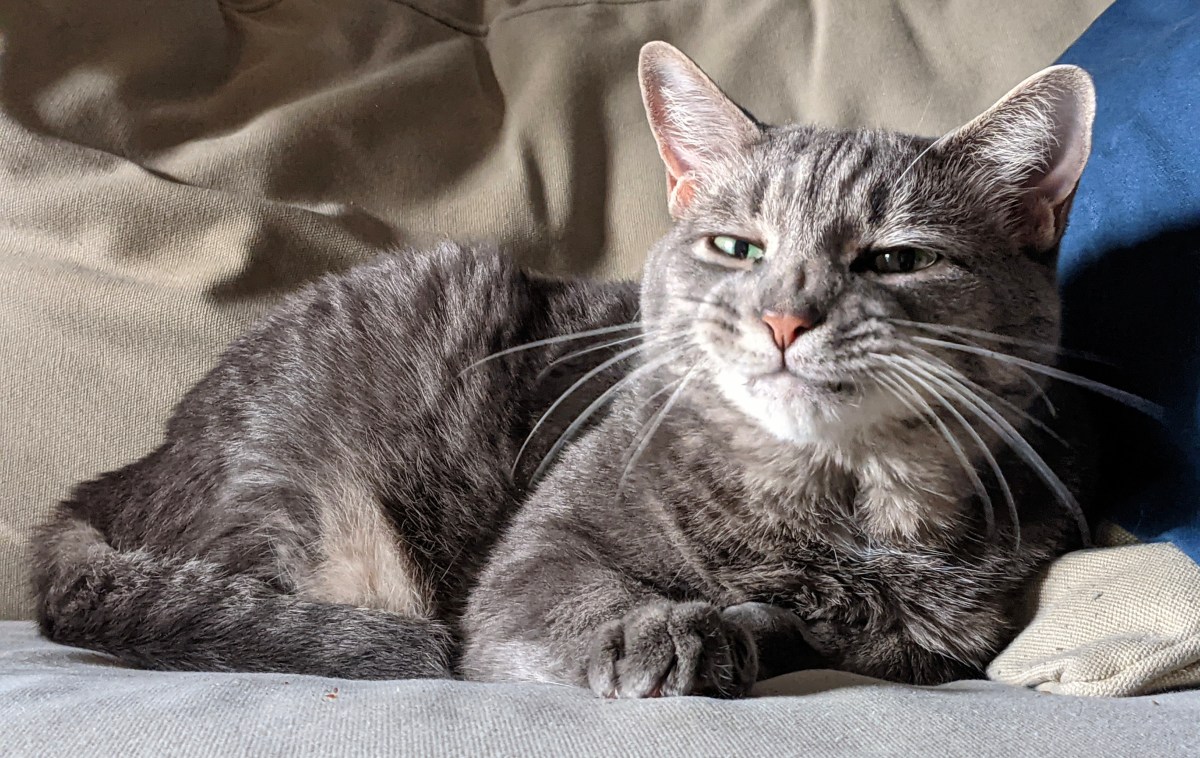
Here at Casa de Buddy, we keep it simple: Bud or Buddy. I feel like if I just start freestyling names, little man is going to be confused.
Call me “Mr. Buddy Wuddy” and I’ll murder you, human.
Indeed, that’s the subject of Mollie Hunt’s Oct. 6 post, “What’s In A Name?”, which notes we should call our cats by their proper names for good, practical reasons: not confusing the little ones, getting them accustomed to responding to their names, and the peace of mind that comes with knowing they’ll respond in an emergency.
Research has repeatedly confirmed what we’ve all known anecdotally: domestic felines know their names and they even know the names of other cats they live with. They may not always deem a human worthy of a response, but they hear us and they know we’re calling for them.
I do call Bud other things, but they tend to be invented by my sleep-deprived brain when he insists on screeching in my ears or standing on my face to get me out of bed.
They’re not really nicknames so much as they’re insults, but don’t worry — no egos were bruised in the process. In the past I’ve thrown pillows at him for his relentless assaults on my sleep, and he seems to think that’s hilarious.
So yes, in the momentary anger of getting woken up for the fifth time in an hour, while he’s standing on my face and the tips of his back claws are digging into my cheek, I might mumble “Shut up, you furry little turdball!” or threaten to defenestrate him like an out-of-favor Russian oligarch.
But I dote on the little guy, function as his faithful servant, and try to give him his best life. I’ve also seriously considered constructing a throne for him. What’s a little “annoying little jerk” between friends? It all evens out!
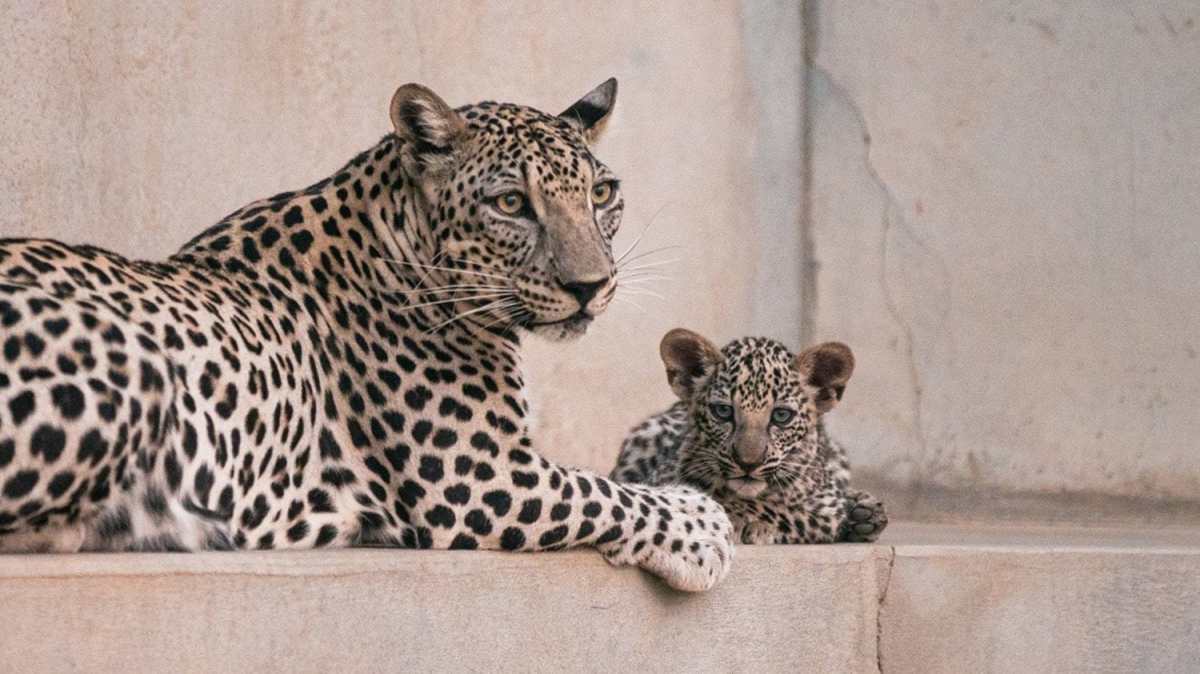
Arabian leopards are among the most rare of all cats, with only about 120 left living in the wild. Trump was taken with them on a recent visit to Saudi Arabia.
I can practically hear Donald Trump bragging about the new pair of extremely rare Arabian leopards the Saudis will send stateside as a deal-sweetener between the countries.
“They’re tremendous cats, just terrific,” he’ll say. “The most ferocious cats you’ve ever seen, believe me. It’s incredible. A lot of people are saying — and by the way, did you know leopards eat up to 40 pounds of meat a day? They’re tremendously powerful animals, very powerful.”
As the New York Times notes, Trump is just as beguiled by dangerous apex predators as he is with dangerous “strong men” tyrants:
Mr. Trump does not own pets and, unlike his sons, he does not hunt big game. But he has shown a particular fascination for animals at the top of the food chain. Last year, he talked constantly on the campaign trail about shark attacks. While campaigning in 2015, he was nearly mauled by a bald eagle he posed with in Trump Tower for a Time magazine photo shoot. (“This bird is seriously dangerous but beautiful!” he chirped after the raptor lunged at his head.)
During his first term, Mr. Trump asked aides about dropping snakes and alligators into a hypothetical moat he wanted built on America’s southern border. He also reportedly became fixated on the viciousness of badgers, badgering his former chief of staff Reince Priebus, who is from the Badger State, as Wisconsin is known, about whether badgers were mean or friendly, according to “Sinking in the Swamp,” a book about the first Trump administration. (Mr. Priebus did not respond to multiple requests for comment.)
Trump viewed the leopards and spoke to a zookeeper while he was in Saudi Arabia to complete a recent arms deal. (The U.S. will sell $142 billion in high tech weapons to Saudi Arabia so the kingdom can more effectively slaughter Yemeni civilians in its ongoing proxy war with Iran.) The American president wanted to know all about the big cats, including how big they are and what they eat. The zookeeper, who routinely handles those sorts of questions from visiting classes of elementary school children, happily indulged his interest.
Arabian leopards are fierce, but they’re somewhat smaller than their Asian counterparts. Panthera pardus nimr, as the species is known, generally has a lighter, tan-colored coat that provides more camouflage in desert and arid environments.
An Arabian leopard Arabia’s Wildlife Center in Sharjah, United Arab Emirates. Credit: Arabia Wildlife Center
The Times also quotes Joe Maldonado, aka Joe Exotic, who spoke to a reporter from prison, where he’s serving a 21-year sentence for trying to have Big Cat Rescue’s Carole Baskin murdered. Maldonado is keenly aware of Trump’s recent streak of handing out pardons to reality TV grifters, like Todd and Julie Chrisley, who stole almost $40 million, as well as less famous scammers like convicted crypto bros. (The Chrisleys, who were convicted of bank fraud and tax evasion, declared bankruptcy to avoid paying back their victims, and will now launch a new reality TV show detailing their post-prison lives. ‘Merica!)
Now Maldonado sees an opportunity.
The former “Tiger King” says Trump should have leopards and other big cats prowling the grounds of the White House, which is the kind of thing dictators like Vladimir Putin and Saddam Hussein have been known for.
“I think it would be absolutely amazing if he would put some endangered cats like that around the White House,” Maldonado said. “I’ve never been there. I don’t know how big the Rose Garden is, but I would imagine you could build a pretty nice size complex.”
Perhaps Trump can threaten to feed congressmen and senators to his new leopards if they defy him and don’t vote for legislation like the “big, beautiful bill” he’s been pushing.
Maldonado admitted that even he’s never seen an Arabian leopard, an animal so rare that only an estimated 120 of them remain in the wild. Still, he thinks he can handle them for Trump.
“Let me out,” Maldonado said, “and I’ll come take care of ’em!”
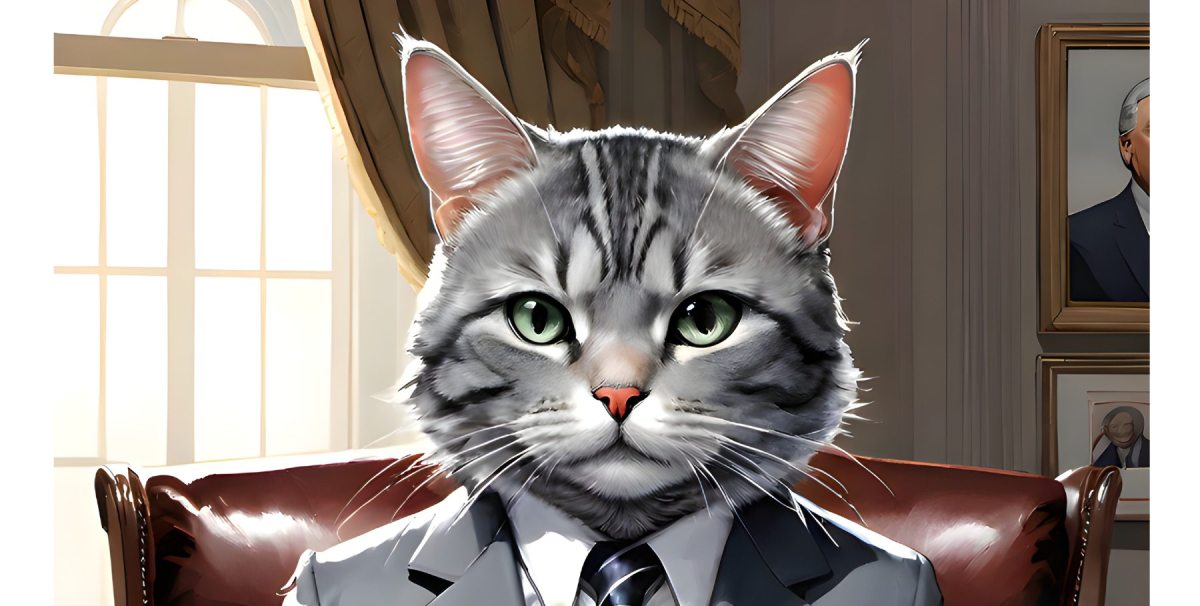
An optimistic Buddy began election day hoping momentum would carry him to the White House, where he plans to implement dozens of food-related measures.
WASHINGTON, D.C. — With a crowd of more than 60,000 chanting his name, Buddy the Cat made his final appeal to the nation’s felines on Tuesday as they headed to the polls.
“These past four years have been a tragedy,” the candidate told the crowd. “The consistency of wet food has been subpar, dry food has been less crunchy, and Americats are suffering because of inflation, with some snacks costing three times as much as they did in 2020!”
The crowd yowled viciously, expressing its displeasure.
“My opponent, the tyrannical Smudge the Cat, thinks he can hoard all the best snacks for himself while regular Americats make do with grocery brand crunchies,” Buddy continued. “Well I’m here to say ‘Enough!’ I’m here to say that every cat deserves to gorge him or herself on whichever snack they like! I’m here to say no more restrictions on napping spots! I’m here to say that there should be mandatory quiet hours during the dozen scheduled nap times per day!”
The crowd erupted in cheerful meows, waving Americat flags and giant poster-size images of Buddy looking presidential.
A campaign ad for Buddy4Americats.
“I’m also here to tell Vladimir Putin’s cat: Your time has come, Boris! Buddy the Cat is here to kick butt and eat meaty sticks, and I’m all out of meaty sticks!”
“Buddy! Buddy! Buddy!” the crowd roared.
“And to my friends,” Buddy continued, “the tigers of Asia, the lions, leopards and cheetahs of Africa, and our dear fellows, the pumas and jaguars of the Americas, we will form a coalition to bring Boris and his evil servant to heel, liberating Russian cats from the authoritarian rule they have endured for so many years.”
As the crowd chanted his name again, Buddy was hit by a bedazzled pink collar. Waving off half a dozen Sleepy Service agents who moved to quickly close ranks around him, Buddy winked at the Calico who’d thrown the collar, and she fainted.
“Someone get that young lady a bowl of water,” the candidate said, “and make sure her human has my human’s phone number.”
Cats padding out of the rally were enthusiastic and hopeful about their chances.
“Smudge is a corrupt, chubby and inept ‘leader,’ and I use that word in the loosest possible sense,” said Milo, 3, who was voting for the first time. “Buddy’s agenda is the most delicious, and that’s why he’ll win.”
Luna, 5, said Buddy has all the qualities an Americat president should have.
“He’s strong, he understands the importance of naps,” she said, “and he’s so dreamy!”
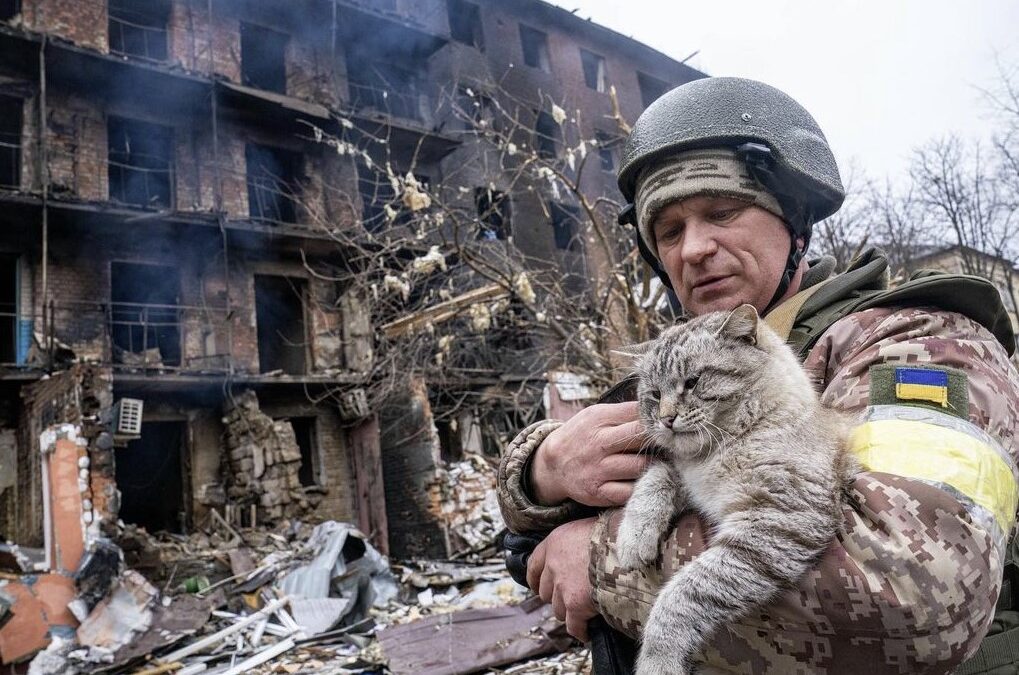
From the military camps where they stop mice from wreaking havoc to social media where they help raise money, Ukraine’s felines are enduring the war alongside their people.
Roman Sinicyn and his men were living in an abandoned house in a destroyed village for a month.
Although each of the Ukrainian soldiers contributed to their survival and fought the Russians, perhaps their biggest hero was Syrsky the Cat.
The fearless feline evicted a rodent infestation in the platoon’s temporary headquarters, hunting the mice mercilessly as his humans engaged in firefights with invading Russians. By day Syrsky made the soldiers’ temporary lodgings livable and by night he soothed their trauma with healing purrs.
The cheese-loving moggie’s moniker is a double-entendre: he’s named for Ukrainian Army Land Forces Commander Oleksandr Syrsky, and for the Ukrainian word for cheese, syr.
A new story from Politico EU details the important role of felines as the costly war enters its third year. Russian missiles, bombs and artillery have flattened villages, sending civilians fleeing and often separating them from their families and their pets.
The bewildered cats and dogs, accustomed to easy lives indoors, are suddenly thrust into a world of death, explosions, mine fields and other horrors.
As the war endured past its early phases, former pets began seeking out humans where they could find them — in military camps and in the rodent-infested trenches where they hunkered down against the constant thunderclaps of Russian artillery.
During peak war season in the summer, Vladimir Putin’s bedraggled military fires up to 20,000 artillery rounds a day according to the Associated Press, with that number dipping to “only” 7,000 per day as the war machine slows in brutally cold Slavic winters.
Oleksandr Liashuk, a Ukrainian soldier, with his cat Shaybyk. Credit: Oleksandr Liashuk
Just like they did 10,000 years ago when they first domesticated themselves, cats proved their worth by chasing out mice and rats, but this time they didn’t have to convince humans to allow them to stick around. They were welcomed with open arms and hands bearing snacks, serving as hunters and therapy animals to men enduring a living hell.
“When this scared little creature comes to you, seeking protection, how could you say no? We are strong, so we protect weaker beings, who got into the same awful circumstances as we did, just because Russians showed up on our land,” Oleksandr Yabchanka, a Ukrainian medic, told Politico.
It’s amazing how a return to primitive circumstances has so quickly pushed humans back toward reliance on animals who made it possible for our species to survive in the first place.
Without dogs, early hunter-gatherers would have been much worse off on the hunt and their groups would have been much more susceptible to ambush when they slept. Indigenous societies eking out existences on the tundra would have no reliable animals to pull sleds. Without oxen to pull plows, farmers wouldn’t be able to produce enough food for civilization to thrive and grow.
And the people of nascent human settlements, taking the first great leap forward for our species with the invention of agriculture, would have starved out over long winters as mice and rats gnawed away at their food stores — if not for cats, our furry friends.
In 2024 humans can’t live without cats once again. Felines patrol Ukraine’s World War I style bunkers, killing hordes of mice. Mice that otherwise devour MREs, chew through comm link and power wires, damage weapons and make soldiers miserable.
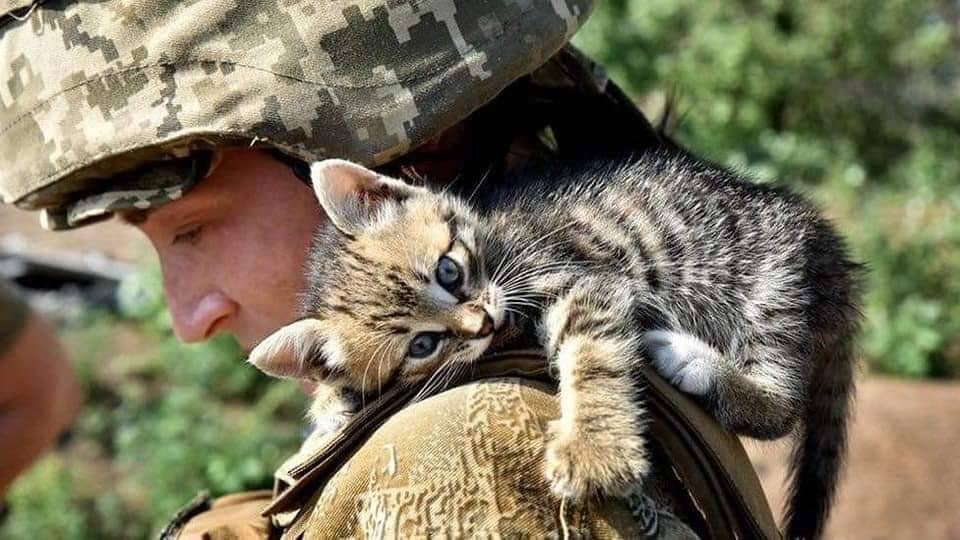
A Ukrainian soldier with a stray kitten. Credit: Ukraine Ministry of Defense
Some cats become unofficial unit mascots and good luck charms, but many others are claimed by individual soldiers who find normalcy and relief in their company.
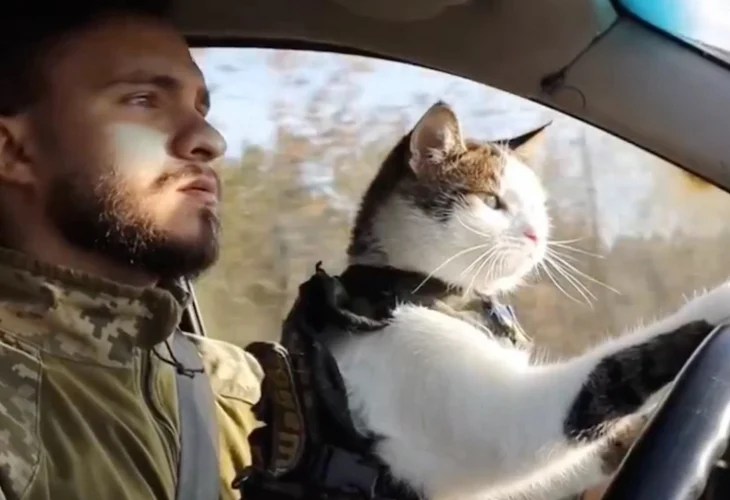
One soldier/cat pair are viral sensations thanks to videos of the alert cat riding along with his human, scanning the terrain ahead. Another story detailed a patrol whose men just avoided an ambush thanks to their company’s cat, who spotted the enemy first and frantically warned that something was wrong.
In that way, cats are serving the propaganda effort as well, helping the public to connect to the men and women defending them.
Military cats have become signals for Ukrainians to rally around, but Russians are doing it too. Russia is a famously cat-loving country, and Putin’s government has latched onto stories about the felines accompanying his men into battle — an effort that Politico notes is meant to humanize Russian soldiers and create the impression that it values them even as it continues to conscript unwilling civilians and ship them to the front line “meat grinders” with a few weeks’ worth of training, meager supplies and minimal ammunition for their rifles.
In that respect, the soldiers of Ukraine and Russia have at least two things in common — they love their feline companions, and they’re enduring hell as well as a high risk of death because of one small man’s delusions of greatness and legacy. Western media tends to ignore the humanity of Russian conscripts, and the pro-Ukrainian side of the internet calls them “orcs,” painting them as the mindless and disposable drones of a bloodthirsty dictator.
But they’re human too, with their own hopes and fears, and mothers back home worrying about them. They don’t want to be there. It seems fanciful to imagine Russians refusing to continue the invasion when Putin has squads behind the front lines with guns pointed at his own men to prevent them from deserting or refusing to fight. But maybe the men in the trenches can come together over shared interest and shared love of cats, and help put an end to three years of misery.
The outrage over the death of a pet cat may be the best barometer of Russia’s national mood as its disastrous war on Ukraine enters its third year.
For the past two years I’ve had a lurid hobby. I’ve been watching translated clips from the bizarre world of Russian state TV, where Vladimir Putin’s pet propagandists tell the Russian people what to think.
There’s ringleader Vladimir Solovyov, a guy who dresses like the admiral of a galactic fleet of military starships and is prone to wild mood swings. Depending on when you catch Solovyov he could be cackling maniacally at the prospect of nuking London or crying into his microphone as he laments the loss of his overseas bank accounts and his boss’s slipping grip on power.
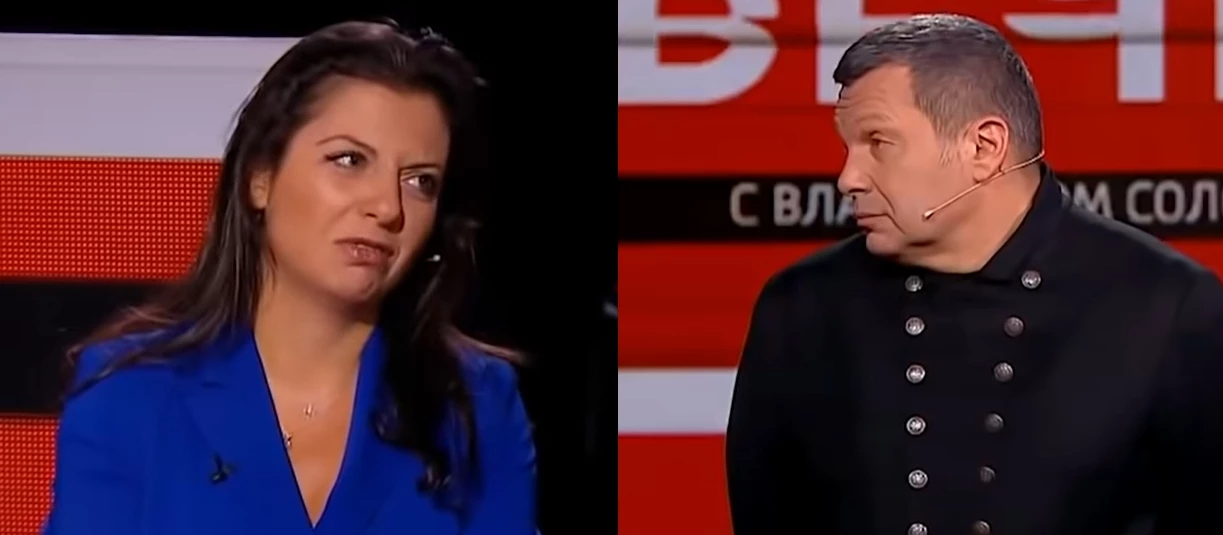
There’s Margarita Simonyan, the 43-year-old head of RT (Russia Today) and rumored alcoholic who, strangely, is even-keeled compared to Star Admiral Solovyov.
Then there are the second-tier propagandists: Olga Skabeeva, the “Iron Doll of Putin TV” who matter-of-factly endorses horrific war crimes, and men like Anton Krasovsky, who famously fantasized about drowning Ukrainian children in the Tysa River, a tributary of the Danube, his desk rising three inches as he excitedly repeated “Just drown those children, drown them!” Apparently he forgot he was on television and said the quiet part out loud, forcing his boss (Simonyan) to grudgingly condemn his words.
Margarita Simonyan, left, and Vladimir Solovyov, right, are two of Russia’s most famous pro-Putin propagandists. Credit: Russian state TV
Solovyov, Simonyan and the others looked like a bunch of investors celebrating the sale of a billion-dollar company during the opening phases of the war in early 2022, giddily playing footage of Russian missiles taking out Ukrainian apartment buildings and artillery flattening hospitals.
Their rhetoric was extra-dimensional at the time: they spoke often of a glorious New World Order with Russia at its head and all of humanity united under Putin’s tiny feet, where people would undoubtedly conclude that life under Russian masters is better than any over-hyped concept of freedom.
When Russia faltered and Ukraine began stringing together victories with the help of western weapons and real-time intelligence from the US and UK, the tone of Putin’s propagandists grew bitter. Their body language mirrored their frustration. Solovyov began a tradition of threatening to nuke a different country every day, for “crimes” like acknowledging the reality of Russia’s military incompetence or calling for peace.
To date, Solovyov’s threatened to nuke the UK, France, Spain, Germany, Italy, Japan, Finland, Sweden and the US, and that’s just off the top of my head. He especially hates the British for reasons that aren’t entirely clear, but he regularly makes it clear that it’s only through Putin’s benevolence that cities like London and Paris continue to exist.
He’s also extremely fond of Tucker Carlson: he plays clips from Carlson’s show on X regularly, offered him a job after the American was fired by Fox News, and has declared him the greatest journalist in the western world.
In Putin Russia, cat feed you!
I thought of that motley crew of Putinious jackwagons this week as I read about the Russian public’s horrified response to an incident on a train.
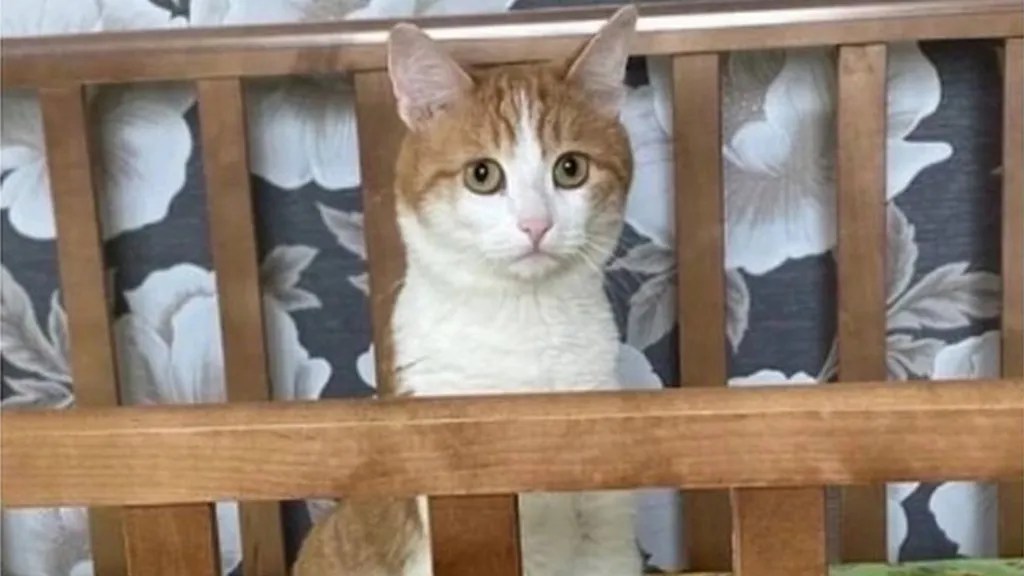
A couple was traveling on a Russian Railways train to St. Petersburg when their beloved cat, Twix, escaped his carrier. The frightened ginger tabby just kept running until he was scooped up by a female conductor, who unceremoniously tossed him into the snow in Russia’s frigid Kirov Oblast. Temperatures regularly dip into the single digits and below zero in the winters there.
On Jan. 20, after a search joined by hundreds of people, little Twix’s body was found in the snow about a half mile from the train tracks. The feline, who was used to safety and warmth, suffered multiple animal bites and died either from his wounds or the temperature.
Twix the cat in a photo from his family that was reposted to a Russian Telegram channel.
To say Russians are furious is an understatement.
Twix’s fate has been the talk of Russian social media platforms for days. Surveillance camera footage of the conductor tossing the tabby ignited a new level of rage. As of Wednesday more than 300,000 Russians had signed a petition calling for the firing of the conductor, whose name hasn’t been released by the state-owned passenger railroad company. A second petition goes further, calling for criminal prosecution, and has 100,000 signatures in just a few days.
Public outrage about the fate of Twix just might be the first authentic sentiment to reach Russian media in years.
In an unusual move, the government acquiesced — partly — to the public’s demands and pulled the conductor from duty pending an investigation. They’ve also acknowledged that Twix’s humans had properly purchased a pass for him and were riding in a car designated for passengers with pets. In the future, they’ve vowed, conductors won’t toss animals from trains.
Russia is a famously cat-loving country. Felines comprise more than 64 percent of all pets kept by Russians, and more than half of all Russian households have pet cats. They’re considerably more popular than dogs in the nation of 143 million.
Cats are popular in Russian folklore, where traditions say the furry ones have the power to ward off evil, and they’re a much more convenient pet for the millions who live in Soviet-era apartment blocks in cities like Moscow and St. Petersburg.
Still, this feels like something more.
Russians haven’t had an easy two years thanks to Putin’s disastrous “special military operation.” They can face years in prison simply for calling for peace with Ukraine. Unless they’re part of the nation’s elite or have connections among them, men can’t leave the country because the military needs more warm bodies. The country’s economy is in shambles as the government pumps more money into the war and international sanctions have taken their toll.
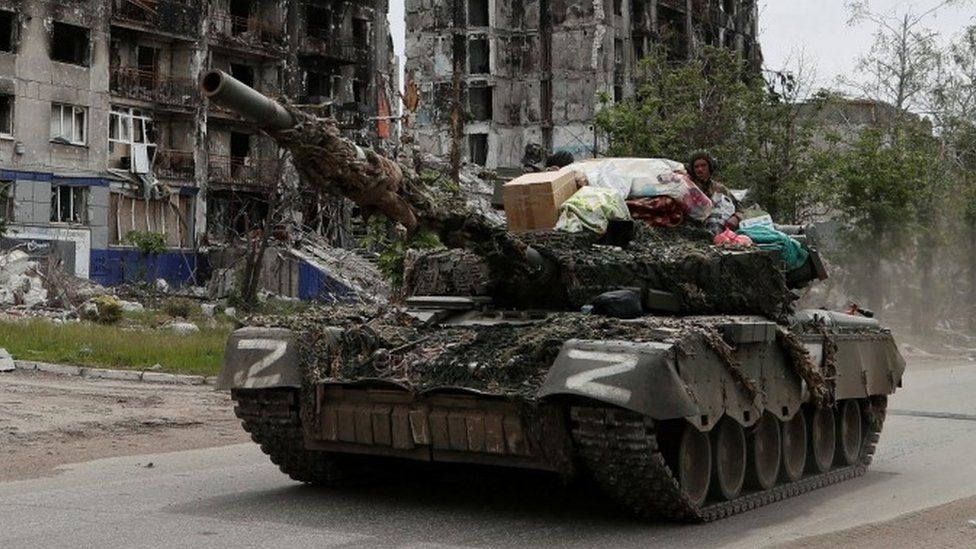
A Russian tank laden with loot, including a toilet, rolls past the ruins of residential buildings in Popasna, a city in eastern Ukraine.
The government has canceled or downplayed annual military celebrations so the public won’t be reminded of the war’s costs. Russia is on pace to lose an astonishing 500,000 men in two years of combat, according to the UK’s Ministry of Defense, and Putin has tried to stem the anger of the country’s mothers by staging several meetings with actresses posing as the moms of Russia’s war dead, events which have been heavily covered by state press.
Russians can’t oppose the war they’re dying in. They can’t mourn their dead fathers, sons, brothers and husbands, not by revealing their real emotions.
Quality of life has further degraded in a country where tens of millions don’t even have indoor plumbing, which is why there have been so many clips of Russian soldiers stealing toilets, washing machines and other appliances from Ukrainian homes. The prospect of being pulled off the street, sent for two weeks’ worth of rudimentary training and deployed as cannon fodder hangs heavy over the heads of Russian men and their families, especially ethnic minorities and the poor.
But Twix? They can mourn him. They can get angry about what happened to him. The furious public sentiment regarding his death wasn’t manufactured by Solovyov and company. State TV didn’t spark the backlash, it was forced to acknowledge it.
I’m neither a Russophile nor an expert on that often difficult-to-understand country, but I’d bet all my rubles that those dueling petitions say more about the Russian mood than any opinion poll to come out of Russia since 2022, and definitely more than the words of anyone allowed to express an opinion on Russian TV.






 Pain In The Bud