Some names climbed the rankings, while others are perennial favorites tied to coat colors, patterns and personalities.
Another year, another list of the most popular names for our furry overlords.
This one is based on data from a pet insurance company commissioned by US News & World Report, and while there are others based on things like chip registrations and veterinary records, they agree on pretty much all the most popular names.
So what are the top names we bestow on our little pals?
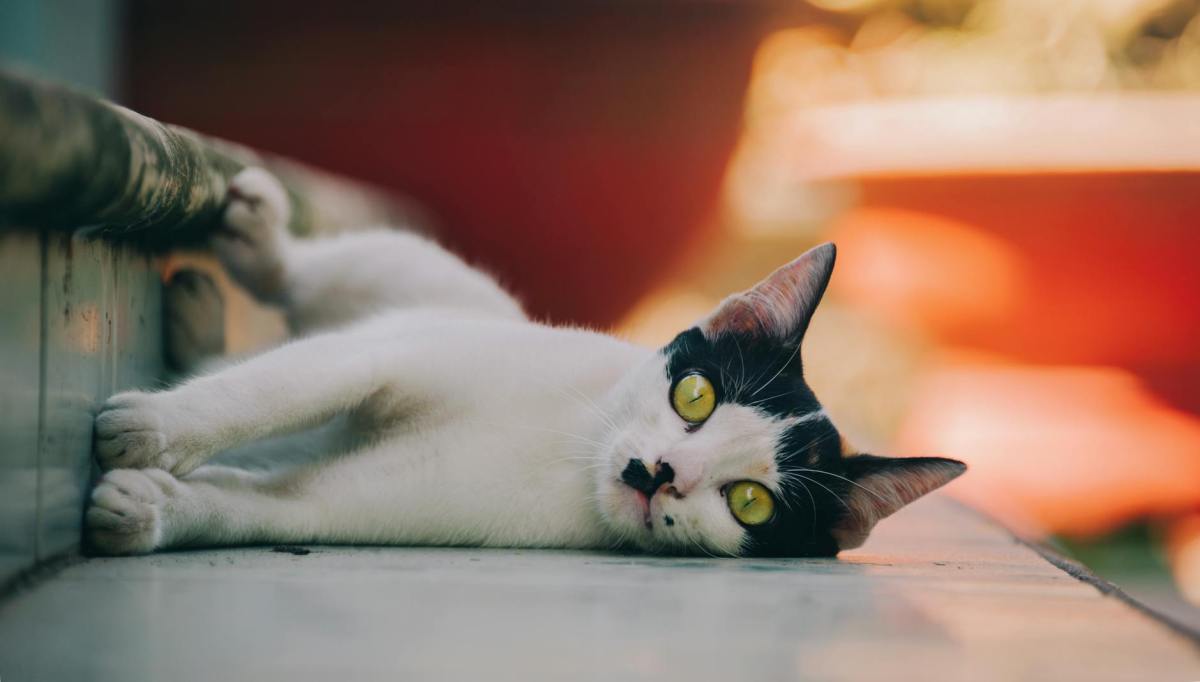
Unsurprisingly, Bella and Luna retained their top spots for female cats, while Leo ane Milo were the most popular names for male cats.
There’s not even a mention of the name Buddy, which is either a heresy which shall not go unpunished, or pretty cool because it’s kind of unique, and there are probably only like 25,000 Buddies in the US. Buddy hasn’t made up his mind yet, although I think he’s too lazy to go around punishing alleged heretics.
Credi5: Mahmoud Yahyaoui/Pexels
Interestingly, Luna and Bella are also the top names for female dogs. Leo enjoys enduring popularity due to its association with lions (panthera leo) while Milo owes its popularity at least in part to the film The Adventures of Milo and Otis.
Rounding out the list are Simba (Disney’s The Lion King), Nala from the same film, and traditional cat names like Kitty, Oreo, Shadow and Smokey, with the latter three referencing coat patterns and colors.
Is your cat a genius or not the sharpest claw on the paw? The University of Maine’s Cat Lab wants your help as researchers seek to measure feline intelligence.
Buddy apparently has brawn and brains, according to a “cat IQ test” by researchers at the University of Maine.
The test is a survey designed by the people who work at the university’s Cat Lab, and it aims to employ some of the same techniques used to measure the intelligence of young children and dogs.
The test asks questions about memory, how closely felines read nonverbal cues from their humans, how attuned they are to human emotions, whether they’ve learned tricks, and whether they’ve improvised solutions to obstacles they’ve encountered.
I gave each question serious thought and tried to eliminate my own bias to the best of my ability.
“This is your brain on catnip. Any questions?”
For example, there’s absolutely no question Buddy is extremely communicative, curious, bold and friendly. He’s also figured out things on his own, like how to open doors and how to best manipulate me for as much food as possible. I’ll never forget watching with fascination when, as a kitten, he figured out how to wedge his body against the frame of my bedroom door with his feet while using his front paws to turn the handle.
On the other hand, he’s a hilariously inept hunter, he’s done some spectacularly dumb things, and he went through a whole phase in which he “boxed” the cat in the mirror before figuring out it was a reflection of himself.
I can still hear the “THWAP THWAP THWAP!” of his little kitty paws against the glass and his accompanying trills as he did battle with himself. To be fair, that was also in kittenhood, and he eventually figured out there was no other cat.
As I’ve detailed in this blog previously, Bud also seems to possess the precision of an atomic clock when it comes to meal times, and if I so much as shift in my chair as meal time approaches, he springs up and trills at me like “Are we going to the kitchen? Come on, dude, it’s Food O’clock! I want turkey, beef or tuna!”
According to the survey, Buddy has an IQ of 64 on a max-70 scale, good enough for the “Felix Forecaster” tier and just below “The McGonagall Mastermind.”
It’s probably for the best that he’s not in that very top tier anyway. We’re talking about a cat intelligent enough to understand I hate the sound of the flap on his litter box squeaking on its hinges, and has subsequently weaponized it to get me out of bed. If he gets any smarter, I’ll probably wake up to a machine that slaps me every time I hit the snooze button.
You can take the survey on behalf of your own cat(s) here. Don’t forget to share your results!
A Yougov survey of Americans produced some hilarious results when respondents were asked how they’d fare in hypothetical combat.
In the opening scene of Netflix’s Afraid, a woman is using her iPad in bed when she asks her husband: “Did you know six percent of Americans believe they could beat a grizzly bear in a fight?”
I had to pause the movie right there and see if there was any truth to the claim. Sure enough, in a Yougov survey from 2021, titled “Rumble In The Jungle,” six percent of respondents — almost entirely men — said they could defeat a grizzly bear unarmed.
Grizzly bears top out at more than 2,000 pounds, can crush bowling balls with their paws and have claws the size of large knives. They’re also extraordinarily well-protected, with heavy fur and fat protecting their vital organs. If you think you can harm one unarmed, let alone kill it, well, good luck with that.
Incredibly, eight percent said they could defeat a lion, gorilla or elephant, while 17 percent thought they could take on a chimpanzee. Again, the respondents who liked their own odds against extraordinarily lethal animals were almost exclusively men. The survey doesn’t say what they were smoking when they responded.
Domestic cats fared poorly in the imaginations of Americans: 69 percent thought they could defeat the little stinkers in hypothetical battles. Only rats fared worse, with 72 percent sure of victory in unarmed single combat.
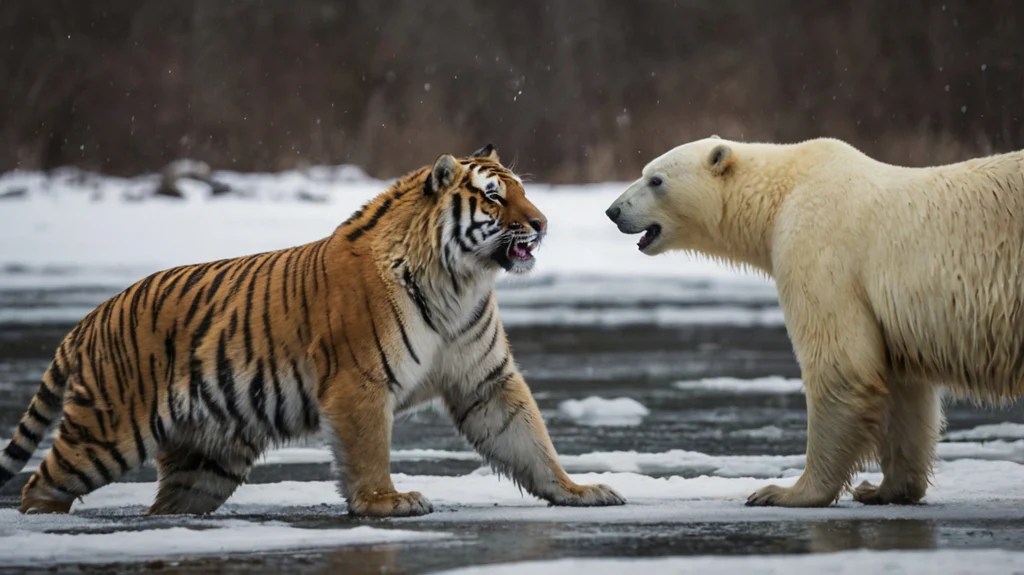
“This is really an insult to felines,” said Buddy the Cat, a combatologist at Buddesian University. “However, we jaguars fared much better, as we were projected to win about two-thirds of hypothetical fights against other animals, including elephants, rhinos and tigers. Personally I think it’s closer to 99 percent, but I won’t protest. It’s better for us if we’re underestimated.”
He chalked human overconfidence up to the fact that people are “bizarre creatures who live in a fantasy world,” and have “an unfulfilled yearning to be something more than our servants.”
“They don’t have the claws, teeth or, like, the muscle fibers we do,” he explained. “Those advantages make it possible for me to kill a caiman with a single bite or tear an anaconda apart in seconds. Jaguar means ‘He who kills with one leap,’ did you know that? Yeah, it’s pretty badass.”
“People aren’t ready for us to turn carnivore cats vegan but I’m going to do it,” the CEO of a vegan cat food brand has vowed.
In September of last year, a research paper about feline health was published to the open-access journal PLOS-One, going mostly unnoticed.
The paper’s authors claim their research proves cats fed a “nutritionally complete” vegan diet are not only just as healthy as their meat-eating counterparts, they’re actually less likely to need veterinary visits, less dependent on medication, and more likely to be given a clean bill of health by their veterinarians.
When a company called Wild Earth announced the launch of a new line of vegan cat food this month, the company pointed directly to that paper as proof that “cats fed nutritionally sound vegan diets are healthier overall than those fed meat-based diets,” as the paper’s lead author put it.
Wild Earth CEO Ryan Bethencourt, who does not have a professional background in veterinary medicine or feline nutrition, summed up his goal in a tweet: “People aren’t ready for us to turn carnivore cats vegan but I’m going to do it.”
Bethencourt calls the effort to put pets on vegan diets “vegan biohacking.” Credit: Wild Earth
He painted the new offering as a bold counter to skeptics who say vegan cat food is unhealthy.
“We expect aggressive resistance from the meat industry on the launch of this industry-pioneering vegan cat food, but we know there are A LOT of cat parents looking for healthier plant-based and more sustainable options and we want to be the leader in providing them with that choice,” Bethencourt wrote in a statement.
What he didn’t mention was the fact that the loudest voices opposing “vegan cat food” are animal welfare organizations like the SPCA and Humane Society, as well as veterinarians and nutritionists, the same people who see the consequences of cats who are deprived of meat. Over the years they have reiterated that felines are obligate carnivores who have evolved to get their nutrients from meat, with digestive systems that cannot process most plants, meaning they can’t break them down and derive nutrients from them. That’s why we don’t see servals or leopards foraging for fruit in the wild.
In addition, the announcement did not mention that the 2023 research was funded by ProVeg International, a non-profit dedicated to reducing global meat consumption, weaning people and animals off of meat and onto plant-based food.
That didn’t stop other credulous reports, like one from GreenQueen claiming Wild Earth’s vegan cat food is “built on research proving that felines can be healthy on a vegan diet.”
And that’s exactly the point — the “study” was conceived and published so that advocates of vegan cat food can point to it and say “science says” cats can survive on plants.
Bad data makes for bad science
Extraordinary claims require extraordinary evidence, but the 2023 study did not examine veterinary records or log the results of vet visits over years. Instead, the data was self-reported by participants.
A total of 1,418 people responded to the survey, and only 127 of them said they feed their cats exclusively vegan diets. The claims that their cats get sick less often and do better in veterinary check-ups are based on their subjective assessments and recollections. The paper’s authors don’t know which vegan brands the 127 respondents were giving to their cats, nor do they have information on whether the food was wet or dry, how often the cats were fed, and how much they ate.
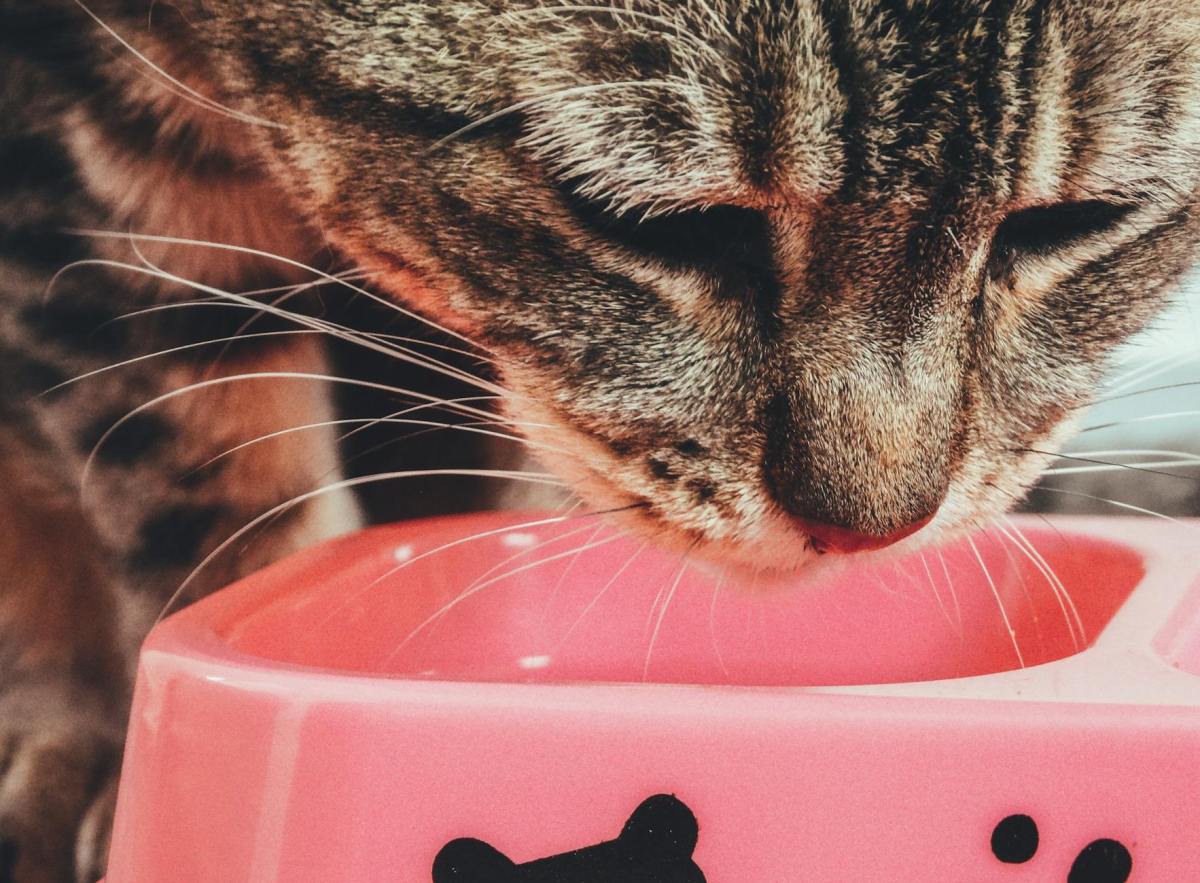
A cat eating Wild Earth’s Unicorn Pate, which is made entirely from plant products. Credit: Wild Earth
One of the metrics cited by the authors is “guardian opinion of more severe illness,” which means arbitrary feedback from people who aren’t experts in veterinary medicine or nutrition.
If including respondent opinions as “data” doesn’t bother you, consider how many people buy products like Airborne, concluding that it works because they didn’t get sick once on a cross-country flight. Airborne, you may recall, was “invented” by a teacher who claimed she figured out how to cure the common cold, something no physician has done in centuries of trying.
Like vegan cat food proponents, Airborne had its own “study” that claimed its efficacy. The company eventually paid out more than $23 million in a class action settlement for its false claims. That’s not to say vegan cat food makers are precisely like Airborne, but pointing to poorly conducted research is a tactic that works because most people won’t go to the effort of finding the study and reading it.
Current global meat consumption is unsustainable, but…
I’m a vegetarian and I’ve seen enough evidence to convince me that the current rate of meat consumption, especially in the first world, is untenable as the global population rises toward its expected 11 billion-plus peak. Those forecasts and the horrors of factory farming are motivation enough to hope human civilization consumes less meat in the future.
But I’m also a guy who loves his cat, and I think if you’re going tell me that my little pal, designed by nature to be an obligate carnivore with a digestive system and body plan that hasn’t significantly changed for ages, can stop eating meat entirely with no deleterious effects — despite the experts saying otherwise — then you really need to show me something better than a self-reported survey paid for by a vegan advocacy group.
This cat is not happy. Credit: r/cats(reddit)
Especially when veterinarians who have no financial interest in the pet food industry relate horror stories of their four-legged patients slowly going blind and cats with no other ailments suffering catastrophic consequences, with their organs shutting down because they’re not getting the vital nutrients and proteins they need to survive.
It’s a horrific way to die, and it happens because misguided people think human morals should apply to cats. Notice in the press releases and marketing materials from vegan cat food manufacturers, there’s no mention of what’s in the best interest of cats — it’s all about people making “bold” choices, “disrupting” industries and leading the Earth to a shiny future without meat or suffering.
The truth is, felines cannot synthesize the proteins that are absolutely necessary for their survival, and their digestive systems aren’t evolved for breaking down nutrients from plants. Those are well-established facts, and ignoring them will not change reality. So anyone who claims “vegan cat food” is healthy faces a much bigger task than asking people to take a self-reported survey. A survey paid for by a nonprofit that lobbies for veganism isn’t proof, it’s wishful thinking masquerading as science.
Even if the authors of the paper had the complete veterinary records of the same cats, it would only be one tentative first step toward challenging everything we know about cat nutrition. Questions aren’t settled after one study, especially with such a small data set. Studies must be repeatable, and the difference between correlation and causation isn’t settled with a single well-designed, unimpeachable study, much less a self-reported survey.
When the stakes are the lives, happiness and health of innocent animals, we should be absolutely sure we’re doing right by them.
The respondents also admitted they “forget” to feed their furry friends an average of three times a week. Say what?!?
Americans don’t know basic facts about their cats, fail to properly care for them and overestimate how well they do as pet parents, according to a new poll.
The survey of cat owners commissioned by PetSafe found most people in the US who have cats in their home don’t know their feline friends typically have 18 toes, for example, and don’t realize cats purr when they’re content as well as when they’re trying to soothe themselves.
Respondents said they frequently forget to refill their furry little buddies’ water bowls, but the thing that really blew my mind is that people supposedly forget to feed their cats an average of three times a week.
How is that possible?!?
The number of times Bud has missed a meal in 10 years is precisely zero. Even when I had COVID, even when half my face was frozen with Bell’s Palsy and I was throbbing with the worst headache I’d ever endured, I fed the little guy according to his schedule.
It’s not just that he reminds me. There’s a whole ritual around it, an elaborate series of increasingly affirmative and urgent meows that quickly give way to panic if Buddy doesn’t see activity associated with a bowl of fresh wet food and water delivered to his nook.
The pre-reminder reminders begin about 45 minutes to an hour before feeding time, with Bud’s infallible internal clock signaling upcoming meal time.
At the 30 minute mark Bud will put himself directly in my line of sight and stare at me. Then he’ll start to meow at regular intervals, and if I’m not up and heading to the kitchen by T-minus 15 minutes to yums, the meowing begins in earnest.
Even the act of retrieving a pack of wet food from the Buddy Cabinet is highly formalized and ritualistic: the little dude grunts and trills excitedly as I open the seal, dump the food in his bowl, mash it up and pile it in the middle the way he likes it.
Then he leads me back to his nook, looking over his head every few paces to make sure I’m right behind him, even though we’ve done this song and dance literally 7,318 times as of today. (It’s probably more than that since I fed him more than twice a day when he was a kitten, and doesn’t include his bowl of dry food for his late night snack/overnight emergency supply so he doesn’t have to wake me up if he’s hungry.)
I realize Bud’s a bit of a tyrant and there’s no peace until he gets what he wants, but still. Cats are cats. So really, how does anyone “forget” to feed their cat?






 Pain In The Bud