Buddy’s Cat Café and Catnip Lounge has become a neighborhood fixture where feline lovers can enjoy their favorite caffeinated beverages while lavishing snacks and catnip on Buddy himself.
NEW YORK — When Buddy’s Cat Café and Catnip Lounge first opened its doors in late 2023, skeptics were quick to predict its demise.
“A cat cafe featuring only one cat sounds more like the selfish plot of the proprietor feline and less like a legitimate cat cafe experience,” the New York Times sniffed, while the New York Post derided the venture as “one chubby cat’s ludicrous scheme to gorge on endless snacks and catnip while customers line up to shower him with affection.”
Two years later, with a 4.8 out of 5 rating on Google and hundreds of regulars, Buddy’s Cat Café has not only been a success, it’s inspired other felines to open their own single-cat locations.
Mrs. Nakamura watches her students interact with Buddy, affectionately known to them as Badi-chan.
Mrs. Tomoko Nakamura, a teacher at the Japanese Academy of Manhattan, has been taking her class to Buddy’s since the cafe opened.
“Badi-chan very handsome and charming,” Mrs. Nakamura said, smiling as her students giggled and offered an array of crunchy treats to the lounging feline. “All my students love him!”
Sisters Dierdre and Stephanie Sullivan are regulars who say they take their kids to Buddy’s almost weekly.
“Madisyn, Skyelarr and Jaxon just love little Buddy,” Stephanie Sullivan said, calling other cat cafes “a tragedeigh in comparison.”
Buddy and friends during a Tabletop Tuesdays gathering at Buddy’s Cat Café and Catnip Lounge.
Since its opening, Buddy’s has featured an array of themed nights that cater to regulars with shared interests.
On Saturdays a lively crowd of people wearing perms, neon clothes and big shoulder pads flock to the cafe for Retro 80s Night. Sunday crowds gather to watch football with Buddy on the big screen TV, and Tabletop Tuesdays cater to miniature wargamers, with Buddy and his regulars continuing long-running campaigns in Dungeons and Dragons and Warhammer 40K.
One of the most popular themed nights is Freestyle Fridays, when local rappers and hip hop heads gather to spit bars, smoke blunts and collaborate on beats.
DJ Rashid, center, jubilantly hoists Buddy while the others cheer on a recent Freestyle Friday at Buddy’s Cat Cafe.Buddy after indulging in too much catnip on Freestyle Friday.
Da Ill Collektah, a local underground emcee, rolls catnip blunts for the tabby proprietor so he can fully participate in the levity.
“Oh, that’s good ish!” Buddy said on a recent Friday as he exhaled a nimbus cloud of ‘nip smoke to cheers from the assembled hip hop heads.
“Watch out!” beatsmith Biggity Biggity Bryce exclaimed. “Buddy gonna bless us with a fiyah freestyle!”
Lysander The Lyrical Destroyer, a Brooklyn emcee and longtime “associate” of Buddy, said no other cat cafe could hope to compete.
“Buddy’s cafe got the freshest jams, the livest atmosphere, and the bang bang boogie don’t stop the boogie,” he noted. “But most of all, it’s got Buddy.”
Scientists have uncovered the elusive mechanisms behind coat color expression, opening the door to a new question: is fur pigment connected to personality?
When Professor Hiroyuki Sasaki retired, he wasn’t done with science. He just wanted to use it to better understand his cats.
The Japanese geneticist raised more than $73,000 from Japanese and international cat lovers and put together a team, including partners from the US. Then he began the hard work of scrutinizing feline DNA to find out why some cats are orange, and why most all-orange cats are male while virtually all calico and tortoiseshell cats, whose coats have splotches of orange, are female.
It turns out there’s no genetic instruction telling the fur to take on an orange pigment — it’s the absence of a segment of DNA, which governs pigment production, that does it.
In other words, ginger cats are mutants.
Most fully-orange cats are male because the mutation removes the DNA segment in the X chromosome. As males have X and Y chromosomes, they only need the mutation in the single X chromosome for their coats to express in that shade.
Lots of cat lovers swear that coat color and temperament are connected.
Females have an XX chromosomal arrangement, so they need the mutation in both chromosomes to turn tangerine. If the mutation only shows up in one chromosome, you get patches of the color instead of a consistent coat.
That explains why 80 percent of ginger cats are male, and why only one in 3,000 calicos and tortoiseshells are male. A male cat would need an extra X chromosome, XXY, to be born with a calico or tortoiseshell coat. One of the side effects, however, is sterility.
Scientists estimate only one in a thousand male calicos/tortoiseshells can reproduce and pass their unique mutations on.
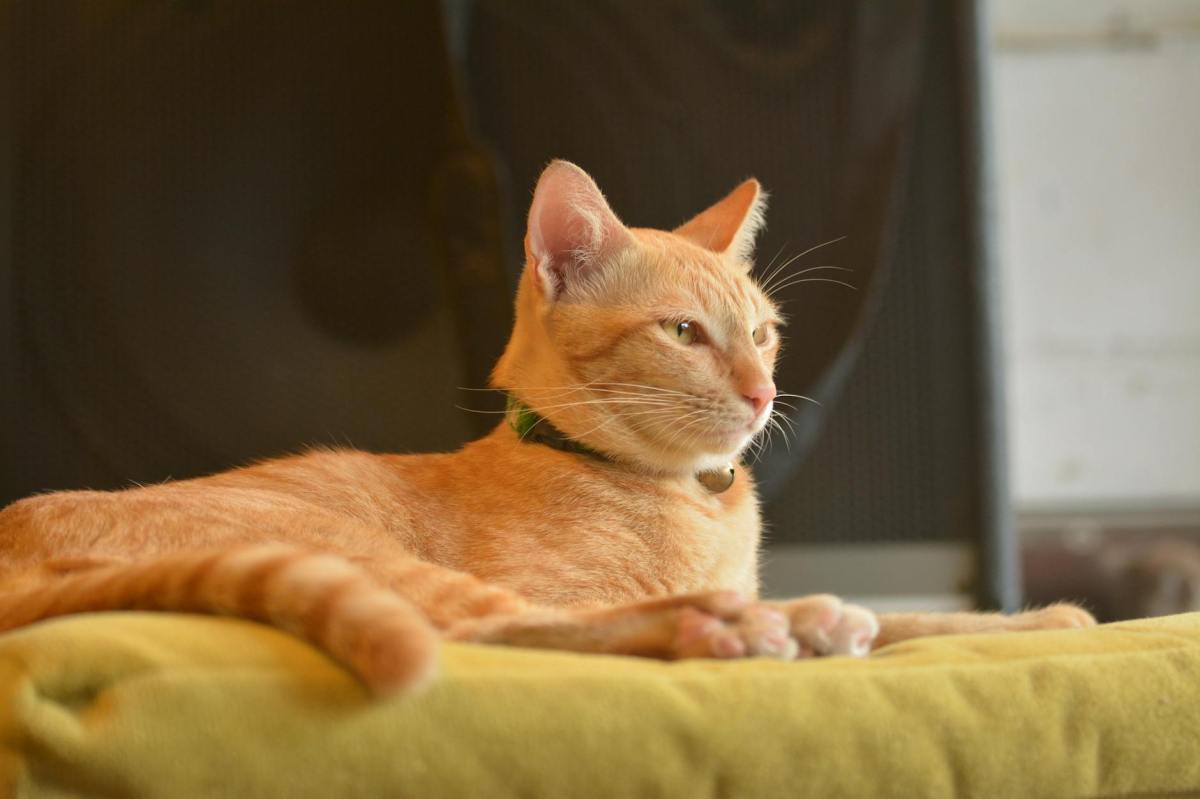
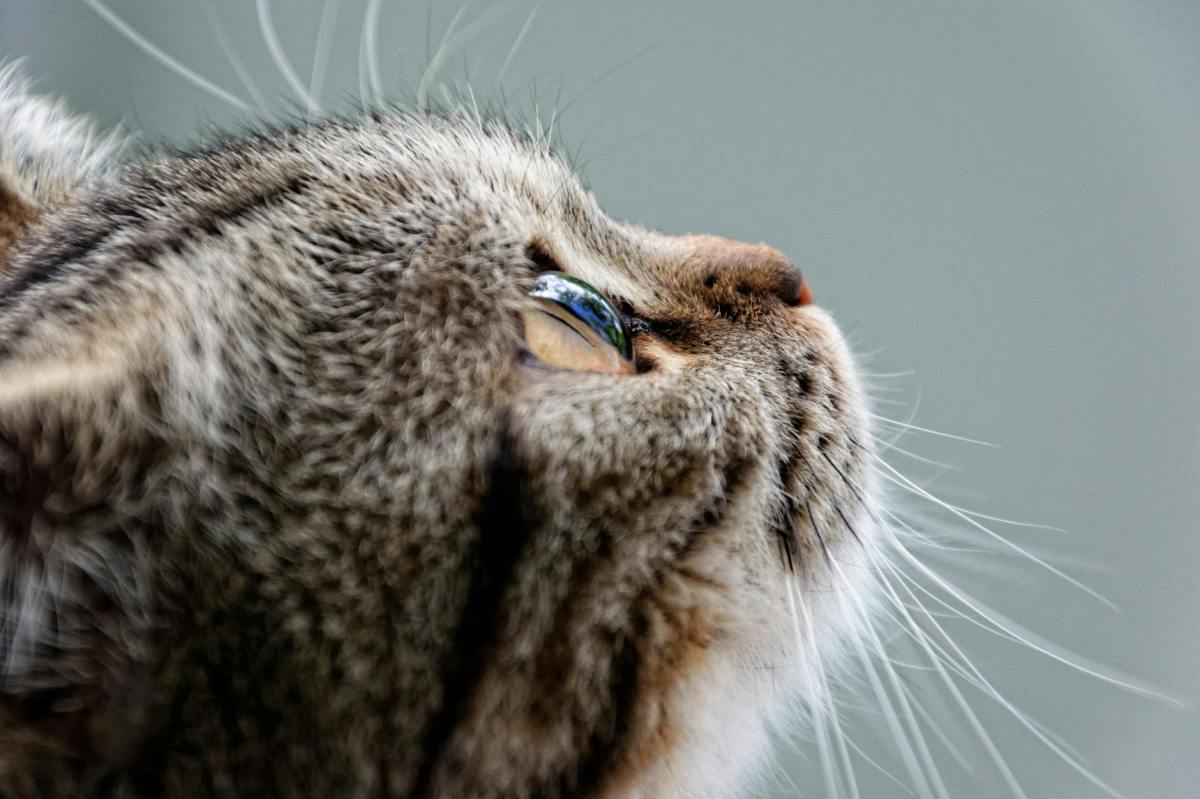
It’s not just coat color either. The mutation impacts skin and eye color, which is why a ginger cat might have a pink nose compared to the terracotta shade of a void cat or a silver tabby.
Are orange cats really more friendly and silly?
So how does this relate to temperament, and the many people who attest to a particular personality associated with orange cats? Some people say ginger tabbies are more loyal, affectionate and social than cats of other coat colors, but they’re also more prone to doing boneheaded things.
The stereotypes have picked up steam online, where people often share memes depicting orange felines as earnestly derpy, but they may be on to something — or at least, it can’t be ruled out until we know more.
Ginger cats are not the sharpest claw on the paw, according to popular memes.
Because of the missing piece of genetic code, a specific gene, ARHGAP36, isn’t “expressed.” Like so many genes, scientists don’t fully understand everything ARHGAP36 impacts, or how alterations can lead to unexpected changes elsewhere.
“Many cat owners swear by the idea that different coat colours and patterns are linked with different personalities,” Sasaki told the BBC. “There’s no scientific evidence for this yet, but it’s an intriguing idea and one I’d love to explore further.”
The find is extraordinary, allowing scientists to directly study the extinct cat’s musculature, fur, head shape, and even its claws and whiskers.
A team in Russia stumbled on the find of the century when they located the stunningly well-preserved remains of a saber-toothed kitten in Siberia.
The kitten, which was found near the Badyarikha River in northeastern Siberia, was about three weeks old when it died, scientists estimate.
Unlike typical finds — a fang here, a mandible or partial skeleton there — this specimen still had its fur, claws, whiskers and muscles, which means scientists have already learned more about the species, Homotherium latidens, than they have with almost any other long-extinct animal.
Images of the extinct cub’s paws compared to (D), the paw of a 3-week-old lion cub pictured on the bottom right. The Homotherium paw is thicker but less elongated. Credit: Borissiak Paleontological Institute, Russian Academy of Sciences, Moscow, Russia
While the saber-toothed cub is a true felid, it boasts adaptations unlike any surviving member of the panthera genus.
It has wide paws wrapped in heavy fur, a short tail and a stockier, lower-to-the-ground build than modern lions and tigers. Those adaptations, scientists believe, made it easier for Homotherium latidens to traverse environments with ice and heavy snow.
Its head shape is slightly different, with smaller ears than modern big cats, and its neck is enormous, more than twice as thick as the neck of a comparable three-week-old lion cub which was used for comparison. Likewise, its mouth is capable of opening significantly wider, although the team did not compare it to the jaguar, which has the widest-opening jaw among extant felids.
A photograph of the cub, top, and a scan revealing facial, ear and neck structure, below. Credit: Borissiak Paleontological Institute, Russian Academy of Sciences, Moscow, Russia
The frigid, arid clime of Siberia made it possible for the cub’s body to endure for so long. The team that made the discovery conducted radiocarbon dating that puts the cat at between 35,000 and 37,000 years old, according to reports.
It’s not clear how the cub died, although its species went extinct about 10,000 years ago, likely as a direct result of fewer prey animals in the frigid zones it occupied. Additional bones belonging to the rear of the cub skeleton were encased in a large cube of ice immediately next to the intact upper body.
The cub’s remains were recovered in 2020, but the results of the research team’s analysis were just released on Nov. 14 and published in the journal Nature. The paper’s authors have a lot more to share about the species’ physical characteristics, they noted in the text, and plan to follow up soon with a second paper going into more detail about what they learned from the cat’s intact musculature.
Top image: An artist’s impression of an adult member of homotherium.
Credit: Borissiak Paleontological Institute, Russian Academy of Sciences, Moscow, Russia
Rumors of big cats in the UK countryside have persisted for years, with witness claims from all over the country. The latest reported sighting was in northern England.
People who really want to believe big cats are running around the British countryside are ecstatic with the news that a DNA sample from a dead sheep reportedly tested positive for panthera DNA.
The DNA sample was swabbed from a freshly-killed sheep carcass “at an undisclosed upland location” in Cumbria, northwest England, a witness told BBC Wildlife. It’s exactly the kind of countryside where people have been reporting big cat sightings for years, although the sightings aren’t confined to that area, with other witnesses claiming they’ve seen large felids as far as the UK’s southern coast.
Sharon Larkin-Snowden, who lives nearby, told a big cat enthusiast podcaster that she disturbed the “big cat” while it was feeding. The startled felid took off and jumped a stone wall, leaving the partially-eaten sheep, Larkin-Snowden said.
“I assumed at first it was a sheepdog, but then I did a double take and realised it was a black cat,” she said. “It was big – the size of a German shepherd dog.”
“I could really go for a Chinese! Anyone else wanna go for a Chinese?”
A swab was collected — the details are sketchy on who did the collecting and when exactly they submitted the sample — and sent to the University of Warwick’s Robin Allaby, a professor of life sciences.
Allaby, whose specialty is studying the genetics and evolution of domesticated plants, began offering a DNA testing service for the public some 12 years ago in response to the persistent rumors of big cats in the countryside. In the past samples have yielded DNA from foxes and other animals, but Allaby says this one matched the genetic profile of a big cat, although he cannot say which species.
It’s not unusual for a DNA sample to match to a genus, in this case panthera, but not to a specific species if the sample was degraded or only partial.
Rick Minter, who has made a career of tracking alleged big cat sightings across the UK, says he believes the mystery cat is a leopard. Leopards and jaguars are the only two big cats who have true melanistic color morphs — meaning some of them have virtually all-black coats — and Minter says he believes it’s more likely the former.
Neither are native to the UK or Europe: Leopards range from Africa to Asia, while jaguars range from south to Central America, with some populations edging slightly into the US.
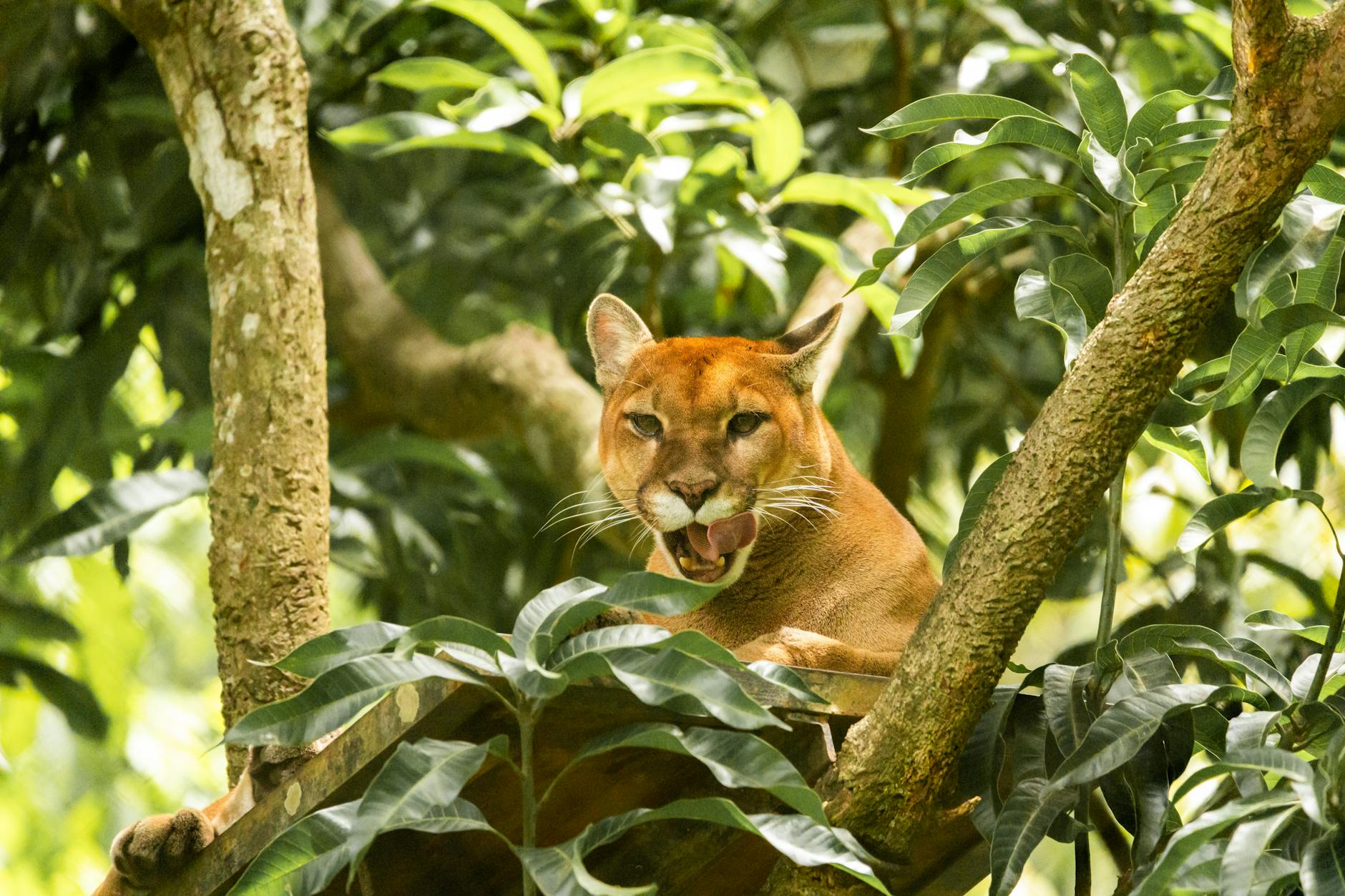
Britain’s big cat enthusiasts say they believe pumas are among the wild cats living in Credit: Jean Paul Montanaro/Pexels
Why isn’t a DNA match evidence of big cats in the UK?
If the lab results say the sample came from a big cat and that result is consistent with the witness account, what’s the problem?
Chain of custody, for one. We don’t know anything about who took the sample, where it was taken, the time elapsed between the kill and the sample swab, or who may have handled it before it reached Allaby.
In fact, we don’t know if there was a dead sheep to begin with.
If I were a prankster living in the UK, for example, and was friendly with a keeper at a local zoo, I could have the keeper swab an animal, bag it and hand it over to me. There are dozens of conceivable ways a person could obtain a sample even if they don’t know someone who works in a zoo.
“So we left the sheep there at the edge of the field and made sure the lady saw us before we buggered off over the fence. Next day, we was in all the papers! A right laugh that was, mate.”
The problem is the provenance of the sample and what happens to it between the time it’s collected and ends up in the hands of a scientist like Allaby.
This is why chain of custody is paramount in criminal trials, and why there must be a complete record of who handled samples from collection in the field to the lab. Even in the absence of foul play, an improperly handled sample can be contaminated and render test results meaningless.
It’s not a matter of trust, it’s the simple fact that extraordinary claims require extraordary evidence, as Carl Sagan was fond of saying. Short of capturing one of these animals or getting clear, indisputable footage, any other claimed proof has to be ironclad.
Speaking of footage, that’s another issue. It’s extremely difficult to believe that a breeding population of big cats can exist in the UK countryside for years or even decades without a single definitive photo or video. The UK’s rural areas may not be blanketed by CCTV cameras like London, but they’re not the Amazon either. People live, work and farm in those regions, cameras are more ubiquitous than ever, and farmers take steps to protect their livestock, including installing cameras.
Big cats don’t just feed and vanish into the mist. They mark trees with their claws and urine, they leave distinct pug marks, they leave distinctive bite marks on their prey, and they make noise. To paraphrase one naturalist, when big cats are living nearby, you know it. Even if you don’t see them, signs of their presence are ubiquitous.
To accept the claims of tigers, leopards and pumas gallavanting in the fields around small towns and villages, we’d have to suspend disbelief or conclude that these are some sort of previously unknown ghost cats who can fade in and out of the physical plane.
I’m not a skeptic to be a killjoy. If big cats really were running around the UK, that would be a hell of a story. But we’d still need convincing evidence, and this isn’t it.
As Charles Darwin pointed out, the difference between humans and animals is one of degree, not kind. That should factor into discussions on the value of animal life.
The headline — ‘My Boyfriend Said He’d Save Our Cat but Not a Stranger if Both Were Drowning’ — comes from the New York Times via its Ethicist column, in which NYU philosophy professor Kwame Anthony Appiah answers questions from readers about moral rights and wrongs.
Here’s the full text of the question:
My boyfriend and I were talking about protecting human life, and he said that he doesn’t believe that human life is necessarily worth more than any other kind of life. For example, he said that if one of our cats were drowning next to a human who was a stranger to us (who was also drowning) and he could save just one, he would choose our cat. Is this morally wrong?
Appiah, in his very first sentence in response, regretfully calls pets “fictive kin” before pointing to a study by an experimental psychologist in which participants were asked whether they’d save their pets or a foreign tourist if both stepped in front of a bus at the same time. Forty percent of respondents picked the pet.
To his credit, Appiah notes the people who chose their pets don’t have “some grave defect of character,” and said the impulse to save a companion pet is “very human,” given all we share with our animals, including “affection, companionship, loyalty, all twined around a whole lot of memories.”
“Buddy sad. Buddy needs snack.”
That said, Appiah says human life is more valuable:
“But yes, it’s very wrong. (In states with “duty to rescue” laws, it could be illegal too.) Those human strangers? They had rich emotional lives and they had plans, short-term and long-term, big and small; it’s a good guess that they were also part of other people’s plans, other people’s emotional lives.”
I’m not going to get into the question of whether human or animal life has more value. That’s a mine field, I don’t subscribe to the idea that we should work out hierarchies of life’s value as if we’re ranking favorite ice cream flavors, and it seems to me these “what if?” questions involving oncoming buses or trains don’t have much value in gauging reality.
After all, how many people do you know were forced to make life or death decisions in a millisecond, let alone decisions involving a complex moral and emotional calculus? Appiah seems to agree, while also pointing out that what people say in a questionnaire doesn’t necessarily predict what they’d do in the moment.
Life is life. It’s all valuable, and the survey doesn’t have much use outside the classroom or ethics columns.
Buddy the Cat: Brains as well as brawn.
However, I do think it’s worth pointing out that much of what Appiah assumes is the difference between human and animal life — particularly rich emotional lives, cognition and value to others — can indeed be attributed to animals.
There’s been a seismic shift in the way most scientists view animal cognition over the past decade, and in many ways the acknowledgement of non-human sentience and potential sapience is long overdue — there are literally thousands of studies confirming animals are conscious, sentient, and possessed of the full range of primary and secondary emotions.
Every time we set new barriers for what distinguishes human from non-human, we’re forced to change the goalposts. When behaviorism was the dominant model, the distinction was internal thought processes. In dismantling behaviorism, Noam Chomsky helped launch the cognitive revolution. Then it was emotion and love, which crumbled with the ugly Harry Harlow studies into maternal deprivation in monkeys. Then it was capacity to reason, tool use, innovation — and every time, we’ve revised our definitions, solid in our conviction that we’re fundamentally different.
In fact, the only thing that’s held up is Charles Darwin’s original observation in 1871 that “the difference in mind between man and the higher animals, great as it is, certainly is one of degree and not of kind.”
In other words, humans aren’t some higher order of being. We are animals. Upjumped animals in some sense, but animals all the same, subject to the same diseases, physical limitations and helplessness in the face of greater forces like nature.
We may live in an age when our planet is blanketed in satellites, scientists are on fusion’s doorstep and each one of us has the entire sum of our species’ knowledge at our fingertips, but it’s shocking how quickly the veneer of civilization can collapse when people are scared, the food runs out, social order breaks down and those primal motivations — the ones we think we’ve out-evolved — drive our actions again. The early days of the COVID pandemic was just a small reminder of that.
We don’t like talking about these uncomfortable truths because they lead to more uncomfortable truths about the billions of non-human minds we share the planet with, and how we treat them.
I can’t claim to be a philosopher, although I minored in the subject over the objections of my advisor. (He should have warned me off journalism!) But when it comes to animal cognition I do have a great teacher, an 11-pound ball of fur who won’t let me forget he’s got his own wants, needs and strong emotions. Doesn’t he deserve consideration too?








 Pain In The Bud