Grieving Family Wants Answers After Amazon Driver’s Theft Of Their Cat Ends With His Death

A Kansas City family is in anguish after an Amazon delivery driver stole their senior cat, beginning a sequence of events that led to his death. Once again, Amazon treated the situation like a routine customer service issue.

At this point it feels like the certainties in life are death, taxes and Amazon delivery drivers stealing pets.

If there’s a fourth, it’s Amazon’s predictably awful response to customers whose cats and dogs are stolen by the company’s drivers. Whether asking distraught customers how much the pet was worth, offering credit, or offering to send stuffed animals as replacements, Amazon has generally been unhelpful. This is a pattern going back years now and Amazon still hasn’t come up with a protocol to handle these situations.

A recurring problem is that Amazon treats the incidents like regular customer service complaints. Their customer service representatives aren’t trained for the possibility, they are apparently reluctant to go off-script, and the result is that the reps treat the missing pets like fungible products, as if these situations can be rectified by sending a replacement or reimbursing a customer.

That’s the last thing anyone wants to hear. Pets are companions, considered family by most Americans who have cats and dogs in their homes. Hearing “And how much would you say Fluffy’s worth?” exacerbates the frustration and worry.

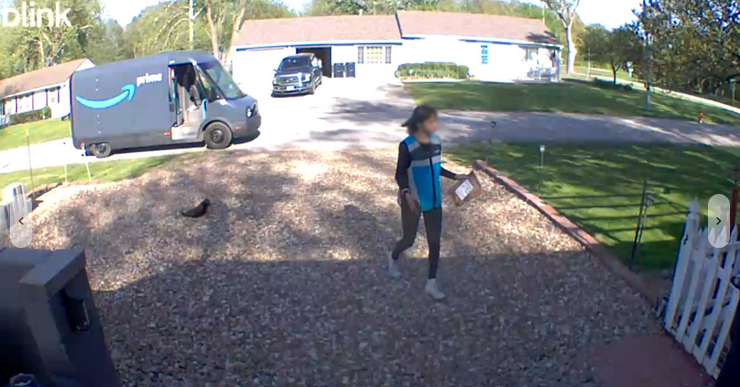
In the latest incident, surveillance footage shows an Amazon driver picking up a cat named Sidney from his family’s driveway in Kansas City on April 20. At 16 years old, dependent on medication with his health failing, Sidney was near the end of his life, Marsha Reeves told the local Fox affiliate.
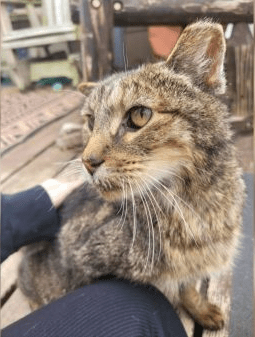
Sidney

“I knew his time was near, and I just wanted him to be comfortable and at home when it came,” she said.

Because of the driver’s actions, Sidney’s last days were spent in distress and confusion, separated from the people who loved him. The driver surrendered him to a shelter the next day, and Sidney was bounced between shelters and animal control with his family frantically trying to track him when a veterinarian at a rescue group euthanized him.

“I cannot even imagine what he was thinking,” she said. “He did not deserve to die on a metal table with strangers poking him. He should have been at home in my arms when he took his last breath.”

Marsha Reeves, Sidney’s human

It’s a tragic and horrific end for a cat whose family wanted to fill his last days with love. They’re denied closure, and to add to the awfulness of the situation, Reeves said the mega-corporation was not helpful, at first not admitting one of its drivers took the cat, then slow-walking the response.

“I cannot even imagine what he was thinking,” Reeves said. “He did not deserve to die on a metal table with strangers poking him. He should have been at home in my arms when he took his last breath.”

We’ve written about this before, and previous cases make it clear: people who find themselves in this situation should not wait for Amazon (or any other company) to handle it, because it’s not a priority for them. In every case in which a family has successfully regained their cat, the common denominator was they took it upon themselves to lead the effort and were relentless in searching, posting flyers locally, rallying support online and making noise in local media. Sometimes even that’s not enough, but it increases the odds of a happy reunion by orders of magnitude compared to putting faith in a corporation and police.

In this case, there’s been no word from Amazon about consequences for the driver or changes to the way the company trains its delivery workforce and customer service representatives.

The driver “needs to come with a supervisor and face me and my family members who this has affected,” Reeves told the local Fox affiliate. “I think Amazon needs to be held accountable. I think this young woman needs to be held accountable. She needs to realize that there are consequences to her decision making.”

So far the company hasn’t admitted wrongdoing or offered an apology, which is consistent with cases in the past involving drivers who have stolen pets.

“Why won’t Amazon just come out and say ‘we screwed up?’”
New York Times Ethicist: ‘My Boyfriend Said He’d Save Our Cat but Not a Stranger if Both Were Drowning’

As Charles Darwin pointed out, the difference between humans and animals is one of degree, not kind. That should factor into discussions on the value of animal life.

The headline — ‘My Boyfriend Said  He’d Save Our Cat but Not a Stranger if Both Were Drowning’ — comes from the New York Times via its Ethicist column, in which NYU philosophy professor Kwame Anthony Appiah answers questions from readers about moral rights and wrongs.

Here’s the full text of the question:

My boyfriend and I were talking about protecting human life, and he said that he doesn’t believe that human life is necessarily worth more than any other kind of life. For example, he said that if one of our cats were drowning next to a human who was a stranger to us (who was also drowning) and he could save just one, he would choose our cat. Is this morally wrong?

Appiah, in his very first sentence in response, regretfully calls pets “fictive kin” before pointing to a study by an experimental psychologist in which participants were asked whether they’d save their pets or a foreign tourist if both stepped in front of a bus at the same time. Forty percent of respondents picked the pet.

To his credit, Appiah notes the people who chose their pets don’t have “some grave defect of character,” and said the impulse to save a companion pet is “very human,” given all we share with our animals, including “affection, companionship, loyalty, all twined around a whole lot of memories.”

Buddy
“Buddy sad. Buddy needs snack.”

That said, Appiah says human life is more valuable:

“But yes, it’s very wrong. (In states with “duty to rescue” laws, it could be illegal too.) Those human strangers? They had rich emotional lives and they had plans, short-term and long-term, big and small; it’s a good guess that they were also part of other people’s plans, other people’s emotional lives.”

I’m not going to get into the question of whether human or animal life has more value. That’s a mine field, I don’t subscribe to the idea that we should work out hierarchies of life’s value as if we’re ranking favorite ice cream flavors, and it seems to me these “what if?” questions involving oncoming buses or trains don’t have much value in gauging reality.

After all, how many people do you know were forced to make life or death decisions in a millisecond, let alone decisions involving a complex moral and emotional calculus? Appiah seems to agree, while also pointing out that what people say in a questionnaire doesn’t necessarily predict what they’d do in the moment.

Life is life. It’s all valuable, and the survey doesn’t have much use outside the classroom or ethics columns.

Buddy the Handsome Cat
Buddy the Cat: Brains as well as brawn.

However, I do think it’s worth pointing out that much of what Appiah assumes is the difference between human and animal life — particularly rich emotional lives, cognition and value to others — can indeed be attributed to animals.

There’s been a seismic shift in the way most scientists view animal cognition over the past decade, and in many ways the acknowledgement of non-human sentience and potential sapience is long overdue  — there are literally thousands of studies confirming animals are conscious, sentient, and possessed of the full range of primary and secondary emotions.

Every time we set new barriers for what distinguishes human from non-human, we’re forced to change the goalposts. When behaviorism was the dominant model, the distinction was internal thought processes. In dismantling behaviorism, Noam Chomsky helped launch the cognitive revolution. Then it was  emotion and love, which crumbled with the ugly Harry Harlow studies into maternal deprivation in monkeys. Then it was capacity to reason, tool use, innovation — and every time, we’ve revised our definitions, solid in our conviction that we’re fundamentally different.

In fact, the only thing that’s held up is Charles Darwin’s original observation in 1871 that “the difference in mind between man and the higher animals, great as it is, certainly is one of degree and not of kind.”

In other words, humans aren’t some higher order of being. We are animals. Upjumped animals in some sense, but animals all the same, subject to the same diseases, physical limitations and helplessness in the face of greater forces like nature.

We may live in an age when our planet is blanketed in satellites, scientists are on fusion’s doorstep and each one of us has the entire sum of our species’ knowledge at our fingertips, but it’s shocking how quickly the veneer of civilization can collapse when people are scared, the food runs out, social order breaks down and those primal motivations — the ones we think we’ve out-evolved — drive our actions again. The early days of the COVID pandemic was just a small reminder of that.

We don’t like talking about these uncomfortable truths because they lead to more uncomfortable truths about the billions of non-human minds we share the planet with, and how we treat them.

I can’t claim to be a philosopher, although I minored in the subject over the objections of my advisor. (He should have warned me off journalism!) But when it comes to animal cognition I do have a great teacher, an 11-pound ball of fur who won’t let me forget he’s got his own wants, needs and strong emotions. Doesn’t he deserve consideration too?