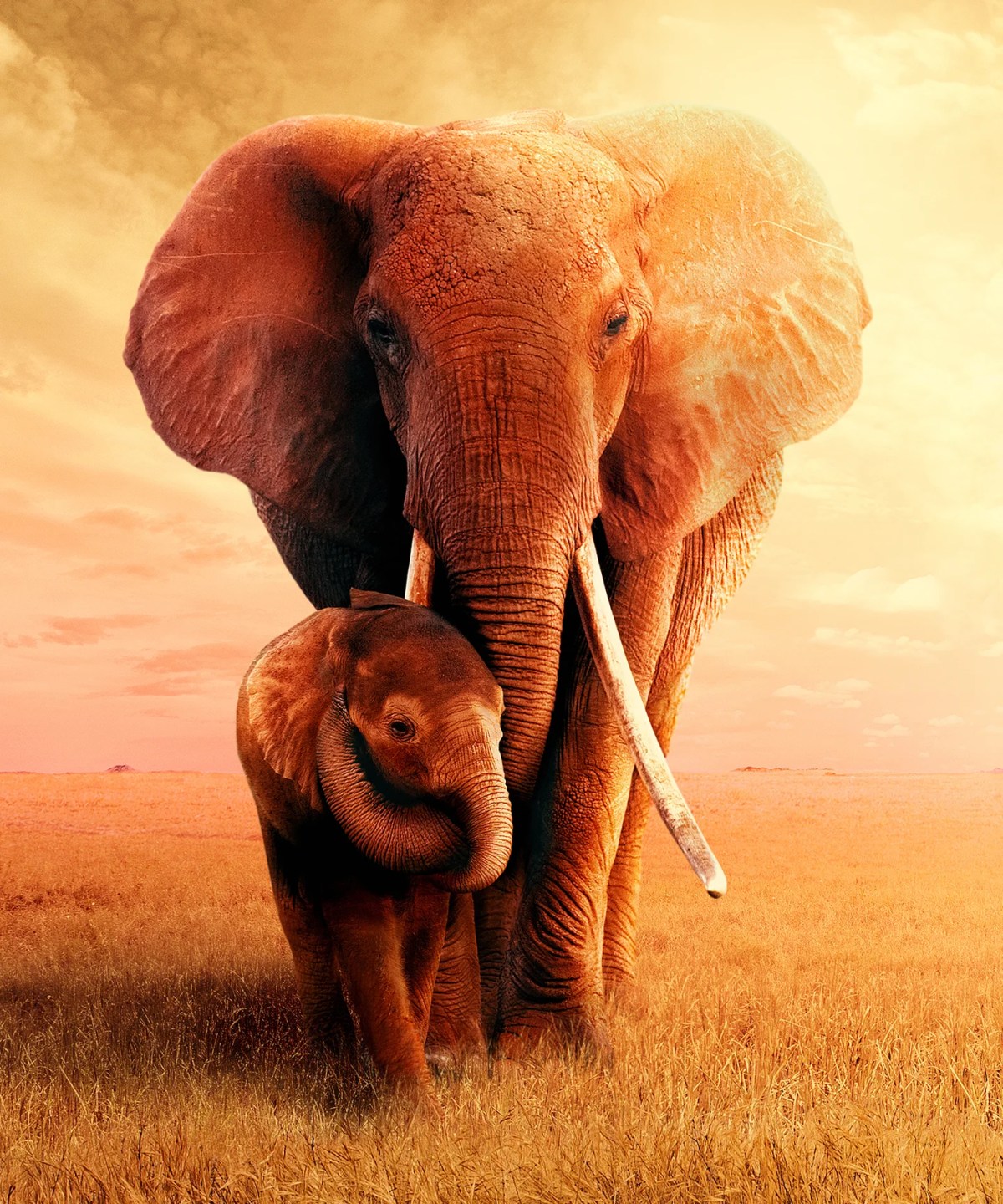
The Elephant Queen Is A Love Letter To Some Of The Most Extraordinary Creatures On Earth

The filmmakers spent four years with matriarch Athena and her herd.

Athena learned the seasonal migratory path from sanctuary to sanctuary from her mother, who in turn learned from her mother, in an unbroken chain that goes back as long as elephants have walked the savanna we call the Maasai Mara.

Every bend, every life-sustaining water hole, every spot where the most nutritious plants grow — and especially the final resting places of her relatives, those who didn’t survive the long journeys to water and shade during drought seasons.

The 50-year-old matriarch, one of the Earth’s last “super tuskers,” has seen her family through so many difficult times that the members of the herd don’t question her even when her decisions could mean life and death for them.

She is their matriarch, and their trust in her is absolute.

During times of drought, all animals converge on the same watering holes. Credit: Apple TV

Athena is also the herd’s protector, which means being wary of humans is her default. It has to be, since humans have poached her kind to the brink of extinction to feed the insatiable Chinese ivory trade.

Filmmakers Victoria Stone and Mark Deeble spent four years with Athena and her herd while filming The Elephant Queen, and earning Athena’s trust was a laborious process.

At first, the wise matriarch wouldn’t let the documentary team anywhere near her family. That slowly began to change as they showed her they meant her no harm.

“But we could see that with her herd, with her family, she was a really calm, beautiful, temperate matriarch,” Deeble explained after a film festival screening of the documentary “And we would just spend time with her.”

Still, the filmmakers had to pass a test before Athena extended her trust:

‘Over the course of several weeks, Athena had allowed the small crew closer and closer, until they were about 40 meters from her. One day, Athena walked away to let her calf stand between her and the crew. That’s a rare occurrence for a mother.

“At that stage two things can happen,” Deeble said. “Either she can realize that it was a mistake, and if we’re in the middle of them we’re going to get trampled, or, and what I like to think happened, she was just testing us. Because after a while, she made a very low rumble and the calf looked up, and she wandered very calmly around the front of the calf. And from that day on, she allowed us amazing access.”’

The Elephant Queen first finds Athena’s herd during a time of plenty, when water and food are abundant, and the herd’s babies — curious Wewe, a boy, and little Mimi, a female and the youngest member of the herd — get to splash around and explore their new world.

Satao, a male “super-tusker,” arrives at the watering hole for hydration and to find a mate. Credit: Apple TV

But every year there comes a time when the water hole starts to dry out and the herd must begin a long march spanning more than 100 miles to reach a more reliable source of water.

The year Stone and Deeble began following the herd, the drought was so severe that Athena made the difficult decision to march for a far-off sanctuary, the closest known permanent water hole fed by an underground spring.

It’s a long, exhausting journey, and newborns can’t make it, so Athena is forced to delay their departure for as long as she can to give Mimi and Wewe enough time to feed and grow stronger.

Elephant calves are dependant on their mothers’ milk for two years. Credit: Wikimedia Commons

The gestation period for African elephants is about two years, and the entire herd is protective of the babies. The adults cooperate to shield them from predators and the sun, using their bodies to do both. They’re also extremely cautious around hazards like rapidly drying mud holes, which can trap young elephants.

The Elephant Queen’s stars are its titular species, but the documentary does an outstanding job not only showing us the other animals who inhabit the elephant kingdom, but also making clear the many ways those animals depend on elephants for their survival.

From geese, frogs and terrapins who rely on elephants to dig water holes, to dung beetles for whom elephant waste is a bounty, to kilifish whose eggs hitch a ride on the massive animals toward the next water source, the entire ecosystem is balanced on the broad backs of the gentle giants.

As narrator Chiwetel Ejiofor (Doctor Strange, The Martian, 12 Years A Slave) notes, elephants are tactile creatures, and when they nudge a terrapin or knock a frog off a tree branch, it’s curiosity, not malice, that motivates them. They’re herbivores, despite their enormous size, and gain nothing from harming other creatures.

Credit: Wikimedia Commons

It’s impossible to watch a documentary like this without looking into the eyes of elephants like Athena and wondering about the intellect behind them, the thoughts and emotions that motivate their actions.

In one scene, as Athena leads her herd through a parched landscape with nothing but dust and dead trees in every direction, she stops. There’s no water or food. There’s only an elephant skull, the remains of a family member who died on one of the treacherous journeys toward refuge during drought season.

The elephants crowd around the skull, gently running their trunks along its tusks the way they do every day to greet one another. Even with the body long since decomposed, with nothing but a skull remaining, they recognize one of their own.

Some will dismiss the idea that the elephants are mourning, claiming that ascribing emotions to animals is anthropomorphizing them. But if they’re not mourning, what are they doing? If they’re not remembering an individual they loved, why would they stop when it’s crucial to find water and food?

Indeed, the only other time Athena calls a halt is when one of her pregnant sisters goes into labor.

Credit: Wikimedia Commons

Documentaries like The Elephant Queen don’t exist solely for entertainment value. Despite intense efforts to protect elephants, poachers still kill an estimated 20,000 each year.

Just 100 years ago, 10 million elephants inhabited almost every corner of Africa. A 2016 study put their number at 415,000, and while there have been successes in conservation efforts, it’s difficult to ascertain whether they balance out the relentless poaching and habitat loss.

The Elephant Queen acknowledges threats to the continued existence of elephants, but doesn’t dwell on them. There’s good and bad to that: in some ways it’s a missed opportunity to galvanize viewers, but it also ensures the film is family friendly, without gore or violence. The film doesn’t sugar coat the fact that nature is unforgiving, but you’re not going to see a poacher raid on a herd.

The Elephant Queen is an Apple TV documentary and premiered on the streaming service after a limited theatrical run. I stumbled upon it as a subscriber after it appeared prominently in the app.

And while it was released in 2019, its message is still as relevant today. Whether you’re fascinated by elephants or appreciate wildlife in general, The Elephant Queen is a great example of how powerful documentaries can be, especially in transporting us to real places that exist in our world, but remain out of reach for the majority of us.
Buddy Visits Leopards, Finds Himself On The Menu

Buddy’s back at it, trying to befriend big cats. Emboldened by his success with the tolerant and wise jaguars, the reckless tabby has his sights set on the savanna and its temperamental predators, the leopards. Can Buddy win the admiration of these notoriously dangerous felids, or will he end up as a light snack for a spotted cat?

VIRUNGA NATIONAL PARK, Democratic Republic of Congo — “What the heck is that?”

A leopardess raised her head in response to her mate’s question, gazing down from the sturdy limb of an acacia tree where she’d taken refuge from the scorching midday sun.

Two hundred yards ahead, a tiny gray cat was padding toward them, picking his way carefully around rocks and occasionally disappearing in the high grass.

“There’s nothin’ that a hundred men on Mars could ever do,” the little feline sang as he walked. “I bless the rains down in Africa! I bless the rains down in…”

The diminutive feline stopped near the base of the tree and looked up at the leopards.

“Jambo!” he meowed enthusiastically. “My name is Budvuvwevwevwe Budyetenyevwe Buddabe Ossas!” he announced. “You can call me Buddy!”

Jambo!

The adult leopards were momentarily stunned until one of the cubs awoke from her nap, spotted Buddy and exclaimed: “Look, mommy, lunch!”

The small cat flashed a wide smile.

“That’s a great idea! I’ve already eaten, but you know what they say: a lunch a day barely keeps the rumbles at bay! I’m a three-lunch cat, myself. So what are we having?”

Another cub piped up.

“That’s not lunch, that’s a snack!” he told his sister.

“And what a cute little snack he is!” the female cub said, gracefully dropping from her napping spot in the tree.

Buddy’s eyes bulged.

“You’re…you’re talking about me?”

The male cub did a squeaky impression of a roar.

“Do you see any other single-serve snacks around?”

Buddy licked his lips, his effort to hide his fear betrayed by his rising hackles and tail, which now resembled a quivering spiked club.

“I…I…I am a cat,” he said in his best impression of an authoritative meow. “I’m practically your cousin!”

The female was just paces away now and moving too fast for Buddy’s liking as he backpedaled.

“The question is,” she said, “are you tasty like cousin Serval or cousin cheetah?”

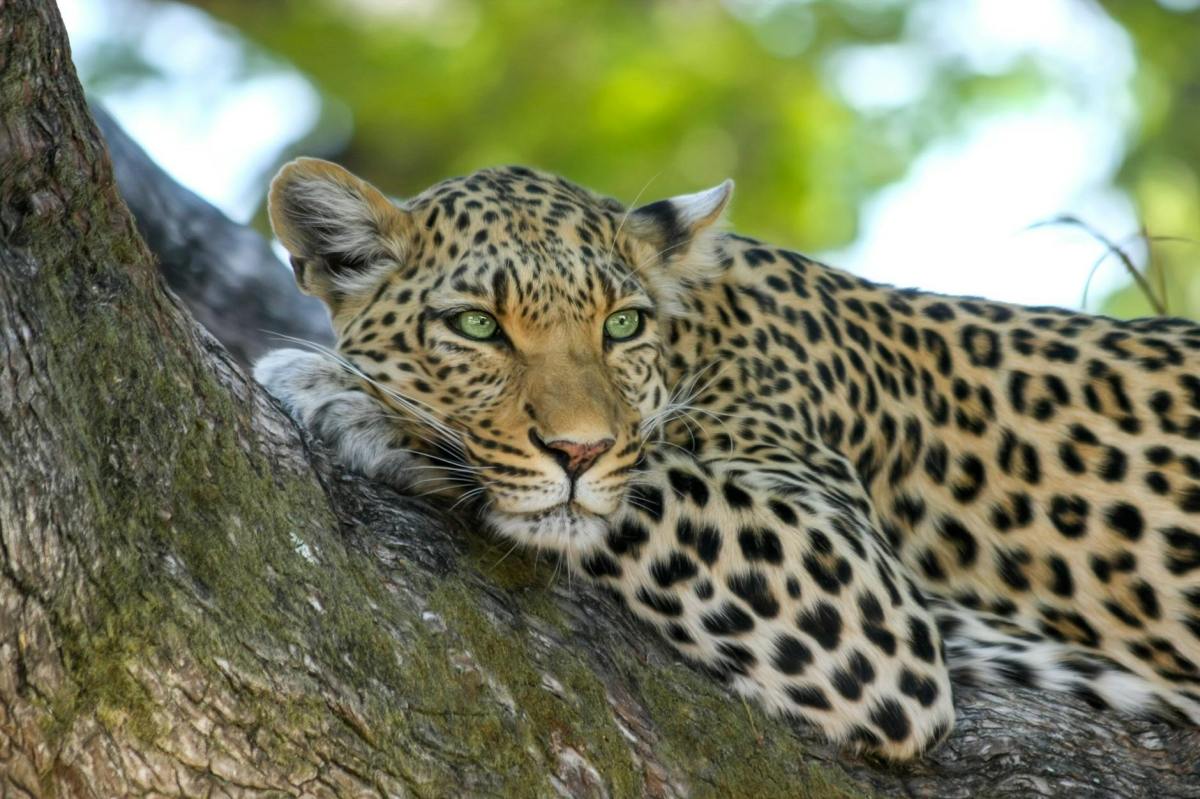
An image of a leopard cub
Credit: RudiHulshof/iStock

Buddy changed tactics.

“This is an outrage! Not even the tigers tried to eat me! This is…this is, uh, catibalism!”

The cubs were circling him now.

“Mommy, can we have a snack?” the male cub called, looking back at his mother on the tree.

“As long as it doesn’t spoil your dinner later,” came the reply.

“It won’t, mamma!”

Buddy gulped.

The cubs closed the distance, ready to strike, and Buddy was babbling while pleading for his life when the earth itself shook.

Branches jolted and leaves dropped. A flock of birds nesting in a nearby tree took off, silhouettes etching ephemeral geometric patterns in the sky. In the distance, a baboon shrieked a warning to its troop.

The cubs went from aggressive to retreat in the span of an instant, and even their parents looked alarmed, taking off after their young.

Buddy watched them flee, wondering if he should bolt in another direction as something incomprehensibly gargantuan lumbered toward him, shaking the trees.

He’d emptied his bowels by the time a gigantic head poked through the foliage, followed by the rest of the colossal beast. It was gray-skinned, leathery and bizarre, unlike anything Buddy had ever seen.

“Giant space aliens!” he screamed, turning around and running right into a tree trunk.


“Ahhhhh! Don’t eat me!”

Buddy awoke in a sweat, his fur damp in the soupy, stifling heat.

An entire platoon of the peculiar beasts stood around him, their sizes ranging from 25 Buddies in mass to freakishly large individuals sporting pairs of prodigious teeth that looked like scimitars made of bone.

“Einstein’s awake,” one of them rumbled, and the rest turned from stuffing themselves with leaves to get a better look at the Liliputian animal before them.

“What is that thing?” one of them asked.

“It’s a fun-size cheetah!” one exclaimed confidently.

“No, it’s a baby Serval!” another said. “But the color’s all wrong.”

In the distance, a giraffe poked its head above the tree line, pausing to munch on the silky pink flowers of a mimosa tree.

Buddy was saved from hungry leopards by friendly giant space aliens!

Buddy cautiously pushed himself up on his paws. These aliens did not seem interested in eating him.

“Greetings,” he said. “I am a feline, a cat from planet Earth! What planet do you come from?”

There was a pause, then trumpeting, cacaphonic laughter.

“‘What planet are you from?'” one of the great beasts mimicked, sparking a second round of giggles that sounded like the trombone section of an orchestra, if someone had slipped the players psychedelics.

“We are elephants, and this is our home,” said the leader, a magnificent female. “And you, little one, are fortunate we happened by.”

Buddy puffed himself up.

“I think you mean the leopards were lucky,” he said, flexing his meowscles. “They didn’t want to tangle with these guns.”

The elephants chortled. “Can we keep him? He’s funny!”

The matriarch shook her massive head.

“He is far from home, and he should return before he runs into leopards again, or something worse,” she said.

Buddy looked unsure of himself.

“But I’m homies with the jaguars and the tigers! I thought…you know, I could be down with the leopards too. Us big cats gotta stick together, ya know? It’s hard out there for an apex predator. By the way, got any lunch?”

One of the elephants raised her trunk, pointing east toward a herd of intimidating horned beasts.

“Lunch,” she said. “Think you can take them?”

Buddy gulped.

“Go home, little one.”


Buddy’s version of events!

“So anyway,” Buddy said, addressing his human, “that’s how I impressed the leopards, and they made me their king. In fact, they bestowed the honorific ‘Paka mkubwa na mwenye misuli hodari,’ which means ‘great and mighty muscled cat’ in Swahili!”

“Sounds like you had quite an adventure! That’s impressive, Bud!” Big Buddy said.

“It is! It is!” Buddy said, nodding vigorously.

Big Buddy made a whistling sound.

“Was that before or after you peed yourself in terror?”

“What? I…no, I told you, they made me their king! Where did you hear this, this slander?”

Big Buddy reached for his iPad, pulling up images of a terrified Little Buddy running from leopard cubs on the savanna, Buddy running head-first into a tree, and Buddy cowering before a herd of elephants.

“A wildlife tour was nearby during your ‘coronation,’ but this is probably just a gray tabby who looks exactly like you and happened to be right where you were crowned,” he said. “Congratulations, Your Meowjesty!”

Elephants Call Each Other By Name, Study Says

Elephants encode names and other information in low-frequency rumbles that can be heard miles away. For social animals who live in large herds, it’s crucial to be able to address individuals.

Elephants are famously social animals, moving in matriarchal herds that can consist of as many as 70 of their kind.

They also communicate over long distances, emitting rumbles that can be heard miles away.

Because of their social and nomadic existence, it makes sense that elephants would need a way to single out individuals and address each other, and for the first time researchers say they’ve found evidence of Earth’s largest land animals calling each other by name.

“If you’re looking after a large family, you’ve got to be able to say, ‘Hey, Virginia, get over here!’” Duke University ecologist Stuart Pimm told the Associated Press.

The research involved field work and analysis using artificial intelligence. To record samples of elephants communicating, teams followed herds with recording equipment. Notably, elephant rumbles include sounds in frequencies lower than the human ear can detect.

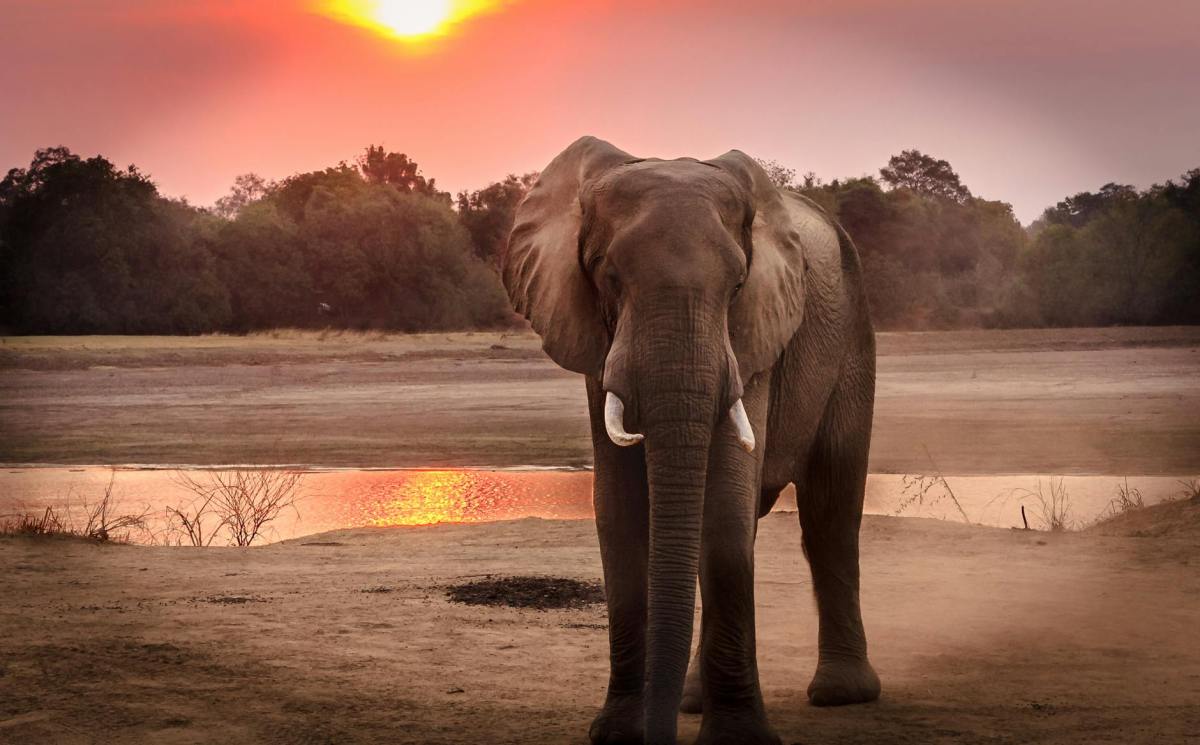
large elephants near lake
Credit: Pixabay/Pexels

The team paid close attention when one elephant vocalized and another responded, and recorded who initiated each rumble and who it was meant for.

Although elephants are best known for making loud “trumpeting” sounds, experts say those are more like exclamations while rumbles contain encoded information that African savanna elephants would need to communicate to each other.

“The rumbles themselves are highly structurally variable,” said Mickey Pardo, a biologist from Cornell University and co-author of the study. “There’s quite a lot of variation in their acoustic structure.”

A machine learning algorithm was then used to sort and categorize the large number of audio samples, looking for patterns that are difficult for human minds to detect.

“Elephants are incredibly social, always talking and touching each other — this naming is probably one of the things that underpins their ability to communicate to individuals,” said George Wittemyer, an ecologist at Colorado State University and co-author of the study. “We just cracked open the door a bit to the elephant mind.”

elephant-cub-tsavo-kenya-66898.jpeg
A female elephant with her young offspring in Kenya. Credit: Pixabay/Pexels

Notably, the elephant “names” are identifiers that they created for themselves, and are not the kind of human-bestowed names that cats and dogs respond to. The list of animals who have names for themselves is short, although likely to expand with further study. Dolphins, for instance, identify themselves with unique whistling patterns, and parrots have a similar method, but both species address individuals by imitating their calls. Elephants use their name analogs the way humans do, to directly address each other.

The research has the potential to raise public awareness of elephant intelligence and their plight as they face threats to their continued existence. Like almost all of the Earth’s iconic megafauna, elephants will become extinct if we don’t do a better job protecting them and ending the ivory trade. Every year about 20,000 elephants are slaughtered for their tusks to feed the demand for ivory, especially in China where it’s considered a status symbol, according to the World Wildlife Fund.

Yang Feng Glan, known as the”Queen of Ivory,” was sentenced to 15 years in prison by a Tanzanian court in 2019. Yang smuggled some 860 elephant tusks worth $6.5 million from Tanzania to China as the leader of one of the world’s most extensive poaching and ivory smuggling organizations.

During her years operating the smuggling ring, Yang presented herself as a successful businesswoman and ran in elite circles within China, authorities said. Two of her accomplices were also given 15-year sentences for their roles, but since then others have filled the vacuum left by Fang’s conviction, and elephant preserves are constantly under threat from heavily armed poachers.