The Elephant Queen Is A Love Letter To Some Of The Most Extraordinary Creatures On Earth

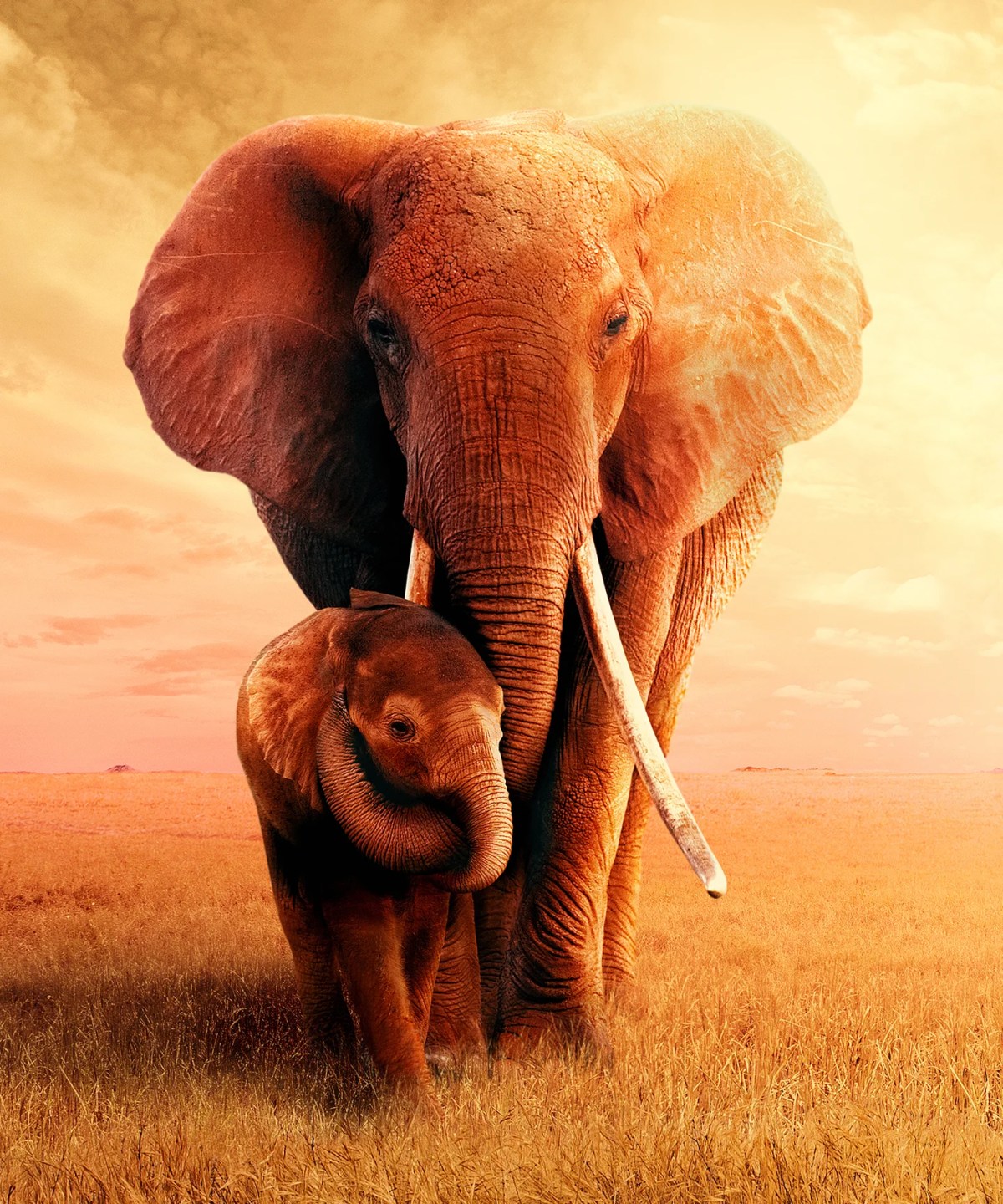
The filmmakers spent four years with matriarch Athena and her herd.

Athena learned the seasonal migratory path from sanctuary to sanctuary from her mother, who in turn learned from her mother, in an unbroken chain that goes back as long as elephants have walked the savanna we call the Maasai Mara.

Every bend, every life-sustaining water hole, every spot where the most nutritious plants grow — and especially the final resting places of her relatives, those who didn’t survive the long journeys to water and shade during drought seasons.

The 50-year-old matriarch, one of the Earth’s last “super tuskers,” has seen her family through so many difficult times that the members of the herd don’t question her even when her decisions could mean life and death for them.

She is their matriarch, and their trust in her is absolute.

During times of drought, all animals converge on the same watering holes. Credit: Apple TV

Athena is also the herd’s protector, which means being wary of humans is her default. It has to be, since humans have poached her kind to the brink of extinction to feed the insatiable Chinese ivory trade.

Filmmakers Victoria Stone and Mark Deeble spent four years with Athena and her herd while filming The Elephant Queen, and earning Athena’s trust was a laborious process.

At first, the wise matriarch wouldn’t let the documentary team anywhere near her family. That slowly began to change as they showed her they meant her no harm.

“But we could see that with her herd, with her family, she was a really calm, beautiful, temperate matriarch,” Deeble explained after a film festival screening of the documentary “And we would just spend time with her.”

Still, the filmmakers had to pass a test before Athena extended her trust:

‘Over the course of several weeks, Athena had allowed the small crew closer and closer, until they were about 40 meters from her. One day, Athena walked away to let her calf stand between her and the crew. That’s a rare occurrence for a mother.

“At that stage two things can happen,” Deeble said. “Either she can realize that it was a mistake, and if we’re in the middle of them we’re going to get trampled, or, and what I like to think happened, she was just testing us. Because after a while, she made a very low rumble and the calf looked up, and she wandered very calmly around the front of the calf. And from that day on, she allowed us amazing access.”’

The Elephant Queen first finds Athena’s herd during a time of plenty, when water and food are abundant, and the herd’s babies — curious Wewe, a boy, and little Mimi, a female and the youngest member of the herd — get to splash around and explore their new world.

Satao, a male “super-tusker,” arrives at the watering hole for hydration and to find a mate. Credit: Apple TV

But every year there comes a time when the water hole starts to dry out and the herd must begin a long march spanning more than 100 miles to reach a more reliable source of water.

The year Stone and Deeble began following the herd, the drought was so severe that Athena made the difficult decision to march for a far-off sanctuary, the closest known permanent water hole fed by an underground spring.

It’s a long, exhausting journey, and newborns can’t make it, so Athena is forced to delay their departure for as long as she can to give Mimi and Wewe enough time to feed and grow stronger.

Elephant calves are dependant on their mothers’ milk for two years. Credit: Wikimedia Commons

The gestation period for African elephants is about two years, and the entire herd is protective of the babies. The adults cooperate to shield them from predators and the sun, using their bodies to do both. They’re also extremely cautious around hazards like rapidly drying mud holes, which can trap young elephants.

The Elephant Queen’s stars are its titular species, but the documentary does an outstanding job not only showing us the other animals who inhabit the elephant kingdom, but also making clear the many ways those animals depend on elephants for their survival.

From geese, frogs and terrapins who rely on elephants to dig water holes, to dung beetles for whom elephant waste is a bounty, to kilifish whose eggs hitch a ride on the massive animals toward the next water source, the entire ecosystem is balanced on the broad backs of the gentle giants.

As narrator Chiwetel Ejiofor (Doctor Strange, The Martian, 12 Years A Slave) notes, elephants are tactile creatures, and when they nudge a terrapin or knock a frog off a tree branch, it’s curiosity, not malice, that motivates them. They’re herbivores, despite their enormous size, and gain nothing from harming other creatures.

Credit: Wikimedia Commons

It’s impossible to watch a documentary like this without looking into the eyes of elephants like Athena and wondering about the intellect behind them, the thoughts and emotions that motivate their actions.

In one scene, as Athena leads her herd through a parched landscape with nothing but dust and dead trees in every direction, she stops. There’s no water or food. There’s only an elephant skull, the remains of a family member who died on one of the treacherous journeys toward refuge during drought season.

The elephants crowd around the skull, gently running their trunks along its tusks the way they do every day to greet one another. Even with the body long since decomposed, with nothing but a skull remaining, they recognize one of their own.

Some will dismiss the idea that the elephants are mourning, claiming that ascribing emotions to animals is anthropomorphizing them. But if they’re not mourning, what are they doing? If they’re not remembering an individual they loved, why would they stop when it’s crucial to find water and food?

Indeed, the only other time Athena calls a halt is when one of her pregnant sisters goes into labor.

Credit: Wikimedia Commons

Documentaries like The Elephant Queen don’t exist solely for entertainment value. Despite intense efforts to protect elephants, poachers still kill an estimated 20,000 each year.

Just 100 years ago, 10 million elephants inhabited almost every corner of Africa. A 2016 study put their number at 415,000, and while there have been successes in conservation efforts, it’s difficult to ascertain whether they balance out the relentless poaching and habitat loss.

The Elephant Queen acknowledges threats to the continued existence of elephants, but doesn’t dwell on them. There’s good and bad to that: in some ways it’s a missed opportunity to galvanize viewers, but it also ensures the film is family friendly, without gore or violence. The film doesn’t sugar coat the fact that nature is unforgiving, but you’re not going to see a poacher raid on a herd.

The Elephant Queen is an Apple TV documentary and premiered on the streaming service after a limited theatrical run. I stumbled upon it as a subscriber after it appeared prominently in the app.

And while it was released in 2019, its message is still as relevant today. Whether you’re fascinated by elephants or appreciate wildlife in general, The Elephant Queen is a great example of how powerful documentaries can be, especially in transporting us to real places that exist in our world, but remain out of reach for the majority of us.

Fearless Cat Forces Bear To Retreat, PLUS: Flow’s Void Sparks Interest In Black Moggies

Flow’s Cat has improved things for his fellow voids, who are drawing more interest from adopters.

This video is bonkers!

A cat who is definitely not Buddy stared down a bear and made the ursine interloper retreat in fear in a confrontation caught on camera.

The stand-off happened in Pike County, Pa., and the cat’s name is T’Challa, after the titular hero of Marvel’s Black Panther franchise.

“I think perhaps this young bear woke this kitty cat up because he was not happy that he was sharing his deck with him when he woke up and he expressed himself,” said the homeowner whose security cameras caught the exchange.

After T’Challa made a series of feints, the bear — who is orders of magnitude larger — beat a hasty (for a bear) retreat.

Well done, T’Challa! Someone get that good boy a treat!

Go with the Flow

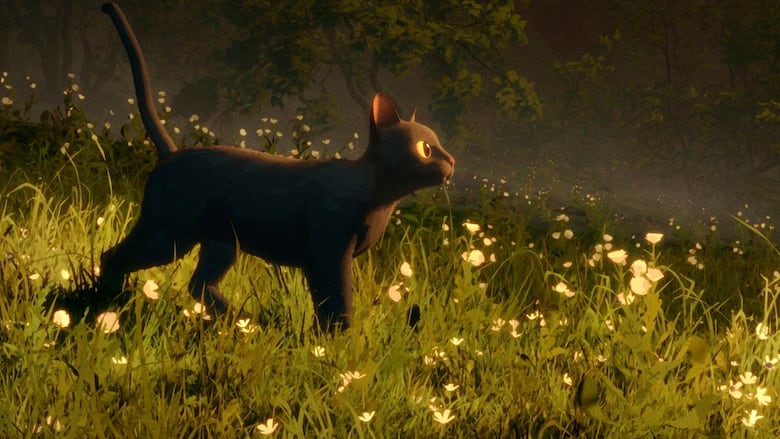
Part of what makes Flow so spectacular — aside from the breathtaking visuals, clever narrative and the strange world it portrays — is how endearing its star, Cat, is.

The little guy shows enormous resilience as he survives a biblical flood, gets chased by a flock of angry secretary birds, learns to swim, and finds his confidence in situations that would terrify any feline. He’s incredibly expressive, revealing his emotions with every twitch of his tail and whiskers, as well as his distinctive meow and, most of all, his bright yellow eyes.

He’s also the first feline star to win an Oscar and a Golden Globe, as well as many other film awards for the universally praised film.

Now he’s got another accomplishment to his name: he’s improved the way people view black cats, who have long been the victims of absurd human superstition and have a hard time finding forever homes because of the stigma.

Credit: Live RIGA

Animal welfare organizations are reporting heightened interest in black cats (good), but not a manic rush to adopt them as has happened when other species and breeds are popularized in films. (Bad, because those pets are often discarded when the novelty wears off.)

In other words, Cat may have inspired something close to parity in adoptions in some places.

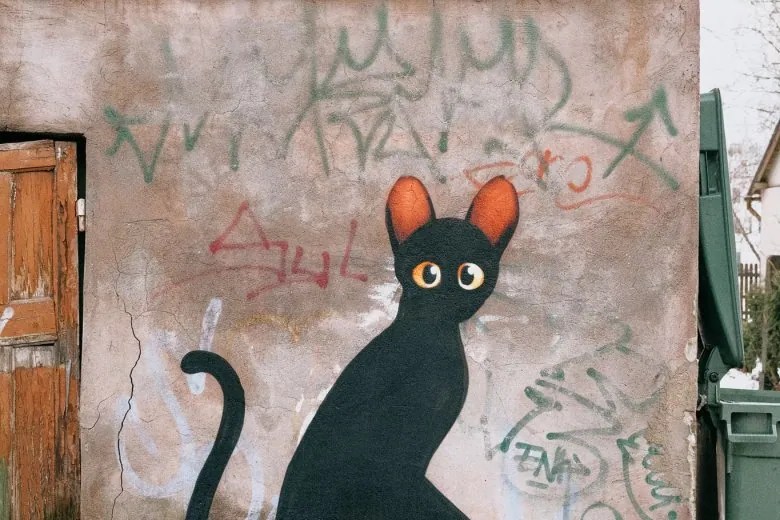
Cat is beloved in director Gints Zilbalodis’ home country of Lithuania. The capital, Riga, is now adorned with street art of the little guy, including a statue sitting atop a major monument in the heart of the city.

Credit: Live RIGA

Flow’s Cat Accepts Oscar In The Most Feline Way Imaginable

The animated feature about a cat surviving an apocalyptic flood has racked up awards and earned universal acclaim.

It’s been quite a year for Latvian animator Gints Zilbalodis and Cat, the star of Flow.

Their film won an Oscar for best animated feature film, racked up wins at the Golden Globes and smaller film festivals, became the most-watched film in Latvian history, snuggled its way into the hearts of audiences in the US, Europe and Asia, and enjoys incredibly rare universal accolades from critics and viewers alike, scoring 97 and 98 percent with each group respectively on film review site Rotten Tomatoes.

Now Cat has officially recognized his Oscar by doing precisely what his species loves to do. In a short video posted by Zilbalodis, Cat smacks the golden statue off the railing of his boat and onto the deck, to the annoyance of his lemur buddy.

Congratulations, Gints and Cat!

Apocalypse Z: A Man And His Cat Fight For Survival

As the world ends, Manel doesn’t lose sight of his most important priorities: making sure his cat is safe and well-fed.

Shhhh, don’t meow!

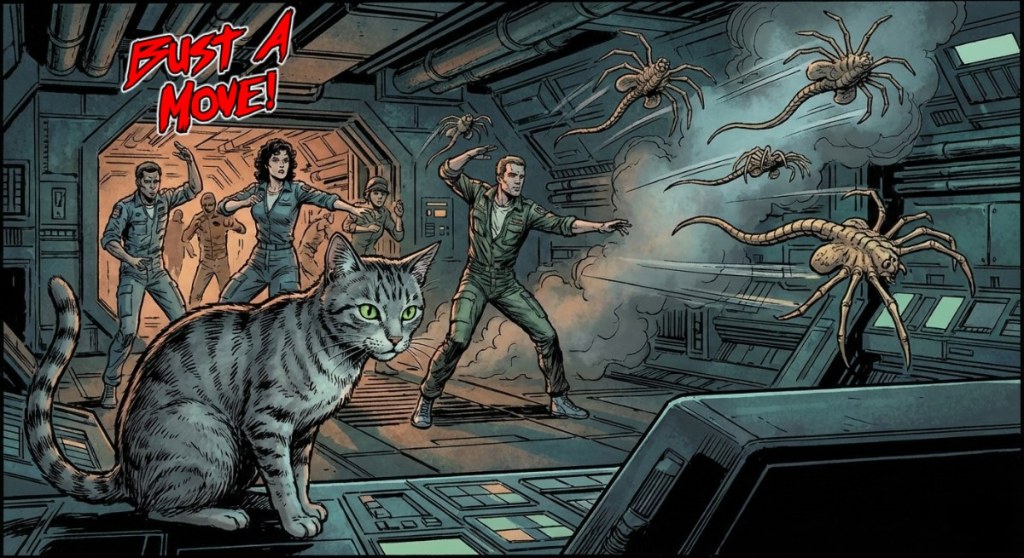
With A Quiet Place: Day One and Apocalypse Z: The Beginning Of The End, it looks like the “protagonist and cat surviving the world’s end” thing might be a growing subgenre.

While Day One lit up theaters in spring and early summer, Apocalypse Z is a zombie flick out of Spain, currently sitting atop Amazon’s Prime Video charts as a major crossover hit.

It stars Francisco Ortiz as Manel, the owner of a small solar power business and servant of a talkative cat named Luculo. Manel’s brother-in-law works for the Spanish military, and as reports of a deadly and spreading virus hit the news, his sister relays privileged information from her husband warning Manel to hide during mandatory evacuation and find a way to join the family on the Canary Islands, where Spain’s military and civil leaders have fled.

Vince McMahon Meme

After weathering the initial wave of the virus by huddling in his apartment in Galicia, Manel seeks out a way to make the 2,400km (about 1,500 mile) journey to safety.

One thing I loved about this movie was Manel’s absolute devotion to Luculo. When he tries to stock up at a store being ransacked by panicked locals, the first thing he does is grab cat food. When he finds a set of wheels at one point — a sporty motorcycle — he straps Luculo’s carrier securely to the back of the seat.

No matter how impractical, no matter how much danger it puts him in, Manel refuses to abandon his pal, even though the little guy can’t keep his mouth shut.

Apocalypse Z
Manel with Luculo the cat in his carrier, strapped to the back of the motorcycle.

While watching Day One, all I could think about was how conveniently silent Sam the cat was, and how dead I’d be trying to survive with Bud in the same situation.

Luculo is incapable of being quiet, although he’s not as loud or insistent as Bud is. He’s named after the Roman statesman and conqueror Lucinius Lucullus, described as “the greatest glutton of antiquity, who stunned Rome with his lavish feasts” and his dedication to bringing recipes for the tastiest dishes from the provinces back to the capital.

“He came, he ate, he conquered” might be an appropriate motto for Lucullus, and his feline namesake is similarly food-obsessed, often seen scarfing down yums as if the apocalypse is just a minor obstacle between meals.

Apocalypse Z
Manel refuses to leave his buddy behind, going to great lengths to keep Luculo safe as the world goes to hell around them.

Apocalypse Z isn’t a walk in the park, given the genre, but it’s significantly less gory than The Walking Dead, The Last of Us or even Zombieland. The film’s infected are Danny Boyle-style zombies, the terrifyingly fast baddies from 28 Days Later and 28 Weeks Later, rather than the slow shufflers of Romero-influenced productions. Accordingly, they’re much more dangerous and enable more intense action sequences.

Finally, because this is a cat blog and I’ll most certainly get emails and comments if I don’t address the tabby in the room: nothing terrible happens to Luculo. His greatest ordeal is having too many admirers, who are shocked to see a guy who’s survived so long with his pet cat.

Apocalypse Z
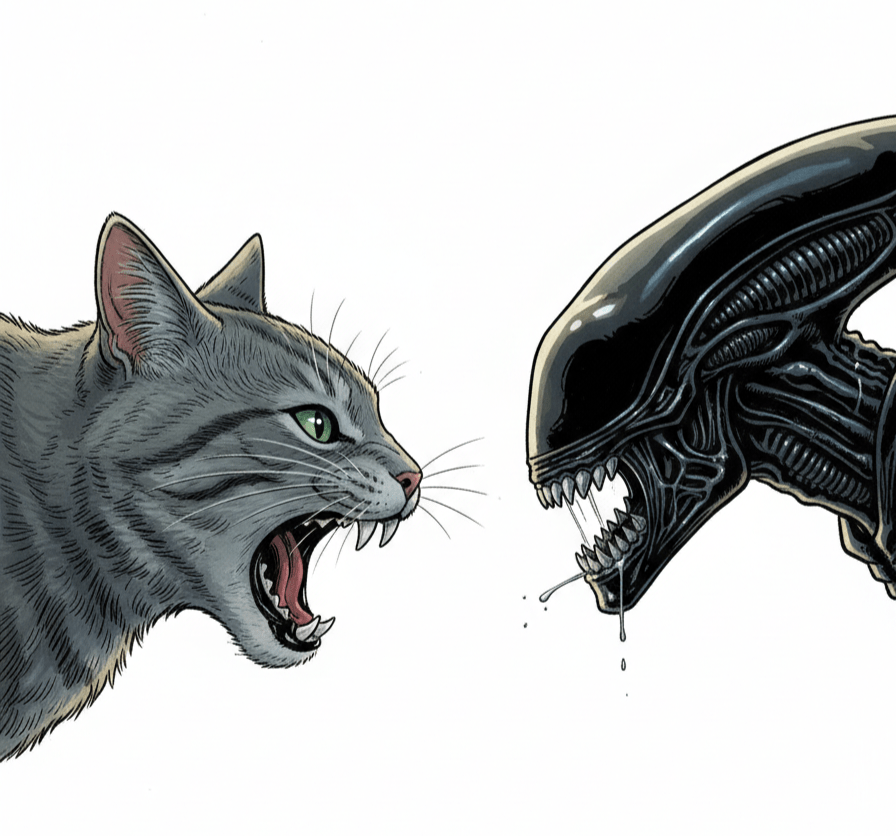
Luculo does quite a bit of hissing at the zombies, who stand between him and his beloved yums.

Apocalypse Z: The Beginning of the End is the first part of a bigger story, as the title suggests. It rocketed to the top as the most-streamed movie in more than 90 countries, so we should be hearing news about a sequel soon.

If you’re a fan of genre movies and escapism, Apocalypse Z is a fun way to spend a few hours.


Apocalypse Z is available now to stream on Amazon Prime Video. The stream will default to an overdubbed version, but we highly recommend enabling English subtitles and switching the audio track to its original Spanish.

Buddy Cast As Richard Parker In Life Of Pi Remake

The famous feline embraces the role of a beloved tiger in a reboot of the Academy Award-winning film. Critics praised the casting, noting Buddy’s strong resemblance to Richard Parker.

LOS ANGELES — Buddy the Cat will star as the main antagonist in an upcoming remake of Life of Pi, Variety reported on Monday.

The silver tabby cat will pad into the role of Richard Parker, a Bengal tiger who finds himself sharing a small boat with a teenage boy named Pi after they survive a storm that sinks their ship.

Alone, hungry and scared, Pi and Richard Parker must learn to trust each other as they drift west with no land in sight.

In one memorable scene from the 2012 original, a gluttonous Richard Parker hoards hundreds of fish while refusing to share with Pi.

“A lot of people think Richard’s being greedy,” Buddy said, “but put yourself in his paws. You can’t get turkey out there. Pi isn’t exactly volunteering to open cans of the good stuff. It’s a cat eat fish world.”

(Above: Buddy the Cat as Richard Parker is “indistinguishable” from the original character, the movie’s casting director says.)

One of the most memorable sequences involves the duo drifting toward an island paradise under the stars as the ocean glows a bioluminiscent blue. The scene takes on a trippy quality as boy and tiger hallucinate tasty, juicy fish paddling lazily through the night air.

“As an actor, you embrace the challenge of imagining all these scrumptious, decadent fish and, you know, your stomach just rumbles,” Buddy told an interviewer.

Richard Parker's Fish

The silver tabby said the film is helping him grow as an actor.

“When my agent sent me the script, I thought ‘Life of Pie?’ You know, I like pie. Shepherd’s pie, chicken pot pie, paella, steak and guiness pie,” he said. “So to prepare for the role, I ate a lot of pie.”