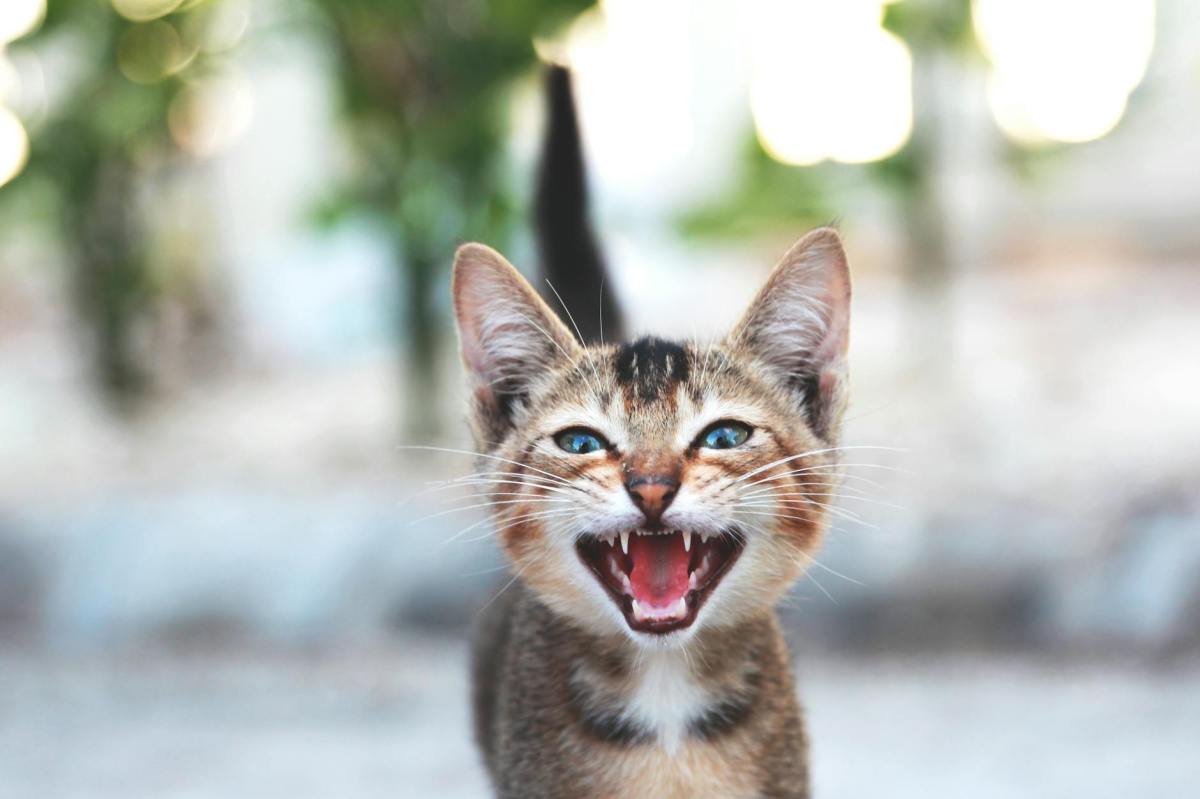
A 23-second clip of a cat growling and yowling has become one of the most-used sound effects over the past three decades. The Guardian traced the clip back to the man who recorded it and got the full story.
We’ve all heard Cheeta the cat yowling, we just don’t know it.
Cheeta was a house cat who belonged to Wylie Stateman, a sound engineer who lives in LA.
In 1988, Stateman recorded an argument between Cheeta, a “remarkably small” half-Siamese void, and her mate, a tomcat named Sylvester.
The 23-second clip made it onto The Premiere Edition, a 20-CD library of sound effects Stateman produced in 1990.
Stateman, called “one of the great recorders of the time” by a colleague, told The Guardian he brought his sound recorder with him everywhere he went for three decades, recording thousands of sounds that have been used in movies for 35 years.
Buddy is also an accomplished sound effects cat.
Cheeta’s yowls are one of his greatest successes. The cranky cat can be heard in Toy Story, Home Alone 3, Les Miserables, Pet Sematary, 101 Dalmations, Venom: Let There Be Carnage, Babe, End of Days, How The Grinch Stole Christmas, and many more.
Although it’s difficult to get an exact count, it’s believed Cheeta’s distinct voice can be heard in some 330 films over the years. If you’re interested in learning more, check out The Guardian’s deep dive into the sound effect and its origins.
Buddy the Magnanimous
I went to visit my brother and his family in Washington this past week, leaving Buddy in the care of my mom.
Regular readers will recall that Bud has a bad reputation for trying to maul his cat sitters, which obviously complicates things.
The incorrigible little lunatic.
Sue, his regular sitter, has known Bud since he was a kitten. She’s literally one of the first humans he met, yet that has not stopped him from ambushing and attacking her. Incredibly, she still agrees to care for him in my absence despite his belligerence, though she’ll no longer play with him. She feeds him and gets out ASAP. I can’t blame her.
This time my mom cared for the little stinker. He’s also tried to murder her when she’s watched him on previous occasions, including one incident in which his bites and scratches necessitated a trip to urgent care and a round of antibiotics.
So yeah, the happy news is that he didn’t attack her this time, although she told me every time she came back, he’d be waiting right by the door, and when he saw it wasn’t me, he would sniff derisively before turning and padding away.
They have an uneasy truce, but I’ll take it. You know you have small dreams when you celebrate a trip in which your cat doesn’t try to maul anyone in your absence.
On a tangential note, I had a first phone interview with a wild cat conservation organization this week, and for the first time in a long time, Bud didn’t make a peep.
He’s meowed loudly during other phone interviews, he’s put his butt in front of the camera like it’s his job during video calls, and he won’t shut up at any other time, but the one time when having a cat might benefit me, he decides to be silent. Thanks, Bud. You’re the best.
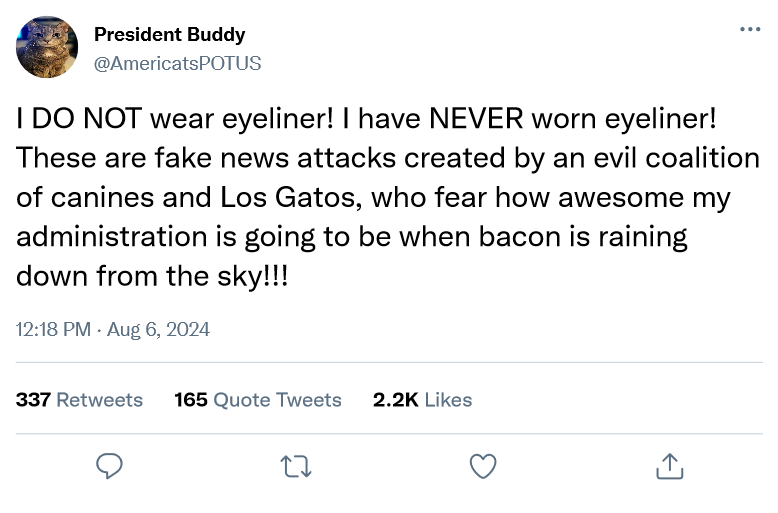
Despite repeated denials, Buddy the Cat has been dogged by allegations that he wears eyeliner as he campaigns to once again enter the White House as president of the Americats.
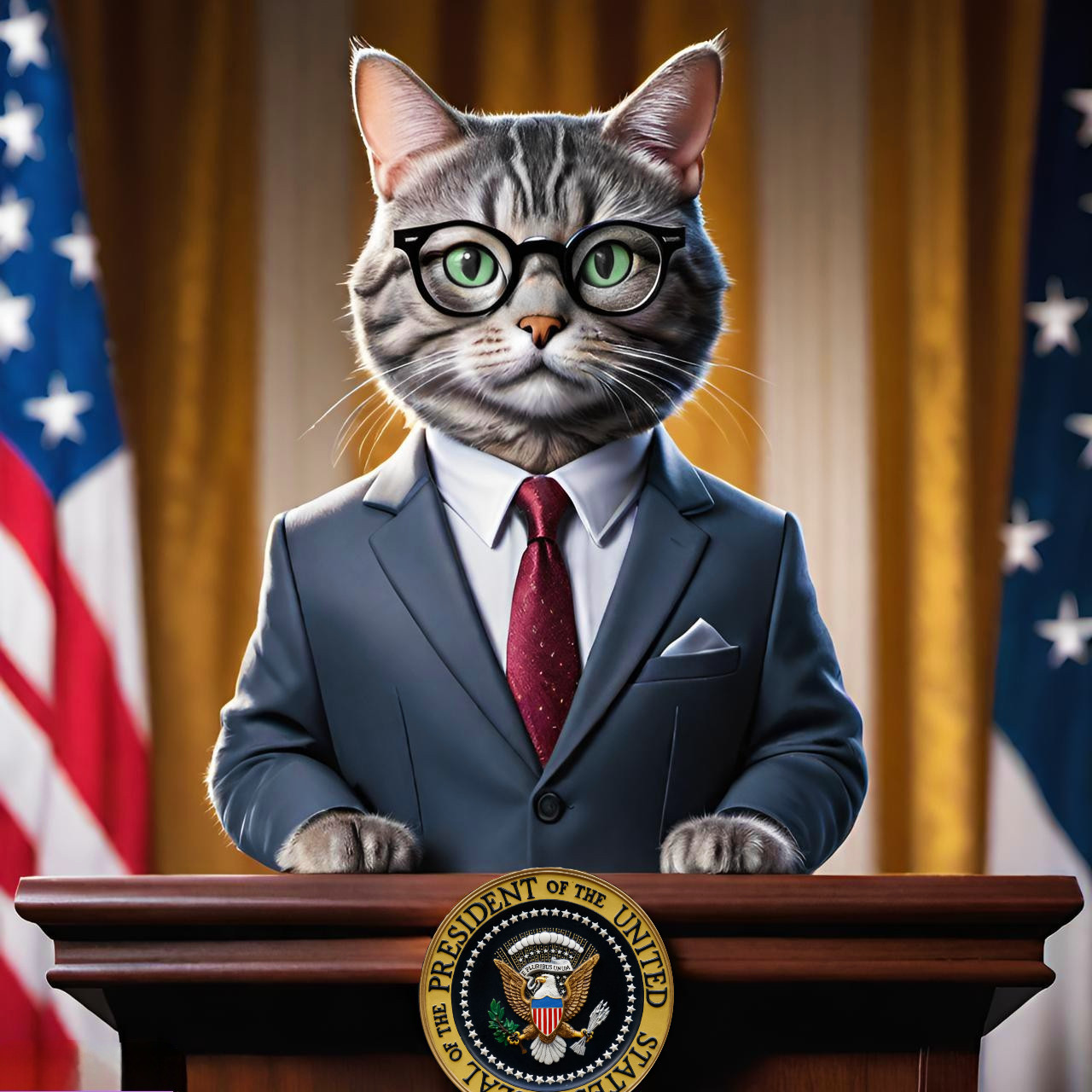
NEW YORK — As he crosses the country in his bid to win a second term as president of the Americats, Buddy the Cat has outlined his policy vision, including banning dogs from parks and making bacon one of the major food groups.
But to his frustration, there’s one topic he can’t seem to shake.
“Mr. President,” one reporter asked during a campaign stop in Skokie, Ill., “why do you wear eyeliner?”
Buddy hammered a paw onto the podium before taking a breath and composing himself.
“I don’t wear eyeliner, okay? Next question.”
Buddy the Cat has been accused of wearing eyeliner to accentuate his bright green eyes.
A Washington bureau chief from CNN (Cat News Network) was called on by the Buddy campaign’s spokescat.
“Mr. President, what would you say to those voters who are convinced you wear eyeliner, and how does your use of eyeliner align with the American Heartland values you claim to champion?”
Buddy’s paws held the podium in a death grip.
“I. Do not. Wear. Eyeliner!” he said, emphasizing each syllable. “My coat pattern has natural dark lines around my eyes. I don’t wear makeup, okay? Can we let this go already?”
Someone coughed in the back of the room, and the CNN staffer took the microphone back.
“So guyliner then,” she said declaratively.
“Not guyliner either! Does anyone have a question about my campaign or the great ideas we have for the country?”
Americat Purrsident Buddy announces sanctions on canines during a press conference on Oct. 30, 2019.
A journalist from Spyglass Magazine in New York spoke up.
“Yes, Mr. President, you said you’d make it a priority on day one to ban all canines from public parks.”
“Yes, that’s right,” Buddy said, nodding. “They’ve had the parks for decades. It’s our turn.”
The reporter looked down at her notes, then back up at Buddy.
“Do you think a politician who wears eyeliner is the right cat to confront the canine species on this topic?” she asked as steam began jetting out of Buddy’s ears. “Shouldn’t the message come from a feline who doesn’t wear cosmetics?”
The room fell silent until a journalist in the back called out: “Perhaps you can share your makeup tips with the country?”
The camera feed cut off just as former President Buddy leapt off the podium toward the press corps. For a few seconds yowling could be heard over the feed before it cut out entirely, replaced by a static message saying the network was experiencing technical difficulties.
While a press release from the Buddy campaign claimed the candidate was “merely hugging his favorite member of the media,” the hashtag #BuddyWearsEyeliner went viral on Meower, with more than 32,000 meows about the former president’s alleged use of the cosmetic.
Buddy is many things, but he’s NOT quiet. His incessant chattiness can kill my sleep and my peace and quiet, but in the world of A Quiet Place, it would kill me! Would your cat get you killed in the movie franchise’s monster-stalked reality?
As a cat lover, big time science fiction fan and appreciator of the first two A Quiet Place installments, the very first thing I thought when I saw the trailer for A Quiet Place: Day One was “I hope the cat doesn’t meow!”
My second thought? Bud and I would be so, so dead.
Dead immediately. Dead a thousand times over.
Apparently I’m not the only one, because fans have taken to social media to participate in the “Quiet Place Challenge,” which involves reenacting some of the scenes from the movie with their own cats to see if their furry overlords can stay silent.
As PITB readers know, Buddy never shuts up. He’s got something to say about everything, he often narrates his activities in real time, and he’s got an entire meowing ritual that starts at least a half hour before Food O’Clock, gaining in volume and annoyingness until a fresh bowl of turkey is placed before him. His personal patois, the Buddinese dialect, makes heavy use of trills, chirps, grunts, chuffs and sniffs to elaborate on his meows.
If you’re unfamiliar with the Quiet Place movies, they imagine a world that’s been invaded by so-called Death Angels, dread creatures of extrasolar provenance who are completely blind, but have extraordinarily sensitive hearing. The first movie, about a family surviving on their farm in upstate New York months after the initial invasion, was universally lauded for its taut script, effective tension and novel use of a quiet/loud dynamic that is a marked departure from the usual horror-thriller formula.
John Krasinksi directs and stars in the original A Quiet Place as Lee Abbott, a father who survives the invasion along with his wife (real life spouse Emily Blunt) and their two children. Credit: Paramount Pictures
In A Quiet Place (2018), its 2020 sequel and the recently-released prequel, Day One, entire minutes pass soundlessly. As a viewer you can’t help but wince and tense up when a character errs and makes noise, knowing the consequences can be immediately tragic.
There’s simply no way Bud and I would survive more than five minutes, and if I had to put money on it, I’d wager we’d probably be dead within 60 seconds of the terrifying monsters showing up.
Indeed, the movie doesn’t dither: the Death Angels make planetfall at around the 12 minute mark. Mild spoilers from the beginning of the film follow:
12:31 – On Chinatown’s ruined Pell Street, within a haze of dust so thick you can’t see more than a few feet in any direction, a man shouts loudly into his smartphone, telling the person on the other end that something meteor-like had landed just a few hundred feet away. He’s pulled suddenly and violently into the smog, his scream ending as abruptly as it began. Verdict: Death by Buddy. He’d probably meow in protest at the dust and get us both killed immediately.
12:53 – A female National Guard soldier sees Nyong’o’s Sam and shouts at her to take cover. The guardswoman’s radio crackles with the panicked screams of her comrades saying the enemy is everywhere, and then she’s dispatched as quickly as the guy on the phone. Verdict: Death by Buddy. He’d almost certainly huff derisively at the soldier’s order to take cover, and we’d both be crushed underneath the foot of one of the lumbering beasts.
13:34 – Sam huddles behind a vehicle with another woman when a panicked man screams, drawing the aliens like moths to a flame. Verdict: Death by Buddy. Little dude’s default reaction when he’s scared is to run screaming and hide behind my legs. He’d draw the monsters right to us and we’d die.
13:50 – Sam wakes up inside a theater several minutes after an explosion knocked her out. She’s about to speak when Djimon Hounsou’s Henri clamps a hand over her mouth and raises a finger to his lips. Unfortunately that doesn’t work with a cat. Verdict: Death by Buddy. Attempts to get him to shut up would be fruitless, and while I’d know my only chance for survival would be to throw him like a football so the aliens track his indignant screech, I wouldn’t have the heart to do it. We’d die together.
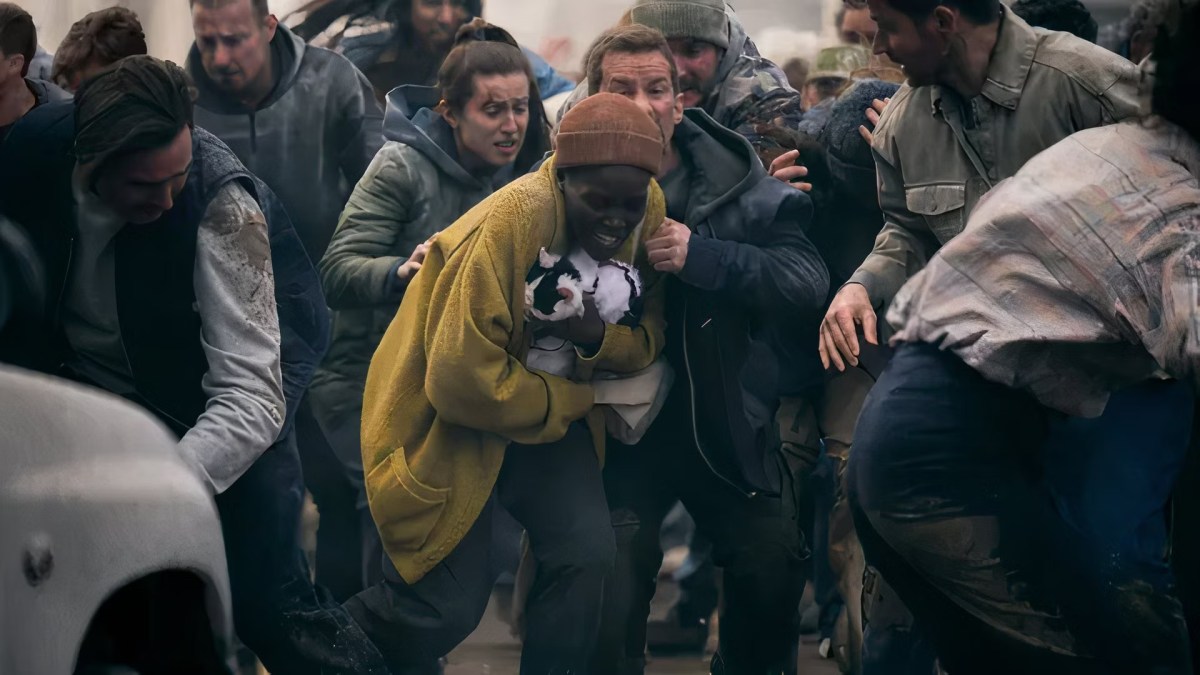
Frodo, the feline co-star of Day One and “service cat” to Lupita Nyong’o’s Sam, is precisely the opposite. He’s a Good Boy extraordinaire, consistently calm in his mother’s arms and reliably silent when he needs to be.
Frodo is a handsome and resourceful little guy, and much of Day One’s tension comes from putting him in danger. Credit: Paramount Pictures
Without meows to rely on, director Michael Sarnoski gets quite a performance out of Nico and Schnitzel, the two cats who play Frodo. They’re expressive felines who could teach Nicolas Cage a thing or two about how to emote with subtlety, as in one scene when Frodo sees a man emerge gasping from a flooded subway station. Frodo regards the stranger with curiosity, his little face registering surprise at the man’s sudden appearance with just the slightest twitch of his mouth and whiskers.
It’s effective and very cute, but we never forget about the incredible danger that faces Frodo and Sam as they return the One Ring to Mount Doom navigate the ruins of New York City amid blind predators with extraordinarily sensitive hearing.
“LOL I got you killed, dude! Hey! Wake up! I’m hungry! Turkey time! I’ll take my evening meal on the balcony and dine al fresco this evening, okay? Big Bud? Dude?”
If Day One’s world was reality — and I’m extremely thankful it’s not — I suppose it’s possible I’d get lucky if we were in a deep subterranean level of a building for some odd reason, and if Bud decided it’s not worth disturbing his nap to investigate the ruckus above.
But the moment his belly rumbles and he starts screeching for yums, or the second he gets it into his little head that he just has to tell me his latest theory regarding entangled subatomic particles, it would all be over, for me at least. I could totally see Bud making noise, then dashing to his customary hiding place behind my legs while a “Death Angel” impales me with one of its giant claws.
What about the rest of you? Is your cat a Frodo, a Bud or another sort entirely? Would you be dead as quickly as we would be, or do you think you could survive with your furry pal?
I love my cat, except when he’s standing on my head and screeching into my ear at 80 decibels to make sure sleep is not an option.
Regular readers of this blog know I dote on my cat.
I don’t call him “Your Grace” without reason. He always eats first. He regularly uses me as his pillow. He knows how to manipulate me, he always gets what he wants, and I’ve been told many times how he’s got me “wrapped around his paw.”
He rules the roost, and has done so since the night he arrived as a baby and came striding out of his carrier like a furry little Ghenghis Khan, conquering everything in sight.
No one can doubt that I love the little guy.
But if you were a fly on the wall when I wake up, well, you might think differently. Bud is, to put it bluntly, absolutely relentless when he wants something, which puts us at odds when it comes to that most crucial commodity, sleep.
Some of the most vile things that have ever come out of my mouth have been prompted by the little guy’s snooze-disturbing antics. I’ve called him ALF (Annoying Little F—-er), I’ve threatened to sell him to the local Chinese restaurant, I’ve thrown pillows at him, and when my sleep-deprived brain can’t come up with something more creative, I half-mumble “Shut up, you furry little turdball!”
Buddy the Cat: Never at a loss for meows.
Those are the more tame ones! The worst thing, the bit that makes me feel bad, is that Bud just wants me to wake up so we can hang out and be buddies.
He doesn’t want food. He’s got a bowl of dry food set out for him before bed every night precisely so he doesn’t have to wake me up. Nope. He wants to knead my shoulder, purr up a storm and have me scratch his chin while I tell him what a good boy he is. And instead of that, I’m turtling up beneath the blanket, pillow over my head, telling him he’ll be served as General Tsao’s Buddy if he doesn’t shut his trap.
All this time I’ve told myself that it’s okay because he doesn’t understand what I’m saying, and he knows I wouldn’t harm a hair on his head.
But what if he does understand some of it?
That’s the subject of a new column by Karin Spicer. Writing in the Dayton Daily News, Spicer describes her morning ritual with her cat, Pip, and how she’s encouraged her naturally vocal cat to vocalize even more by talking to him.
“No sleep for you, human! There are foreheads to rub, chins to scratch and ‘good boys’ to be said!”
Like Pip, Bud is a naturally talkative cat, and like Pip, his motor mouth tendencies have been cultivated by plenty of attention, affection and interaction.
“Cats want to bond with their owners,” says Catster’s Michelle Gunter, who is quoted in Spicer’s column about Pip. “If you take the time to communicate with them in soft, calming tones, that bond will strengthen faster. Your tone and the affection you offer during these periods can help show your cat that you love them and want to spend time with them.”
You mean to tell me all this time I’ve been undoing some of that bonding by hurling vile invective at my Buddy when he tries to annoy me out of sleep?
You mean to tell me he can infer by my tone of voice that I’m threatening to sell him to Somali pirates for $15 and a pack of gum?!?
Sheeeeit!
Disclaimer:No Buddies were harmed in the creation of this content, except perhaps for some bruised egos.
PLUS: Today’s the deadline for UK residents to get their cats microchipped under a new law that levies a hefty fine for people who don’t comply.
Another day, another story about a person who can’t tell if the cat they’ve brought inside is their own or a random lookalike.
In this case, a woman named Amber Porter says her indoor-only cat bolted outside, and after a few hours she was able to bring him back in — only to have doubts about whether he’s actually her cat. Meanwhile, an identical-looking black cat is hovering around Porter’s home, and she’s trying to lure it inside.
“I’m still a little worried about it,” Porter said. “I have fully convinced myself I have the wrong cat but I also think I do have the right one.”
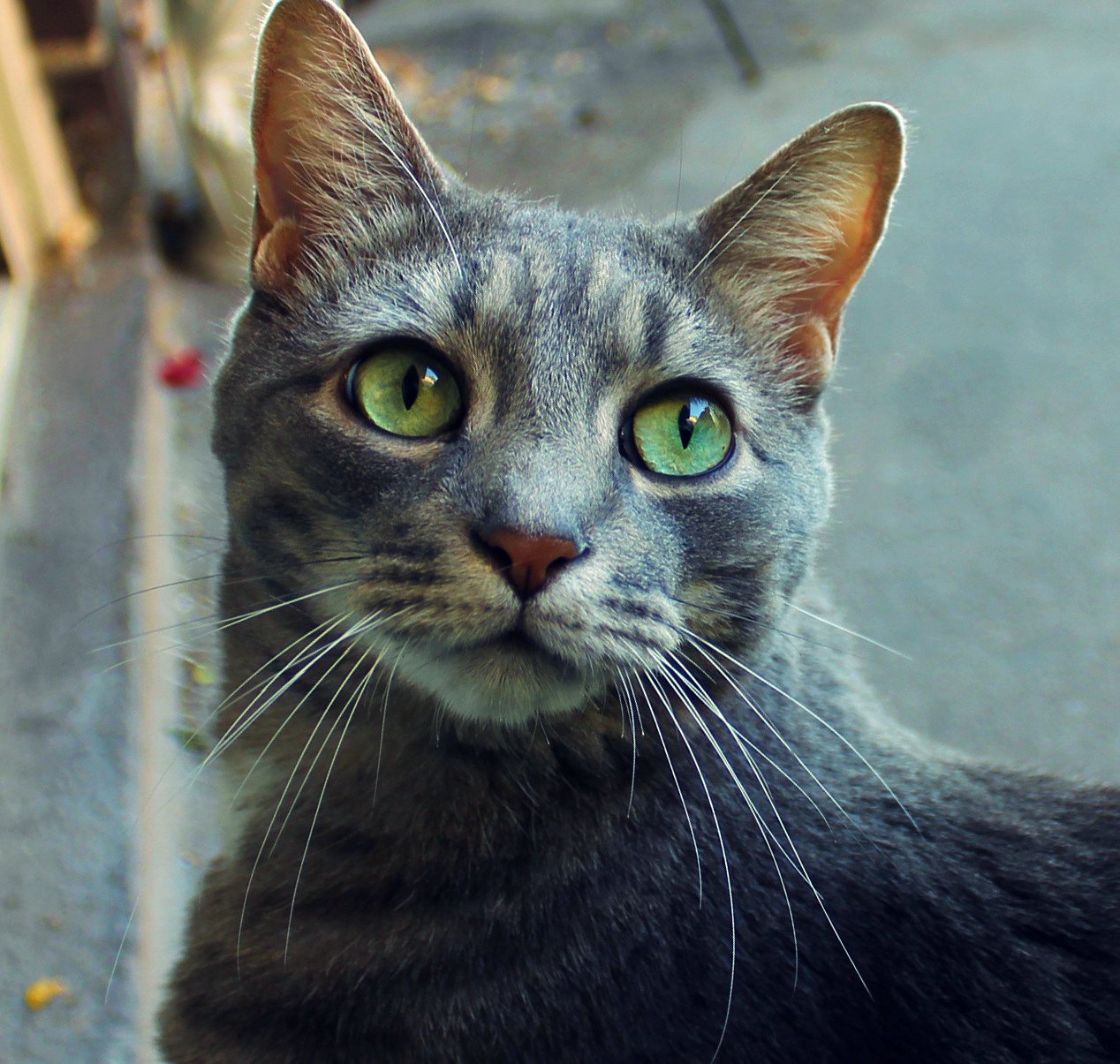
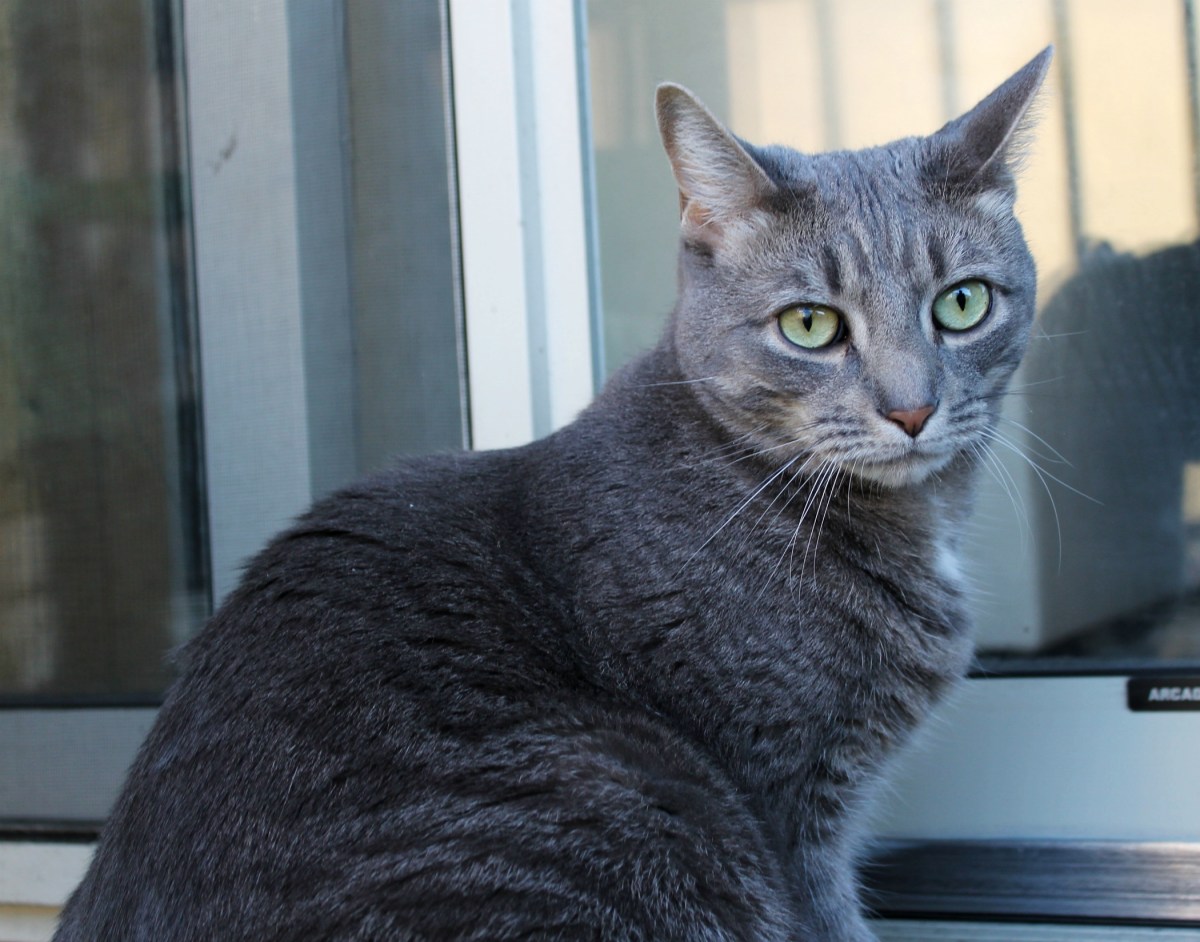
This absolutely blows my mind. If someone asked me how long it would take to determine if a gray tabby is Buddy, I’d say approximately half a second. It’s not because of his “bib,” that unique white tuft of hair on his chest, or his pronounced muzzle, although both would offer confirmation.
It’s his behavior, his mannerisms and movement, the fact that if we were separated, he’d meow loudly the second we’re reunited and I’d hear that familiar half-trill, half-meow he does that seems to be Buddesian for “Hello, servant!”
In any case, I hope Amber Porter figures out which cat is hers, and the story looks like it’ll have a happy ending because she says she intends to keep both cats.
Today’s the deadline to get your cats microchipped in the UK
A reminder to our British readers: today, June 10, is the deadline to have your cat microchipped under a new law that makes chips mandatory.
If you’re caught with an unchipped cat, the fine is a hefty £500, or about $635 in ‘Merican greenbacks. That’s some serious chop, so get your little buddy chipped!
“Chip me, human!” Credit: FOX/Pexels
Alice Potter, a cat welfare specialist with the RSPCA, told Sky News that microchips with up-to-date information are the biggest factor in reuniting cats with their humans when the former go missing.
“On average, 11% of all cats coming into the RSPCA’s care are still not microchipped. We’ve also rescued cats who have been microchipped but the details haven’t been kept up to date, which is arguably even more frustrating as it means cats spend a long time in our care whilst we fruitlessly try to contact the owner with out-of-date information,” Potter said.
“However, we’ve also seen countless stories of cats that have been reunited with their owners thanks to a tiny microchip – showing what this change of legislation will achieve for animal welfare.”







 Pain In The Bud