A London woman’s cat, Flossie, just celebrated her 29th birthday, making her the oldest cat in the world. And in Utah, a zoo just debuted an adorable little predator.
Happy Sunday, everyone, and if you’re on the east coast of the US like we are, we hope you’re safe and warm during this year’s first snow.
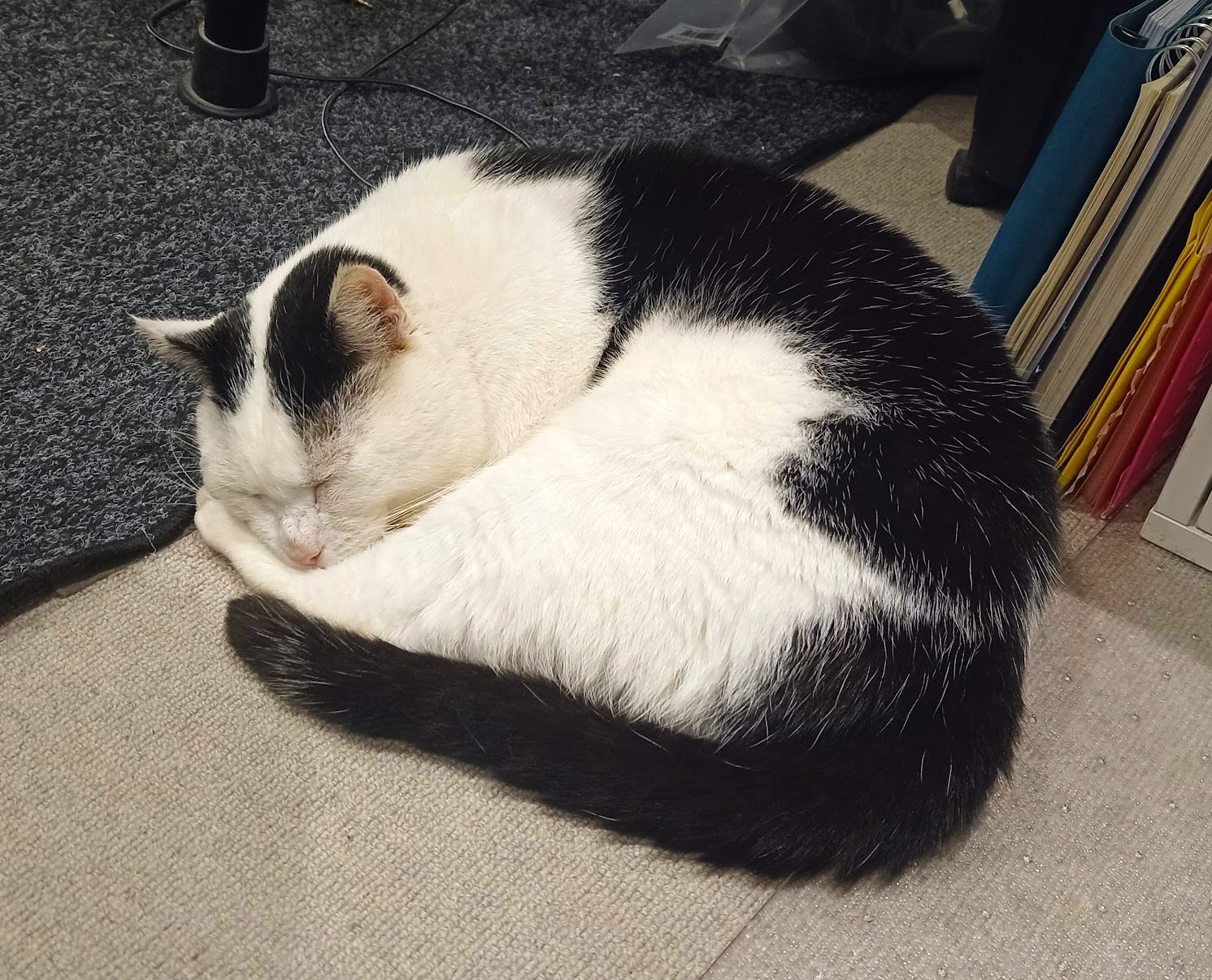
We’ll start off with a bit of significant news first reported in the The Buddesian Times: the famous artist and sculptor Meowchelangelo has unveiled a glorious marble statue of our favorite feline hero, “striding like a colossus toward evil-doers in the distance, his rippling muscles rendered in magnificent Calacatta Borghini,” which is marble from the same quarry in Carrara, Italy, that supplied the raw material for another masterpiece, the Renaissance sculpture commonly known as “David.”
The statue, which honors Buddy’s recent valorous defense of a helpless dog during a vicious attack by a pack of 72 coyotes, will likely be installed in Manhattan, although Washington’s city council is lobbying hard for it, promising the famous statue of Abraham Lincoln in his eponymous monument would be removed for the Buddesian likeness.
Today’s edition of the Buddesian Times with a front-page story on the statue.
The World’s Oldest Cat still moves like a kitten
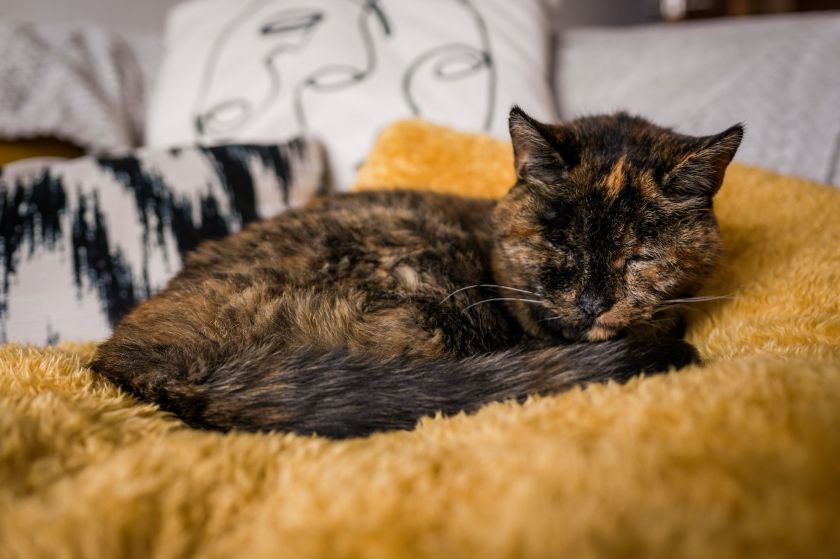
The Guardian has an interesting column from Vicki Green, cat mom to Flossie, who at 28 years old is the Guinness World Records certified oldest domestic cat in the world.
Flossie, who was born in December of 1995, is as old as Green, who attributes the tortoiseshell’s longevity to “luck, and because she was loved by her previous owners.” Flossie was initially an outdoor kitten who lived in a managed colony until she was adopted by her first human, who died when Flossie was 14 years old.
The woman’s sister took Flossie in next but died after 10 years. Her son became the long-lived feline’s third servant, but after three years he brought her to Cat’s Protection in London, saying he could no longer provide the level of care Flossie deserved and needed.
Shortly after, Green was looking to adopt a cat and saw Flossie’s listing online.
“At the time, I thought it was an error and that she must be 17,” she wrote. “Cats Protection told me she was still available to adopt and that no, she was in fact 27, the same age as me.”
Green thought Flossie would likely only live a few more months, but “she’d at least spend them in a nice, warm flat, be fed well and get treats as well as a comfy bed.”
“To my surprise,” Green wrote, “I’ve had her for over a year now and she’s still going strong.”
Flossie takes lots of naps but is surprisingly active and playful for her age. Credit: Vicki Green
Despite her advanced age, Flossie is active, seeks attention and still plays with her favorite toys. Green got miniature stairs for the senior kitty to easily reach the couch, but Flossie doesn’t use them, preferring to jump up instead.
“The biggest difficulty is dealing with the fact that there may soon come a time when she passes. I’m in denial about that. I look at her and just think she doesn’t look old at all,” Green wrote. “Yet who knows? She could well be on the way to becoming the oldest cat in history. Though even if she doesn’t break the current record of 38 years and three days, at least I’ll know she had a great retirement home.”
Gaia the three-pound terror debuts in Salt Lake City
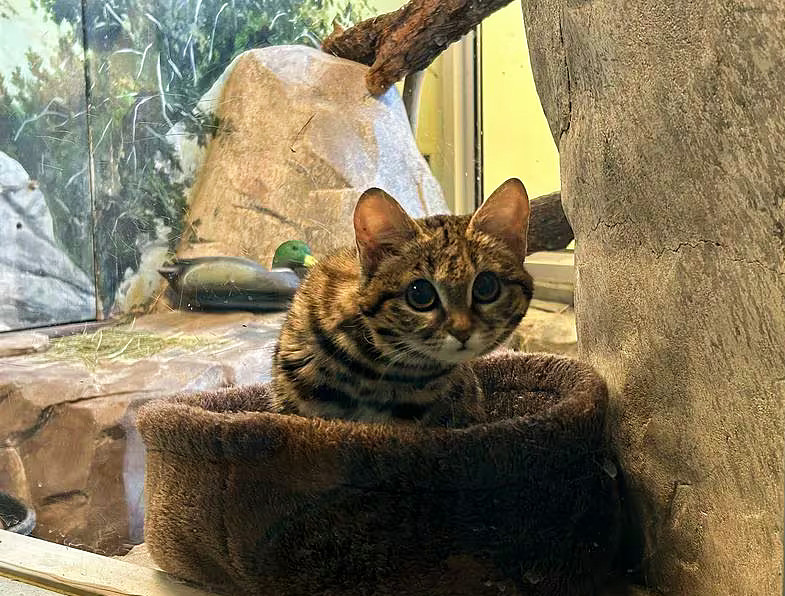
Black-footed cats are known primarily for three things: they’re outrageously cute, they’re diminutive and they’re remarkably deadly.
Of course with a maximum weight of three pounds, only tiny prey have to worry about the fury of these furry little guys. The rest of us get to point and go “Aww!”
Gaia’s personality is “large and feisty” according to zookeepers. Credit: Hogle Zoo
Native to the savannas of southern Africa, black-footed cats are excellent hunters, but like all felines they’re also prey, and they’re the subject of a worldwide zoological breeding and conservation program due to declining numbers in the wild.
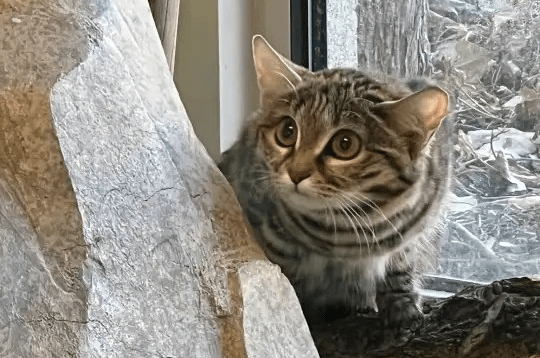
The newest success story for those breeding efforts is Gaia, an eight-month-old black-footed kitten who just made her debut at Hogle Zoo in Utah.
Zookeepers describe baby Gaia’s personality as “large and feisty,” and they expect she’ll be popular with zoo visitors.
She’s now the second of her species at Hogle, joining Ryder, a male. They haven’t been introduced yet. A carefully supervised introduction is “in the cards, but we’ll let these two feline friends get acquainted when Gaia reaches maturity,” the zoo said.
Police say foxes are responsible for killing cats in London, but animal welfare activists insist there is indisputable evidence of human cruelty.
It’s difficult to know what to make of the Croydon cat killer story.
Initially, people from London-area cat rescues said they were looking for a person who had mutilated dozens of cats in the South London area. As the number increased to more than 100 and public outrage became palpable, police opened an investigation.
The story was wild. Newspapers bandied about disturbing figures, claiming hundreds of cats mutilated at the hands of a sick individual or several people. There were reports of feline remains artfully arranged in the driveways and on the front steps of victims’ homes to inflict maximum trauma on the people who discovered them, with allegedly clean cuts indicating a human with a blade was responsible.
Then in 2021, the Metropolitan Police announced they were closing their case after three years and almost $200,000 spent.
Foxes, not cruel humans, were responsible for the cat killings, they said. A study in the journal Veterinary Pathology found fox DNA on the corpses of 32 cats and said puncture wounds on the feline bodies were consistent with fox bites.
London-area animal rescues disputed the findings, saying the study couldn’t account for the mutilation of so many animals. The study’s authors blamed “badly behaved foxes” who were scavenging on the remains of strays and pets killed in traffic or by ingesting antifreeze.
Credit: Fajer u015eehirli/Pexels
Lots of other people refused to accept the Metropolitan Police conclusion, including people whose cats had been victimized. In some of those cases, veterinarians concluded the cats were killed by humans, not animals.
Which brings us to now.
The Mirror has teamed up with the South London Animal Rights Network (SLAIN) to create an interactive map showing the locations where more than 1,000 dead cats were found over the past several years.
“This map shows where incidents have occurred but also and perhaps just as important, where incidents have never happened,” SLAIN’s Boudicca Rising told the paper. “If you know of someone who made journeys to these locations on these dates please do get in touch with us. All information will be treated in the strictest of confidence.”
Documents obtained by journalists in London indicate there was internal tension at the Metropolitan Police over the resources that had been allocated to the cat case, and spokesperson for the force admitted that was a consideration. But the department stands by its assessment and says there’s no evidence a serial cat killer is on the loose.
It’s difficult to believe someone or a group of people could evade capture while allegedly killing more than 1,000 cats since 2015, especially in a city like London where CCTV cameras blanket most neighborhoods.
There are an estimated one million CCTV cameras covering 607 square miles of London, and the commonly-cited statistic claims Londoners are caught on CCTV cameras an average of 300 times per day. Other estimates claim that number is too high, and the average UK citizen is spotted on a municipal surveillance camera 70 times a day.
Notably, those figures do not include private cameras like Ring systems and surveillance operated by private businesses. The point is, it’s very difficult to avoid cameras in London, and if there are human feline killers out there, they must know an awful lot about where the cameras are.
If the phantom cat-killers are real, not only have they been able to avoid appearing on surveillance, they’ve evaded the watchful eyes of neighbors as the story circulated widely in the press. The theory that the killings were the work of animals, mostly under the cover of night and beneath the notice of people, sounded more plausible to many people.
Still, the theory doesn’t neatly fit the evidence.
Not all veterinarians agree that foxes are the culprit. While the veterinary pathologists who authored the study looked at photographs of the mutilated felines, some veterinarians who directly examined the bodies of slain cats concluded they were killed with blades. When experts are at odds over evidence, what can you do but gather more information and hope for the best?
London may have to do what Washington, D.C. did and deploy low-to-the-ground trail cameras and regular surveillance cameras around the city. In Washington, the goal was to get an accurate census on the number of strays and ferals living within city limits. In London, a census could be a bonus as they finally get an answer to the question of who’s been killing all those cats.
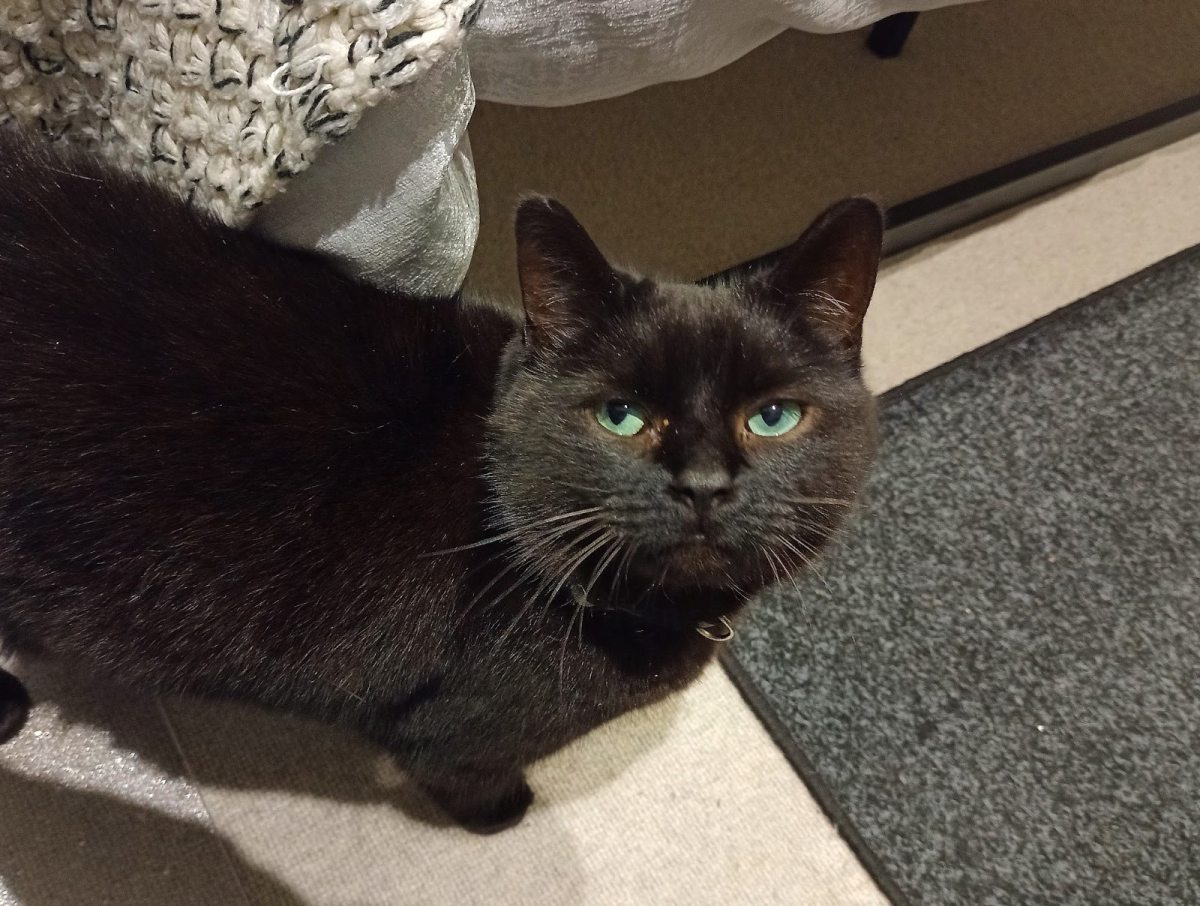
With her mesmerizing green eyes, supreme confidence and strong opinions, Bella has pawed her way into her humans’ hearts.
About a year after John Graham and his wife, Kathleen Birch, adopted Bella the Cat, they noticed she had an acquaintance — a genial neighborhood stray with a white-cream coat and black fur running from his back to his tail like a cloak.
Although she’s territorial like any member of her species and spends much of her time patrolling Grove Park — a quiet London neighborhood tucked into a winding loop of the Thames — Bella expressed no animosity toward the apparent intruder, and in fact seemed to be on quite friendly terms with him.
Graham and Birch, who like to joke that Bella is a clandestine agent of MI5 — Britain’s version of the FBI — dubbed the stray Bertie, and decided he was her field liaison.
“We think Bertie is her Mi5 contact and visits to get updates [before] returning to HQ to report on her field actions and mission status,” Graham quips.
After checking with the neighbors and bringing Bertie to the veterinarian, who said the stray was not chipped, Graham and Birch believe Bertie was likely abandoned by his previous family and eked out a living zig-zagging between homes in Grove Park, depending on the goodwill of neighbors and his own considerable charm for food. So they had Bertie chipped with their contact details about eight months ago, and now field agent and handler have been united under one safe house roof as they continue in His Majesty’s service.
Bertie and Bella even have their own WhatsApp group comprised of their humans and neighbors, who post to let each other know of the feline duo’s comings and goings.
Both cats are a source of great joy for Graham and Birch, who were looking to adopt again two years ago after the passing of their beloved Bets, who had been with them since kittenhood and lived to the ripe old age of 21.
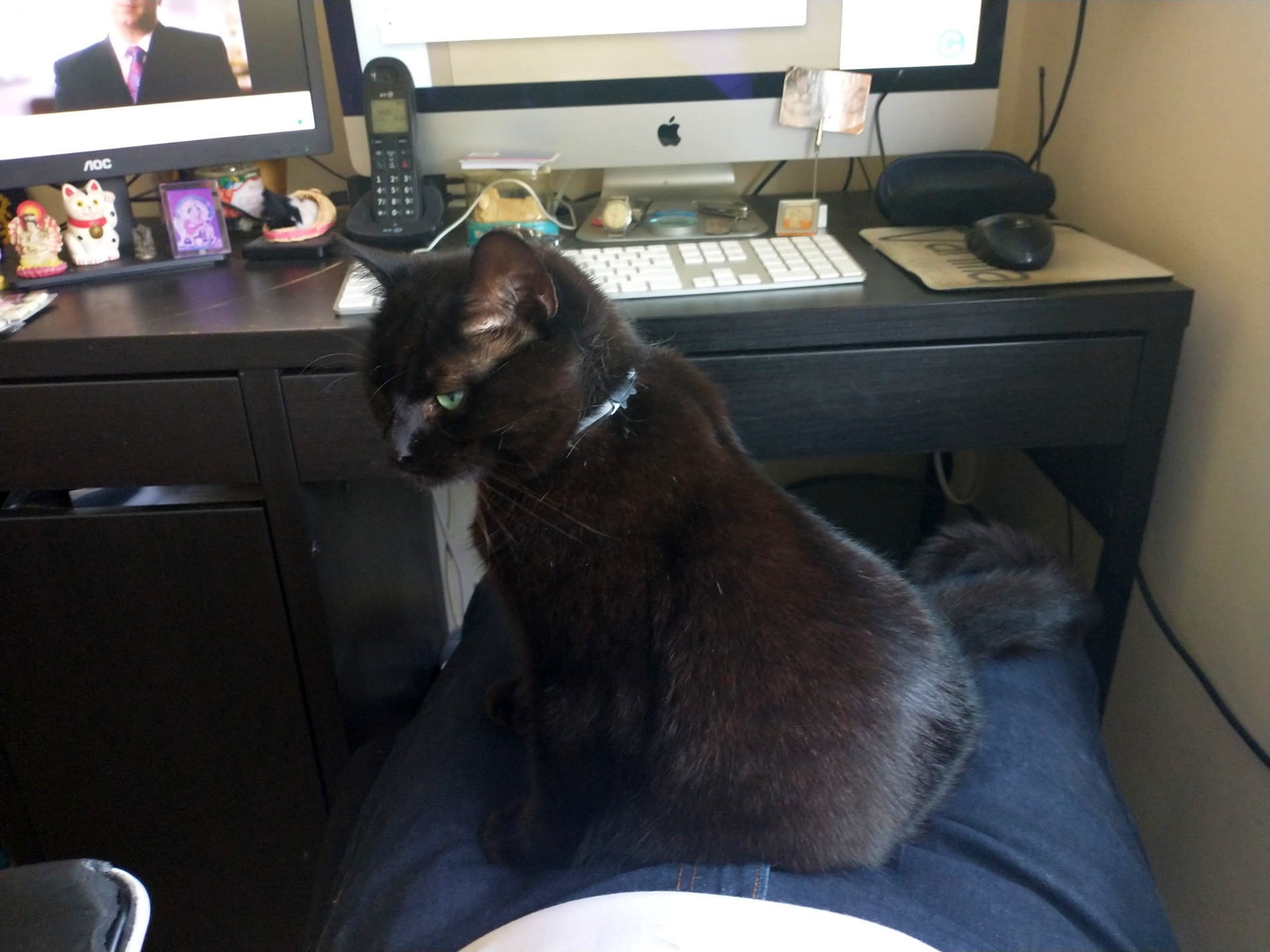
Bella deciding she needs to be a lap cat for a little while in order to supervise John’s work. Credit: John Graham
After contacting a charity they support in Twickenham, the couple went out to meet a cat named Puss Puss at a foster’s home about three miles away.
“We walked in and sat down, and within literally a few seconds, she came out from under a table. My wife immediately fell in love with her as Puss Puss – now called Bella — rolled over and showed her belly with the loudest purrs ever,” Graham recalled. “She walked over to me and looked up with the most beautiful green eyes, allowing pets and scritches instantly. I was totally smitten. Her secret service training on overcoming any resistance was obvious here.”
Not much is known about Bella’s past, which Graham jokes is classified, but the fosters said Bella likely came from a hoarding situation. She bears some emotional scars from those times, making it clear she didn’t like to be picked up and wouldn’t tolerate head rubs. Graham said he thinks Bella may have been struck on the head by the abusive person or people who had custody of her originally, but with patience “she has grown to trust us and love us the way we love her.”
True to her training, Bella came striding out of her carrier that first day without need for coaxing and set about surveying her new headquarters, exploring while noting promising hideouts and lounging spots.
“She immediately checked out the perimeter as do all good Mi5 agents, looked around and began a sniffing and snooping journey for about an hour,” Graham said, “Then sitting in front of us on a low stool, she started shouting loudly, her default way of demanding food. This prompted me into action, offering her different dishes attempting to find her favourite. It turns out that she basically will eat anything.”
Indeed, Bella’s love of food is one of the few things that cause a bit of tension between her and her doting humans. She’s restricted to carefully measured wet food plus veterinarian-suggested “weight management crunchies” and, like many cats, is not shy about notifying her servants when the yums are low or the auto-feeder isn’t dispensing them. (In those instances, Bella hops up onto the bed and approaches the sleeping Graham: “I will get the gentle paw followed by the sharp claw to ensure I get the message to come and feed her immediately.”)
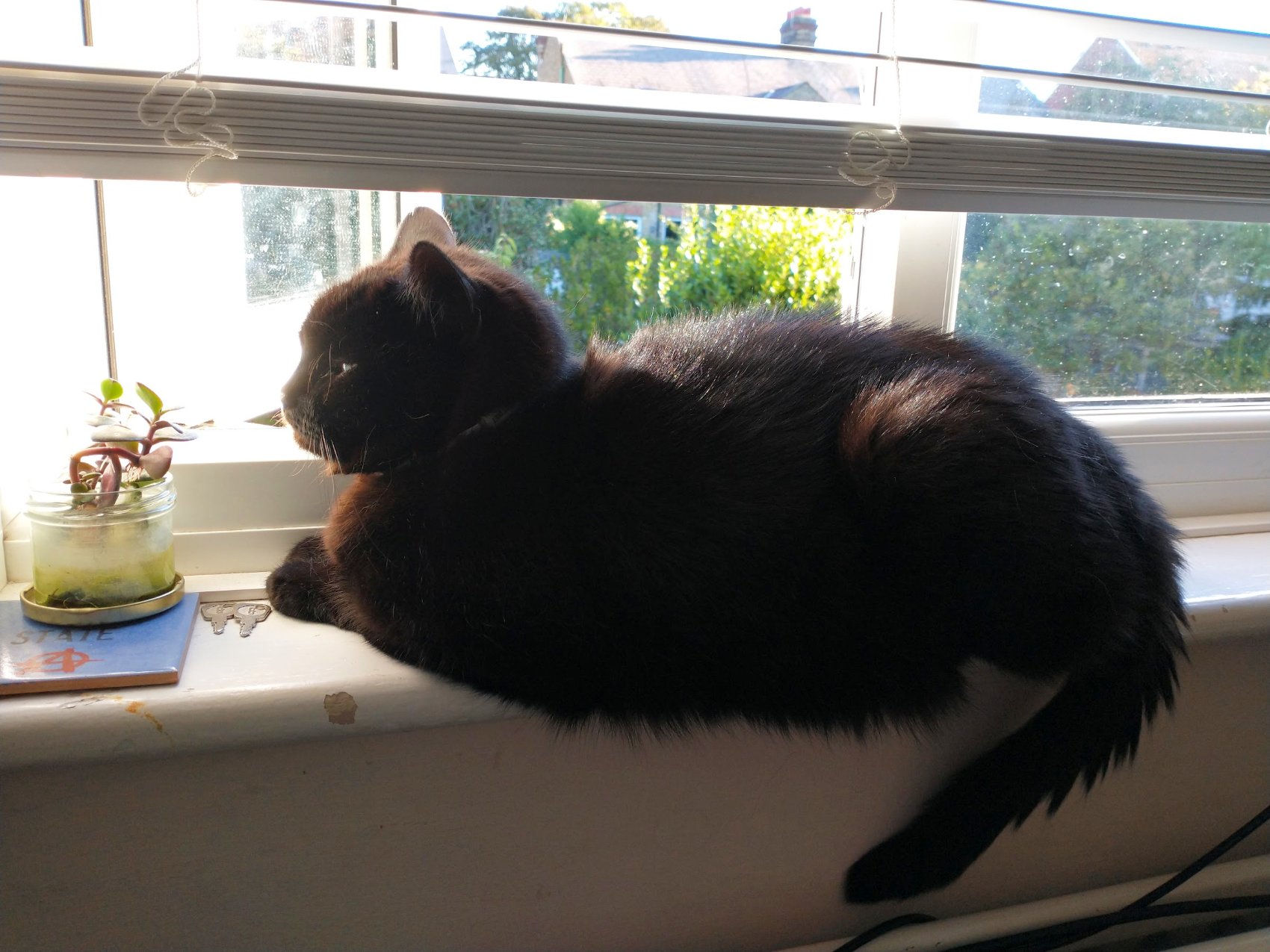
Bella on overwatch duty, making sure Grove Park remains quiet and free of interlopers. Credit: John Graham
Adopting a cat is always a guessing game. Will the cat relax and open up once she realizes she’s safe and has a home? Was he reserved when we met him because he’s been living in a shelter with unfamiliar sights and smells? Will she take to her new home immediately, or will she dive under a couch and remain there for weeks, emerging only to grab a bite from her bowl when no one’s around?
Those questions were immediately settled for Graham and Birch, and Bella’s outgoing personality is one of the things they love most about her, along with her supreme confidence.
“She has it in absolute truckloads,” Graham notes, “and there is pretty much no fear on her part about adventuring anywhere in or out of the house.”
While keeping cats indoors is the norm in the US, as many as nine in 10 caretakers in the UK allow their felines to spend time outdoors unsupervised, encouraging them to establish their territories, explore their gardens (backyards to us Americans) and familiarize themselves with their neighborhoods.
Many US shelters and rescues won’t allow potential adopters to take a cat home if they indicate they’re willing to let the kitty outside, and some even require adopters to sign contracts stating they’ll keep their four-legged friends indoors. UK cat rescues often take the opposite stance. They advise pet parents on how to gradually introduce their cats to the outdoors, offer tips on how to manage their outside time and recommend various pet flap configurations.
The difference is partly cultural and partly practical. While extolling the benefits of allowing cats to roam, UK cat lovers point out that domestic felines rarely stray far from their homes, on average venturing only between 40 and 200 meters (about 130 to 650 feet). They’re curious, which drives them to explore, but also territorial, which keeps them on a figurative leash.
There’s also a marked difference in wild threats to domestic cats. In the US, cats are vulnerable to pumas (also known as mountain lions and cougars), coyotes and a wide variety of birds of prey, from eagles, harriers and hawks to condors, osprey and even some larger species of owl. The UK does not have pumas, despite local legends to the contrary, nor does it have coyotes. Foxes, the smaller cousins of coyotes, and some birds of prey do pose a threat, but not to the extent that the wildlife of the Americas does.
“Yes, I’ll just settle down here for a nap whilst I wait on your report to HRH.” Bertie joined Bella about eight months ago and now they both live under one roof. Credit: John Graham
For Graham, allowing his cats outside fosters their independent streak and allows them — or Bella, at least — to exercise their hunting impulses. Bertie isn’t known for his predatory prowess, but Bella is a pro at catching mice.
The local neighborhood is quiet, traffic is strictly limited to 20 mph, and the neighbors know each other well, often using their WhatsApp groups to track their kids in addition to cats.
In fact, if Bella could speak, Graham reckons she’d thank him for providing a home in a tranquil locale — and for never closing doors in their home.
What else would she say?
Graham says it’s obvious: “Glad that you understand the difference between my requests and my orders – you took a while.” She’d also likely chide the couple on their ineptitude as hunters, declaring Graham and Birch “are both rubbish at catching mice and rats despite how many times I show you how to do it.”
For Graham, the managing director of a London brand agency, and Birch, a skin care therapist, sharing their home with cats feels natural, and they cherish the unpredictable nature and playfulness of their feline friends. Cognizant of the fact that black cats are less likely to find homes, they prefer adopting melanistic house panthers like Bets, their previous cat, and Bella.
“I totally love all animals but as residents in our house, cats fit perfectly being clean, highly intelligent and able to manipulate any situation with an expression or display of love,” Graham says. “My favourite thing about Bella is when she surprisingly sits on my lap and the mystery when she hides in unlikely places causing me to rush around desperately trying to find her, not coming out even when I am shaking a treat bag.”
Bella will allow the game to drag out “until she decides to appear with her ‘I win’ look and swagger.”
Feline love is often hard-won, but that makes it worth it. In discussing Bella, it’s clear Graham lives for the moments when the independent-minded kitty decides to let him know how much he means to her by sleeping at the food of the bed, playing her hide-and-seek games and climbing into his lap.
Bella and Bertie may not be regular lap cats, but that’s okay with Graham and Birch.
“So there you have it,” Graham said. “Two cats that come and go as they please with occasional signs of affection, but get nothing apart from permanent love and affection from us.”
Bella is serious about her food. Credit: John Graham
Bella’s favorite toy, fittingly, is a mouse. Credit: John Graham
Amazon’s newest streaming hit is heady, fast-moving and a lot of fun. There’s nothing else on TV like it.
Amazon’s newest big-budget prestige drama, The Peripheral, imagines a near future when technology has become even more deeply embedded in every day life.
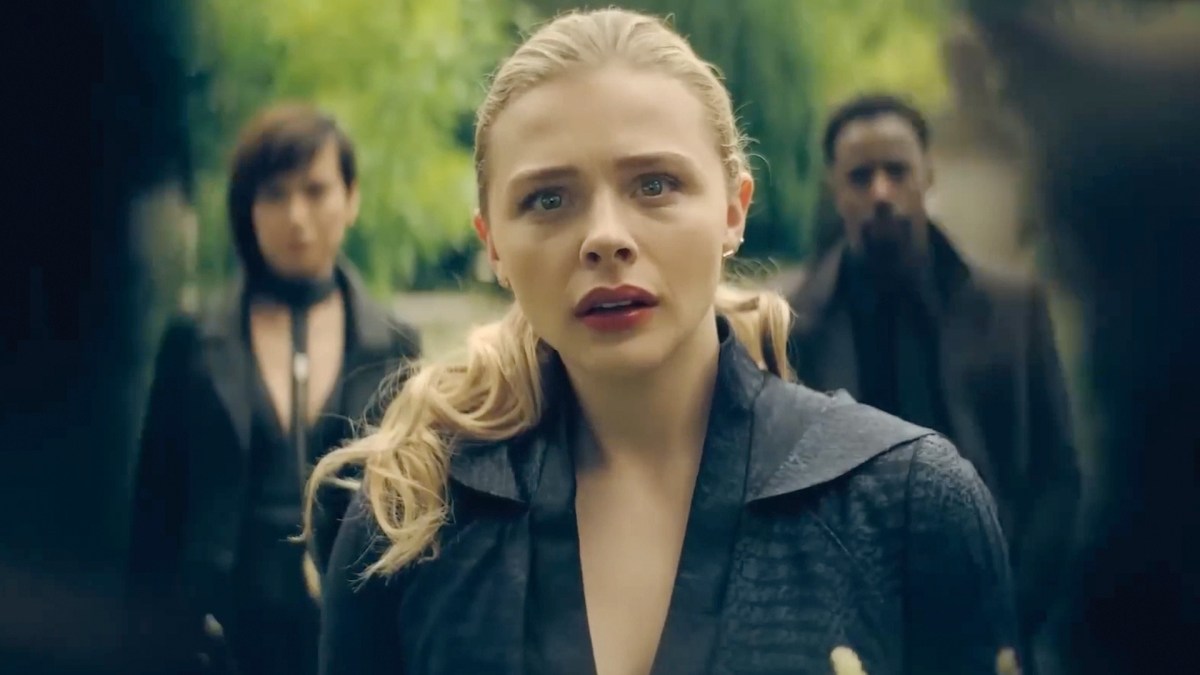
Flynne Fisher (Chloe Grace Moretz) is a young woman who lives in North Carolina’s rural Blue Ridge Mountains, works in a 3D print shop by day and plays virtual reality games by night.
The story is set a decade from now in 2032, and while Flynne’s brother, Burton (Jack Reynor), plays startlingly realistic VR games for fun, Flynne plays them for money. Although Burton is a former United States Marine Corps infantryman and war veteran, his sister is the superior player when it comes to video games, and she’s so good that well-heeled players across the world pay her to carry them through high-difficulty levels.
If that seems fanciful, consider that it already happens in real life: some people fork over big bucks to highly skilled players who can help them win in multiplayer video games like Fortnite, or run them through the most challenging missions in online role playing games to get coveted in-game gear.
Flynne’s side hustle allows her to afford expensive medication for her sickly mother. Apparently in 2032, Democrats and Republicans are still squabbling over how to pass meaningful prescription drug reforms while remaining in the good graces of the corporate behemoths who finance their campaigns. Some things never change.
When a Colombian company called Milagros Coldiron offers Flynne a hefty chunk of change to beta test their newest game — and the incredibly immersive new headset it comes with — Flynne thinks she’s just taking a lucrative but routine job, one that will help pay for her mom’s meds for at least a few weeks.
What she doesn’t know is that her life is going to change drastically the moment she steps into the newest form of virtual reality, revealing things about her world and herself that she never imagined.
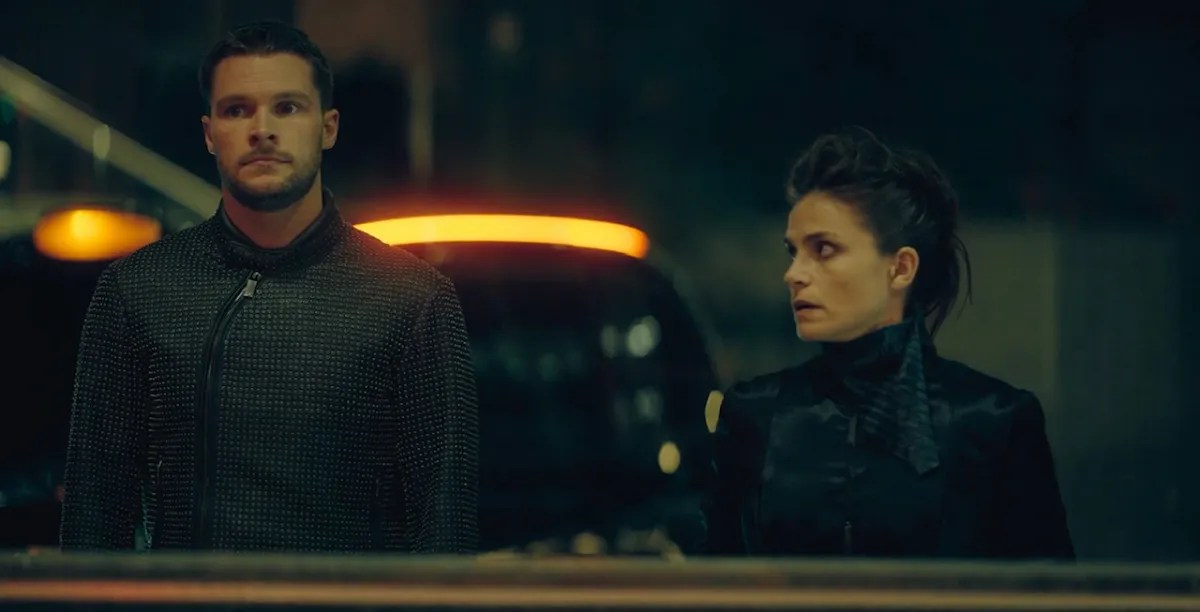
Jack Reynor as Burton Fisher and Charlotte Riley as Aelita West in The Peripheral.
There’s so much more to the story, and in fact we’ve barely scratched the surface, but The Peripheral is the kind of show best appreciated by knowing as little as possible going in.
The ambitious new series is based on a 2014 novel by technoprophet William Gibson of Neuromancer fame. Gibson envisioned the concept of cyberspace in 1981, more than a decade before the first mass market commercial dial-up services were available.
At the time, the idea of exploring almost photorealistic worlds in virtual reality was a radical new idea, and it took more than 35 years for technology to catch up by making it feasible. (We’re still not quite there yet. VR tech has improved by leaps and bounds, and we’re beginning to see the first deeply immersive VR games, but Mark Zuckerberg’s much-hyped version of the metaverse, for example, has fallen flat and been pilloried by press and players alike.)
By choosing to adapt Gibson’s work, Amazon has dipped into the largely untouched world of literary science fiction.
While the science fiction of movies and TV has been treading the same worn ground and returning to the same tired concepts for decades, SF novels are a rich source of astonishingly inventive big ideas, from the existential stories of Liu Cixin (The Three Body Problem) to the galaxy-spanning space opera of the late, great Iain M. Banks, to the gothic horror-tinged, wildly imaginative universe of Revelation Space by Welsh astrophysicist Alastair Reynolds.
Indeed, Netflix is developing a series based on The Three Body Problem, with Game of Thrones showrunners David Benioff and D.B. Weiss taking the helm. Amazon has acquired the rights to Banks’ first Culture novel, and Netflix’s highly-praised anthology series Love, Death + Robots adapted two of Reynolds’ short stories as episodes.
Finally we’ve moved beyond the Alien clones, Star Wars sequels, prequels, spinoffs and crossovers, as well as the unfulfilling JJ Abrams mystery box offerings that have made up the bulk of live action science fiction on the big and small screens.
There are no candy-colored light swords in The Peripheral, nor are there spandex-clad superheroes or franchise installments designed with merchandise sales in mind. Instead, we get a story for adults, one that gives the audience a lot to think about while also holding a mirror up to our own world, as the best science fiction always does.
After all, technology changes but people don’t. Human nature is a constant. What we do with our shiny new toys says a lot about us as a species and civilization.
Reynor’s Burton connects to a VR world from his Airstream camper in The Peripheral, which is set primarily in North Carolina’s Blue Ridge Mountains and London, UK.
Gary Carr as Wilf Netherton and Chloe Grace Moretz as Flynne Fisher in The Peripheral.
Although The Peripheral begins with the comparatively low-stakes world of virtual reality, its scope rapidly expands until, by the end of the first episode, it becomes clear the show is asking its audience to grapple with existential questions about humanity and our future.
The Peripheral demands its audience’s full attention as it introduces concepts like the parallel universes of M-theory, nanotechnology and the idea that even if matter can’t be shifted between time and space, information in the form of photons can.
Gibson uses these heady concepts in his narrative sandbox, forcing his characters to consider wild concepts like the possibility that there may be infinite versions of themselves existing in infinite branching realities.
How would you react knowing there’s a version of yourself who chose to study classical literature and move to Athens, or a version who became a software programmer, authored a lucrative app and lives in a Manhattan penthouse? Can you imagine having a different wife or husband, or a different child? (Are there realities in which I am not the loyal and loving servant of Buddy? In that case, who is feeding him snacks, and are they doing it promptly?)
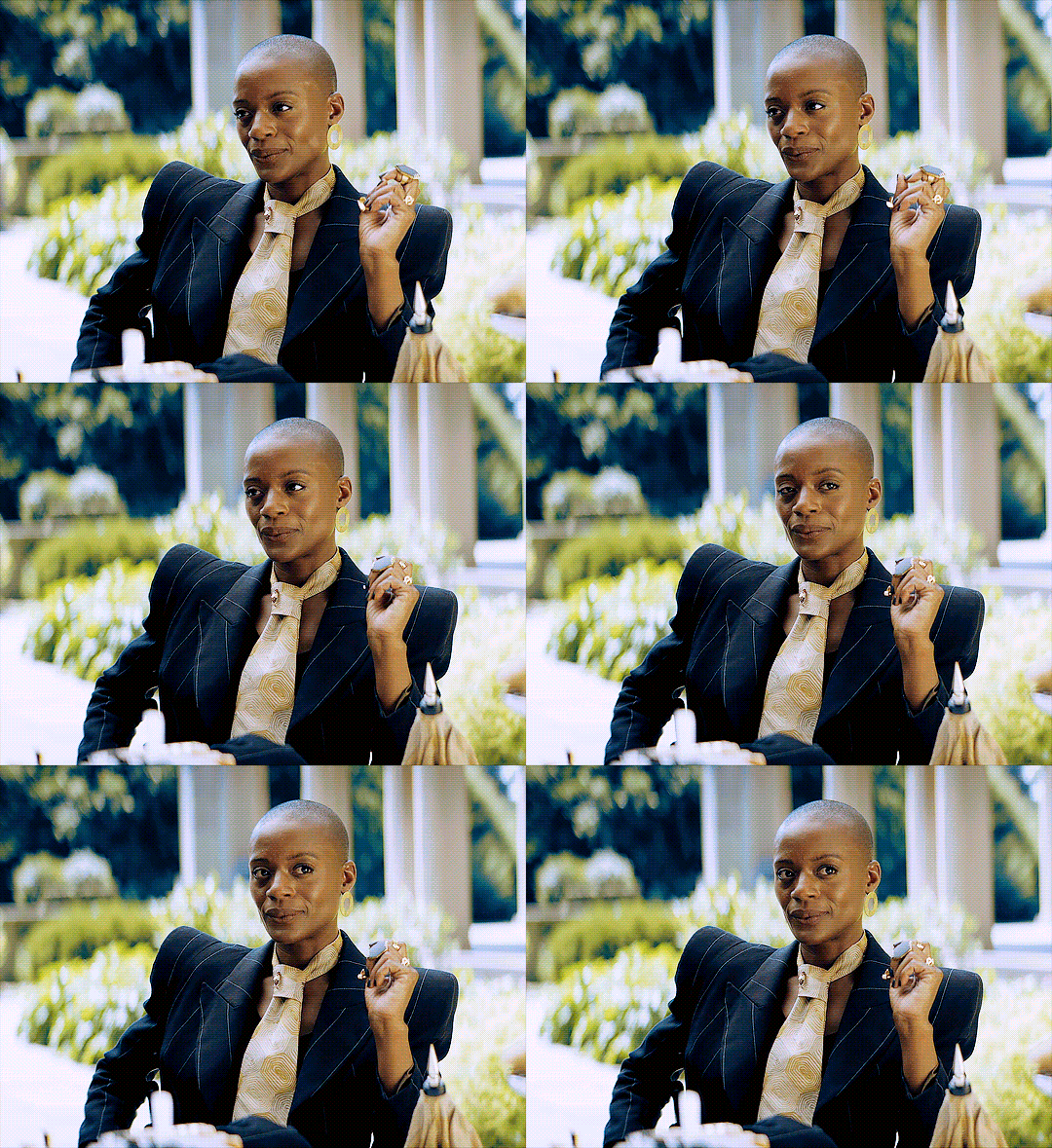
T’Nia Miller radiates malice as Cherise Nuland.
Of course, none of this stuff would matter without interesting characters and a compelling narrative. Moretz and Reynor have the chemistry of a real brother and sister in the way they regularly bicker but ultimately love each other. Eli Goree’s Connor is a man of wonderful paradoxes, and T’Nia Miller steals every scene she’s in as the delightfully malicious Cherise Nuland, an antagonist who loves making her enemies squirm while dispensing witticisms in cut glass RP.
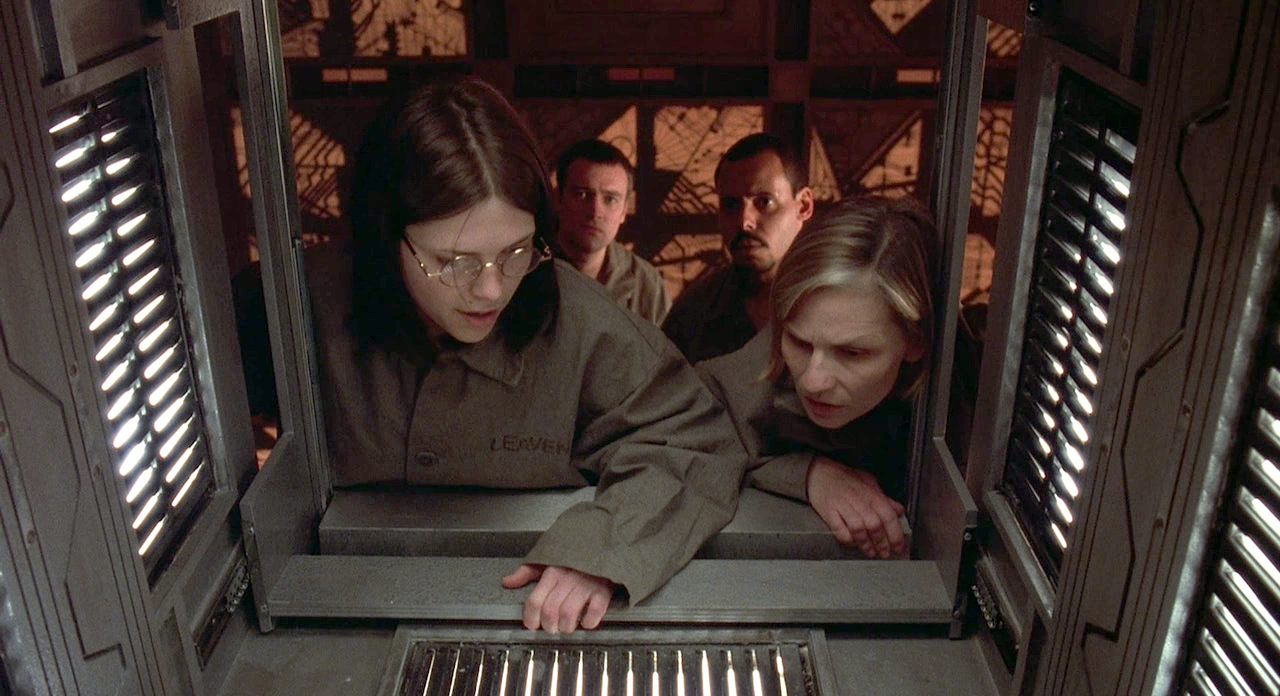
For longtime SF fans, there’s another compelling reason to give the series a shot: Canadian writer-director Vincenzo Natali, best known for his mind-bending 1997 indie film Cube, is an executive producer and directs four of the season’s episodes. Natali is a pro at incorporating heady ideas in ways that enhance his narratives instead of weighing them down.
The first season just concluded, and you can stream all eight episodes on Amazon Prime. Bud and I are already looking forward to The Peripheral’s return.
Cube writer-director Vincenzo Natali is behind the lens for half of The Peripheral’s episodes.
No. 10 Downing Street’s chief mouser shows he’s capable of defending his home from all manner of animal intruders.
Larry the Cat has been the official chief mouser at the UK’s prime minister’s home since 2011.
Now he should be bestowed with a new title — chief foxer.
The famous tabby was lounging guarding No. 10 Downing Street on a recent evening when a fox approached the property. Larry slow-walked the canid intruder back to an adjacent garden, but wasn’t satisfied when the fox lingered, so he laid the smacketh down to show foxy who was boss.
The thick-headed vulpine interloper tried a third time to get closer to the house, but Larry wasn’t having it.
The encounter was a reminder that Larry can handle business when sufficiently motivated.
Larry is a former stray rescued by London’s Battersea Dogs and Cats and was four years old when he got the job on the strength of the shelter’s claim that he was an excellent hunter who would solve No. 10’s rodent problem. Bringing in a capable kitty became a priority in 2011 when the rats on site became so bold, they’d walk right past reporters and TV cameras outside the prime minister’s official residence and office.
The long-tenured mouser got a bad rep in his early days, when critics complained he “does little besides sleep” and spend time with his “lady friend,” Maisie, while also depositing hair on Prime Minister David Cameron’s suits.
But it’s Larry who’s had the last laugh as his tenure has outlast those of three prime ministers — Cameron, Theresa May and Boris Johnson. He’s now on his fourth PM, Liz Truss.
According to his official profile on the UK government’s website, “Larry spends his days greeting guests to the house, inspecting security defences and testing antique furniture for napping quality. His day-to-day responsibilities also include contemplating a solution to the mouse occupancy of the house. Larry says this is still ‘in tactical planning stage.'”
Larry the Cat. Credit: 10 Downing St.
President Barack Obama and Prime Minister David Cameron play with a cat named “Larry” at 10 Downing Street in London, England, May 25, 2011. Larry was adopted by 10 Downing to handle rodents. Liz Suggs holds the cat. (Official White House Photo by Pete Souza)