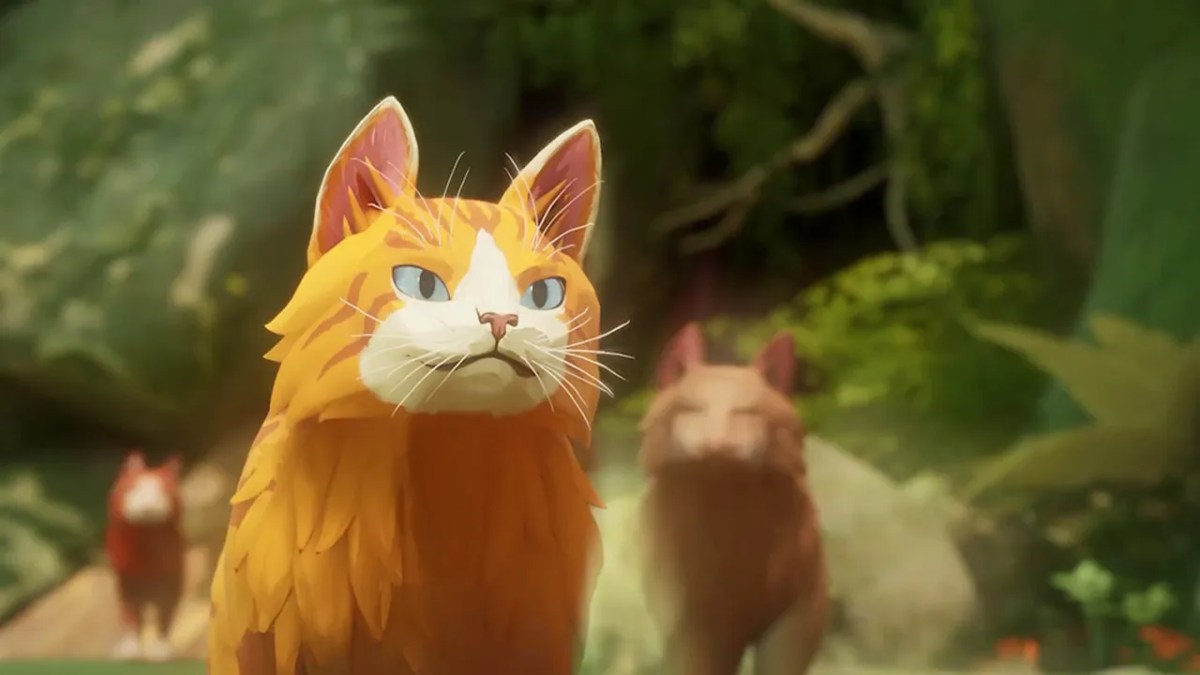
Reviews For New ‘Warrior Cats’ Game Are Brutal

Based on the mega-popular book franchise, expectations were high for Warrior Cats: Clans of the Forest.

When reviewers accuse you of ruining childhood memories and start invoking all-time pop culture lows like Indiana Jones and the Crystal Skull, you know you’re in trouble.

I winced when I opened Steam on Friday and saw the newly-released Warrior Cats: Clans of the Forest had an abysmal “Mostly Negative” aggregate score on Steam. Since then the reviews have marginally improved, if you can call it improvement, with only 47 percent of players recommending the game for a “Mixed” rating, but most of the muted enthusiasm comes from the game’s intellectual property, not its production values, game loop or mechanics.

One reviewer called the narrative “diabolically bad,” saying the game’s story writers apparently paid little attention to the bestselling books it’s based on. Almost every review mentioned disappointment with the game’s cat-creation system, with Warrior Cats limiting users to a series of pre-determined names and strange coat colors that supposedly correspond to your character’s capabilities.

That means if players want to make their own cats in the game, they’re out of luck, and they have to choose between a cat who they favor aesthetically and one who has the attributes they want.
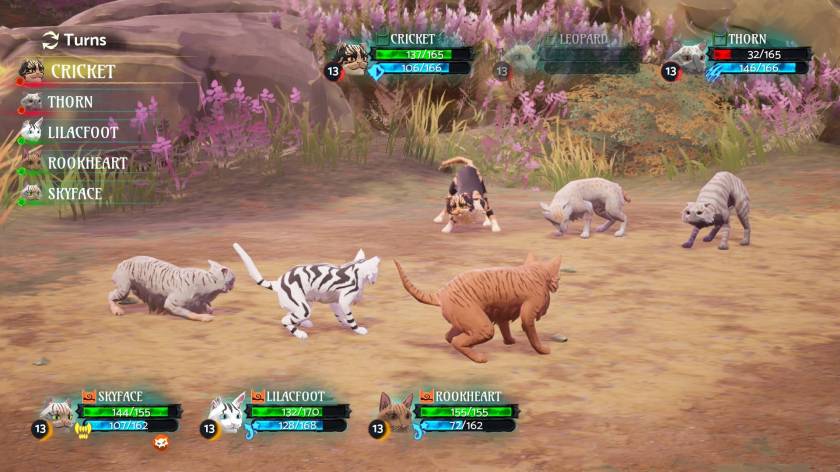
A group of six animated cats, each with distinct designs and colors, arranged in a turn-based game setting. The cats are displaying their names and health points at the bottom of the image, with a colorful grassy background featuring rocks and plants.
A screenshot showing the game’s turn-based combat system, which superficially resembles the systems used in games like Clair Obscure and old-school JRPGs.

“I would’ve hated this as a kid as much as I do now. Playing Warriors on the playground by myself was more fun than this,” one reviewer wrote. “At least I had my imagination. Here, you have a buggy game with completely unintuitive mechanics, randomly generated clan cats that don’t matter to the story or to your story, tiny field mice that attack you, a lack of swimming ability in Riverclan, repetitive fight mechanics, invisible walls abound in an open world, and a storyline that is beyond paper thin. I wrote Warriors dialogue on Proboards when I was 8 that [were] better than anything in this game.”

“[S]uch a slog to get through; awful camera controls, repetitive quests, and a nonsensical story,” another wrote. The ending for the player’s chosen clan was “so absurd and out of nowhere I was dying from laughter from how bad it was.”

It’s worth noting that most of the negative reviews were from players who spent significant time in the game, enough to provide a fair assessment of what the game has to offer. The reviews PITB sampled were from players who had mostly between seven and 14 hours in-game.

Not everyone was down on the game. Most, including those who didn’t like the story or mechanics, praised the visuals, and a sizable minority of players wrote about how much they enjoyed playing a game set in a universe that was important in their childhood. Nostalgia did a lot of the heavy lifting in positive reviews.

Reviews from game critics were also mixed, although it’s worth noting there aren’t enough reviews for a consensus on Metacritic yet.
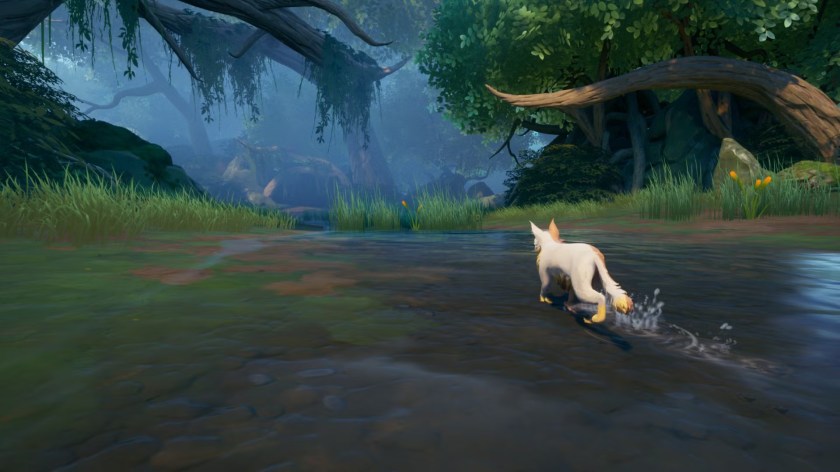
A white cat walking through a shallow stream in a lush, misty forest.
The visuals got a lot of love from reviewers, who praised the heavily stylized art direction and the environments, which include familiar locations from the books.

Steam shows the amount of in-game time under reviews so other players can get a sense of how much the individual reviewers stuck with games. The reviews show time played as of the moment of the review and total time played, so you can also see if a positive review preceded repeated plays. In a narrative game like Warrior Cats, 10 to 15 hours’ worth of content is about expected for a playthrough, while players in some games – open world exploration, survival, strategy, multiplayer – can amass hundreds of hours or more over years, attesting to a game’s replay value and the amount of content included.

Steam review aggregates are broken down into Overwhelmingly Positive for games praised by 95 percent of players or more, Very Positive for games reviewed favorably by at least 80 percent of players, Positive for games that have the same ratio of favorable reviews but fewer total reviews, Mostly Positive for games favored by 70 to 79 percent of players, and Mixed for games that meet the approval of between 40 and 69 percent.

The worst are Negative, Very Negative and Overwhelmingly Negative, reserved for games that are total disasters without redeeming qualities. Those games are often unfinished, abandoned by their developers, or are blatant cash-grabs.
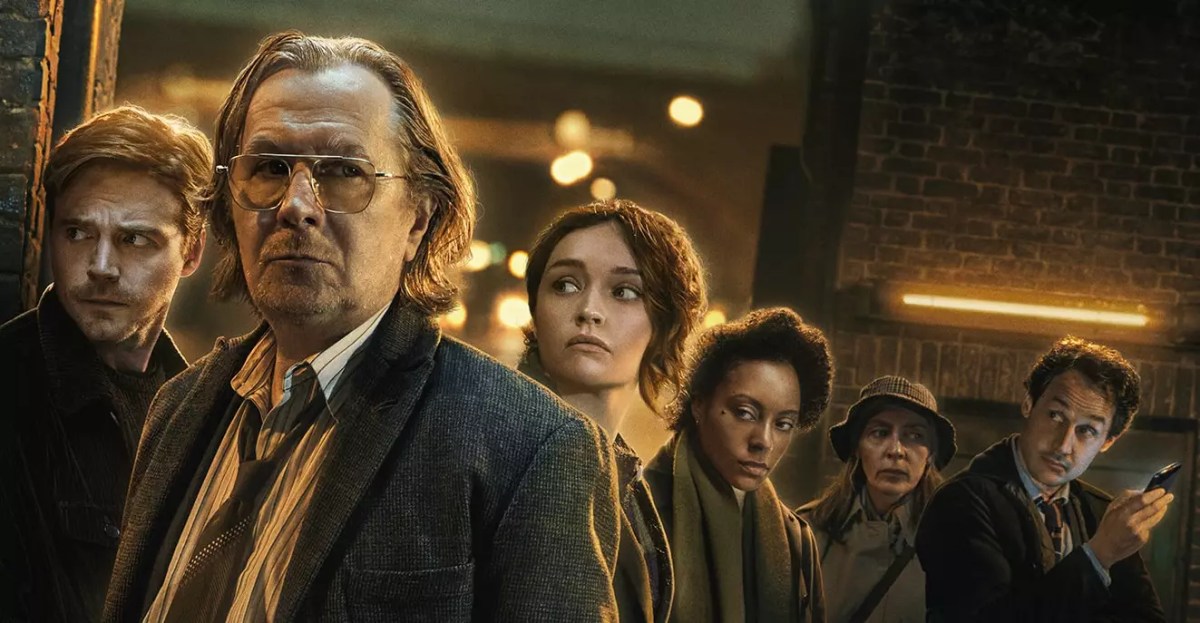
In Slow Horses, MI5’s Rejects Become Heroes

TV thrillers don’t get any better than this.

There’s a scene in the first season of Slow Horses when Gary Oldman, in the role of a lifetime as MI5 supervisor Jackson Lamb, gathers his team as they’re being hunted.

“I don’t normally do these kind of speeches,” he says with an exasperated sigh, “but this feels like a big moment and if it all turns to shit, I might not see any of you again.”

He looks each of his agents in the eye, their fear reflected back at him, and sniffs.

“You’re f—ing useless, the lot of you! Working with you has been the lowest point in a disappointing career,” he says before barking at one of the young agents to accompany him and warning the rest not to get themselves killed.

Oldman is spectacular as Lamb, the gaseous, miserable MI5 veteran who captains Slough House, a purgatory where the agency’s worst agents are sent to waste away the remainder of their careers after humiliating themselves, usually in novel and cringe-worthy ways.

One agent was exiled after forgetting a disc with sensitive information on a train. Another was an alcoholic who didn’t notice her supervisor was feeding information to the Russians for years, while a third was banished to Slough House simply for being an insufferable jerk.

Gary Oldman as Jackson Lamb
Gary Oldman as Jackson Lamb, who oversees the purgatory for disgraced MI5 agents known as Slough House.

Regardless of the reasons, each of the agents at Slough House is determined to get back into the good graces of agency brass by redeeming themselves in service to king and country.

Or, as Mick Jagger puts it in the show’s catchy theme song, they want “to dance with the big boys again.”

To do that they must endure consistently brutal needling from Lamb and navigate the most mundane, least glamorous assignments. If a job is a lose-lose proposition, MI5 hands it over to the rejects of Slough House — the eponymous Slow Horses — figuring their already stained reputations can’t get much worse.

So when a secretive MI5 plot goes off the rails and the agency’s leaders need someone to take the fall, they serve up the Horses.

There’s just one problem: Lamb, for all his misery, disgusting habits and bone-dry British humor, is an exceptional agent with old-school skills, and the Horses themselves aren’t necessarily incompetent. Several were promising young agents of great skill who got railroaded or were collateral damage in political warfare.

When MI5 second-in-command Diana “Lady Di” Taverner (an icy Kristen Scott Thomas) decides the disgraced agents will be blamed for a major agency blunder, Lamb is aghast and warns her he won’t accept it.

“They’re losers,” he says, “but they’re my losers.”

When we meet them for the first time they’ve already been tagged for sacrifice to the media and public, but don’t know it yet.

And when it turns out that the case has real consequences — a young man will be beheaded on a live stream by extremists if their demands aren’t met — the Slow Horses, led by the acid-tongued Lamb, use every trick at their disposal in an attempt to rescue the innocent victim.

slowhorsesriversid
Jack Lowden as River Cartwright, left, and Olivia Cooke as Sid Barrett, center, disgraced agents of MI5. Credit: Apple TV

Slow Horses, like Luther and similar UK crime dramas, is a different animal than the bland, formulaic cop shows we’re accustomed to on this side of the pond.

Whether it’s Law and Order, the many incarnations of CSI and NCIS or shows like Chicago PD, the audience always knows a few things for sure: The case will be solved and the bad guys apprehended by the end of the hour, the police will be righteous and earnest, and favorite characters will never find themselves in real danger. Mariska Hargitay’s character will live another day to continue on in her third decade fighting crime. Chicago’s tough-talking detective Hank might be rough around the edges and bend a few rules, but he’s fundamentally a good guy on the side of justice.

The Slow Horses have no such pretenses, nor plot armor. They’re deeply flawed people and they’re not immune to bullets or bad luck.

The result humanizes the agents in a way other spy thrillers and crime shows never manage to accomplish with their own characters. When one of the Horses takes a bullet from a Russian agent or risks life and limb to protect the British public, there’s a real sense of tension because the show makes it clear not everyone survives.

The show’s writers also know when to dial it back with moments of genuine humor, separating Slow Horses from contemporary spy thrillers like Homeland, which — with apologies to Claire Danes — always took itself seriously.

Slow Horses: Taverner and Lamb
Kristen Scott Thomas as Diana “Lady Di” Taverner, MI5’s ruthless second-in-command, with Oldman as Jackson Lamb. Credit: Apple TV

As for Jagger, he signed on to write the show’s theme song with composer Daniel Pemberton because he’s a fan of the original Slow Horses novels by Mick Herron. While writing the lyrics, he said, the phrase “strange game” kept coming back to him. That became the title of the theme song and its primary hook. It’s an apt description of what MI5 agents are involved in as operators for a domestic agency that, unlike the American FBI, has the green light to involve itself in extensive subterfuge on home soil.

Slow Horses just finished airing its third season. A fourth has already been filmed and completed, a fifth is in production and a sixth season is currently in the adaptation/writing phase.

A production that runs like a finely tuned engine is appropriate for the series: each season is a taut six episodes, meaning there’s no filler and the tension does not let up on the gas pedal. With eight books and counting, there’s plenty more material to adapt, and if the response so far has been any indication — universal praise by critics and audiences in rare agreement — we’ll get to see every one of them make it to the small screen.

Title: Slow Horses
Network: Streaming (Apple TV)
Format: Series
Release date: April 2022 (season 1), December 2022 (season 2), November 2023 (season 3), TBA 2024 (season 4)

Verdict: All the paws up! When it comes to crime and spy thrillers it doesn’t get any better than this. Slow Horses is tense and humorous in precisely the right proportions, knows when not to take itself too seriously, and benefits from an incredibly talented cast to match its excellent writing. We highly recommend this show.