Reviews For New ‘Warrior Cats’ Game Are Brutal

Based on the mega-popular book franchise, expectations were high for Warrior Cats: Clans of the Forest.

When reviewers accuse you of ruining childhood memories and start invoking all-time pop culture lows like Indiana Jones and the Crystal Skull, you know you’re in trouble.

I winced when I opened Steam on Friday and saw the newly-released Warrior Cats: Clans of the Forest had an abysmal “Mostly Negative” aggregate score on Steam. Since then the reviews have marginally improved, if you can call it improvement, with only 47 percent of players recommending the game for a “Mixed” rating, but most of the muted enthusiasm comes from the game’s intellectual property, not its production values, game loop or mechanics.

One reviewer called the narrative “diabolically bad,” saying the game’s story writers apparently paid little attention to the bestselling books it’s based on. Almost every review mentioned disappointment with the game’s cat-creation system, with Warrior Cats limiting users to a series of pre-determined names and strange coat colors that supposedly correspond to your character’s capabilities.

That means if players want to make their own cats in the game, they’re out of luck, and they have to choose between a cat who they favor aesthetically and one who has the attributes they want.
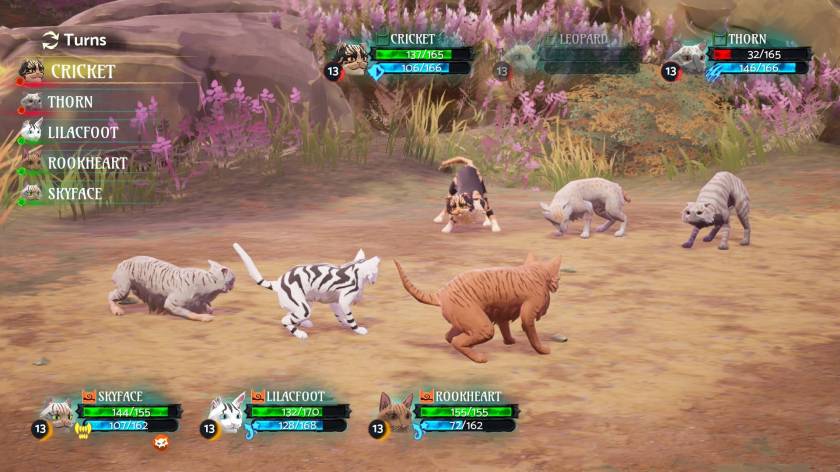
A group of six animated cats, each with distinct designs and colors, arranged in a turn-based game setting. The cats are displaying their names and health points at the bottom of the image, with a colorful grassy background featuring rocks and plants.
A screenshot showing the game’s turn-based combat system, which superficially resembles the systems used in games like Clair Obscure and old-school JRPGs.

“I would’ve hated this as a kid as much as I do now. Playing Warriors on the playground by myself was more fun than this,” one reviewer wrote. “At least I had my imagination. Here, you have a buggy game with completely unintuitive mechanics, randomly generated clan cats that don’t matter to the story or to your story, tiny field mice that attack you, a lack of swimming ability in Riverclan, repetitive fight mechanics, invisible walls abound in an open world, and a storyline that is beyond paper thin. I wrote Warriors dialogue on Proboards when I was 8 that [were] better than anything in this game.”

“[S]uch a slog to get through; awful camera controls, repetitive quests, and a nonsensical story,” another wrote. The ending for the player’s chosen clan was “so absurd and out of nowhere I was dying from laughter from how bad it was.”

It’s worth noting that most of the negative reviews were from players who spent significant time in the game, enough to provide a fair assessment of what the game has to offer. The reviews PITB sampled were from players who had mostly between seven and 14 hours in-game.

Not everyone was down on the game. Most, including those who didn’t like the story or mechanics, praised the visuals, and a sizable minority of players wrote about how much they enjoyed playing a game set in a universe that was important in their childhood. Nostalgia did a lot of the heavy lifting in positive reviews.

Reviews from game critics were also mixed, although it’s worth noting there aren’t enough reviews for a consensus on Metacritic yet.
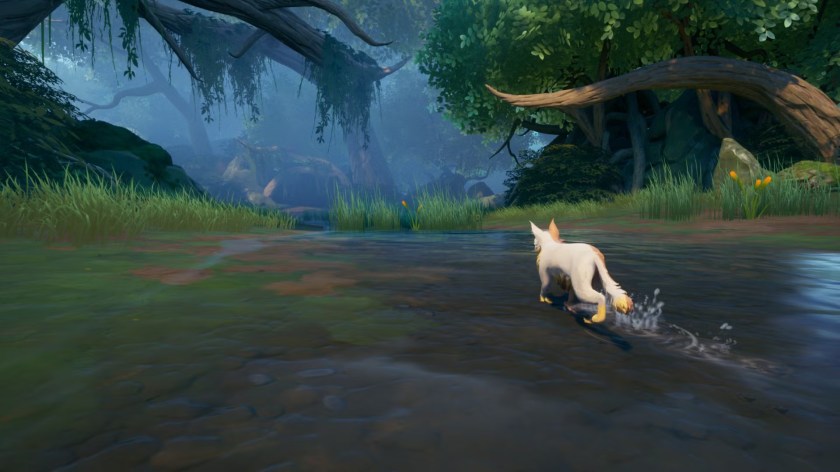
A white cat walking through a shallow stream in a lush, misty forest.
The visuals got a lot of love from reviewers, who praised the heavily stylized art direction and the environments, which include familiar locations from the books.

Steam shows the amount of in-game time under reviews so other players can get a sense of how much the individual reviewers stuck with games. The reviews show time played as of the moment of the review and total time played, so you can also see if a positive review preceded repeated plays. In a narrative game like Warrior Cats, 10 to 15 hours’ worth of content is about expected for a playthrough, while players in some games – open world exploration, survival, strategy, multiplayer – can amass hundreds of hours or more over years, attesting to a game’s replay value and the amount of content included.

Steam review aggregates are broken down into Overwhelmingly Positive for games praised by 95 percent of players or more, Very Positive for games reviewed favorably by at least 80 percent of players, Positive for games that have the same ratio of favorable reviews but fewer total reviews, Mostly Positive for games favored by 70 to 79 percent of players, and Mixed for games that meet the approval of between 40 and 69 percent.

The worst are Negative, Very Negative and Overwhelmingly Negative, reserved for games that are total disasters without redeeming qualities. Those games are often unfinished, abandoned by their developers, or are blatant cash-grabs.

Game View: The Future London Of Watch Dogs: Legion

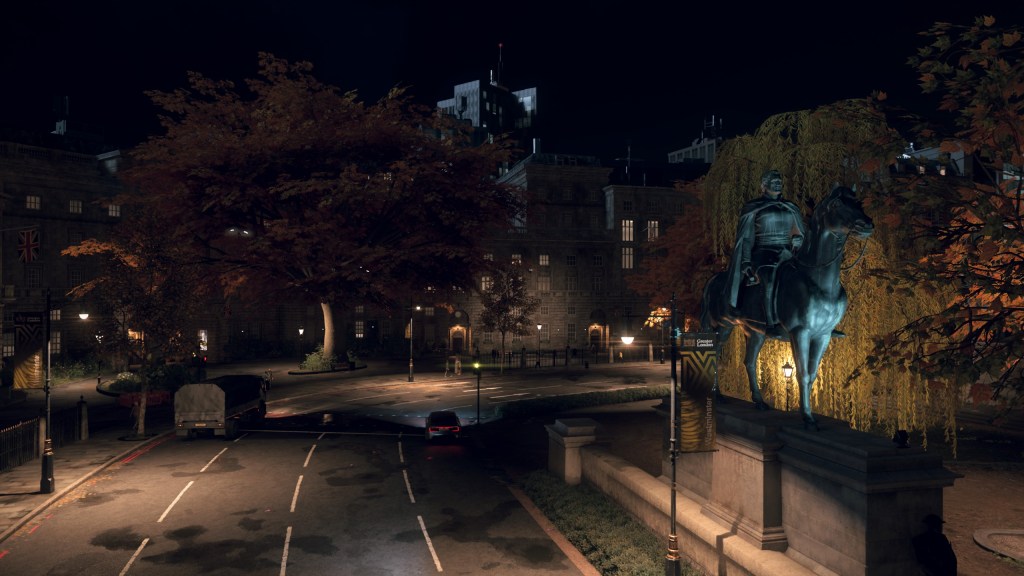
It took a team of thousands to recreate London in stunning detail. Here’s what it looks like.

Over the years I’ve developed kind of an obsession with virtual recreations of real places, and since I’ve mentioned it in the past on PITB, I figured virtual London would be a good place to start.

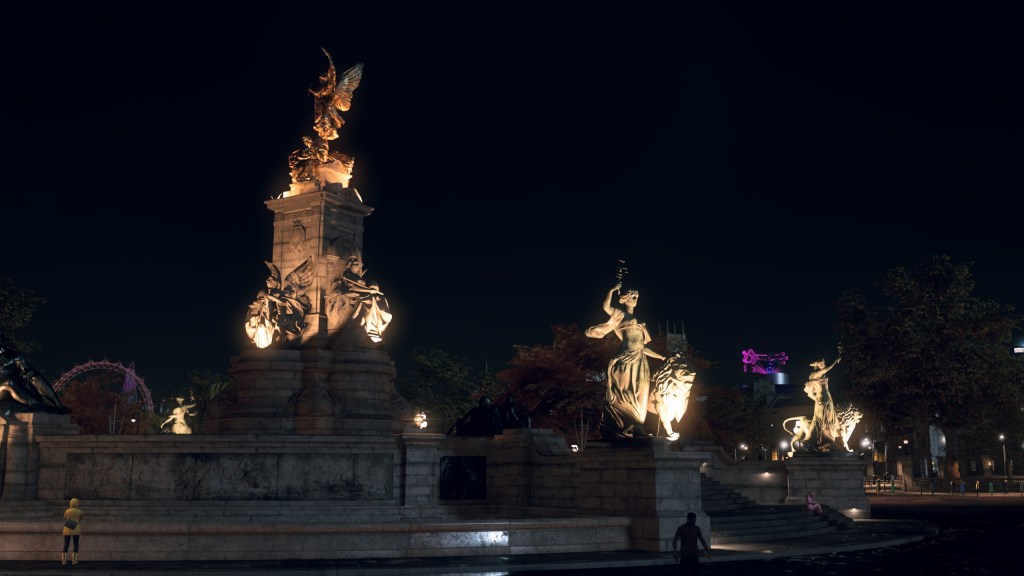
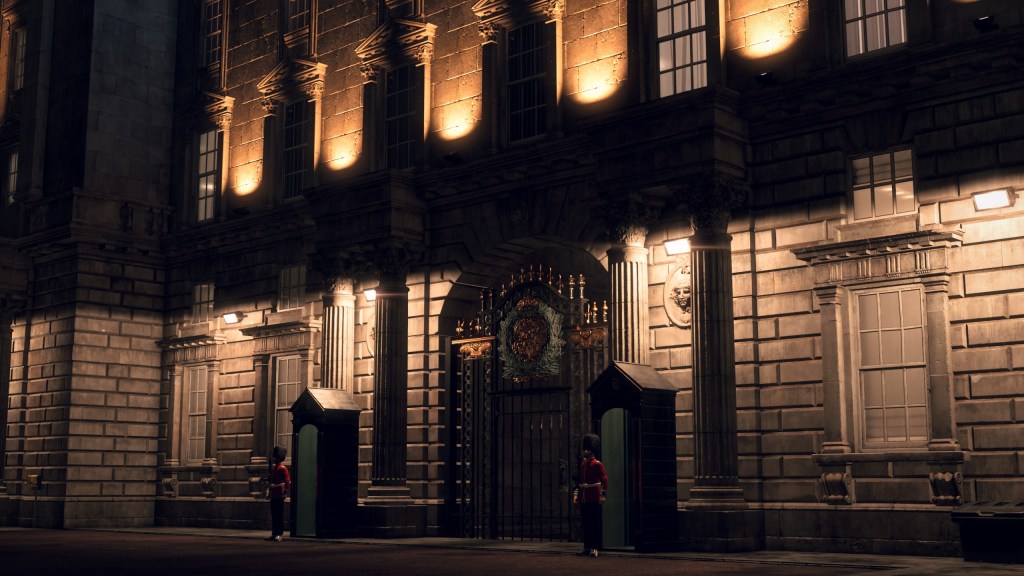
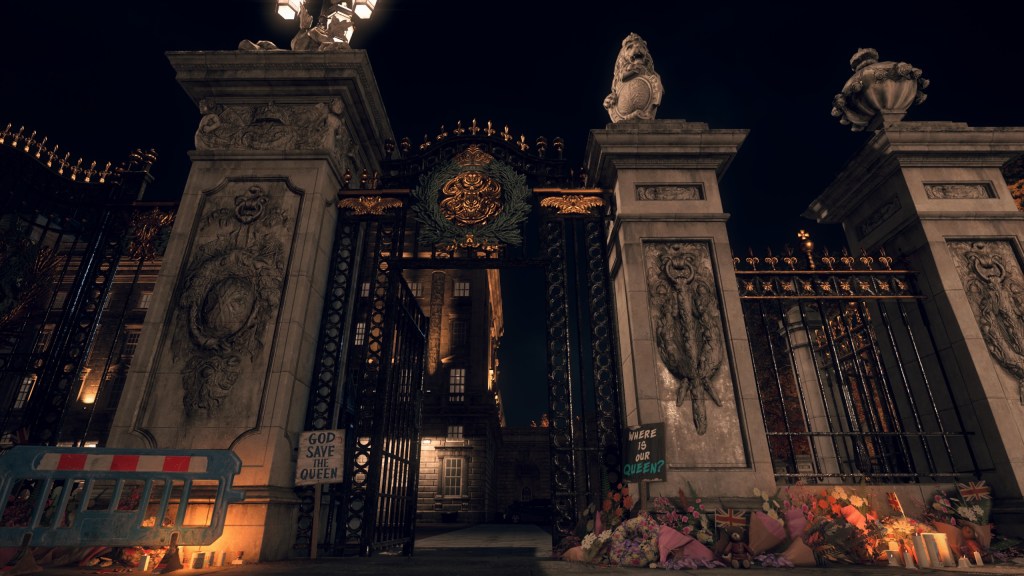
The gates of Buckingham Palace at night. Although Legion depicts a future London, Queen Elizabeth II was still going strong in 2020 when the game was released, and her reign felt like it could go on forever. There’s a hologram portrait of her somewhere in the city, but I cannot remember where I saw it. (Near the British Museum perhaps?)

So the next best thing is an illustrative image of the gates of Buckingham Palace in this future dystopian London, where a private security megacontractor has essentially taken over the city, leaving people pining for a sight of the queen:

In Legion you’re part of an activist/hacker collective called DedSec, fighting back against a police state. As a result, any Londoner is a potential ally. You can recruit police officers, judges, barristers, construction workers, street cleaners, assassins, spies, office workers, store clerks, disc jockeys, the homeless, and people from any background you can think of.

Each has its advantages: judges and cops allow you to get access to restricted spaces and manipulate the legal system from within. Construction workers have access to equipment no one else can touch, and security won’t think twice about them walking into a construction site. Street sweepers are largely invisible to a public that ignores them, allowing them to listen in on conversations.

Every person has a different attitude toward authority, challenging it, and the direction the UK has been heading. Recruiting them involves winning them over to your side by proving you can be trusted, sometimes by helping them out personally, sometimes by keeping secrets, and sometimes by striking back at the authorities.

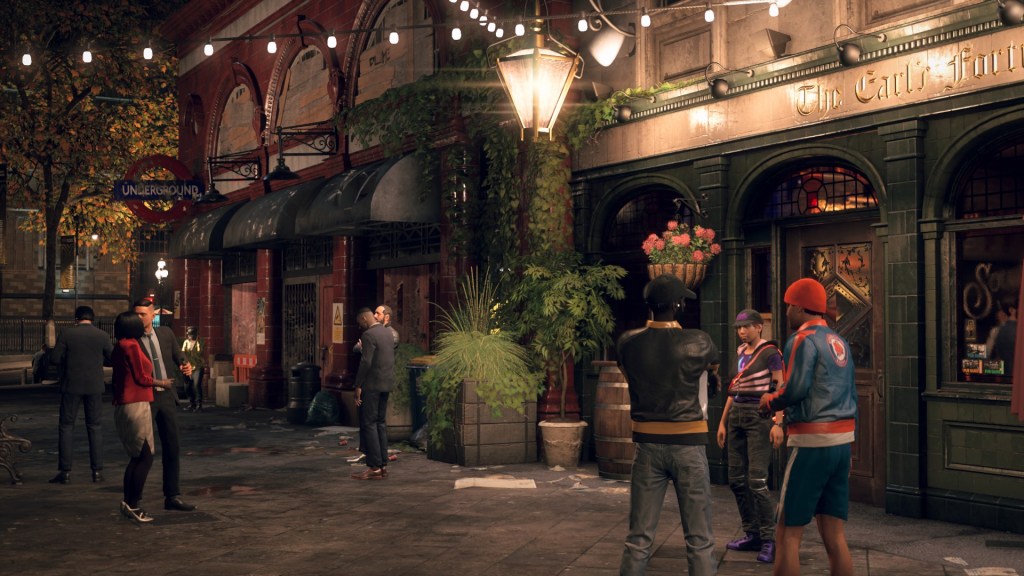
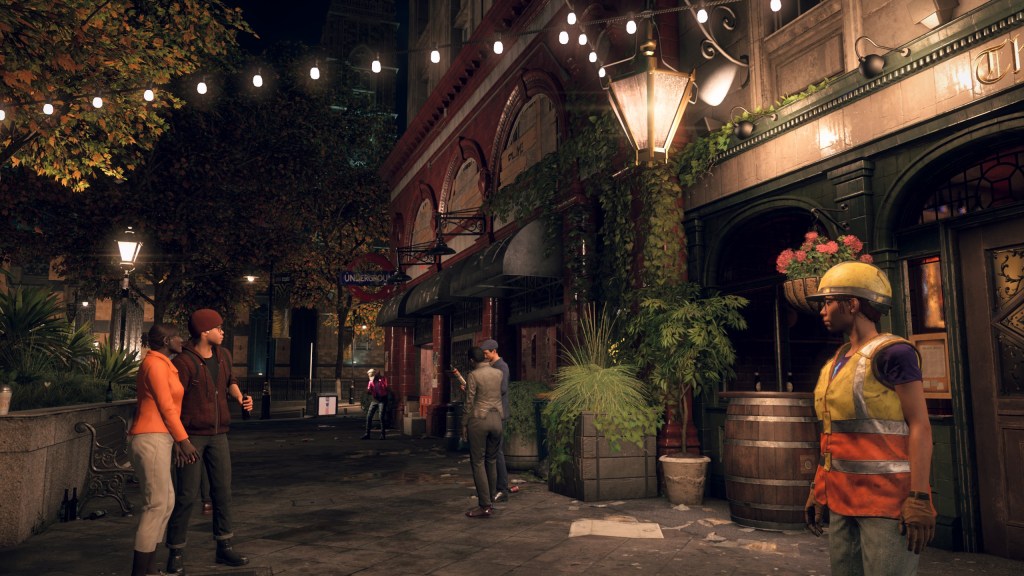
One of the most fun parts is that DedSec’s secret headquarters is tucked into the back of this pub, The Earl’s Fortune, accessible via a secret door in a back room:

Early morning in Piccadilly Circus, before the crowds:

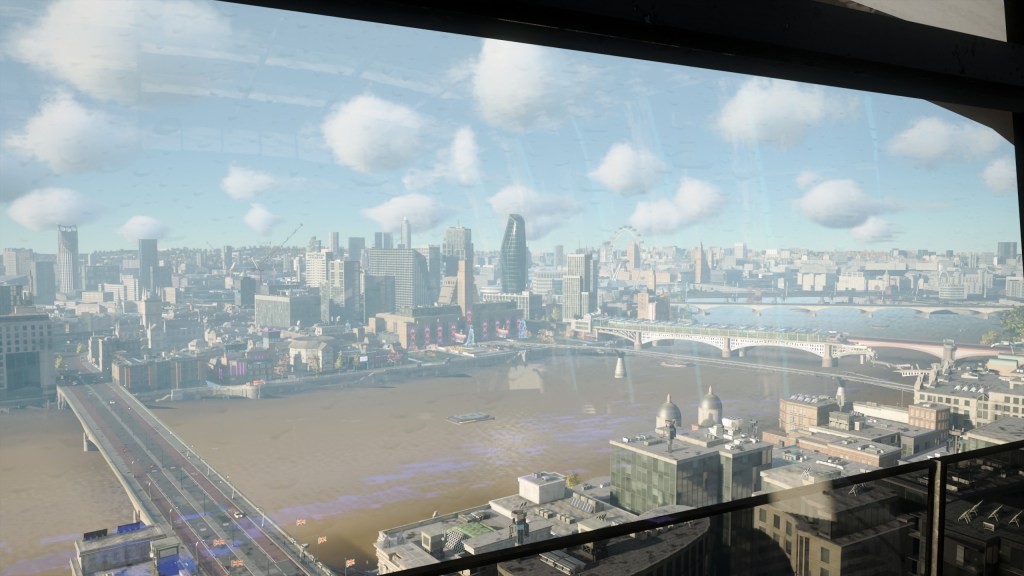
The Sky Garden at the top of the “walkie talkie building” affords incredible views of the city:

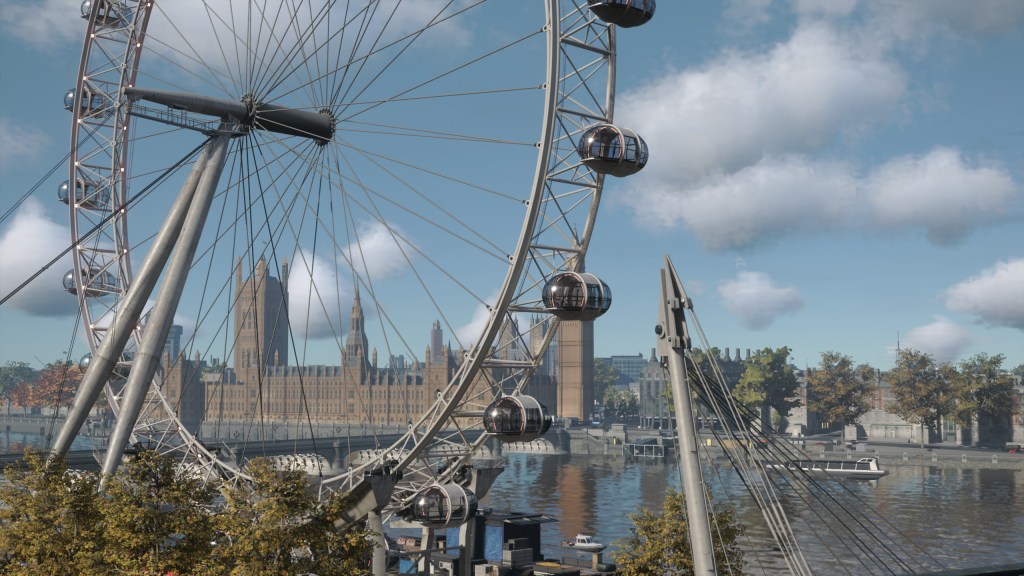
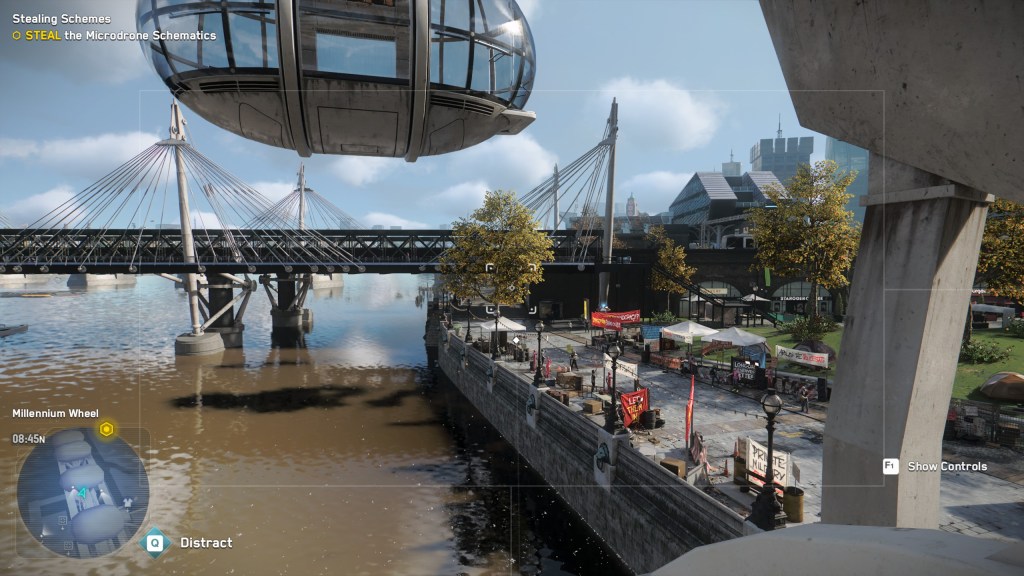
The Eye. Yes, you can ride it. Yes, you can take photos from it.

This is called Waterloo Plaza in the game. I’m not sure if it’s a real place or if it’s been renamed due to rights issues:

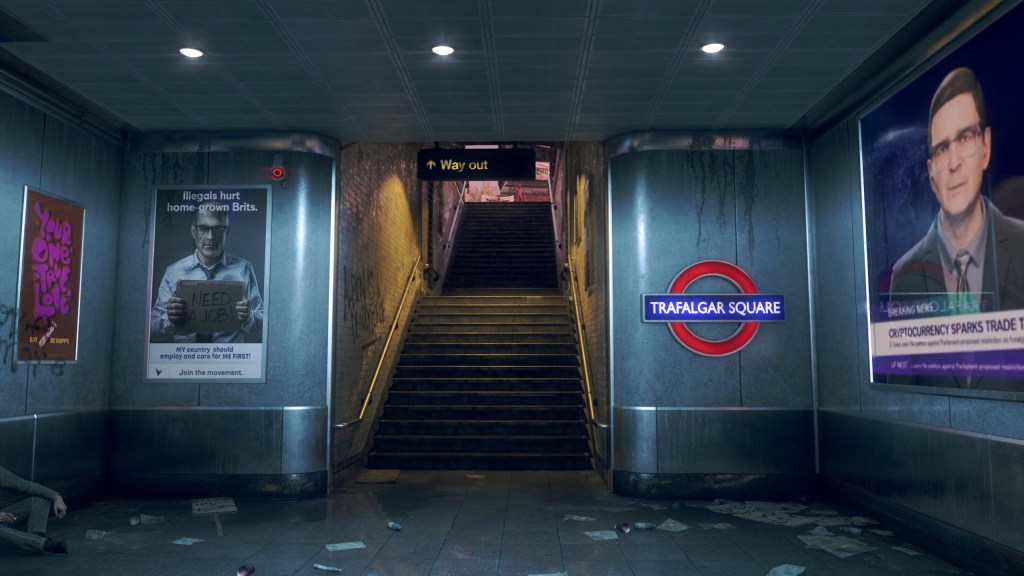
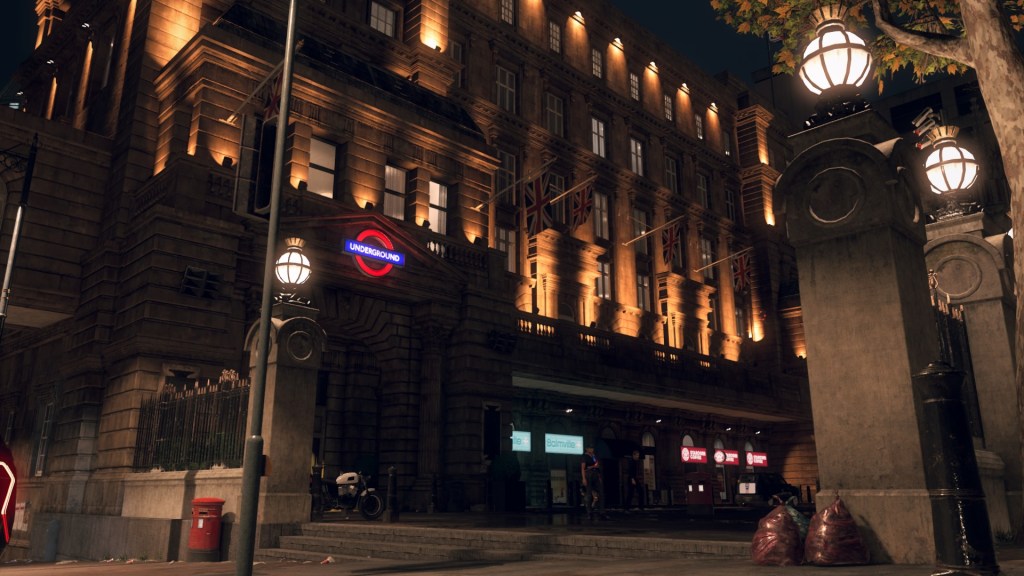
A tube station with an advertisement that reads “Illegals hurt homegrown Brits.” The game clearly took inspiration from real life political events and grievances:

The “gherkin” from the Sky Garden. Again because of rights issues, the logo is from a company that does not exist in the real world:

Beefeaters standing guard:

“Larry?! Larry, where have you run off to?”

The authorities do not like you getting anywhere near No. 10 Downing St. It took a lot of sneaking around for me to get this close and get these screenshots. Sadly, I did not see Larry.

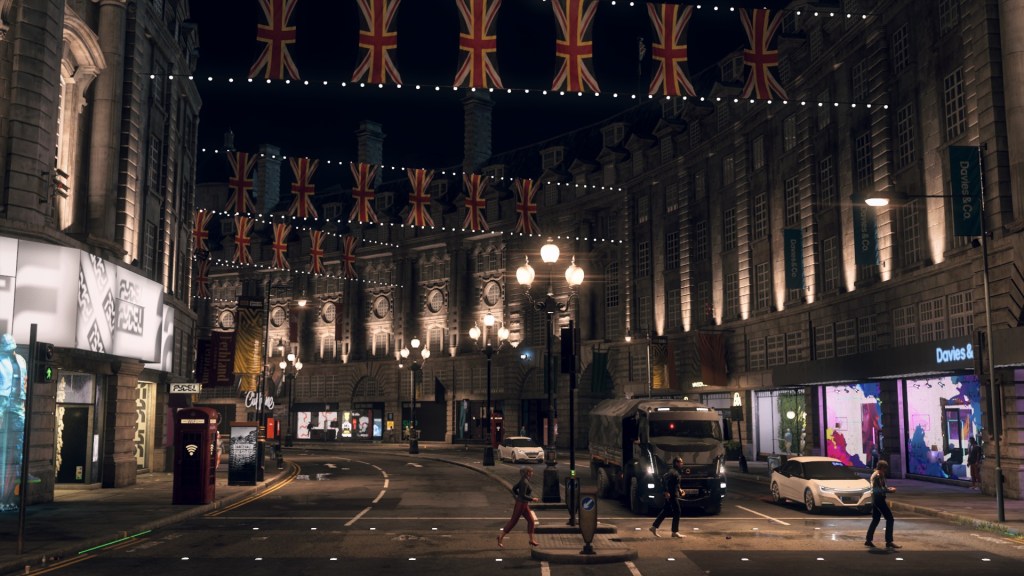
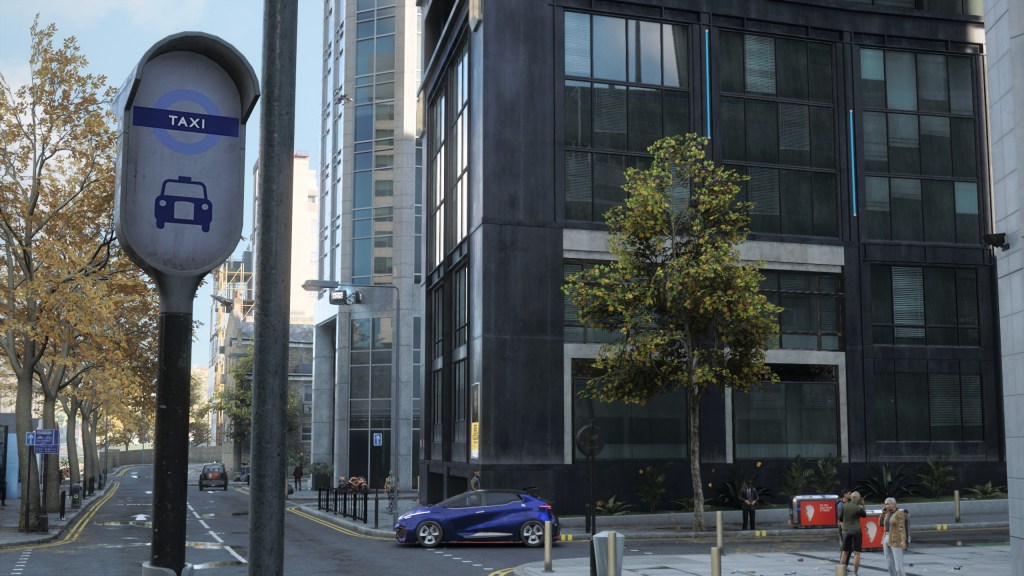
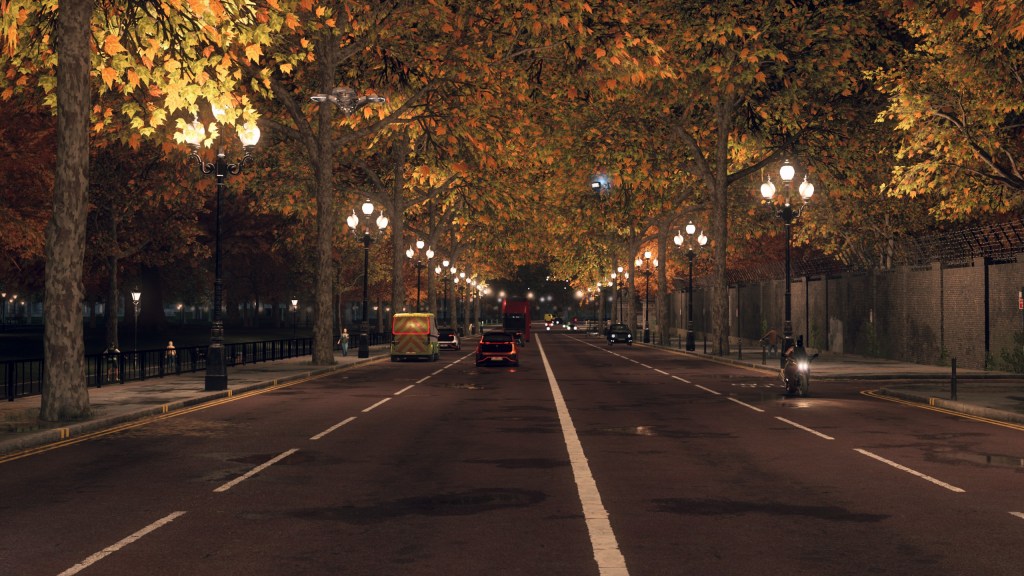
I’m not sure exactly where this is, but the game recreates streets and neighborhoods in astonishing detail. Note the puddle on the pavement. Modern gaming technology actually recreates the way light bounces off of water, stone, windows, plants, etc. In the past, if you saw a reflection in a game, it was a static texture. Thanks to ray tracing technology, all reflections are dynamic, meaning if you’re looking in a store window and a bus passes behind you, you see the bus pass in the reflection. It’s awesome.

A street adjacent to Piccadilly Circus:

The view from an Eye capsule. The Thames is dirty AF!

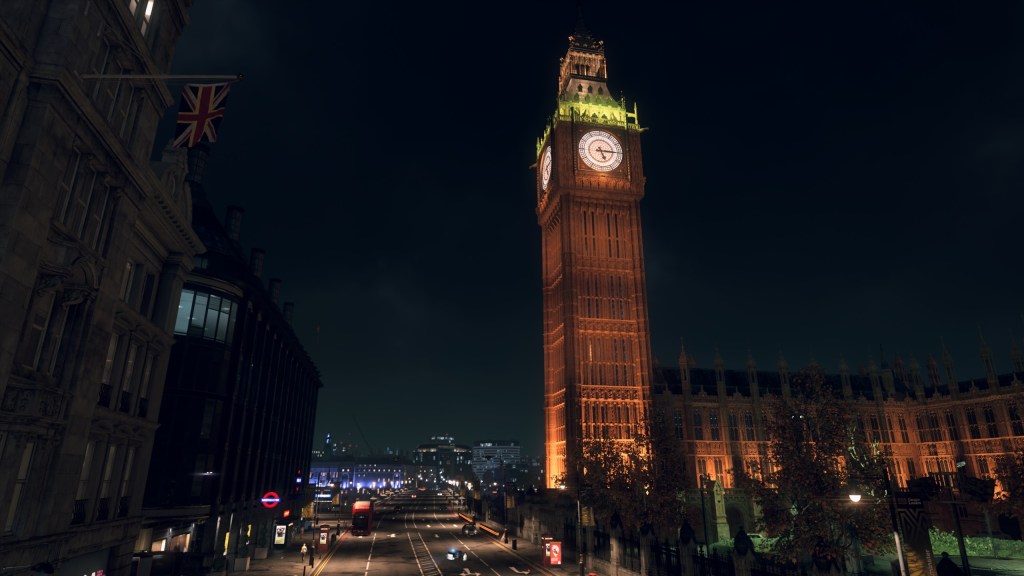
Big Ben:

In reference to the ray tracing effects mentioned above, note the way the windows reflect the surrounding area. You can see the light behaves differently based on whether it’s in shadow or sunlight, and the surrounding structures are reflected in the windows. At night the windows behave dynamically so they are turned on and off randomly. Using shaders, you can see the interior rooms from street level.

Regretfully I did not take enough photos of random neighborhoods. In Southwark, for example, there are run-down areas, public housing and you don’t see the grand structures of historic neighborhoods.

There are parks with people kicking footballs around and laying in the grass, bicyclists, buskers, people talking on their phones, mimes, cops on the beat.

Another view through a Sky Garden window:

In the future, free wifi will be even more plentiful!

What’s next? Tokyo? New York? Ancient Athens? Future Detroit? Los Angeles? Miami?

All images captured on my PC: AMD Ryzen 7 8700F 8-Core Processor (4.10 GHz), AMD Radeon RX 7700 XT (12 GB), 32GB DDR5 G-Skill RAM, Windows 11.