Game View: The Future London Of Watch Dogs: Legion

It took a team of thousands to recreate London in stunning detail. Here’s what it looks like.

Over the years I’ve developed kind of an obsession with virtual recreations of real places, and since I’ve mentioned it in the past on PITB, I figured virtual London would be a good place to start.

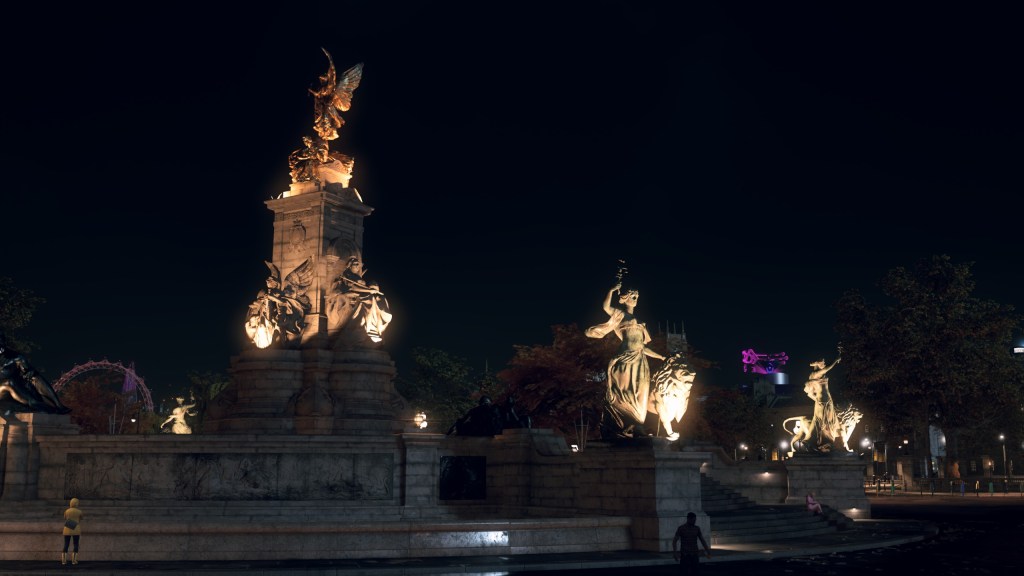
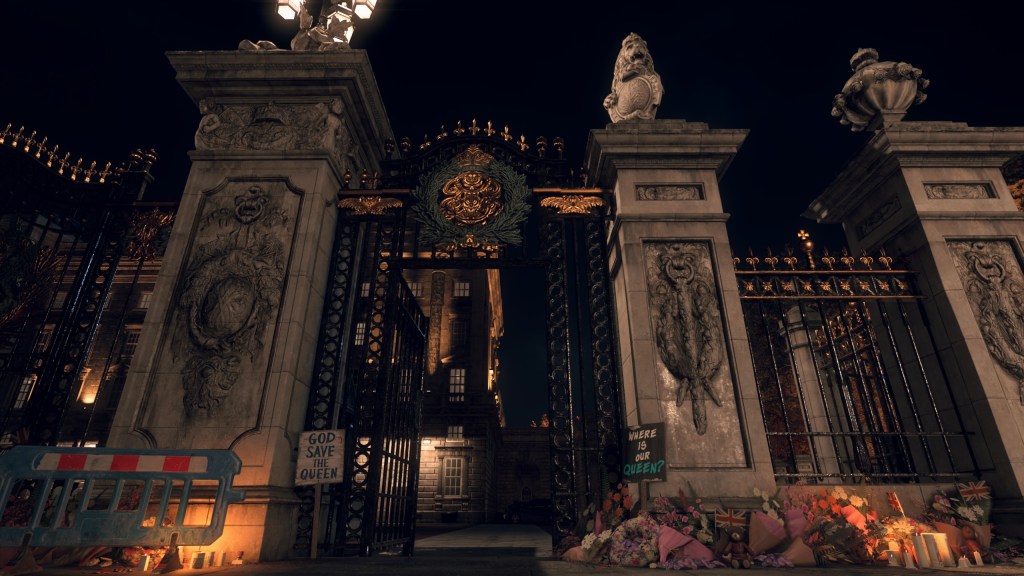
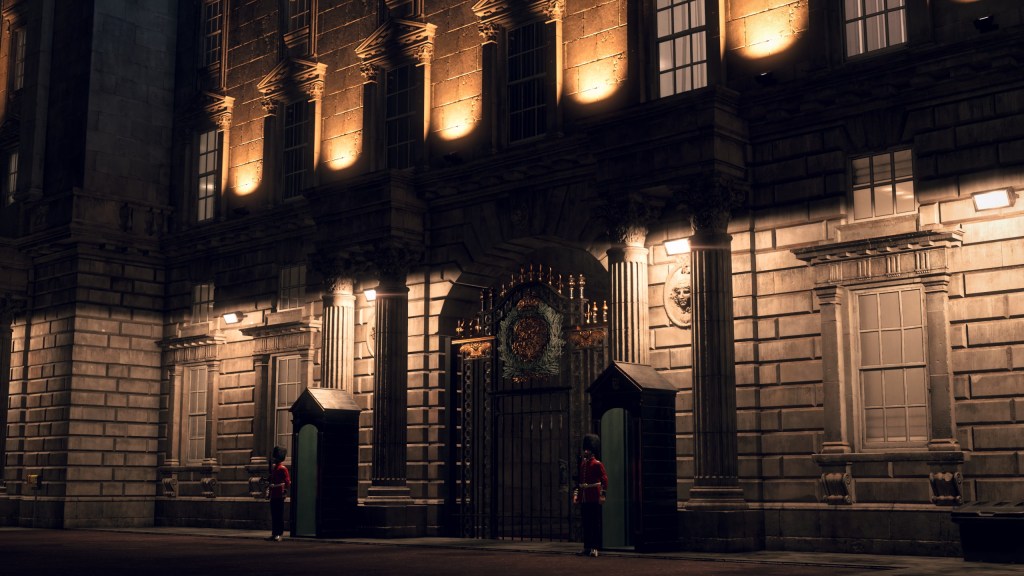
The gates of Buckingham Palace at night. Although Legion depicts a future London, Queen Elizabeth II was still going strong in 2020 when the game was released, and her reign felt like it could go on forever. There’s a hologram portrait of her somewhere in the city, but I cannot remember where I saw it. (Near the British Museum perhaps?)

So the next best thing is an illustrative image of the gates of Buckingham Palace in this future dystopian London, where a private security megacontractor has essentially taken over the city, leaving people pining for a sight of the queen:
In Legion you’re part of an activist/hacker collective called DedSec, fighting back against a police state. As a result, any Londoner is a potential ally. You can recruit police officers, judges, barristers, construction workers, street cleaners, assassins, spies, office workers, store clerks, disc jockeys, the homeless, and people from any background you can think of.

Each has its advantages: judges and cops allow you to get access to restricted spaces and manipulate the legal system from within. Construction workers have access to equipment no one else can touch, and security won’t think twice about them walking into a construction site. Street sweepers are largely invisible to a public that ignores them, allowing them to listen in on conversations.

Every person has a different attitude toward authority, challenging it, and the direction the UK has been heading. Recruiting them involves winning them over to your side by proving you can be trusted, sometimes by helping them out personally, sometimes by keeping secrets, and sometimes by striking back at the authorities.

One of the most fun parts is that DedSec’s secret headquarters is tucked into the back of this pub, The Earl’s Fortune, accessible via a secret door in a back room:
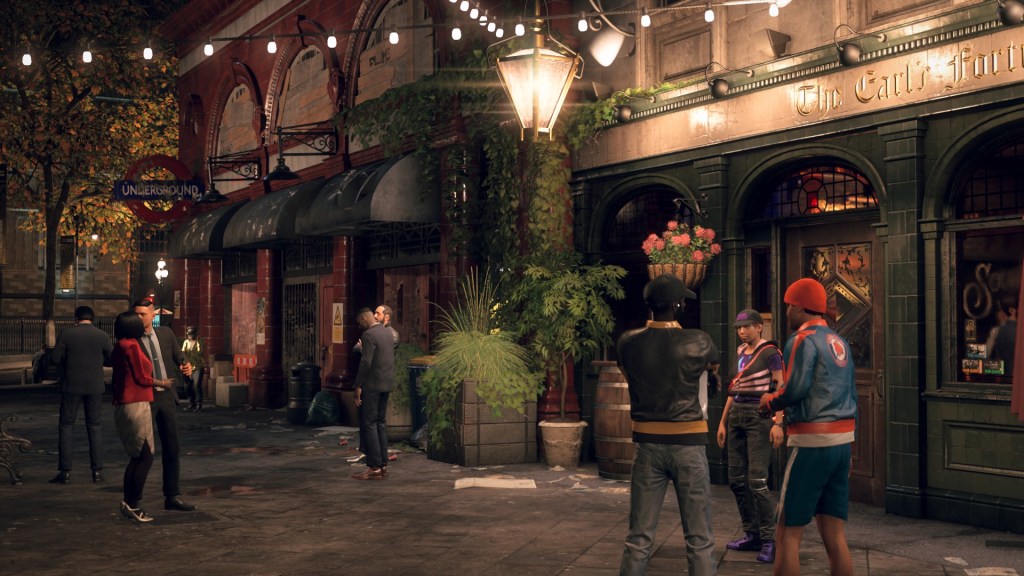
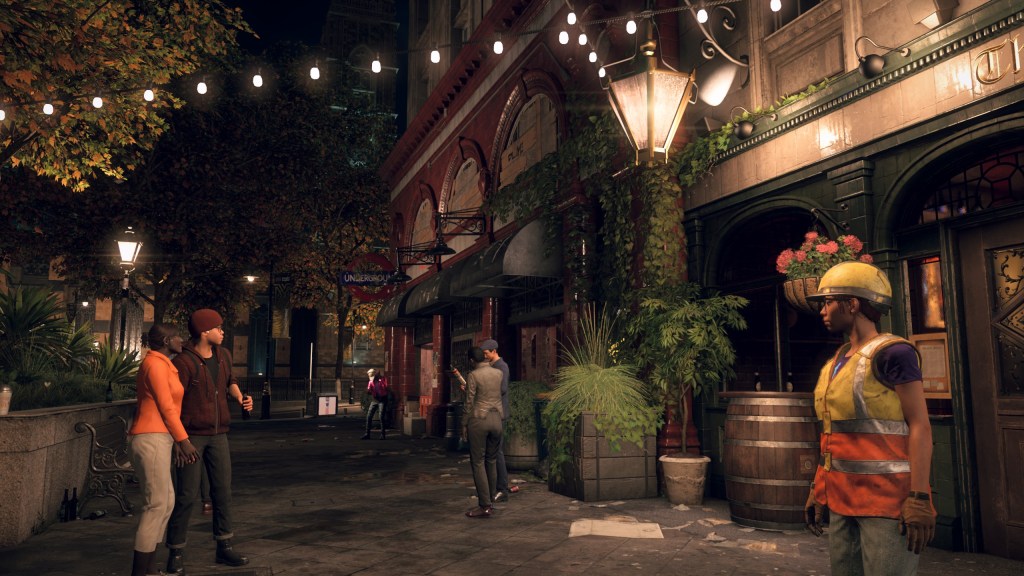
Early morning in Piccadilly Circus, before the crowds:

The Sky Garden at the top of the “walkie talkie building” affords incredible views of the city:

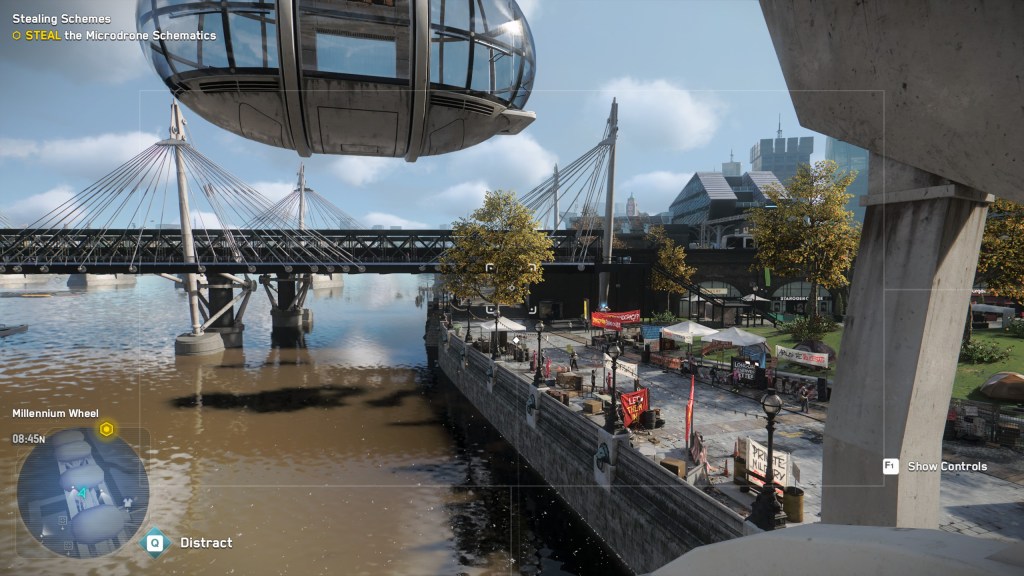
The Eye. Yes, you can ride it. Yes, you can take photos from it.
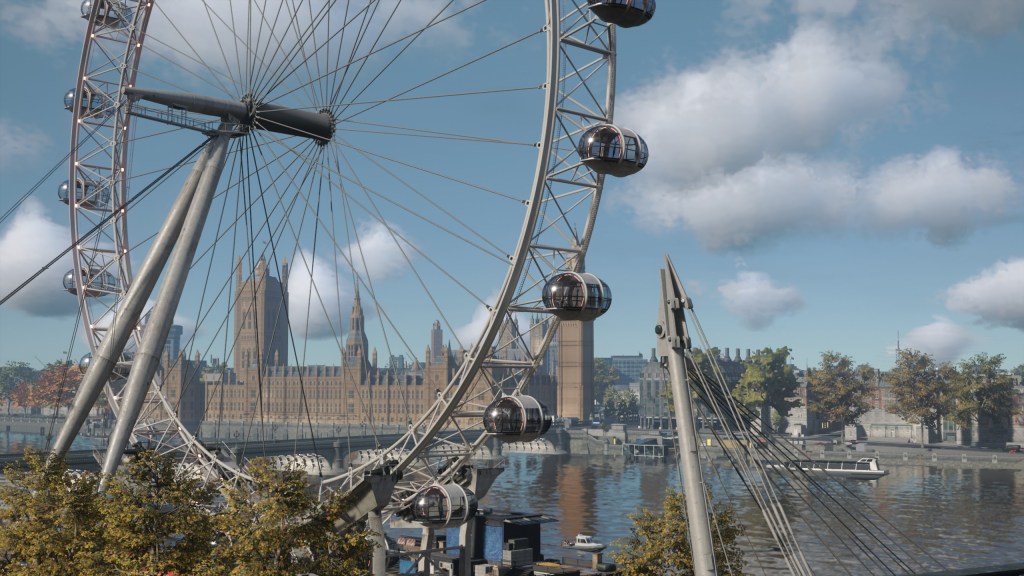
This is called Waterloo Plaza in the game. I’m not sure if it’s a real place or if it’s been renamed due to rights issues:

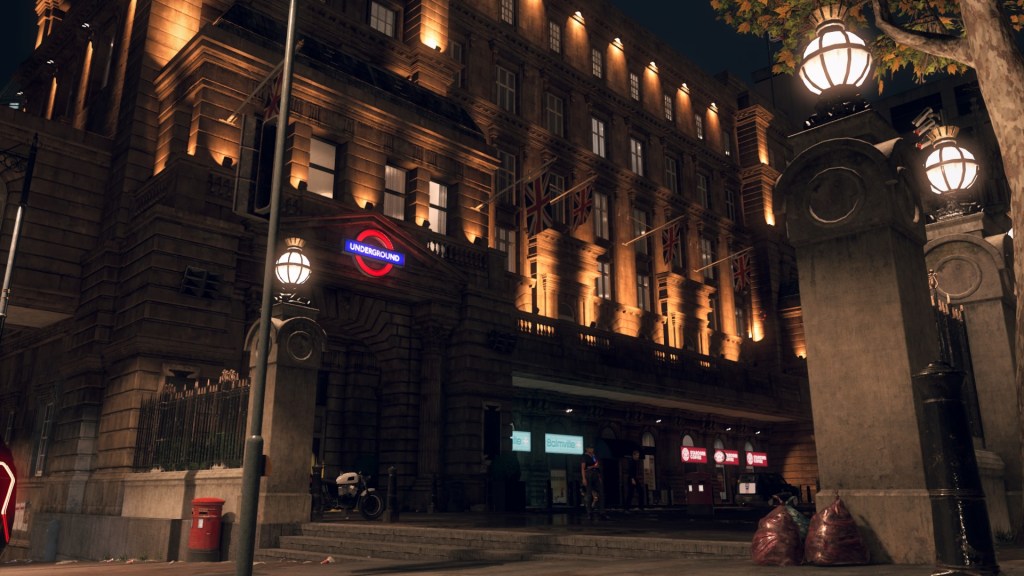
A tube station with an advertisement that reads “Illegals hurt homegrown Brits.” The game clearly took inspiration from real life political events and grievances:
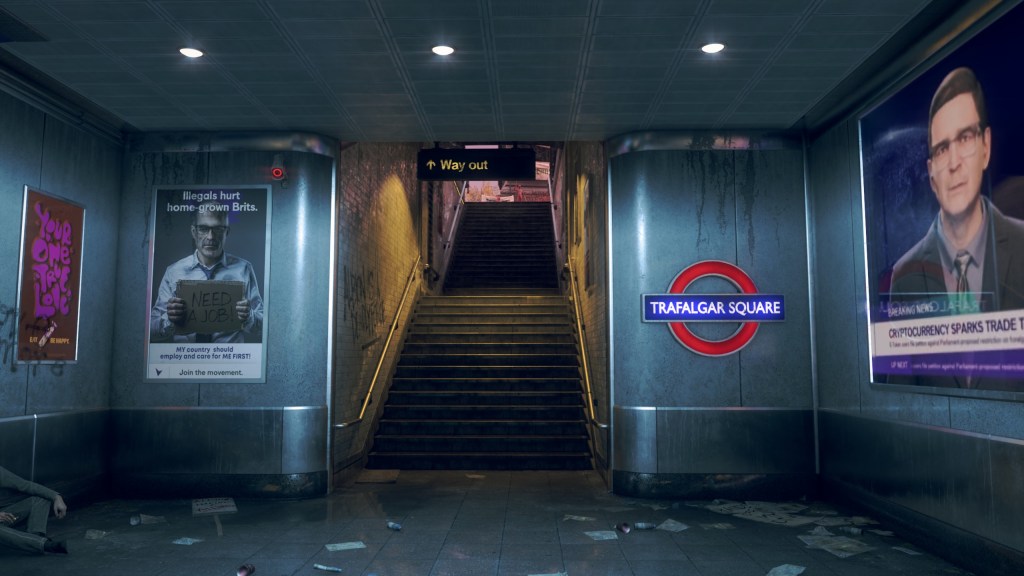
The “gherkin” from the Sky Garden. Again because of rights issues, the logo is from a company that does not exist in the real world:

Beefeaters standing guard:
“Larry?! Larry, where have you run off to?”

The authorities do not like you getting anywhere near No. 10 Downing St. It took a lot of sneaking around for me to get this close and get these screenshots. Sadly, I did not see Larry.

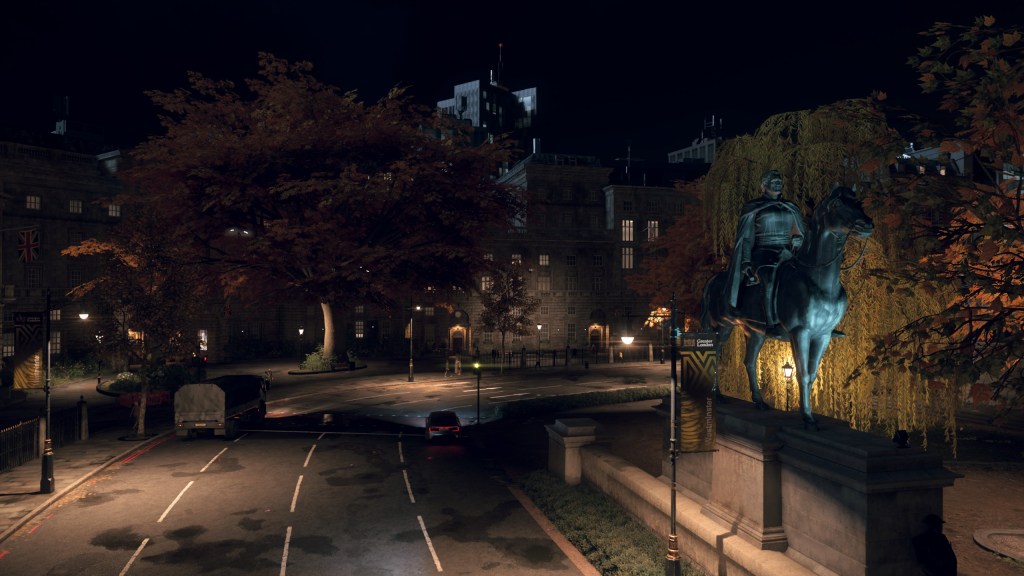
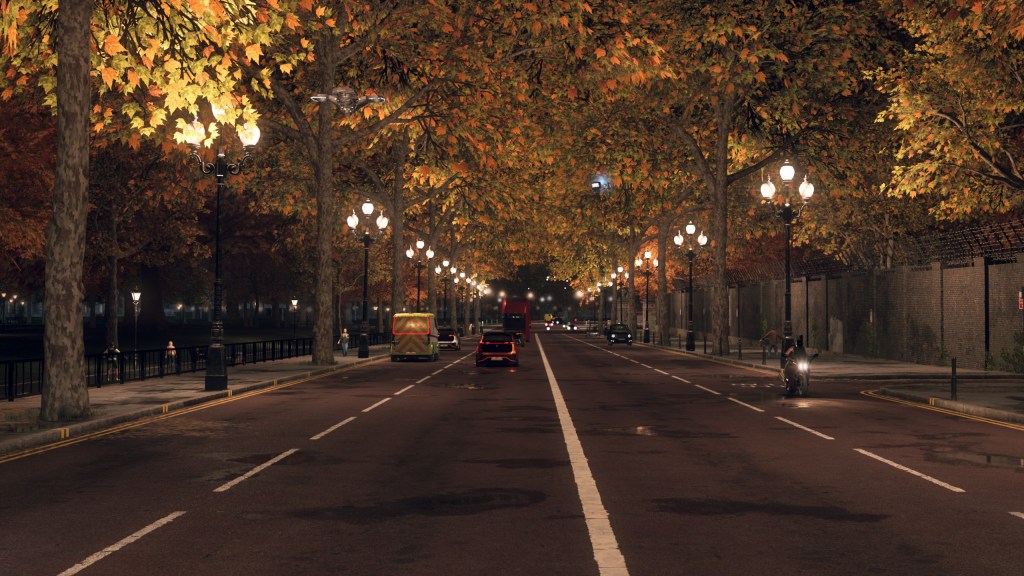
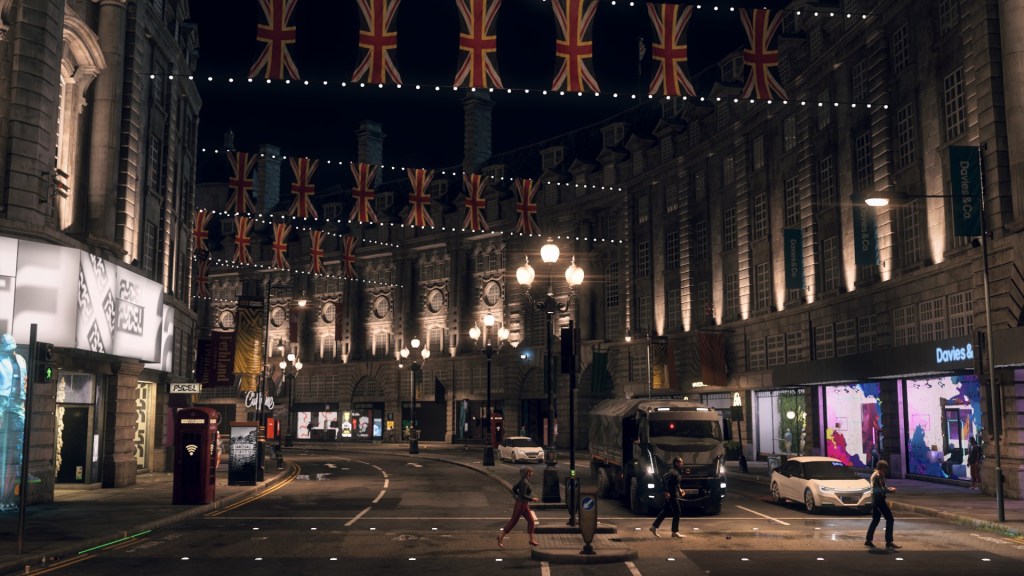
I’m not sure exactly where this is, but the game recreates streets and neighborhoods in astonishing detail. Note the puddle on the pavement. Modern gaming technology actually recreates the way light bounces off of water, stone, windows, plants, etc. In the past, if you saw a reflection in a game, it was a static texture. Thanks to ray tracing technology, all reflections are dynamic, meaning if you’re looking in a store window and a bus passes behind you, you see the bus pass in the reflection. It’s awesome.

A street adjacent to Piccadilly Circus:
The view from an Eye capsule. The Thames is dirty AF!
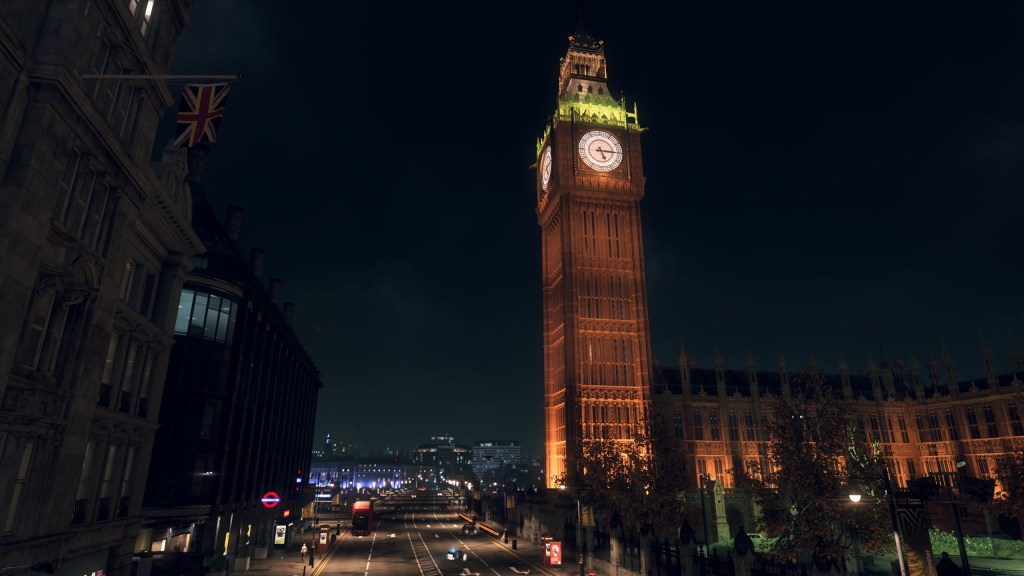
Big Ben:
In reference to the ray tracing effects mentioned above, note the way the windows reflect the surrounding area. You can see the light behaves differently based on whether it’s in shadow or sunlight, and the surrounding structures are reflected in the windows. At night the windows behave dynamically so they are turned on and off randomly. Using shaders, you can see the interior rooms from street level.
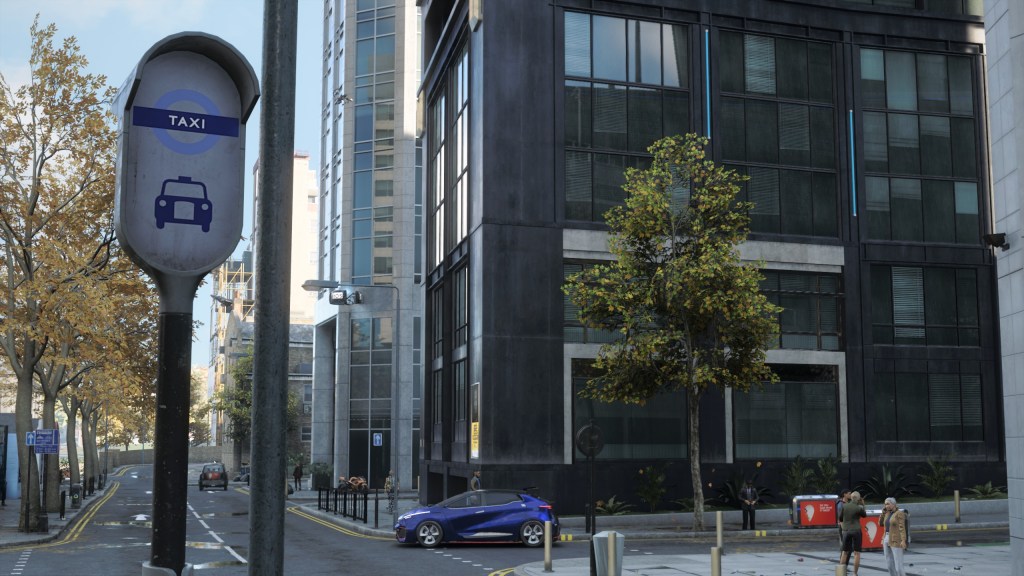
Regretfully I did not take enough photos of random neighborhoods. In Southwark, for example, there are run-down areas, public housing and you don’t see the grand structures of historic neighborhoods.

There are parks with people kicking footballs around and laying in the grass, bicyclists, buskers, people talking on their phones, mimes, cops on the beat.

Another view through a Sky Garden window:
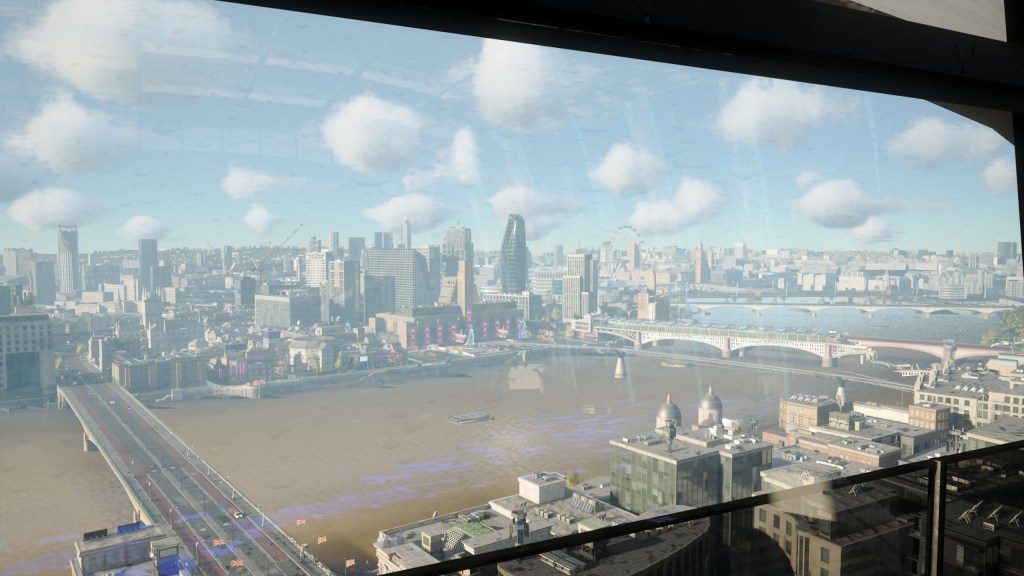
In the future, free wifi will be even more plentiful!

What’s next? Tokyo? New York? Ancient Athens? Future Detroit? Los Angeles? Miami?

All images captured on my PC: AMD Ryzen 7 8700F 8-Core Processor (4.10 GHz), AMD Radeon RX 7700 XT (12 GB), 32GB DDR5 G-Skill RAM, Windows 11.
100 Years Ago, An Archaeologist Unearthed The Most Incredible Find In History

100 years ago today, Howard Carter found a tomb filled with statues of cats, as well as the mummy of some guy named King Tut!

Howard Carter’s peers felt sorry for him.

The British archaeologist’s contemporaries watched him dig in Egypt’s Valley of the Kings year after year, grid by grid in what they were sure was a fruitless search for something that didn’t exist. Everyone knew the sand-covered necropolis had yielded all of its secrets. Everyone knew Carter was wasting his time — and the funds of his patron, the Earl of Carnarvon — looking for the tomb of an obscure, apocryphal boy king who allegedly ruled Egypt for nine years in deep antiquity.

After 15 years, the partnership between Carter and Carnarvon was about to end. Even the wealthy aristocrat had his limits, and after so much time and effort chasing an apparent mirage, Carnarvon declared he would pay for one final season of archaeological work in 1922.

Carter had been laboring in the necropolises along the Nile since he was a young boy and apprentice to the great archaeologists of his time. Aside from seasons that were cut short by war, the Egyptologist had spent three decades digging in those valleys. Now he was about to be out of a job and a patron.

Carter's notes
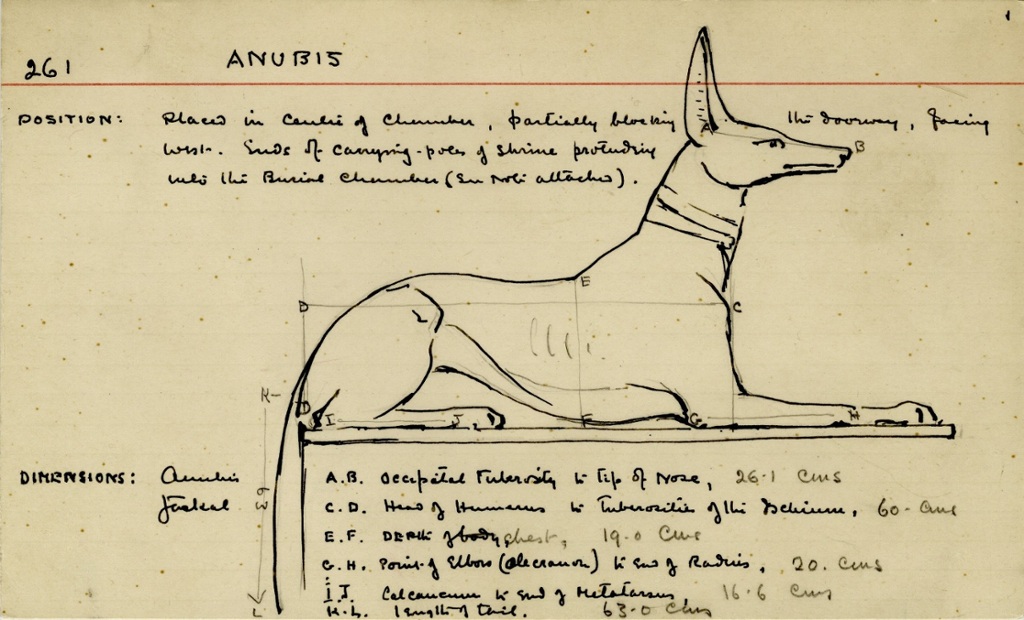
Howard Carter’s discovery made him the most famous archaeologist in history, but it also left him with the incredible task of preserving and cataloguing everything in the more than 3,000-year-old tomb. Here’s a page from Carter’s notes about a statue of Anubis. Credit: Wikimedia Commons

Exactly 100 years ago today, Carter wrote a terse entry in his journal: “First steps of tomb found.”

Those steps descended to a door of limestone and plaster, marking the entrance to an antechamber. A second doorway lay sealed in the gloom, and after dispatching a letter imploring Carnarvon to make haste to Egypt, Carter waited for the arrival of his patron and chipped away at the second door, peering through a tiny hole.

With trembling hands I made a tiny breach in the upper left-hand corner. Darkness and blank space, as far as an iron testing-rod could reach, showed that whatever lay beyond was empty, and not filled like the passage we had just cleared. Candle tests were applied as a precaution against possible foul gases, and then, widening the hole a little, I inserted the candle and peered in, Lord Carnarvon, Lady Evelyn and Callender standing anxiously beside me to hear the verdict. At first I could see nothing, the hot air escaping from the chamber causing the candle flame to flicker, but presently, as my eyes grew accustomed to the light, details of the room within emerged slowly from the mist, strange animals, statues, and gold – everywhere the glint of gold.

The earl, sensing a shift in Carter’s mood, queried him: “Do you see anything?”

Carter paused to collect himself before answering.

“Yes,” he said. “Wonderful things!”

The rest is history.

It turned out the room Carter first glimpsed was yet another antechamber. It had been breached in antiquity and tomb robbers had taken some of its valuables before resealing it, but they hadn’t breached a second chamber, the one that contained what are now the most famous finds in archaeological history: The iconic gold funerary mask of King Tutankhamun, the ornate sarcophagus inscribed with prayers from the Egyptian book of the dead, a life-size statue of the boy pharaoh and other statuary, impeccably designed furniture, vases, funerary candle holders, textiles, canopic jars, even chariots and a model ship. There were cats too, including statues of felids big and small.

Tut coffin
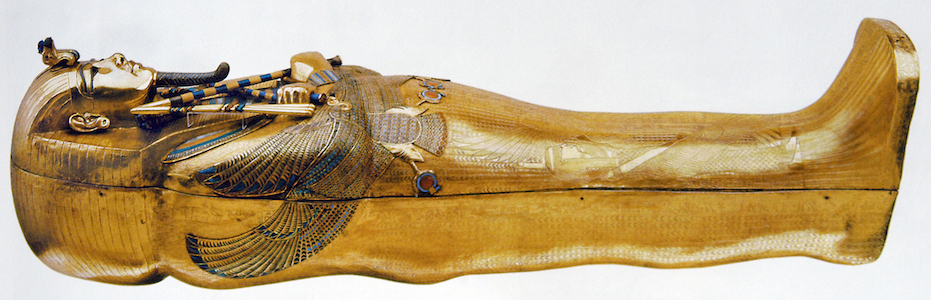
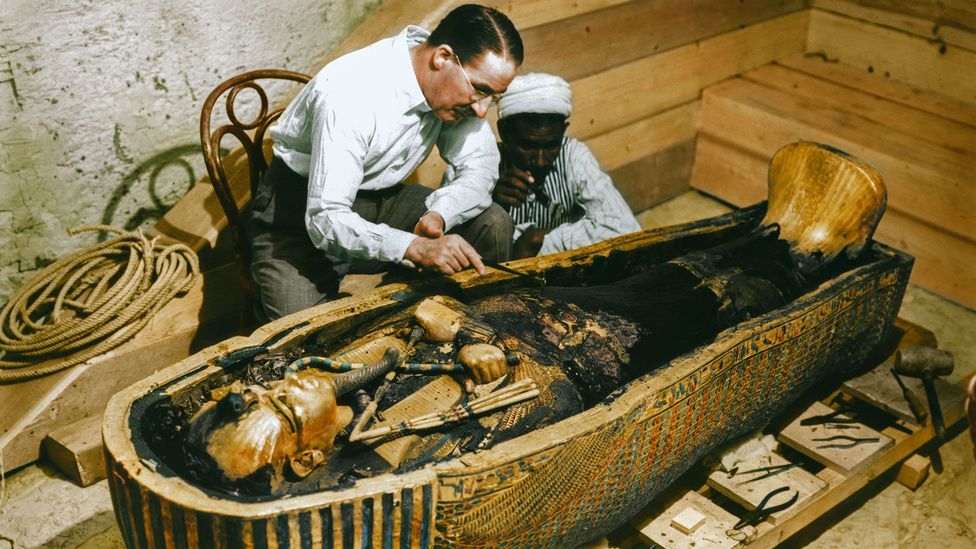
A second coffin made of wood and gold encased the pharaoh’s body and was placed within the sarcophagus.

Everything was gilded, and everywhere Carter’s torch cast light was the glitter of gold. He had been vindicated. Subsequent rulers had almost erased Tut’s name from history, and many doubted he was a historical figure. Now Carter not only proved the boy pharaoh was real, he had discovered the best-preserved tomb in history, ignited renewed interest in ancient Egypt, and unearthed objects that would leave indelible marks on human culture.

For more about Carter’s historic discovery, King Tutankhamun himself and the impact of the incredible discovery as the world celebrates its 100th anniversary, here’s some further reading:

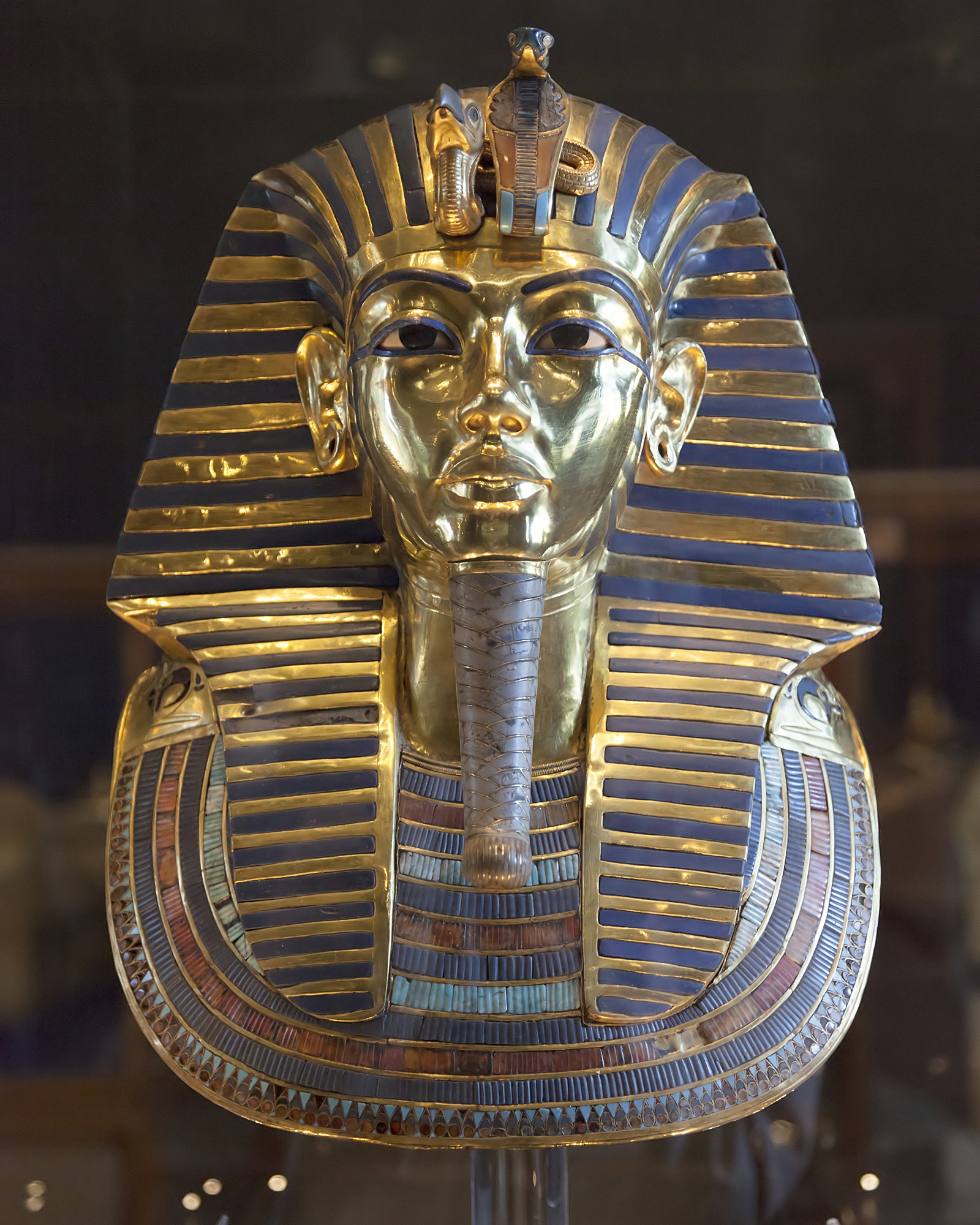
Funerary Mask of King Tutankhamun
The funerary mask of King Tutankhamun is perhaps the most recognizable and iconic artifact from ancient Egypt. Credit: Wikimedia Commons

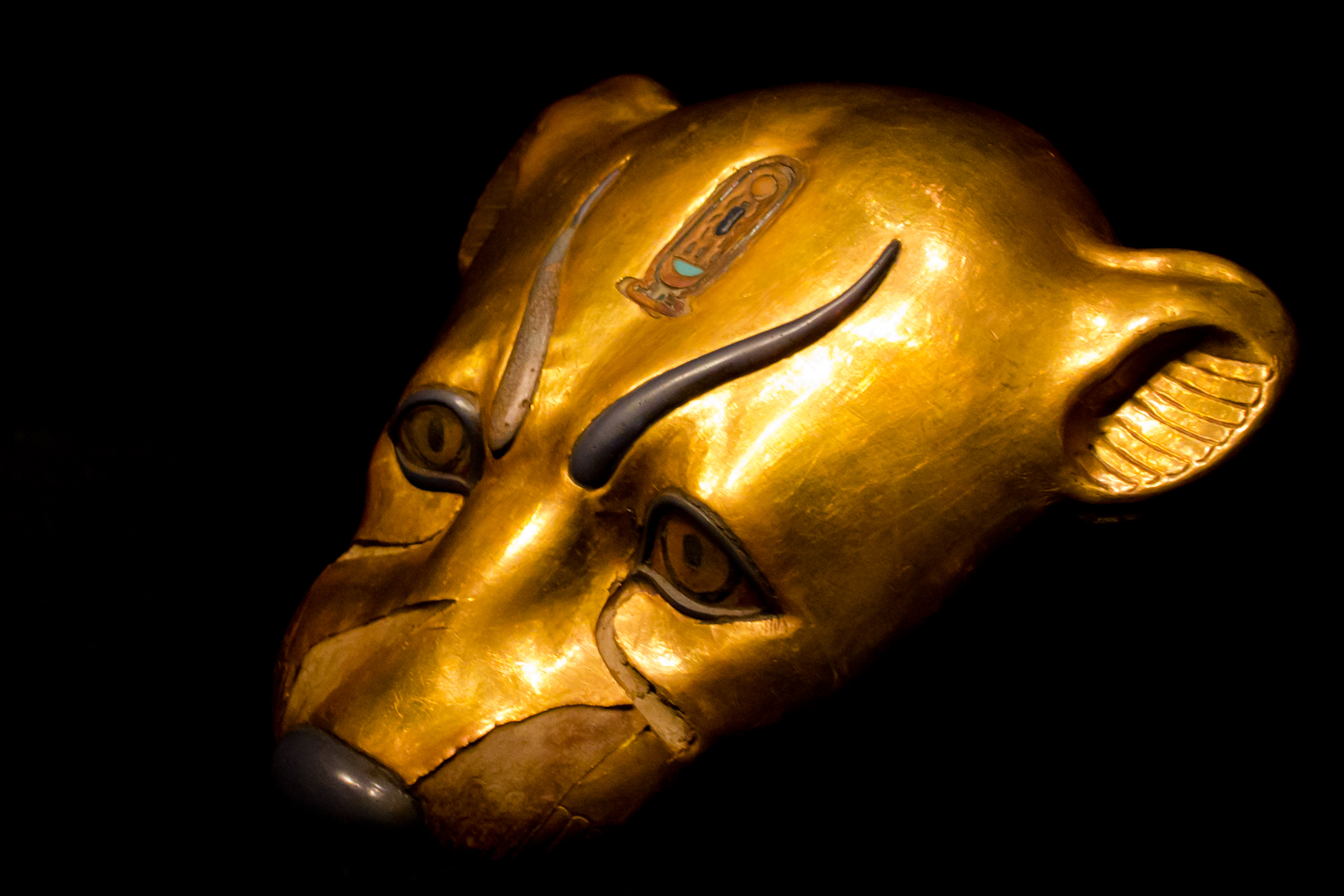
Leopard from King Tut's tomb
A sculpture of a leopard found in Tutankhamun’s tomb. Cats were important in ancient Egypt, and feline/felid imagery abounds in depictions of deities, statuary and motifs. Credit: Wikimedia Commons