The artist says his whimsical animal images are meant to help lower the national temperature after a week of riots and incrimination following the stabbing deaths of three young girls.
UK street artist Banksy has been busy lately, with a new piece of graffiti popping up in London every day for the past six days.
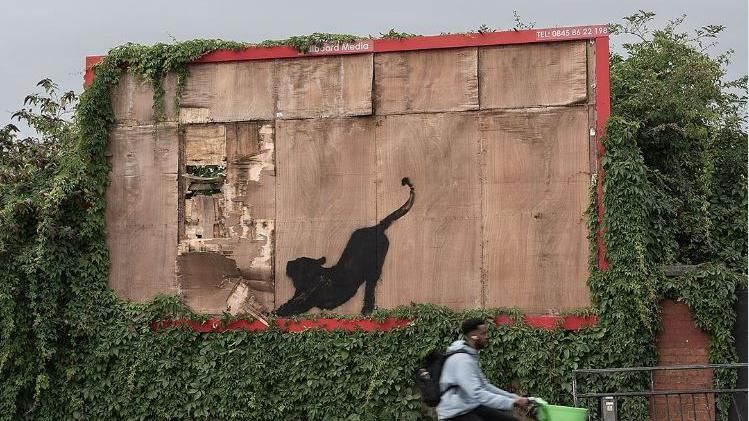
All six new images are animals and the latest is a cat. Sprayed on a billboard in northwest London, the Banksy feline is a black silhouette of a stretching cat and was found this morning.
On Friday, the anonymous artist added a pair of pelicans to a fish shop sign, making it look like the pelicans were eating the fish. That follows a trio of monkeys who appear to be swinging across a bridge, a pair of elephants, a mountain goat, and a howling wolf in the center of a satellite dish, creating the impression that the dish is the moon silhouetting the wolf.
The whimsical animal renderings often show their subjects appearing to interact with their urban environment.
Banksy’s art commands high prices at auction: one piece sold for $25 million, while many others have fetched winning bids well into seven and eight figures.
The wolf piece lasted only hours before a group of men came along and took it. A representative for the artist confirmed to the BBC that the artwork was stolen.
Likewise, the feline was gone by afternoon, removed by contractors who said they were trying to safeguard it.
This isn’t Banksy’s first cat. In 2015 the anonymous artist snuck into the Gaza strip via a tunnel from Egypt and painted a kitten on a fragment of concrete wall that was rubble left over from an Israeli strike. Banksy has also been responsible for at least three other feline-themed pieces of street art, and possibly more.
Banksy’s kitten graffiti in the Gaza strip.
The UK artist is known for using his art to highlight causes, and has made reference to various conflicts around the world, unregulated capitalism, destruction of the environment and distrust of authority, with many of his pieces taking aim at the UK surveillance state. As The Londonist wrote, London is considered one of the most surveilled cities in the world, with between 627,000 and 942,000 CCTV cameras monitoring the public.
However, Banksy’s latest series eschews a political message, his reps told UK media. After a tumultuous week that saw rioting across the country in response to the stabbing deaths of three young girls — and inaccurate news reports about the identity of the attacker — Banksy, his publicist said, merely wants his countrymen to “cheer up.”
The Chief Mouser of No. 10 Downing St. is still going strong after 13 years on the job.
At first it didn’t seem like Larry the Cat would last.
The then-four-year-old moggie was adopted from a London rescue because of his apparent predatorial skill and in November of 2011 was appointed Chief Mouser at No. 10 Downing St., the UK prime minister’s office and residence.
The prime minister and his staff hoped the highly-touted feline would rid them of a persistent rodent problem. It was so bad that when a mouse scurried into view during a state dinner in late 2011, Prime Minister David Cameron tossed a fork at it in frustration, and staff set about looking for a more comprehensive solution than the usual traps.
Larry arrived to great fanfare but had to remind the humans who’s boss first. He was almost an hour late to his public introduction because he was napping, then took a swipe at a news reporter trying to get in a live shot with him.
In his first weeks on the job, the imperious tabby made a big show of dozing off in public view, often on the window sill of No. 10. During his waking hours he was much more keen on visiting his “lady friend,” next door mouser Maisie, than he was on performing his official duties.
Larry the Cat. Credit: No. 10 Downing St./Wikimedia Commons
The chief mouser eventually found his hunting groove, and almost thirteen years later four prime ministers have come and gone, but Larry remains.
Rishi Sunak, the fifth prime minister of the Larry Era, called elections for July 10 and if his conservative party — currently behind in the polls — doesn’t maintain control of the House of Commons after the votes are counted, Larry will wave goodbye to Sunak and welcome the sixth prime minister under his watch.
Larry’s outlasted David Cameron, Theresa May, Liz Truss and Boris Johnson. Sunak assumed office in 2022.
At this point, No. 10 Downing St. should probably be renamed Larry’s House.
He seems to have a knack for knowing who’s going to stick around and who won’t last. When Truss bent down to pet Larry shortly after assuming office in late 2022, Larry gave her the cold shoulder. Truss lasted only 50 days, the shortest tenure of any prime minister in UK history.
The famous little guy is now 17 years old, but the staff who feed and care for him, and the veterinarians who help keep him in mouse-hunting shape, say he’s hale and healthy.
If the next prime minister is smart, he or she should look to Larry for advice on enduring popularity — and political survival.
Header photo of former US President Barack Obama and former UK Prime Minister David Cameron with Larry the Cat credit: Peter Souza/Official White House photo.
Larry, perched on the window sill on the left, photobombed former Prime Minister Theresa May during a visit by former US President Donald Trump and First Lady Melania Trump. Credit: White House press photo/Wikimedia CommonsLarry was looking strong as he patrolled his territory in December of 2023. Credit: Justin Ng/Twitter
The outrage over the death of a pet cat may be the best barometer of Russia’s national mood as its disastrous war on Ukraine enters its third year.
For the past two years I’ve had a lurid hobby. I’ve been watching translated clips from the bizarre world of Russian state TV, where Vladimir Putin’s pet propagandists tell the Russian people what to think.
There’s ringleader Vladimir Solovyov, a guy who dresses like the admiral of a galactic fleet of military starships and is prone to wild mood swings. Depending on when you catch Solovyov he could be cackling maniacally at the prospect of nuking London or crying into his microphone as he laments the loss of his overseas bank accounts and his boss’s slipping grip on power.
There’s Margarita Simonyan, the 43-year-old head of RT (Russia Today) and rumored alcoholic who, strangely, is even-keeled compared to Star Admiral Solovyov.
Then there are the second-tier propagandists: Olga Skabeeva, the “Iron Doll of Putin TV” who matter-of-factly endorses horrific war crimes, and men like Anton Krasovsky, who famously fantasized about drowning Ukrainian children in the Tysa River, a tributary of the Danube, his desk rising three inches as he excitedly repeated “Just drown those children, drown them!” Apparently he forgot he was on television and said the quiet part out loud, forcing his boss (Simonyan) to grudgingly condemn his words.
Margarita Simonyan, left, and Vladimir Solovyov, right, are two of Russia’s most famous pro-Putin propagandists. Credit: Russian state TV
Solovyov, Simonyan and the others looked like a bunch of investors celebrating the sale of a billion-dollar company during the opening phases of the war in early 2022, giddily playing footage of Russian missiles taking out Ukrainian apartment buildings and artillery flattening hospitals.
Their rhetoric was extra-dimensional at the time: they spoke often of a glorious New World Order with Russia at its head and all of humanity united under Putin’s tiny feet, where people would undoubtedly conclude that life under Russian masters is better than any over-hyped concept of freedom.
When Russia faltered and Ukraine began stringing together victories with the help of western weapons and real-time intelligence from the US and UK, the tone of Putin’s propagandists grew bitter. Their body language mirrored their frustration. Solovyov began a tradition of threatening to nuke a different country every day, for “crimes” like acknowledging the reality of Russia’s military incompetence or calling for peace.
To date, Solovyov’s threatened to nuke the UK, France, Spain, Germany, Italy, Japan, Finland, Sweden and the US, and that’s just off the top of my head. He especially hates the British for reasons that aren’t entirely clear, but he regularly makes it clear that it’s only through Putin’s benevolence that cities like London and Paris continue to exist.
He’s also extremely fond of Tucker Carlson: he plays clips from Carlson’s show on X regularly, offered him a job after the American was fired by Fox News, and has declared him the greatest journalist in the western world.
In Putin Russia, cat feed you!
I thought of that motley crew of Putinious jackwagons this week as I read about the Russian public’s horrified response to an incident on a train.
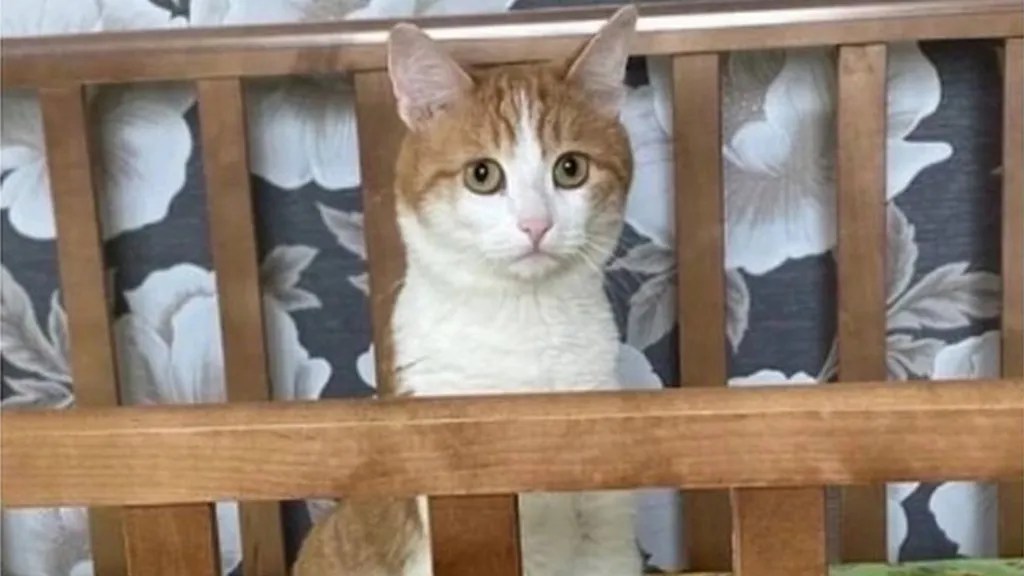
A couple was traveling on a Russian Railways train to St. Petersburg when their beloved cat, Twix, escaped his carrier. The frightened ginger tabby just kept running until he was scooped up by a female conductor, who unceremoniously tossed him into the snow in Russia’s frigid Kirov Oblast. Temperatures regularly dip into the single digits and below zero in the winters there.
On Jan. 20, after a search joined by hundreds of people, little Twix’s body was found in the snow about a half mile from the train tracks. The feline, who was used to safety and warmth, suffered multiple animal bites and died either from his wounds or the temperature.
Twix the cat in a photo from his family that was reposted to a Russian Telegram channel.
To say Russians are furious is an understatement.
Twix’s fate has been the talk of Russian social media platforms for days. Surveillance camera footage of the conductor tossing the tabby ignited a new level of rage. As of Wednesday more than 300,000 Russians had signed a petition calling for the firing of the conductor, whose name hasn’t been released by the state-owned passenger railroad company. A second petition goes further, calling for criminal prosecution, and has 100,000 signatures in just a few days.
Public outrage about the fate of Twix just might be the first authentic sentiment to reach Russian media in years.
In an unusual move, the government acquiesced — partly — to the public’s demands and pulled the conductor from duty pending an investigation. They’ve also acknowledged that Twix’s humans had properly purchased a pass for him and were riding in a car designated for passengers with pets. In the future, they’ve vowed, conductors won’t toss animals from trains.
Russia is a famously cat-loving country. Felines comprise more than 64 percent of all pets kept by Russians, and more than half of all Russian households have pet cats. They’re considerably more popular than dogs in the nation of 143 million.
Cats are popular in Russian folklore, where traditions say the furry ones have the power to ward off evil, and they’re a much more convenient pet for the millions who live in Soviet-era apartment blocks in cities like Moscow and St. Petersburg.
Still, this feels like something more.
Russians haven’t had an easy two years thanks to Putin’s disastrous “special military operation.” They can face years in prison simply for calling for peace with Ukraine. Unless they’re part of the nation’s elite or have connections among them, men can’t leave the country because the military needs more warm bodies. The country’s economy is in shambles as the government pumps more money into the war and international sanctions have taken their toll.
A Russian tank laden with loot, including a toilet, rolls past the ruins of residential buildings in Popasna, a city in eastern Ukraine.
The government has canceled or downplayed annual military celebrations so the public won’t be reminded of the war’s costs. Russia is on pace to lose an astonishing 500,000 men in two years of combat, according to the UK’s Ministry of Defense, and Putin has tried to stem the anger of the country’s mothers by staging several meetings with actresses posing as the moms of Russia’s war dead, events which have been heavily covered by state press.
Russians can’t oppose the war they’re dying in. They can’t mourn their dead fathers, sons, brothers and husbands, not by revealing their real emotions.
Quality of life has further degraded in a country where tens of millions don’t even have indoor plumbing, which is why there have been so many clips of Russian soldiers stealing toilets, washing machines and other appliances from Ukrainian homes. The prospect of being pulled off the street, sent for two weeks’ worth of rudimentary training and deployed as cannon fodder hangs heavy over the heads of Russian men and their families, especially ethnic minorities and the poor.
But Twix? They can mourn him. They can get angry about what happened to him. The furious public sentiment regarding his death wasn’t manufactured by Solovyov and company. State TV didn’t spark the backlash, it was forced to acknowledge it.
I’m neither a Russophile nor an expert on that often difficult-to-understand country, but I’d bet all my rubles that those dueling petitions say more about the Russian mood than any opinion poll to come out of Russia since 2022, and definitely more than the words of anyone allowed to express an opinion on Russian TV.
Blurry photos and fleeting encounters keep the legend of big cats in the UK alive. Could there be leopards, pumas and other large cats roaming the countryside?
For all the advances in optics and camera technology over the last 20 years alone, there are two kinds of people who love blurry, low-resolution footage: UFO enthusiasts and people who are convinced the UK is like a cold, rainy Africa with big cats lurking in every bush and field.
To be a member of either group you’ve got to shut down critical thinking faculties, suspend disbelief and put faith in the highly improbable. (Or the impossible when it comes to people who insist little green men are zipping across the night sky in sleek ships that defy all we know about physics and aerodynamics.)
The UK’s big cat believers claim the country is home to a thriving native population of large felids. Some of them think they’re “panthers,” not specifying which species of cat they think is out there, while others claim jaguars, leopards or tigers are prowling the English countryside, spotted only fleetingly at the edges of fields or in the brush, and only by people who own two-decade-old Nokia flip phones with rudimentary cameras.
They believe a native, breeding population not only exists, but for centuries has eluded capture and avoided leaving compelling evidence.
“Pardon me, mate, could you point me toward Aldersgate Street?”
The phantom cats have remarkable stealth abilities. They’ve never tripped a trail camera or appeared in a single frame of CCTV footage. Not a single tree marked for territory, not a single pile of cow bones picked clean by giant barbed tongues, not a single clump of panthera dung. Not even a hungry cub drawn into a village by the smell of barbecue on a summer night.
The reported sightings say more about human capacity for imagination — and how poor we are at estimating size over distance — than they do about the crypto-pumas and melanistic tigers some people swear they’ve seen.
When alleged big cats are spotted in the UK, they’re always seen fleetingly and from afar. When witnesses try to confirm what they’ve seen, the animals are gone.
“I was coming up to Jolly Nice from Oxford at around 7.50pm and the car in front of me was travelling at a steady pace. I looked to the verge of the other side of the road because I saw a bright pair of eyes low down. Upon further inspection, I suddenly realised there was a large outline of a low and stocky cat that was huge.”
That’s the testimony of a UK man who told the Stroud Times, a local newspaper, that he encountered a big cat a few minutes before 8 p.m. on Friday in Nailsworth, a town of about 5,600 people a little more than 100 miles west of London. His description mirrors that of others who say they’ve spotted large felids, mostly in the UK’s countryside and small villages.
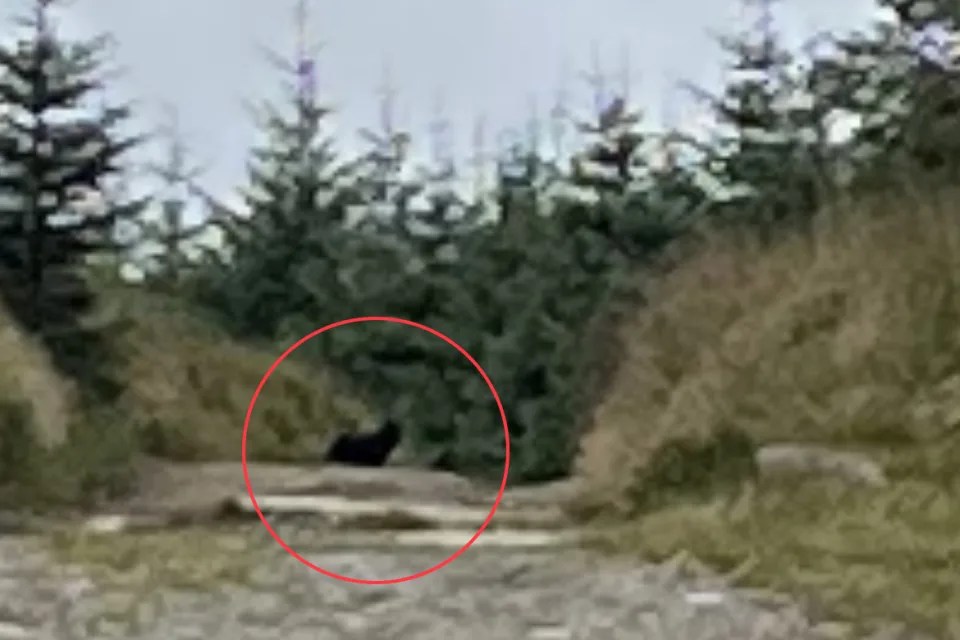
Photograph from a previous “big cat sighting.” It’s typical of the photos that surface with claims of leopards and pumas stalking the countryside. Blurred details and digital zoom make it difficult to gauge distance and scale.
The story’s headline reads: “Big cat expert’s verdict: beast spotted was a leopard.”
The expert in question is Rick Minter, an amateur biologist who has made UK big cat legends into something of a cottage industry by publishing books, hosting a podcast and frequently speaking to newspapers about the phenomenon. It’s not clear how Minter decided the animal in Friday’s sighting was a “black leopard,” but he’s said in previous interviews that he believes most alleged big cat sightings in the UK are leopards, with pumas accounting for most of the others.
Neither animal is native to Europe. Pumas range from South America to the American northwest and midwest, with isolated populations in places like Florida. Leopards are native to Africa and Asia, with ranges that overlap with lions on the former continent and tigers on the latter, mostly in India.
“I’m originally from San Diego, actually, but the expat life suits me and the British are very tasty.”
Some have floated the possibility that the mysterious felids are escaped pets who have successfully adjusted to the countryside. Minter says the evidence points to breeding populations.
If there are thriving populations, the cats would need to exist in numbers, with at least 50 on the extreme low end. If they’re escaped pets, the authorities would know.
Unlike the US, where big cat ownership was banned in the vast majority of states even before the recent Big Cat Public Safety Act was passed, owning a massive carnivore slash killing machine isn’t illegal in the UK. But owners have to register their animals, seek approval for the habitats and enclosures they’ve built, and submit to annual inspection.
There have been a handful of escapes over the decades and each time the authorities were able to capture or kill the animals, often tracking them via livestock kills. Pet tigers and leopards might be dangerous, but they’re still at a disadvantage compared to their wild brethren, meaning they go for the easy, guaranteed kills when they’re hungry. Nothing’s easier than a docile farm animal that’s never seen a big cat.
“Oi, wanna have a pint and watch Man U vs Arsenal on the telly?”
More recently, big cat hunters in the UK have tried to find more compelling evidence than a couple of blurry photographs of house cats out for a stroll. They’ve touted suspicious-looking pug marks, and in August 2022 found black fur on a barbed wire fence. According to the believers, a UK lab confirmed the fur belonged to a leopard, but there was no chain of custody, no documentation of how the sample was found and handled. Big cat experts remain skeptical.
— Big Cat Sightings In Scotland (@BCSI_Scotland) October 24, 2022
Indeed, Oxford’s Egil Droge, a wildlife conservationist, points out that in places where big cats live, you don’t have to go hunting for evidence. It’s everywhere.
“I’ve worked with large carnivores in Africa since 2007 and it’s obvious if big cats are around. You would regularly come across prints of their paws along roads. The rasping sound of a leopard’s roar can be heard from several kilometres,” Droge wrote, noting that leopards in particular are not discriminating about what they kill and leave ample evidence of their handiwork when they’ve hunted.
Still, as improbable as the sightings are, the big cat enthusiasts of the UK have one up on UFO enthusiasts and hunters of cryptics like Big Foot, the Loch Ness Monster and the Jersey Devil: the creatures they’re looking for actually exist and may surprise us yet.
Sir Buddy’s fortunes have risen dramatically, while Prince Harry’s future looks bleak.
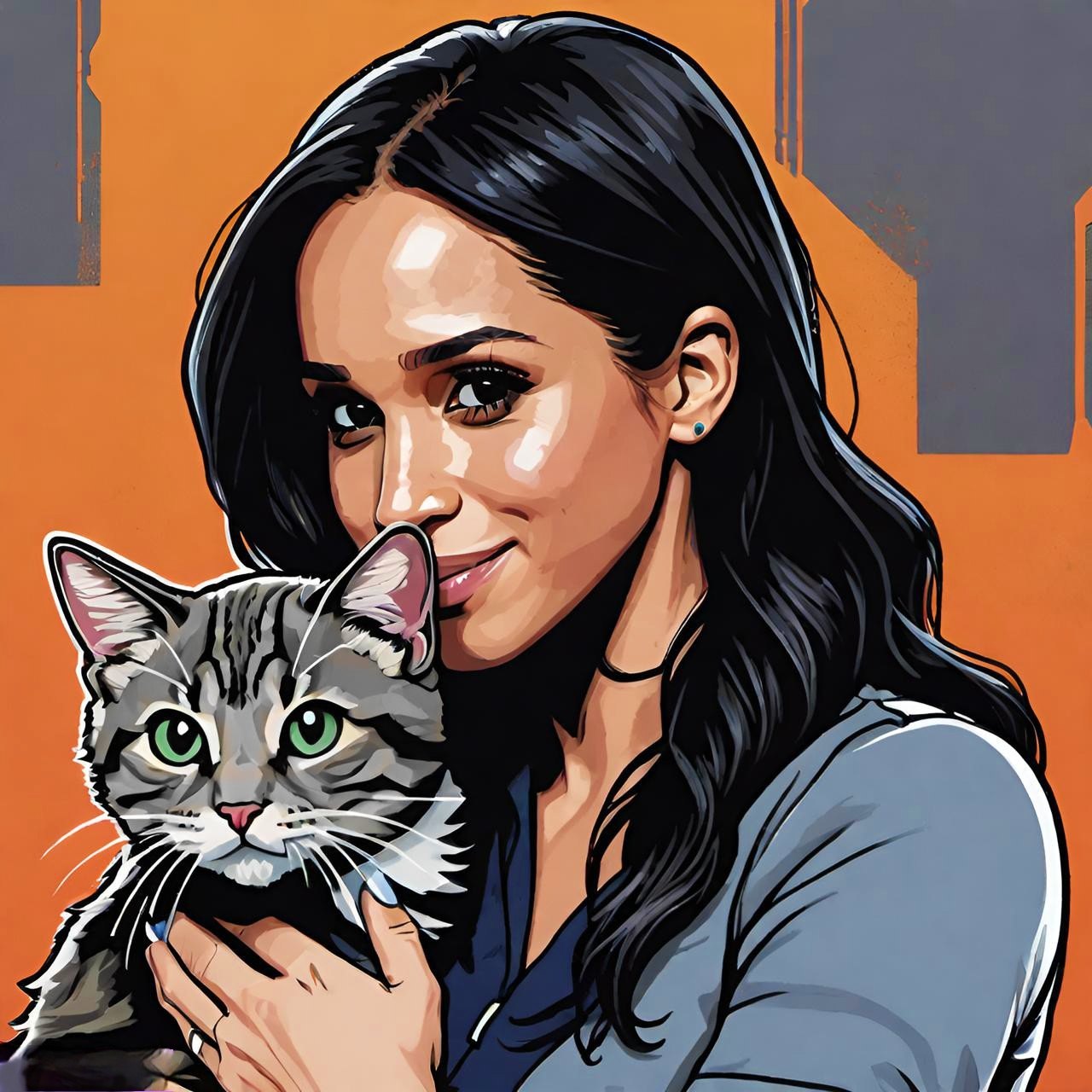
LOS ANGELES — Buddy the Cat, rumored to be on the short list for a dukedom after establishing a warm friendship with the late Queen Elizabeth II in recent years, has been spotted in the company of the Duchess of Sussex, per TMZ.
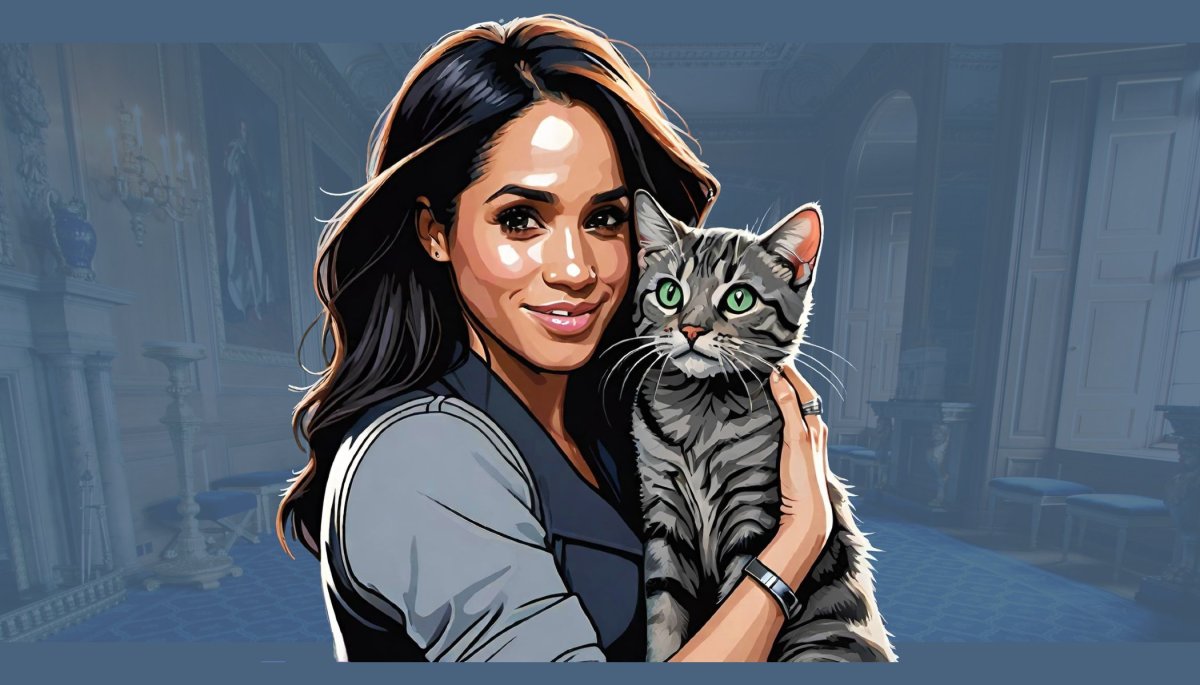
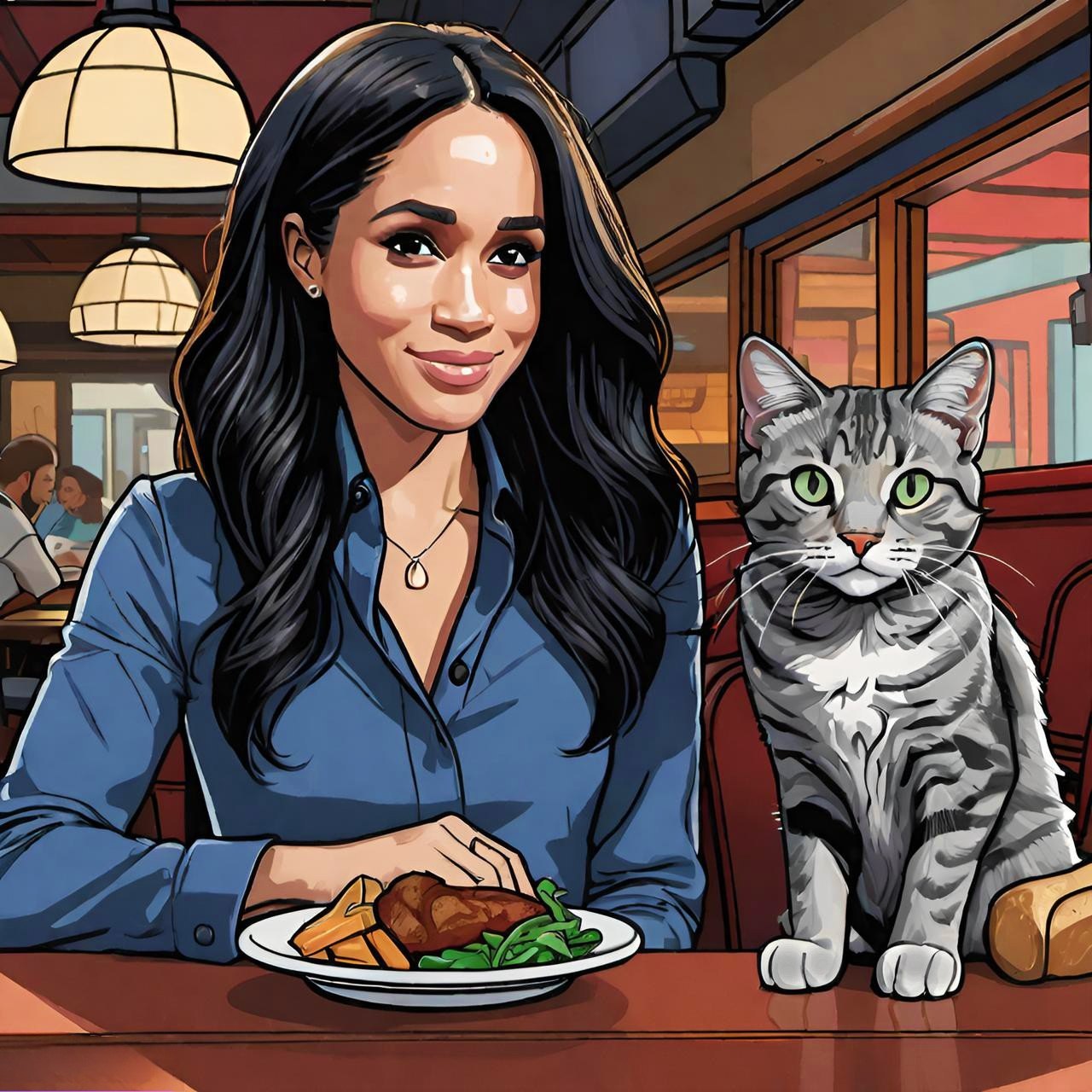
Photographs and surreptitiously-recorded footage show the handsome silver tabby and Meghan Markle enjoying a cozy private karaoke session with friends over the holiday. Later they were seen getting close at Dorsia, the ultra-exclusive Manhattan eatery where A-listers rub elbows with investment bankers and cabinet secretaries.
Prince Harry is said to be “enraged” and “deeply wounded,” not only that his wife is enjoying the company of a desirable bachelor, “but also because he thinks it would be really awesome to hang out with Sir Buddy, and he feels left out,” a royal insider said on condition of anonymity. Notably, the prince has not been able to secure a reservation at Dorsia.
The famed feline was knighted Sir Buddy by the late queen in 2021. He was created Earl of Budderset the following year in what palace insiders called a “meteoric rise” in favor with the royal family.
He had become a trusted confidante to Her Majesty, with the two parties speaking by telephone weekly and Buddy earning the endearing diminutive “my dearest Bud-Bud” from her. With his soft fur and playful nature, he’s also a favorite of young Princess Charlotte and Prince George, forming fast friendships with the rest of the family.
Markle was spotted at a popular LA nightclub with the famous feline in December of 2023.
Then the Sussexes resigned as “working royals” amid controversy and left the UK for Los Angeles. Shortly after, Prince Andrew was swiftly disowned for his role in the Jeffrey Epstein scandal. With the palace looking to take the focus off that unpleasantness, royal observers and palace stalwarts alike named Sir Buddy as a likely candidate for elevation to dukedom.
With Earl Buddy in favor and her current husband persona non grata, Markle may be eyeing the next rung on the ladder, said Gavin Northbridge, a royal observer and author of Your Highness: The Royal Family’s Favorite Marijuana Strains.
Paparazzi have also photographed the Duchess and her feline companion at an exclusive Los Angeles nightclub, an art gallery opening in the Hollywood Hills and a trendy restaurant. Prince Harry, who burned bridges with his family via a series of high-profile interviews and an autobiography, Spare, was nowhere to be seen in the photos.
“Here he is making himself vulnerable with his book, speaking out about the injustices done to him by his family, and his wife is out fraternizing with a handsome young bachelor,” said Devon Camden Dankworth, author of Grand Tyromancy: The Royal Family’s Secret History of Cheese Divination.
If King Charles follows through on his mother’s plans and grants his feline friend a dukedom, it would instantly render the current Earl of Budderset the most powerful member of the British aristocracy. The king has already thrown his enthusiastic support behind the earl’s charity, Food For Buddies, which provides delicious meals to London’s stray cats.
Markle and Sir Buddy in a trendy LA restaurant.
In an honor unprecedented at the time, Sir Buddy was knighted in 2021 “for his innumerable contributions to human-feline understanding, unprecedented innovations in the art of napping, and status as tastemaker supreme in the world of delicious snacks,” according to the Central Chancery of the Orders of Knighthood at St James’s Palace.
Since then, he’s further endeared himself to the British public by starring in ads for Aston Martin and his own detective series, The London Underfoot.
“If you’re Meghan, a future with Harry looks bleak,” said Dankworth, “but a future with Buddy looks absolutely delicious.”





 Pain In The Bud