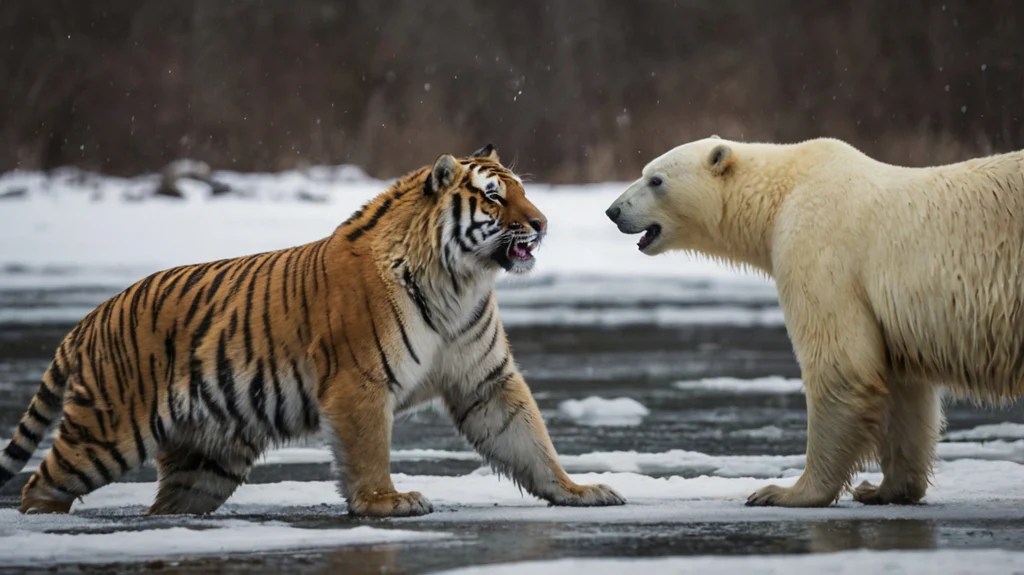
A Yougov survey of Americans produced some hilarious results when respondents were asked how they’d fare in hypothetical combat.
In the opening scene of Netflix’s Afraid, a woman is using her iPad in bed when she asks her husband: “Did you know six percent of Americans believe they could beat a grizzly bear in a fight?”
I had to pause the movie right there and see if there was any truth to the claim. Sure enough, in a Yougov survey from 2021, titled “Rumble In The Jungle,” six percent of respondents — almost entirely men — said they could defeat a grizzly bear unarmed.
Grizzly bears top out at more than 2,000 pounds, can crush bowling balls with their paws and have claws the size of large knives. They’re also extraordinarily well-protected, with heavy fur and fat protecting their vital organs. If you think you can harm one unarmed, let alone kill it, well, good luck with that.
Incredibly, eight percent said they could defeat a lion, gorilla or elephant, while 17 percent thought they could take on a chimpanzee. Again, the respondents who liked their own odds against extraordinarily lethal animals were almost exclusively men. The survey doesn’t say what they were smoking when they responded.
Domestic cats fared poorly in the imaginations of Americans: 69 percent thought they could defeat the little stinkers in hypothetical battles. Only rats fared worse, with 72 percent sure of victory in unarmed single combat.
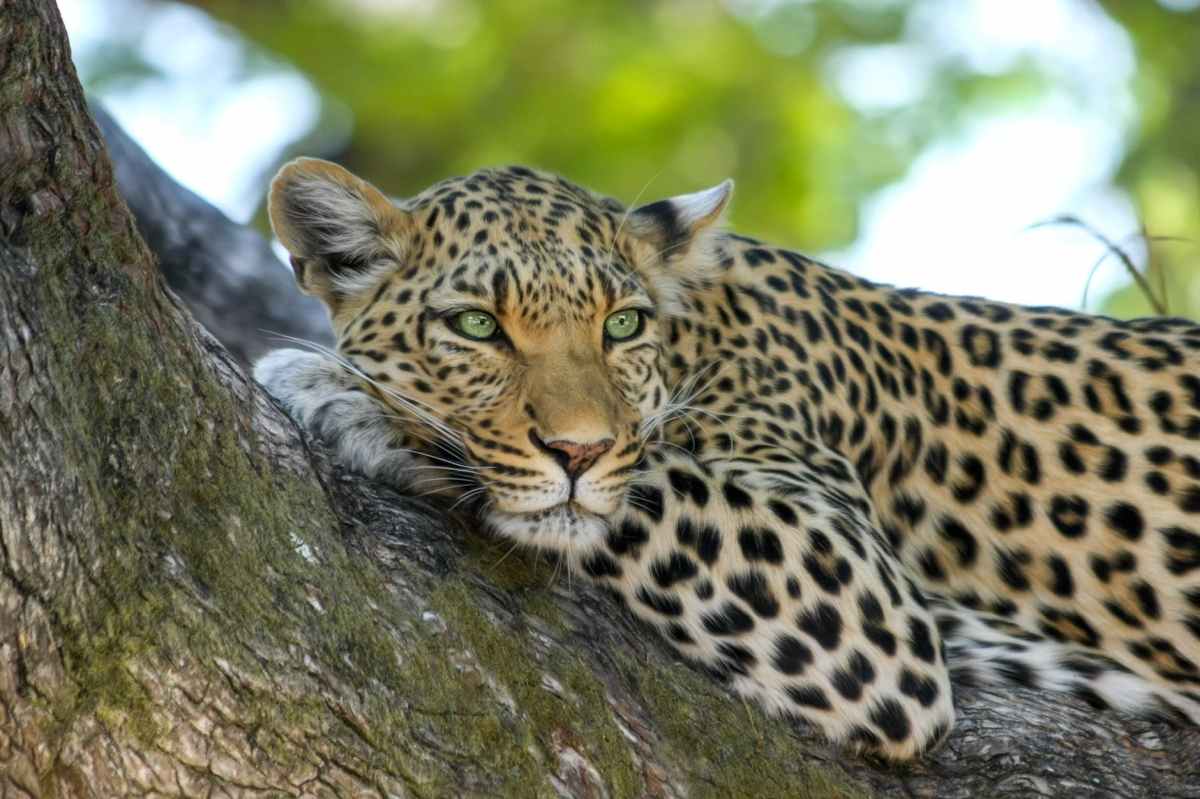
“This is really an insult to felines,” said Buddy the Cat, a combatologist at Buddesian University. “However, we jaguars fared much better, as we were projected to win about two-thirds of hypothetical fights against other animals, including elephants, rhinos and tigers. Personally I think it’s closer to 99 percent, but I won’t protest. It’s better for us if we’re underestimated.”
He chalked human overconfidence up to the fact that people are “bizarre creatures who live in a fantasy world,” and have “an unfulfilled yearning to be something more than our servants.”
“They don’t have the claws, teeth or, like, the muscle fibers we do,” he explained. “Those advantages make it possible for me to kill a caiman with a single bite or tear an anaconda apart in seconds. Jaguar means ‘He who kills with one leap,’ did you know that? Yeah, it’s pretty badass.”
Plus: The awesome and terrifying cats and proto-cats of prehistory!
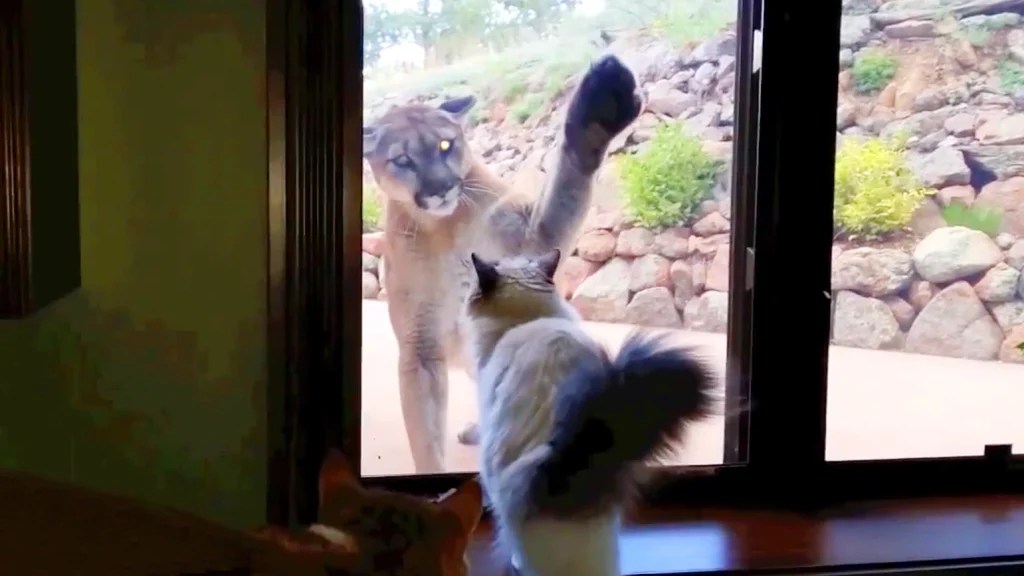
OMG, you guys! No cap, you gotta totally check out this adorbz video of a sweet widdle kitty witty becoming best fwiends with this mountain lion!
Phoebe the cat sees this cute AF puma near the back door of her home, curiously looking inside. It’s love at first sight as kitty and kitty see each other! Per Parade Pets:
“[T]he kitty in this TikTok video is completely fascinated by the big kitty outside her window. There’s no getting her away from her new friend!
On Sunday, August 25, @cricketandstrawfl shared this footage of her Tuxedo Cat posted up at the back door in their house, where a cougar was hanging out. It goes without saying that the cougar in question was many times bigger than Phoebe, but that didn’t seem to scare her at all.
It seemed like the cougar was pretty curious, too. He didn’t appear to be aggressive; instead, he was staring at Phoebe and gently pawing at the glass, trying to figure out who the tiny cat in the window was.”
OMG-hee! Look at the big kitty gently pawing at the door! He wants to give the little kitty a huggy-wuggy!
SO ADORBZ! The puma pawing at the door wasn’t testing its strength to see if he could snag a quick meal, those were totes signals of love! Teehee!
Felid predators of pre-history: They will eat you
If you’re in need of a palate cleanser after all that sugar, the BBC’s Discover Wildlife has a rundown of prehistoric cats and their particularly fascinating proto-cat ancestors, some of whom looked more classically cat-like than several species of true cats. Isn’t convergent evolution cool?
There’s the famous smilodon, the saber-toothed cat, xenosmilus, the so-called shark-toothed cat, and homotherium, the scimitar-toothed cat. Outdoing each other with increasingly sword-like teeth was apparently a big thing in the felid world back then.
There’s also the cave lion, the last of the UK’s big cats, and miracinonyx, the American cheetah, but did you know that simbakubwa, the “great lion” of Africa, topped out at almost 3,000 pounds?
Simbakubwa was massive, making modern lions look almost like house cats in comparison.
Dinictis looked like a cat, behaved like a cat and hunted like a cat, but was not part of the felidae family. Credit: Wikimedia Commons
Simbakubwa and dinictis were examples of “false cats.” That is to say, they were not part of the felid lineage, but closely resembled cats in body plan and behavior through convergent evolution. Nature found a niche, and several different species filled it for a time.
Dinictis in particular looks strikingly like modern big cats, which makes it even more surprising to learn it’s not part of the genetic lineage of the felid line.
Finally — or firstly — there’s proailurus, the first cat or “dawn cat,” from which all true felidae species can trace their lineage. Appearing almost 31 million years ago proailurus enjoyed napping, climbing trees and eating Temptations. Okay, we made that last part up. But still. If proailurus were around today, it would probably go just as crazy for the kitty crack as our house panthers do.
Big cat sightings across the UK have a lot in common with UFO sightings in the US.
Shhhhh!
No one tell NewsCorp that “black pumas” don’t exist, pumas are native to the Americas, leopards are native to Africa and Asia, and a “black panther” is a color morph, not a species of cat.
A story from Fox News — prompted by a similar story in the UK’s Sun, part of the same Rupert Murdoch-owned media conglomerate — claims the British are “unnerved” by an “uptick” in sightings of cryptid big cats. The mysterious creatures are supposedly running rampant in the British countryside and in the suburbs, according to the article, which identifies them as black pumas, black panthers and black leopards.
Oddly, the story says the sightings are up significantly because there have been three “big cat” sightings in October, immediately before informing readers there are 2,000 such sightings in the UK every year.
Little Buddy and I are not exactly known for our math skills, but 2,000 sightings a year works out to 167 sightings per month, which is a lot more than three. Fifty five times more, in fact. So the story should really be about a dramatic dip in phantom big cat sightings, shouldn’t it?
What evidence does the Fox report cite for its breathless claim about big cats taking over the UK? A pair of grainy security camera videos, including one showing a “big cat sighting” at night, and the word of a “big cat sighting expert,” alternately called a “countryside expert” in other media reports, who by the way happens to be hawking a documentary on the sightings.
“It’s a crucial issue,” self-described wildcat expert Rick Minter told The Sun. “How do we come to terms with living alongside big cats in Britain?”
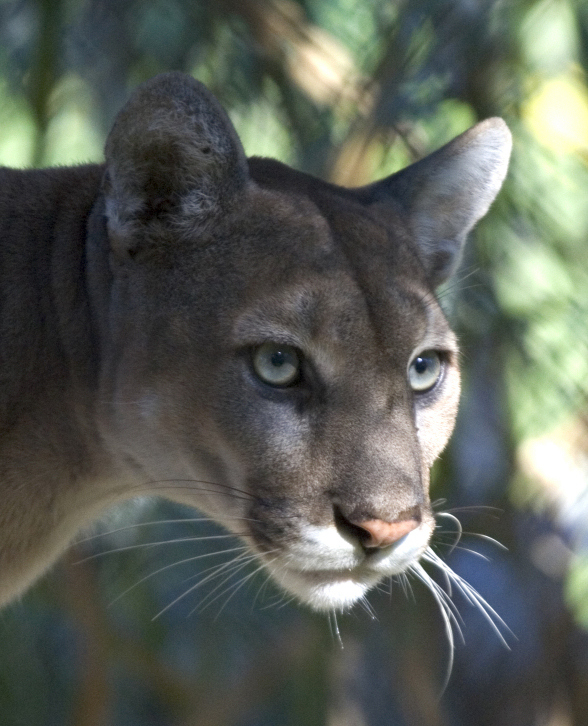
Pumas, also known as cougars, mountain lions, panthers and catamounts, are native to the Americas. Credit: Wikimedia Commons
For readers unfamiliar with the highest echelons of reputable journalism, The Sun is the UK’s foremost bastion of trustworthy reporting, a tabloid par excellence whose editorial staff are known for breaking stories about “crazed werewolves” and immigrants barbecuing the late queen’s swans when they weren’t running topless photos of models on Page 3. The Sun is owned by NewsCorp, the parent company of Fox News.
As for the two pieces of footage, one is the aforementioned blurry mess recorded by a home security camera at night, and shows a few frames of a cat’s behind and a tail as the felid walks out of the frame. The other is a blurry clip the credulous claim depicts a large cat feeding on a sheep. There’s no indication the figure is a felid of any type.
As far as we’re concerned, there are a few possible explanations for the sightings:
They’re former pets
India the tiger was found wandering the suburbs of Houston in 2021. In this photo, he’s enjoying life in his sanctuary’s large enclosure where he’s got plenty of room, stimulation, toys and even his own rock pool.
If there are indeed big cats roaming the British countryside and suburbs, they would have to be former pets of people who acquired them on the illegal wildlife market, broke the law by “importing” them into the UK, then broke several additional laws by keeping them as pets until the cats quickly grew and the owners realized keeping them is untenable.
Such situations aren’t unheard of, obviously, but they can’t account for a dozen big cats on the loose at any one time, much less more than a thousand as Minter claims.
More importantly, big cats who are taken from their mothers as days-old cubs, sold as pets and later dumped are universally confused, terrified and unable to fend for themselves. They end up roaming suburbia in broad daylight, like a nine-month-old tiger named India who was spotted wandering around the outskirts of Houston in 2021, sniffing out potential food in garbage cans because they don’t know how to hunt.
If these phantom big cats were former pets, they’d be spotted, captured and taken to sanctuaries within a matter of days.
They’re small wildcats formerly native to the area, like the Eurasian lynx
The problem is, the Eurasian lynx was extirpated from the UK about 1,400 years ago. There have been debates among conservationists about reintroducing wild populations to the British countryside — and to Ireland — but no concrete plans as of yet. Proponents say the lynx could be beneficial, keeping deer populations level without major human intervention.
Eurasian lynx adults can grow to about the size of medium dogs, so it’s possible they can be mistaken for “big cats” in blurry video, especially when perspective and/or lack of other objects makes it difficult to place their actual size in context. However, as with big cats, any Eurasian lynx spotted in the UK are likely to be former pets.
They’re housecats
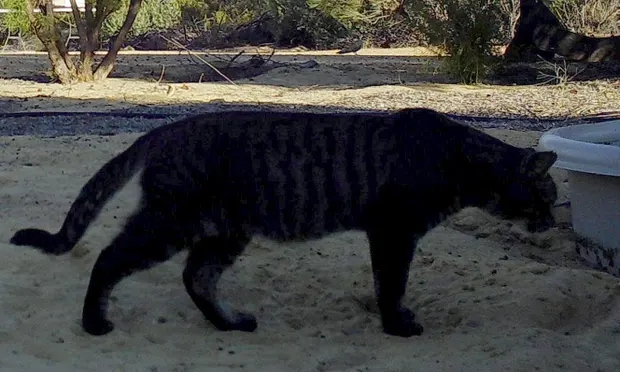
This feral cat, a plain old member of the felis catus species, was repeatedly mistaken for a big cat in western Australia back in 2018.
If witnesses in the UK are mistaking house cats for big cats, they wouldn’t be the first.
Stories abound of little cats prompting “big cat” sightings, from Vancouver (a Savannah cat) to Scranton, Pa. (a missing house cat), to San Jose (a Maine Coon) and even Australia. (A feral cat.)
One wildlife ranger in Australia became so annoyed with fielding frequent big cat reports that he implored people to educate themselves.
“People need to get over the idea the cats are panthers,” wildlife ranger Tim Gilbertson told Australia’s ABC news. “It is just not on. They are big feral cats, at least 50% bigger than a house cat and they are powerful.”
The usual issues are in play here: Fuzzy security camera footage, night sightings, confused witnesses. You’d think there would be more phantom big cat sightings in the US, since pumas can grow to the size of jaguars and could be mistaken for lions, but people who live in areas where pumas range tend to know they’re around and what they look like. They’re also the definition of scaredy cats, reluctant to let humans spot them or get anywhere near them.
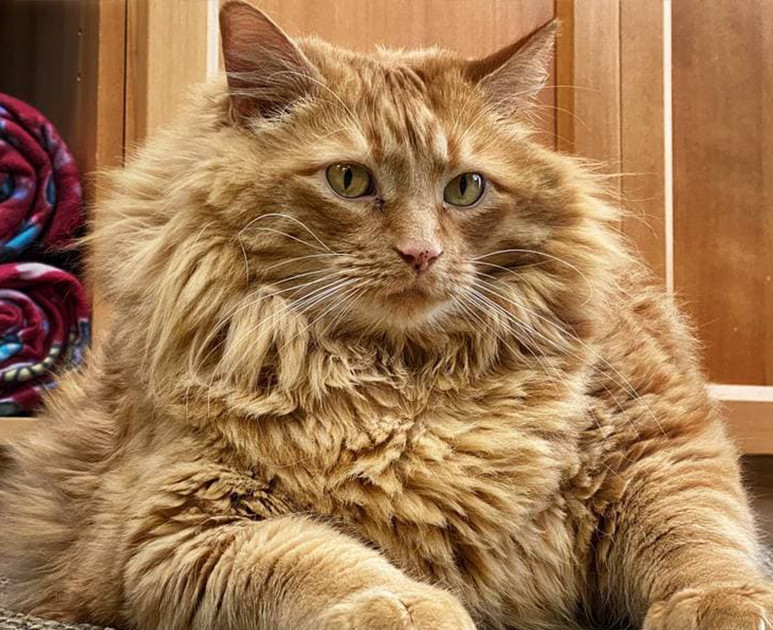
Frequently mistaken for a tiger: Buddy the Cat.
Ultimately, witness reports count don’t count for much, and not just because memory is malleable.
Thousands of people have reported seeing Bigfoot, chupacabras, the Jersey Devil and the Loch Ness monster, but those creatures are all firmly in cryptid territory.
There’s Occam’s Razor, and there’s common sense: For a primate species like Bigfoot to exist, for example, there would need to be a breeding population, enough prey for the creatures to feed themselves, and someone somewhere would have found remains at some point. (Bigfoot sightings go back to the days before Columbus set foot on New World shores, but it’s only been in the last century or so that the cryptid has entered the popular imagination via folklore and media.)
Likewise, if there are indeed 1,000 big cats prowling the British countryside, as Minter claims, there would be a breeding population, ubiquitous tracks and the remains of prey animals killed in ways consistent with big cat ambush techniques. Cats of all sizes are ambush hunters and have a distinct way of killing prey which is unlike other animals.
The UK’s big cat sightings should be treated more like the UFO sightings in the US and particularly around Area 51. They start with a kernel of potential truth — the existence of a secret base to test experimental military aircraft, or the possibility that big cats who were former pets have been let loose — which leads people to consider the possibility, then when they see something they can’t easily explain, they reach for the exceptional.
But as Carl Sagan famously said, exceptional claims require exceptional proof, and it’s no accident that things like UFOs, cryptid primates and phantom big cats only appear on the grainiest, blurriest and darkest footage.
My money is on domestic cats mistaken for their much larger cousins. Maybe Buddy’s been taking some transatlantic flights under my nose. I’ll have a little chat with him about it and ask him to kindly stop terrifying our friends across the pond.
Cats from all walks of life react to news that humans want to join the species.
There have been several controversial stories lately about humans who identify as cats, or want to become cats. Most of them are hoaxes, but you can’t put things past crazy humans. We asked actual cats what they think about the idea.
What do you think?
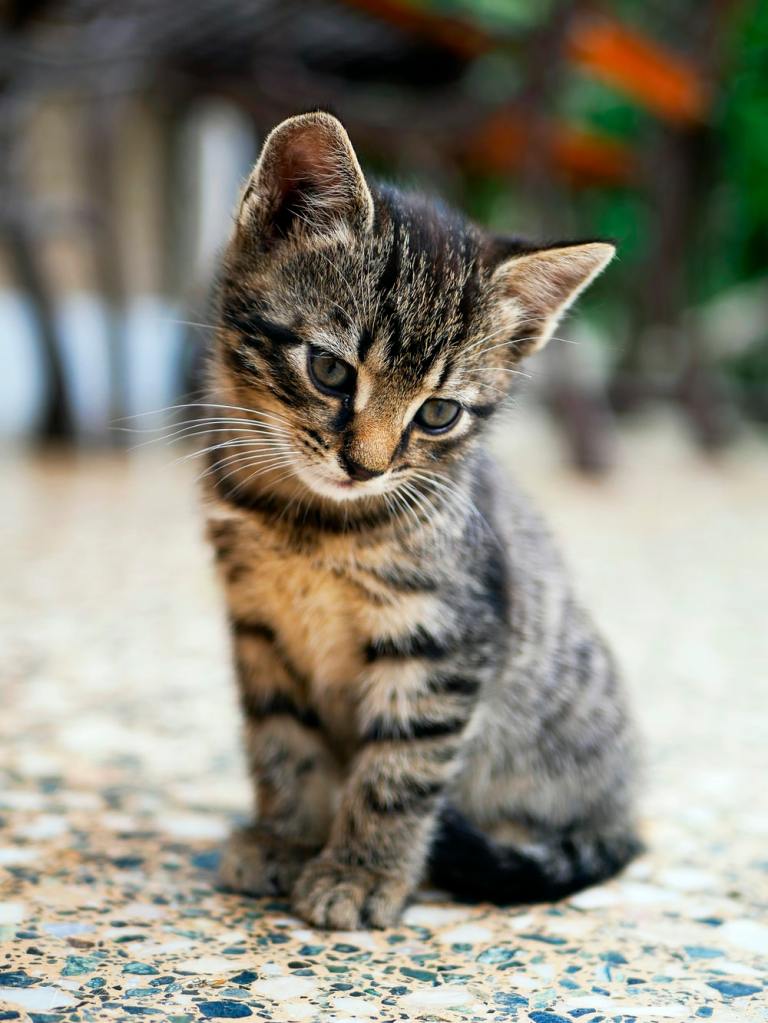
“Does this mean they’re not going to be our servants anymore?” – Princess Sprinkles, 6, house cat
“I identify as a hulking tiger.” – Tiger, 11, indoor-outdoor menace
“They can identify as Jovian moons for all I care, as long as dinner is still served on time.” – Crispy Cream, 4, house cat
“I say, dear fellow, I should rather think they lack the fur.” – Niles, 10, British cat
“What am I thinking about? I’m thinking about chocolate rivers, candy-coated gumdrops, and Lifesavers made of cheese!” – Chonkmatic the Magnificent, King of North American cats
“WATCH ME GO!!! WATCH ME! I’M GONNA RUN FAST NOW!!! YEEEEAAAHHH!” – Mari, 4 months, house kitten
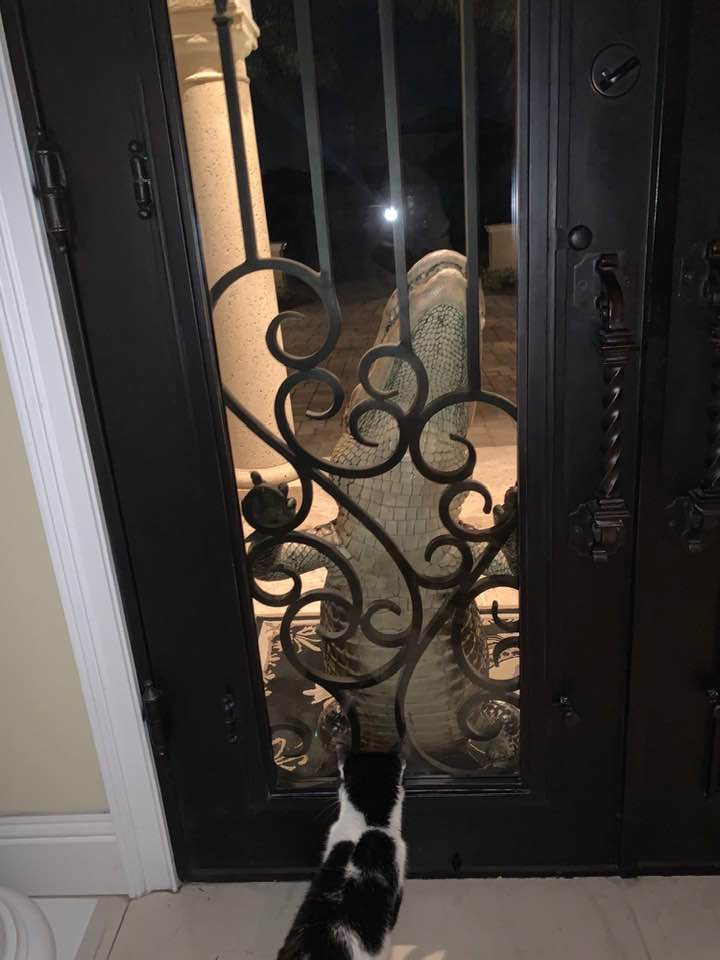
The cat displayed Buddyesque bravery in confronting the massive reptile.
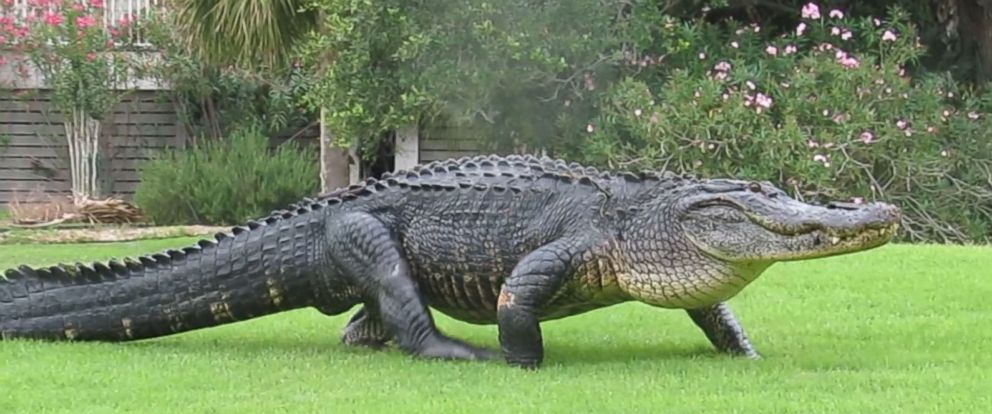
A house cat in Florida looked decidedly unimpressed by a massive alligator that tried to force its way into the cat’s home earlier this month, sitting calmly just a few feet away as the alligator pressed against the front door.
”Hey!” we imagine the cat saying. “This home is taken! This is my house and these are my humans, and if you think you can just break into my territory, you got another thing coming!”
The photo was taken in Sarasota, Florida, where it’s not unusual to see the predatory reptiles waddle their way through developed areas, particularly during storms. In the viral photo — which has been shared more than 104,000 times on Facebook — the alligator’s belly is pressed up against the glass door, which itself is reinforced by wrought iron in a floral motif.
We asked Buddy the Cat whether the sort of bravery exhibited by the Tuxedo in the photo is typical of all felines.
“Ahhhh! What the hell is that?!?” Buddy said, jumping back six feet. “I mean, uh, of course I’m not scared. Us cats eat alligators for breakfast!”




 Pain In The Bud