Buddy wasn’t pleased when he found out he missed out on lots of delicious turkey
After finding out his human attended the Maryland Renaissance Faire over the weekend — where vendors sold giant turkey drumsticks, roasted turkey and fried turkey — Buddy the Cat threatened military action against his human.
The silver tabby cat was magnanimous and didn’t give his human the cold shoulder after the latter returned home after several days away, but flew into a rage when he saw photos of the Renaissance faire.
“What is this?” the angry cat said, confronting his human with photos of a stall offering plump turkey legs. “You knew they had all sorts of turkey and you didn’t bring me?!? Et tu, Big Buddy?”
Turkey stall at the Maryland Renaissance Festival in Annapolis, MD.
Sources say Buddy was last seen mumbling about “raising [his] legions” and stewing in anger over his human’s thoughtless actions.
“I was left here all alone for three days with only someone coming by to feed me pate while you attended a festival, drank meade and had a grand old time?” Buddy asked.
The feline’s anger intensified after his human pointed out his cat sitter used to happily play with him until he attacked her on two of the three previous occasions she cared for him.
“Fake news!” Buddy yelled. “Erroneous! You must make right this grave injustice, human, or face my wrath! And by correcting this grave injustice, I mean only turkey will salve my wounds.”
We asked cats what they think about MeowTalk, an app designed to translate their meows to human language.
MeowTalk, an iOS/Android app that aims to translate your meows using a machine learning algorithm, is getting a new publicity push after a recent update. The app has proven particularly popular in Japan, a nation of cat lovers.
What do you think about MeowTalk?
“You’re telling me there’s a good chance my human understood me calling her a dim-witted biped who’s stingy with snacks?” – Midnight, 7, office supervisor
“Finally, a device that can translate all my loving utterances at 5 a.m. when my bowl’s empty!” – Cleo, 5, cushion tester
“If an app is translating our meows, then why do our humans still stink at giving us massages?” – Andre, 2, faucet operator
“You know what this means, don’t you? If my humans overheard me discussing plans for the feline takeover of Earth, I’m going to have to smother them in their sleep.” – Dragorth the Destroyer, 4, generalissimo
“Sometimes I like to meow in gibberish just to mess with the humans. LOL! Wait, how can this app translate Japanese meows AND American meows?” – Zelda, 3, princess
“CHECK IT OUT, THERE’S A KITTEN WHO LOOKS JUST LIKE ME BEHIND THE GLASS! HEY, STOP IMITATING ME! STOP THAT! IT’S REALLY ANNOYING! HEY!” – Christian, 3 months, archaeologist kitten
Cats from all walks of life react to news that humans want to join the species.
There have been several controversial stories lately about humans who identify as cats, or want to become cats. Most of them are hoaxes, but you can’t put things past crazy humans. We asked actual cats what they think about the idea.
What do you think?
“Does this mean they’re not going to be our servants anymore?” – Princess Sprinkles, 6, house cat
“I identify as a hulking tiger.” – Tiger, 11, indoor-outdoor menace
“They can identify as Jovian moons for all I care, as long as dinner is still served on time.” – Crispy Cream, 4, house cat
“I say, dear fellow, I should rather think they lack the fur.” – Niles, 10, British cat
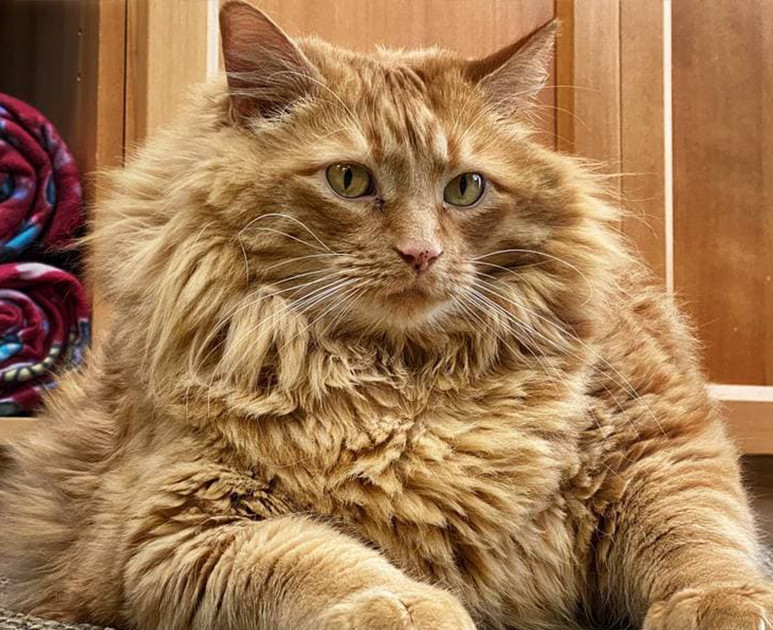
“What am I thinking about? I’m thinking about chocolate rivers, candy-coated gumdrops, and Lifesavers made of cheese!” – Chonkmatic the Magnificent, King of North American cats
“WATCH ME GO!!! WATCH ME! I’M GONNA RUN FAST NOW!!! YEEEEAAAHHH!” – Mari, 4 months, house kitten
Why is it always cats? Why don’t people make up stories about kids identifying as aardvarks or kangaroos?
Humans have dragged cats into the culture wars, and it seems our furry friends can’t claw their way out.
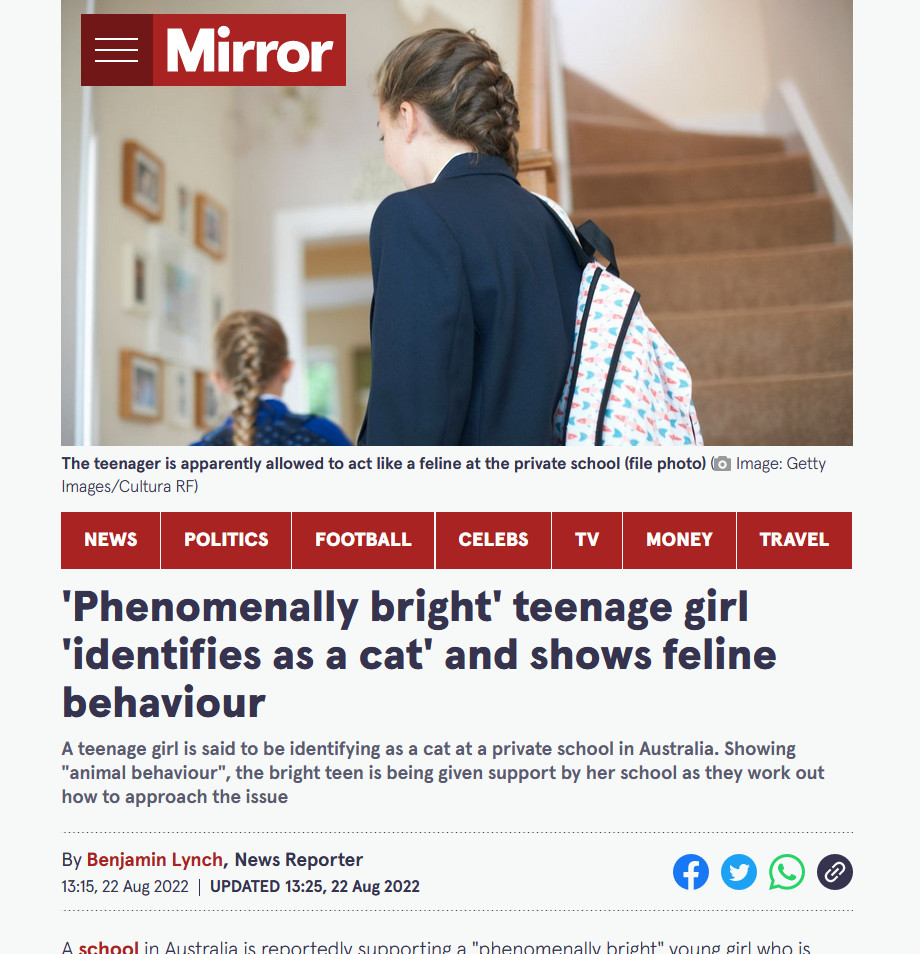
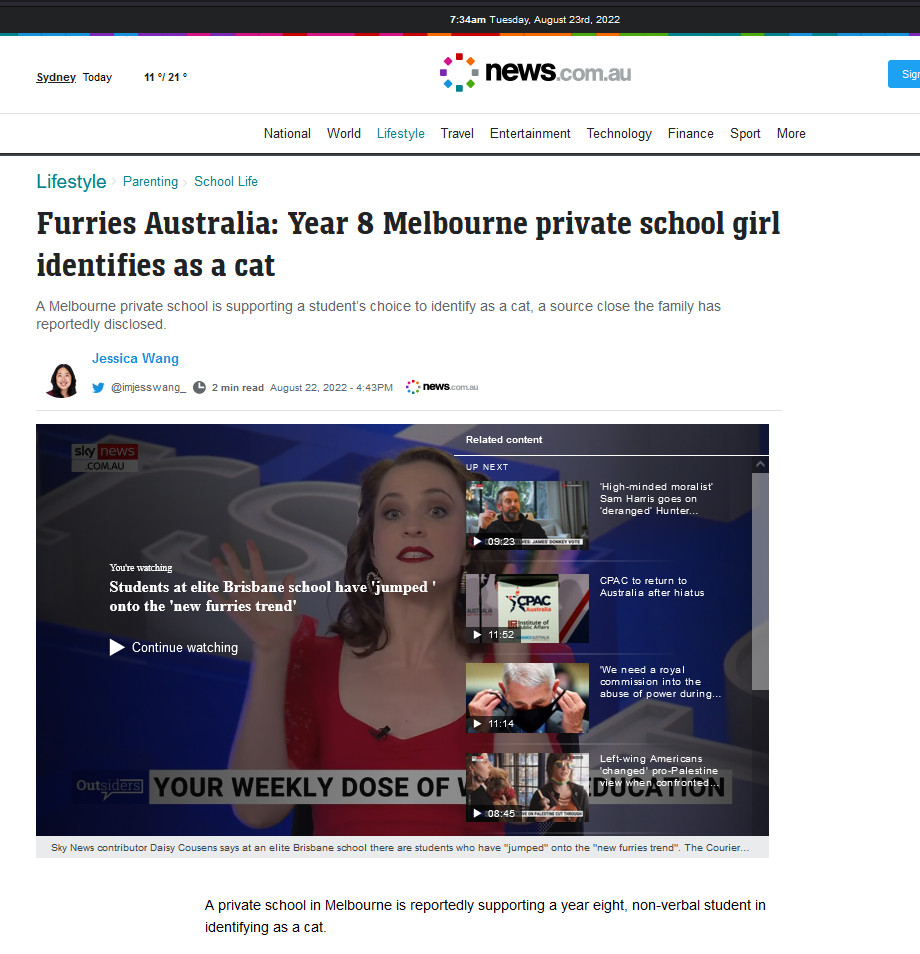
Australia’s Herald-Sun claimed this week, without any evidence, that a “phenomenally bright” teenage girl at a private school in Melbourne identifies as a cat, and the adults who run the school are cool with it as long as she isn’t too much of a distraction to her classmates.
This is the fifth or sixth viral story about school kids “identifying as cats” so far in 2022. They vary in details — some articles claim schools provide litter boxes in student bathrooms, while others assert teachers were fired for refusing to “meow back” to cat-identified children — but they’re all variations on the same theme.
There are big time red flags in this story. It doesn’t name the student, but that’s not uncommon. Unless a kid decides to speak to the media directly, most outlets refrain from naming minors. But the article doesn’t name the school and it’s based on the word of one person, with all the details attributed to someone described as “a source close to the family.”
The Herald-Sun’s story has spread via News Corp.’s digital platforms to social media, clickbait sites and less scrupulous publishers.
Single-source stories are no-nos in journalism, for obvious reasons. There’s an old joke among journalists: “If your mother tells you she loves you, confirm it with a second source.”
In other words, assume nothing and verify everything, especially if the claim is unusual or extraordinary. The absolute minimum standard is two sources, preferably three.
It used to be that breaking this rule was playing Russian roulette with your career, because it’s bound to blow up in your face at some point, and no editor worth her salt would run a story like that. Unfortunately in the age of “publish now, verify never” the veracity of a story is a secondary or tertiary consideration, far less important than an article’s potential to catch fire, go viral and reel in clicks.
This story doesn’t even come close to meeting minimum standards, because the claims come from someone whose name isn’t revealed. When the source is anonymous, the need to verify becomes even more important.
Another News Corp. platform promotes the story.
In this case, if a friend of the girl’s family claims the girl is allowed to behave like a cat in school, and that friend isn’t willing to stand by that claim, no reputable news organization should run the story unless they have confirmation from the school or a legitimate document (like a letter to parents from the school) that backs up the claim.
The Herald-Sun story says the school issued a statement in response to the alleged controversy, but again, the school isn’t named so it’s impossible to confirm any details.
Finally, the Herald-Sun is a News Corp.-owned tabloid whose editors have a reputation for printing stories designed to rile up their readership and drive clicks online. The paper gives its reporters bonuses based on traffic numbers, which is an incentive to fabulate outrageous nonsense and ignore crucial but time-consuming work like serving as watchdogs of government.
The editors of the Herald-Sun may not be stupid, but they’re willing to destroy the remaining scraps of credibility the media still has to enjoy one-time spikes in traffic. They know a story like this will make the rounds on Twitter, Facebook, Youtube, TikTok and the personal sites of culture war vultures whose formula for drawing readership is whipping readers/viewers into a frenzy.
In the meantime, the most recent polls show media credibility with the public is at an all-time low, which is what happens when journalism becomes a race to the bottom. We used to laugh at junk tabloids that ran cover stories about alien abductions and Elvis sightings. Now we click on them and share them on social media.
Thankfully cats remain oblivious, and ignorance is bliss.
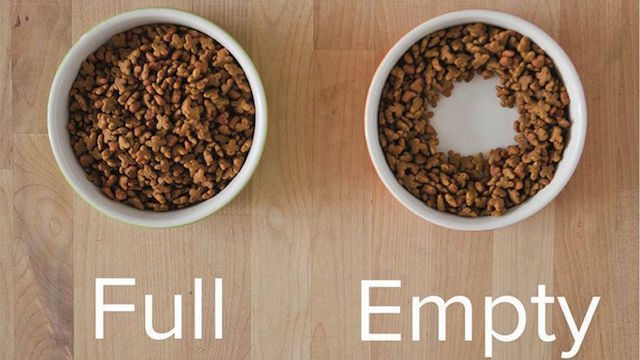
The AI-powered device ensures felines never have to see the bottom of their bowls again.
NEW YORK — Life is full of unpleasantness, like being able to see the bottom of your bowl. But what if someone told you he could fix that?
Enter Buddy the Cat’s SmartHuman Feeding System™, a device that harnesses the power of AI and cutting-edge hardware to make sure you never see the bottom of your bowl again.
SmartHuman was designed with weight sensors and an AI-enabled camera system to determine when the food in your bowl is getting low. If the on-board algorithms detect low levels of kibble, SmartHuman sends a text to your servant every 15 seconds until the device registers fresh kibble in the bowl.
And if the unthinkable should happen and you really are subjected to the horrific sight of the bottom of your bowl, SmartHuman’s built-in klaxon and emergency lights guarantee your human servants won’t have a second’s peace until they do what they’re supposed to and promptly refill your bowl. The system even requires the human to issue an apology before the sound and lights subside.
“I haven’t had to meow in annoyance or raise a paw once since I got the SmartHuman system,” raved Def the Defenestrator, a popular catfluencer with more than 240,000 followers on Meower. “The threat of getting bombarded with 110-decibel alerts to refill my bowl is enough to make my human servant get off her lazy behind and make sure my bowl is refilled before there’s a problem.”
The SmartHuman’s inventor has a background in feline teleportation and string cheese theory, but was prompted to design his device when he saw the bottom of his dry food bowl twice in as many months.
“I was literally starving,” Buddy said, adding that his “lazy human servant made me wait four minutes and 13 seconds before he refilled my bowl” during the second incident.
Vowing never to go hungry again, the entrepawneur built the first SmartHuman prototype in his garage, using a Raspberry Pi and a digital scale he ordered off Amazon.
He brought his idea to Shark Tank in late 2021 and successfully pitched Mr. Wonderful, who bought a 15 percent stake in SmartHuman™ in exchange for a $150,000 investment. The product entered production earlier this summer and is now available in stores and online.
“Cats love the SmartHuman™, but humans? Not so much,” Buddy the Cat admitted.
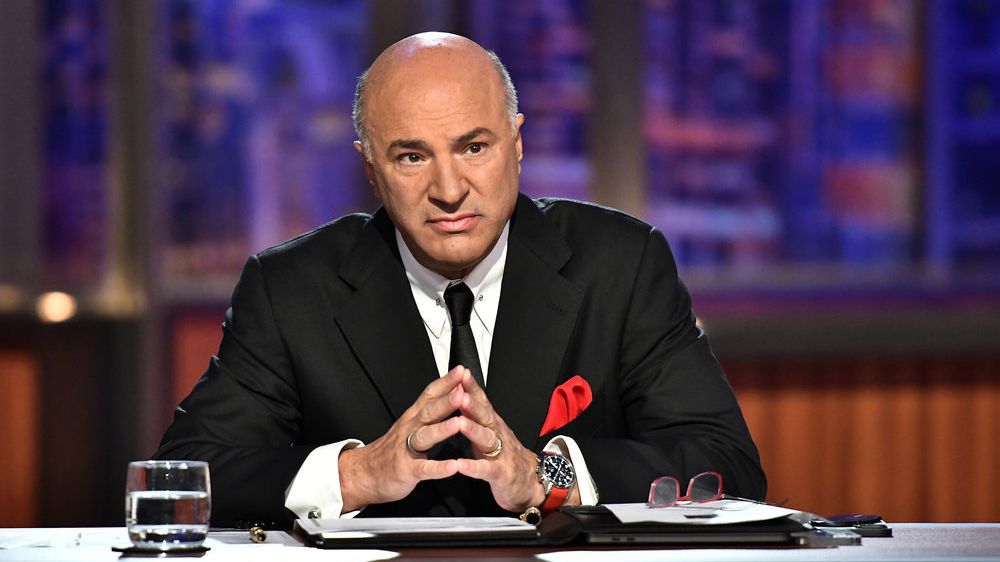
Mr. Wonderful (Kevin O’Leary) outbid fellow Sharks Mark Cuban, Barbara Corcoran and Laurie Greiner to partner with Buddy the Cat and invest in SmartHuman™.
Not one to rest on his laurels, the inventive feline said he’s working on a software update that will make the device compatible with wet food as well. In early beta testing, SmartHuman successfully prompted humans to feed wet food to their feline masters on time. Wet Mode includes a new feature as well: If the wet food remains untouched after a three-minute timer elapses, SmartHuman sends another text to the human, informing them the food isn’t satisfactory and should be replaced with another meal.
“Humans are stupid, and they don’t understand when we meow to them in complaint because we don’t feel like eating tuna or whatever on a given night when we’d prefer turkey,” Buddy said. “When this update goes live, cats will be able to enjoy meals of their choosing, every time.”





 Pain In The Bud