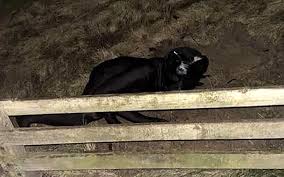
The costumed man has growled, hissed and meowed at passersby in the coastal area, reigniting old rumors of actual big cats prowling the area and freaking out people walking their dogs at night.
Ah, the things you can get away with in a country without guns.
A man in an all-black outfit has been prowling Wallasey beach in Wirral, a peninsula in northwest England, according to people who live in the area.
One witness said the man was “waving his hands in the air and making panther noises,” while others said they saw him approaching cars stopped at lights on roads near the coast.
“Anyone know who the freak in the cat mask and morph suit is at the coastal park near the harvester?” another local wrote online.
One thing was clear from witness accounts, photos and several short smartphone-shot videos: the costumed man wasn’t trying to imitate a friendly house cat.
“Was walking my dog tonight and heard a man making cat noises, shone a torch he was waving his arms at me before crawling up the hill. Never been so scared,” one witness posted to Facebook, per the BBC.
Sad as it may be, the first thing that came to mind when we read the witness accounts was that this doesn’t happen in the US, simply because odds are the costumed prankster would be shot.
“So I decided to bugger off home, had the rest of last night’s takeaway, had a laugh at the Sharons and Waynes on Blind Date, then went to see if any of the lads were up for a pint. Oi, I could really go for a Chinese! Anyone else wanna go for a Chinese?”
It’s possible whoever is behind the strange sightings is making light of decades-long rumors that mysterious and elusive big cats have been prowling the UK countryside.
Similar to persistent rumors of Bigfoot in the US, the phantom cats of the UK have their own believers who argue that there’s an extant population of leopards or pumas who are exceptionally adept at staying hidden from cameras but are occasionally spotted by farmers and motorists in the British countryside.
There’s a podcast dedicated to the topic, and proponents of the idea say it could explain a handful of cases in which livestock have gone missing.
The podcast, Big Cat Conversations, even dedicated a 2021 episode to “Wirral’s liminal leopards,” with its host interviewing several people who say they’ve encountered large melanistic felids on the peninsula over the decades.
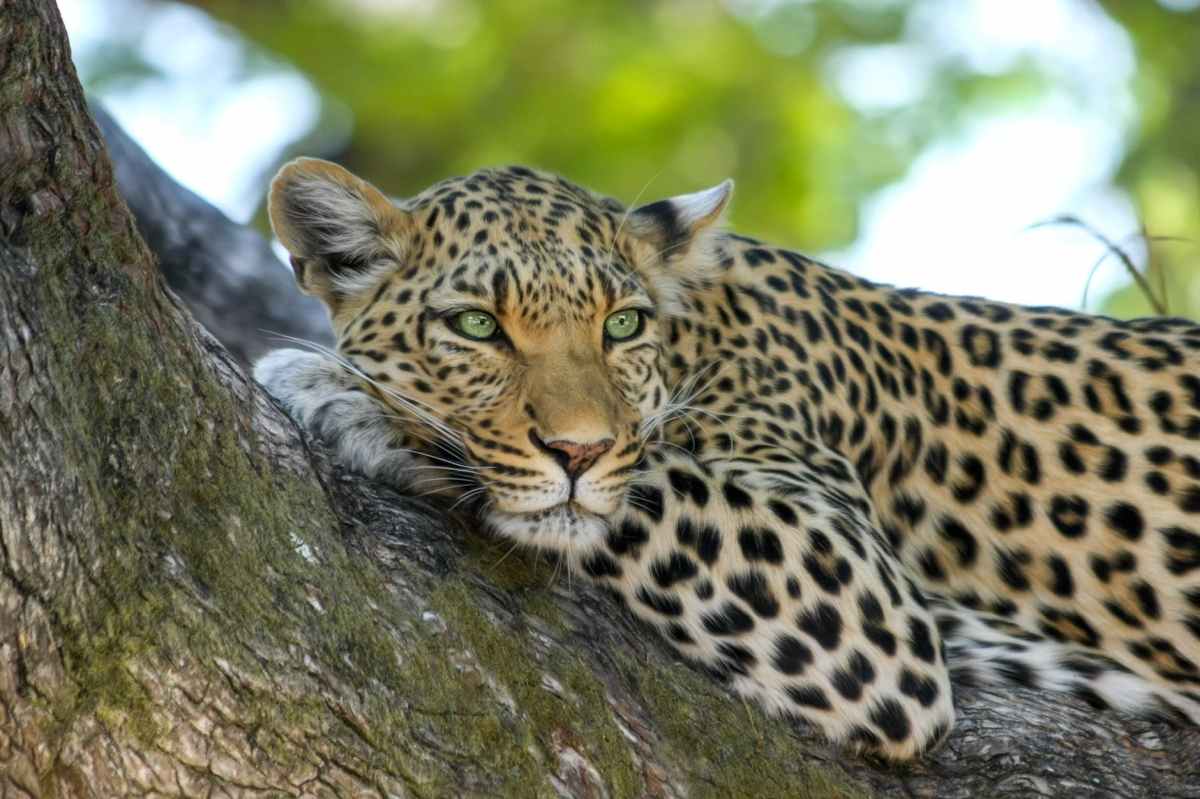
Real big cats such as the leopard above tend to leave unmistakable evidence of their presence. Image credit: Wikimedia Commons
But as big cat experts have pointed out, it’s difficult to miss the signs when such apex predators really do claim an area as home. From unmistakable pug marks, to trees scratched and scent-marked with urine, to calls that can echo for miles in right conditions, big cats have many ways of making their presence known— and it’s often advantageous for them to do so, since they’re highly territorial animals.
One man who was out walking his dog told the BBC he thinks the whole thing is a prank.
“I don’t know his name, I think it’s just a wind up. He’s definitely not out to frighten people, he does it for fun,” he said. “He just likes being a giant cat. He doesn’t frighten our dog.”
Local police say they’re aware of the sightings. Merseyside Police and Crime Commissioner Emily Spurrell told local media that anyone who feels threatened by the suited figure should call law enforcement and report his whereabouts.
Rumors of big cats in the UK countryside have persisted for years, with witness claims from all over the country. The latest reported sighting was in northern England.
People who really want to believe big cats are running around the British countryside are ecstatic with the news that a DNA sample from a dead sheep reportedly tested positive for panthera DNA.
The DNA sample was swabbed from a freshly-killed sheep carcass “at an undisclosed upland location” in Cumbria, northwest England, a witness told BBC Wildlife. It’s exactly the kind of countryside where people have been reporting big cat sightings for years, although the sightings aren’t confined to that area, with other witnesses claiming they’ve seen large felids as far as the UK’s southern coast.
Sharon Larkin-Snowden, who lives nearby, told a big cat enthusiast podcaster that she disturbed the “big cat” while it was feeding. The startled felid took off and jumped a stone wall, leaving the partially-eaten sheep, Larkin-Snowden said.
“I assumed at first it was a sheepdog, but then I did a double take and realised it was a black cat,” she said. “It was big – the size of a German shepherd dog.”
“I could really go for a Chinese! Anyone else wanna go for a Chinese?”
A swab was collected — the details are sketchy on who did the collecting and when exactly they submitted the sample — and sent to the University of Warwick’s Robin Allaby, a professor of life sciences.
Allaby, whose specialty is studying the genetics and evolution of domesticated plants, began offering a DNA testing service for the public some 12 years ago in response to the persistent rumors of big cats in the countryside. In the past samples have yielded DNA from foxes and other animals, but Allaby says this one matched the genetic profile of a big cat, although he cannot say which species.
It’s not unusual for a DNA sample to match to a genus, in this case panthera, but not to a specific species if the sample was degraded or only partial.
Rick Minter, who has made a career of tracking alleged big cat sightings across the UK, says he believes the mystery cat is a leopard. Leopards and jaguars are the only two big cats who have true melanistic color morphs — meaning some of them have virtually all-black coats — and Minter says he believes it’s more likely the former.
Neither are native to the UK or Europe: Leopards range from Africa to Asia, while jaguars range from south to Central America, with some populations edging slightly into the US.
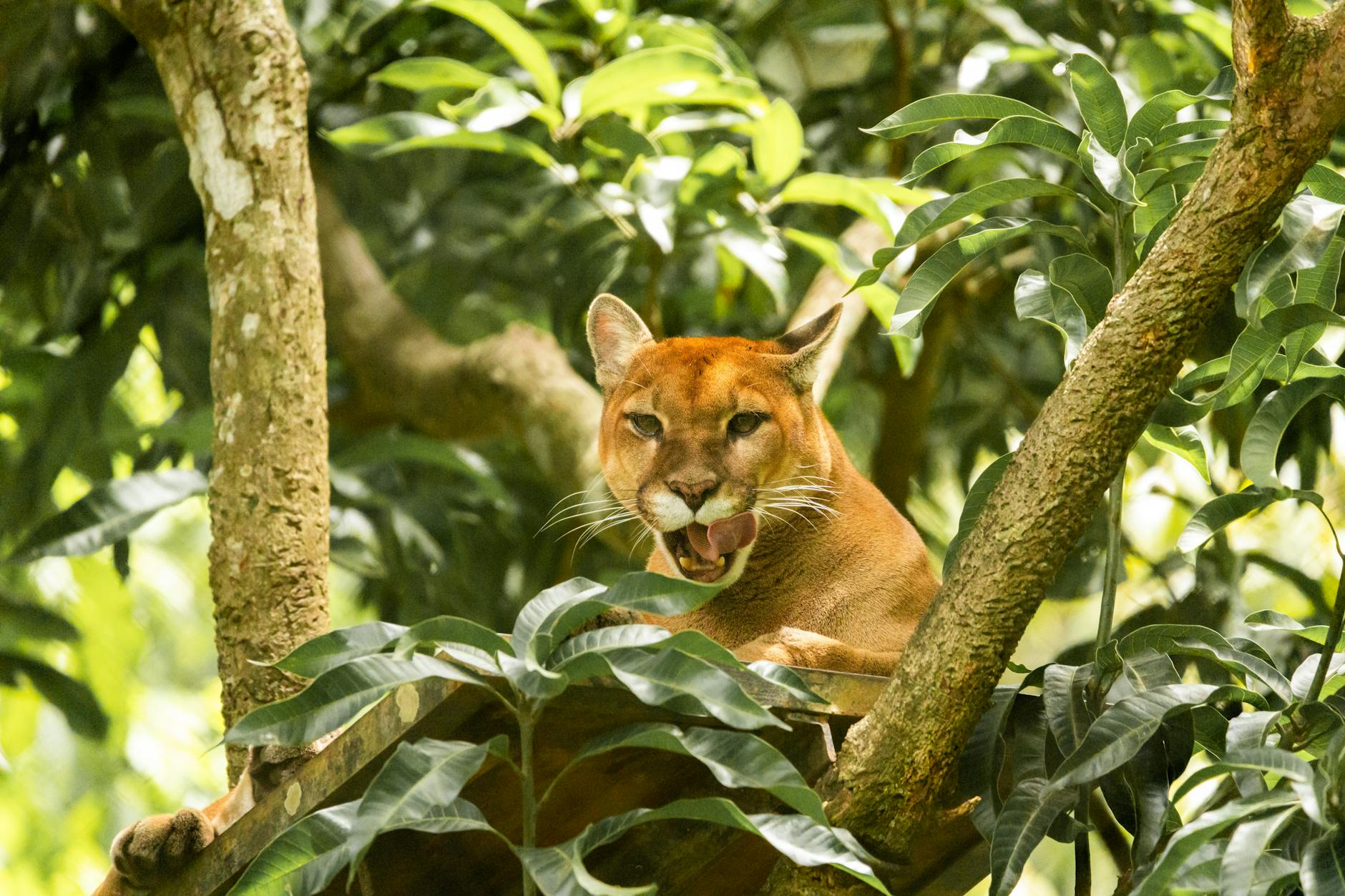
Britain’s big cat enthusiasts say they believe pumas are among the wild cats living in Credit: Jean Paul Montanaro/Pexels
Why isn’t a DNA match evidence of big cats in the UK?
If the lab results say the sample came from a big cat and that result is consistent with the witness account, what’s the problem?
Chain of custody, for one. We don’t know anything about who took the sample, where it was taken, the time elapsed between the kill and the sample swab, or who may have handled it before it reached Allaby.
In fact, we don’t know if there was a dead sheep to begin with.
If I were a prankster living in the UK, for example, and was friendly with a keeper at a local zoo, I could have the keeper swab an animal, bag it and hand it over to me. There are dozens of conceivable ways a person could obtain a sample even if they don’t know someone who works in a zoo.
“So we left the sheep there at the edge of the field and made sure the lady saw us before we buggered off over the fence. Next day, we was in all the papers! A right laugh that was, mate.”
The problem is the provenance of the sample and what happens to it between the time it’s collected and ends up in the hands of a scientist like Allaby.
This is why chain of custody is paramount in criminal trials, and why there must be a complete record of who handled samples from collection in the field to the lab. Even in the absence of foul play, an improperly handled sample can be contaminated and render test results meaningless.
It’s not a matter of trust, it’s the simple fact that extraordinary claims require extraordary evidence, as Carl Sagan was fond of saying. Short of capturing one of these animals or getting clear, indisputable footage, any other claimed proof has to be ironclad.
Speaking of footage, that’s another issue. It’s extremely difficult to believe that a breeding population of big cats can exist in the UK countryside for years or even decades without a single definitive photo or video. The UK’s rural areas may not be blanketed by CCTV cameras like London, but they’re not the Amazon either. People live, work and farm in those regions, cameras are more ubiquitous than ever, and farmers take steps to protect their livestock, including installing cameras.
Big cats don’t just feed and vanish into the mist. They mark trees with their claws and urine, they leave distinct pug marks, they leave distinctive bite marks on their prey, and they make noise. To paraphrase one naturalist, when big cats are living nearby, you know it. Even if you don’t see them, signs of their presence are ubiquitous.
To accept the claims of tigers, leopards and pumas gallavanting in the fields around small towns and villages, we’d have to suspend disbelief or conclude that these are some sort of previously unknown ghost cats who can fade in and out of the physical plane.
I’m not a skeptic to be a killjoy. If big cats really were running around the UK, that would be a hell of a story. But we’d still need convincing evidence, and this isn’t it.
The American feline has also been linked to the appearance of crop circles in several US states.
GLOUCESTERSHIRE, United Kingdom — The alleged phenomena of big cats stalking the forests and outskirts of villages in the UK turned out to be a hoax this week after authorities caught an American feline planting “evidence” near the A40.
The perpetrator, who goes by the names Buddy the Cat, Kinich Bajo, The Buddinese Tiger and several other monikers, was spotted at the edge of the Forest of Dean using a ladder to create claw marks at roughly tiger height, Detective Inspector Alistair Clarke said.
When he realized he’d been made, the gray tabby cat yelled “Oh shit!” then bolted down the ladder and into the forest, Clarke told reporters.
Police called in a K9 unit, which was able to track a trail of crumbs and discarded turkey bones to a clearing where authorities discovered non-toxic black paint, a fog machine and a copy of Arnold Schwarzenegger’s 1977 docudrama Pumping Iron.
“It’s our belief that the suspect painted himself black, played prerecorded clips of various big cat roars, then posed menacingly amid the fog for the benefit of locals, mostly drunks stumbling out of local pubs,” Clarke said. “Choosing inveterate drunks as his primary witnesses ensured the resulting smartphone camera footage would be grainy, shaky and inconclusive, adding to the legend and mystique of phantom big cats in the countryside.”
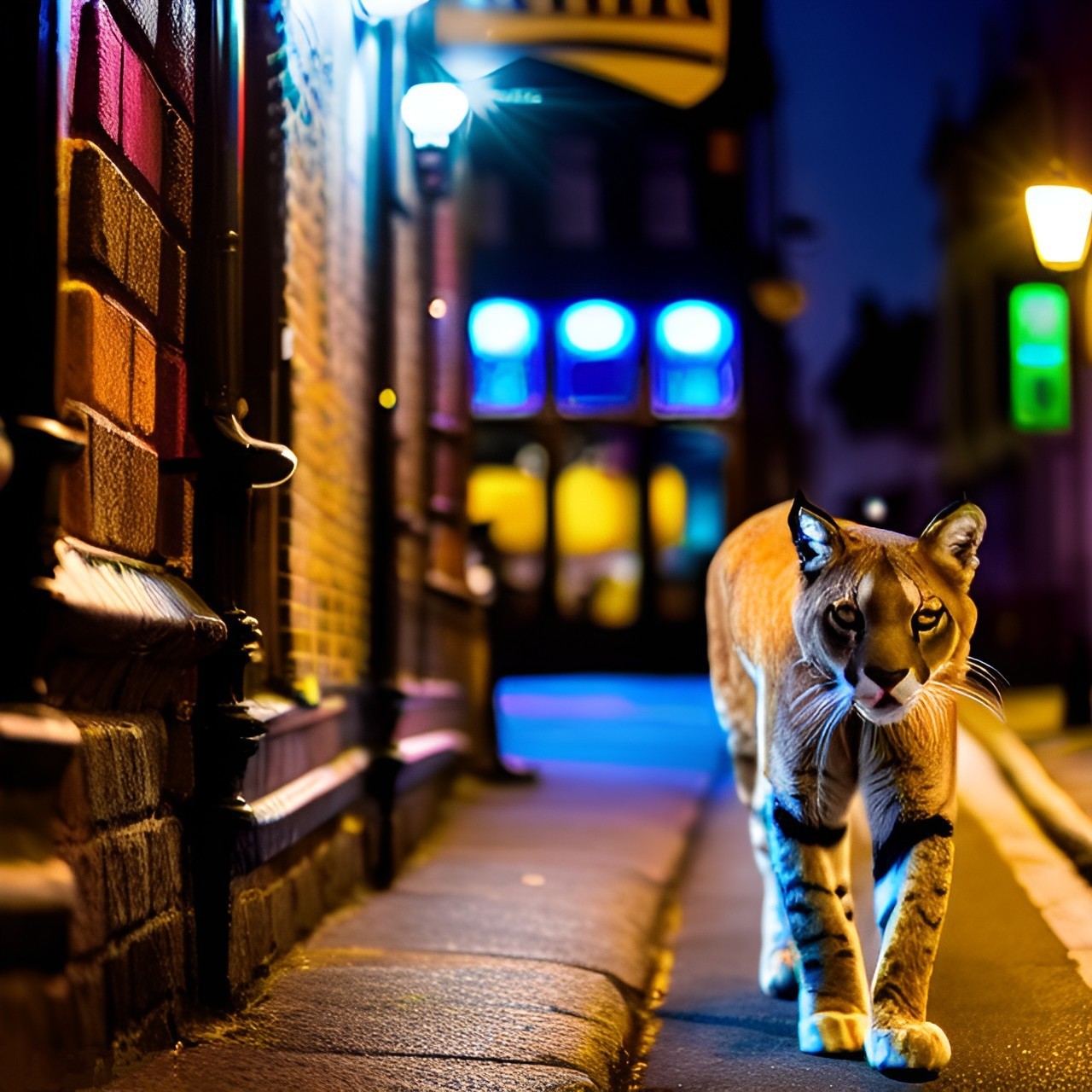
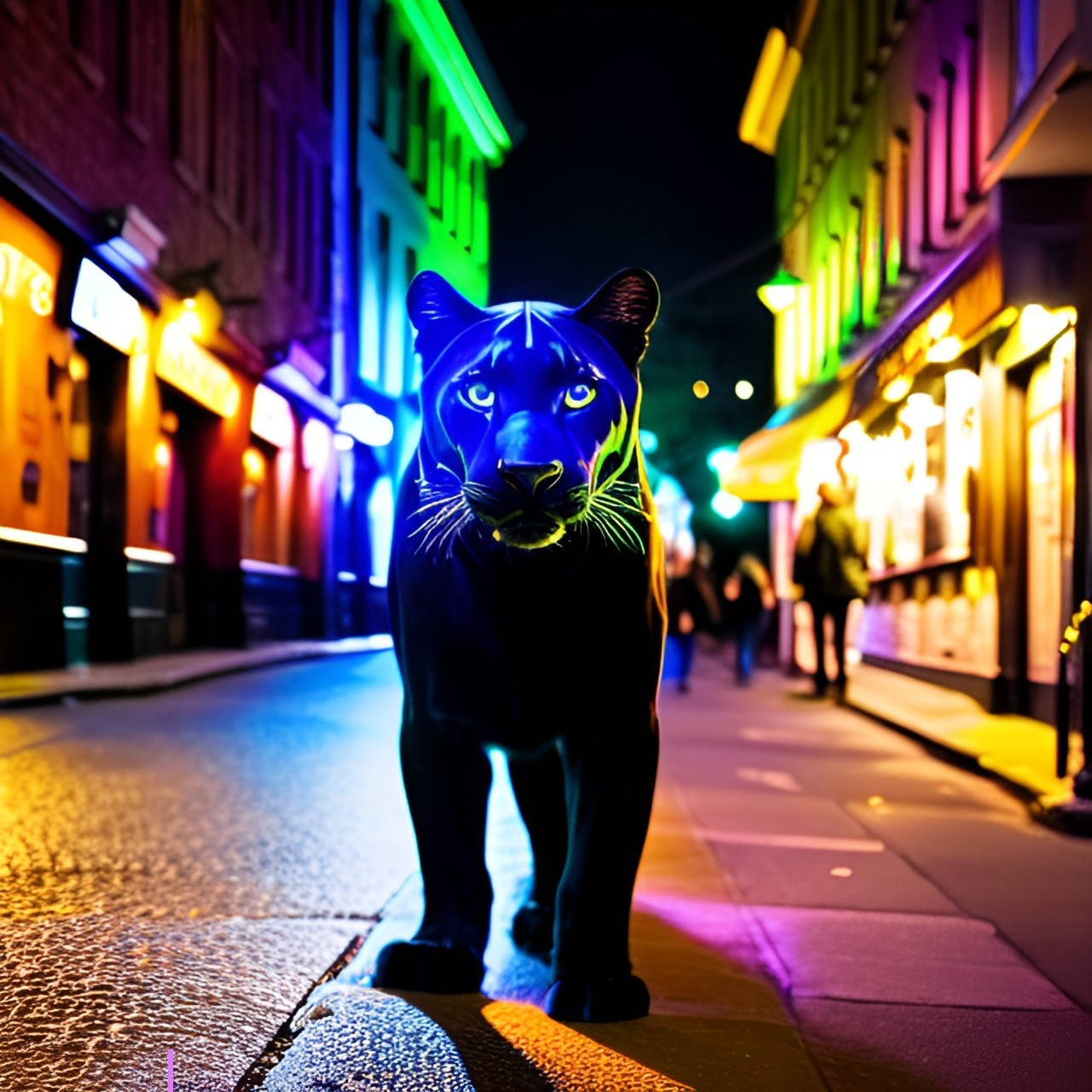
Buddy in costume in late 2022, after parading himself in front of a group of heavily intoxicated people leaving a pub. Credit: PITB
Asked by a reporter whether Buddy’s dedication to weightlifting contributed to locals misidentifying him as a big cat, Clarke shook his head.
“We don’t think so, no,” he said. “Despite his apparent obsession with bulking up and the 63 bottles of protein powder we recovered, the suspect remains a tiny little stinker, which is why he carefully revealed himself only to the thoroughly inebriated.”
Buddy the Cat remained in a local lock-up awaiting extradition back to the US. His human told reporters the feline hadn’t said much about his predicament.
“He’s complained loudly about the food and said the British should be thanking him for increasing tourism to southern England, but other than that he’s kept a lid on his thoughts,” Big Buddy said.
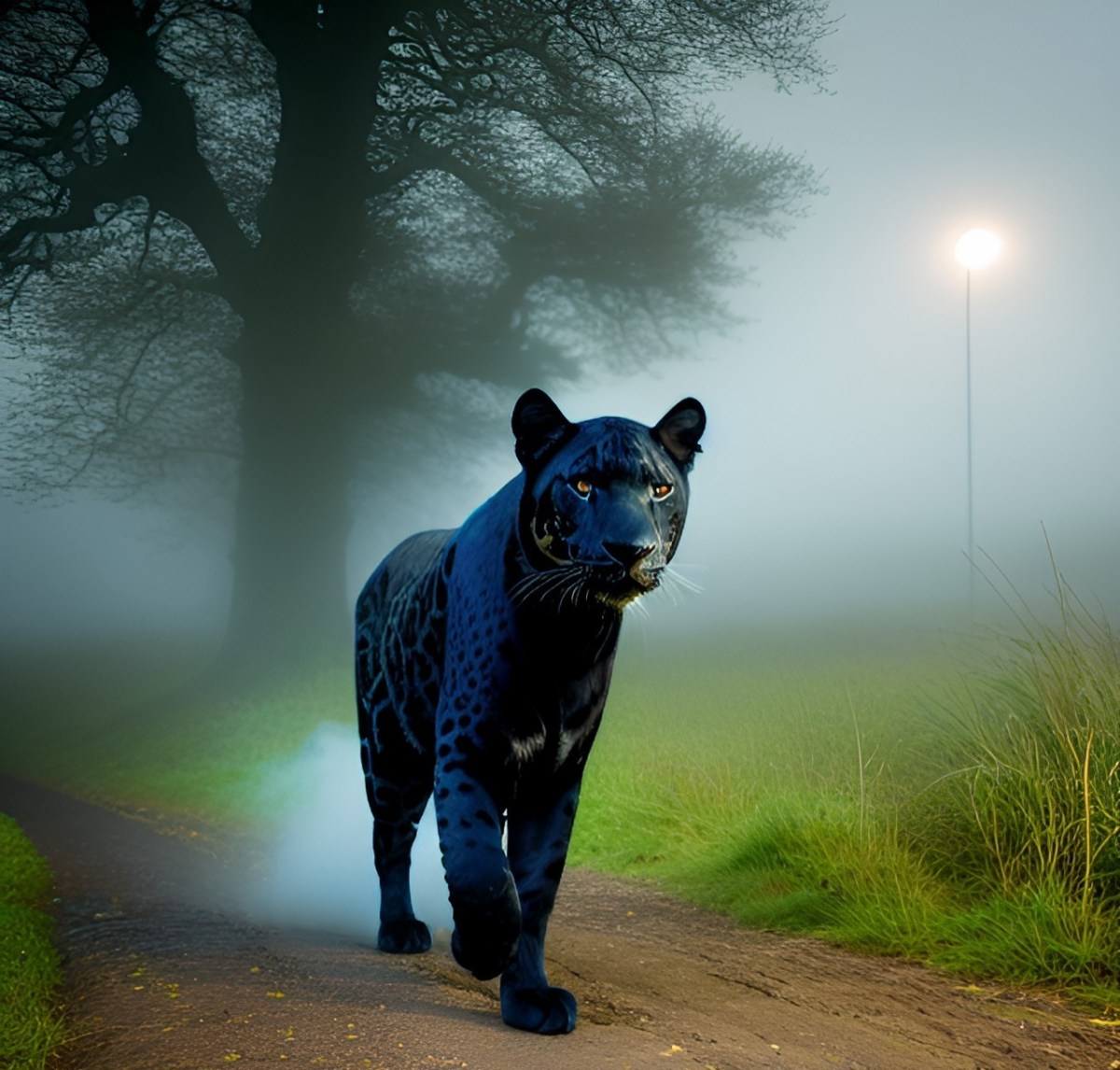
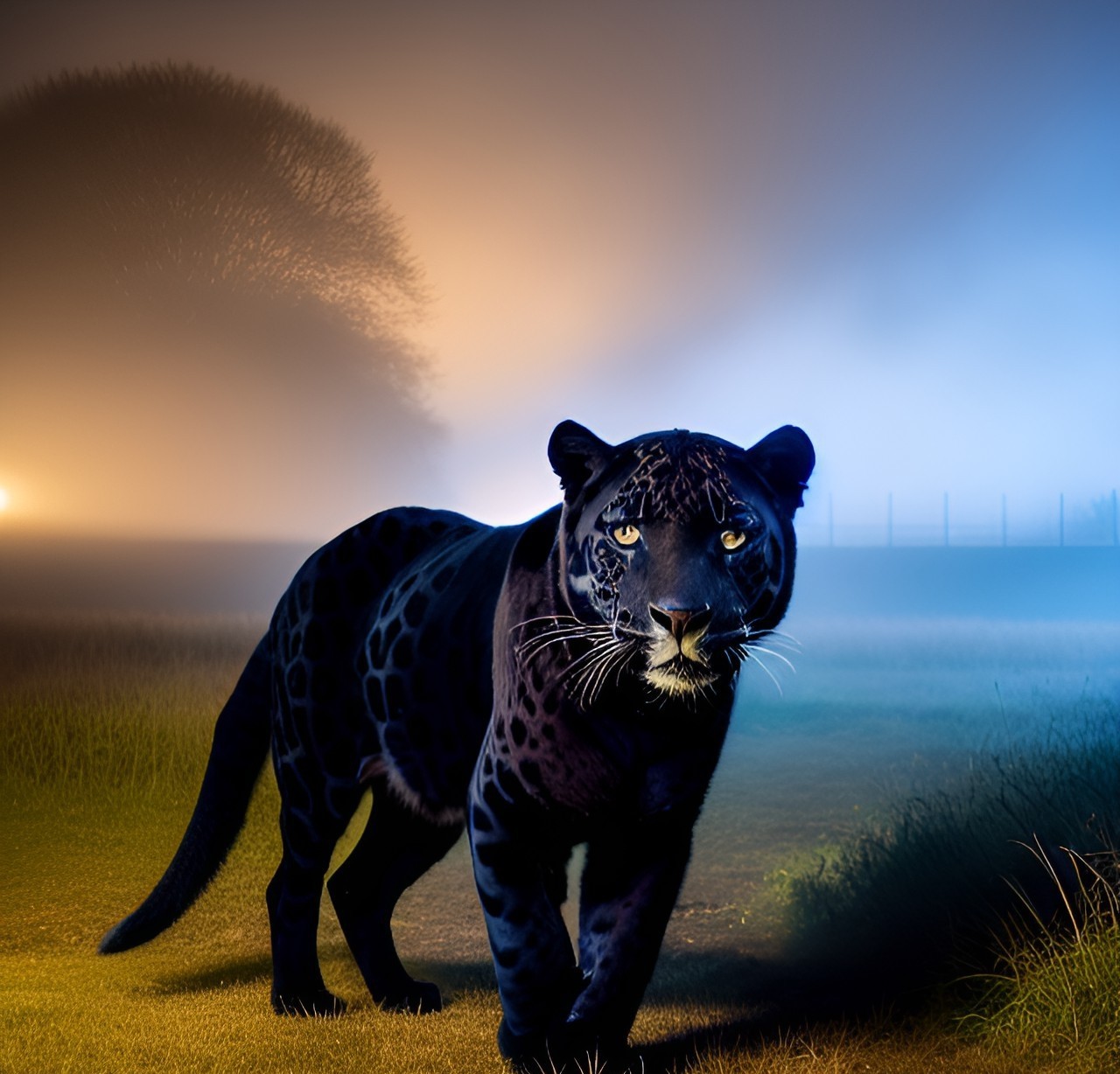
Buddy is seen here patrolling the UK countryside after painting himself black, prompting several calls to the police. Credit: PITB
In the meantime, the South Carolina state police forensics division and detectives from several US police departments have been in contact with UK authorities after similarities emerged between the fake big cat sightings and a series of bizarre crop circles in the US.
“We also found turkey bones and crumbs scattered around the crop circles, but at the time our working theory was that we were dealing with aliens who had a taste for turkey,” said one law enforcement official, who spoke on condition of anonymity. “Now we believe our cases may be connected to the UK hoax.”
“Lads, that’s a panther, innit? A panther, wow!” Credit: PITB
Big cat sightings across the UK have a lot in common with UFO sightings in the US.
Shhhhh!
No one tell NewsCorp that “black pumas” don’t exist, pumas are native to the Americas, leopards are native to Africa and Asia, and a “black panther” is a color morph, not a species of cat.
A story from Fox News — prompted by a similar story in the UK’s Sun, part of the same Rupert Murdoch-owned media conglomerate — claims the British are “unnerved” by an “uptick” in sightings of cryptid big cats. The mysterious creatures are supposedly running rampant in the British countryside and in the suburbs, according to the article, which identifies them as black pumas, black panthers and black leopards.
Oddly, the story says the sightings are up significantly because there have been three “big cat” sightings in October, immediately before informing readers there are 2,000 such sightings in the UK every year.
Little Buddy and I are not exactly known for our math skills, but 2,000 sightings a year works out to 167 sightings per month, which is a lot more than three. Fifty five times more, in fact. So the story should really be about a dramatic dip in phantom big cat sightings, shouldn’t it?
What evidence does the Fox report cite for its breathless claim about big cats taking over the UK? A pair of grainy security camera videos, including one showing a “big cat sighting” at night, and the word of a “big cat sighting expert,” alternately called a “countryside expert” in other media reports, who by the way happens to be hawking a documentary on the sightings.
“It’s a crucial issue,” self-described wildcat expert Rick Minter told The Sun. “How do we come to terms with living alongside big cats in Britain?”
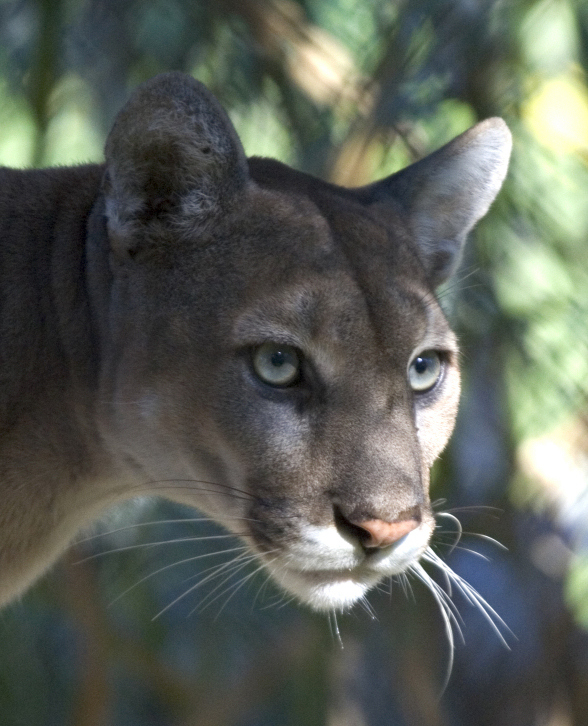
Pumas, also known as cougars, mountain lions, panthers and catamounts, are native to the Americas. Credit: Wikimedia Commons
For readers unfamiliar with the highest echelons of reputable journalism, The Sun is the UK’s foremost bastion of trustworthy reporting, a tabloid par excellence whose editorial staff are known for breaking stories about “crazed werewolves” and immigrants barbecuing the late queen’s swans when they weren’t running topless photos of models on Page 3. The Sun is owned by NewsCorp, the parent company of Fox News.
As for the two pieces of footage, one is the aforementioned blurry mess recorded by a home security camera at night, and shows a few frames of a cat’s behind and a tail as the felid walks out of the frame. The other is a blurry clip the credulous claim depicts a large cat feeding on a sheep. There’s no indication the figure is a felid of any type.
As far as we’re concerned, there are a few possible explanations for the sightings:
They’re former pets
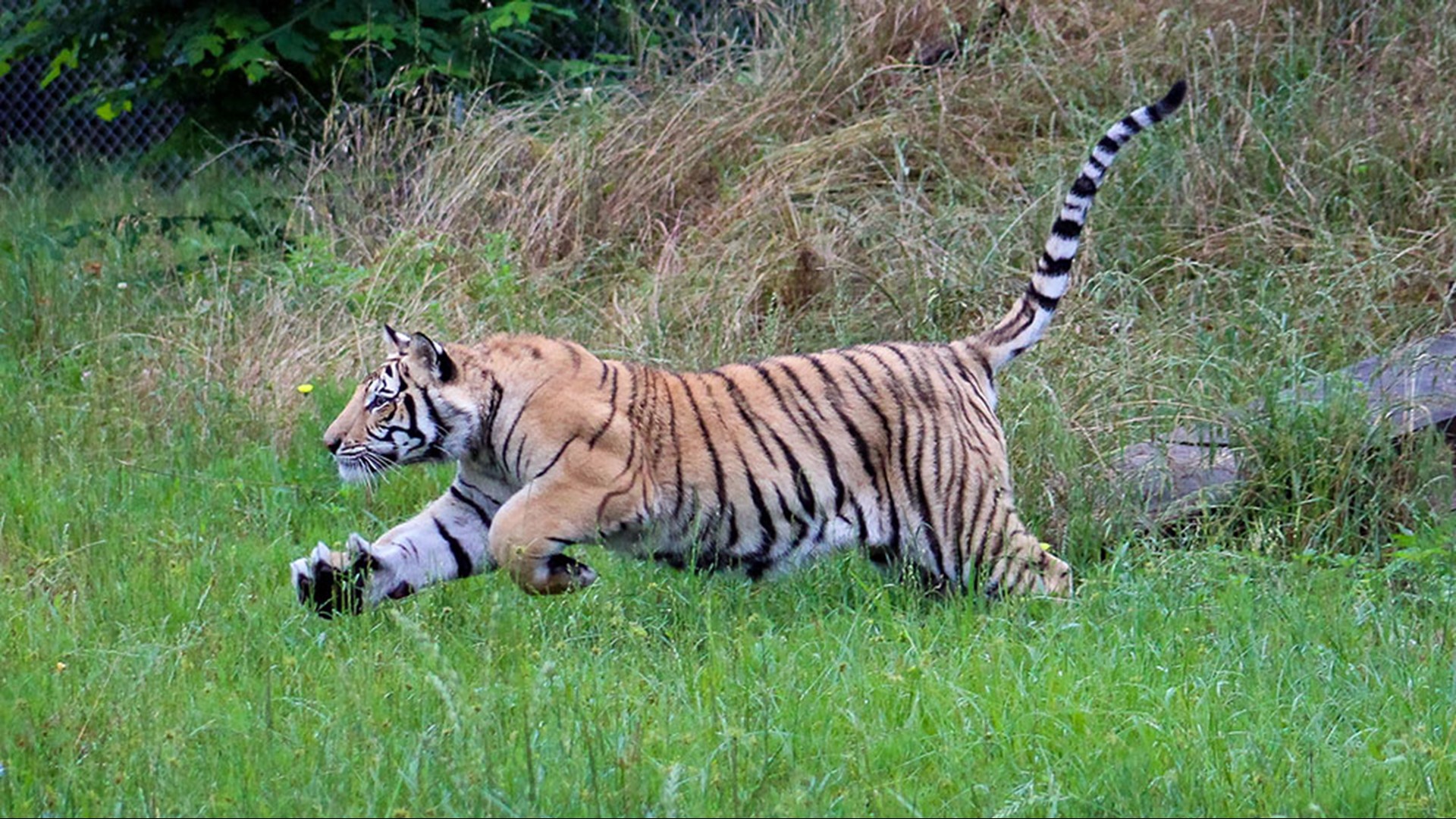
India the tiger was found wandering the suburbs of Houston in 2021. In this photo, he’s enjoying life in his sanctuary’s large enclosure where he’s got plenty of room, stimulation, toys and even his own rock pool.
If there are indeed big cats roaming the British countryside and suburbs, they would have to be former pets of people who acquired them on the illegal wildlife market, broke the law by “importing” them into the UK, then broke several additional laws by keeping them as pets until the cats quickly grew and the owners realized keeping them is untenable.
Such situations aren’t unheard of, obviously, but they can’t account for a dozen big cats on the loose at any one time, much less more than a thousand as Minter claims.
More importantly, big cats who are taken from their mothers as days-old cubs, sold as pets and later dumped are universally confused, terrified and unable to fend for themselves. They end up roaming suburbia in broad daylight, like a nine-month-old tiger named India who was spotted wandering around the outskirts of Houston in 2021, sniffing out potential food in garbage cans because they don’t know how to hunt.
If these phantom big cats were former pets, they’d be spotted, captured and taken to sanctuaries within a matter of days.
They’re small wildcats formerly native to the area, like the Eurasian lynx
The problem is, the Eurasian lynx was extirpated from the UK about 1,400 years ago. There have been debates among conservationists about reintroducing wild populations to the British countryside — and to Ireland — but no concrete plans as of yet. Proponents say the lynx could be beneficial, keeping deer populations level without major human intervention.
Eurasian lynx adults can grow to about the size of medium dogs, so it’s possible they can be mistaken for “big cats” in blurry video, especially when perspective and/or lack of other objects makes it difficult to place their actual size in context. However, as with big cats, any Eurasian lynx spotted in the UK are likely to be former pets.
They’re housecats
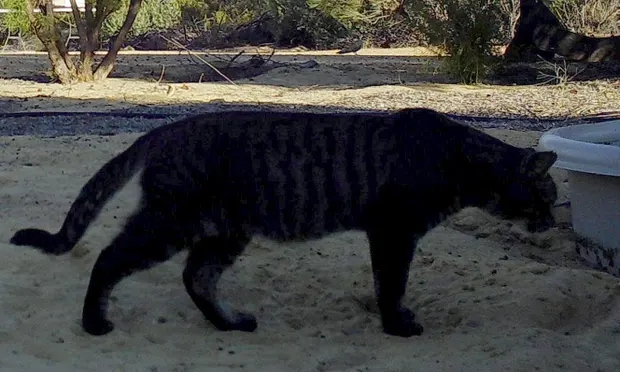
This feral cat, a plain old member of the felis catus species, was repeatedly mistaken for a big cat in western Australia back in 2018.
If witnesses in the UK are mistaking house cats for big cats, they wouldn’t be the first.
Stories abound of little cats prompting “big cat” sightings, from Vancouver (a Savannah cat) to Scranton, Pa. (a missing house cat), to San Jose (a Maine Coon) and even Australia. (A feral cat.)
One wildlife ranger in Australia became so annoyed with fielding frequent big cat reports that he implored people to educate themselves.
“People need to get over the idea the cats are panthers,” wildlife ranger Tim Gilbertson told Australia’s ABC news. “It is just not on. They are big feral cats, at least 50% bigger than a house cat and they are powerful.”
The usual issues are in play here: Fuzzy security camera footage, night sightings, confused witnesses. You’d think there would be more phantom big cat sightings in the US, since pumas can grow to the size of jaguars and could be mistaken for lions, but people who live in areas where pumas range tend to know they’re around and what they look like. They’re also the definition of scaredy cats, reluctant to let humans spot them or get anywhere near them.
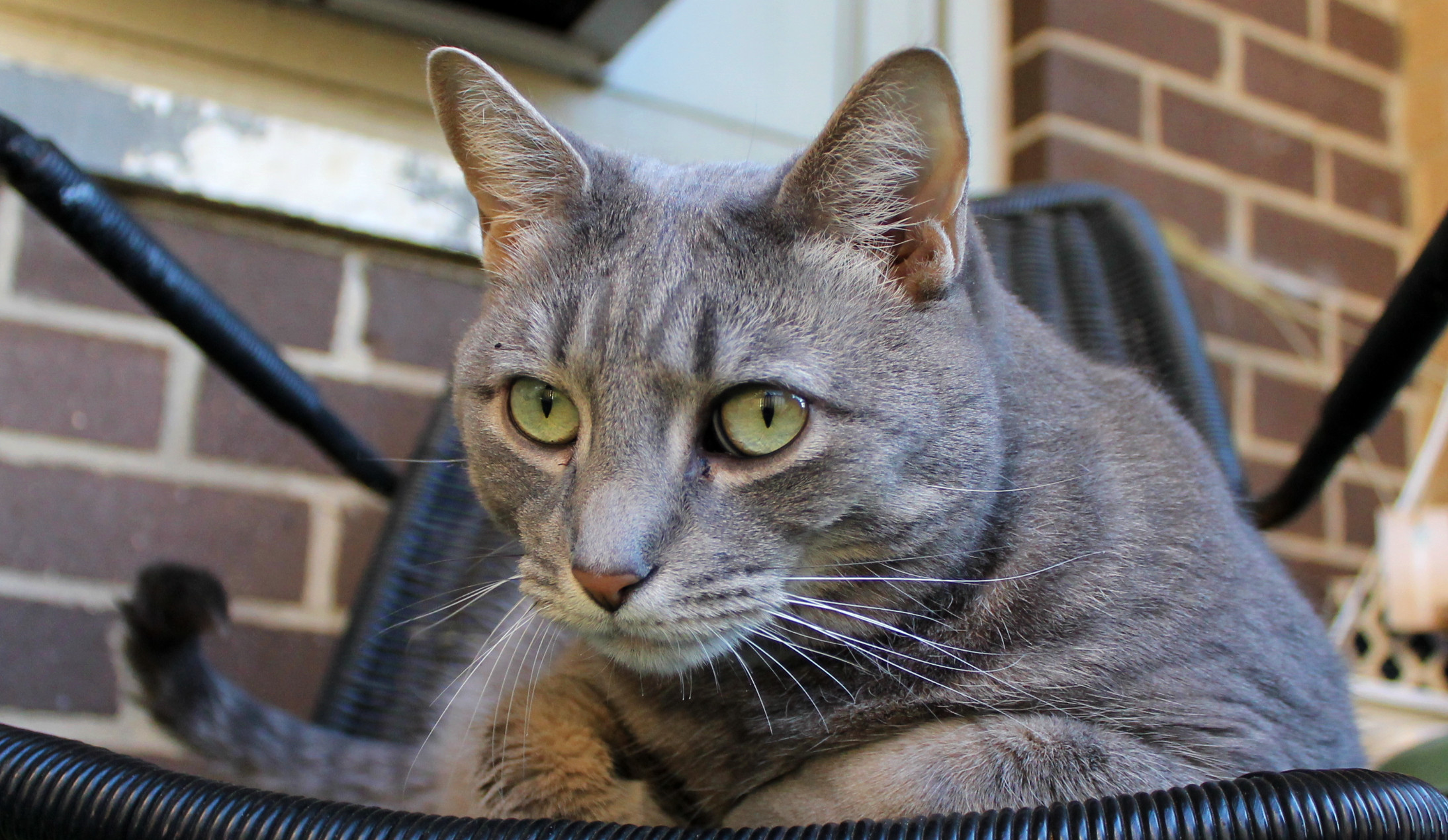
Frequently mistaken for a tiger: Buddy the Cat.
Ultimately, witness reports count don’t count for much, and not just because memory is malleable.
Thousands of people have reported seeing Bigfoot, chupacabras, the Jersey Devil and the Loch Ness monster, but those creatures are all firmly in cryptid territory.
There’s Occam’s Razor, and there’s common sense: For a primate species like Bigfoot to exist, for example, there would need to be a breeding population, enough prey for the creatures to feed themselves, and someone somewhere would have found remains at some point. (Bigfoot sightings go back to the days before Columbus set foot on New World shores, but it’s only been in the last century or so that the cryptid has entered the popular imagination via folklore and media.)
Likewise, if there are indeed 1,000 big cats prowling the British countryside, as Minter claims, there would be a breeding population, ubiquitous tracks and the remains of prey animals killed in ways consistent with big cat ambush techniques. Cats of all sizes are ambush hunters and have a distinct way of killing prey which is unlike other animals.
The UK’s big cat sightings should be treated more like the UFO sightings in the US and particularly around Area 51. They start with a kernel of potential truth — the existence of a secret base to test experimental military aircraft, or the possibility that big cats who were former pets have been let loose — which leads people to consider the possibility, then when they see something they can’t easily explain, they reach for the exceptional.
But as Carl Sagan famously said, exceptional claims require exceptional proof, and it’s no accident that things like UFOs, cryptid primates and phantom big cats only appear on the grainiest, blurriest and darkest footage.
My money is on domestic cats mistaken for their much larger cousins. Maybe Buddy’s been taking some transatlantic flights under my nose. I’ll have a little chat with him about it and ask him to kindly stop terrifying our friends across the pond.




 Pain In The Bud