Gen Z Kids Think The Cat In The Hat Is Stalking Them In Real Life

Viral videos show figures dressed as the Dr. Seuss character terrorizing unsuspecting people in mostly quiet suburban settings.

There’s a new freak-out among the terminally online, mostly relegated to Gen Z and people who spend significant amounts of time on TikTok – they think a Dr. Seuss character made flesh is popping up in the suburbs of the UK and Ireland to stalk and scare the pants off people.

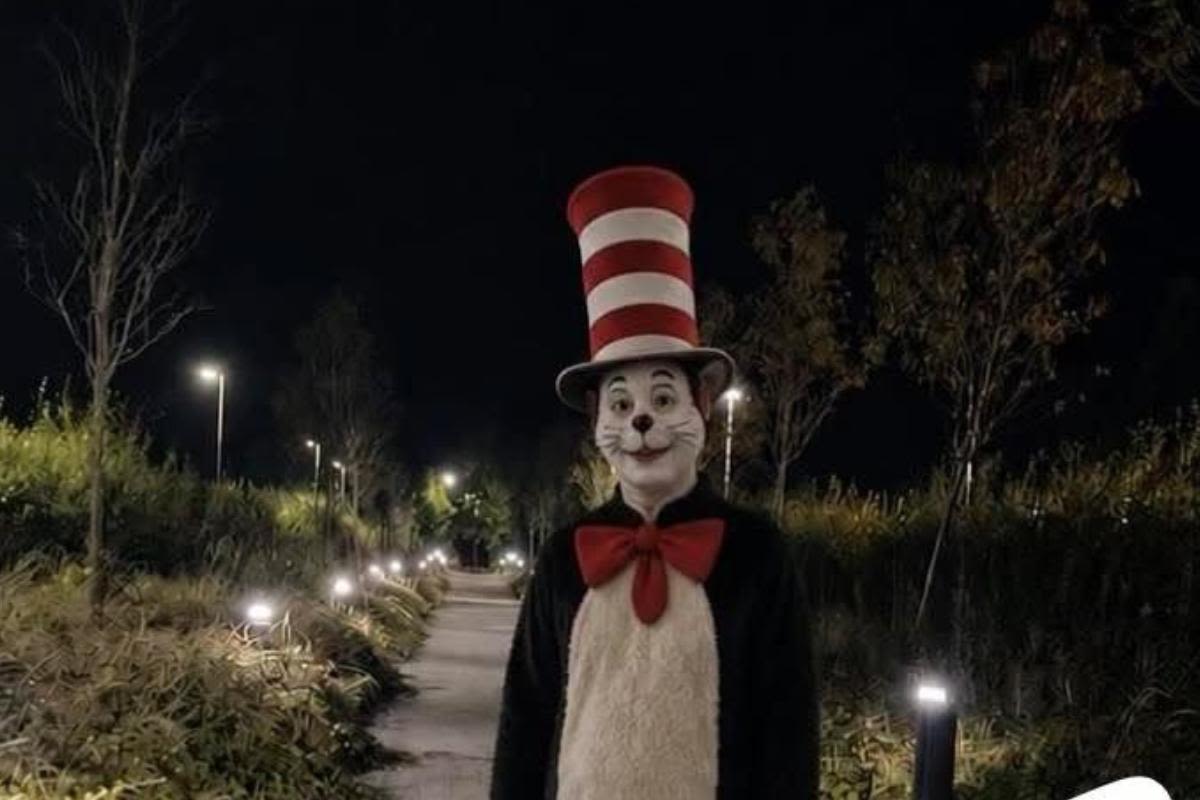
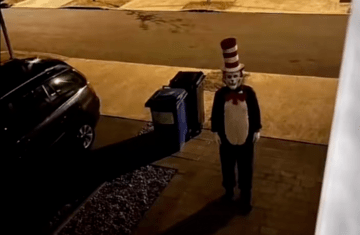
Videos featuring the iconic children’s story character have gone viral on the platform in the last week or two, each of them showing similar scenes: it’s night, usually in some safe-looking suburb, and a person wearing a full size Cat In The Hat costume pops out of the bushes or from behind a car to terrify unsuspecting passersby.

Others show the costumed creeps simply standing in driveways or in the middle of the street and silently observing people in their homes.

The alleged perps favor a more sinister look than the traditionally friendly-looking creation of Theodor “Dr. Seuss” Geisel in 1957. These cats in hats wear a disturbing grin or a sneer, and some videos depict the costumed weirdos leaping onto cars with feline athleticism or stalking the people they encounter.
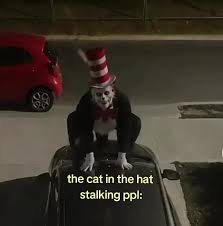
While the footage looks real enough that it initially fooled UK media as well as kids, police in several jurisdictions have looked into the reports and concluded the videos are AI generated, likely with Chinese-made tools like Wan and Skywork.

OpenAI, one of the leading AI companies in the US, shut down its Sora AI video generator earlier this year amid widespread criticism and abuse of the tool.

While Sora had guardrails preventing users from generating certain kinds of content or violating intellectual property (you could not, for example, generate a video of a laughing Mickey Mouse gunning down a crowd of people with an Uzi), many of the Chinese-made video generation tools do not place restrictions on videos.

Some western companies have tried to compete in that space, including TripleTaco, which runs quite possibly the creepiest ads touting “AI that never says ‘no.'”
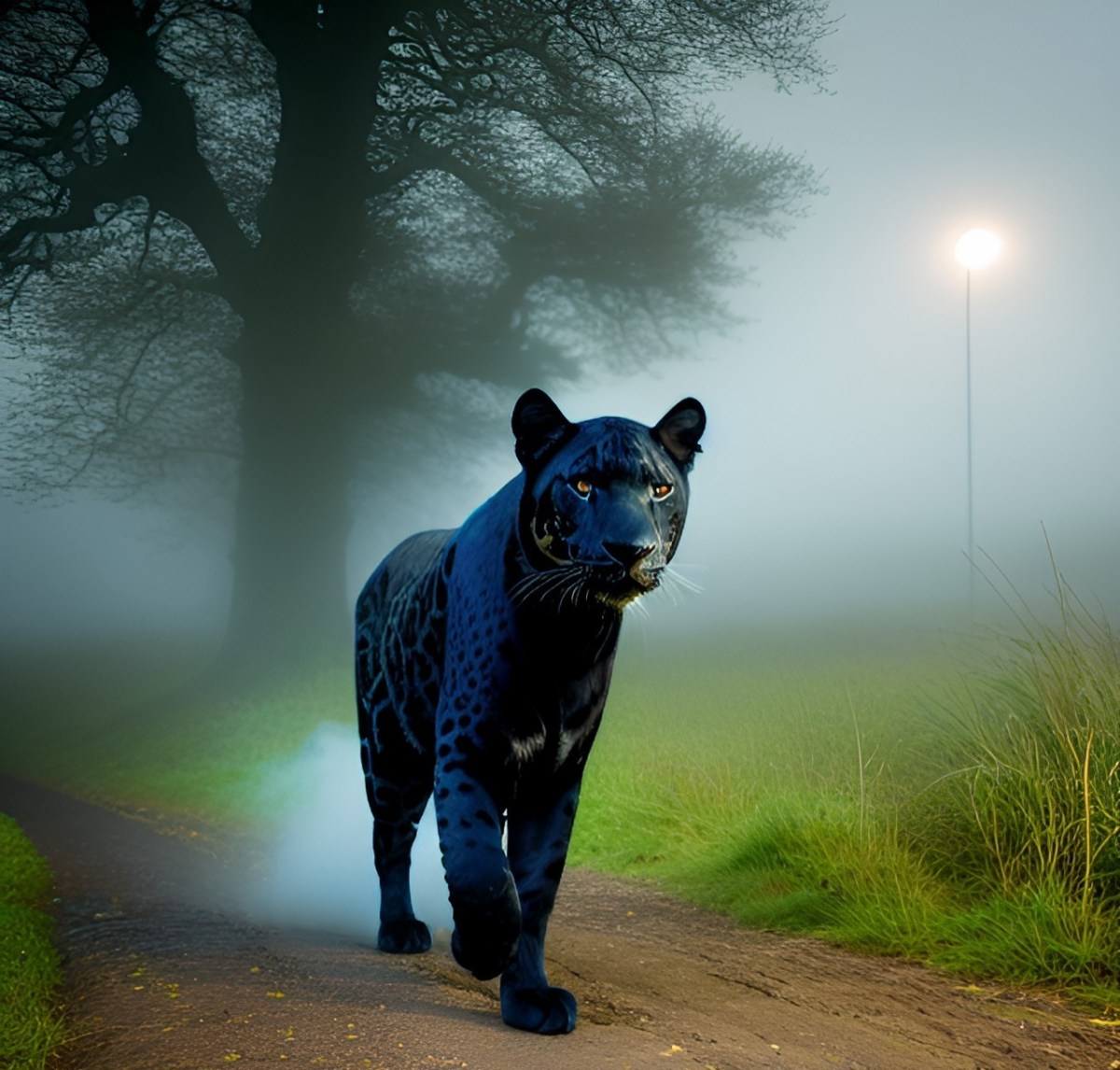
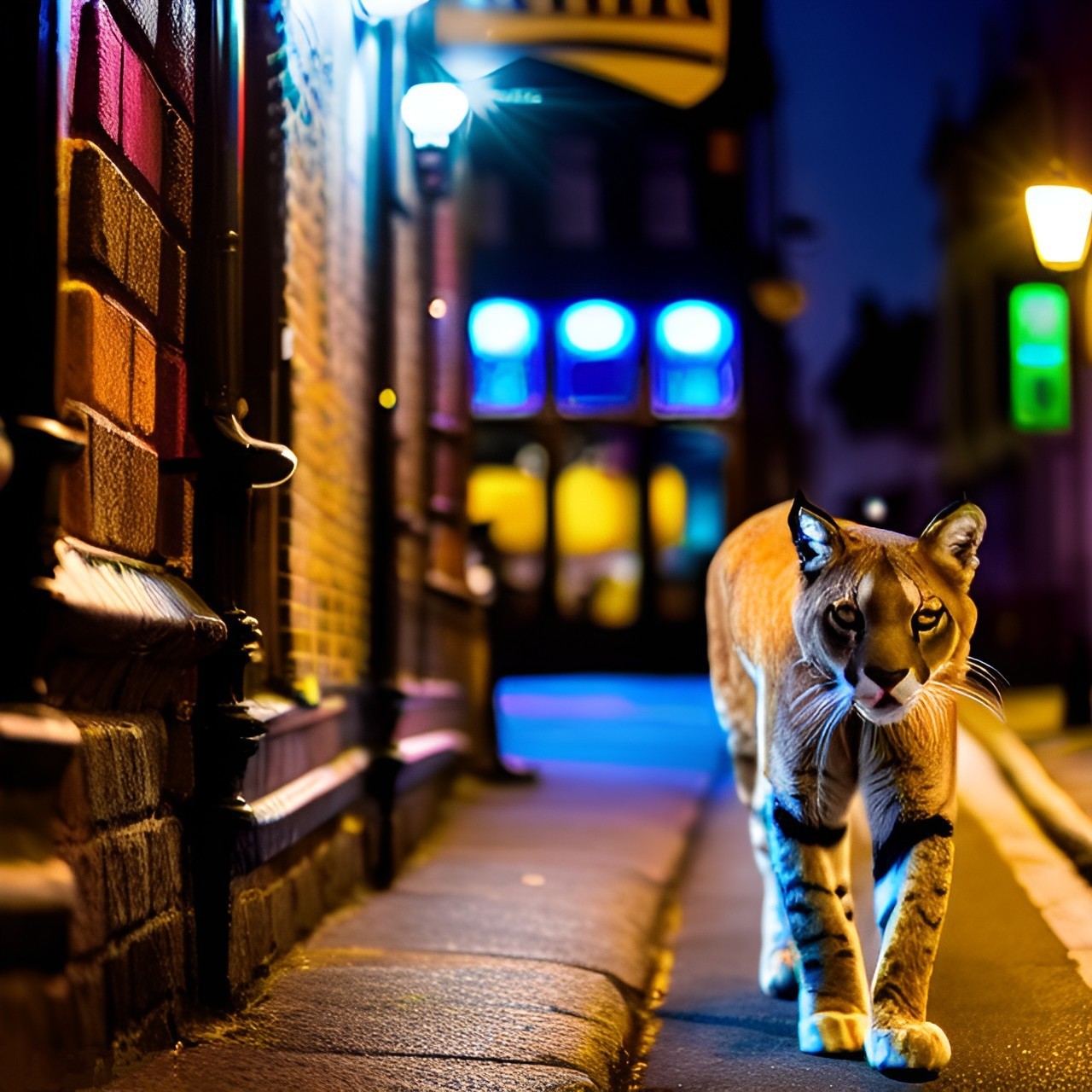
In any case, the panic over the Cat In The Hat mirrors a similar freak-out in India earlier this year when social media was flooded with realistic videos showing tigers and leopards mauling people having their morning tea outdoors or snatching them from moving trains.

The Cat In The Hat videos haven’t really caught on in the US, possibly because it stretches credulity to believe trigger-happy ‘Mericans wouldn’t just shoot weirdos stalking through our neighborhoods.

Regardless, it’s a good reminder to take everything with a grain of salt, especially anything you see on social media.
UK’s Elusive ‘Big Cats’ Turn Out To Be Buddy Playing Pranks, Police Say

The American feline has also been linked to the appearance of crop circles in several US states.

GLOUCESTERSHIRE, United Kingdom — The alleged phenomena of big cats stalking the forests and outskirts of villages in the UK turned out to be a hoax this week after authorities caught an American feline planting “evidence” near the A40.

The perpetrator, who goes by the names Buddy the Cat, Kinich Bajo, The Buddinese Tiger and several other monikers, was spotted at the edge of the Forest of Dean using a ladder to create claw marks at roughly tiger height, Detective Inspector Alistair Clarke said.

When he realized he’d been made, the gray tabby cat yelled “Oh shit!” then bolted down the ladder and into the forest, Clarke told reporters.

Police called in a K9 unit, which was able to track a trail of crumbs and discarded turkey bones to a clearing where authorities discovered non-toxic black paint, a fog machine and a copy of Arnold Schwarzenegger’s 1977 docudrama Pumping Iron.

“It’s our belief that the suspect painted himself black, played prerecorded clips of various big cat roars, then posed menacingly amid the fog for the benefit of locals, mostly drunks stumbling out of local pubs,” Clarke said. “Choosing inveterate drunks as his primary witnesses ensured the resulting smartphone camera footage would be grainy, shaky and inconclusive, adding to the legend and mystique of phantom big cats in the countryside.”

Puma pub
Buddy in costume in late 2022, after parading himself in front of a group of heavily intoxicated people leaving a pub. Credit: PITB

Asked by a reporter whether Buddy’s dedication to weightlifting contributed to locals misidentifying him as a big cat, Clarke shook his head.

“We don’t think so, no,” he said. “Despite his apparent obsession with bulking up and the 63 bottles of protein powder we recovered, the suspect remains a tiny little stinker, which is why he carefully revealed himself only to the thoroughly inebriated.”

Buddy the Cat remained in a local lock-up awaiting extradition back to the US. His human told reporters the feline hadn’t said much about his predicament.

“He’s complained loudly about the food and said the British should be thanking him for increasing tourism to southern England, but other than that he’s kept a lid on his thoughts,” Big Buddy said.

Buddy in costume II
Buddy is seen here patrolling the UK countryside after painting himself black, prompting several calls to the police. Credit: PITB

In the meantime, the South Carolina state police forensics division and detectives from several US police departments have been in contact with UK authorities after similarities emerged between the fake big cat sightings and a series of bizarre crop circles in the US.

“We also found turkey bones and crumbs scattered around the crop circles, but at the time our working theory was that we were dealing with aliens who had a taste for turkey,” said one law enforcement official, who spoke on condition of anonymity. “Now we believe our cases may be connected to the UK hoax.”

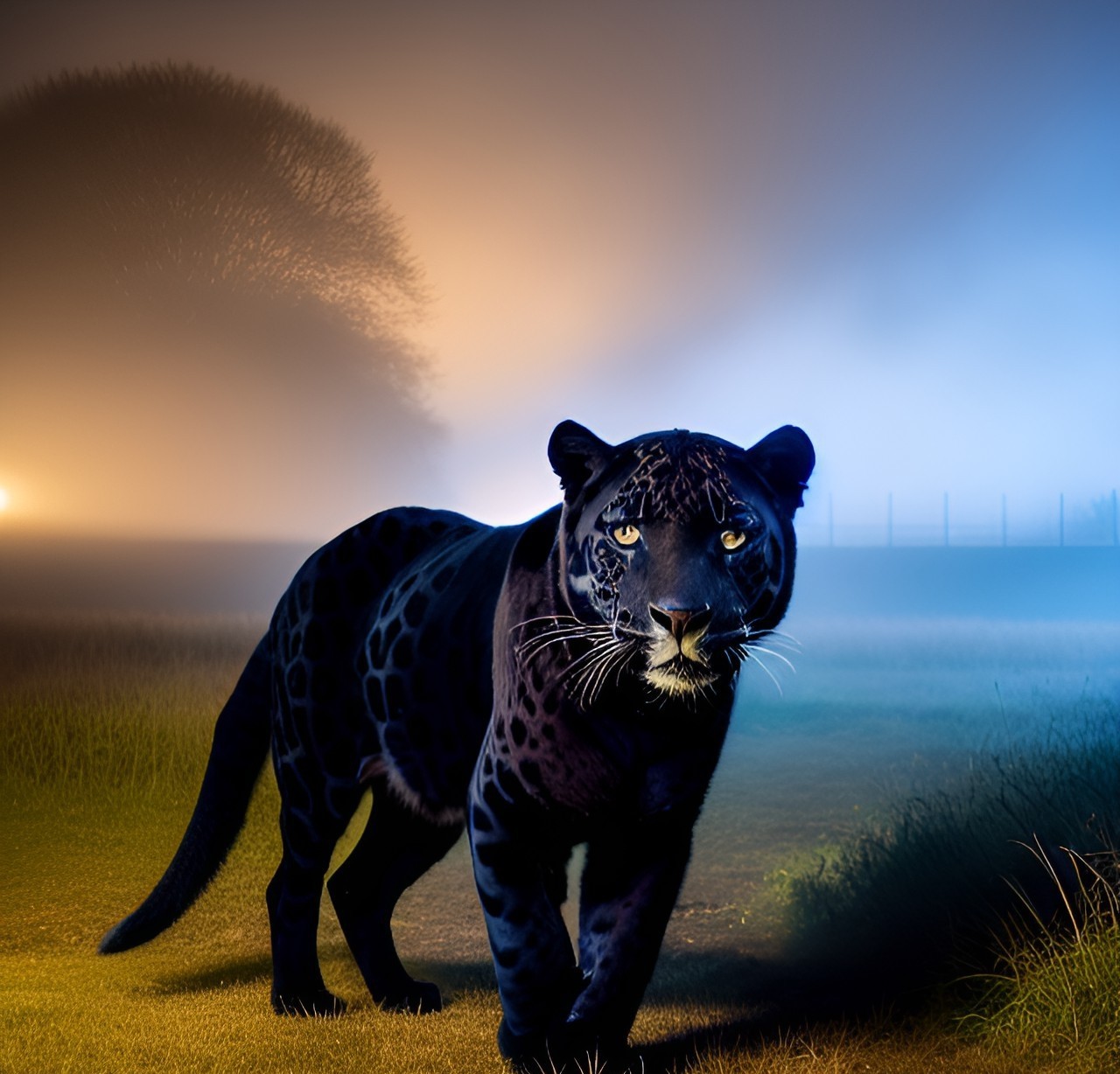
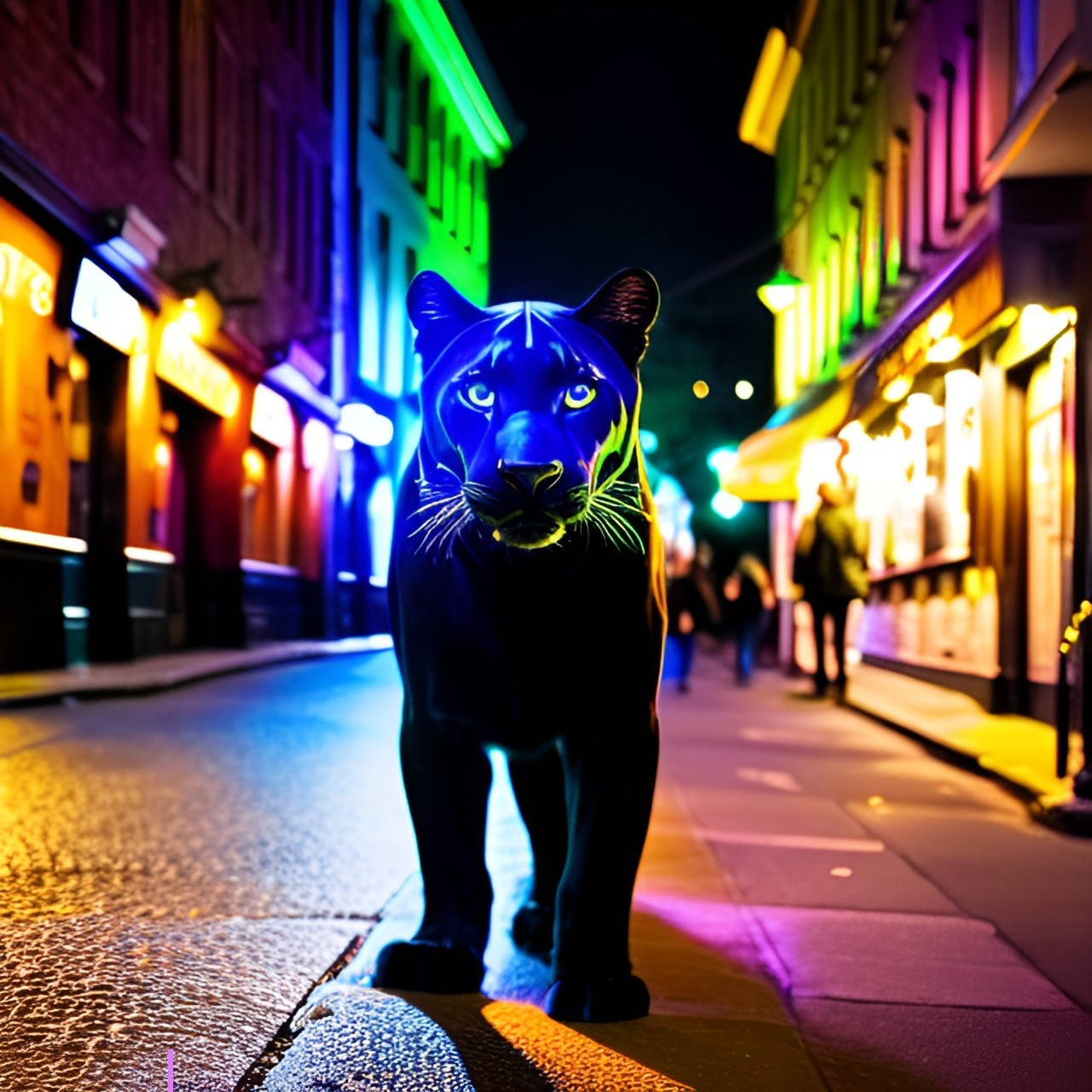
Panther!
“Lads, that’s a panther, innit? A panther, wow!” Credit: PITB

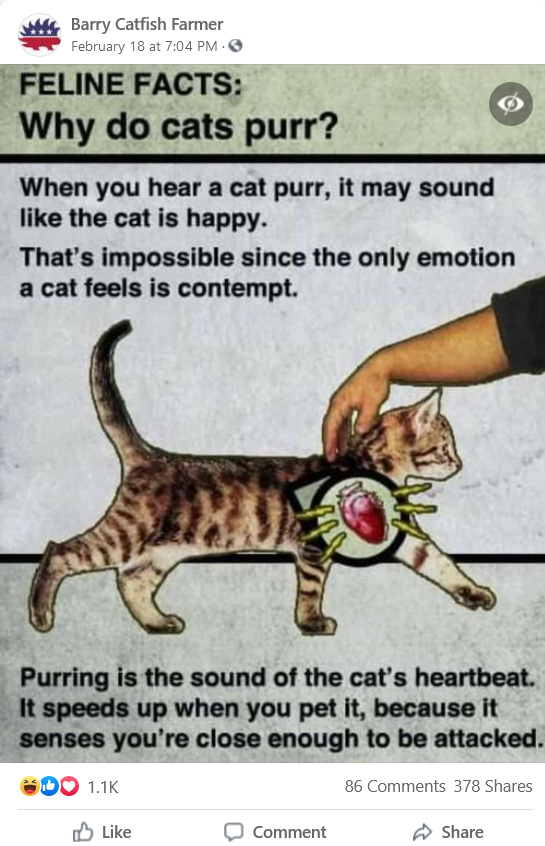
Viral FB Post Claims Cats Have One Emotion: Contempt

Factchecking a Facebook post claiming cats feel a single emotion: Contempt.

You have to feel sorry for the people still stuck in the Zuckerbergian cesspit that is Facebook, spending their days wading through tedious political arguments and “SHARE IF U AGREE” shitposts written for the paste-eating crowd.

Unfortunately, the platform’s rampant misinformation is not limited to politics. Here’s one of the latest viral posts:

Facebook Derp
Derp derp derp! A derp a derp derp derp!

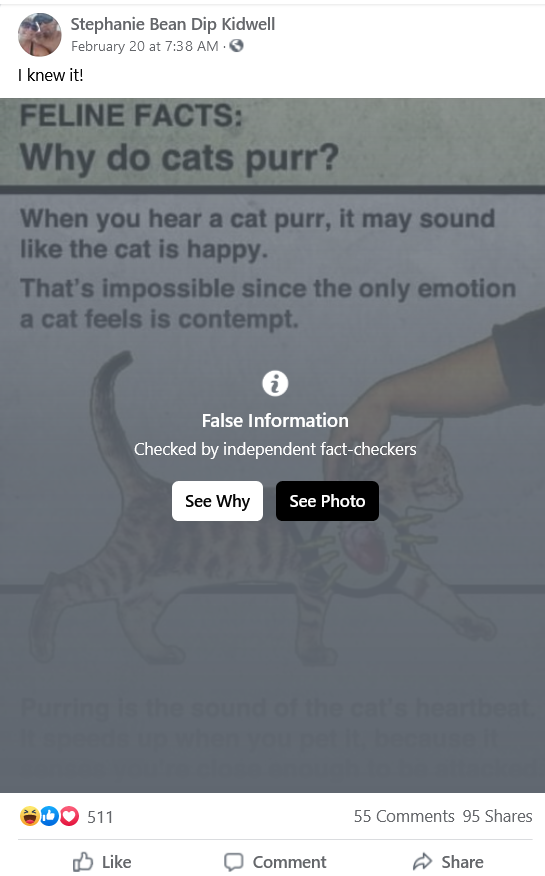
And this is what it looks like now, to protect people like your aunt who keeps sending you email forwards about Pizzagate:

Facebook: Derp!
Despite the flagged warning, people are still sharing the post. “Big Tech doesn’t want us to know the truth ’bout cats!”

Whenever I encounter stuff like this, my first instinct is to dismiss it as nonsense no one would actually believe. Then I remember our dubious track record when it comes to critical thinking: a third of millennials are flat-Earthers, one in four Americans thinks the sun orbits the Earth, and more than 16 million Americans believe chocolate milk comes from brown cows.

Some futurists and ethicists thought the world wide web would bring an end to conspiracy theories and outlandish beliefs, with the sum of human knowledge at our fingertips and the disinfectant power of the truth. But falsehoods have remarkable staying power, and the internet is happy to oblige any conspiracy theory no matter how far removed from reality, with sites like this one that says it offers “no-bullshit truth”:

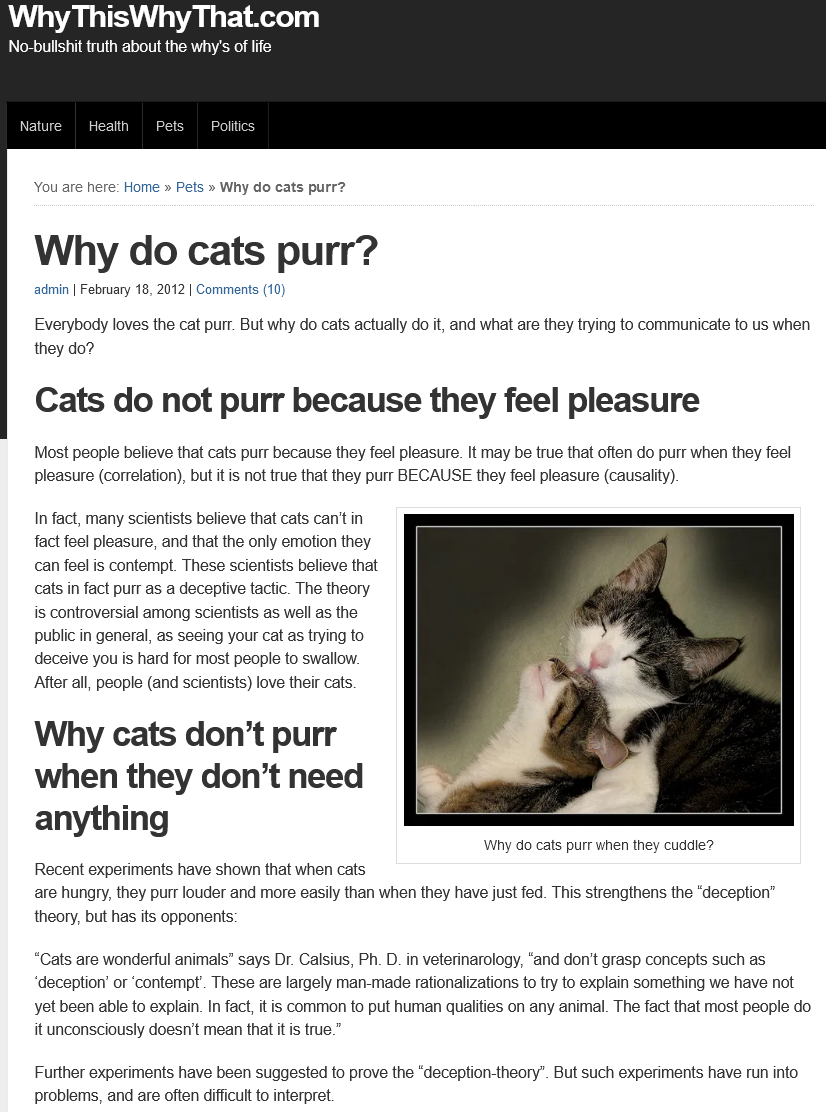
Screenshot_2021-02-25 Why do cats purr

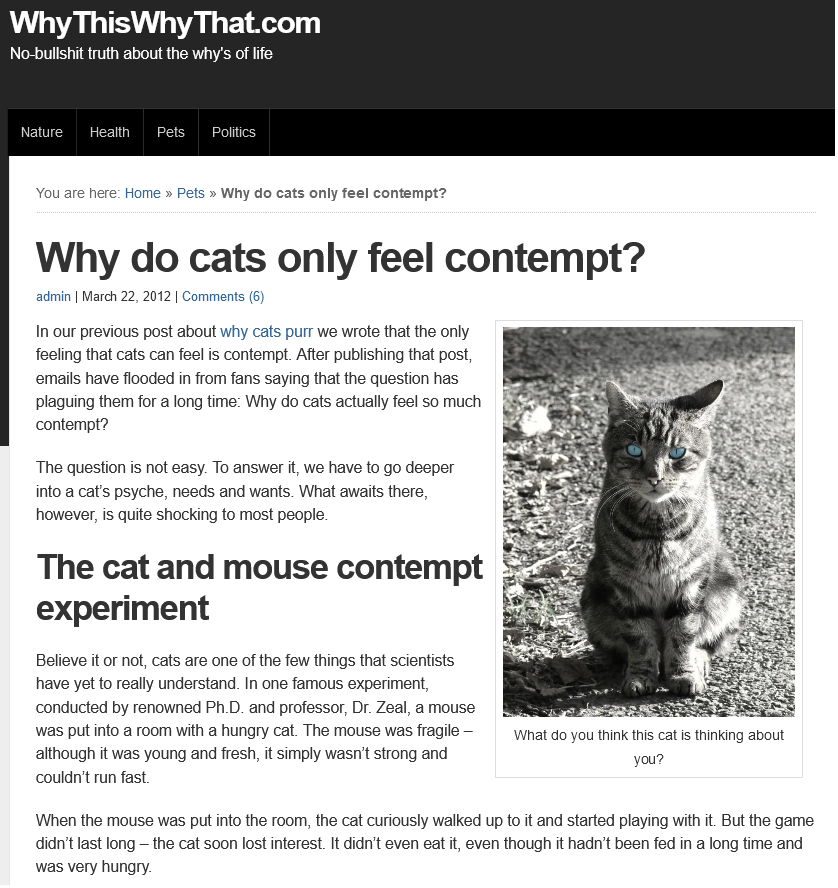
Screenshot_2021-02-25 Why do cats only feel contempt

So at the risk of stating the obvious, purring has nothing to do with a cat’s heartbeat, and cats experience all the same primary emotions we do (happiness, sadness, fear, excitement, nervousness) as well as quite a few secondary emotions, like jealousy, disappointment, contentment and confidence.

The idea that animals like cats and dogs are emotionless automatons went out of favor more than half a century ago, and modern technology has made it possible for scientists to peer into the minds of our domesticated friends and witness brain activity that mirrors our own when we process emotions. There is no debate: Cats have very real emotions, which is another compelling reason to treat them well.