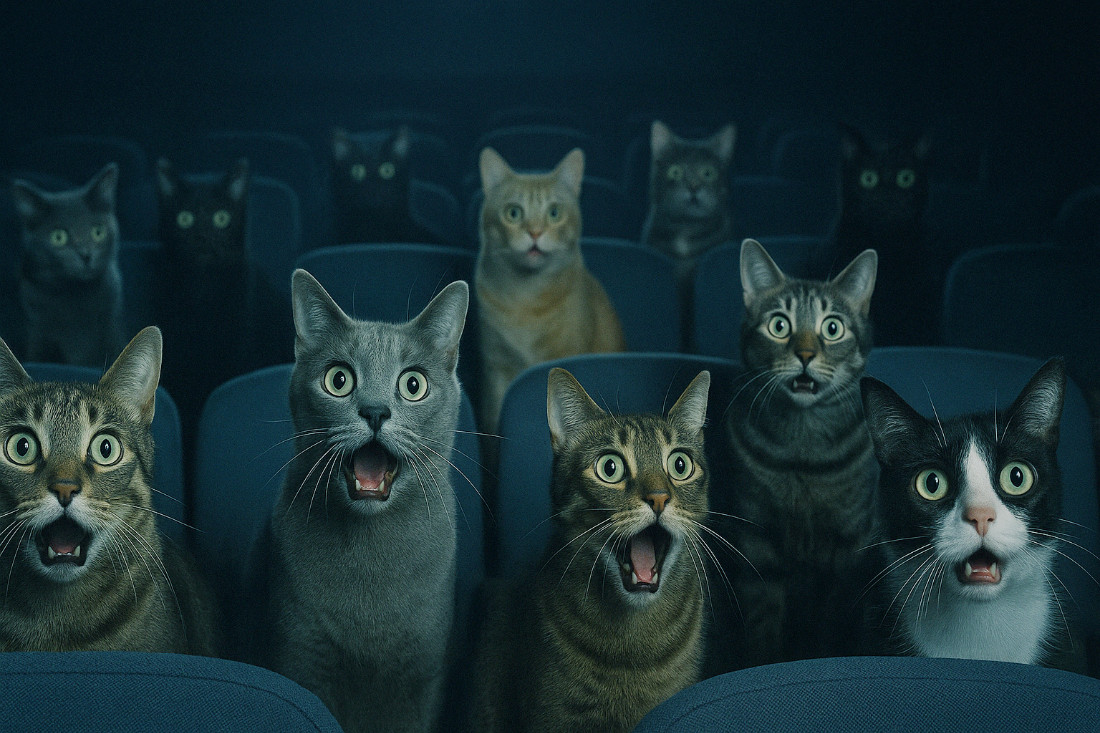
“I found myself subconsciously rationing my popcorn as I sat in the theater,” one critic wrote of the harrowing experience that is ‘The Empty Bowl.’
With a Rotten Tomatoes critic score of 94 percent and an equally enthusiastic reception by fans, Buddy the Cat’s directorial debut. “The Empty Bowl,” has already cemented his place among the modern masters of the horror genre.
The movie follows Dubby, a tabby cat from New York who awakens one day to find his human gone, and most horrifically, his food bowl essentially empty, with just a few morsels pushed to the sides of the ominously hollow container.
Time is measured in the growls of Dubby’s stomach and the lengthening shadows inside his domicile as a sinister score ratchets up the tension.
“Buddy the Cat presents a master class in exploring trauma via the absence of yums,” Associated Press critic Misty Lemire wrote. “We feel Dubby’s hunger as he carefully rations out his remaining pieces of kibble, made worse by the unknowns in front of him: when will Dubby’s human return? Will it be five minutes from now, or five hours? What if there’s nothing left in the cat food cupboard, and he has to go to the store? These are harrowing questions the audience is asked to ponder.”
The film “makes us feel Dubby’s hunger on a visceral level,” feline horror aficionado site YummyDisgusting noted in its review.
Indeed, test audiences indicated they “felt guilty” chowing down as they watched Dubby writhe with hunger.
“I found myself subconsciously rationing my popcorn as I sat in the theater,” New York Times critic Meowchio Mewkatani wrote. “How could I enjoy the buttery goodness in the bucket on my lap as Dubby’s stomach growled in excruciating Dolby surround sound? This is a film that really makes you stop and consider.”
The director told reporters he “wanted to tap into authentic fear, not the fantasy violence that often comes with genre cinema.”
“Obviously there’s something aesthetically primal about an evil, slobbering dog emerging from the shadows,” he said. “But I’m interested in pushing boundaries, not taking the well-padded path. The fear that our minds create is often much more terrifying than any trope.”
In one particularly brutal sequence, Dubby’s human returns home toting several heavy grocery bags, and the snap of a tin can of tuna opening is precisely timed to the crescendo of the orchestral score.
The camera focuses on the meaty morsels tumbling into the bowl, landing with saliva-inducing, moist thuds.
Dubby races toward the feast, his tongue comes within millimeters of the juicy tuna…and he awakes tragically in a cold sweat to find himself laying in a still-empty apartment rendered dark as the last of the sun’s rays disappear over the horizon.
“If that doesn’t hit you right in the feels,” Lemire wrote, “then you’re not a real feline.”
Entering its sixth year as the most incredibly awesome cat blog in the universe, PITB continues to chronicle the amazing adventures of Buddy the Cat.
It looks like 2025 is shaping up to be quite a year!
Flow won an Oscar, the Yankees are primed for mediocrity, this is the year Nostradamus predicted we’d get those awesome hoverboards from Back To The Future, and PITB will turn six years old in the summer!
Can you believe it? Six years of thrilling millions of readers with stories of Buddy’s incredible adventures, covering the most important cat news and setting all the hot new trends in the cat world!
LITTLEBUDDYTHECAT.COM: The elegant choice for discerning cat lovers.
Critics have lavished praise on PITB:
“You won’t find two more reprehensible characters. The ill-mannered cat who’s always hatching ludicrous schemes and the human who glorifies him. They don’t have two neurons to rub together between them.” – WIRED
“Incredible! Buddy the Cat is the most dashing, dapper and daring feline on the planet, and his fans are fortunate to read about his thrilling exploits!” – Buddy Monthly (starred review)
“Two of the worst representatives of their respective species. Fate smiled cruelly upon the world when these two joined forces. Thankfully their epic incompetence prevents them from taking over.” – The Guardian
“A titan of the feline world and his human sidekick, the Buddies join forces — and combine their considerable mental resources — for the betterment of feline- and mankind. Is there anything Buddy can’t do? That’s a rhetorical question, by the way.” – The Buddy Review of Awesome Felines
“A chubby house cat who thinks he’s a tiger and a human whose writerly ambitions far exceed his talents. Both live in a fantasy world that puts them one harebrained scheme from fame and fortune. If PITB had a print edition we’d recommend it as a birdcage liner.” – The New York Times
“Buddy is an 80s action hero in furry form, a one-cat army whose skill in martial arts is matched only by his razor-sharp wit. We feel privileged to read about his many adventures.” – The Buddinese Shinbun
“The blog works mostly as a celebration of a delusional cat’s ego.” – Associated Press
“Astonishing! With clever and awe-inspiringly beautiful prose, Big Buddy is like a bard expanding the legend of our furry little hero with every post. It’s no wonder Taylor Swift’s cat loves Buddy the Cat so much and wants to share her vast fortune with him.” – El Magnifico Buddenisto
“Buddy the Cat is a legend in his own mind, where his chubby frame becomes ‘meowscle’ and his half-baked plots become ‘genius.’ In that depraved little mind exists a world where kittens plaster his posters on their walls, female cats fight for his affections, and humans argue over who should have the privilege of serving him. Somehow, both cat and human labor under the misconception that what they’re doing is ‘humor,’ but they’re both morons.” – Newsweek
“Like the contents of a particularly foul litter box upended and assembled into crude approximations of words.” – Pitchfork
“Compulsively readable and addicting, like Michael Crichton on crack. Come to think of it, why isn’t there an amusement park based on Buddy and his legend? That’s a billion-dollar idea!”- The Daily Buddy
“Shunned by tigers, nearly murdered by lions, chased out of the White House by thousands of angry Americats and laughed at by rodents. Buddy’s track record is one of infamy and failure, and he’s not cute enough to make up for it. Avoid this blog like the COVID ward of your local hospital.” – The Economist
“So handsome, so kawaii! Budditsu-chan is dreamy!” – CrunchyRoll
“Immature, asinine and frankly offensive, [PITB] chronicles the ‘adventures’ of its titular feline, a delusional lunatic who harbors a single-minded obsession with turkey. When they’re not eating paste or laughing at their own poop jokes, the Buddies are probably smoking catnip, for only drug-addled idiots will find their ‘humor’ amusing.” – GQ
Critics and audiences alike have raved about the feline’s convincing performance as a cat who hasn’t eaten in minutes, possibly even hours.
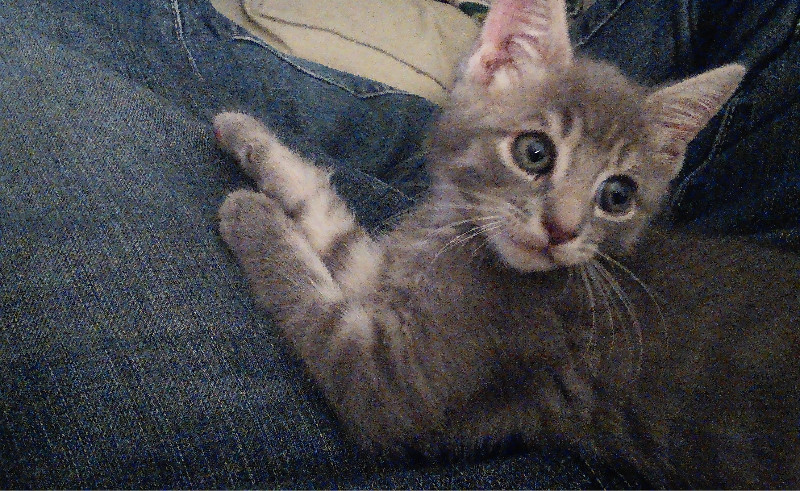
LOS ANGELES – Buddy the Cat sat on the coffee table, shoulders drooped, gaze fixed on his human.
With a faint, high-pitched mew and a slight quiver of his mouth, his sad eyes seemed to grow even bigger as he watched his pal take a bite of cheese.
“It’s as if he’s saying ‘Et tu, Big Buddy? Don’t we do everything together? Where is Buddy’s snack?'” the normally savage film critic Anthony Lane said. “I’m man enough to admit this scene made me weep.”
Lane wasn’t alone in expressing that sentiment, and as rave reviews continued to pour in, praise for the gray tabby cat’s performance morphed into Oscar buzz, creating a sense of inevitability.
Now Buddy has a new prize for his shelf to display alongside his Nathan’s Hot Dog Eating Contest championship belt, his national bowling trophies and his World Series ring. He’s the first cat to win the Academy Award for Best Actor, cementing his legacy as a master thespian.
“The way he inhabits the role of a starving cat is nothing short of remarkable,” said Christy Lemire, the longtime film critic for the Associated Press. “Logically, my mind knows this is a feline who has never missed a snack, let alone a meal. He’s chubby, sedentary and I doubt he can entirely groom himself. And yet his performance is so committed, so all-encompassing, that I can actually see a starving cat. His acting chops are phenomenal, generational even.”
Those close to the mercurial tabby say he is a method actor who remains in character even when the cameras are not rolling.
“He had me absolutely convinced he was on the verge of starving to death,” said one longtime friend of Big Buddy, Buddy the Cat’s human servant. “I said, ‘What have you been doing to this poor cat?’ The little guy barely has the energy to walk, and his meow is imbued with a deep sorrow, the kind of sadness that can only come from hours of being deprived of snacks.”
A woman who gave only her first name, Melissa, lives two doors down from the Buddies. She sheepishly admitted to breaking into Casa de Buddy to feed the feline while his human was out.
“His meows are tortured,” Melissa said. “I began to wonder: does my neighbor ever feed his cat? Should I call Cat Protective Services?”
Upon entering the apartment and getting her first proper look at Buddy, Melissa said she was taken aback.
“I was expecting skin and bones, not fur and flab.”
Still, Buddy’s performance was so convincing that Melissa said she cooked two thick pieces of filet mignon for the little guy, which he quickly devoured.
“He inhaled them, belched and immediately meowed insistently for more,” she recalled. “I couldn’t believe it.”
Later, she said, she spoke to another neighbor who said she’d fed Buddy meatballs, deli meats and roast turkey that same day.
Not one to rest on his laurels, Buddy is currently considering half a dozen new scripts, including one about a starving cat who goes to space and a Western about a starving cat who has been framed for murder.
“He’s not afraid of being typecast,” said his agent, Ari Gold. “This is his wheelhouse. Fans can’t wait to see what he eats next.”
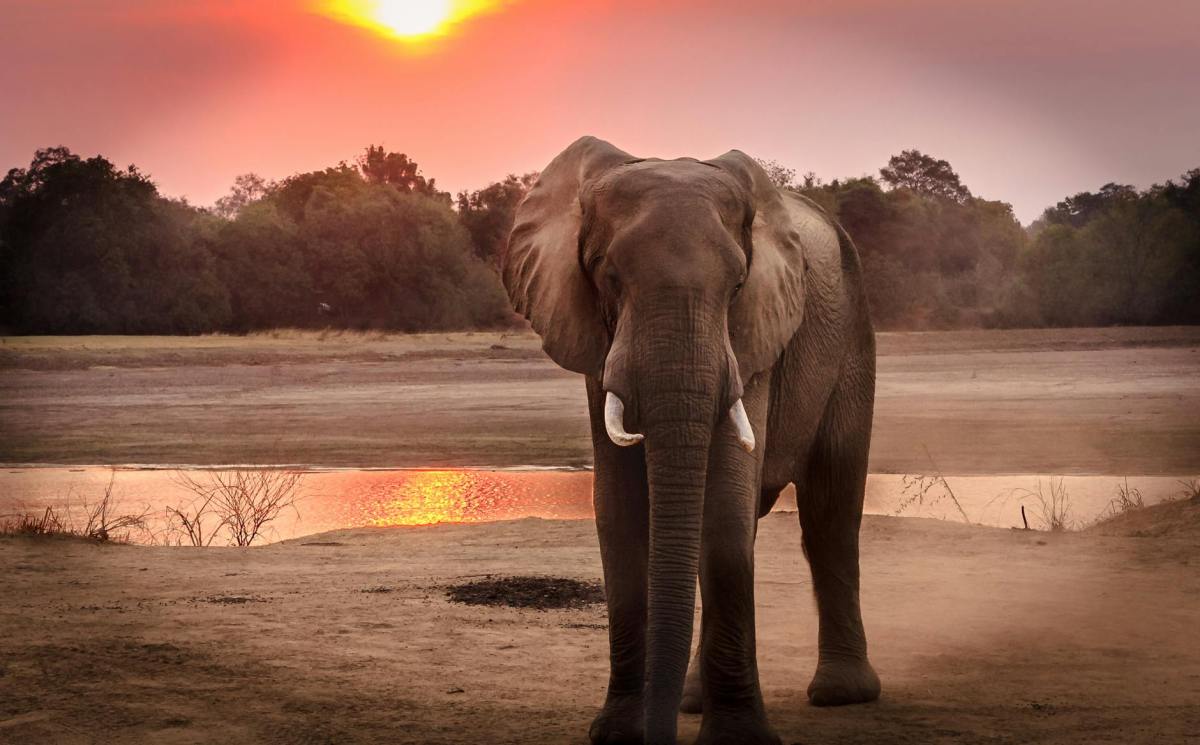
Elephants encode names and other information in low-frequency rumbles that can be heard miles away. For social animals who live in large herds, it’s crucial to be able to address individuals.
Elephants are famously social animals, moving in matriarchal herds that can consist of as many as 70 of their kind.
They also communicate over long distances, emitting rumbles that can be heard miles away.
Because of their social and nomadic existence, it makes sense that elephants would need a way to single out individuals and address each other, and for the first time researchers say they’ve found evidence of Earth’s largest land animals calling each other by name.
“If you’re looking after a large family, you’ve got to be able to say, ‘Hey, Virginia, get over here!’” Duke University ecologist Stuart Pimm told the Associated Press.
The research involved field work and analysis using artificial intelligence. To record samples of elephants communicating, teams followed herds with recording equipment. Notably, elephant rumbles include sounds in frequencies lower than the human ear can detect.
Credit: Pixabay/Pexels
The team paid close attention when one elephant vocalized and another responded, and recorded who initiated each rumble and who it was meant for.
Although elephants are best known for making loud “trumpeting” sounds, experts say those are more like exclamations while rumbles contain encoded information that African savanna elephants would need to communicate to each other.
“The rumbles themselves are highly structurally variable,” said Mickey Pardo, a biologist from Cornell University and co-author of the study. “There’s quite a lot of variation in their acoustic structure.”
A machine learning algorithm was then used to sort and categorize the large number of audio samples, looking for patterns that are difficult for human minds to detect.
“Elephants are incredibly social, always talking and touching each other — this naming is probably one of the things that underpins their ability to communicate to individuals,” said George Wittemyer, an ecologist at Colorado State University and co-author of the study. “We just cracked open the door a bit to the elephant mind.”
A female elephant with her young offspring in Kenya. Credit: Pixabay/Pexels
Notably, the elephant “names” are identifiers that they created for themselves, and are not the kind of human-bestowed names that cats and dogs respond to. The list of animals who have names for themselves is short, although likely to expand with further study. Dolphins, for instance, identify themselves with unique whistling patterns, and parrots have a similar method, but both species address individuals by imitating their calls. Elephants use their name analogs the way humans do, to directly address each other.
The research has the potential to raise public awareness of elephant intelligence and their plight as they face threats to their continued existence. Like almost all of the Earth’s iconic megafauna, elephants will become extinct if we don’t do a better job protecting them and ending the ivory trade. Every year about 20,000 elephants are slaughtered for their tusks to feed the demand for ivory, especially in China where it’s considered a status symbol, according to the World Wildlife Fund.
Yang Feng Glan, known as the”Queen of Ivory,” was sentenced to 15 years in prison by a Tanzanian court in 2019. Yang smuggled some 860 elephant tusks worth $6.5 million from Tanzania to China as the leader of one of the world’s most extensive poaching and ivory smuggling organizations.
During her years operating the smuggling ring, Yang presented herself as a successful businesswoman and ran in elite circles within China, authorities said. Two of her accomplices were also given 15-year sentences for their roles, but since then others have filled the vacuum left by Fang’s conviction, and elephant preserves are constantly under threat from heavily armed poachers.
From the military camps where they stop mice from wreaking havoc to social media where they help raise money, Ukraine’s felines are enduring the war alongside their people.
Roman Sinicyn and his men were living in an abandoned house in a destroyed village for a month.
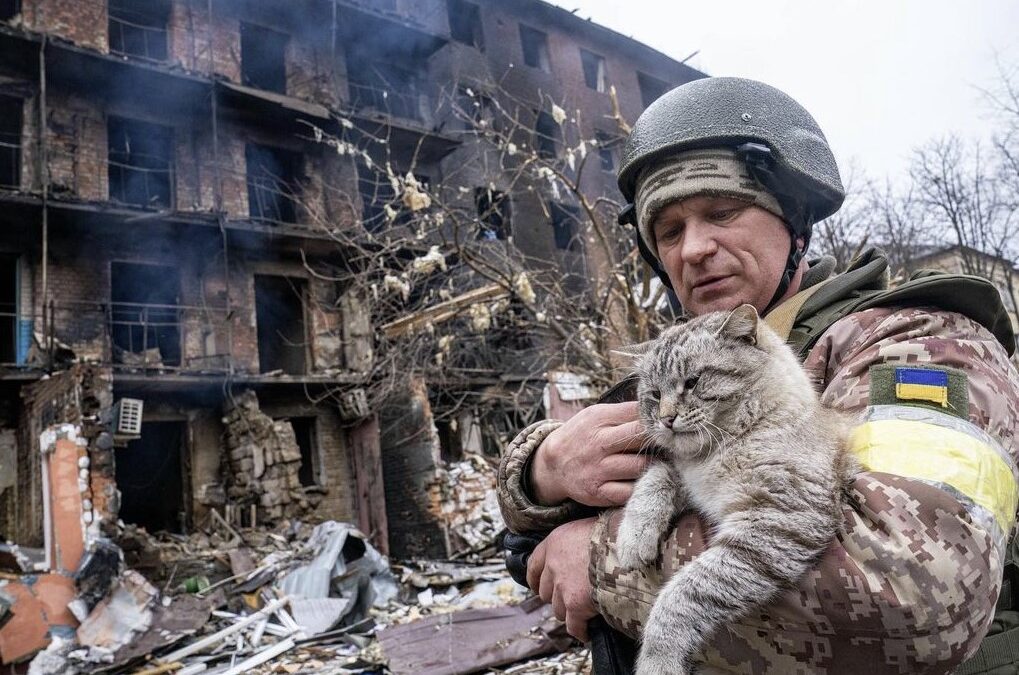
Although each of the Ukrainian soldiers contributed to their survival and fought the Russians, perhaps their biggest hero was Syrsky the Cat.
The fearless feline evicted a rodent infestation in the platoon’s temporary headquarters, hunting the mice mercilessly as his humans engaged in firefights with invading Russians. By day Syrsky made the soldiers’ temporary lodgings livable and by night he soothed their trauma with healing purrs.
The cheese-loving moggie’s moniker is a double-entendre: he’s named for Ukrainian Army Land Forces Commander Oleksandr Syrsky, and for the Ukrainian word for cheese, syr.
A new story from Politico EU details the important role of felines as the costly war enters its third year. Russian missiles, bombs and artillery have flattened villages, sending civilians fleeing and often separating them from their families and their pets.
The bewildered cats and dogs, accustomed to easy lives indoors, are suddenly thrust into a world of death, explosions, mine fields and other horrors.
As the war endured past its early phases, former pets began seeking out humans where they could find them — in military camps and in the rodent-infested trenches where they hunkered down against the constant thunderclaps of Russian artillery.
During peak war season in the summer, Vladimir Putin’s bedraggled military fires up to 20,000 artillery rounds a day according to the Associated Press, with that number dipping to “only” 7,000 per day as the war machine slows in brutally cold Slavic winters.
Oleksandr Liashuk, a Ukrainian soldier, with his cat Shaybyk. Credit: Oleksandr Liashuk
Just like they did 10,000 years ago when they first domesticated themselves, cats proved their worth by chasing out mice and rats, but this time they didn’t have to convince humans to allow them to stick around. They were welcomed with open arms and hands bearing snacks, serving as hunters and therapy animals to men enduring a living hell.
“When this scared little creature comes to you, seeking protection, how could you say no? We are strong, so we protect weaker beings, who got into the same awful circumstances as we did, just because Russians showed up on our land,” Oleksandr Yabchanka, a Ukrainian medic, told Politico.
It’s amazing how a return to primitive circumstances has so quickly pushed humans back toward reliance on animals who made it possible for our species to survive in the first place.
Without dogs, early hunter-gatherers would have been much worse off on the hunt and their groups would have been much more susceptible to ambush when they slept. Indigenous societies eking out existences on the tundra would have no reliable animals to pull sleds. Without oxen to pull plows, farmers wouldn’t be able to produce enough food for civilization to thrive and grow.
And the people of nascent human settlements, taking the first great leap forward for our species with the invention of agriculture, would have starved out over long winters as mice and rats gnawed away at their food stores — if not for cats, our furry friends.
In 2024 humans can’t live without cats once again. Felines patrol Ukraine’s World War I style bunkers, killing hordes of mice. Mice that otherwise devour MREs, chew through comm link and power wires, damage weapons and make soldiers miserable.
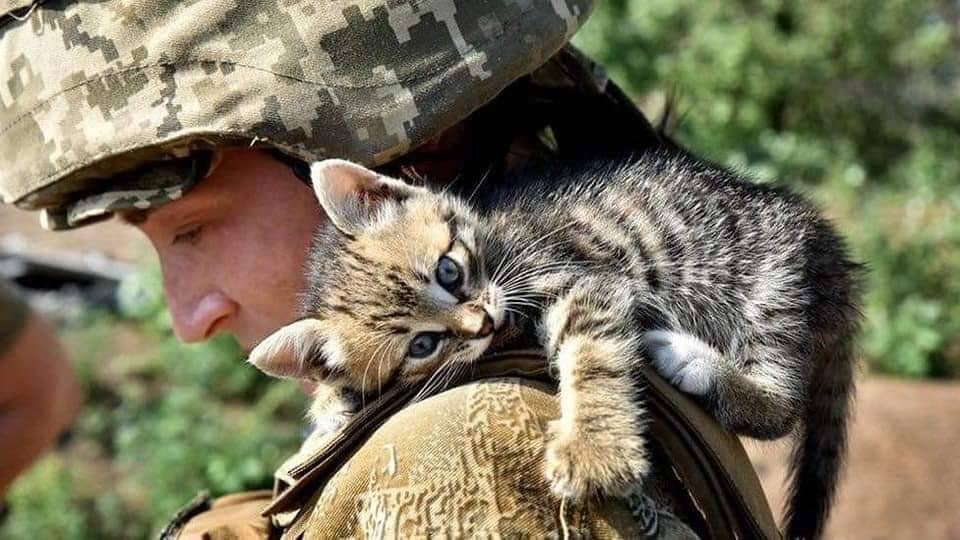
A Ukrainian soldier with a stray kitten. Credit: Ukraine Ministry of Defense
Some cats become unofficial unit mascots and good luck charms, but many others are claimed by individual soldiers who find normalcy and relief in their company.
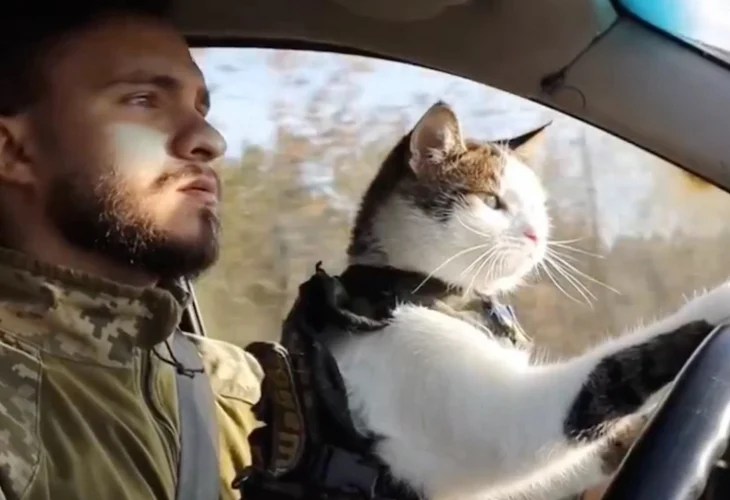
One soldier/cat pair are viral sensations thanks to videos of the alert cat riding along with his human, scanning the terrain ahead. Another story detailed a patrol whose men just avoided an ambush thanks to their company’s cat, who spotted the enemy first and frantically warned that something was wrong.
In that way, cats are serving the propaganda effort as well, helping the public to connect to the men and women defending them.
Military cats have become signals for Ukrainians to rally around, but Russians are doing it too. Russia is a famously cat-loving country, and Putin’s government has latched onto stories about the felines accompanying his men into battle — an effort that Politico notes is meant to humanize Russian soldiers and create the impression that it values them even as it continues to conscript unwilling civilians and ship them to the front line “meat grinders” with a few weeks’ worth of training, meager supplies and minimal ammunition for their rifles.
In that respect, the soldiers of Ukraine and Russia have at least two things in common — they love their feline companions, and they’re enduring hell as well as a high risk of death because of one small man’s delusions of greatness and legacy. Western media tends to ignore the humanity of Russian conscripts, and the pro-Ukrainian side of the internet calls them “orcs,” painting them as the mindless and disposable drones of a bloodthirsty dictator.
But they’re human too, with their own hopes and fears, and mothers back home worrying about them. They don’t want to be there. It seems fanciful to imagine Russians refusing to continue the invasion when Putin has squads behind the front lines with guns pointed at his own men to prevent them from deserting or refusing to fight. But maybe the men in the trenches can come together over shared interest and shared love of cats, and help put an end to three years of misery.







 Pain In The Bud