Orangey the Cat enjoyed a suspiciously prolific career as Hollywood’s top feline actor for almost two decades. What’s the story behind the iconic moggie?
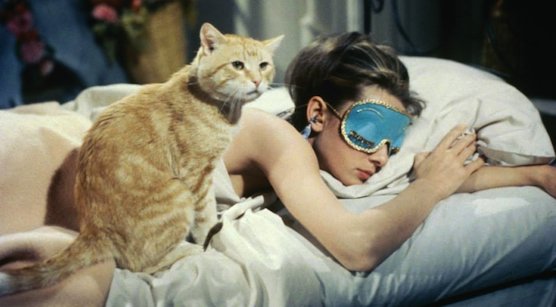
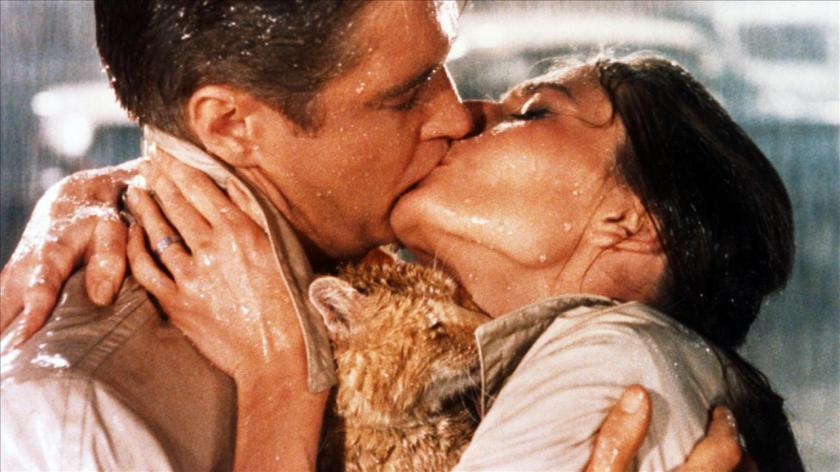
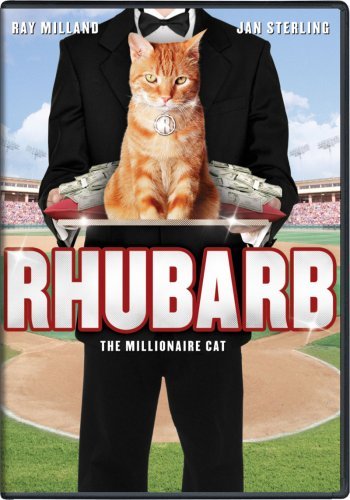
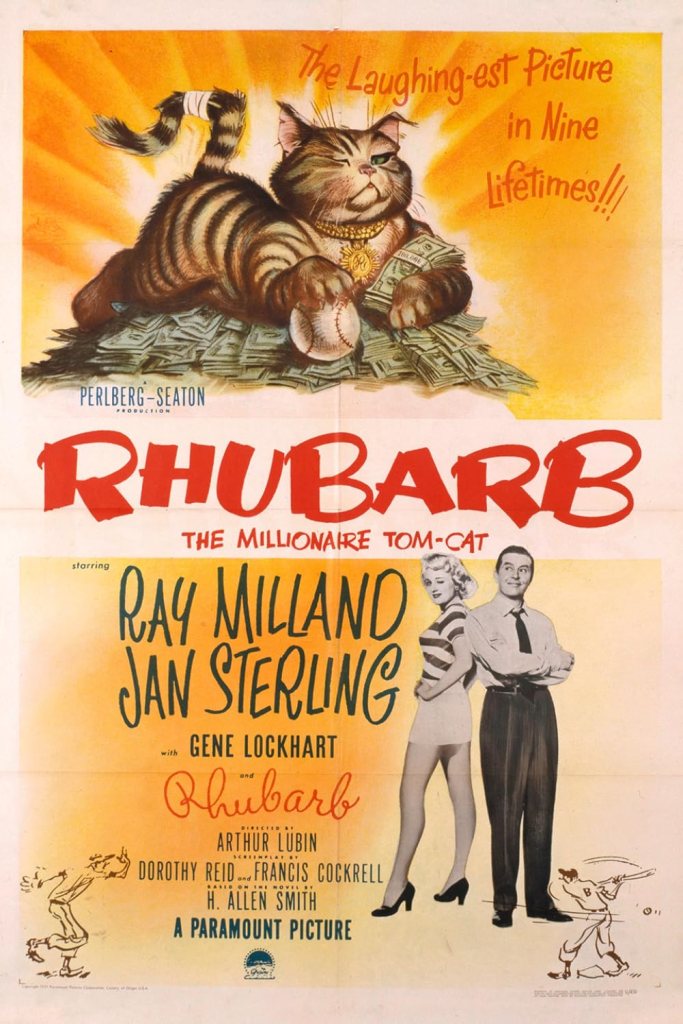
Orangey, the cat who famously belonged to Audrey Hepburn’s character in Breakfast at Tiffany’s, had an impressive and improbable film career beginning with 1951’s Rhubarb and ending with roles in TV series like Green Acres and The Flying Nun almost two decades later.
A new story in The Guardian charts Orangey’s film career and attempts to reconcile conflicting information about the famed feline. At least two cats played Orangey in Breakfast at Tiffany’s, while potentially dozens were used for Rhubarb, a comedy about a cat who inherits his wealthy late owner’s fortune and assets, including a baseball team.
“Watching the cat performances both within the movies and across the different titles certainly lends credence to the idea that Orangey was more a cat type, provided by trainer Frank Inn, than a specific animal,” The Guardian’s Jesse Hassenger writes.
Orangey had a prolific career in film and TV, one that would have been very difficult for a single cat to manage due to the number of appearances and the unlikely length of his tenure as Hollywood’s top cat.
In fact, color mattered less than resemblance because most of Orangey’s appearances were in black and white, so it’s possible Orangey wasn’t always Orange. (Later performances were filmed in color and some films were subsequently colorized.)
Using more than one cat for a role is pretty standard in Hollywood films that feature felines. Keanu, the 2016 Key and Peele comedy about an eponymous kitten who is stolen by drug dealers, cycled through several kittens as the pace of production was simply too slow compared to the rapid growth of real life kittens. In 2024’s A Quiet Place: Day One, two very similar-looking cats, Nico and Schnitzel, shared the role of Frodo, the cancer-stricken protagonist’s emotional support animal.
Why do people steal cats?
In early 2023, more than 50 cats in and around Kent, England, were abducted and returned with patches of fur shaved off.
At first people suspected the perpetrators were engaged in some bizarre form of animal cruelty — and some later copycats, for lack of a better word, across the UK may have been motivated to cause distress — but authorities later said they believe the catnappers were checking to see if the felines were spayed or neutered.
If they weren’t, those cats were kept for breeding, while the others were dropped off where they were found.
A cat shaved during spay/neuter surgery. Credit: jp_the_man/reddit
That rash of disappearances and other cases of car abductions factored into a staggering report from the Royal Kennel Club’s lost pets database: of the 25,000 pets reported missing in the UK between January 2023 and June 2024, more than 20,000 were cats.
Those cases and others are highlighted in a report from The Telegraph published on Thursday detailing the increase in reports of stolen felines. While the actual number of police reports are unknown due to discrepancies in the way such cases are classified by police, data from the Kennel Club and microchip companies, as well as anecdotes, indicate a concerning spike in cat theft even as the UK has mandated microchips for every pet cat.
Some, like the recent case involving an Amazon delivery driver, are crimes of opportunity. They’re spur-of-the-moment decisions by people who encounter cats they might want for themselves or people close to them.
Others, like the mass pet thefts in Kent, could have ties to larger organized crime operations.
And some are attempts to make a quick quid by petty thieves who count on the emotional bond between plpeople and their animals to demand ransom for the four legged family members, like one couple who abducted a woman’s cat and ransomed her for the equivalent of a few hundred dollars.
That woman, who was identified only by the pseudonym Helen in the story, said she was torn between getting her cat back and encouraging the people who took him.
“I was worried the same thing would just keep happening,” she told the newspaper. “It’s not something you want to encourage – paying to get your cat back – in case they do it again.”
Another year, another Festivus for the Rest of Us.
This year marks the 29th Festivus of the Festivus Revival Era, when Cosmo Kramer convinced Frank Costanza to bring back the beloved holiday that eschews the excessive commercialism of the modern holiday season.
We enthusiastically celebrate Festivus annually at Casa de Buddy and here on the blog, but if you’re joining us for the first time and you’re not familiar with the tradition, we can help get you up to speed by referring back to the wisdom of Frank Costanza, who founded the holiday:
Frank Costanza: Many Christmases ago, I went to buy a doll for my son. I reached for the last one they had, but so did another man. As I rained blows upon him, I realized there had to be another way!
Cosmo Kramer: What happened to the doll?
Frank Costanza: It was destroyed. But out of that, a new holiday was born. A Festivus for the rest of us!
Festivus was popularized by Seinfeld in the 1997 episode “The Strike,” and presented as a holiday celebrated by the Costanza family under duress, at the insistence of Frank Costanza, the insane father of George Costanza.
But the holiday was not invented for the show — it was a real tradition invented by Dan O’Keefe Sr., father of Seinfeld writer Dan O’Keefe, in the 1960s. The younger O’Keefe had no plans to work it into an episode of the sitcom, and blames his “loudmouth brother” for bringing it up at a party for the Seinfeld cast and crew.
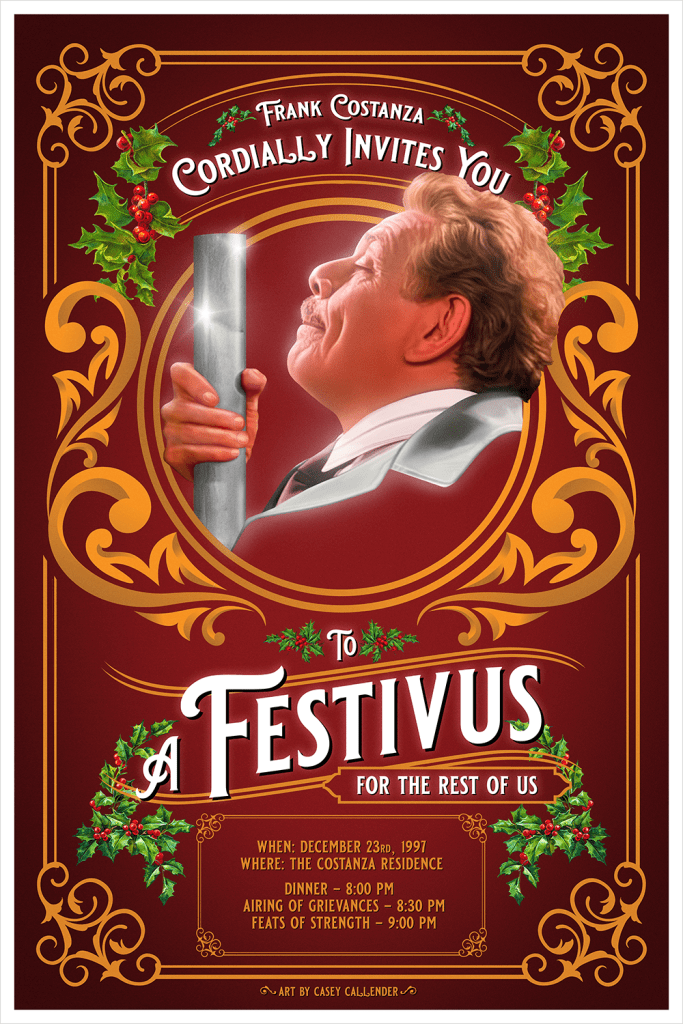
Frank Costanza holding the Festivus pole.
O’Keefe pleaded with his colleagues not to write it into an episode, but by that point Jerry Seinfeld and Larry David, the main creative forces behind the show, were already intrigued and couldn’t be talked out of it.
In a 2017 interview, Dan O’Keefe said he believed his father’s made-up holiday was “too weird” for the TV audience, but Seinfeld has always been about the absurd and the nonsensical.
The audience loved it, and in the almost three decades since, Festivus has grown in popularity. It’s celebrated in homes, neighborhood bars, offices and other places as a non-secular holiday for which people don’t have to worry about bringing gifts and it’s okay to be a little grumpy.
As testament to its widespread popularity and its place in modern American culture, Festivus has been recognized as a culturally significant event by the Library of Congress.
Credit: US Library of Congress
On the surface, Festivus is superficially similar to Christmas. It involves a gathering of family and friends, a holiday dinner and a warm atmosphere.
But in a rejection of holiday consumerism, Festivus is not celebrated with a tree or candles. Instead, the primary decoration is an unadorned Festivus pole, usually made out of aluminum. (“I find tinsel distracting,” Frank Costanza explained.)
Festivus dinner begins with the Airing of Grievances and ends with the Feats of Strength.
The head of the family declares “I’ve got a lot of problems with you people, and now you’re gonna hear about it!”
No Festivus is complete without the Airing of Grievances.
It should come as no surprise that cats, who have high standards for service, would have their owh list of disappointments. Behold, Little Buddy the Cat’s grievances for 2025:
BigBuddy: It has come to my attention that you portray me as a wimp on MY blog! Apparently your claims about me running from vacuums and the rustling of paper bags are running jokes in your posts. These heresies shall not go unpunished! I am a tiger!
Readers of PITB: Et tu, friends of Little Buddy? And here I thought I had admirers who appreciate me for being the dashing, beguiling, intelligent and meowscular feline I am. As punishment, I shall refuse to do anything amusing for at least a month, depriving you of stories about my witty ripostes and magnificent adventures.
Smudge the Neighbor Cat: Your time will come soon, my friend. Very soon. Nobody tangles with Buddy and…uh…gets untangled. Or something. You think I don’t know you’ve been surreptitiously marking my front door with your foul stench? I’ll be keeping a close eye on you, so you’d better not try any of your sneaky stuff!
The Jaguars of the Amazon: Once again, you my homies! You know how to make a fellow apex predator feel at home, and you can be reliably called upon when I need a vacuum destroyed or dogs intimidated. I got your backs! I love you guys.
SantaClaws: Last year’s gifts were a bit sub par, if I’m being honest. I’m a good boy, and as a good boy, I deserve toys! I have left the Christmas tree alone this year, I don’t scratch the couch, and I only puked on Big Buddy’s bed once. It’s technically my bed anyway, so it’s not like I did it on purpose. Trust me, I almost felt bad when Big Buddy had to replace the sheets and wash the old ones twice. And I don’t know what you may have heard regarding those vile rumors about me smacking Big Buddy in his sleep, but they’re really light taps with my paw. Smack is such a harsh word. Can I have new toys now?
The series has become known for its whimsical feline-centric episodes, with cats who are always trying to save the world or conquer it.
Love, Death + Robots has had a thing with cats since the very beginning.
The science fiction anthology started off on the right paw with 3 Robots, an inaugural season episode about a trio of intelligent machines touring the ruins of human civilization on a post-apocalyptic Earth, only to discover it isn’t quite as lifeless as they thought, with cats happily ruling the ashes.
We’ve written about the episode before, and it ends, naturally, with cats making the robots their new servants.
The gray tabby who tricks the titular 3 Robots into becoming his servants.
A sequel to that episode added to the legend of feline dominance, and now the fourth season brings us two more cat-centric episodes, For He Can Creep and The Other Large Thing.
For He Can Creep is set in 1757 London, where a poet named Christopher is incarcerated at St. Luke’s Asylum for Lunatics (an actual place) with only his cat. Jeoffry, for company. Christopher’s talent is mistaken for madness by the asylum staff, but not by the devil, who realizes the poet’s words have a unique power.
The problem? Jeoffry stands in his way. It turns out felines have spectacular evil-fighting powers, and the very British, very 18th-century devil offers Jeoffry an endless supply of treats, plus dominion over the Earth, if he’ll simply stand aside and let his human fall under the influence of evil.
Jeoffry, of course, is not having it, but to have a chance of defeating such powerful evil, he’ll need to enlist the help of the nearby alley cats, including an adorable but ferocious kitten named Nighthunter Moppet…
Nighthunter Moppet may be a tiny kitten, but she’s ferocious!
Jeoffry demonstrates the feline ability to teleport, a skill Bud has often used to confound me.
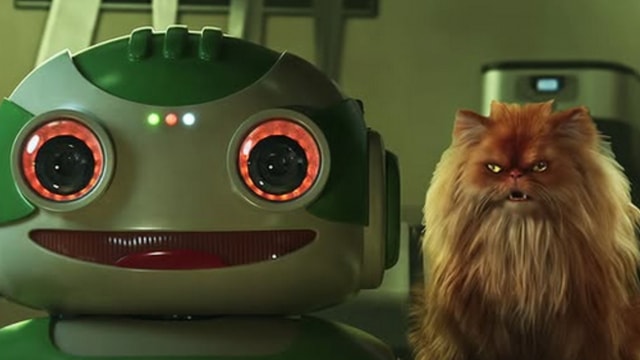
The Other Large Thing is a prequel to 3 Robots and 3 Robots: Exit Strategies, and focuses on a fluffy Persian whose humans call him Sanchez, a name he hates.
The humans are portrayed as jibberish-speaking morons for whom Sanchez has nothing but contempt, and when the “pathetic minions” bring home a domestic robot servant, Sanchez is infuriated — until he realizes the robot can “speak God’s language,” aka cat, and has opposable thumbs.
With the robot as his new minion, Sanchez finally sets out to conquer the world!
Sanchez realizes he’s struck gold when the new robot home assistant fetches as many cans of “the good stuff,” aka wet food, as he wants from the previously unreachable cupboard top shelf.
Both episodes are based on short stories, and they’re both written by people who clearly love cats.
Some episodes of LDR can get a little dark or somber. That includes Beyond the Aquila Rift and Sonny’s Edge, written by Alastair Reynolds and Peter Hamilton, two of my favorite novelists. Both episodes are spectacular, but they leave you with a chill and some disturbing thoughts that linger long after the credits end.
The feline-themed episodes are the perfect digestifs, offering doses of whimsy and levity to counter the existential dread and nightmarish visions of the future of other installments.
With no more humans to do their bidding, cats seize the opportunity and conscript the visiting robots as their new minions.
If you haven’t had the chance to check out the series, which streams on Netflix, I highly recommend starting with the aforementioned first season episodes 3 Robots and Beyond the Aquila Rift, then working your way through the rest of the cat episodes.
Not all of the episodes are great. The 400 Boys, one of the new episodes, is little more than inane and pointless violence, and the ubiquitous, creepy smiling “Mr. Beast” makes an appearance in another installment in an unnecessary attempt to attract new viewers. Thankfully most are strong, with more hits than misses.
Other highlights include the Christmas-themed short, All Through the House, Harlan Ellison’s Life Hutch, Reynolds’ Zima Blue, and Snow In The Desert.
A comedy, a remarkable documentary, a classic and a surprise hit make the list for the best cat-centric movies.
Keanu (2016): Jordan Peele stars as Rell, a man who is despondent after he’s dumped by his girlfriend. When a kitten shows up on his front step, Rell takes the little guy in and his life is suddenly transformed. He’s enamored with the kitten, whom he names Keanu, can’t stop talking about him, and even begins photographing him in dioramas based on famous films.
But tragedy strikes when drug dealers ransack Rell’s home, mistaking it for the small-time drug dealer’s home next door, and take Keanu. Rell and his cousin, Clarence (Keegan Michael-Key) embark on a quest to get Keanu back no matter what it takes, even if it means posing as a pair of contract killers to infiltrate the criminal world where Keanu’s been taken. It’s every bit as absurd as you’d imagine — but it’s also very, very funny. “Actually, we’re in the market right now for a gangsta pet,” is not a line I’d expect to hear in a movie, but in Keanu it works.
Flow is the surprise hit of the awards season.
Flow (2024): Even the hype of Golden Globe awards and Oscar nominations can’t take away from the powerful impression Flow makes. By now most of us are probably familiar with it through clips or trailers, but they don’t do justice to the beauty of director Gints Zilbalodis’ world, nor how naturally expressive his protagonist, Cat, is.
The animators put in an extraordinary amount of effort into understanding and perfectly replicating every feline behavioral quirk, every hackled coat and curiously bent tail. They accomplish the same with Cat’s companions, including a Labrador, a secretarybird, a lemur and a capybara. And while we’re dazzled by the visuals and energetic narrative, Zilbalodis poses a thematic question as the flood waters take the animals through the ruins of human civilization: without people, the world will go on. What would a world without humans look like? Cat and his companions tell us one story while the environment tells us another, and the result is greater than the sum of its parts.
Tiger: Spy In The Jungle
Tiger: A Spy In The Jungle (2008): What makes this documentary so special is that it was filmed over three years in an Indian tiger preserve, and the filmmakers not only disguised cameras as rocks and tree stumps, they trained elephants how to carry “trunk cams,” achieving shots which no human cameraman could ever hope to get without spooking the subjects of the film.
Tigers don’t hunt elephants because they’re simply too big. Unlike lions, they’re not feeding a whole pride, and they don’t hunt cooperatively. It’s just not worth the effort required to take down the giant, majestic beasts. As a result, tigers and elephants not only tolerate each other, they mostly ignore each other’s presence.
One of the cubs stares curiously at a camera disguised as a rock in Tiger: Spy In The Jungle
That allowed the team to get unprecedented shots of an iron-willed tigress raising a litter of four cubs by herself. We see their dens, we watch the cubs play, and we witness the incredible prowess of the mother, who according to narrator David Attenborough has a remarkable 80 percent success rate while hunting. That’s pretty much unheard of.
With four young mouths to feed in addition to herself, the tigress is determined, and also supremely skilled. The whole jungle erupts in a cacophony of shrieks and alarm calls the instant a single animal gets a whiff of the tigress’ presence, but that still doesn’t stop her from achieving her goal.
Still, the odds are against all four cubs making it, with dangers like adult leopards, sickness and hunger. Through Spy In The Jungle, we get to see the entire journey, from the newborn cubs to the confident juveniles on the cusp of adulthood. There’s no better tiger documentary anywhere.
Shere Khan, right, makes an intimidating villain in The Jungle Book (2016)
The Jungle Book (2016): With so many Disney cash-grabs in the form of live-action remakes of classics that did not need to be remade, it’s easy to dismiss The Jungle Book. The thing is, this movie has heart. Neel Sethi is an earnest Mowgli, Idris Elba voices the infamous tiger Shere Khan, and to balance out the felid villainy with some heroism, Sir Ben Kingsley voices Bagheera, the noble leopard who discovers baby Mowgli in the jungle and protects him as his wolf friends raise the boy. Lupita Nyong’o as the wolf matriarch Raksha, Bill Murray as the honey-obsessed bear Baloo and Christopher Walken as orangutan King Louie round out a great cast.
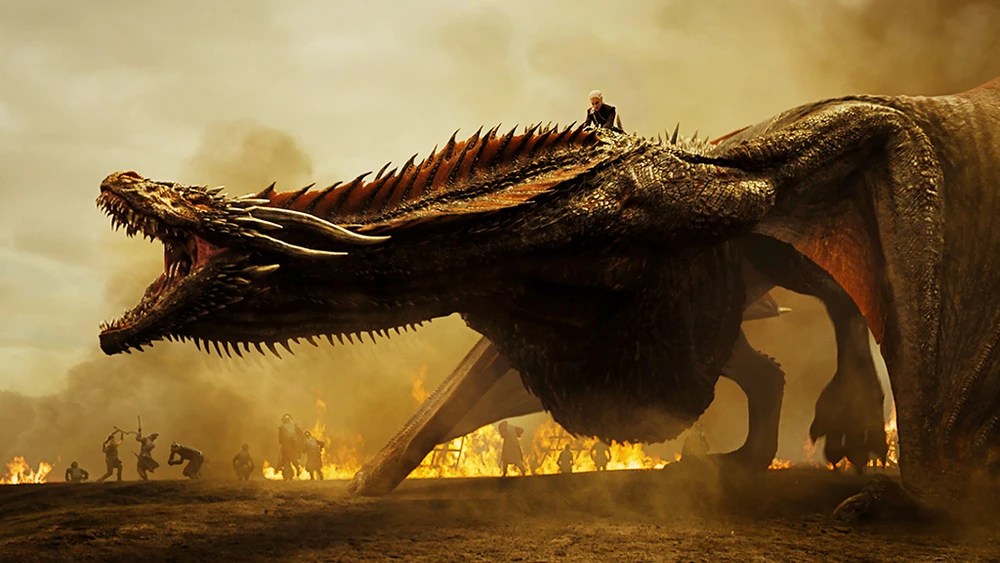
The dragons of the Game of Thrones universe are so well-designed, with such attention to detail and writing that imbues them with their own personalities, that they feel like real creatures. They’re a sight to behold.
The Budster was just a kitten when the fourth season of Game of Thrones premiered, and I vividly recall trying to tire the little guy out with extra play time on Sunday nights so I could watch my favorite show in peace.
The effort was mostly in vain with such an energetic, curious and chatty kitten, but eventually Bud would settle down in my lap and watch with me.
Enamored as I was with the tiny animal in my care, I found myself especially appreciative of the fact that the dragons of the Game of Thrones universe are so lovingly, realistically rendered and given such unique personalities that they feel like real animals. A lot of thought and care went into their design, from their anatomies to the biomechanics of how they move and fly, to their chittering, calls and roars.
If you look closely when they open their mouths menacingly, you can even see the glands that secrete the accelerant allowing them to breathe fire.
Both shows — the original Game of Thrones and its prequel, House of the Dragon — have done such a good job developing the dragons as characters that I’ve found myself more disturbed by the unfortunate deaths of a few of the majestic beasts than I was by the grisly fates of some human characters. That’s saying a lot for a fictional universe infamous for shocking, emotionally manipulative, gut-wrenching deaths, a universe that immediately established no one is safe after killing off its main character — played by its highest-profile actor — before the first season was over.
The willingness to do what no other TV show has done in 60-plus years of television is part of what makes Game of Thrones and its spinoff such compelling drama. No one is safe. Heroes can die agonizing, undignified deaths. Villains can triumph, infuriatingly. But just when you think you know where the narrative will go next, it subverts your expectations yet again.
Now that we’re a few episodes into the second season of the prequel, House of the Dragon, and I’ve taken to trying to get my cat to respond to commands in High Valyrian as if he were a dragon himself, I compiled this official Buddy-approved list of our favorite dragons in both series:
Syrax
Syrax is golden and regal.
The beautiful golden-scaled Syrax is protagonist Rhaenyra Targaryen’s dragon, so it’s fitting that she’s the first of the eponymous creatures we see in House of the Dragon, soaring across the skies over King’s Landing in the first scene of the first episode.
Teenage Rhaenyra Targaryen with Syrax after a flight over the Westerosi capital city, King’s Landing.
As was tradition with Targaryen children, Syrax’s egg was place in infant Rhaenyra’s crib, with child and dragon raised together to create their indelible bond. The show makes it clear why that bond is so important in the third episode, when Rhaenyra arrives dramatically atop Syrax to defuse a confrontation among her uncle and the king’s men that was on the verge of bloodshed.
“Take care not to startle Syrax, my lords,” Rhaenyra says as she dismounts, pulling off her riding gloves. “She’s very protective of me.”
Syrax is a young and growing dragon at the time of HotD’s first episode, when Rhaenyra is just 15 years old.
Vermax
Nom-noms for Vermax?!
Vermax is a juvenile when we meet him for the first time in House of the Dragon, in a scene showing Princess Rhaenyra’s young son, Jacaerys Velaryon, learning to bond with his dragon. (A time skip in the first season moves the action forward some 15 years.)
Vermax is young and wants all the snacks. Note the accelerant gland in his mouth, visible on the right side. When the dragons of the Song of Ice and Fire universe breathe fire, a natural accelerant is secreted from the gland, mixing with the dragon’s breath to create flame hot enough to turn men to dust in their plate armor.
It’s the first time since the early seasons of Game of Thrones that we see a sub-adult dragon, and Vermax almost looks like a fire-breathing velociraptor as we watch him roast his own dinner at Jace’s command.
We also get to see the dragon keepers instruct the young prince on how to “call [his] dragon to heel,” issuing commands in High Valyrian like “dohaeris” (serve), “umbās” (wait or hold) and the most famous command, “dracarys,” which instructs the beasts to spit fire.
Meleys
We don’t meet Meleys until late in HotD’s first season, but the wait is worth it. Known as the Red Queen, Meleys is massive, terrifying and already has a storied history by the time we set eyes on her.
She stars in arguably the most spectacular scene involving a dragon in HotD’s first season, prompting several characters to soil themselves as Meleys makes an unforgettable entrance and threatens them with a deafening roar.
The formidable Meleys. Here too you can see the fire glands in Meleys’ mouth as she roars.
While dragons like Syrax and Dreamfyre are graceful and sleek, Meleys is all menace and sharp edges, resembling the two most famous, most feared dragons in GoT lore — Drogon and Balerian the Black Dread, who were both the personal dragons of Targaryen conquerors.
Meleys is ridden by Princess Rhaenys Targaryen, styled as The Queen Who Never Was due to her strong and spurned claim to the Iron Throne. Rhaenys and her dragon, however, are a force to be reckoned with.
Caraxes
Caraxes is one of the most battle-hardened dragons, and his rider, Daemon Targaryen, is a lunatic. That makes the pair extraordinarily dangerous and unpredictable.
Known as the Blood Wyrm, Caraxes has an unmistakable serpent-like look to him, with a long neck, finned tail and dark red-black scales.
Just as humans can be born with deformities so can dragons, and Caraxes owes his strange anatomical features to an unidentified congenital condition. Caraxes is fierce, fearless and has seen more combat than almost any other living dragon in House of the Dragon.
At first it seems as if Caraxes is a different breed of dragon, perhaps from a sister taxa, but the fearsome fire-breather actually suffers from congenital deformations that somehow make him even more terrifying.
Caraxes is also notable for the man who rides him: The mercurial and often brutal Daemon Targaryen, brother of King Viserys. Daemon is an accomplished warrior and loose cannon, which makes him and his dragon unpredictable and very dangerous. He’s not above using Caraxes to intimidate, and Caraxes seems to enjoy his part.
Rhaegal
Rhaegal and his brothers, Viserion and Drogon, were born when Daenerys Targaryen, Mother of Dragons, carried their eggs into an inferno and emerged at sunrise with three baby dragons clinging to her.
We see him and his brothers grow from tiny and cute infants to living manifestations of absolute terror, destroying entire navies and razing castles with their dragonfire. At the time of their birth, dragons had been extinct from the world of Game of Thrones for centuries. (Game of Thrones takes place about 200 years after House of the Dragon, despite being the first of the two series adapted by HBO.)
Rhaegal is named for Daenerys’ late brother Rhaegar Targaryen, and his eventual rider is Jon Snow. Rhaegal participates in Daenerys’s toppling of the ruling class in one of the Slaver’s Bay cities, and he and Snow eventually participate in the most pivotal, existential battle in the show’s history. Rhaegal is a beautiful example of his species, with dark green scales, and like his brothers, he’s fiercely loyal to Daenerys.
Vhagar
Vhagar is absurdly huge and is the largest living dragon during the reign of King Viserys I in House of the Dragon.
Vhagar is old, ridiculously massive and — at the time of House of the Dragon — the most powerful and celebrated dragon alive.
Age is evident in every one of her features, from her broken teeth, worn scales and tattered wings, to her lugubrious gait as she’s risen from sleep during a key scene late in HotD’s first season.
The earth shakes as Vhagar lumbers forward, launching her colossal frame into the air.
But once she takes to the skies, there is no force in the show’s universe that can stop her. It’s astonishing to see a dragon the size of a damn aircraft carrier, and I can’t wait to see how Vhagar and her rider, Prince Aemond Targaryen, impact future events.
Drogon
Even if you’re unfamiliar with Game of Thrones, chances are you’ve seen ads, promotional clips or giant billboards in Times Square depicting a golden-haired woman atop a behemothic dragon with dark crimson and black scales.
The woman is Daenerys Targaryen and the beast is Drogon, who is said to be the reincarnation of Balerion the Black Dread, the largest and most powerful dragon in recorded history.
Drogon is the symbol of the rebirth of dragons almost two centuries after the last of the species died. He’s the most destructive force in the original Game of Thrones, but he’s also dearly loved by his mother, Daenerys, and he’s even had a few comical, light-hearted moments, like the death stare he fixes on Jon Snow when the latter kisses Daenerys.
“That’s my mom, dude,” Drogon seems to say. “Be respectful or I’ll burn you to a crisp and make a light snack of you.”
This GIF is taken from that very moment, when Jon locks lips with Dany, senses the dragon’s eyes on him, and looks up to see Drogon staring intently at him:
When Drogon and his brothers are born, the people of Westeros and Essos can hardly believe it. For the first time in two centuries dragons lay claim to the sky, their calls echoing for miles across mountains, plains and open water. They also have voracious appetites, helping themselves to thousands of farm animals, wild prey and enemy soldiers as they grow.
Drogon and the boys have a big part to play in the events of the series, but like all animals, they’re born virtually defenseless. The last time we see Drogon he rivals the biggest dragons in history, but the first time we see him he’s the size of a kitten, squealing as he rides his mother’s shoulder.
Daenerys with Drogon (shoulder), Viseryon and Rhaegal in Qarth, the mythical eastern-most city of Essos.
Drogon as an adorable baby dragon, roasting his first nom noms.
Drogon, his brothers and Daenerys were never more vulnerable than they were in those early days, and a succession of ill-intentioned characters try to take or kill them. Drogon, more than any of his kind, proves that “owning” a dragon and getting him to do what you want are two different things, not unlike cats.
Arrax
Who’s a good boy? Arrax is! As the bonded dragon of Princess Rhynaera’s second son, 14-year-old Lucerys (Luke) Targaryen, Arrax is the baby of the group.
We don’t see much of him, but he’s a good-looking little guy with gray-purple scales and a darker purple ridge along his spine. As a young dragon, Arrax is spooked by flying during a storm and needs to be calmed by Luke, bravely taking off and navigating winds, lashing rain and lightning.
Vermithor
We see Vermithor only once in HotD’s first season when Prince Daemon approaches him, singing an old Valyrian tune to calm the ancient dragon, who hasn’t had a visitor in some time.
Vermithor doesn’t look too pleased to be bothered and lets loose a mighty roar and enough dragonfire to waste a small city. Indeed, it’s been years since a human rode the old dragon, who is second only to Vhagar in size and age.
But Vermithor recognizes Daemon as a Targaryen, sees that Daemon is not afraid of him, and doesn’t do him any harm. Vermithor will undoubtedly have a big role to play going forward in HotD as a war of succession rages across Westeros in the wake of King Viserys the Peaceful’s passing.
Balerion the Black Dread
Balerion is the largest dragon in history, the last living creature to see the glory of Old Valyria — the empire that once ruled almost every corner of Game of Thrones’ fictional universe — before its fall.
Balerion is long dead by the events of House of the Dragon and Game of Thrones, so the only real indication we get of his majesty is in the Red Keep, where the legendary beast’s skull remains on display in a shrine to his power and significance:
Balerion’s skull as it appears in scenes from HotD and GoT.
Only a handful of families survived the end of the Valyrian empire, and the most famous of them was led by Aegon Targaryen, also known as Aegon the Conqueror, the man who invaded Westeros with a few dragons and a small army, conquering everything in his path and uniting seven kingdoms under one banner and one rule.
That was only possible with the power of dragons, and Aegon accomplished the feat atop Balerion’s back. When Aegon and Balerion reduced Harrenhal — considered the most impregnable of all castles — to melted rubble and marched north, the lords of the north wisely opted to bend the knee to Aegon and his dragons rather than face the likely extinction of their families.
The most prominent of the northern lords, the Stark family, were rewarded by Aegon Targaryen, who named them the Wardens of the North and gave them dominion over the vast, icy expanses of their realm. As such, they were beholden to the crown, but enjoyed a limited sovereignty that no other house could claim.
Artist Lindsey Burcar’s vision of Balerion.
We’ve left out Sea Smoke, Ser Leanor Valaryon’s dragon, Viseryon, brother to Drogon and Rhaegal, Sunfyre — considered the most beautiful of all the dragons — and several dragons who haven’t been seen yet, like Moonfyre, Tyraxes and Silverwing. Sorry, guys! But the second season of House of the Dragon promises to reveal several dragons we haven’t yet seen, so perhaps we’ll include them in a follow-up.








 Pain In The Bud