A shelter operator has received death threats amid confusion over the facts after animal welfare authorities raided a Los Angeles County shelter on Friday.
The initial news headlines were apocalyptic — more than 700 dogs and cats were found in deplorable conditions according to authorities, who said the California property where they executed a search warrant represented the most extreme animal hoarding case in history.
A day later the numbers have been revised down to a still-significant 250 dogs and 66 cats, and the owner of Rock N Pawz shelter in Los Angeles County says she and her facility have been smeared, resulting in a flood of death threats directed at her.
The story is a reminder that facts aren’t always established as quickly as we’d like them to be in the age of 24/7 news and social media, and the advent of photorealistic AI can add to confusion and stir public outrage by distorting the reality of fluid situations.
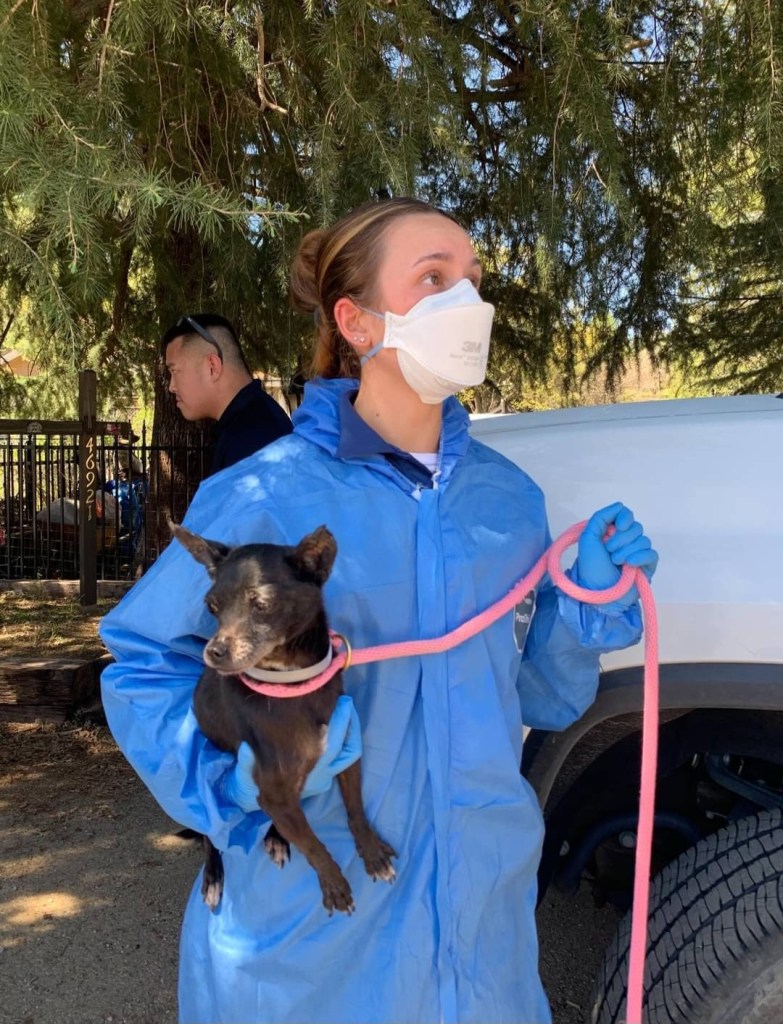
A woman holds a dog found on the Rock N Pawz property. Credit: Los Angeles County Department of Animal Care and Control
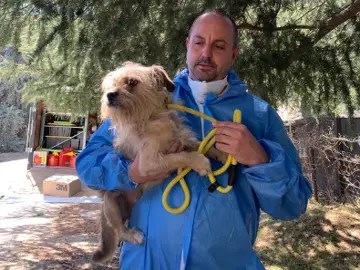
What we know for sure is that officers from the Los Angeles County Department of Animal Care and Control executed a search warrant on the property in Lake Hughes, an unincorporated community in the Sierra Pelona Mountains, about an hour’s drive from Los Angeles proper. The investigation was prompted by repeated complaints from neighbors, who said there were overwhelming odors coming from the shelter and claimed there were regular dog fights and incessant loud barking.
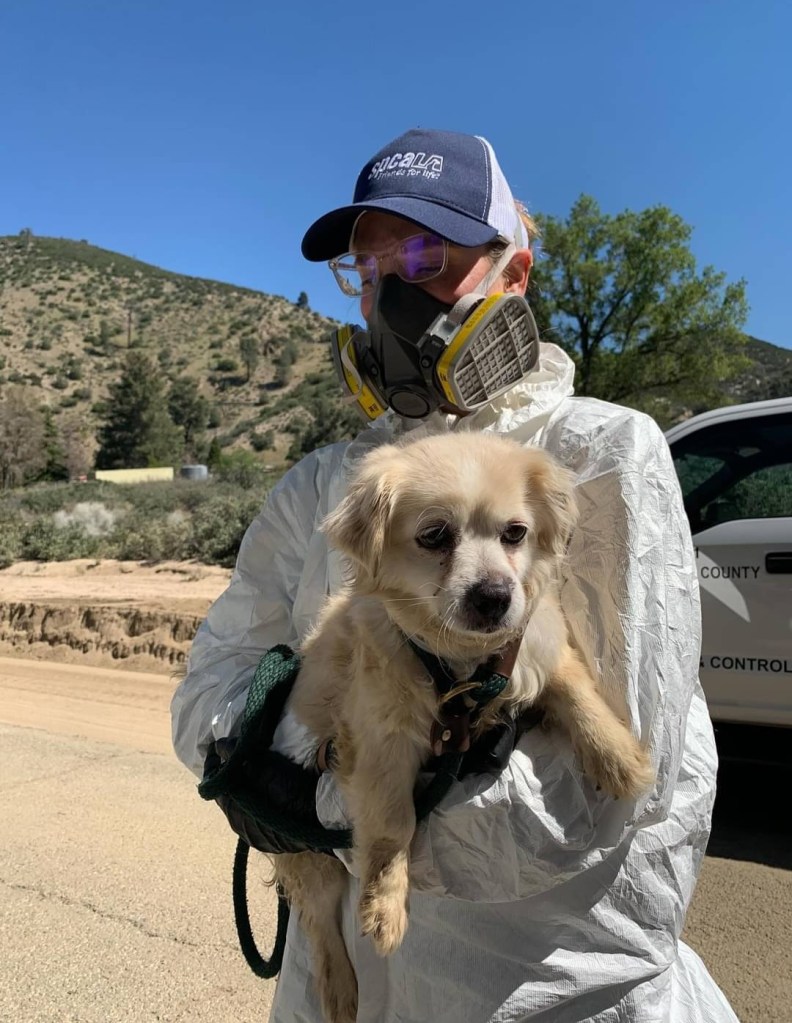
A local news station, KTLA, reported authorities on site were wearing respirators with protective gear, and quoted authorities who said they did not believe it was a case of intentional neglect.
“Sometimes people try to do the right thing, and they may bite off more than they can chew,” the Department of Animal Care’s Sgt. Matthew Davoodzadeh told the station. “They end up ultimately not being able to care for the animals in a proper way.”
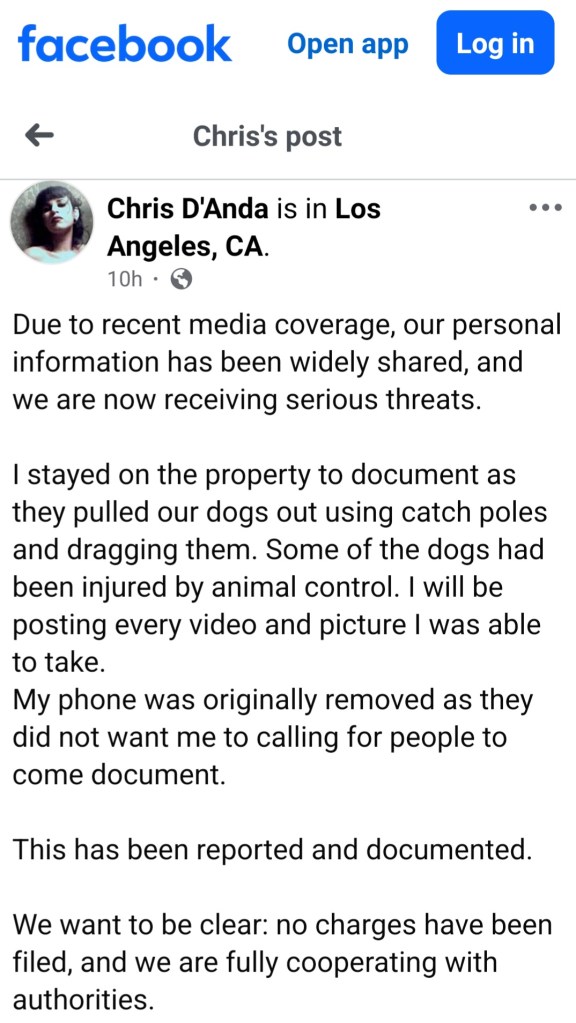
Authorities have not filed charges related to the case and there have been no allegations of criminal conduct.
Credit: Los Angeles County Department of Animal Care and Control
The influx of animals has strained nearby shelters while veterinarians examine the 316 dogs and cats taken from the property.
In the meantime, shelter owner Christine D’Anda said descriptions of the property and the conditions of the animals aren’t accurate, and took to social media to complain of harassment and death threats directed at her since news of the search warrant hit the web.
The shelter operator asked people to withhold judgment until the facts are established.
On Facebook, users posted images allegedly taken from the property, while others pushed back, alleging the images are either AI creations or were taken from unrelated news stories.
The shelter’s page indicated active rescue and adoption efforts, including fundraisers and an advertised adoption event last weekend.
D’Anda said she will fight the allegations in the legal system.
“There’s nothing that I can do. I’m a very stoic person,” she said. “I’m very sad about the whole situation, and I can’t wait to go to court.”
Terry Lauerman literally sleeps on the job, and cats love him for it.
Seven years ago, Terry Lauerman and the Safe Haven Cat Sanctuary went viral.
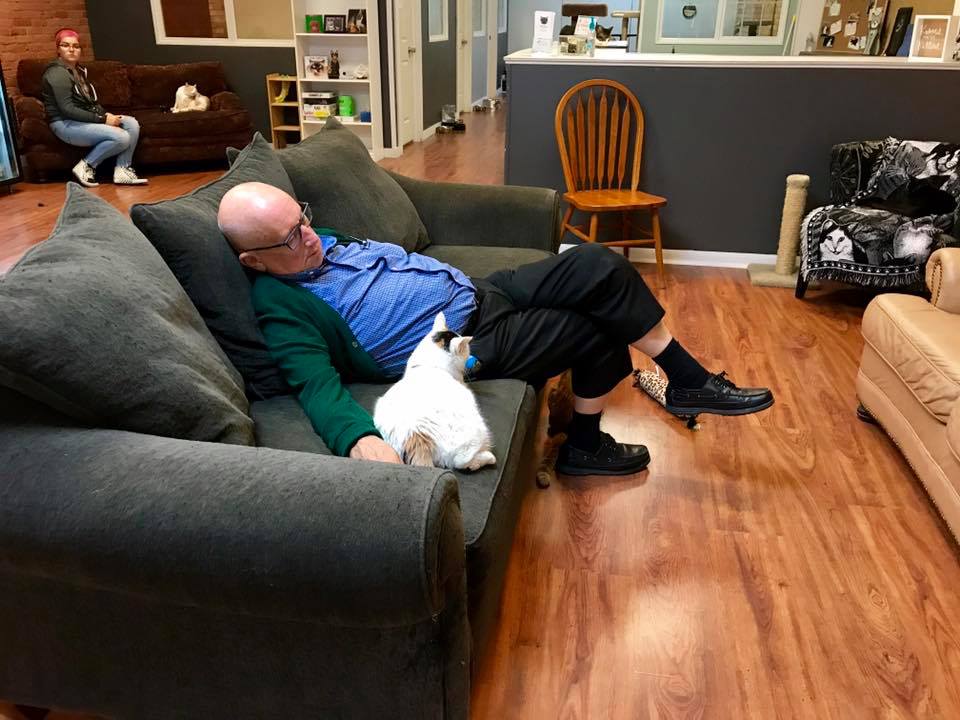
Lauerman, then 75, walked into the Green Bay, Wisconsin, rescue one day and told the staff he liked to brush cats. They welcomed him as a volunteer, he immediately curled up with a cat — and fell asleep.
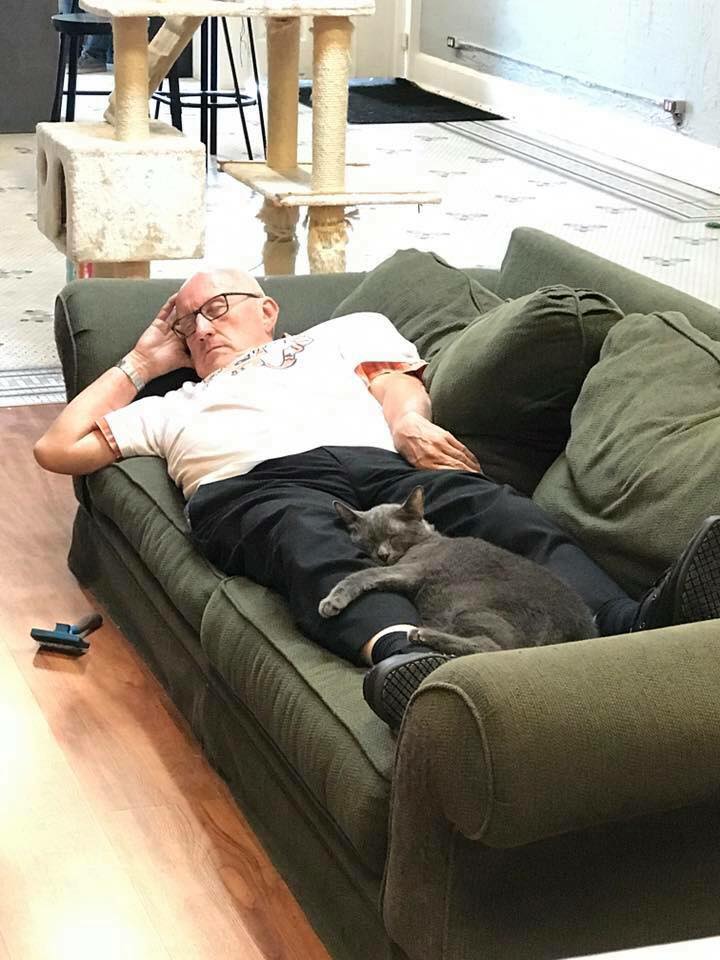
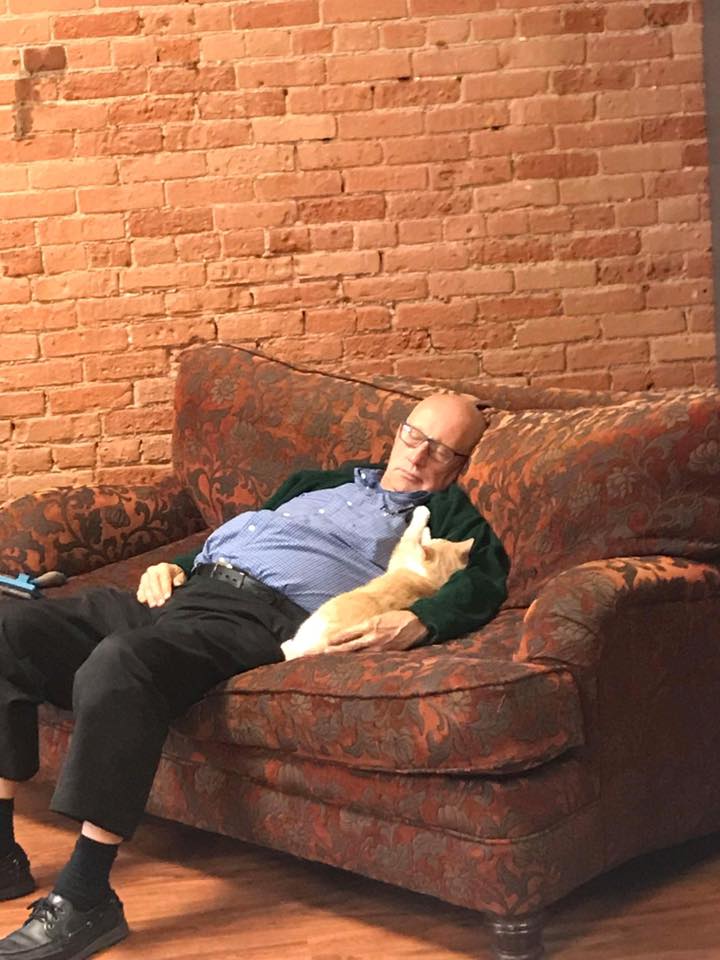
Since then, Lauerman’s been going to Safe Haven every day, brushing his feline friends, then yawning and passing out with a cat in his arms.
Lauerman usually spends an hour sleeping on the couch with a cat, then wakes up and moves to another couch to nap with the next cat, WCCO reports. He did this for six months straight before Feldhausen eventually told him he had become an official volunteer and had him fill out a form.
Now CBS went back to check on Lauerman and the shelter. He’s still at it, napping away the hours with the shelter’s cats, giving a comfort they wouldn’t normally have until finding their forever homes.
“We’re very lucky that he walked in here,” said Elizabeth Feldhausen, Safe Haven’s executive director.
Lauerman, who is also a brother at a nearby abbey, said he senses God in our four-legged friends, which is a notion he probably shouldn’t share with them lest they become even more imperious.
“I’ve always been a cat person,” he said. “To me it’s a blessing to be touched by creation.”
As a CBS reporter put it: “You sleep on the job.”
“Yes,” Lauerman said, “that’s exactly it.”
Bud and I salute Mr. Lauerman. Years ago we heard a friend observe that “there are two kinds of people in the world: those who take naps, and those who don’t even understand how that’s possible.”
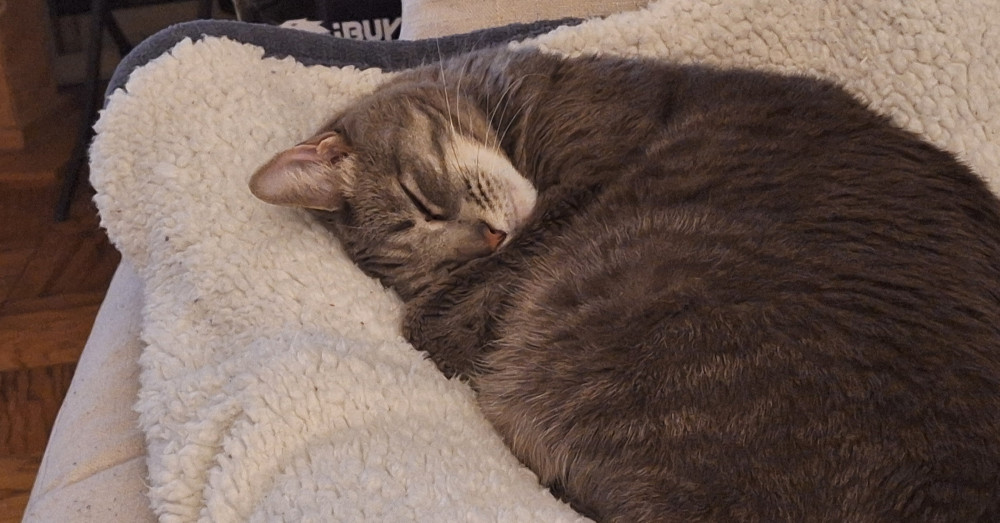
At the time, I agreed with her. But napping starts to seem like a great idea as the years pass by, and when you have a cat, well, sometimes you don’t have a choice. With 11 years now under my belt as Bud’s pillow, I can safely say there are few things more relaxing than opening a book, reading a few chapters as your little buddy curls up in your lap, and easing into some Zs.
Images via Safe Haven Cat Sanctuary.Header image via Pexels.
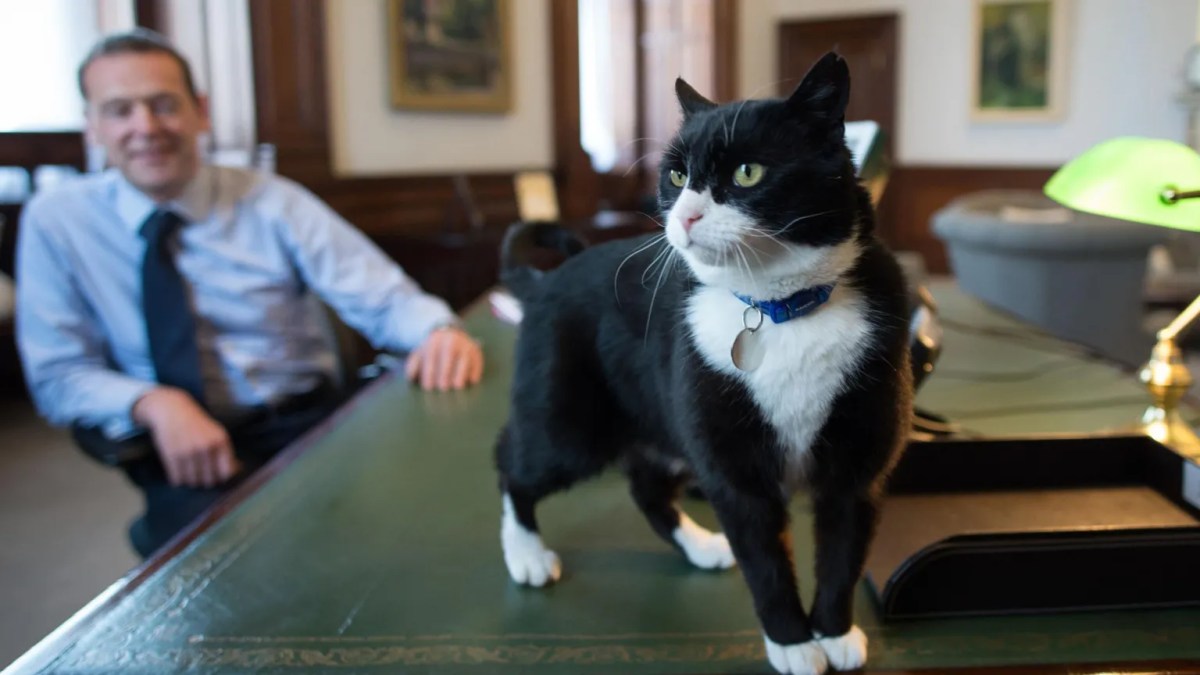
Named after a powerful prime minister, Palmerston was a hungry stray who was found on the streets of London and quickly made his mark when he was appointed mouser to the UK’s Foreign Office.
Some sad news today: Palmerston, the UK Foreign Office’s strong-willed mouser and foil to Larry the Cat, has passed away.
Palmerston was scooped up in 2016 “as a hungry, underweight stray wandering the streets of London, with no owner traced and no microchip,” London’s Battersea Cats and Dogs noted in a post.
The Foreign Office staff were looking for a new mouser to keep rodents at bay in Whitehall when Battersea recommended the cute tuxedo, and recognizing greatness, the staff brought the little guy on immediately and named him after Henry John Temple, better known as Lord Palmerston, who served as prime minister in the 1850s during the height of the British Empire.
Palmerston the cat, just two years old at the time, took to his new job with enthusiasm — perhaps too much so. The territorial tuxedo quickly developed a reputation for turf battles with his rival mouser, No. 10 Downing St.’s Larry the Cat.
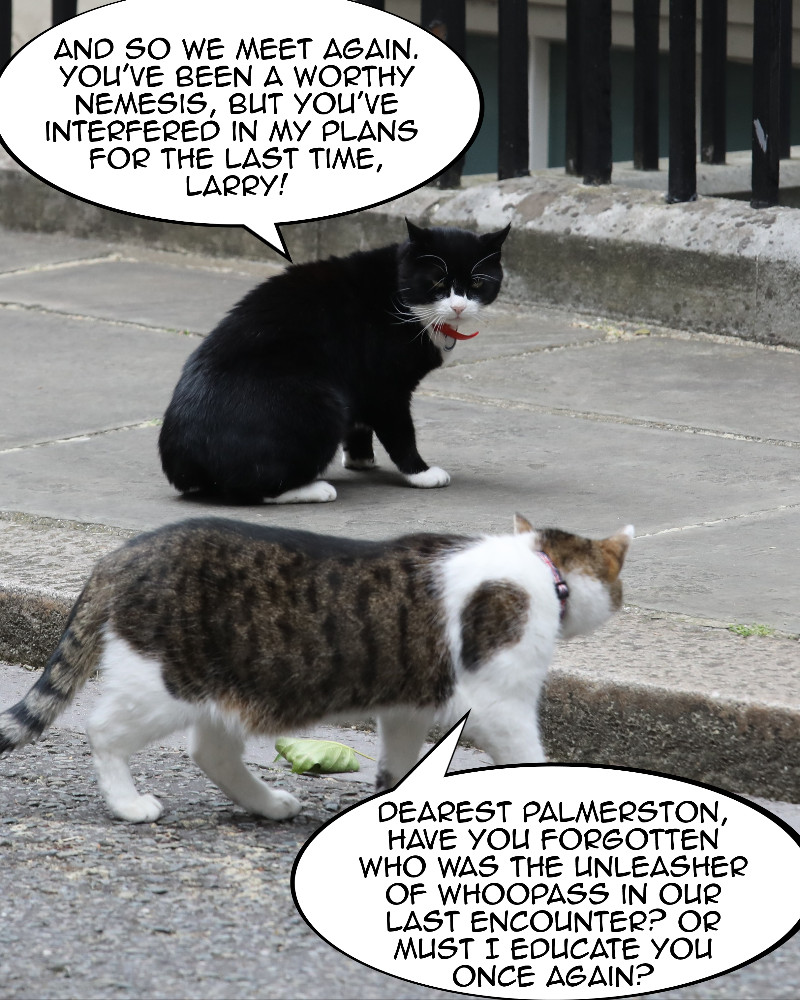
Their skirmishes, which often occurred within the full view of reporters and photographers covering UK government, soon became the stuff of legend, producing several iconic images of the two felines in battle in their eternal struggle for status as top cat in the UK government.
The fearless feline’s hijinx included invading Larry’s inner sanctum in 2016 when he snuck through an open door at No. 10, and while Larry was known for visiting his “lady friend,” Maisie, Palmerston struck up a relationship with Freya, another mouser with a post on Downing Street.
When society’s gears grinded to a halt with the 2020 lockdowns in response to the COVID pandemic, Palmerston “retired” to the countryside with his loyal human, former Royal Navy officer Andrew Murdoch.
Little Lord P enjoyed the quiet life for several years before thrilling fans a year ago with his announcement that he was returning to public life as “feline relations consultant” to Murdoch in his new post as governor of Bermuda.
Admirers followed Palmerston’s antics in the tropical locale via updates on social media. He was living the high life, free of Larry’s evil machinations.
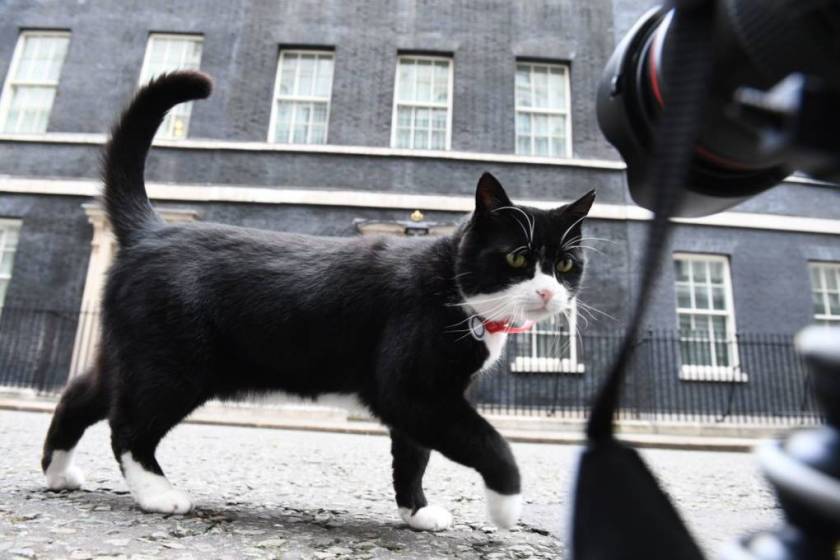
Palmerston patrolling Downing Street.
Palmerston died on Feb. 12, Murdoch wrote in a post on the famous feline’s X account.
“‘Palmy’ was a special member of the Government House team in Bermuda, and a much loved family member,” the post reads. “He was a wonderful companion, with a gentle nature, and will be sorely missed.”
A reply from Larry’s account indicated the former rivals had called a truce: “Farewell old friend,” Larry’s servants wrote on his behalf.
Palmerston, left, and Larry, right, during one of their epic battles while Palmerston was still top cat at Whitehall.We had a lot of fun with the Palmerston-Larry rivalry here on PITB, admiring both mousers.
While this is sad news, Palmerston will not be forgotten, and we’re confident he’ll take to his new post across the rainbow bridge with the same zeal he applied to his work on behalf of the people of the UK. RIP, little guy.
Hat tip to our friend Platypus Man, who notified us of today’s sad news. If you enjoy photos of far-flung locales, check out his blog, which features posts about his many travels around the world. Thanks, P!
Or if your sense of humor tends toward the scatological, you can donate to put your ex’s name on a litter box.
Like other nonprofits, animal shelters face steep competition when it comes to scoring charitable donations, so the more a shelter can stand out, the better.
For some that means stories about their rescues and pets-in-waiting going viral. For others, it means finding clever ways to use occasions like Valentine’s Day to raise money.
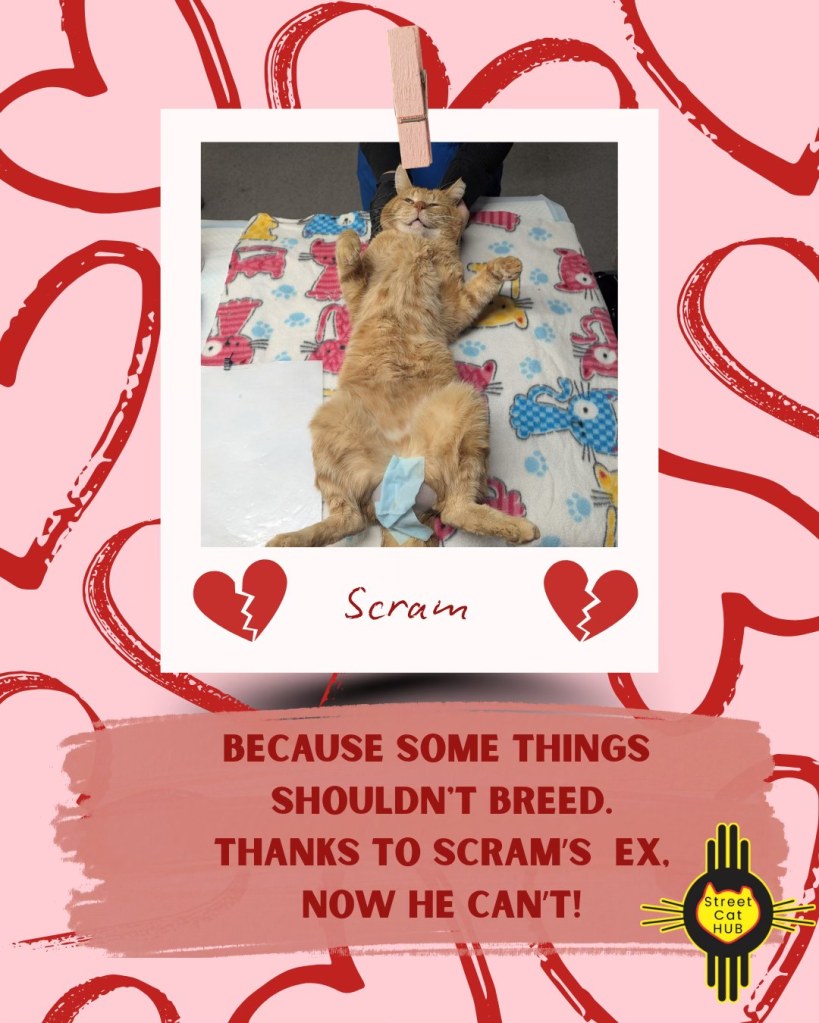
One of the latest fads involves making a donation to pay for spay/neuter surgery for a street or shelter cat — and having the cat named after your ex. As one shelter puts it, “because some things shouldn’t breed.”
Poor Scram has no idea he’s a stand-in for a despised ex.
If the idea of castrating an ex seems a little morbid to you, you’ve still got options.
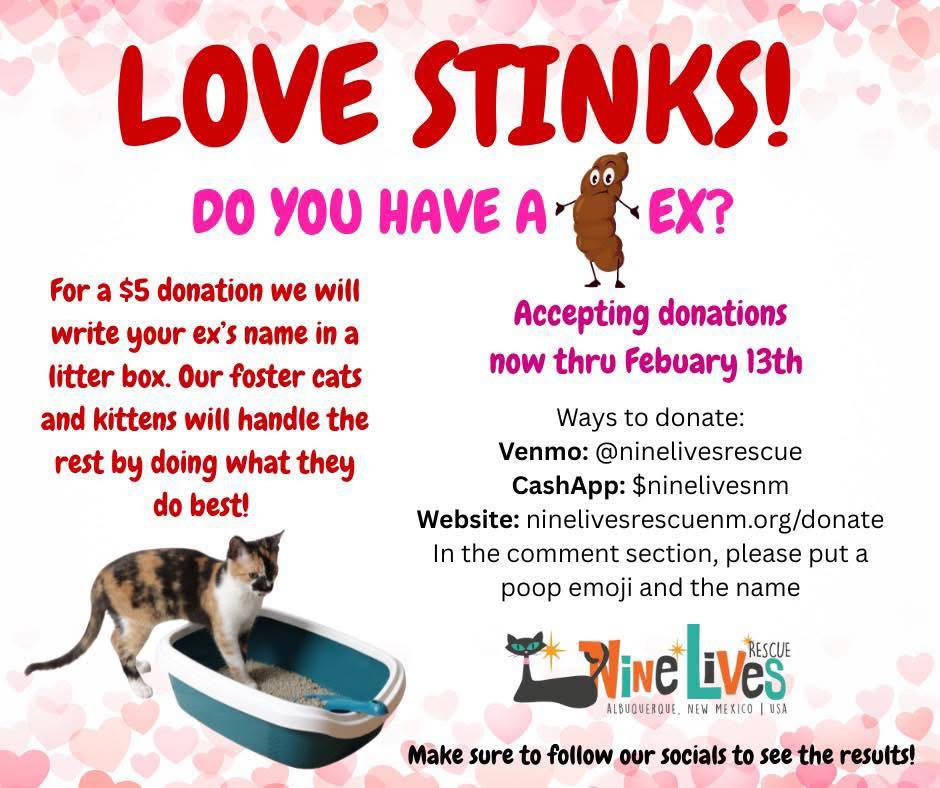
For just $5, Albuquerque, New Mexico’s Nine Lives Shelter will write your ex’s name on a litter box.
“Our foster cats and kittens will handle the rest by doing what they do best,” the shelter’s staff wrote on Facebook.
Of course, there’s another option for people who prefer a more positive take: donating out of love for cats in general, because despite the encouraging drop in animal euthanasia over the past two decades — the result of relentless campaigns to get pets and street cats spayed/neutered — a few hundred thousand cats are put down every year. Every time a cat is fixed, that number drops, and existing cats have a better chance of finding forever homes.
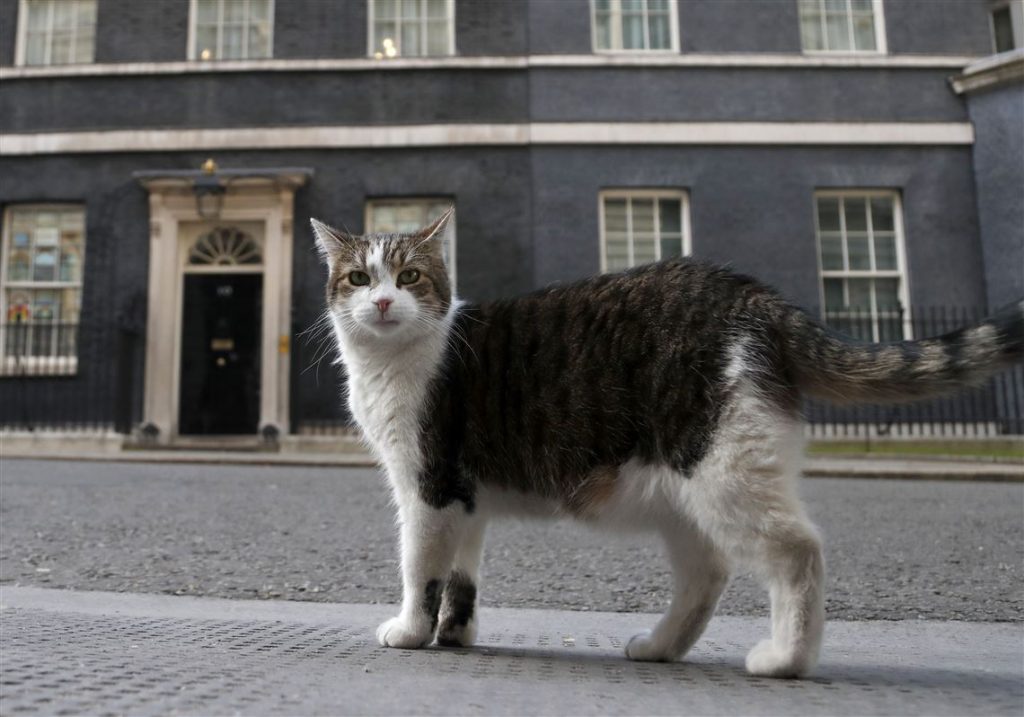
As Larry marks 15 years as the chief mouser in the UK’s seat of power, No. 10 Downing Street, Britain’s most famous feline is a constant amid rapid change.
At first it didn’t look as if Larry the Cat’s tenure would last long.
The striking white and tabby mix came highly recommended from Battersea Cats and Dogs, a London shelter whose staff said he was one of their most skilled little hunters. Larry, they said, would adjust well to the busy surroundings of the prime minister’s office and residence.
Adjust he did, but not in the way then-Prime Minister David Cameron, No. 10’s staff, and the UK press thought he would. Larry began his tenure by taking long naps on the residence’s front windowsill, paying frequent visits to his “lady friend” Maisie — a mouser living in another government building several doors down — and establishing a territorial rivalry with Palmerston, the Foreign Office’s mascot and mouser.
“In a separate development, it can be revealed that Larry has a girlfriend,” a droll BBC report from 2011 confirmed, while reporting on a cat-themed quiz night fundraiser at No. 10 to ensure the chief mouser’s yums cupboard remained stocked. “Maisie, a cat who lives at the nearby St James’ Park keeper’s cottage, has struck up a relationship with Larry, a spokesman for the Royal Parks has confirmed.
“There is, though, no prospect of kittens, as Larry went under the knife some time ago,” the report continued, speculating that the chief mouser’s love life could explain “why Larry spends most evenings out – and most days fast asleep in 10 Downing Street.”
It didn’t take long for the press to begin running tongue-in-cheek stories about Larry failing to deliver on promises just like every other political animal, and for a while it looked like No. 10 would need another chief rodent exterminator.
But then Larry began covering himself in glory by defending his new domicile not only from rats and mice, but also from a fox, territorial incursions by Palmerston, ill-intentioned politicians and other undesirables.
As the years passed, Larry’s legend grew. He outlasted Cameron, then Cameron’s successor, Theresa May, who admitted she was a dog person and wasn’t fond of Larry, even denying him the use of her office chair for naps. Then there was Boris Johnson, Liz Truss, Rishi Sunak, and Keir Starmer.
Starmer is Larry’s sixth prime minister, and no one will be surprised if his tenure ends while Larry’s endures. Meanwhile, Palmerston was “retired” to the countryside and only recently returned to politics when he accompanied his human, Andrew Murdoch, to Bermuda when the latter was appointed governor there. Such is the price of incurring Larry’s wrath.
Now at 18 years old, with 15 years as chief mouser under his collar, Larry represents something rare in modern politics: stability and predictability. With the passing of Queen Elizabeth II in 2022, illness and scandal in the royal family, and the usual ephemeral nature of UK politics, Larry has become more important than ever as the stalwart in the country’s seat of power.
Larry’s given the cold shoulder to Irish and Scottish politicians, nuzzled up for scritches from former US President Barack Obama, and forced President Donald Trump to wait before departing No. 10 while taking refuge from the rain under the president’s limo. The famous feline rarely leaves the public guessing when it comes to his thoughts on visiting political figures.
He’s “the most miserable animal you’ll ever meet,” a snubbed Ian Murray, the Scottish Secretary, said after Larry refused to pose for photographs with him. (Murray, it should be noted, was relieved of his post in September, and now holds the lofty title of minister for “culture, media and sport.” Perhaps he and Palmerston can commiserate.)
But that’s part of Larry’s appeal. The chief mouser’s unimpressed reaction to powerful figures has endured him to the public, who shower him with fan mail, treats and toys.
His unintentionally comedic adventures and ability to nap under any circumstances won him the affection of the notoriously fickle UK press, who enjoy watching, photographing and writing about his antics while waiting for the less popular humans inside to update them on the big news of the day.
That’s not hyperbole, by the way: a 2024 Ipsos poll found Larry is more popular than every prime minister to share his home, and the margins aren’t even close.
It also hasn’t escaped the notice of the press that Larry “rules the roost,” and has attentive staff who open the door at No. 10 any time he wants to go in or out. The famous door is actually a blast-proof, steel replica of the wooden original, custom manufactured after the IRA fired a mortar at the residence in 1991. Thus there’s no cat flap, and staff monitoring the door from inside open it as soon as the building’s most enduring resident decides he wants back in.
The prime minister may be the UK’s most powerful political figure on paper, but Larry’s tenure, run of the place, array of servants and adoring fans all prove he’s the real power at No. 10.
Now Larry’s legend will expand even further as the UK’s Channel 4 has commissioned a documentary series on cats from writer-comedian David Baddiel. The series, which is currently filming, will feature Larry in one of its episodes.
Happy 18th birthday, Larry! We hope you see many more years filled with treats, adventures, historic furniture to nap on, and politicians to push around. And if you achieve world peace while you’re at it, no one would be surprised.




 Pain In The Bud