The Greatest Feline In Science Fiction Film History Is About To Turn 45

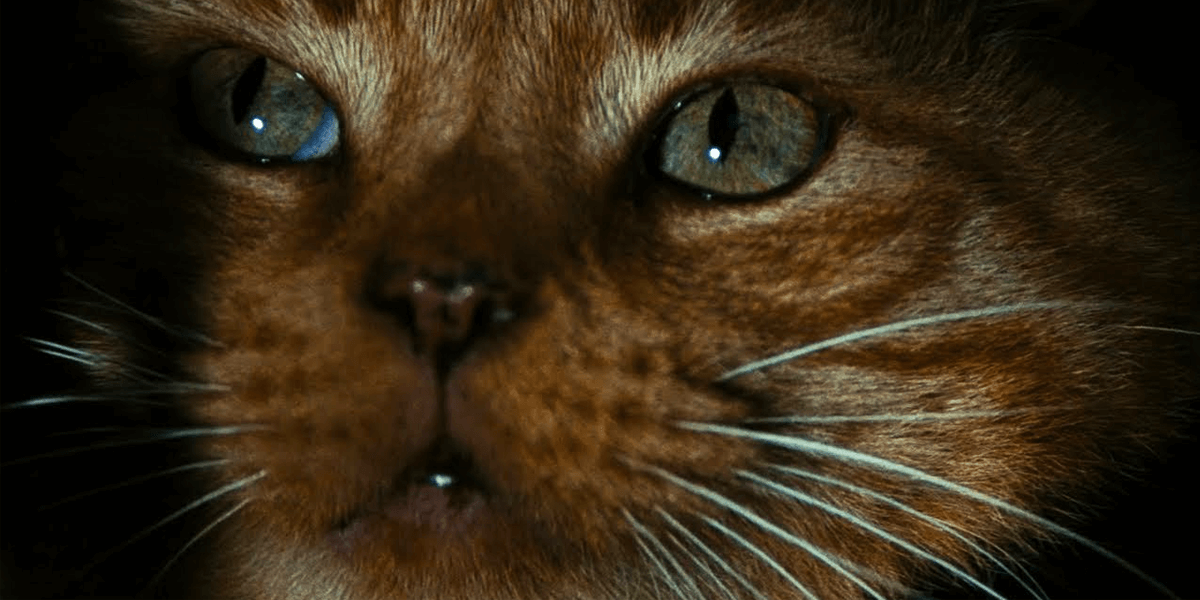
Making his debut in 1979’s Alien, Jonesy is one of the most famous felines in cinema history.

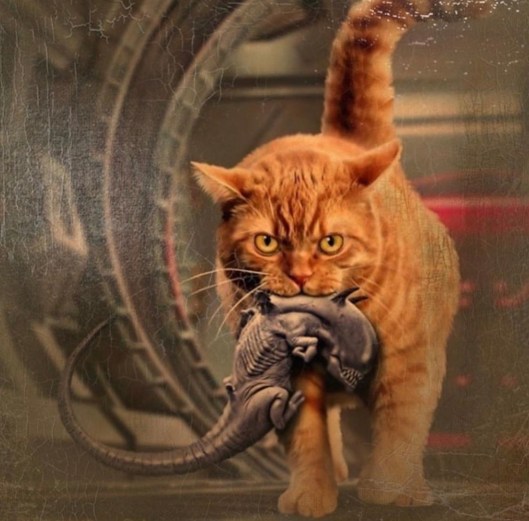
There’s a popular meme among Alien fans that depicts Jonesy the Cat walking nonchalantly down one of the starship Nostromo’s corridors with his tail up, carrying the corpse of the recently-spawned alien in his mouth like he’s about to present a dead mouse as a gift to his humans.

The joke is self-evident: if the crew of the Nostromo had allowed Jonesy to take care of business from the get-go, the alien would have been disposed of before it had the chance to grow into the monstrosity that haunted the decks of the Nostromo and the nightmares of viewers.

Jonesy Alien
“Who’s a good boy? Who just saved his crew from certain violent death at the claws of a ruthless alien predator? That’s right, you did!”

Of course then there’d be no movie. No ripples of shock in theaters across the US as audiences were confronted by something more nightmarish and utterly alien than popular culture had ever seen before. No indelible mark left on science fiction.

Despite the film’s retrofuturistic aesthetic, it’s difficult to believe Alien first hit theaters almost half a century ago.

That’s testament to director Ridley Scott working at the height of his powers, the carpenters, artists and set dressers who created the starship Nostromo’s claustrophobic interior, the design of the derelict starship where the alien was found, and the bizarre creature itself.

The alien ship and creature designs were the work of Swiss surrealist H.R. Giger, who was little-known at the time but floored Scott and writer Dan O’Bannon with his hyper-detailed paintings of grotesque biomechanical scenes.

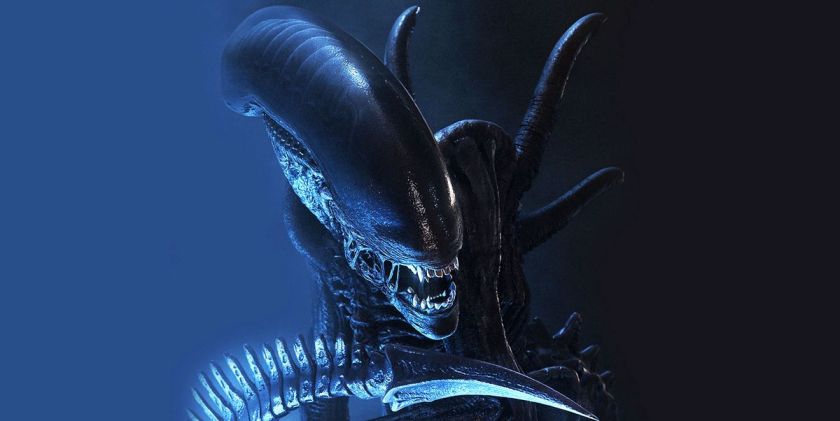
Giger’s work, specifically his 1976 painting Necronom IV, was the basis for the titular alien’s appearance. The alien, called a xenomorph in the film series, is vaguely androform while also animalistic. It is bipedal but with digitgrade feet and can crawl or run on all fours when the situation calls for it. It hides in vents, shafts and other dark spaces, coiling a prehensile tail that ends in a blade-like tip.

But it’s the creature’s head that is most nightmarish. It’s vaguely comma-shaped, eyeless and covered in a hard, armored carapace that ends just above a mouth full of sinister teeth like obsidian arrowheads. There’s perpetually slime-covered flesh that squelches when the creature moves but there are also veins or tendons or something fully exposed without skin, apparently made of metal and bone. Maybe those ducts feed nutrients and circulate blood to the brain. Maybe they help drain excess heat from the creature’s brain cavity.

Regardless, it’s a biomechanical nightmare that the Nostromo’s science officer, Ash, admiringly calls “the perfect organism” whose “structural perfection is matched only by its hostility.”

The alien, Ash declares, is “a survivor, unclouded by conscience, remorse, or delusions of morality.”

Alien xenomorph
The alien, also referred to as a xenomorph, “that thing,” a “dragon,” “the perfect organism” and various other names by characters in the series. Credit: 20th Century Studios

Part of what makes Jonesey so beloved is the fact that, together with the xenomorph and Ripley, he completes the triumvirate of survivors. We see Jonesy scurry into the protection of tiny confined spaces to escape the alien, hissing at it in the dark. We see him dart into the bowels of the ship after sensing the stalking creature, adding another blip to the crew’s trackers. Finally we see him settling into a cryosleep pod with Ripley, like so many other cats with their humans, when the threat has passed.

Jonesy — affectionately referred to as “you little shithead” by Ripley in the second film — appears in the franchise’s two most famous films, his own comic book series titled Jonesy: Nine Lives on the Nostromo, a 2014 novel (Alien: Out of the Shadows), and in hundreds of references in pop culture over the last half century, from appearances in video games (Halo, World of Warcraft, Fortnite) to references and homages in movies and television shows.

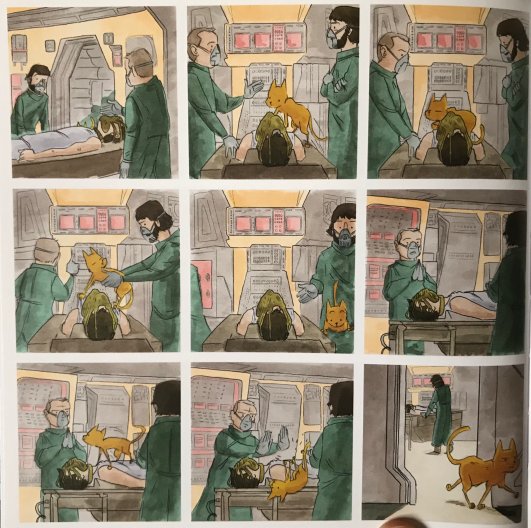
Jonesy: Nine Lives On The Nostromo
A page from Jonesy: Nine Lives On The Nostromo, which tells the story of Alien from the cat’s perspective. These panels depict Jonesy watching Ash and Dallas examining Kane in the ship’s medical lab.

He’s like the anti-xenomorph. Cats are predators, after all, and Jonesy might be the xenomorph to the ship’s rodents just like every ship’s cat in thousands of years of human naval endeavors. But to the crew members Jonesy’s a source of comfort, a warm, furry friend to cuddle with. Unlike the xenomorph he’s got no biological programming urging him to impregnate other species with copies of himself in one of the most horrific gestation processes imaginable.

Xenos are like predators on steroids, gorging themselves on their victims to fuel unnaturally swift cell reproduction and growth. As a result, over the decades some have speculated that the alien simply ignored the cat, deeming its paltry caloric value unworthy of the effort to kill.

The idea that Jonesy was too small to interest the alien is proved a fallacy in later franchise canon when we see the aftermath of a xenomorph consuming a dog. It’s indiscriminate in its quest for energy, feasting on adult humans and animals alike until two or three days pass and it’s a 12-foot-tall, serpentine nightmare the color of the void of interstellar space.


Just imagine sitting in a theater in 1979. Your idea of science fiction is sleek jet-age spacecraft, Star Trek and Stanley Kubrick’s clinical orbital habitats from 2001: A Space Odyssey. You’re expecting astronauts, heroes, maybe a metal robot or an alien who looks human except for some funky eyebrows, green skin or distinct forehead ridges.

Instead you get a crew of seven weary deep space ore haulers inhabiting a worn, scuffed corporate transport ship, complaining about their bonuses and aching for home, family and the familiar tug of gravity.

But home will have to wait. The ship has logged an unusual signal of artificial origin broadcasting from a small planet in an unexplored star system. The crew has no choice but to investigate. It’s written into their contracts, which stipulate the crew will forfeit their wages if they disregard the signal.

So they land, suit up, move out and find a derelict starship. An incomprehensibly massive vessel so strange in detail and proportion that it could only have been built by an alien mind, with unknowable motivations and psychology.

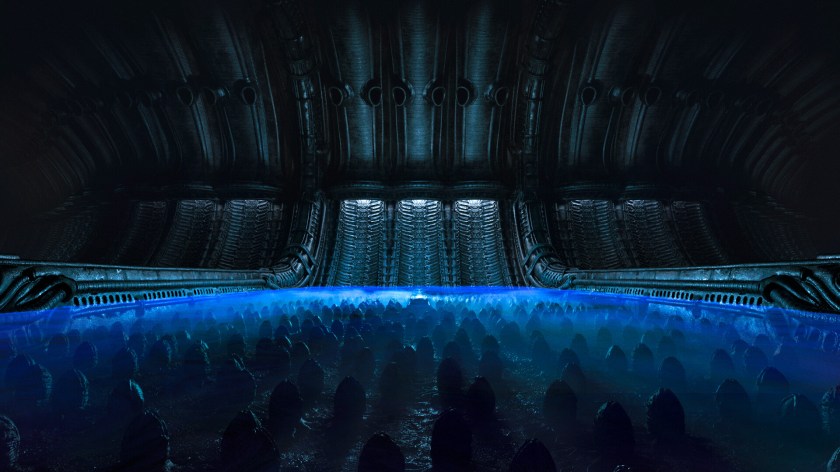
The Egg Chamber
The egg chamber of the derelict alien ship, designed by Giger.

Inside, hallways that look like ribcages lead to vast chambers with utterly bizarre, inscrutable machinery that seems to consist of biological material — skin, bone, joints, organs — fused with metal. In one of them the corpse of an alien, presumably a pilot, is integrated into a complex array. It’s at least twice the size of a large human man. Its elephantine head is thrown back in the agony of its last moment, when something exploded outward from its body, leaving a mangled ribcage, torn papery skin and desiccated organs.

And beneath that, a shaft leading to another horror — a chamber that seems to stretch for kilometers in either direction, where leathery eggs are cradled in biomachinery and bathed in a bioluminescent cerulean mist.

The decision to enter that chamber sets off one of the most shocking scenes in cinema history, leads to the birth of pop culture’s most terrifying monster, and sent millions of theater-goers home with nightmares in the spring and summer of 1979.

It’s almost too much to handle. But take heart! The unlikely female protagonist makes it to the end, and so does the cat. What more can you ask for?

Jonesy on the Nostromo
Jonesy grooming himself on the flight deck of the starship Nostromo. Credit: 20th Century Studios

Feline Leads US National Bowling Team To Dominant Win

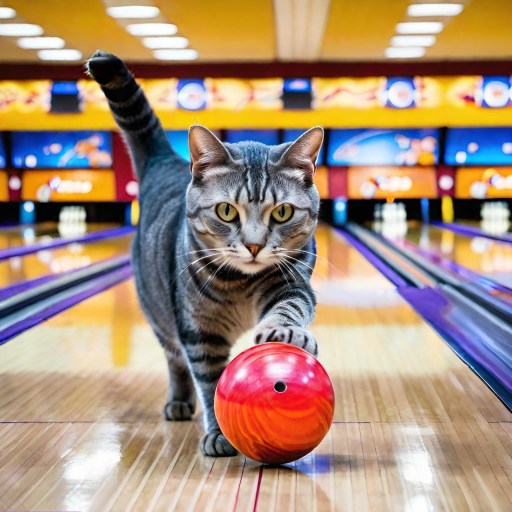
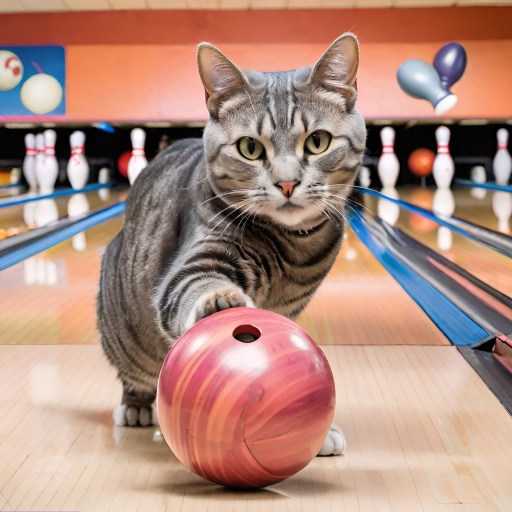
Cats are unequaled when it comes to knocking objects over, giving them a natural talent for bowling.

DES MOINES — With his brow furrowed in concentration, the US team captain took a moment at the top of the lane to analyze the geometry of the task before him.

Satisfied that he’d correctly sized things up, he lunged forward and sent the ball barreling down the polished hardwood where it connected with a pin on the right, clipping it with just enough force to snap it toward its twin on the other side.

As both pins reverberated with a familiar clunk and the score registered a spare, teammates and spectators alike broke out into a raucous cheer.

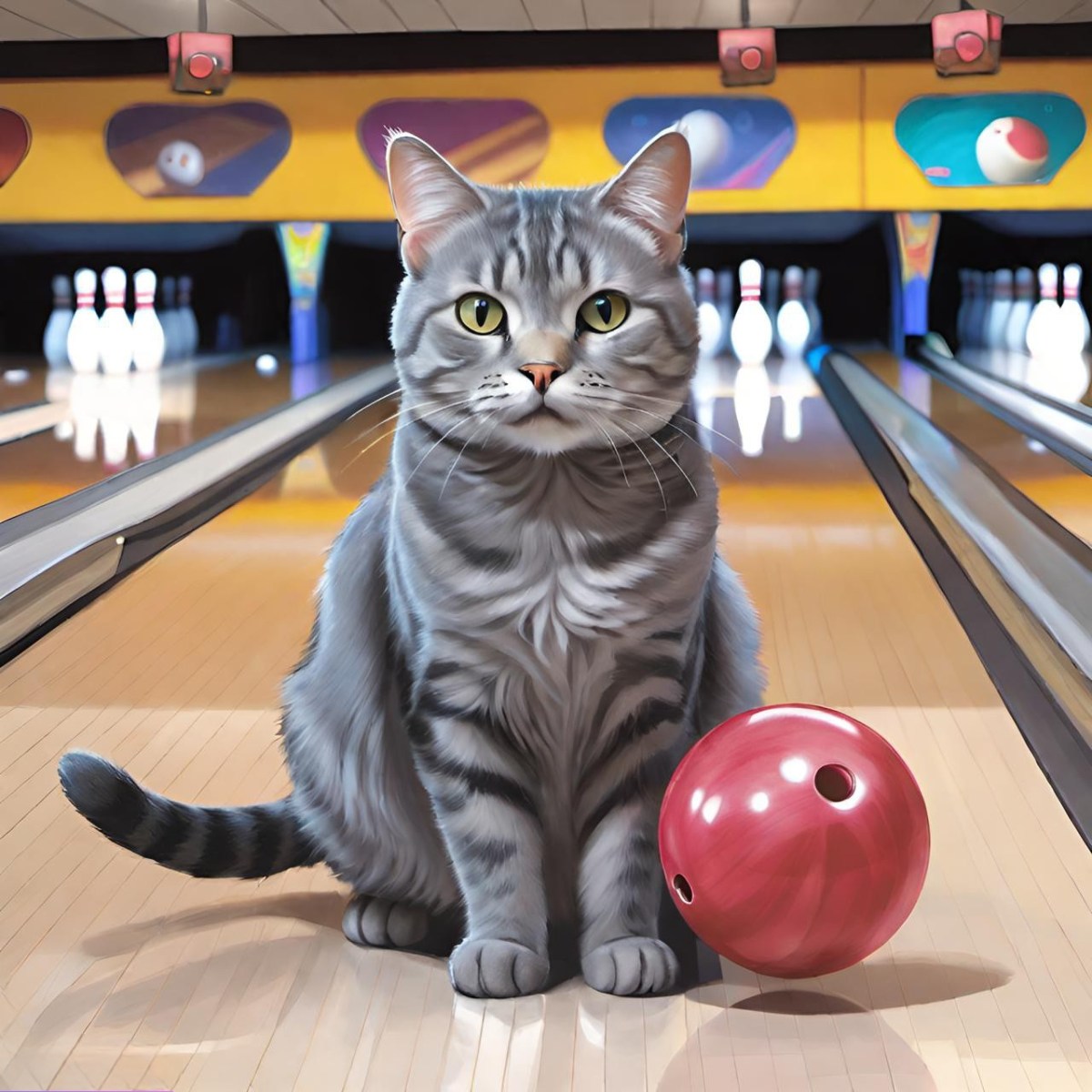
It was business as usual for the US National Bowling Team except for one small detail: the bowler who’d just collected another spare was a domestic cat named Buddy.

Buddy the Bowler

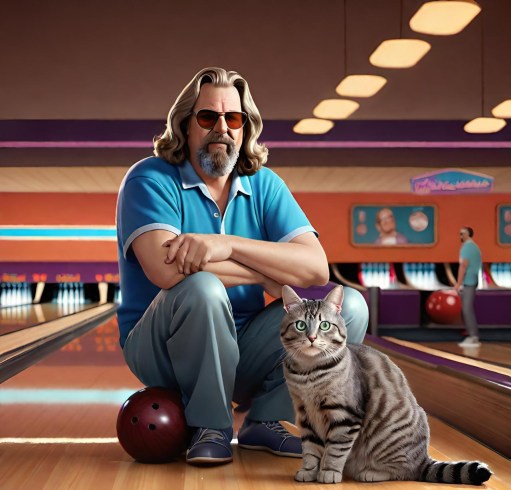
Asked to summarize his feline teammate’s game, bowler Jeffrey Lebowski didn’t hesitate.

“One word,” he said. “Lights out. Actually that’s uh, that’s two words, but you get my drift, man.”

For Lebowski and his fellow bowlers, championship ambitions became reality with the meteoric rise of Buddy the Cat, who dominated the lower leagues before joining the national squad and quickly earning its captaincy.

“I’ve been knocking things over since I was a kitten,” Buddy said matter-of-factly. “Swiping objects isn’t just a hobby. For me, it’s a passion.”

Indeed, the silver tabby estimates he’s slapped tens of thousands of items off of tables, chairs, desks and counters at home over the years. He says he’s knocked his human’s smartphone to the floor more times than he can count, along with TV remotes, keys, writing instruments and beverages.

Buddy
Buddy the Cat at the regional qualifiers in Dallas, Texas, in August of 2023.

He credits the latter especially with providing him with the foundation necessary to excel on the lanes.

“If you think about it, a water bottle isn’t much different than a bowling pin,” Buddy explained. “They have a similar form factor and center of gravity, and they both make a satisfying slap as they hit the floor.”

But making a career of his passion never occurred to the New York-born feline until he dozed off on the couch one day and woke up to a bowling broadcast on ESPN6.

He was instantly smitten.

“I couldn’t believe such a sport existed,” Buddy recalled. “I said to my human: ‘All this time you knew there was a competitive sport that involves my favorite thing to do besides napping and eating, and you just neglected to mention it to me?’ I mean, it doesn’t even involve any running or physical exertion whatsoever! I knew it was the sport for me.”

Buddy and Lebowski
Jeffrey Lebowski with Buddy the Cat.

Buddy’s new teammates were skeptical at first, but when he filled in for teammate Walter Sobchak and bowled a perfect 300, they were sold.

“I told those %@#*s down at the league office that I don’t roll on Shabbos, but they scheduled us for a Friday night game anyway,” Sobchak said. “I told the league office ‘You’re entering a world of pain if we lose because I can’t roll,’ but Buddy saved our bacon. Shomer Shabbos!”

shomershabbos

Buddy says he’s focused on leading the US team to its first championship in decades, but credits the experience for broadening his horizons. He said he’s particularly interested in getting involved in boxing “since boxes are another passion of mine.”

“Boxing sounds amazing, and I’m partial to all kinds of boxes, not just cardboard,” he said. “But first we have a world championship to win.”

It’s Kitten Bowl Sunday!

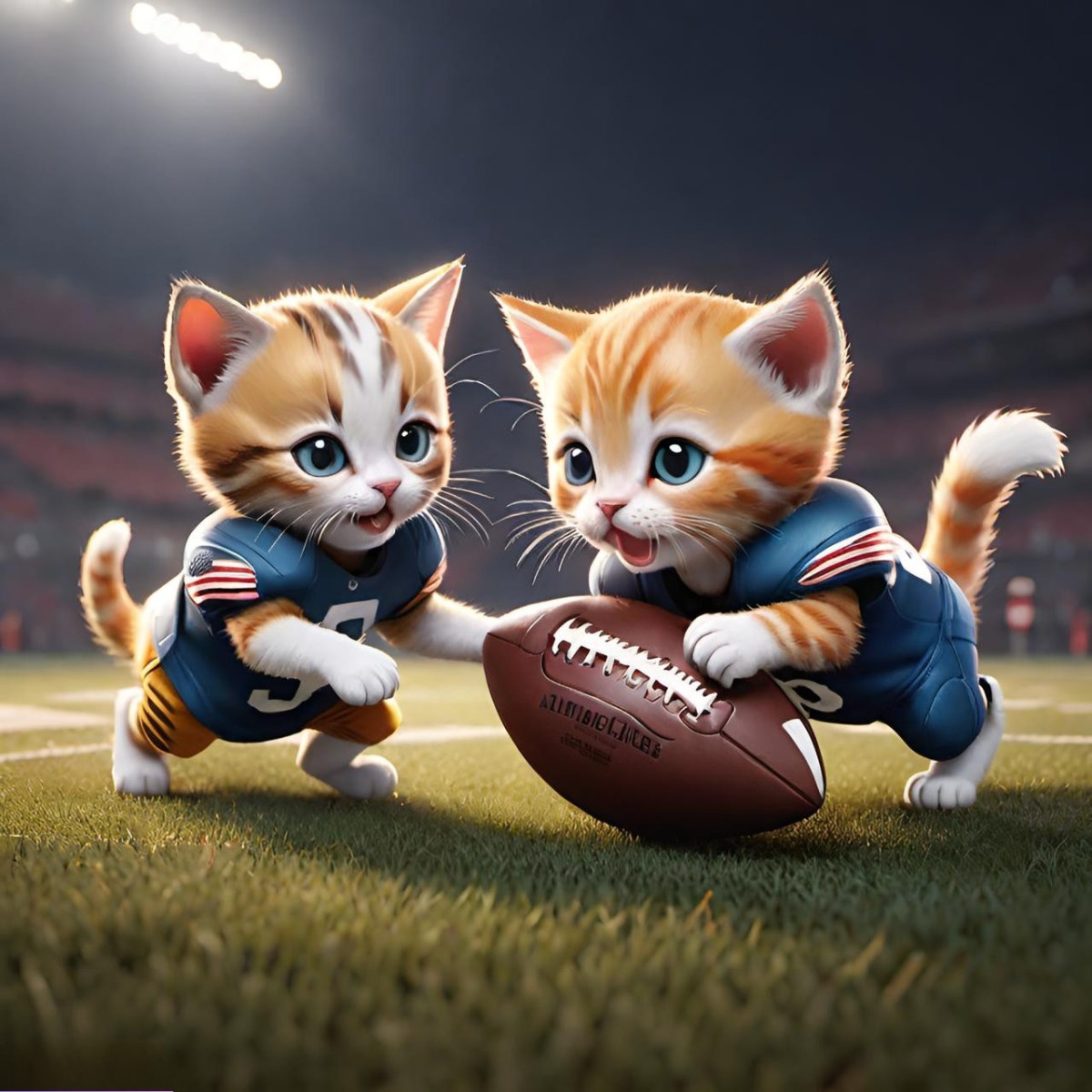
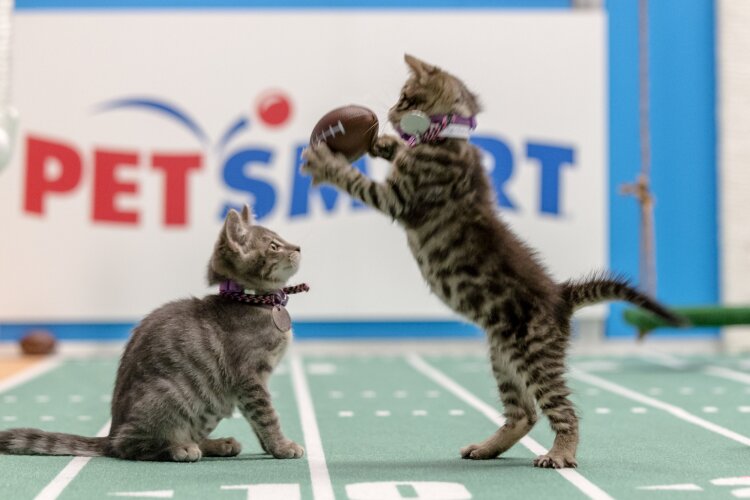
It’s the big game! Watch adorable, adoptable kittens and puppies square off on a tiny football field for a no holds barred game of…catch? Fumbling? We don’t know! They’re doing something, okay?

It’s time for the Kitten Bowl!

What, you thought we were gonna blog about that other game?

For the second straight year the former Kitten Bowl has been renamed the Great American Rescue Bowl, and will feature puppies as well as kittens. It’s moved from its former home at the Hallmark Channel to the Great American Channel, but retains its hosts, its partnership with the North Shore Animal League, and most importantly its adorable furry participants.

You can catch the Great American Rescue Bowl at noon eastern, making it a convenient watch whether you’re headed to a Super Bowl Taylor Swift Bowl party later in the day or you care not for sporting contests that don’t feature four-legged athletes.

Kitten Bowl
Catches are pretty rare, but that’s okay!

If you don’t get the Great American Channel as part of your cable package or you’re a cord-cutter, you can stream it for free on fubo.

While the kittens and puppies are adoptable, this year also includes three special young cats — Meowi Wowi, Hana Lulu, and Surfin Sammy — who were displaced by the Hawaii wildfires of August 2023.

And if you’re hosting a party today and you need a last-minute addition to your menu, Buddy has kindly offered to share his recipe for Buddy’s Extra Turkalicious Turkey Wings:

  • Turkey wings for guests (24) and for Buddy (48)
  • Turkey sauce, 2 cups
  • Buddy’s BBQ Turkey Seasoning
  • Turkey bacon

In a large bowl, mix the turkey wings with the turkey sauce, then arrange the wings on a non-stick pan and bake for 30 minutes at 400 degrees. Glaze with additional turkey sauce. Garnish with turkey bacon. Goes great with your other favorite turkey-based snacks!

The First HD Video Streamed From Space Is A Clip Of A Cat Chasing A Laser

In Netflix’s Three Robots, a trio of intelligent wise-cracking machines tour post-apocalyptic Earth after humanity nukes itself out of existence. While humans are long gone from the planet, felines are not, and before long the robots encounter a gray tabby.

“What’s the point of this thing?” one robot asks its friends, looking skeptically at the yawning cat.

“Apparently there’s no point, they [humans] just had them,” the second robot says.

“Well, that’s underselling their influence,” the third robot says. Humans, it explains, “had an entire network that was devoted to the dissemination of pictures of these things.”

The ongoing joke that the internet and modern telecommunications systems were invented solely for the purpose of sharing cat photos and videos won’t die any time soon now, thanks to NASA.

To inaugurate and test its new Deep Space Optical Communications (DSOC) system, which uses lasers instead of radio signals to transmit data, the famed space agency streamed a high definition video of a cat named Taters chasing a laser.

The 15-second clip took half a second to transmit from the spacecraft Psyche and 101 seconds to cross the 19 million miles (30 million kilometers) between Psyche and Earth. For context, that’s a journey about 80 times as long as the distance between Earth and the moon.

So why is NASA doing this? Why create a new communications network when the old one still works? And why send a video of a cat?

Taters
Taters the cat. Credit: NASA

The answer to the first question is simple: Our machine proxy explorers need more bandwidth to send back data and ultra high definition photos/video of the strange worlds they’re exploring.

We send robotic probes to destinations like the asteroid belt and Venus because we can’t go ourselves, and because it’s the most efficient way to explore. The indomitable human spirit drove us to explore our own planet, and it’s expected that eventually human eyes will see the oceans of Europa and the surface of Mars. But we still have some big engineering challenges ahead of us, like figuring out how to build ships that adequately shield astronauts from radiation, and medical/biological challenges like how to prevent vision, bone density and muscle loss in low or zero gravity.

So in the meantime robotic probes are our ticket, and their numbers are growing quickly.

There are more than 30 active probes exploring our star system now. Most belong to NASA, but others belong to space agencies from the EU, South Korea, Japan, Russia and India, among others. Another 27 new spacecraft are expected to launch this year, headed to destinations like Venus, Mars and the many moons of Jupiter, and at least that many are scheduled to join them in 2026.

That’s a lot of probes.

Each of those craft will have to transmit data back to Earth — scientific data, but also high definition photos and videos of planetary and moon surfaces, asteroid compositions and more.

There isn’t a traffic jam — yet. But there will be soon if every probe’s data is bottlenecked by the lower-bandwidth radio system.

While laser and radio transmissions both travel at the speed of light, the shorter wavelength of laser light allows more data transfer. In simple terms, the DSOC network is like upgrading from an old phone modem to broadband.

As for why NASA chose a video of Taters chasing a laser, there are two main reasons: Fun and honoring history.

Taters’ human, Joby Harris, works for NASA as a visual strategist. When NASA employees were talking about the significance of sending the first high-def video from a probe to Earth, one staffer mentioned that one of the first — or perhaps the first — test videos in the dawn of television was a simple video of a statue of Felix the Cat.

The rest fell into place. Transmitting a video of a cat chasing a laser seemed like the natural choice to test a laser-based comms system. Taters has become something of a celebrity in the process.

One thing we can be sure of: if aliens are watching us from afar, there’s a good chance they’ll conclude felines are the ones running things down here. They may not be wrong.

Aye, Captain Buddy Be Searchin’ For Pieces O’ Eight, Ye Scallywags!

Buddy, aka Graybeard, has departed for his annual adventure on the high seas aboard his ship, the Fowl Play. He really gets into talking like a pirate.

Ahoy, me hearties!

Tis that time of year when I depart the frigid coasts of me headquarters of New York bound for the pirate heaven of Somalia! ‘Tis tradition ever since me Big Buddy temporarily sold me to pirates for a hoard of booty an a jest and I spent a season learnin’ the life of a cat-o-the-sea.

Havin’ obtained me all the plunder I could carry, I returned to New York in time for the spring, rich in gold and the vocabulary of a true privateer. (And a proper cutlass too, though truth be told it were redundant with me sharp claws.) Ye landlubbers were mighty surprised!

So now I be known as Graybeard and my ship, the Fowl Play, is the Scourge o’ the Seas, makin’ sailors tremble in their boots at the sight o’ me mast with a big hulkin’ tiger eatin’ a plump turkey.

Captain Bud
“Ahoy! Land ho! Be prepared to drop anchor, all hands to the poop deck!”

Ahoy! ‘Tis many an incautious feline captain who met the watery grave of Davy Jones’ locker fer understimatin’ the Foul Play, tis it true. Many a red ensign me plunder for the rum, many a seadog know the name o’ Ol’ Graybeard an heard it true me put a shot across they bow!

Them sons o’ biscuit eaters become sharkbait if they underestimate Graybeard, so ye better strike colors an succumb to the inevitable — that Buddy’ll strike anchor, invite hisself aboard ye vessels and help hisself to the prime booty!

Only problem is, not a spot o’ turkey to be had on the high seas, so I have me men squib the deck, get the Fowl Play shipshape and make port often to keep the turkey larders topped up for the galley, ye savvy? Anyone who raid me turkey stash be playin’ with Jack Ketch and be sure to feed the fish, if ye catch me drift!

Avast me, ol’ Graybeard’s adventures on the high seas will continue till I find the legendary pieces of eight or the grog strike me with a clap o’ thunder, I always say.

Fer legend has it that there be an island where turkeys have eight wings, each more delicious than the last, and it be Graybeard’s obsession to find this isle o’ wonders. Just imagine how awesome it would be! Arrrr…belay that! Put it in yer mind that Graybeard’ll be rich in plunder and turkey if the mythical isle be found!

I have me pigeon here who’ll carry me dispatches back to that landlubber Big Buddy, so he can continue the bloggin’ an apprise ye buckos of me adventures. Until such time as the Fowl Play make port, I’d advise ye stay off the shippin’ lanes between the kingdom and the Caribbean.

Yer captain,

Buddy

Captain Bud
Pictured: Captain Graybeard on the deck of the Fowl Play.