You Can Now Play Stray As Your Own Cat And As Garfield Thanks To Mods

Who wants to play as Buddy?

More news in the world of Stray, the play-as-a-cat video game that’s taken the world by storm with rave reviews, plenty of memes and hilarious videos of real cats reacting to their humans playing the game.

Thanks to players who create custom game mods, short for modifications, Stray players can now replace the game’s ginger tabby protagonist with cats of their choosing. Currently there are mods that make the title cat a Siamese, a black cat with yellow eyes, a white cat with heterochromia (different color eyes), a tuxedo and a Calico, among others.

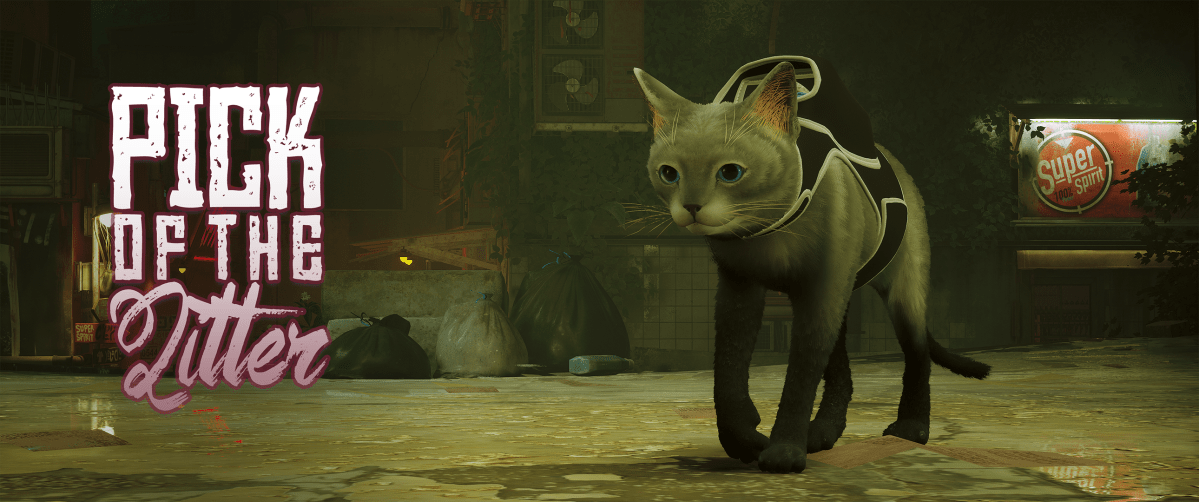
The most popular mod, dubbed Pick of the Litter, features many different coat colors and patterns that users can select and switch between.

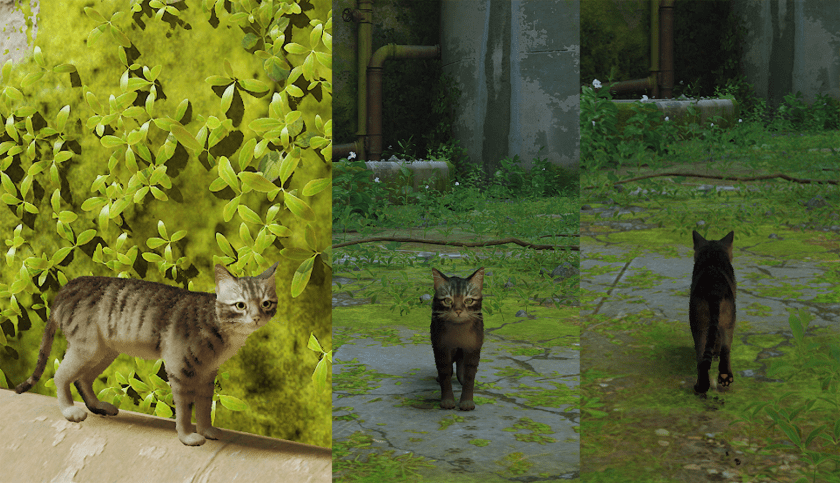
There are currently at least two gray tabby mods, but neither of them match Buddy’s chubby incredibly muscular physique.

One modder is taking commissions from gamers and creating custom cat avatars based on photographs, so if a player’s cat has a unique color or pattern — or you just want something more accurate — they have that option. Perhaps we’ll inquire if it’s possible to add huge meowscles as well as edit coat patterns and colors.

graytabbystray
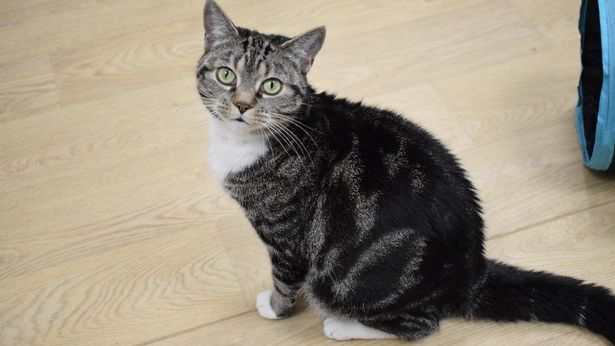
Gray tabby mod: Clearly not meowscular enough to be Buddy.

Other mods allow players to substitute a dog as the protagonist (come on, now…), add snazzy spectacles to the kitty, and tweak graphics settings for greater photorealism.

Finally, if you’re a fan of a certain lasagna-loving cartoon cat, you’re in luck: He’s now in the game thanks to the efforts of one dedicated fan, and he’s as lazy and heavy-lidded as he’s always been.

It should be noted that mods are unique to the PC, which is an open platform. If you’re playing the game on a Playstation 4 or 5, you’re out of luck.

58-1658692188-909899575
Garfield in Stray: Maybe you can feed him lasagna to restore his health?

Finally, Wild Cat ‘Ownership’ Could Be Banned Under The Big Cat Public Safety Act

The legislation aims to ban all private big cat ownership throughout the United States.

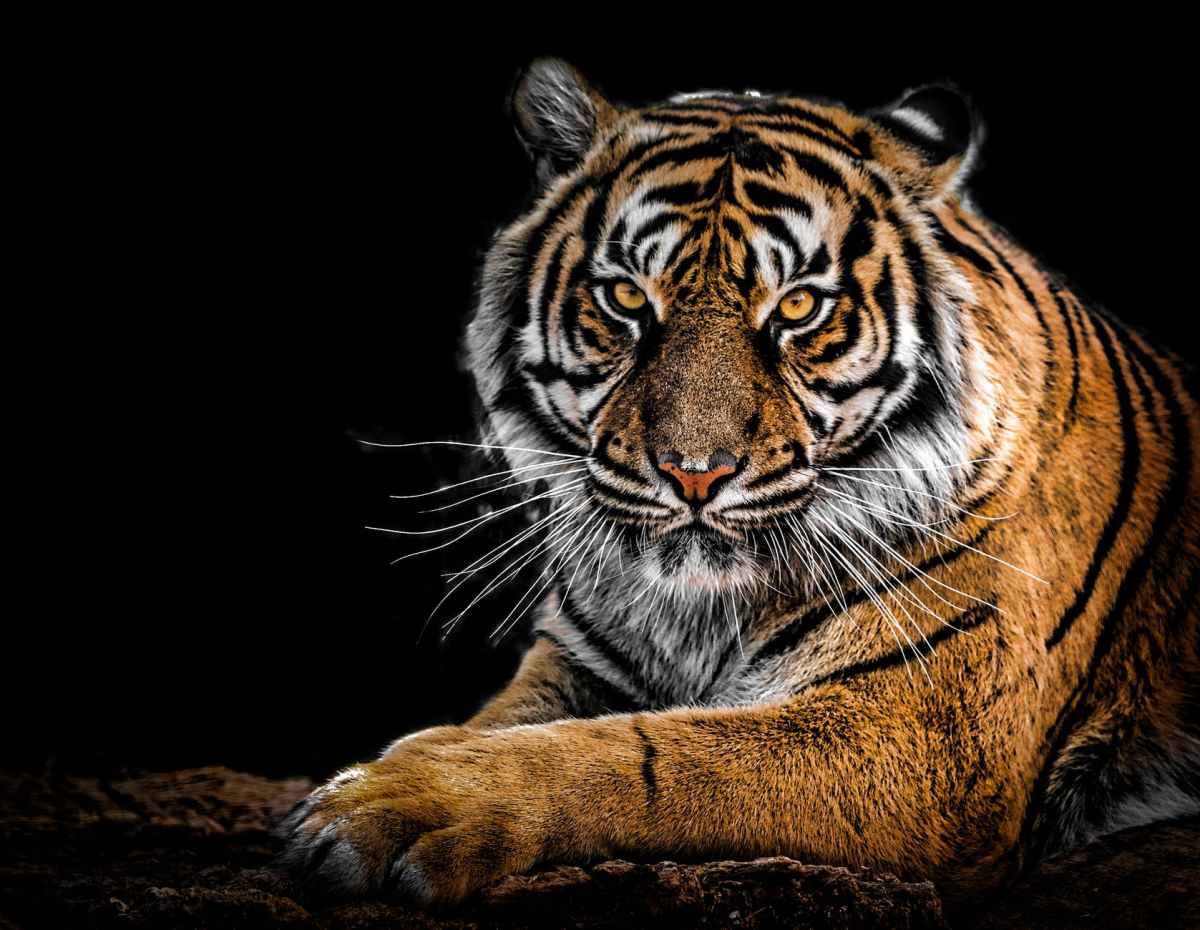
There are more tigers living in cramped backyards in Texas than there are in the wild.

At roadside zoos, shady people like Joseph Maldonado-Passage, Joe “Exotic” of Tiger King fame, breed big cats like rabbits so they have an endless supply of cubs to steal from their mothers before they’re weaned, pumped full of sedatives, and handed off to tourists who take selfies with them but never stop to consider the welfare of those baby cats or the harm they’re enabling.

And in states like Florida, where “Muh freedoms!” reign supreme over all other values, people can own any wild animals they want, with no real oversight and no mechanisms to ensure they’re doing right by the animals. There’s nothing forcing “exotic” animal “owners” to keep the big cats, monkeys and other mammals in proper enclosures where they have stimulation and — just as importantly — won’t escape and hurt neighbors.

India the tiger Transported to BBR
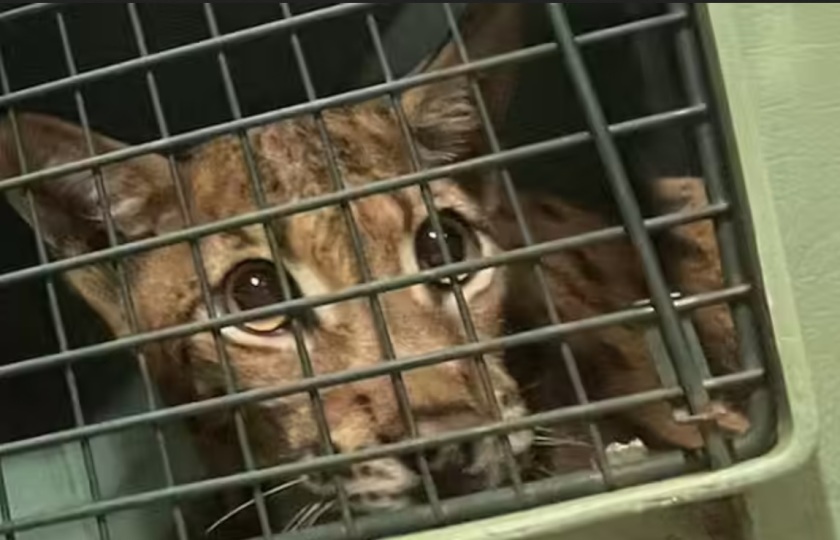
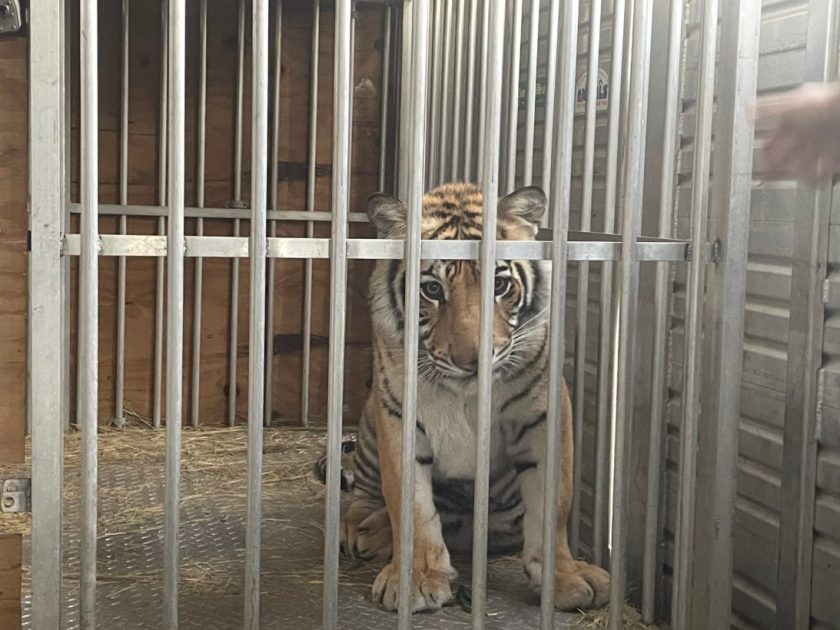
India the tiger was still just a cub when he was spotted wandering through residential neighborhoods in Texas, where he’d been dumped by his former “owner.” Credit: Humane Society

Thankfully, things could change soon as lawmakers are expected to vote on the Big Cat Public Safety Act, a rare bipartisan effort that would finally make it illegal to keep tigers, lions, jaguars, leopards, cheetahs, pumas and other wildcats privately, whether in homes, businesses or non-accredited “zoos.”

Currently keeping big cats is illegal or severely restricted in most states, but like many things in the US, there’s a confusing patchwork of laws and things that would be unthinkable in other states are perfectly acceptable in places like Texas and Florida.

Because, you know, “muh freedoms.”

Now is a good time to point out that this blog has always been, and will remain, politically agnostic. I have my own political beliefs as any other person does, but PITB is a cat humor, news and advocacy blog, and the only politics we discuss here are those that relate to animal welfare. Equally important, Buddy and I want people of all political persuasions to feel comfortable as readers and commenters on PITB. (Although that could change if one or both political parties suddenly makes a move against the nation’s Strategic Turkey Supply. Then Buddy’s gonna have to get biblical.)

The Big Cat Safety Act is co-sponsored in congress by representatives Mike Quickly, D-IL, and Brian Fitzpatrick, R-PA, and in the senate by senators Susan Collins, R-ME, Tom Carpenter, D-DE, Richard Burr, R-NC, and Richard Blumenthal, D-CT.

It’s endorsed by a wide range of groups, from the National Association of Zoos and Aquariums to the Humane Society and various bar associations. The proposed legislation also has the support of the White House, which released a statement this week urging its passage.

If your congressional representative or your senators aren’t publicly on board with the Big Cat Safety Act, you can make your voice heard via the Humane Society’s site, which allows you to draft and send letters to the offices of your lawmakers.

shallow focus photography of cheetah
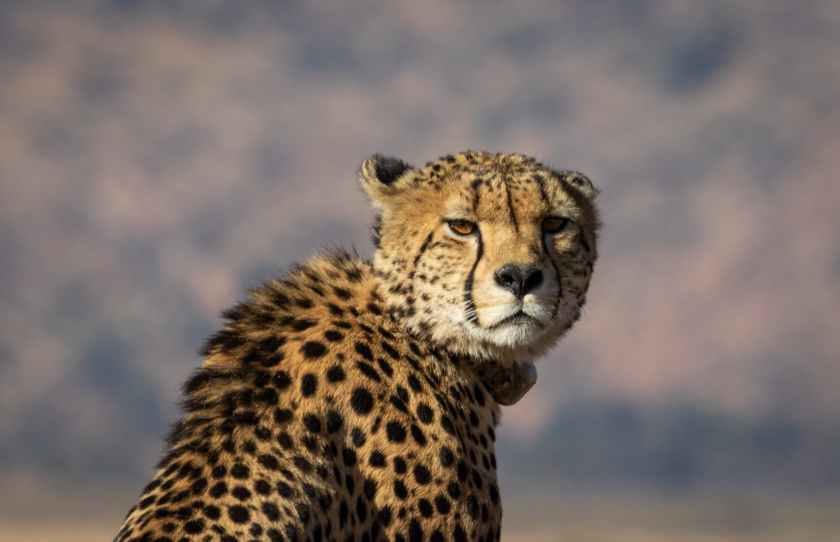
Cheetahs, already critically endangered, have been almost entirely wiped out by poachers who sell their cubs on the illegal wildlife market. Credit: Magda Ehlers/Pexels

Do You Live In A Cat Or Dog State?

The US is evenly split between 25 cat states and 25 dog states.

I spent a weekend dog-sitting for the first time ever in the spring of 2 B.B. (Before Buddy), rising early to walk my brother’s Chihuahua-terrier before work.

The Manhattan of 7 am is a different world: Everywhere I looked, bleary-eyed New Yorkers clutched leads, yawning as dogs of all shapes and sizes pulled them along. I never knew there were so many dog-friendly apartments, let alone so many people willing to share cramped spaces with dogs of all sizes. Seven-pound Cosmo was one thing, Greate Danes and Dobermans quite another.

You’d think New York City, with its sky-high population density, would be a cat town. It isn’t. Neither is New York State as a whole.

Sadly, Buddy and I live in a state dominated by dog-lovers, one of 25 including California, Texas, Florida, Virginia and both Carolinas. Although cats are the most popular pets in 25 states as well, feline strongholds tend to be in places with lower population density, from Oregon and Washington in the west to Louisiana, Arkansas and Mississippi in the south, to Pennsylvania, New Jersey and Maine in the east.

The information was compiled by market research firm Time2Play, which surveyed more than 3,000 Americans. The team also asked respondents whether they posted photos and videos of their pets online. Even though cats remain the undisputed masters of digital space, almost 57 percent of dog people showed off their pooches online, while only 43 percent of cat servants did.

Bud and I have been thinking about moving someplace warmer for years, but of course the king’s needs come first. Maybe we’ll settle in Louisiana or Nevada, where Buddy can establish a new realm for himself.

Do you live in a cat or dog state?

dogs-vs-cats-states

At Tabby’s Place, A New Center Will Take In ‘Cats The Rest of the World Forgot’

The sanctuary’s expansion will allow staff to care for FeLV-infected cats who are highly contagious and cannot be housed with the other kitties.

In 2015, a Good Samaritan found a tiny kitten abandoned in the snow and brought her to Tabby’s Place.

Staff at the Ringoes, New Jersey-based sanctuary nursed her back to health, but tests confirmed the little one had Feline leukemia virus (FeLV). While they set up a makeshift isolation ward (FeLV is highly contagious), a woman came by and told the staff she wanted to adopt a cat no one else wanted.

She chose the FeLV+ kitten, who was dubbed Quinn, even though she knew they might only have a few months or perhaps a year or two together.

Seven years later and despite the odds, Quinn is still with her human mom. The latter decided she wanted to thank Tabby’s Place with a $3.5 million donation to help FeLV+ cats like Quinn. With the hefty donation and the support of many other donors, the sanctuary is closing in on the $5.5 million to cover the construction of Quinn’s Corner, a first-of-its-kind center for treating cats infected with FeLV.

“These little ones are really the ‘final frontier’ in terms of cats who have nowhere to turn,” Tabby’s Place Development Director Angela Hartley told PITB, “and we’re thrilled to finally be in a position to welcome them at Tabby’s Place.”

Staff at Tabby’s Place see Quinn’s Corner as a major step forward in caring for kitties who normally don’t have a chance. Because they don’t have the facilities, know-how or resources to treat FeLV+ cats, many shelters simply euthanize them.

In the initial announcement, the sanctuary described Quinn’s Corner as a place where “cats who wandered the world looking for love will find cage-free bliss, matchless medical care, and the dignity and tenderness that every Tabby’s Place cat enjoys.”

The construction crew broke ground about a year ago and, if factors like supply chain issues for construction materials and the weather cooperate, the staff at Tabby’s Place hope to celebrate with a grand opening in autumn.

Because of how contagious and deadly FeLV is — it can pass by grooming, sharing food and water bowls, and close contact — infected cats must be kept apart from the other feline residents. Quinn’s Corner will have its own entrance and lobby, individual suites and a large communal room for FeLV cats, and “solaria,” which are like fancy catios for the ailing furballs to get fresh air and enjoy chirping at birds.

Separately, the project will add a nursery and adoption suite for kittens and an “operations center” where staff can attend to all the behind-the-scenes work of caring for felines, including laundry and food prep.

Tabby’s Place will match donations until they reach the $2 million goal to supplement the initial donation of $3.5 million, but cat lovers can continue to donate at any time, Hartley said.

All construction photos and renderings provided by Tabby’s Place. Top photo credit Asish Aji/Pexels.


Thanks To A New Treatment, These Cats Have A Second Chance At Life

Parsnip and Jupiter are fighting off FIPV, a virus that until recently was a death sentence for cats. The future looks bright for both cats.

After almost three months in treatment, little Parsnip is back to her old self.

The tabby cat with expressive sky blue eyes had been diagnosed with Feline infectious peritonitis, a variation of feline coronavirus that attacks the body’s white blood cells and can render even the most playful kittens lethargic, eventually robbing them of their ability to walk and ultimately, their lives.

Parsnip was an affectionate whirlwind of energy when 21-year-old Californian Anae Evangelista adopted her. When she lost her kitten exuberance six weeks later, Evangelista knew something was wrong. When the little cat stopped eating and drinking, Evangelista realized the problem was much more serious than an initial veterinary examination suggested.

After more tests, she received grim confirmation that Parsnip had FIPV, a virus that is almost always fatal.

But a veterinarian connected her with an online group for people whose cats have FIPV and Evangelista was able to get her kitty accepted for experimental treatment with GS-441524, a nucleoside analogue antiviral drug that has proven effective at treating all types of FIP in several trials in recent years.

After a regimen of almost three months of GS-441524 treatment, Parsnip has her energy back, she’s gained a pound and a half, and “looks perfectly healthy,” Evangelista said. Equally important, her blood work and other health indicators are all positive.

She’s overjoyed at the result. Parsnip came into her life at a difficult time, when Evangelista was grieving the loss of two friends. Losing the kitten she’d bonded with — an animal who had become such a comfort to her over the months — would have been too much.

Evangelista will graduate from college in about a week’s time, “so I’m honestly so excited to have her ‘graduate’ from her treatment too,” she told PITB.

Parsnip at the vet
Parsnip being a little trooper during one of her many veterinarian visits.

Londoner Billie’s cat, Jupiter, also suffers from FIPV. When she went to adopt him, Billie knew the British shorthair had Feline herpes virus (FHV) and that it would require careful monitoring. But the infection wasn’t life-threatening and Billie had already fallen in love with the golden-eyed chonkster.

When Jupiter’s appetite waned and his behavior changed earlier this year, Billie thought the little guy was just suffering from a FHV flare-up.

“He is very loving, he is like my shadow and he loves to play,” Billie told PITB, “but he wasn’t doing any of these things.”

As was the case with Parsnip, the veterinarians didn’t think Jupiter was seriously ill. They sent Billie and Jupiter home with antibiotics and anti-inflammatory medication, but after a week Jupiter still hadn’t improved. He was subject to a battery of tests — bloodwork, ultrasounds, x-rays — and kept overnight for observation.

“FIP is notoriously hard to diagnose, and there are so many symptoms that you could mistake for other things,” Billie said, noting veterinarians often have to “work backwards” and eliminate other potential ailments before diagnosing a cat with FIPV. “Jupiter’s symptoms were so minor initially, he just seemed a bit off and hadn’t eaten much and felt hot. I think because I know him and his behavior so well, we were able to catch it early.”

jupiterjubilee
Jupiter proudly displaying the Union Jack in celebration of Queen Elizabeth’s Platinum Jubilee.

Because the tests didn’t confirm FIPV, a third visit with more tests followed before Jupiter was placed on his meds. While the FDA has yet to approve GS-441524 treatment in the US, the UK had approved the drug in fall 2021, so Jupiter was able to begin treatment right away. Like Evangelista, who paid $5,000 for the FIPV drugs, not including the initial veterinary examinations, Billie was faced with hefty bills: The three initial veterinary visits, tests and five nights of observation added up to £5,500 (about $6,930 in USD), and the medication set her back £7,500 (about $9,400).

Her family helped her pay the initial veterinary bills, her sister started a GoFundMe campaign, and her nieces began making “FIP Warrior crystal healing bracelets,” with the proceeds from sales going to Jupiter’s treatment. (A GoFundMe for Parsnip also exists, and has raised $2,060 of its $2,500 goal so far.)

So far, Jupiter is responding well to the treatment and the signs are encouraging.

Both cats will enter an 84-day observation period after their regimens. They’ll have their bloodwork monitored and will be examined several times over that stretch to make sure they’ve recovered. They’ll also be closely watched at home for any symptoms.

Evangelista and Billie said they’re heartened by the 85 percent success rate.

Despite the cost, Billie said she didn’t balk at taking care of her cat.

“Jupiter is my whole world,” Billie said. “It is just the two of us, he is my one constant and he means everything to me. He is so loving, and so sassy. He has such a little personality and I would be so lost without him.”

Follow Jupiter on Instagram @_jupitersfipfight and Parsnip at @lilmissparsnip