After Massive Backlash, Government Agrees To Stop Shooting Cats

Bowing to public pressure, a state agency in California said it will no longer allow its employees to shoot cats in a misguided attempt at protecting local wildlife.

State employees in California have agreed to temporarily stop shooting cats after stories about their actions prompted an overwhelming backlash.

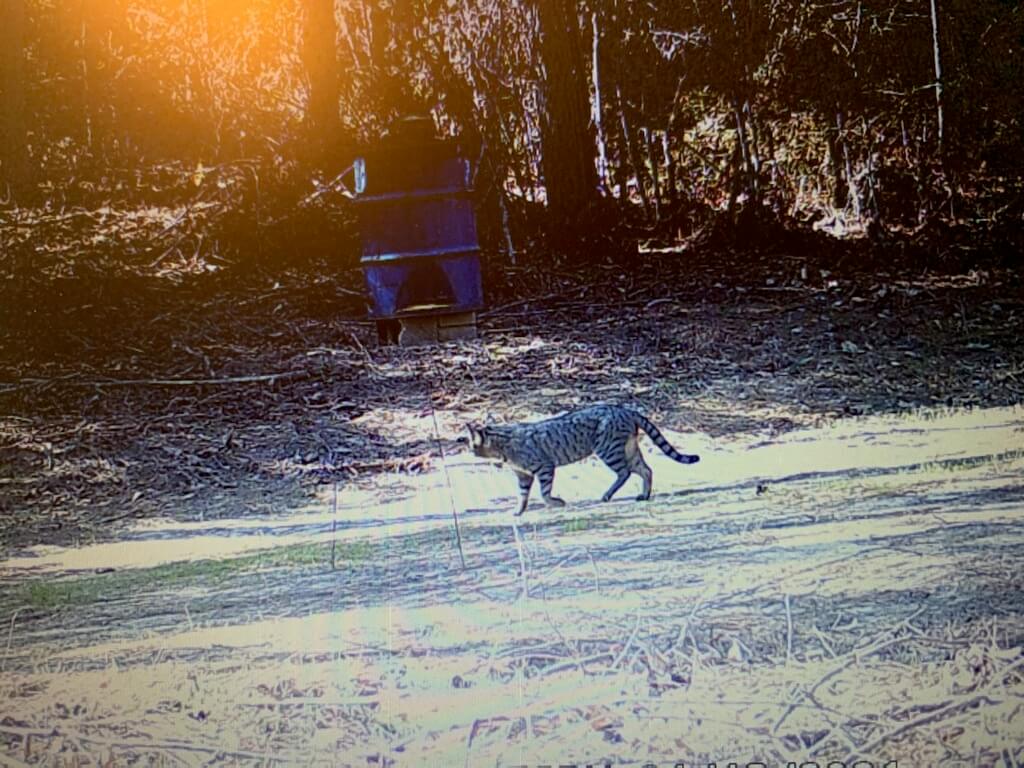
Employees with the East Bay Regional Park District have shot at least 18 cats this year, including a dozen in the past month. A spokesman for the state agency, which manages park land in nine California counties and major cities like San Francisco, claimed the cats were a threat to birds in a marshland not far from a business park where the felines lived.

But the East Bay Regional Park District has repeatedly lied about the cats’ fates, failed to work with local rescues and shelters, and refused to honor public records requests about the cat-killing program, according to animal rights advocates and local media.

Dave Mason, a spokesman for the East Bay Regional Park District, described the situation as “an out-of-control feral cat colony of at least 30 cats.” By contrast, staffers at local rescues, as well as the people who managed the colony, said most of the cats were strays, some were former pets, and they rarely entered the nearby protected marshlands.

“[East Bay Regional Park District] came out most likely at night, and shot and killed the cats we had cared for. We spent countless hours getting the majority of these cats fixed. Countless hours!” one local caretaker fumed on Facebook. “These cats were vaccinated, microchipped and healthy. We pulled kittens out when they presented themselves. We pulled adult cats out on many occasions. Some of which we believe were dumped there. We were constantly doing work there.”

Mason painted a very different picture of the situation.

“The Park District appreciates all animal life but is required by law to protect threatened and endangered wildlife living in District parklands,” he told SFGate. “It is imperative that the public understands that feral cats are not part of a healthy eco-system and feeding them only serves to put endangered wildlife at risk.”

willow
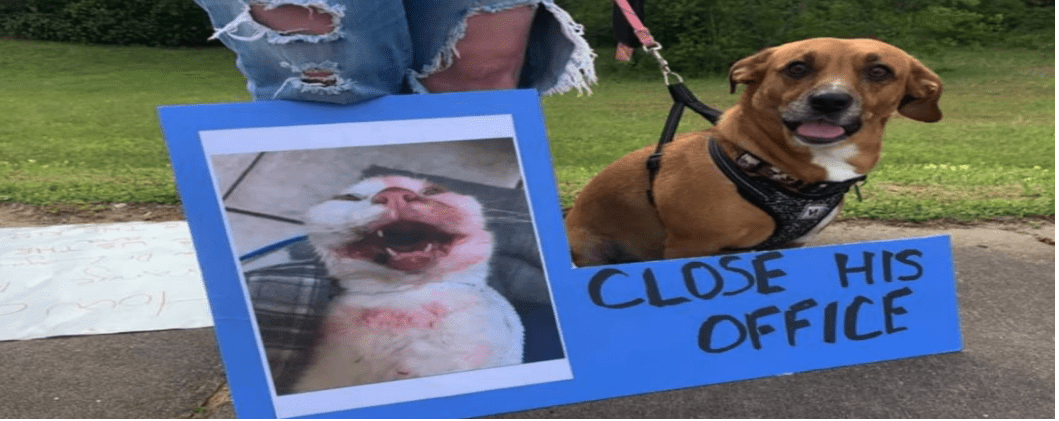
Willow, one of the strays in the eliminated cat colony, is missing. Colony caretakers believe she was shot by state employees.

Now the agency’s supervisory board has pulled the plug on killing cats, according to the local ABC affiliate, after receiving a flood of angry messages and phone calls about the policy. Dee Rosario, the board’s incoming president, told KGO she plans to have the practice ended permanently.

Board members also promised the public will get answers after the EBRPD ignored public records requests from journalists at KGO.

“The board will be asking some tough questions, and we want to get a report of exactly what happened,” said Ellen Corbett, who sits on the board. “And that’s why we’ve asked for an investigation.”

It’s worth noting there’s no evidence to support culling cats as an effective way to protect birds. Several studies, however, indicate TNR (trap, neuter, return) programs do have a measurable impact on local cat populations, and thus limit the number of birds and small mammals killed by free-roaming cats. The majority of animal welfare specialists — as well as groups like the SPCA and Humane Society — urge people to keep their pet cats indoors, and to get them spayed or neutered.

Initially, employees of the state agency claimed they’d trapped the cats and placed them in local shelters, colony caretaker Cecelia Theis said. But after staffers at local shelters said the East Bay Regional Park District did not drop off any cats, and a local TV news station began calling, the agency backtracked and admitted a team of “conservationists” shot the cats.

“There is a pile of bags and a hole in the fence near where I fed these babies every night. Those jerks hunted them and killed them,” Theis wrote on Facebook.

Later she told SFGate: “I’m looking out at the park crying their names.”

A Change.org petition urging the EBRPD to “honor its values” and cease shooting cats had accumulated almost 5,000 signatures in three days.

Cat advocates were particularly incensed that the EBRPD did not notify them before making the decision to kill the cats and didn’t reach out to local shelters for help finding a better solution.

“While we understand and fully support the need to safeguard protected wildlife and habitats from nonnative and predatory species, this tragic outcome did not need to happen,” said John Lipp, director of the Friends of Alameda Animal Shelter.  His group and other local rescues “could have worked together to humanely rehome or relocate these cats had we been notified in advance.”

Despite the pledge to stop killing cats, advocates aren’t taking any more chances. They’ve trapped the remaining strays. Some will be put in foster homes, and four will be available for adoption in the near future.

Local Gov. Employees In California Are Shooting Cats To ‘Protect Wildlife’

The government agency that manages Bay Area parks initially denied killing the cats, then said its employees shot 18 strays because they were a threat to birds who migrate to the area for the winter.

In a sickening story out of California, state government employees have admitted to shooting 18 cats and say they can’t rule out shooting more who venture too close to a marshland where thousands of birds migrate for the winter.

The cats were shot by employees of the East Bay Regional Park District, a government agency that manages parks in the Bay Area, including San Francisco, Oakland, San Jose, Palo Alto and dozens of other cities and towns in a nine-county area.

They’re operating under a broad mandate that allows them to kill any cats “that may pose a danger to wildlife,” according to a report by Bay Area ABC affiliate KGO.

It’s 7:30 at night in an East Oakland office park, Cecelia Theis is trying to trap what’s left of the colony of cats she’s cared for over the past year. She tells the I-Team, “I really want to get them out of here.”

After Theis came here to work for the county, training poll workers in the last primary election, she began helping others feed the feral cats. She fell hard for them, including the little one who climbed on her hood waiting for food, and the first cat she befriended.

“Each of them had a personality and helping them was a priority for me,” Theis said.

She found homes for their kittens, took the adults to be spayed and neutered; the colony was stable at 30 cats. But over the past month, most of them have disappeared.

Theis finally got East Bay Regional Park officials to admit, their staff shot and killed several of the cats that had wandered into a nearby marsh.

Her heartbreak spilled out on social media, “It’s not okay to shoot these beings; some of them were pets that were abandoned.”

The state employees who shot the cats did so without notifying the public, without talking to locals who manage and care for cat colonies in the area, and without asking for the help of local shelters and rescues whose staffers say they could have easily trapped the cats and relocated them.

In fact, the East Bay Regional Park District lied when first asked about the fate of the cats: Employees there initially told Theis and another colony manager that the cats were trapped and taken to shelters in Oakland and nearby Dublin, according to a day-old Change.org petition that already has almost 500 signatures.

3C25179C-2597-4D77-87CD-2FB9A007E358

The state employees only came clean about killing cats when Theis went to KGO and they realized their actions would be detailed in media reports. They’re still obfuscating: KGO journalists filed public records requests for documents related to the cat killings, but the agency has not fulfilled the requests.

That’s illegal according to state and federal law, which dictate that government agencies have 30 days to respond and, if they deny the open records request, must provide a compelling reason why. As a career journalist who has filed my own share of Freedom of Information Act requests over the years, I cannot fathom any valid excuse for withholding those documents from the media and thus, the public.

Policies like this one are a direct result of the dangerous misinformation peddled by a handful of academics who advocate for the extermination of cats, and claim domestic cats kill more than 20 billion birds and small mammals in the US annually.

Despite serious and deep flaws in their methodology — and the fact that the authors invented data rather than trying to gather it — the findings of those studies are reported as fact in the press, without any skepticism, despite push back from other scientists who have been sharply critical of the studies and their conclusions.

5F8F6039-255A-4706-8A34-9E7DF8DEF7C2

The result has been a panic over cats and their impact on smaller wildlife. The studies and the subsequent panic are directly responsible for policies like those adopted by some Australian regional governments, who have an open bounty on domestic cats, paying $10 for adult pelts and $5 for kitten pelts. They also fuel rhetoric of the type we witnessed in the New York Times this August, when a columnist was so incensed by reports of cats killing birds that she admitted to fantasizing about shooting a hungry, sickly stray who showed up in her neighborhood.

We have a serious problem if, on the cusp of 2021, we have government employees shooting cats and paying bounties for kitten pelts, based on the misguided idea, not supported by evidence, that violently killing small domestic animals is somehow an effective way to protect birds.

Cats are sentient creatures who feel pain, fear, anxiety, sadness and the full range of primary emotions. Moreover, they’ve been molded into companion animals who bond closely with humans. According to Theis and KGO, several of the cats who were shot were former pets.

A manager with the East Bay Regional Park District downplayed the shootings, saying there was a “communications breakdown” between his team and local rescues as well as colony caretakers.

“We feel horrible about this, you know, this is really one thing that’s just really sad,” Matt Graul, “chief of stewardship” for the agency, told KGO. “And we really don’t want to ever have to take this step. You know, we are compassionate, and love all wildlife. And many of our staff have cats as pets.”

Despite that, Graul would not rule out killing more cats and his agency has not complied with state public records law, nor did he say why the agency lied to colony caretakers about the fate of the strays. We hope Bay Area media organizations are getting their lawyers involved and working with the state’s open government office to force the East Bay Regional Park District to obey the law and release its records on the cat shootings.

This is unacceptable, and it should be stopped before government officials with too much zeal and too little skepticism enact similar policies in other states.

94744672-DA95-48BA-92AC-A0C6518D9619

New Administration, New White House Cat

The Bidens will bring a pet cat to the White House. Also: A Manhattan man has filed a lawsuit to get his cat back after he claims a cat sitter won’t return the kitty.

President-elect Joe Biden will bring a pet cat with him to the White House.

CBS News wants us to know this is an “exclusive” report!

The Bidens don’t actually have a cat yet, according to media reports. It’s not clear if they plan to adopt or purchase one, although my best guess is that an image-conscious First Family will go with the former route.

When they do, they’ll put a cat in the White House for the first time since George W. Bush’s India, who lived to the ripe old age of 19.

kennedycat
Jackie Kennedy and her daughter, Caroline, with a pair of kittens. Tom Kitten, right, was Caroline’s pet cat.

Before that was Socks (Clinton), Cleo and Sara (Reagan), Misty Malarky Ying Yang (Carter), Shan (Ford) and Tom Kitten (Kennedy). Misty and Shan were both Siamese cats. The Obamas had only dogs, as did most historical US presidents, while outgoing President Donald Trump and his family did not have any pets.

Man files lawsuit for return of stolen cat

Pro tip: If someone is obsessed with your cat, comes by just to see him, and repeatedly offers to buy him, it’s probably not a good idea to allow that person to cat-sit your furball.

Zivadin “Chris” Krstic, a 79-year-old shop owner in Manhattan, has accused a woman named Amanda Walker of turning a pet sit into a cat heist after she offered to take care of his cat, Sammy.

Sammy the Cat
Sammy at Krstic’s plant shop in Manhattan.

Krstic was stuck in Florida during the early days of the Coronavirus epidemic, with travel severely restricted and doctors advising him not to risk it at his age. (New York was also a complete mess at the time, and travel was severely restricted.)

One of his employees was taking care of Krstic’s cat, Sammy, when Walker offered to “help” by taking him.

When Krstic returned, Walker kept asking “to keep Sammy for a few extra days,” according to a lawsuit filed by Krstic seeking the return of the four-year-old ginger-and-white cat.

Finally, Walker told Krstic she wasn’t giving Sammy back to him. The reason? Walker told Krstic he didn’t clean Sammy’s teeth properly, and the cat was “good company” for her.

After that, Krstic alleges, Walker ghosted him and wouldn’t return his calls. She even threatened to take out an order of protection against him, according to the New York Post.

“The cat is perfectly healthy. I take care of him like my own children,” Krstic, who’s had Sammy since kittenhood, told the tabloid. “It’s very sad. I can do nothing. My cat is like part of me. [Walker] is hiding. I tried the nice way and then finally I say … we have to go to the court and let the court decide.”

Cat Unimpressed With Huge Alligator At Its Door

The cat displayed Buddyesque bravery in confronting the massive reptile.

A house cat in Florida looked decidedly unimpressed by a massive alligator that tried to force its way into the cat’s home earlier this month, sitting calmly just a few feet away as the alligator pressed against the front door.

”Hey!” we imagine the cat saying. “This home is taken! This is my house and these are my humans, and if you think you can just break into my territory, you got another thing coming!”

87C5FA6D-046D-4548-B1B9-6376DA224520


The photo was taken in Sarasota, Florida, where it’s not unusual to see the predatory reptiles waddle their way through developed areas, particularly during storms. In the viral photo — which has been shared more than 104,000 times on Facebook — the alligator’s belly is pressed up against the glass door, which itself is reinforced by wrought iron in a floral motif.

We asked Buddy the Cat whether the sort of bravery exhibited by the Tuxedo in the photo is typical of all felines.

“Ahhhh! What the hell is that?!?” Buddy said, jumping back six feet. “I mean, uh, of course I’m not scared. Us cats eat alligators for breakfast!”

Photo credit Ed Werdell/Facebook.

French Couple Buys ‘Savannah Kitten,’ Gets Tiger Cub Instead

No, it’s not quite Buddy’s origin story.

A French couple who answered an online ad to buy a Savannah kitten ended up with a tiger cub instead.

The couple, from Le Havre — a coastal town in Normandy, about 110 miles west of Paris — plunked down $7,000 for the little cat, who they were told was an exotic mix between a Serval and a domestic cat.

After about a week, they realized their “kitten” was a tiger cub and contacted authorities, UPI reported. Specialists from the French Biodiversity Office determined the cub is a Sumatran tiger and are caring for the growing cat.

tigercub5

That happened back in 2018, and the reason we’re only hearing about it now is because French police have completed their investigation in which they tracked down the seller and arrested nine people on animal trafficking laws.

There are only some 4,000 tigers remaining in the wild in the entire world. Habitat destruction, poaching and the illegal wildlife market are the primary causes pushing the iconic big cats to extinction.

Meanwhile, Buddy the Cat believes he too was born of wild tiger stock and was mistaken for a common kitten when he was adopted by Big Buddy.

“Obviously, they dyed my fur gray,” Buddy said. “But they couldn’t do anything to hide how ripped I am.”

All images via Wikimedia Commons.

tigercub2