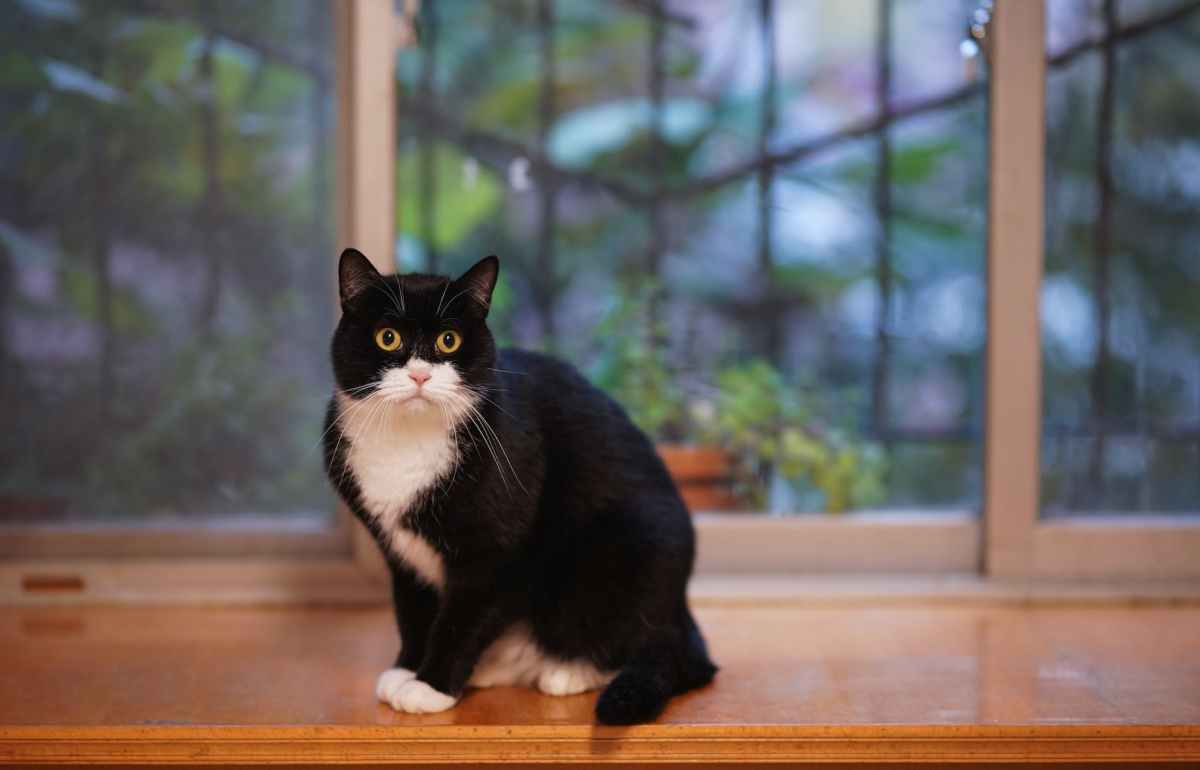
New Zealanders Make No Excuses For Shooting Cats, Calling Them ‘Bird-Killing Machines’

There’s not a shred of evidence that shows arbitrarily gunning down cats has any positive impact on the environment, but that hasn’t stopped vigilantes from hunting them.

There’s this bizarre and infuriating idea among people who call themselves conservationists that they can save certain animals by running around and arbitrarily gunning down other animals.

These people will shoot certain species of birds to protect other bird species, extirpate ferrets, pine martens and various other mustelids, and have had a hard-on for cats ever since a series of shockingly dishonest pieces of propaganda masquerading as studies used fabulated data to paint felines as furry demon spawn who feast on birds by the billions in countries like the US, New Zealand and Australia.

They used to be quiet about it because they realized gunning down cats isn’t exactly good PR for their cause, but now they don’t even bother.

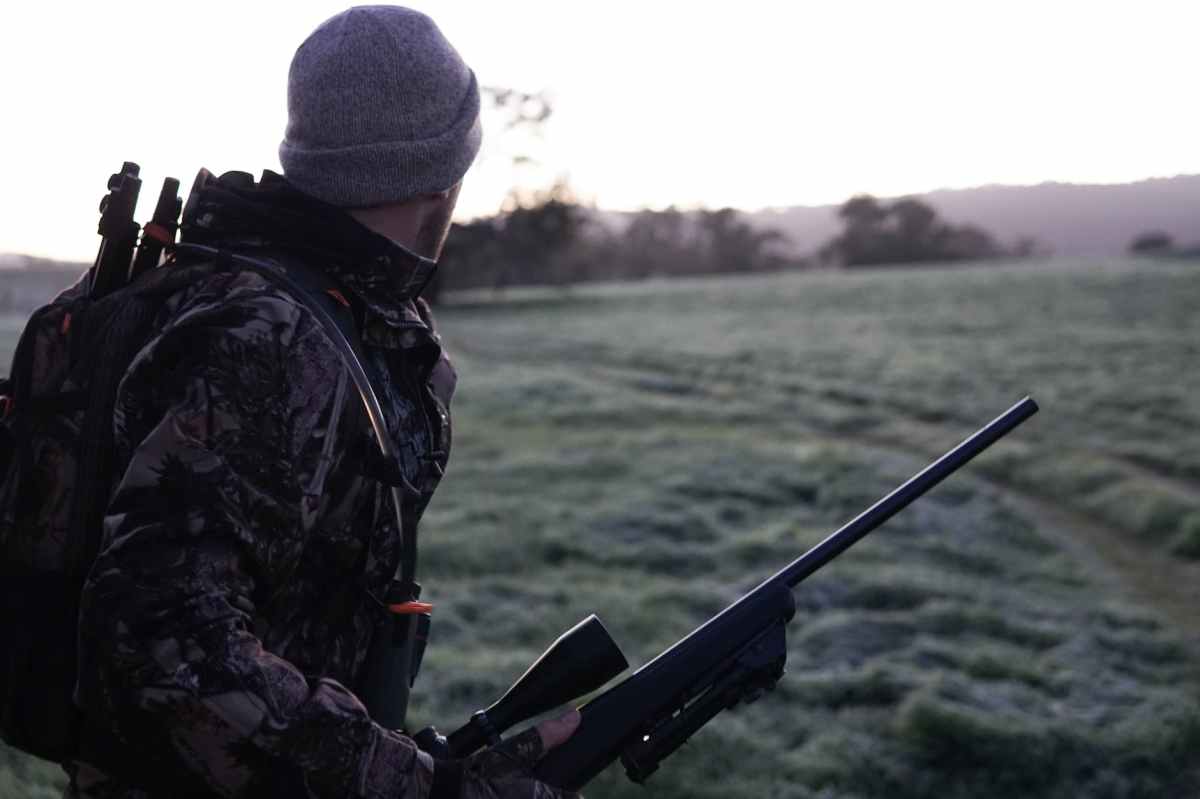
Like John McConnell, a 67-year-old New Zealander whose hobby is going out with a rifle to shoot cats at night because he thinks that’s an effective way to protect birds.

“I shoot them,” McConnell told The Guardian. “Seriously. If it’s a cat and I know whose it is, I’ll leave it. But if it’s a stray cat – it’s a goner. Even if it’s domestic and it’s out at night, I’m getting to the point where I’d shoot those as well, because they shouldn’t be out.”

Two things to note here:

  • McConnell is playing vigilante cat killer, having appointed himself arbiter of which animals get to live and which ones don’t, but he doesn’t understand that stray, feral and pet cats are all the same species. This is a man who thinks the difference between a domesticated and wild animal is whether it has a home.
  • The article contains no statistics and nothing in the way of numbers other than a wild estimate of New Zealand’s cat population, yet it’s filled with anecdotes: people who claim they see more birds after they’ve bagged a couple of cats, but can offer no evidence. That’s not an effective or smart way to make public policy.

Between the bogus studies and the lack of any data remotely suggesting that arbitrarily shooting domesticated animals has a measurable impact on bird populations, there is nothing to support this kind of ruthless nonsense. You’d think that, if an entire country is going to war with an animal species and has vowed to take potentially millions of lives, there would be something — anything — to back up the claim that inflicting all that misery and suffering on sentient creatures would accomplish a conservation goal.

mouseplagueaustralia
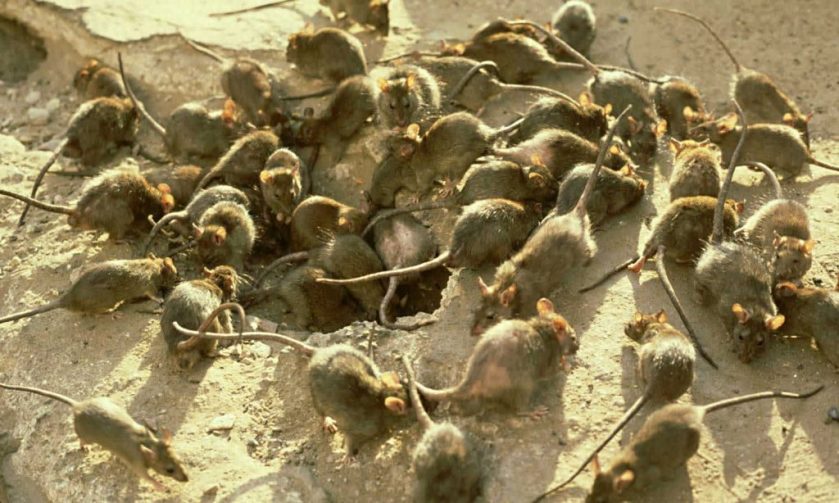
Australia’s reward for culling cats: annual mouse plagues for the past three years since killing millions of cats with air-dropped sausages laced with a chemical that is poisonous only to felids.

Especially after their neighbors, the Australians, killed two million cats with poisoned sausages in a similarly misguided attempt at protecting wildlife and were rewarded for their efforts with three years (and counting) of biblical mouse plagues that destroyed thousands of homes, farms and businesses, and caused billions in damage. Mice, by the way, are a non-native species introduced by settlers from the UK.

Credit another blow to the environment from human behavior as people randomly shoot cats. I suppose blaming cats is easier than admitting we’ve behaved abominably and are the root cause of these problems.

But let’s stop for a moment and imagine if the situation were reversed. Imagine people who want to protect cats decided they’re going to start shooting dogs, foxes, coyotes, owls, eagles and other large birds of prey.

Suppose someone decided that John McConnell’s dog shouldn’t be out for walks and shot it in an act of conservationist vigilantism.

Would anyone tolerate that? Wouldn’t they be labeled lunatics and condemned? What makes the cat culling any different, aside from “justification” in the form of a handful of widely-condemned, heavily-criticized studies that violate just about every elementary rule of scientific research?

Here’s comedian Bill Burr’s take on the absurdity of human efforts to manage wildlife population by shooting animals. Burr, whose everyman facade and humor often mask salient points, also takes the rest of us to task by pointing out it’s humanity, not the behavior of animals, that has the biggest impact on the planet and its wildlife, yet no one’s suggesting we cull our own population.

“I think it’s weird that human beings are trying to control the populations of animals. You know? Like any time the deer population gets out of control, some dude will get on TV like [puts on a redneck accent] ‘Okay, the deer population is up to about 17, 1,800, realistically we need to get that number down to about five or six, alright? So starting tomorrow, if you got a gun, f—ing shoot them in the face!’ I’m just sitting at home like, ‘What are the deer doing that’s so bad for the environment?’ [Slips into a redneck accent again] ‘They eat all the f—in’ grass! They comin’ up to trees, just nibblin’! Just nibblin’!’ Dude, the deer didn’t put a hole in the ozone layer, alright? That’s not a bunch of dogs clogging up the freeway. It’s us, alright?”

Then he lays into people who breed like rabbits, and this is a personal pet peeve of mine whenever I hear someone like Alec Baldwin, a man who has eight children, four massive homes, a fleet of SUVs and an army of nannies, holding court on environmental responsibility and global warming. Baldwin has 12 to 16 people living under his roof at any time, with palatial homes that consume more energy each than entire European villages, yet that doesn’t stop him from adopting a patrician tone and lecturing the “peasants” (his word) on their environmental responsibilities.

A word of caution: while I think Burr is hilarious, this clip is also peppered with obscenities, as his most of his material. If that sort of thing bothers you, skip the clip. If not, well, he’s got a point:

Bring Your Cat To The Movies? One Theater Chain Now Welcomes Furry Friends

Would you bring your cat(s) to the movies?

The whole pet thing takes on a different vibe in Asia.

I first saw it in Tokyo where people push their cats along in baby strollers and luxury shops sell thousand-dollar accessories for felines and canines alike.

In countries like China it’s become a thing to dress pets in “cute little outfits” and pose them like dolls for social media snaps.

Now in Thailand — which is second only to China in pet ownership on the continent — people can bring their cats and dogs to the movies.

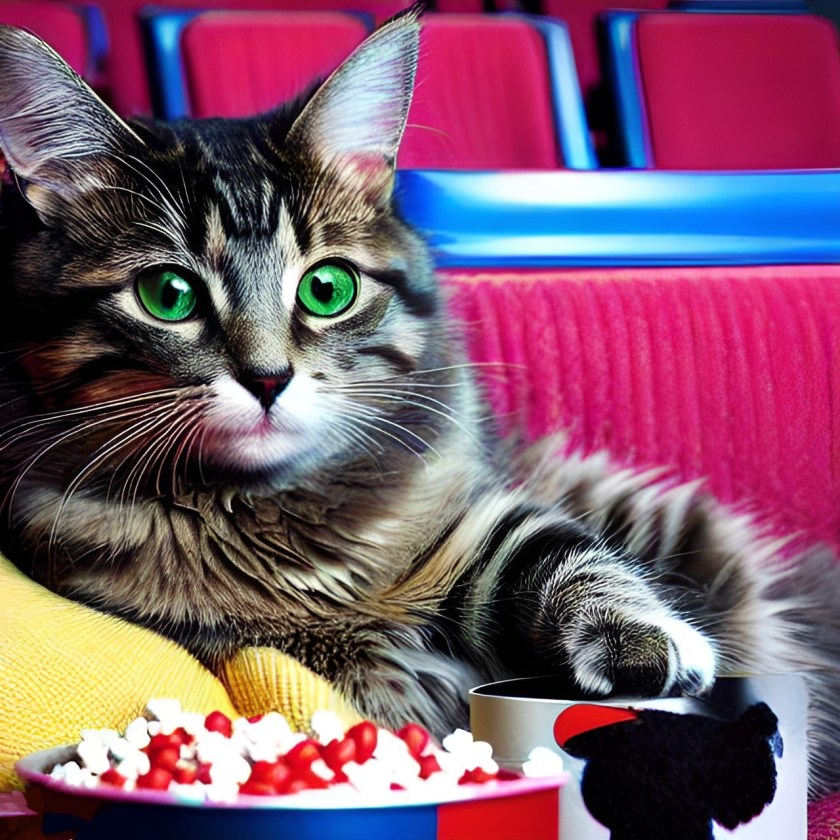
Agence France-Presse sent a reporter there to witness costumed Chihuahuas and poodles arrive by stroller and sit next to their humans for a screening of The Little Mermaid. A cat, who probably had no idea what the hell was going on, was plopped down on the seat next to her human.

Movie cat
“Shhhh! Some of us are trying to watch The Lion King here!” Credit: PITB

A spokesman for the Bangkok cineplex told AFP he thinks pet-friendly cinemas will bring people back to the movies after the pandemic. Pet owners, he said, have been less likely to leave home because their animals are now used to having them around all the time and experience separation anxiety when they leave.

As Bud’s loyal servant I know he does have separation anxiety, but I wouldn’t bring him to the local Alamo Drafthouse or AMC even if they had pet-friendly screenings here.

For one thing, he’s a damn cat! He’s not interested in screens unless they’re showing birds feasting on seeds in a forest, with all the accompanying sounds, while he’s viewing it from the safety of his own home

Second, I know precisely how he’d react, and he wouldn’t take well to being in a theater with a bunch of dogs and a handful of other cats. He’d spend half the movie hissing and the other half crying. I can’t imagine it being a fun experience for him.

Then there’s the “dress code.” Pets in Thailand’s new animal-friendly screenings must wear diapers and sit in bags provided by the theater. This is to ensure they won’t defecate all over the seats, obviously, but my cat has never even tolerated a collar. The chances of him accepting a diaper are zero.

Cat at the movies
“You gotta see Keanu in IMEOWX, my feline friends. It’s meowgnificent.” Credit: PITB

Lastly, at the risk of getting myself into trouble, the entire idea sounds about as appealing as trying to watch a non-kids movie in a theater full of screaming six-year-olds.

Don’t get me wrong, I loved accompanying my nieces to see the Super Mario Brothers movie, watching their delight at seeing the Mushroom Kingdom, Princess Peach, Mario and Luigi brought to life. (“You kids today with your Nintendo Switches, your fancy graphics and your networked games. We had Gameboy. It only had two colors, and you had to put little cartridges inside it to play games, and when they didn’t work we had to blow the dust out of ’em. You don’t know how good you got it, you kids today!”)

But do I want to be responsible for a feline with the intellectual development of a young child while I’m trying to watch a movie? If by some miracle Bud would stop hissing and/or crying, he’d focus on me and start yapping for snacks.

The movies just aren’t a great place for cats, and I’m not sure dogs would be thrilled to be there either.

Now, a hookah bar where you could bring your cat and give him his own little hookah filled with catnip? Maybe that could work.

“Yes, I’ll take an Amstel Light and a bag of your best Meowie Wowie for my little buddy here. Can I see the bar food and pate menus as well? We’ve just come from seeing John Wick 11 at the movies and we’re both famished!”

1685408359906~2
John Wick 11: Buddy’s Revenge! Credit: PITB

North Carolina Zoo Welcomes 3 Newborn Sand Cat Kittens

Sand cats are among the smallest felines in the world and live in harsh environments.

It’s baby season at the North Carolina Zoo.

The 500-acre facility in Asheboro announced the birth of three healthy sand cat kittens. The species, felis margarita, is among the tiniest of all felids and is elusive in the wild, able to survive in desert biomes far from water in the African Sahara, as well as the Middle East and parts of Asia.

The kittens were born to first-time mom Sahara, 3, and Cosmo, 9, and remain unnamed for now. The zoo said it will allow the public to vote on their names, with details to be revealed in the near future.

sand-cats-kittens-forever-fb

The fortuitous birth of the tiny felines follows the arrival of a giraffe calf and a chimpanzee baby, both male, all within a two-week period in mid-May, the zoo said.

“The mom and triplets are doing well,” zoo staff wrote in an announcement. “The trio are beginning to explore their surroundings in the Desert Habitat. Lucky guests may be able to catch a glimpse of them in the coming days.”

Although sand cats aren’t listed as endangered, scientists don’t have a good handle on their numbers and caution that they may be less populous than estimated. The parents were arranged as a breeding pair for maximum genetic diversity through the Sand Cat Species Survival Plan and the Association of Zoos and Aquariums, the zoo said.

sandcat2
An adult sand cat. Credit: North Carolina Zoo

Buddy Wants YOU To Adopt A Kitty: Adopt A Cat Month 2023

Ever year, 3.2 million little buddies enter shelters across the US, hoping for forever homes and humans to love them.

A message from Buddy, Purrsident of the Americats:

June is national Adopt A Cat Month here in our great country, and it’s no coincidence that it coincides with kitten season when hundreds of thousands of little buddies are born.

Those babies will need forever homes and attentive human servants to see to their needs, but don’t forget the adult buddies in your local shelter! They need homes too, and if you like to keep things low key, they’re the buddies for you. Bonus: They come pre-installed with purrsonalities, so there’s less guesswork involved if you’re adding a new living room lion to your existing pride.

Just remember, June is ADOPT a cat month, not “buy a cat from a breeder” month! When you adopt a cat, you’re making a friend for life who will be forever grateful to you…although kitty will still expect you to be a good servant, because that is the natural order of things!

Do you patriotic duty and adopt an Americat!

Purrsident Buddy

americats_adopts2
A patriotic message from Purrsident Buddy! Feel free to share it or print it out. Credit: PITB
americats_adopt
A patriotic message from Purrsident Buddy! Feel free to share it or print it out. Credit: PITB

americats_adopt3

purrsidentbuddy

As Registration Deadline Looms, Big Cat ‘Owners’ Face A Reckoning

The days of tiny backyard enclosures for big cats are over.

The passage of the Big Cat Public Safety Act has been a massive win, resulting in the end of the wild cat trade in the US and the cruel practice of taking cubs from their mothers for use in roadside zoo petting attractions.

But there’s another, often-overlooked component of the new law that’s about to result in big changes for captive tigers, jaguars, pumas and other wild cats.

While current “owners” of big cats were grandfathered in under the BCPSA, they have until June 18 to register with the federal government, and with registration comes requirements, inspections and minimum standards of living for the wild felids.

In other words, most of the people who “own” the estimated 20,000 privately held big cats are about to get a rude awakening. The days of tiny makeshift enclosures in backyards are over, as is the practice of keeping big cats in the home as if they’re domestic felines. (With apologies to Tippi Hedren, who once owned as many as 60 lions and tigers, and at 93 years old still has “13 or 14” big cats, according to her granddaughter, actress Dakota Johnson.)

141028-neil-lion-12-688x1024
Tippi Hedren with one of her lions in a vintage LIFE magazine photo. Hedren kept the lion and other big cats as pets in her home.

If people who have possession of big cats don’t register with the U.S. Fish and Wildlife Service, they’ll have their animals taken away. Likewise for people who don’t provide adequate enclosures that not only provide enough space, but are built to contain the apex predators.

As a result, sanctuaries are bracing for an influx of tigers, lions, jaguars, leopards, cheetahs, snow leopards, clouded leopards and pumas, all of whom are protected under the Big Cat Public Safety Act.

Experts anticipate a significant number of big cat “owners” could try to part with their animals if they can’t or won’t provide adequate enclosures, and the government is already cracking down on people who are trying to sell their “pets.”

A tiger cub named Indy is one of the first to be taken out of private hands and placed in an accredited sanctuary. Indy was recently sold by her original “owner” and the man who purchased her for $25,000 tried to flip her, advertising the cub online.

Authorities moved in and found Indy in a dog kennel in a closet inside the man’s Arizona home. Police, who said they could hear Indy “moaning” from inside the closet, also seized an alligator and a dozen snapping turtles.

Tammy Thies, founder of the Wildcat Sanctuary in Sandstone, Minn. — Indy’s new home — said the cub is lucky she wasn’t confined to the small space for long.

“Many of the cubs we get are suffering from metabolic bone disease, malnutrition, sometimes they have such long confinement that they don’t have use of their back end, so Indy’s a lucky one,” Thies told WKQDS, the local Fox affiliate.

indytiger
Indy was found in a tiny cage in a man’s closet. Now she’s enjoying sunshine in an accredited sanctuary. Credit: Wild Cat Sanctuary

Indy arrived in May and has adjusted well to her new home in less than a month, according to the sanctuary. A page dedicated to tracking her progress has photographs of her meeting another tiger cub for the first time and playing in the grass.

As the deadline fast approaches, we hope Indy’s story is just one of many, and big cats who have suffered for years in tiny enclosures, under the “care” of people who aren’t qualified to keep them, find their way to accredited sanctuaries so they can live out the rest of their lives in sunshine, feeling grass and earth underneath their paws, with enrichment programs created by professionals who care about their well-being.

It’s about time.

tiger in shallow photo
Credit: Richard Verbeek/Pexels.com