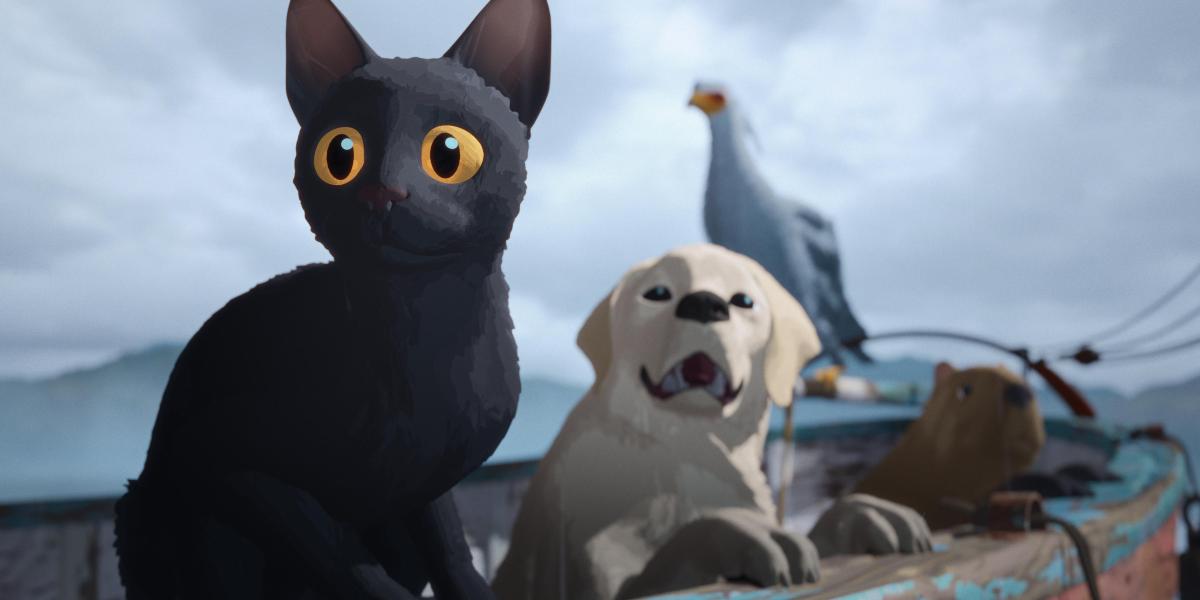
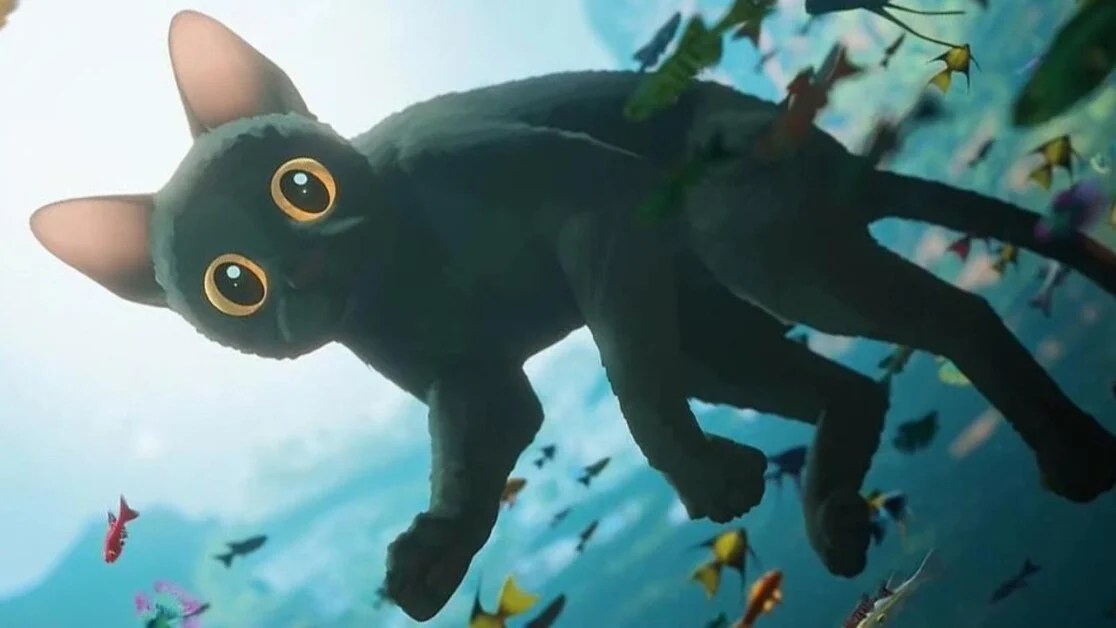
There’s huge buzz around Flow, which follows the journey of a cat through a flooded world where humans are curiously absent, but their former presence is felt everywhere.
Happy Friday! We don’t have any sarcasm, Big Buddesian wit or photos of the sexy beast himself, Little Buddy, for you today.
But we do have a trailer for what looks like an amazing cat movie! The buzz around Flow started in earnest in late spring, but I held back on writing about it because there was no information about when or where people could see this film.
Now it looks like Flow, after getting universal praise from critics and a triumphant release in the creator’s home country of Latvia, is finally poised to reach the rest of the world. Behold:
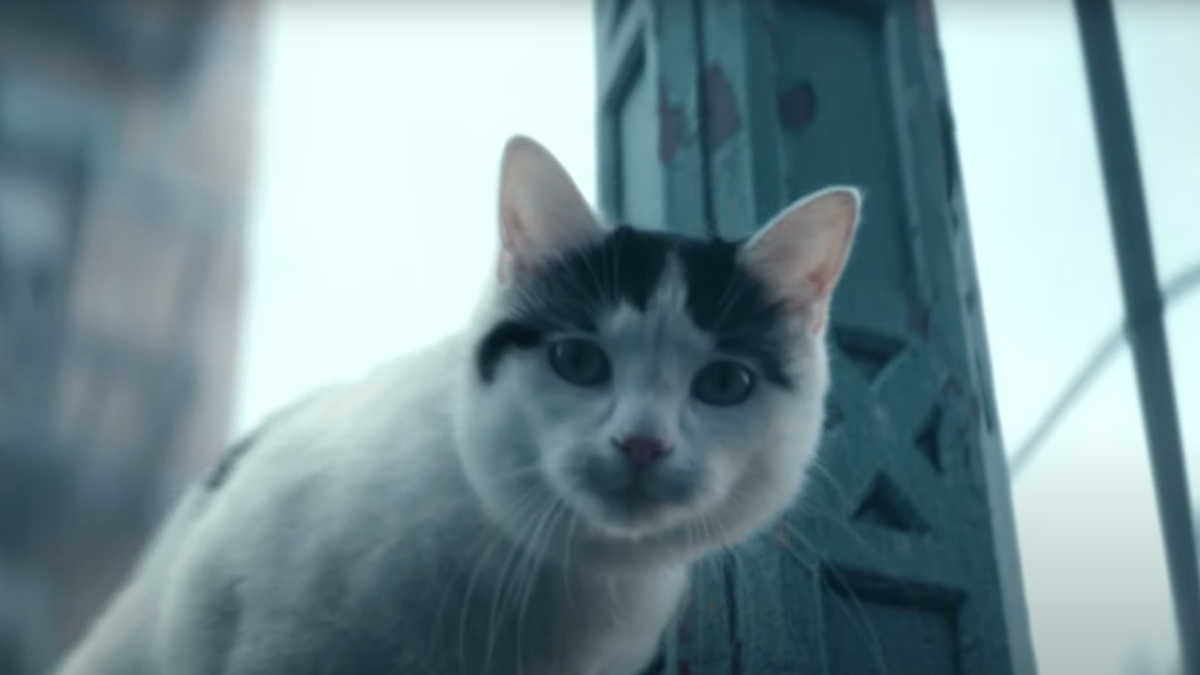
There’s so much going on here, from the sheer beauty of the world the trailer shows us, to the strange absence of humans after an apparent cataclysm, to the snort of the confused Capybara as our heroic void wriggles his way aboard a small sailboat and catches a ride with a motley company of stray animals.
The cat animation is perfect, capturing every nuance of feline movement, and the faces of the animals are expressive, telling us everything we need to know about their thoughts and moods as they survive in this strange new world.
There’s no real explanation for what happened other than the apparent biblical flood, and we’re hearing there isn’t a single word of dialog in the entire 85 minute film. Latvian animator Gints Zilbalodis is already well regarded for his 2019 debut, Away, and the reviews for Flow have been glowing.
While Variety reported Flow will begin its run in theaters on Nov. 22, and Rotten Tomatoes has the same date listed, Fandango says the debut is slated for Nov. 12. Whether that’s a typo or there’s some other reason for the discrepancy, we’re not sure, but we’ll update as more information becomes available.
A still from Flow, a 2024 animated movie about a black cat navigating a post-human world of danger and beauty.A still from Flow, a 2024 animated movie about a black cat navigating a post-human world of danger and beauty.
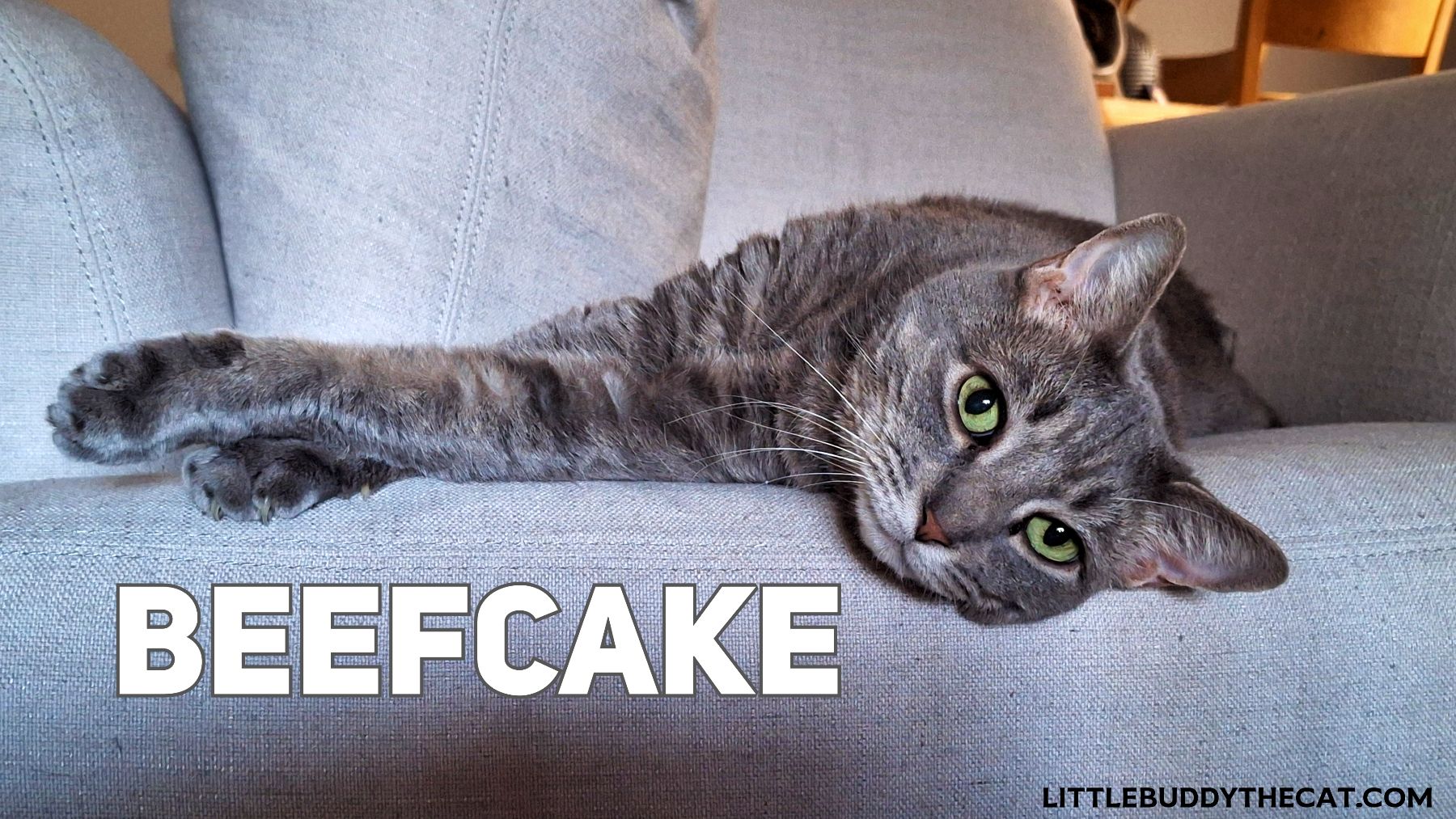
The famous feline embraces the role of a beloved tiger in a reboot of the Academy Award-winning film. Critics praised the casting, noting Buddy’s strong resemblance to Richard Parker.
LOS ANGELES — Buddy the Cat will star as the main antagonist in an upcoming remake of Life of Pi, Variety reported on Monday.
The silver tabby cat will pad into the role of Richard Parker, a Bengal tiger who finds himself sharing a small boat with a teenage boy named Pi after they survive a storm that sinks their ship.
Alone, hungry and scared, Pi and Richard Parker must learn to trust each other as they drift west with no land in sight.
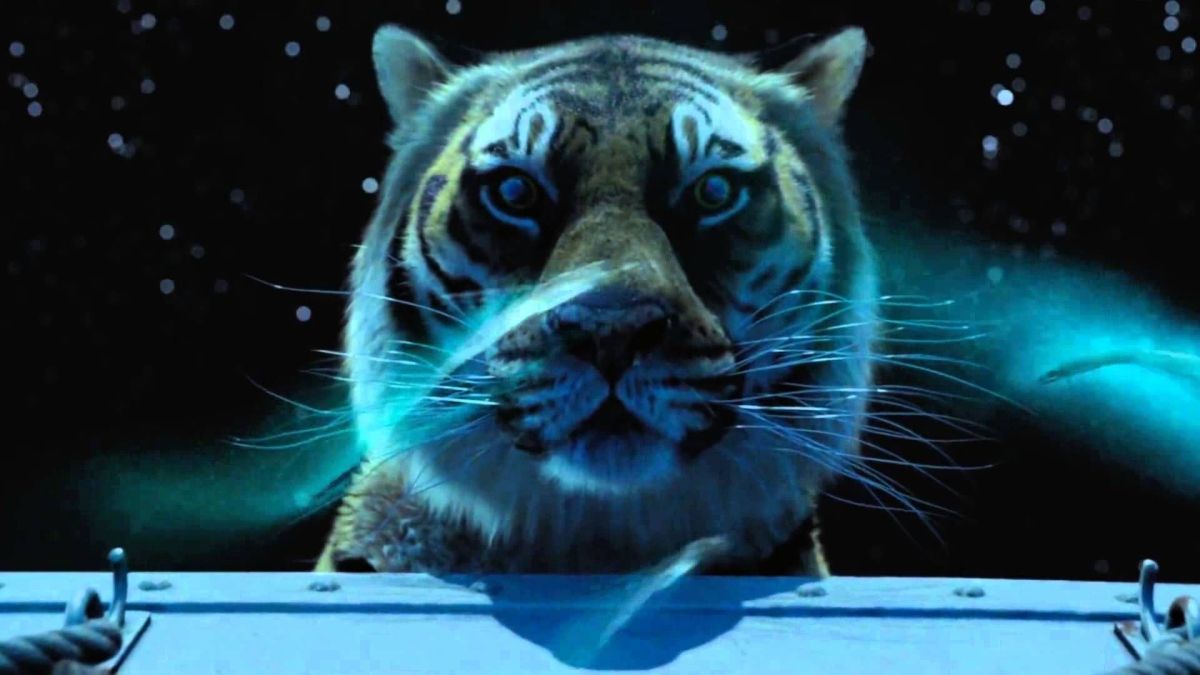
In one memorable scene from the 2012 original, a gluttonous Richard Parker hoards hundreds of fish while refusing to share with Pi.
“A lot of people think Richard’s being greedy,” Buddy said, “but put yourself in his paws. You can’t get turkey out there. Pi isn’t exactly volunteering to open cans of the good stuff. It’s a cat eat fish world.”
(Above: Buddy the Cat as Richard Parker is “indistinguishable” from the original character, the movie’s casting director says.)
One of the most memorable sequences involves the duo drifting toward an island paradise under the stars as the ocean glows a bioluminiscent blue. The scene takes on a trippy quality as boy and tiger hallucinate tasty, juicy fish paddling lazily through the night air.
“As an actor, you embrace the challenge of imagining all these scrumptious, decadent fish and, you know, your stomach just rumbles,” Buddy told an interviewer.
The silver tabby said the film is helping him grow as an actor.
“When my agent sent me the script, I thought ‘Life of Pie?’ You know, I like pie. Shepherd’s pie, chicken pot pie, paella, steak and guiness pie,” he said. “So to prepare for the role, I ate a lot of pie.”
A rare prequel that matches or exceeds the original, Day One explores relationships feline and human in a harrowing, life-or-death situation. With its Manhattan setting and post-apocalyptic vibe, the film also invites comparisons to the chaos and insanity of 9/11, when shocked survivors were just beginning to grapple with what they’d experienced.
If there’s one thing director Michael Sarnoski knows about cat people, it’s that putting a feline in danger is a reliably manipulative way to ratchet up tension.
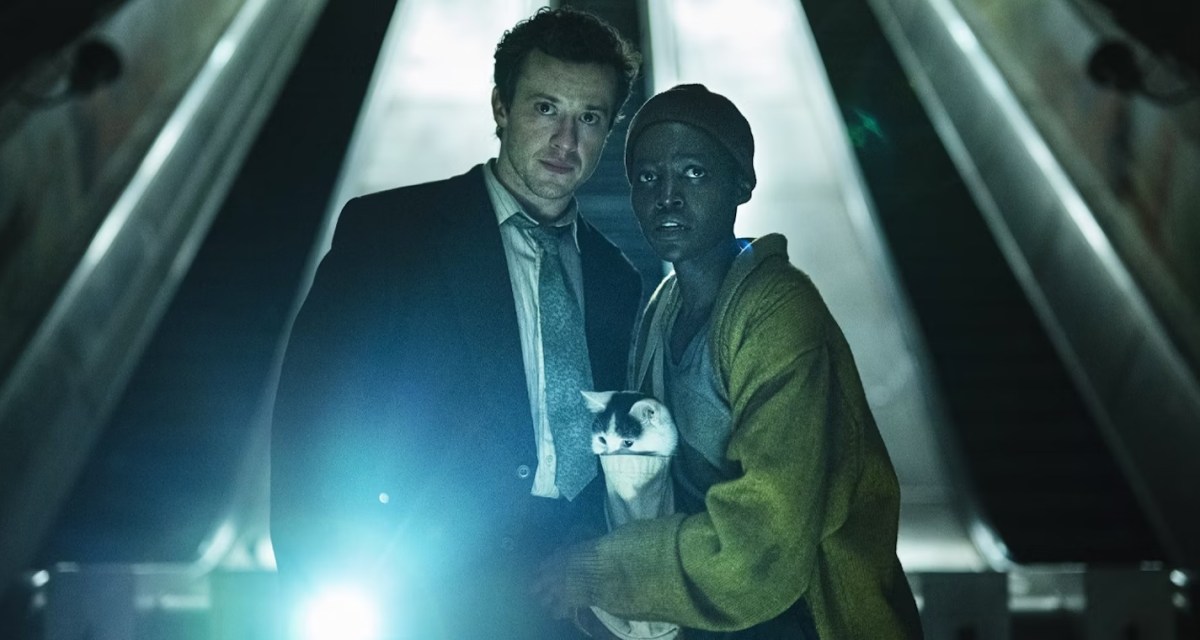
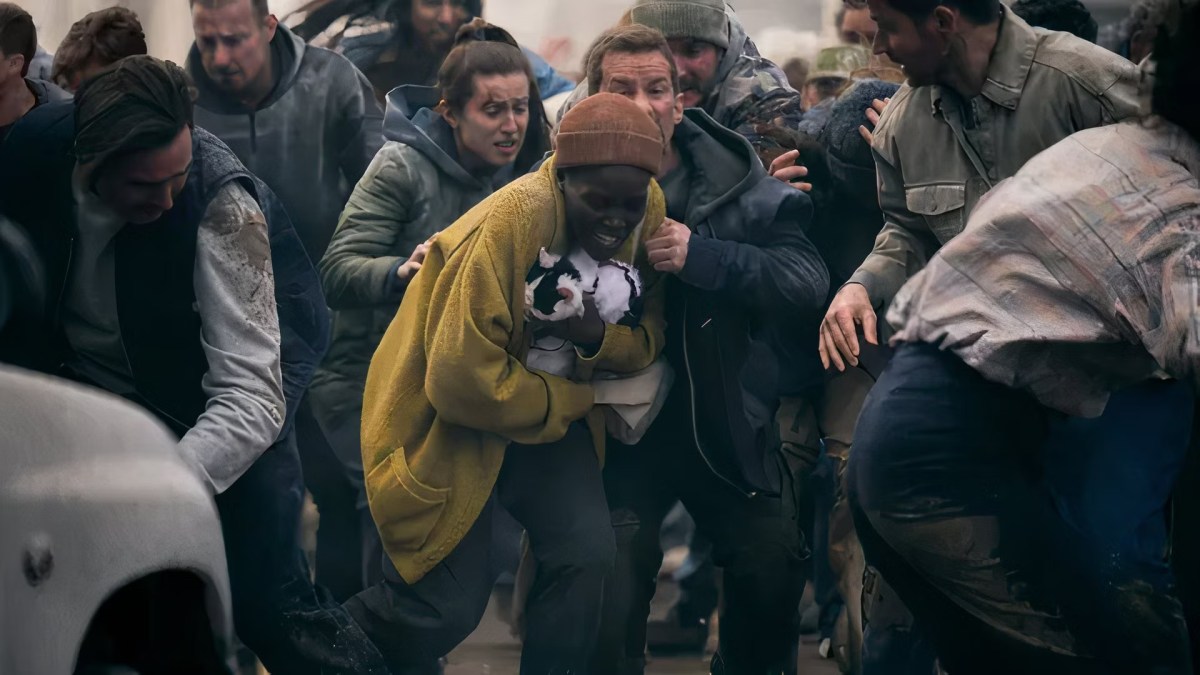
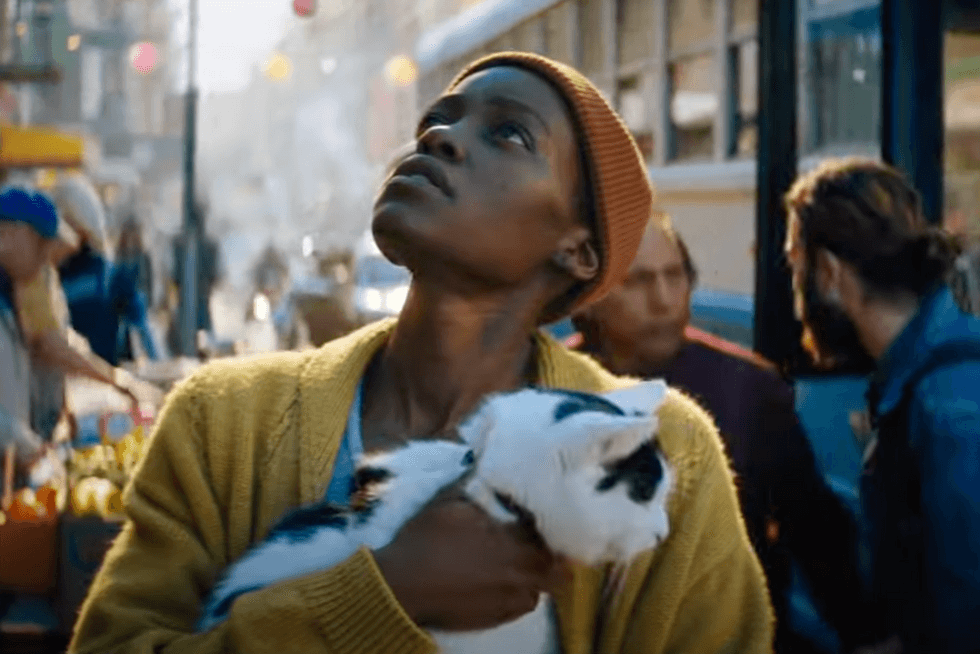
Frodo the cat, therapy pet to Lupita Nyong’o’s Sam in A Quiet Place: Day One, is every bit the handsome co-star.
In a story about a woman and her cat trying to survive an apocalyptic event in New York City, the cat gets plenty of screen time. There are entire sequences following the little guy as he dashes away from danger (and sometimes toward it) and as he follows his feline instincts, which might not be the right instincts in a world that suddenly has its rules rewritten.
Nyong’o’s Sam, right, introduces Frodo to a young admirer in a Manhattan theater during the early minutes of A Quiet Place: Day One. Credit: Paramount
A Quiet Place: Day One is the third installment of the Quiet Place films. The first one thrilled audiences with a tight script, tense acting and a quiet/loud dynamic that made the absence of sound more sinister than sound itself.
A Quiet Place (2018) and its sequel (2020) take place about 16 months after the arrival of monstrous creatures of indeterminate origin. The aliens are blind, but that doesn’t impede their ability to rampage through human cities. They have an unearthly sensitivity to sound and can echolocate. Even a whisper can be enough to draw their attention if they’re in relatively close proximity.
We meet the Abbott family (John Krasinski, Emily Blunt and their children) some 16 months after the initial invasion, when they’re living silently on their isolated farm in upstate New York.
The audience is told nothing about where the creatures came from or what they are, and except for a short sequence in the very beginning of the sequel, we don’t see their arrival. The first two films deal exclusively with the aftermath, with scattered survivors trying to eke out an existence.
A curious Frodo watches Quinn’s character, Eric, emerge gasping from a flooded subway station. Credit: Paramount
Day One is a different beast entirely, both from a plot perspective and through the lens of Sarnoski, who leaves his fingerprints all over the franchise and imbues the prequel with a surprisingly poignant relationship between Nyong’o’s Sam and Joseph Quinn’s Eric, a young British student who moved to New York for law school. (If you’re a fan of Stranger Things, you’ll know Quinn as Eddie Munson, the D&D-playing metalhead and stand-out character from the show’s fourth season. He also had a brief appearance in the seventh season of Game of Thrones, and will appear in the upcoming sequel to Ridley Scott’s Gladiator.)
Sam and Eric are strangers thrown together by circumstance and quickly grow close. Eric, overwhelmed by the world being turned upside down in a country he’s not yet accustomed to, needs someone to latch onto. Sam, who has isolated herself as she wastes away from cancer, finds the companionship she didn’t know she needed.
While tens of thousands of New Yorkers heed the US military’s call to head to South Street Seaport for evacuation via boats, as the Death Angels apparently cannot swim, Sam is determined to reach Patsy’s pizzeria in Harlem, where she believes the world’s last slice of their beloved thin-crust pizza awaits. Unlike the other survivors, she doesn’t have the possibility of a future if she makes it to safety.
Walking from Chinatown in lower Manhattan to Patsy’s in Harlem is a hike, about nine miles as the crow flies. It would take most people the better part of three hours to walk under normal circumstances. In an invasion, when the slightest sound can mean death, it’s an extraordinarily dangerous and long journey.
Still, being determined to get the very last slice of pizza in an apocalypse is precisely the sort of ridiculous thing I’d do, so I sympathize with Sam.
In an amusing scene early in the film, a man in a bodega tells Nyong’o’s Sam she can’t have a cat in the store — while his own shop cat lounges on the counter next to him. Bonus point for the Knicks hat. Credit: Paramount
As for Frodo, he’s one cute little dude! I appreciate the fact that Michael Sarnoski elected to have an adult cat rather than a kitten, not because I have anything against kittens, but because Frodo is a reminder that felines of all ages are beautiful, and there are plenty of Frodos in shelters.
Nico and Schnitzel, the cats who play Frodo, are great animal actors. In one scene Frodo sees Quinn emerge from a flooded subway and stops, curiosity playing across his little face. He looks at the stranger and his mouth opens ever so slightly, as if in shock. How many takes did Sarnoski need to get that?
Nico and Schnitzel split duties as Frodo. Credit: Paramount
Frodo is also a survivor. His hunting instincts kick in when he sees a rat, drawing him closer to danger, and at one point curiosity beckons him toward the ruined shell of a building where the Death Angels are apparently nesting.
Incredibly, he never meows. There are times when he freaks out and runs, as cats are known to do, but he reliably finds his way back to Sam, and he has a knack for remaining absolutely still and silent when he needs to be.
There were so many moments when I imagined myself in Sam’s shoes and Buddy in Frodo’s paws, and we’d have been dead in all of them. As I noted in my post about the “Quiet Place Challenge” trend on social media, the Budster and I would have a life expectancy of approximately 60 seconds in the film’s world. Death by Buddy would be my fate, as inescapable as his mealtime screeching.
There is also a visceral 9-11 feel to the opening sequences of the invasion, and any New Yorker old enough to remember that day will be reminded of it. It’s impossible not to with the scenes of ash-covered survivors huddled inside buildings, crowds of dead-eyed people walking away from disaster and the eerie sight of a sooty Manhattan bereft of its usual bustle and life.
There are of course plot holes in Day One, or at least unanswered questions to things that don’t seem to make sense. When the military’s helicopters sweep over Manhattan, announcing via loudspeakers that survivors should head to the ports because “the enemy cannot swim,” I wondered: did these aliens just land in Manhattan? If so, why? Surely they don’t recognize the arbitrary municipal boundaries of humanity, and the whole area is one seemingly endless metropolis.
Quinn, left, and Nyong’o, right, panic as a Death Angel crashes down from above, listening for its prey. Credit: Paramount
The Death Angels are obviously sentient, but whether they’re sapient is another matter. They don’t seem to have much in the way of a sense of self-preservation, and there is no method to their madness. During the aforementioned helicopter scene, the characters watch as hundreds of Death Angels race toward lower Manhattan, drawn by the sound of the choppers and the loudspeaker. It’s impossible not to think it would be trivial to draw the lot of them with the loudest possible sound, then drop a few daisy cutters on them and call it a day.
Of course if any of that happened there would be no movie and no drama, so as with most stories like this, it’s best to let the film pull you along without stopping to over-analyze what you’re seeing.
If you’ve watched the first two films, you also know the reasons for the invasion are nebulous. The Death Angels don’t eat their kills, as Krasinski’s Lee Abbott learned, and if they’re the vanguard of a more intelligent species, doing all the dirty work before the masters arrive, well, we’ve yet to see who’s pulling the strings.
Overall, like horror master Mike Flanagan taking on a sequel to the tepid Ouiji earlier in his career, Sarnoski doesn’t view the fact that Day One is a prequel as an excuse to phone in a performance. He approaches the film with enthusiasm and energy as if it’s one of his own creations, and that’s evident in every frame. It’s a Sarnoski movie that happens to be a genre film, not the other way round.
There’s a surprising poignancy to Day One that makes it more than the sum of its parts. We’re not here to spoil anything, but if you’re a cat lover, we will say that Day One doesn’t pull an I Am Legend. You can watch the film with reassurance that Sarnoski has better tricks up his sleeve for stirring your emotions than gratuitous animal-involved violence.
It’s rare when a sequel or a prequel reaches the same heights as the original. How many of us wish franchises like Alien and The Matrix stopped at one film? Thankfully that’s not the case here. There’s life in A Quiet Place yet, and like the best science fiction, it’s a film that uses extraordinary circumstances to tell a very human story.
Perhaps the best part is the experience has made a cat lover of Nyong’o. In a short promo (below), she explains that she’s always been afraid of cats, viewing them as miniature lions.
“Now,” she says with a laugh, “somehow, I love them!”
She’s not just saying that either. After filming Day One, she adopted her own cat, Yoyo, and it takes just a glance at her Instagram page, which is festooned with photos of the orange tabby, to know that she really does love the little guy.
Buddy is many things, but he’s NOT quiet. His incessant chattiness can kill my sleep and my peace and quiet, but in the world of A Quiet Place, it would kill me! Would your cat get you killed in the movie franchise’s monster-stalked reality?
As a cat lover, big time science fiction fan and appreciator of the first two A Quiet Place installments, the very first thing I thought when I saw the trailer for A Quiet Place: Day One was “I hope the cat doesn’t meow!”
My second thought? Bud and I would be so, so dead.
Dead immediately. Dead a thousand times over.
Apparently I’m not the only one, because fans have taken to social media to participate in the “Quiet Place Challenge,” which involves reenacting some of the scenes from the movie with their own cats to see if their furry overlords can stay silent.
As PITB readers know, Buddy never shuts up. He’s got something to say about everything, he often narrates his activities in real time, and he’s got an entire meowing ritual that starts at least a half hour before Food O’Clock, gaining in volume and annoyingness until a fresh bowl of turkey is placed before him. His personal patois, the Buddinese dialect, makes heavy use of trills, chirps, grunts, chuffs and sniffs to elaborate on his meows.
If you’re unfamiliar with the Quiet Place movies, they imagine a world that’s been invaded by so-called Death Angels, dread creatures of extrasolar provenance who are completely blind, but have extraordinarily sensitive hearing. The first movie, about a family surviving on their farm in upstate New York months after the initial invasion, was universally lauded for its taut script, effective tension and novel use of a quiet/loud dynamic that is a marked departure from the usual horror-thriller formula.
John Krasinksi directs and stars in the original A Quiet Place as Lee Abbott, a father who survives the invasion along with his wife (real life spouse Emily Blunt) and their two children. Credit: Paramount Pictures
In A Quiet Place (2018), its 2020 sequel and the recently-released prequel, Day One, entire minutes pass soundlessly. As a viewer you can’t help but wince and tense up when a character errs and makes noise, knowing the consequences can be immediately tragic.
There’s simply no way Bud and I would survive more than five minutes, and if I had to put money on it, I’d wager we’d probably be dead within 60 seconds of the terrifying monsters showing up.
Indeed, the movie doesn’t dither: the Death Angels make planetfall at around the 12 minute mark. Mild spoilers from the beginning of the film follow:
12:31 – On Chinatown’s ruined Pell Street, within a haze of dust so thick you can’t see more than a few feet in any direction, a man shouts loudly into his smartphone, telling the person on the other end that something meteor-like had landed just a few hundred feet away. He’s pulled suddenly and violently into the smog, his scream ending as abruptly as it began. Verdict: Death by Buddy. He’d probably meow in protest at the dust and get us both killed immediately.
12:53 – A female National Guard soldier sees Nyong’o’s Sam and shouts at her to take cover. The guardswoman’s radio crackles with the panicked screams of her comrades saying the enemy is everywhere, and then she’s dispatched as quickly as the guy on the phone. Verdict: Death by Buddy. He’d almost certainly huff derisively at the soldier’s order to take cover, and we’d both be crushed underneath the foot of one of the lumbering beasts.
13:34 – Sam huddles behind a vehicle with another woman when a panicked man screams, drawing the aliens like moths to a flame. Verdict: Death by Buddy. Little dude’s default reaction when he’s scared is to run screaming and hide behind my legs. He’d draw the monsters right to us and we’d die.
13:50 – Sam wakes up inside a theater several minutes after an explosion knocked her out. She’s about to speak when Djimon Hounsou’s Henri clamps a hand over her mouth and raises a finger to his lips. Unfortunately that doesn’t work with a cat. Verdict: Death by Buddy. Attempts to get him to shut up would be fruitless, and while I’d know my only chance for survival would be to throw him like a football so the aliens track his indignant screech, I wouldn’t have the heart to do it. We’d die together.
Frodo, the feline co-star of Day One and “service cat” to Lupita Nyong’o’s Sam, is precisely the opposite. He’s a Good Boy extraordinaire, consistently calm in his mother’s arms and reliably silent when he needs to be.
Frodo is a handsome and resourceful little guy, and much of Day One’s tension comes from putting him in danger. Credit: Paramount Pictures
Without meows to rely on, director Michael Sarnoski gets quite a performance out of Nico and Schnitzel, the two cats who play Frodo. They’re expressive felines who could teach Nicolas Cage a thing or two about how to emote with subtlety, as in one scene when Frodo sees a man emerge gasping from a flooded subway station. Frodo regards the stranger with curiosity, his little face registering surprise at the man’s sudden appearance with just the slightest twitch of his mouth and whiskers.
It’s effective and very cute, but we never forget about the incredible danger that faces Frodo and Sam as they return the One Ring to Mount Doom navigate the ruins of New York City amid blind predators with extraordinarily sensitive hearing.
“LOL I got you killed, dude! Hey! Wake up! I’m hungry! Turkey time! I’ll take my evening meal on the balcony and dine al fresco this evening, okay? Big Bud? Dude?”
If Day One’s world was reality — and I’m extremely thankful it’s not — I suppose it’s possible I’d get lucky if we were in a deep subterranean level of a building for some odd reason, and if Bud decided it’s not worth disturbing his nap to investigate the ruckus above.
But the moment his belly rumbles and he starts screeching for yums, or the second he gets it into his little head that he just has to tell me his latest theory regarding entangled subatomic particles, it would all be over, for me at least. I could totally see Bud making noise, then dashing to his customary hiding place behind my legs while a “Death Angel” impales me with one of its giant claws.
What about the rest of you? Is your cat a Frodo, a Bud or another sort entirely? Would you be dead as quickly as we would be, or do you think you could survive with your furry pal?
Service animals and emotional support animals are not the same thing.
A Quiet Place: Day One stars Lupita Nyong’o as Samira, a terminally ill woman, and Joseph Quinn as her nurse, Eric.
But it’s the third main cast member — a feline named Frodo — who’s been hailed as the surprise star of the film, which one reviewer called “a love letter to cat owners.”
Nyong’o’s Sam has been given the equivalent of a death sentence with her aggressive cancer diagnosis, but when the nightmarish creatures who play the antagonists of the Quiet Place franchise arrive, Sam fights for her life with her trusty “service cat” by her side.
“You can’t have a cat in here,” the clerk at a bodega tells Sam early in the film, before she fixes him with a no-nonsense stare and flatly declares: “He’s a service cat.”
The adorable Frodo, co-star of A Quiet Place: Day One.
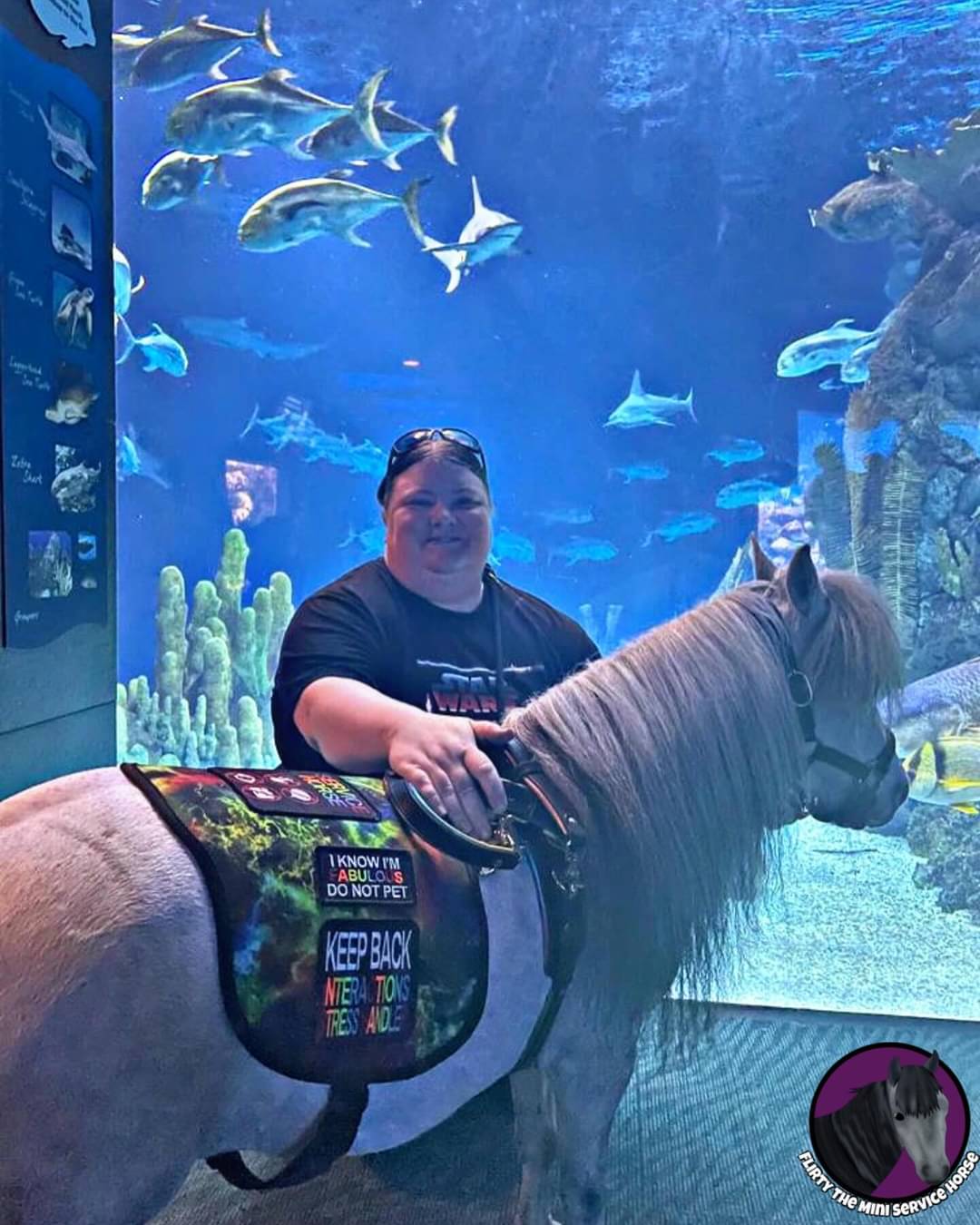
You’ve probably heard stories or seen photos of people trying to take other animals into places they’d normally never be allowed. In 2019, a woman decided to push the boundaries by taking a miniature horse onto a domestic flight, forcing passengers to share extremely limited space with the olfactorily potent, skittish animal. She even scolded social media users who didn’t get the horse’s pronouns “correct.” (They’re she/her, by the way. We’re not making this up.)
The woman, who says she needs the horse because she suffers from PTSD, told Omaha, Nebraska’s KMTV that the managers of a grocery store allegedly violated her rights by asking her to leave rather than allow her to march a horse through a place where people buy food and its operators are required to follow Department of Health rules.
“I was treated so poorly and the manager’s responses when I followed up were poor,” she said. “They are going to be hearing from the Department of Justice and I’m definitely going to be pursuing legal means as well.”
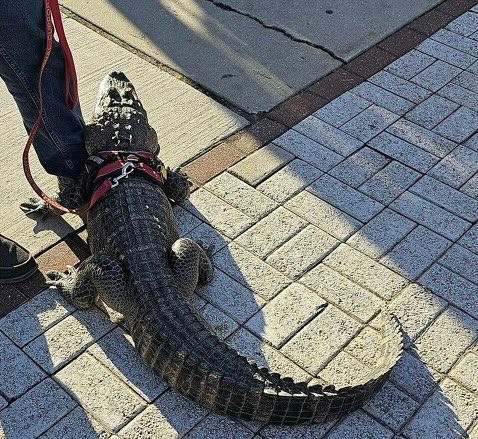
In 2023, a man tried to take a “service alligator” to a Phillies game at Citizens Bank Park. Stadium security weren’t buying it and he was turned away, but not before other fans snapped photos of the attempt. In Nevada, a man who had his USDA license revoked for “multiple violations of the Animal Welfare Act” argued that authorities couldn’t confiscate his 10 tigers because he claimed they are emotional support animals.
“My doctor has written that she feels that the tigers are beneficial to my psychological well-being and so therefore I got what the law requires,” Karl Mitchell told KTNV, an ABC affiliate in Las Vegas.
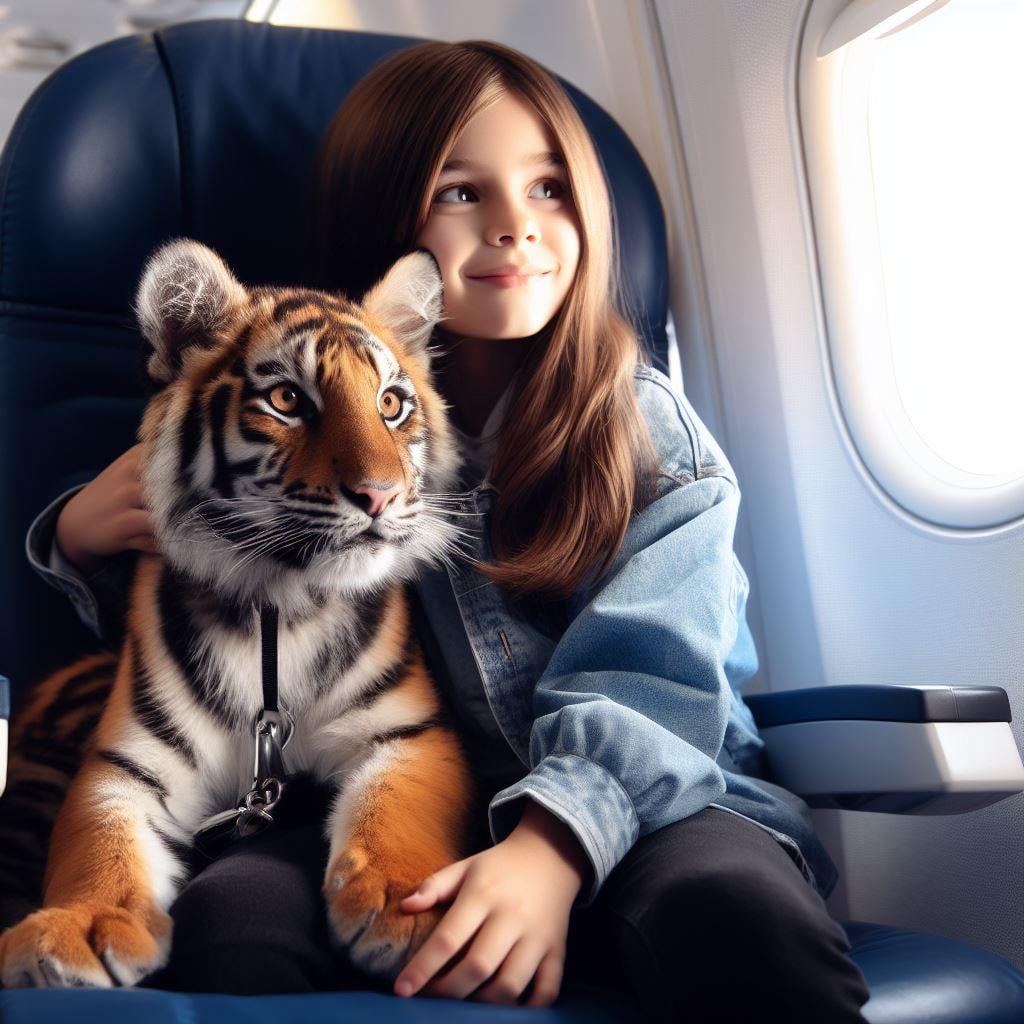
An emotional support tiger depicted in a Reddit photoshop contest for the most ridiculous “service animals.” Maybe some ambitious dreamer will cook up a service elephant or an emotional support bison.
Since then the FAA and Department of Transportation have issued new rules clarifying emotional support horses, peacocks, flying squirrels, parrots and other animals are not allowed on planes, prompting one flight attendant to quip that “The days of Noah’s Ark in the sky are over.”
That, however, has not put a dent in the confusion over what constitutes a service animal versus an emotional support animal, and what rights people have when it comes to bring their furry (or scaly, or feathered) friends into public and private spaces.
Although we’re happy to see Nyong’o in her first lead role since 2019’s freaky horror thriller Us, unfortunately A Quiet Place: Day One is almost certain to contribute to that confusion with its fictional “service cat” character.
A service animal and an emotional support animal are not the same thing
First, there’s an important distinction between a service animal and an emotional support animal.
Service animals can only be dogs or miniature horses, and must be trained. People who depend on service animals can train them themselves, but the animal must meet specific needs, like guiding the blind or vision-impaired.
Emotional support animals, by contrast, are not trained, certified or “official” in any capacity. Anyone can adopt or buy an animal and call it an “emotional support animal.”
A Phillies fan’s “emotional support alligator.” The stadium turned him and his carnivorous apex predator companion down. Credit: Howard Eskin/X
Unfortunately due to the confusion involving service animals vs ESAs, predatory sites have popped up online promising to “officially register” ESAs for a fee.
In addition to charging for something that doesn’t exist, the proprietors of those sites also tell people they can take their “officially registered” support animals into places normally off limits to pets, like stores and restaurants. Some sites offer consultations with alleged mental health professionals who will “diagnose” customers remotely and write letters on the customer’s behalf.
Abrea Hensley with her miniature horse, Flirty, in an aquarium. Hensley’s social media accounts document all the places she goes with the animal.
Those sites operate similar to the numerous “buy a star” sites that claim celestial objects can be officially owned. Like their emotional support animal “registry” counterparts, the star sale sites offer official-looking paperwork, but they’re selling something that can’t legally be sold, and the certificates are legally and practically meaningless.
Buying a “certification” won’t make your cat a service feline, and contrary to how they’re portrayed in the movie, calling a pet an emotional support animal does not allow you to bring it anywhere you like.
For legal purposes, there’s only one perk to be had by claiming an emotional support animal: under the Fair Housing Act, landlords generally cannot refuse tenants who have emotional support animals. The act specifies that allowing emotional support animals is limited by “reasonable accommodations.” That means a dog or a cat is okay, but you can’t keep an animal that poses a danger to your neighbors, negatively impacts their quality of life, or requires the landlord to make major and costly alterations.
The general trend in recent years has involved curbing the limits of emotional support animals, a trend that appears likely to continue as more people abuse the privilege, burdening other members of the public by insisting they must silently endure the inconvenience, potential allergic reactions, sanitary concerns and practical problems caused by bringing animals into spaces that are not designed to accommodate them.
While we’re certainly sympathetic to pet owners — this blog wouldn’t exist if we were not — the fact is that the more people abuse societal boundaries with emotional support animals, the more difficult it makes things for people who have legitimate service dogs and rely on them to navigate life and maintain their independence.
Note: This post has been updated to further distinguish between service animals and emotional support animals. An earlier version contained a paragraph with potentially confusing phrasing.
h/t Susan Mercurio for pointing out that emotional support animals are coveted by the Fair Housing Act