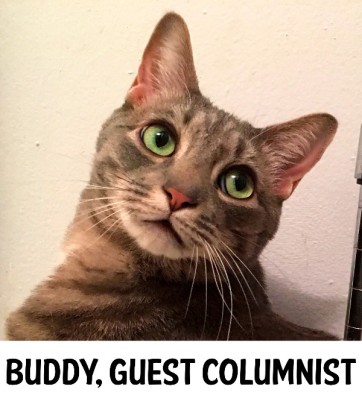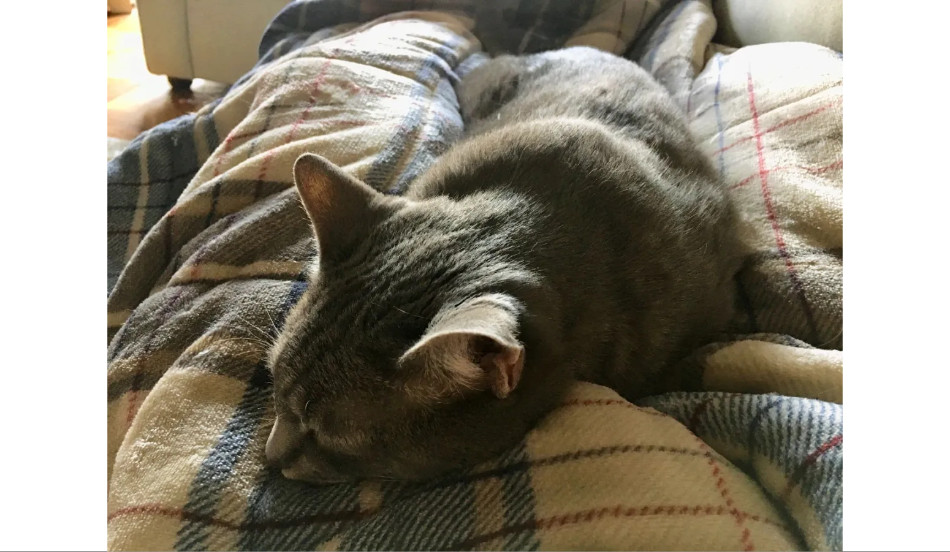
As Buddy’s mignons, you will execute his will across multiple platforms, ensure that client needs are met, and help maintain a company-wide culture of feline supremacy over humans, dogs and other lesser animals.
Are you a dog who can follow directions? Are you a fellow cat who may be timid and needs a strong leader to rally behind?
You’re in luck!
Buddy the Cat is looking for mignons to help execute his fiendishly brilliant plans for world domination!
We offer a competitive benefits package including paid nap time!
Positions:
Palanquin carrier (4, possibly might need 6 after holidays)
Chef
Human wrangler
Cat burglar (a burglar who is a cat, not a burglar of cats)
Groomers
Meowscle (bouncers)
Meowscle (bodyguards)
Consiglieri
Tigers (4) to be my warlords
Chariot-maker
Kittens to serve as lookouts
Architect to build a really awesome secret lair! (Also, a cool throne)
Once we have our secret lair, we can begin plotting to take over the world! Muahahahaha!*
(*) Battles of conquest and meetings about ruling the planet are scheduled around nap times.
Buddy’s personality is galactic in size, his emotions emblazoned in neon, his opinions shared through a bullhorn.
I used to hate cats.
When I’d hang out at my friend Dave’s house as a teenager, the little shits were everywhere, climbing all over everything with no boundaries and apparently no limit to their numbers.
Dave’s family had between 10 and 12 cats at any particular time, a small army, and as far as I could tell they were little more than inscrutable, uncommunicative tribbles, barely sentient animals who didn’t listen to anyone, could not be told “no,” and were going to stick their little faces in your food or drink no matter how many times you told them to get lost.
Worse, I’d have to dose up on Benadryl just to last a few hours and often left because my eyes were gumming up and my nose was clogged.
There were times when I sat in my car, idling for a half hour with the windows down and heat on blast on frigid nights, waiting for the worst allergic symptoms to subside. I was worried I’d be pulled over and a cop, seeing my half-shut, bloodshot eyes, would decide I was driving stoned or drunk.
Even when another friend adopted a friendly, cuddly tuxedo who became the first cat I truly interacted with, even when I realized I could safely play with one or two cats without getting sick, and even as I was actively looking for a feline of my own, I didn’t think they were intelligent or that it was really possible to meaningfully communicate with them.
At best I’d get a tribble of my own, something to feed and care for in my black depression to take me mentally out of myself.
My little pal, probably around 10 weeks old.
Then Buddy came striding out of his carrier like a furry little Genghis Khan and started conquering shit.
The furry little conqueror
I was prepared for a kitten who might dive under the bed and refuse to emerge except to sneak a bite or take a sip when the coast was clear. Lots of guides for first-time adopters warned the adjustment period for a new cat or kitten could be extensive.
What I got was a boisterous, bold, imperious little dude who was kind enough to allow me to continue sleeping on my bed, which was now his bed. I got a companion who demanded my attention, wanted to be involved in everything, and was going to let me know loudly and unambiguously what he liked and what he didn’t. He took up a regular position on my shoulder, like a parrot with a sea captain. We were — and still are — inseparable.
Buddy’s personality is galactic in size, his emotions emblazoned in neon, his opinions shared through a bullhorn. There’s a vibrant mind in his little head.
If they met Bud, even the most stubborn animal haters, the kind of people who refuse to acknowledge animal intelligence because they think it diminishes our own, would know they’re dealing with a person even if they may not admit it.
That is why this site exists. It’s why I write about cats, why I’m invested in their welfare and why it hurts my soul to hear about so many casual incidents of cruelty committed by humans toward felines.
When I hear about people gunning down cats or pouring lighter fluid on them, I think about what might have happened if Bud ended up with someone else, and I think about the cats who are just like Bud who are killed or seriously injured by cruel humans engaging in senseless violence.
There is no question that those cats suffer, that they feel pain, anxiety and terror as seriously disturbed people inflict pain on them for “lulz,” or because they think hurting cats might earn them Internet Points in the bowels of the web where diseased minds congregate to share shock videos.
“Dude, you can’t be serious.”
The fact that Buddy thinks he’s a hulking tiger is a running joke here, and it’s true. He thinks he’s the baddest boy on the block, and he doesn’t see any dissonance between cosplaying as the Buddinese Tiger one minute, and running behind my legs when he gets scared the next.
Mighty and brave!
It’s been 10 years now, and I’ve pretty much accepted the fact that he can’t be stopped from pawing at the big screen door leading from the living room to the balcony.
But every time he gets his claws caught and he’s left hanging, he starts crying for me. He sounds like a baby, and all he wants in that moment is his Big Buddy to come and pick him up, gently slide his claws out, and rub his head while telling him what a brave and tough little guy he is.
He responds by puffing his chest out and purring. He’s probably thinking “Yes, I am brave, aren’t I? I endured that ghastly ordeal and only cried a little bit!”
Buddy with a very Buddy look on his face.
It’s not all wonder and awesomeness, of course. I never would have guessed an animal could be so resourceful and clever when it comes to being annoying. Bud graduated from cackling gleefully in the dark as he terrorized my feet at night, to repeatedly punching the flap on his litter box because he knows the squeak drives me crazy. He’s also fond of standing on my head and shrieking at full volume into my ear. Not “fill my bowl” or “I need water,” because those needs are taken care of immediately before bed.
The reason he wakes me up, why I’m ripped out of restful slumber by his high-pitched kitten voice, is because he wants me to wake up and be Buddies with him. He wants to hang out.
So as annoying as he can be, and as much as I really, really hate losing sleep, I can’t be mad at him. If only humans were so pure in their intentions and non-judgmental.
Cats are social animals
A lot of people say their cats ignore them or at best acknowledge them with a twitch of their radar ears. When I call Bud, he responds by happily padding up to me, tail raised straight up or curled like a question mark.
That’s because he knows I’ll never hurt him. He knows I’ll never force him to do anything he doesn’t want to do, nor will I grab him, subject him to unwanted petting and refuse to let him go. Trust goes a long way in human-feline relationships. In some ways, it’s everything.
Schemeowtics for Buddy the Cat. Note the huge meowscles.
Part of earning that trust means understanding my little pal, learning from him and learning about him. I’ve read more about felis catus than I ever imagined I would, and Bud’s smarts sparked a years-long deep dive into animal cognition that still has its hooks in me.
The belle epoque of feline research
For decades, dogs were the only domestic pet scientists bothered with. Cats were legendarily uncooperative, and the general consensus was that trying to wrangle them wasn’t worth it. If a research team managed to get 150 people to bring their cats into the lab, they were fortunate if a third or a fourth of them worked out.
Over the past 10 years or so, that’s changed as a new generation of scientists began to think in feline terms. Now the research teams come to the cats instead of the opposite, in recognition of how important territory and surroundings are to the species. They’ve also taken study formats originally built for children and dogs, and modified them for moggies.
Thanks to their efforts, we’ve learned a great deal.
Studies have found that, contrary to popular belief, cats really are social animals. If they’re bonded to a person, they value affection more than food or toys! They pay close attention to our whereabouts at all times, even though they’re masters at appearing ambivalent.
They know their names, they know the names of other cats they live with, and studies suggest they may be an even quicker study than toddlers when it comes to basic word association with items and concepts.
The meow isn’t a part of their regular communicative repertoire when they’re strays or ferals, and vocal communication doesn’t come naturally to them, but meows are embedded with meanings we’re only just beginning to understand.
Most amusingly, they’re capable of being dishonest with us and modifying their meows to manipulate us. But don’t let that fool you into thinking cats are real liars: it seems the one and only thing they’re dishonest about is food, probably because they realize we’re suckers.
During our time as inseparable pals, Bud and I have developed our own human-feline patois, a way of communicating that involves verbal and non-verbal cues. I pride myself on knowing what he wants the vast majority of the time, but I also realize the majority of the credit goes to little man for meeting me more than half way.
Sometimes Bud is so insistent, his meows apparently so urgent, that I don’t know what he wants. I can rule out food, water, a foul litter box or demands for pets. If he wants to snuggle or lay in my lap, he doesn’t need to ask. If he wants to play, he lets me know.
So what’s he saying? What could possibly be so important? Is he trying to tell me he’s reconciled quantum mechanics with general relativity? Has he gotten word of an anti-Buddesian plot by the devious neighbor cat, Smudge?
I don’t know. But one thing I do know, that I’m absolutely confident about, is that there are real thoughts scrolling through that little head, and a rich, authentic inner existence.
I’m lucky I’ve gotten to be his buddy, and to learn from him that animals are so much more than vacant-brained automatons I used to think they were.
Political careers, human and animal, have been ended by failure to show proper deference to Larry the Cat.
There’s a current crisis in the UK, one of national importance which must be addressed by all relevant authorities before things get out of hand.
Larry the Cat, Mouser in Chief at No. 10 Downing St. (also known as Larry’s House), is not getting the respect he deserves.
First, incoming Prime Minister Keir Starmer moved into No. 10 this summer. Larry has generously allowed five previous prime ministers to live there, so that wasn’t the problem. The issue, which should have been obvious to anyone with a brain, is that Starmer brought his family cat, Jojo, and allowed his children to adopt a new kitten.
After Larry’s dust-ups with Palmerston, the former chief mouser at the Foreign and Commonwealth Office (FCO), it was established that the lord paramount of No. 10 would tolerate no feline presence other than his ladyfriend, Maisie, yet Starmer went ahead and insulted his gracious host anyway. Wisely, he has restricted his cats to his private apartments while Larry has the run of the compound.
Palmerston was retired to the countryside after crossing Larry. Credit: US Embassy London
Poll after poll has shown Larry’s popularity easily exceeds that of every prime minister to serve under him, so rest assured there will be a new prime minister as soon as election law allows. One does not simply thumb his nose at Larry the Cat and get away with one’s reputation and career unscathed.
Now another politician has run afoul of Larry and his legions of admirers, committing career suicide by calling Larry “a little shit” and piling on the disparaging comments.
Quickest way to invoke the wrath of the entire country. His days are numbered.
Ian Murray, the secretary of state of a country called Scotland, apparently a minor territory in Larry’s realm, said he and the other Scottish ministers “were like kids in a sweet shop” when they attended a meeting at No. 10, not because of government business, but because they would have the honor of an audience with Larry.
But as Robert Heinlein once observed: “Anyone who considers protocol unimportant has never dealt with a cat.”
Press reports suspiciously omit the breaches of protocol committed by Murray and Peter Kyle, the Scottish science secretary, but photographs show Larry snubbing Murray’s attempts to pet him while Kyle watched and laughed.
Or perhaps there was no protocol breach, and the Scottish delegation simply fell beneath the notice of Larry. Surely a cat with so many responsibilities can’t be expected to micromanage the affairs of insignificant vassal states and commonwealth territories. After all, does anyone honestly believe Larry has the time to fret about Monserrat or the Cayman Islands?
Murray, left, seen bending down to pet Larry immediately before being snubbed in front of his colleagues and the UK press. After this incident, Murray’s time in politics will surely come to an end.
Regardless, Murray was not pleased. The man is now on borrowed time, and he knows it.
“And without putting too fine a point on it, Larry the cat is a little shit. So none of us got a picture with Larry the cat,” Murray said after the public diss. “Larry the cat is the most miserable animal you’ll ever meet in your life. I’m not surprised given who he’s had to live with for the last ten years.”
Murray and Starmer would do well to consider the fate of Boris Johnson, whose prime ministry was over the moment he called Larry a “thug.”
Johnson knew full well his dog, Dilyn, had tried to steal Larry’s food and received an appropriate thumping for it, yet still placed the blame on the country’s most revered figure. (With apologies to His Majesty King Charles and the late Queen Elizabeth, who both enjoy popularity nearly on par with Larry.)
Likewise, former MP Liz Truss became the shortest-serving prime minister in the country’s history, lasting only 50 days in office after failing to establish a rapport with the chief mouser, who was photographed on several occasions ducking her attempts at affection.
Larry the Cat shows Boris Johnson the finer points of national management during the former’s turn as prime minister from 2019 until 2022, when Johnson lost Larry’s confidence and was replaced. Credit: UK Foreign Office
Politics in any country are chaotic and unpredictable, but if there is one rule in the UK political system, it’s this: those who get on the wrong side of Larry don’t last long.
Just ask Palmerston, who was banished to a country estate after a dust-up with Larry and still carries a token of the Chief Mouser’s esteem on his left ear, which was cleaved with the might of Larry’s claws.
You don’t mess with with the Mouser in Chief.
If you enjoy reading PITB, please consider whitelisting us on your browser’s ad block. All proceeds from PITB are applied toward Buddy’s turkey fund.
Unfortunately, Lord Fluffybutt III did not make the list.
U.S. News and World Report compiled a list of the top cat names in America by looking at pet insurance registrations, and a bunch of familiar names topped the list.
Luna is the current most popular name for female cats, followed by Bella, while Milo edged out Oliver for the most popular male cat names. The data is current for the year 2024, the report said.
While other lists use different ways of calculating the top names, including registrations on pet-related sites and listings on PetFinder, the U.S. News list closely mirrors the others.
The name “Buddy” was named “most badass” for the 27th year in a row, since pet insurance companies began keeping statistics. (Okay, we made that up, but it’s probably true.)
Are we doing right by our furry friends? The latest issue of New York magazine takes a deep dive into the concept of pet “ownership” and the ethics of keeping animals in our homes.
Almost the entirety of New York magazine is devoted this week to what its editors call “an exhaustive exploration of the ethics of pet ownership.”
There are also articles about what veterinarians really think of “pet owners,” whether runaway dogs deserve to be free, and even a story asking whether the word “owner” is appropriate to begin with. (You’ll notice PITB almost always avoids that word, unless we’re quoting others. I refer to myself as Buddy’s servant and his caretaker, words that feel more honest than owner.)
The stories are worth reading. Some are free for a limited time, others can be read as part of the weekly article limit. And if you can afford it, supporting a magazine or two during these brutal times for the publishing industry is a good way to help quality publications survive, so we’re not all drowning in a sea of clickbait garbage tuned for algorithms instead of human readers.
Regular readers of this blog are likely familiar with the story of Bud’s one and only “escape” as a kitten. When I found him, this cat who hates being picked up leapt into my arms, holding onto me like a terrified toddler, and his relief was palpable as I felt him purring into my neck. We were both relieved.
He’s had the opportunity to leave since, but he won’t. He’s got a good thing going here, living like a little king with his personal servant. He gets tons of attention, he’s allowed to do pretty much anything he wants as long as it isn’t dangerous for him, and he loves his Big Buddy.
I know he does from the way he approaches me, purring and meowing happily as he bunts his forehead against mine. I know it from the way he makes biscuits on me and falls asleep in my lap, feeling content and secure. And I know it from his refusal to leave my side the two times I was so sick I could barely move.
He’s got his own site, awesome retrowave logos and online admirers, but Buddy only cares about the snacks.
We shouldn’t feel guilty for giving cats a home.
I think we tend to forget that as domesticated animals, cats don’t have a natural habitat. The process of domestication made them friendlier, more trusting and more capable of reading human body language, facial expressions and tone of voice.
But those changes came at a cost, as they always do in domestication. Felis catus looks like its wild relatives and retains many of the amazing abilities of wild cats, but compared to them the species has lost a step. Domestic cats are not as quick or agile, they’re too trusting, and they’re not well suited to providing for themselves. The statistics on life expectancy reflect that, with ferals and strays living short, miserable lives.
Although it’s usually very difficult to tell a domestic cat from felis lybica, the wildcat species seen here, there are major differences in their respective survival abilities and instincts. Credit: Wikimedia Commons
So if felis catus has a habitat, it’s our living rooms. When our ancestors welcomed them into human settlements ten thousand years ago, they formed an indelible bond and made a pact, even if they didn’t realize it at the time.
Consider it a debt we owe for the survival of our species, when nascent civilization would have likely been snuffed out were it not for cats protecting the grain stores over long, cold winters.
Without cats, rodents would have eaten their way through the season’s rations, starving out the early settlers before the next harvest. The great agriculture experiment would have been over as quickly as it began with people returning to the nomadic life of hunter-gatherers, and it’s likely that everything after — from the first cities, to the birth of western civilization in Greece, to the remarkable achievement of putting a human being on another world — would have been jeopardized or taken radically different paths otherwise.
So you can thank your cat for your house, your car, the medicine that keeps you tip top, all the comforts of modern civilization, and all the stories and songs of humanity. Without cats and their heroic willingness to eat their way into our good graces, we wouldn’t have gotten here. Thank them often. You can’t go wrong with treats.