You Can’t Neuter Your Ex, But You Can Donate To A Shelter To ‘Fix’ A Stray Named After Him

Or if your sense of humor tends toward the scatological, you can donate to put your ex’s name on a litter box.

Like other nonprofits, animal shelters face steep competition when it comes to scoring charitable donations, so the more a shelter can stand out, the better.

For some that means stories about their rescues and pets-in-waiting going viral. For others, it means finding clever ways to use occasions like Valentine’s Day to raise money.

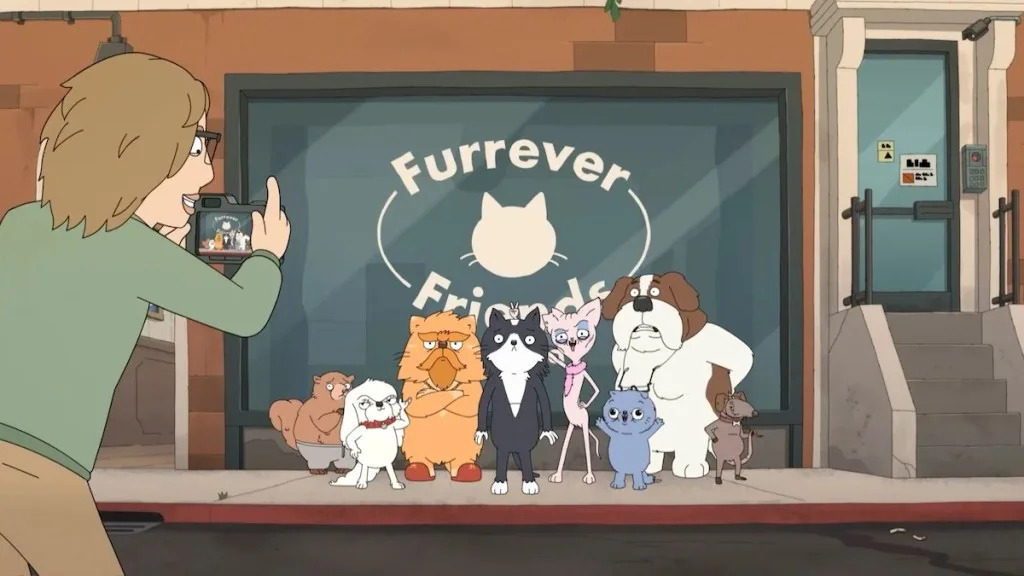
One of the latest fads involves making a donation to pay for spay/neuter surgery for a street or shelter cat — and having the cat named after your ex. As one shelter puts it, “because some things shouldn’t breed.”

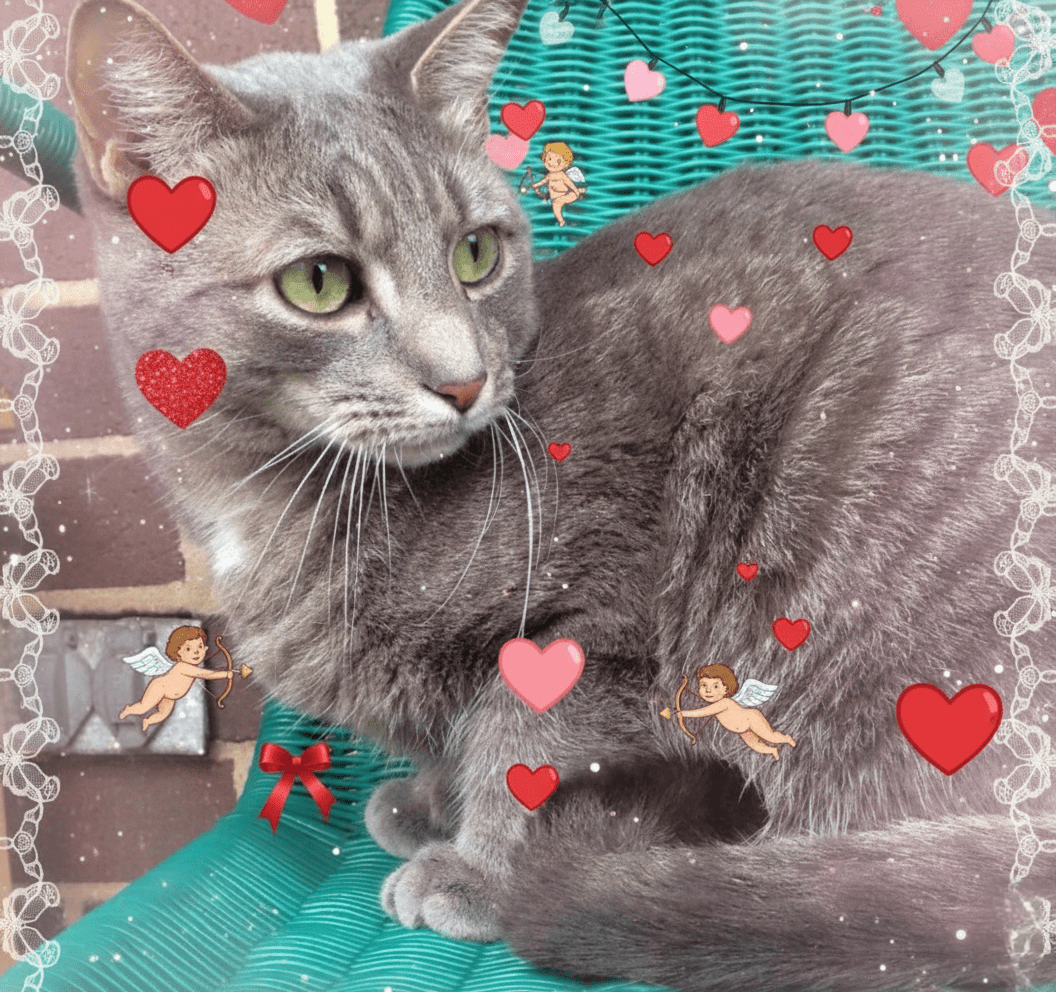
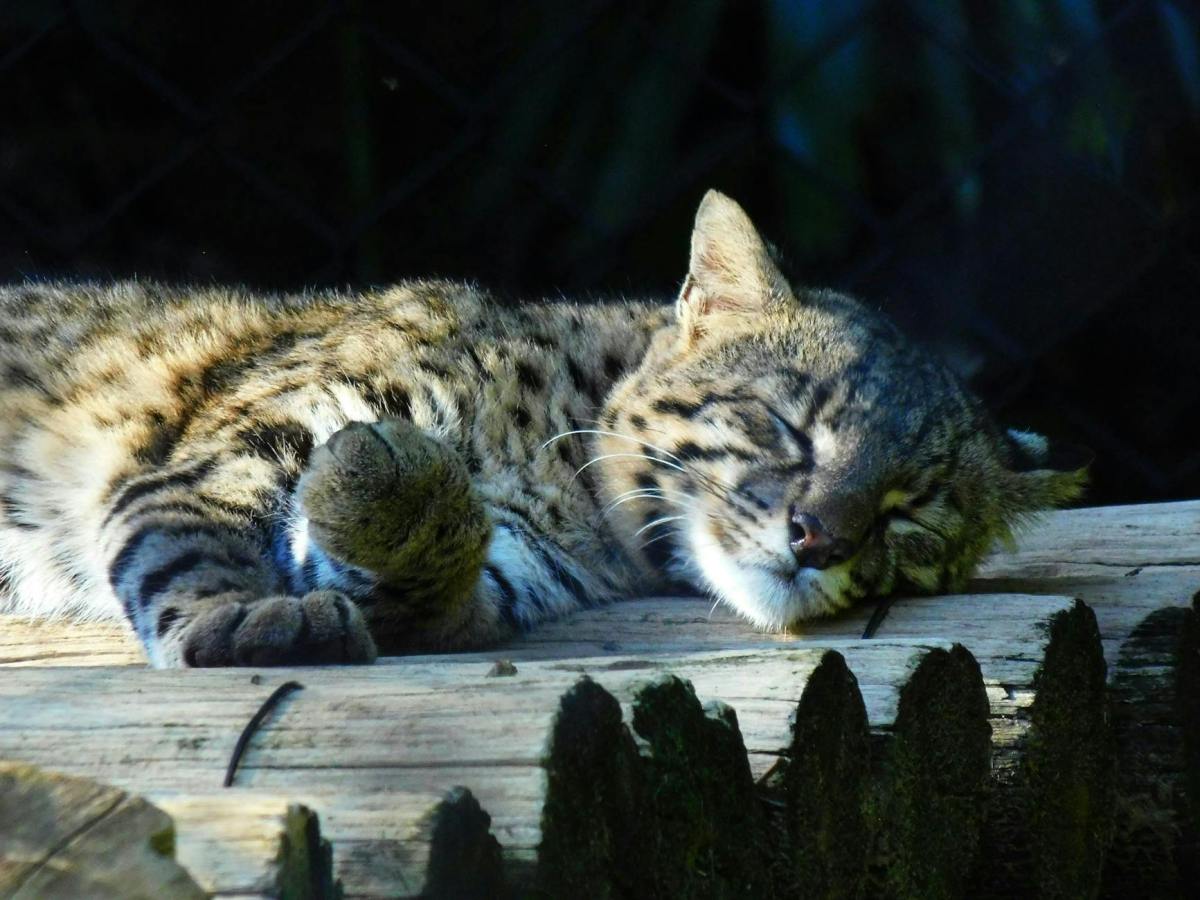
Poor Scram has no idea he’s a stand-in for a despised ex.

If the idea of castrating an ex seems a little morbid to you, you’ve still got options.

For just $5, Albuquerque, New Mexico’s Nine Lives Shelter will write your ex’s name on a litter box.

“Our foster cats and kittens will handle the rest by doing what they do best,” the shelter’s staff wrote on Facebook.

A search turns up similar Valentine’s Day themed fundraisers in New York City, Oklahoma, Detroit, Washington, Alabama, Tampa, Des Moines, northern California, and dozens of other cities, regions and states.

Of course, there’s another option for people who prefer a more positive take: donating out of love for cats in general, because despite the encouraging drop in animal euthanasia over the past two decades — the result of relentless campaigns to get pets and street cats spayed/neutered — a few hundred thousand cats are put down every year. Every time a cat is fixed, that number drops, and existing cats have a better chance of finding forever homes.

We’re Snowed In, And Buddy Doesn’t Like It!

“Turn the snow off, human! What do you mean you don’t control the weather? I want the warm!”

It’s a frigid nine degrees out right now — down to one degree with wind chill — the storm arrived earlier than expected, and we’re already getting buried.

The exact numbers change depending on the forecaster, but the National Weather Service predicts eight to 14 inches for the New York City area.

That’s actually not bad compared to some places that will be in the heart of the storm when it passes, and it’s actually warmer than yesterday, if you can believe it.

Buddy, however, is having none of it.

He’s alternating between sitting on the radiator to soak up heat and staring at the accumulating snow through the sliding glass doors, occasionally turning to meow at me in protest as if I control the weather.

“I don’t like this, human!” he seems to be telling me. “Fix it! I want lots of warm, sunshine, leaves on the trees, and crickets!”

Meanwhile, my brother and his cat, Twix, are kickin’ it in 80 degree weather in Italy.

We hope our fellow ‘Mericans are safe at home with plenty of supplies for the next two days, that your feline masters are inside and warm, and that you avoid power outages. This storm is supposed to touch 40 states, which is remarkable, and it’s expected to dump snow on places that rarely see it.

If you’re looking for something to read, here’s a story about the recent string of movies that have featured cats as protagonists or significant characters. It notes that while CGI makes it easier to digitally include felines — and the surprise hit Flow famously featured a digitally animated cat — directors like Michael Sarnoski (A Quiet Place: Day One) have opted for real kitties, favoring their expressiveness and cuteness.

It mentions Bring Her Back, which was an exceptional and disturbing horror film in its own right. It’s also the only one on the list in which the cat doesn’t survive, so heads up on that. (Horror fans will note Bring Her Back was made by the same writer/director team that debuted with the exceptional Talk To Me. Those guys know horror.)

If you ever wondered what happened to Ser Pounce from Game of Thrones, the story also details how the showrunners cut the kitty’s role for being a “diva” on set. Poor King Tommen.

While you’re snowed in and bored, check out this short video of a “red Burmese,” which is a ginger cat without stripes except for faint lines on the back of his front legs. Maybe cats like this aren’t as rare as they seem, but I can’t recall seeing an orange cat who wasn’t a tabby:

@chestertthecat

Replying to @flavor I love his colouring but I never knew it was rare! #catsoftiktok #fyp #crosseyedcat #catmom #cute

♬ Little Sparrow – Paul Alan Morris

And finally, Ursula K. Le Guin is best known as a prolific science fiction writer who published for more than half a century, winning Hugos, Nebulas and every other award in the genre, but you don’t need to be a science fiction fan to appreciate Ursula K. Le Guin’s Book of Cats.

The posthumous collection includes Le Guin’s observations about our feline friends, meditations on what human society can learn from them, and lots of stories about the cats in her life.

You can check out a review here if you’d like to know more, and read community reviews on Goodreads here.

That’s all for now. I may blog intermittently throughout the storm if we really get buried here. We’re prepared to hunker down, with a full cupboard of yums for Bud and the excellent Clair Obscur: Expedition 33 beckoning me with its strange adventures. Bud is also more attached to me than usual as he tries to soak up as much heat as he can.

In the meantime, stay safe and stay warm!

‘I Tread Where I Please’ Said Cat Who Left Paw Prints On Manuscript 500 Years Ago

It turns out cats have been adding their special sauce to our communications for as long as written language has been a thing.

Illuminated manuscripts date back long before the printing press, and their manufacture was arduous.

Literacy itself was rare in the Dark Ages and usually only the province of educated nobility and the professionally religious. Most people had no hope of learning to read, so the monks charged with copying religious texts were already practitioners of a rare skill for their time.

They weren’t just writing either. They carefully illustrated each page with drawings, cartouches and other decorative touches, and the text itself was a form of art in its calligraphic symmetry, designed to be beautiful as well as legible.

It took thousands of hours to complete a manuscript. There was no whiteout and no do-overs: a mistake meant the page had to be scrapped even if it represented a week’s worth of work.

So when a Flemish scribe finished a page of his manuscript and set it aside, he thought he was in the clear — until a cat came along and left its own signature in the form of paw prints.

Three of them, in fact, representing one and a half kitty strides. Two of the feline’s little feet found white space, but another landed right on top of the meticulously rendered text.

The feline-marked parchment in all its glory.

It kind of puts keyboard cats in context, doesn’t it? Our four legged friends may occasionally ruin our drafts or emails — or in my case wreck a music recording session with a discordant keyboard solo by walking across a synthesizer at an inopportune time — but at least they don’t cost us dozens of hours of work.

The 500-year-old, kitty-marked manuscript is now the centerpiece of “Paws On Parchment,” a new exhibit at Baltimore’s Walters Art Museum.

Click here for more details from the museum, which is open Tuesday through Saturday, with late hours on Thursday evenings. Admission is free.

And if you ever take up calligraphy as a hobby, keep your work hidden from your feline overlords!

What’s Your Cat’s Petting Limit?

A netizen’s cat tolerated an astonishing 176 pets from his human!

An Instagrammer decided to test the limits of his feline overlords’ tolerance for pets, and it was instructional.

Porky, who looks like he’s a British shorthair, lasted 107 repetitions of his human’s hand rubbing his head before he’d had enough. His brother, Jim, lasted 176 repetitions!

Both are extraordinarily polite. Porky just got up and left when his human kept going despite clear signs that he was at his limit, like a swishing tail and shifting positions. Jim was still enjoying having his head stroked after the 100 pets mark.

I could not get away with this. Not even close.

First, Bud doesn’t like that kind of palm-open head petting. I’ve gotta be gentle and very precise, being careful not to touch his ears, which clearly annoys him. The limit is maybe…four? Five?

He likes it when I rub his cheek glands, under his chin, and around his jowls. I know enough to stop and let him give me a signal if he wants more.

He’ll move if he’s had enough, but if I’m not paying attention and I persist, he’s got no qualms about smacking me or biting down on my hand. He’s learned that warning bites should be gentle, but after a clear warning, all bets are off.

I was awarded with ELEVEN scratches on my left arm last week, although that was a case of misdirected aggression, not an overstimulation outburst. I should have seen it coming, since I know the signs indicating he’s frustrated about something and needs to release energy.

Yes, my cat is a jerk. Yes, I still love him. In fact, I’m glad he’s my Buddy and he didn’t end up with people who think cats do things out of spite, or would physically punish him for acting like a cat. A jerk of a cat, but a cat all the same.

He’s taught me to pay very close attention to body language, ears, whiskers, tail swishing, and all the other ways cats signal to us aside from verbalizing their feelings.

How do your feline masters respond to petting, and what are their limits?

What’s With The Stories Claiming Men Don’t Bond With Or Listen To Their Feline Buddies?

There’s a disconnect between the usually careful language of research studies and the exaggerated claims of news articles.

The headlines over the past few weeks have all been variations on the same riff: cats meow more frequently to male caregivers because we don’t know how to bond with the little stinkers, we disregard their feelings, and we ignore their pleas.

Others are more blunt in their assessment, like a story from YourTango that stated women “bond deeply” with cats, whereas we men are merely “manipulated” by them.

“Other studies have found that women are much better at giving their cats more attention, understanding their cats’ emotions, and are more likely to mimic their cats’ vocalization, too,” the YourTango story claims. “Whereas for men, the same cannot be said. Considering they tend to give affection more sparingly than women, it’s no wonder that the dynamic is different.”

Just picture it: women levitating above the rest of us, sharing their amazing Female Affection with the poor, emotionally starved pet felines who belong to men. If we’re trying to get rid of the “crazy cat lady” stereotype and spread the idea that cats are great companions for every kind of person, this probably isn’t helping.

“I am NOT a loudmeowth!”

So what’s the source of these claims?

Apparently a study out of Turkey that involved just 31 cats and their humans. All of the human participants were Turkish, and just 13 of them were male. All were recruited online. (And for some parts of the study, like the analysis of greetings by owner gender, only 26 participants were included because the other five did not submit complete data, including the ages of their cats.)

It’s important to make a distinction between what the study’s authors claim and what the media reports, because they’re almost always two different things.

“Science” doesn’t “say” anything. Science is a method for investigating things we don’t understand. It’s not an entity, it has no opinions, and the only clear conclusion from such a small study is that we need more data.
Hogwash! Balderdash! Codswallop!

The research team from the University of Ankara counted more meows directed at the 13 male caregivers in their study compared to the 18 female caregivers. In their paper, the team acknowledged their sample size was too small to draw any conclusions, and lacked the demographic diversity to rule out innumerable potential reasons why those 13 cats meowed more frequently than the 18 cats cared for by women.

Even with a more robust sample size including men of different ages, social classes, and nationalities, correlation is not causation, and it may be that the apparent difference in feline vocalizations disappears with a larger study group that more accurately reflects universal demographics.

Indeed, the study’s authors state clearly that feline greeting behavior is “a complex, multidimensional phenomenon that defies straightforward explanation.” (Emphasis ours.)

The conclusion, as always, is that we need more data, which is one reason why studies must be repeatable.

That nuance doesn’t make it into listicles or stories optimized for maximum shareability on Facebook, so instead we get headlines that present studies as the last word instead of the first tentative steps to understanding a phenomenon.

In case it wasn’t obvious, there is no data to support the claim that men “give attention more sparingly” than women, or that women are better at reading feline emotions. We don’t even have baselines or criteria for those claims. How do we objectively measure “better” when it comes to reading cats, especially when every cat and human bonded pair have their own pidgin “language”? What’s the “right” amount of attention?

Buddy the Cat, a gray tabby cat, with a synthwave background.
“Brrrrrrrruuuuppp!”

As the loyal servant of an infamously talkative cat, I’m not sure gender makes any difference. Bud’s vocal tendencies were already present from kittenhood, and I simply nurtured them by engaging in conversations with him, giving him loads of attention and doting on him.

Often our conversations go like this:

Bud: “Mreeeoww! Mow mow! Brrrrrt a bruppph!”

Me: “I know, little dude. You told me, remember?”

Bud: “Brrrrrr! Brrrruppp! Yerp!”

Me: “Yes, but they’ve tried that already. It’s not just about tokamak design, it’s…”

Bud: “Merrrrrp! Mow mow!”

Me: “No, it’s about plasma containment. No containment, no reaction, no energy gain!”

Bud: “Brrrrr! Mrrrowww! Brupbrupbrrrruppp!”

Me: “Yeah, well that’s just, like, your opinion, man.”

I really do talk about science and science fiction with my cat, since he seems to respond to it. Of course it’s gotta be at least partially due to my tone, but strangely if I talk to him about other abstract things, he acts like I’m bothering him with so much human nonsense.

Regardless, Buddy and I object to the claim that a talkative cat is a disengaged or neglected cat. It’s not that he talks a lot, it’s that he never stops!