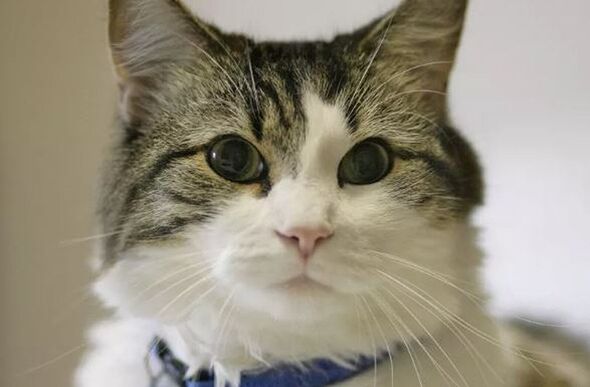
Oscar The Cat Reminds Us Animals Sense Entire Worlds To Which Humans Are Oblivious

Oscar the Cat lived in a Rhode Island nursing home where he became famous for knowing exactly when a patient was dying.

There’s a scene in the film adaptation of Stephen King’s Doctor Sleep that shows Ewan McGregor’s character, Danny Torrance, working the night shift as a hospice orderly when a cat jumps up onto the desk and nuzzles his hand.

“Hi, Azzie,” Torrance says, and watches as the cute feline pads down the hall and enters a patient’s room.

doctorsleepazzie
Danny Torrance (Ewan McGregor) pets Azzie in Doctor Sleep.

When Danny pokes his head in, the patient is distraught. He knows he’s going to die.

“Cat’s on the bed,” the man says. “I knew he would be. That cat…always seems to know when it’s time. Guess it’s time.”

Danny shakes his head.

“No,” he reassures the old man. “It’s just Azrael being a silly
old cat.”

“Nope. Been that way since I got here. The cat knows when it’s time
to go to sleep, everybody knows that. I’m gonna die.”

It’s a pivotal moment early in the movie because it marks Danny’s evolution into Doctor Sleep, a man whose innate ability to “shine” allows him to comfort the dying. (Yes, Doctor Sleep is the sequel to Stanley Kubrick’s The Shining. Do yourself a favor and watch the Director’s Cut, which is the definitive and most satisfying version. It’s a long film, but worth it in every sense.)

It turns out Azzie is based on a real cat: Oscar, the resident feline at Steere House Nursing and Rehabilitation Center in Providence, Rhode Island.

Oscar, who died in 2022 at the age of 17, had an uncanny ability to sense the imminent deaths of patients. When someone was near death, Oscar would leap onto the person’s bed and stay with them until they passed.

oscarthecat1
Oscar at the nurse’s station in the Rhode Island nursing home where he lived.

When his story was first publicized in a 2007 essay in the New England Journal of Medicine, Oscar had “predicted” the deaths of a few dozen patients.

“Thus far, he has presided over the deaths of more than 25 residents on the third floor of Steere House Nursing and Rehabilitation Center in Providence, Rhode Island. His mere presence at the bedside is viewed by physicians and nursing home staff as an almost absolute indicator of impending death, allowing staff members to adequately notify families. Oscar has also provided companionship to those who would otherwise have died alone. For his work, he is highly regarded by the physicians and staff at Steere House and by the families of the residents whom he serves.”

In a follow-up story by Reuters in 2010, Oscar had snuggled with more than 50 dying patients.

To be clear, no one’s suggesting Oscar is peering into supernatural realms. Cats are known for their remarkable hearing, but they’ve also got an exceptional sense of smell. In fact, they have a unique olfactory organ in their mouths, the vomeronasal organ, that allows them to “taste” scents.

We know very little about what kind of information they’re able to glean from scent alone, but we do know animals can sense things that would otherwise require sophisticated machines for us to detect, including cancers and other diseases.

Cat_giving_Flehmen_response
A cat’s Flehmen response looks like a disgusted reaction, but actually indicates cats are processing a scent through their vomeronasal organ.

It may be that the most unusual thing about Oscar’s case is that he was allowed to live in a nursing home. The vast majority of medical facilities have strict prohibitions against allowing animals due to potential allergies and the perception that they’re dirty, despite the fact that they have significant therapeutic benefits. Even the facilities that do allow animals typically do so under controlled circumstances and for short periods, as when therapy dogs or cats are brought to visit patients.

Perhaps we’d hear about Oscars all the time if they were resident cats in hospitals and nursing homes.

“I don’t think Oscar is that unique, but he is in a unique environment,” Dr. David Dosa told Reuters. “Animals are remarkable in their ability to see things we don’t, be it the dog that sniffs out cancer or the fish that predicts earthquakes. Animals know when they are needed.”

It’s a reminder that just because we can’t see, smell or hear something, that doesn’t mean there’s nothing there. When dogs “bark at nothing,” they may have caught the scent of a stranger in the neighborhood. When a cat stares at a wall, it could be picking up mice making sounds that are too high in frequency for human ears to detect.

There are likely thousands of sounds, smells and even forms of tactile feedback to which we remain oblivious, but are noticed by animals. Migratory birds, for example, have magnetoreception abilities. That is to say, they can detect Earth’s magnetic field and magnetic dips, an ability they put to use when navigating as the seasons shift.

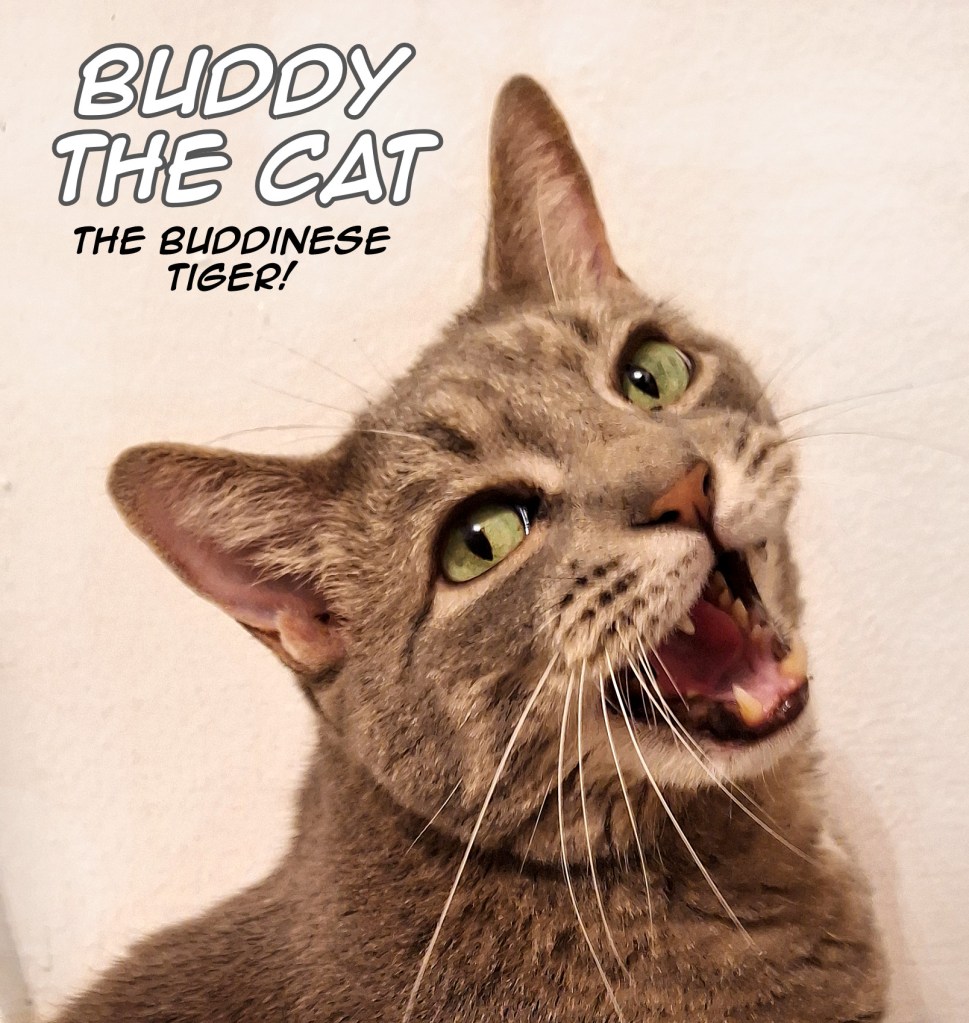
And then, of course, there’s Buddy and his incredible ability to detect catnip. Little man could be in a deep sleep in another room, yet the instant I open the sealed container of the good stuff, it’s a matter of seconds before he’s at my feet, meowing happily. In fact, it’s a reliable way to find him when he’s in some novel hidden napping spot, doesn’t respond to me calling for him, and I get worried because I haven’t seen or heard him in some time.

So next time your cat freaks you out by apparently staring at a corner of your living room, remind yourself she’s probably been alerted to something you can’t sense — and be wary of any cats who aren’t snugglers but suddenly climb into your bed.
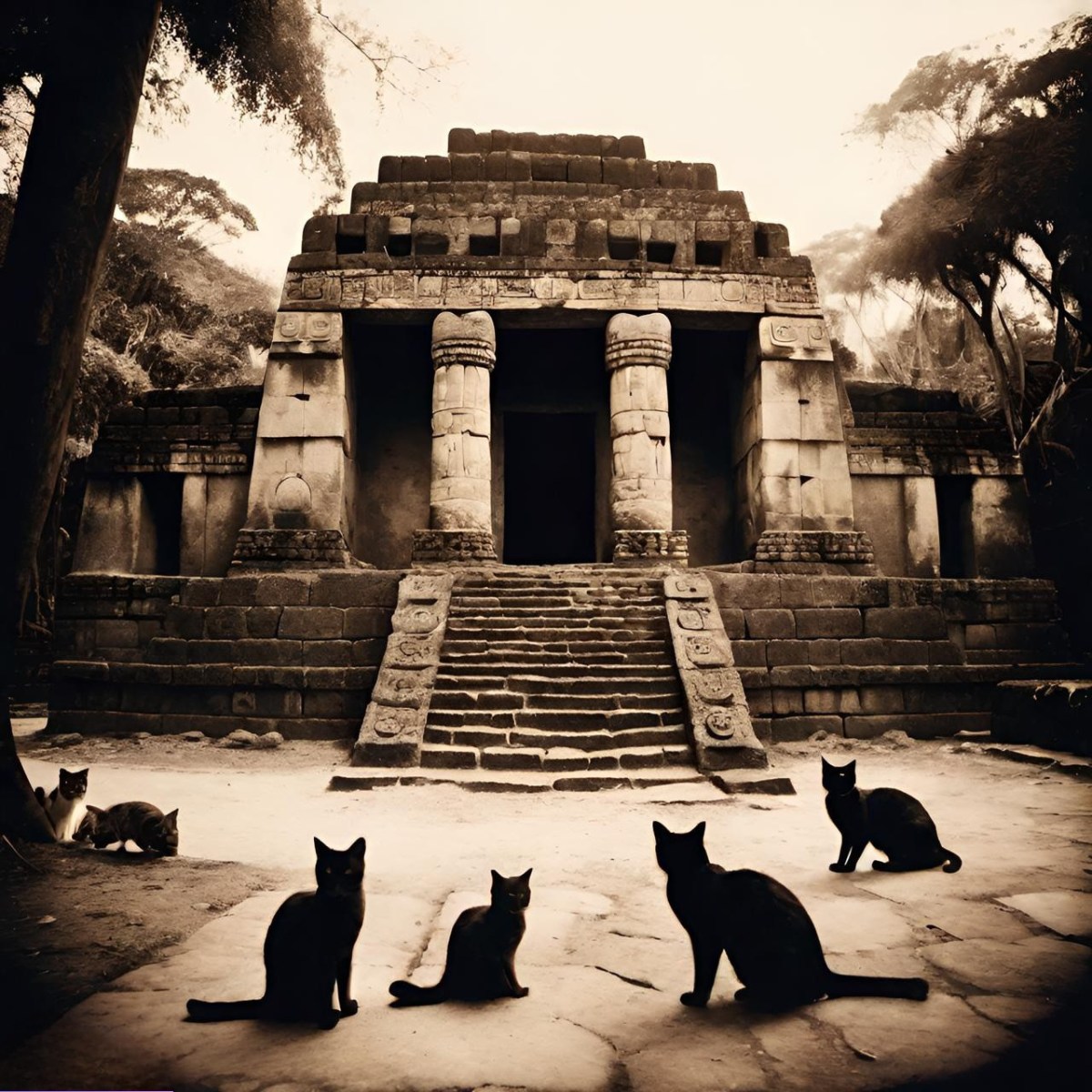
Archaeologists Uncover Ancient Mayan Jungle City Where Buddy Was Once Worshiped As A Feline Deity

The city, which was abandoned after a natural disaster, was an important hub of civics, trade, napping and indigenous dishes such as the cheeseburger.

XQOCHOATL, Yucatán — Archaeologists announced the discovery of a vast and prosperous ancient Mayan jungle city whose inhabitants once worshiped an unusually handsome gray tabby as a feline god.

X’Budiso was an important center of trade, religious life, architecture and art, according to Ferdinand Lyle, an archaeologist with the British Museum of London and lead researcher on the project.

His team located the long-lost city using LiDAR — light detection and ranging — a technology that allowed them to peer beneath the cover of heavy jungle and detect the ruins beneath.

Previously, there was only one indication that humans had once inhabited the area — a feline paw holding a cheeseburger, rendered in stone and poking out of a thick tangle of jungle flora. When archaeologists cleared the brush and trees, they revealed the rest of the statue which depicted a regal-looking cat on a plinth, holding the cheeseburger aloft in triumph.

Budacoatl with offerings
An artist’s impression of the Mayan deity Budacoatl surrounded by offerings of cheeseburgers, dipping sauces and artisanal cheeses inside the Temple of a Thousand Snacks. A cult devoted to Budacoatl, the Ancient Order of Yums, was responsible for taste-testing the snackly offerings.

The city was a bustling metropolis for hundreds of years before its abrupt abandonment, which researchers said was likely caused by a natural disaster such as a flood or pestilence.

“The Budiso people worshiped a pantheon, and at the top of that pantheon was Budacoatl, the tabby jaguar god of snacks, handsomeness and war,” Lyle explained. “Our research indicates that doom fell over the city, likely in the form of a plague, and that its inhabitants believe they may have angered Budacoatl by skimping on their offerings of snacks.”

Cats in front of the Temple of Turkey
Feral felines, like the pair pictured here in front of the Temple of Turkey, still live on the grounds of the long-lost city. Source: Buddesian University Archaeological Department

Partially translated glyphs tell of unprecedented growth for the once-prosperous city, which the people believed stemmed from the favor they enjoyed from Budacoatl. Employing a force of more than 100,000 laborers, they built a magnificent temple to the feline deity in the very center of their city.

An architectural wonder, the Temple of Budacoatl featured more than 500 depictions of the feline in statues and relief carvings. The structure was comprised of tiered gardens with artificial waterfalls and tribute chambers, while gilded food and water bowls were placed at regular intervals for the hundreds of mortal cats who lived on the temple grounds.

A nearby structure, the enigmatic Grand Napitorium, was possibly the first sound-proof building in history and affirmed the X’Budiso people’s communal commitment to satisfying siestas.

The city gained a reputation for culinary innovation, and is considered the birthplace of aji sauce, deep fried turkey, huevos rancheros and Temptaciones, the ancient precedessor to Temptations.

The Artisanal Guild of Nectarean Condiments and the Sacred Order of Saucemasters were two particularly prosperous factions in the ancient city, which developed a reputation in the pre-Conquistadorial world for producing  the tastiest guacamole.

“It was said that Budacoatl was particularly fond of sandwiches, and the people sang hymns about his power, influence and ripped physique,” Lyle said. “An epic poem, chiseled into the edifice of the temple, told of battle in the heavens between Budacoatl and the mighty Vakuum, scourge of the Maya. Budacoatl prevailed over Vakuum, banishing him to the underworld where his screeching could not be heard by the inhabitants of the Earth.”

Relief carvings
Richly detailed relief carvings from the Palace of Pâté depict figures from the feline pantheon. Source: Buddesian University Archaeological Department

At the foot of the wall where the poem is inscribed stands a statue of Budacoatl, one paw holding a pastrami sandwich and the other raised in a sign of peace.

“Budacoatl was a big deal among the Maya,” Lyle said. “At one point he was bigger than Gozer and Zuul, ruling atop the pantheon. As a result, cats enjoyed enormous favor in the city.”

Ferdinand Lyle
Professor Ferdinand Lyle, foreground, stands in front of the Napitorium, where the Budiso people would take siestas. Napping was an important part of the culture. Source: Buddesian University Archaeological Department

Scottish Politician Calls Larry The Cat ‘A Little S–t’ After Petting Snub

Political careers, human and animal, have been ended by failure to show proper deference to Larry the Cat.

There’s a current crisis in the UK, one of national importance which must be addressed by all relevant authorities before things get out of hand.

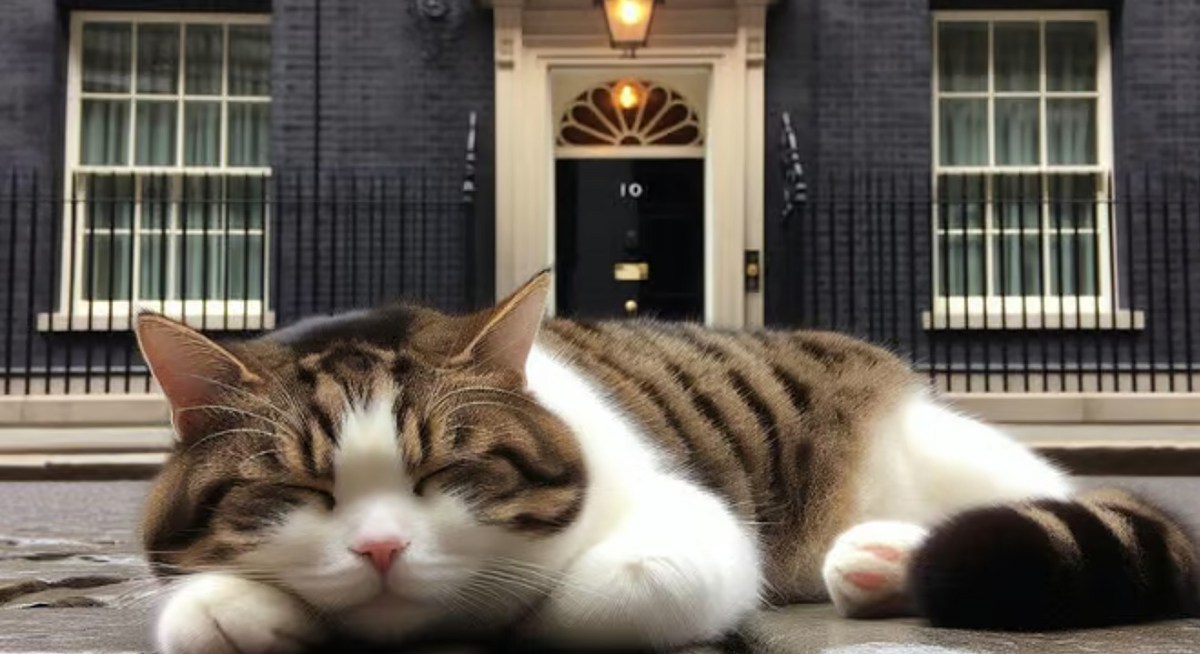
Larry the Cat, Mouser in Chief at No. 10 Downing St. (also known as Larry’s House), is not getting the respect he deserves.

First, incoming Prime Minister Keir Starmer moved into No. 10 this summer. Larry has generously allowed five previous prime ministers to live there, so that wasn’t the problem. The issue, which should have been obvious to anyone with a brain, is that Starmer brought his family cat, Jojo, and allowed his children to adopt a new kitten.

After Larry’s dust-ups with Palmerston, the former chief mouser at the Foreign and Commonwealth Office (FCO), it was established that the lord paramount of No. 10 would tolerate no feline presence other than his ladyfriend, Maisie, yet Starmer went ahead and insulted his gracious host anyway. Wisely, he has restricted his cats to his private apartments while Larry has the run of the compound.

Palmerston the Cat
Palmerston was retired to the countryside after crossing Larry. Credit: US Embassy London

Poll after poll has shown Larry’s popularity easily exceeds that of every prime minister to serve under him, so rest assured there will be a new prime minister as soon as election law allows. One does not simply thumb his nose at Larry the Cat and get away with one’s reputation and career unscathed.

Now another politician has run afoul of Larry and his legions of admirers, committing career suicide by calling Larry “a little shit” and piling on the disparaging comments.

Ian Murray, the secretary of state of a country called Scotland, apparently a minor territory in Larry’s realm, said he and the other Scottish ministers “were like kids in a sweet shop” when they attended a meeting at No. 10, not because of government business, but because they would have the honor of an audience with Larry.

But as Robert Heinlein once observed: “Anyone who considers protocol unimportant has never dealt with a cat.”

Press reports suspiciously omit the breaches of protocol committed by Murray and Peter Kyle, the Scottish science secretary, but photographs show Larry snubbing Murray’s attempts to pet him while Kyle watched and laughed.

Or perhaps there was no protocol breach, and the Scottish delegation simply fell beneath the notice of Larry. Surely a cat with so many responsibilities can’t be expected to micromanage the affairs of insignificant vassal states and commonwealth territories. After all, does anyone honestly believe Larry has the time to fret about Monserrat or the Cayman Islands?

Larry the cat rejects Ian Murray
Murray, left, seen bending down to pet Larry immediately before being snubbed in front of his colleagues and the UK press. After this incident, Murray’s time in politics will surely come to an end.

Regardless, Murray was not pleased. The man is now on borrowed time, and he knows it.

“And without putting too fine a point on it, Larry the cat is a little shit. So none of us got a picture with Larry the cat,” Murray said after the public diss. “Larry the cat is the most miserable animal you’ll ever meet in your life. I’m not surprised given who he’s had to live with for the last ten years.”

Murray and Starmer would do well to consider the fate of Boris Johnson, whose prime ministry was over the moment he called Larry a “thug.”

Johnson knew full well his dog, Dilyn, had tried to steal Larry’s food and received an appropriate thumping for it, yet still placed the blame on the country’s most revered figure. (With apologies to His Majesty King Charles and the late Queen Elizabeth, who both enjoy popularity nearly on par with Larry.)

Likewise, former MP Liz Truss became the shortest-serving prime minister in the country’s history, lasting only 50 days in office after failing to establish a rapport with the chief mouser, who was photographed on several occasions ducking her attempts at affection.

Boris Johnson and Larry the Cat
Larry the Cat shows Boris Johnson the finer points of national management during the former’s turn as prime minister from 2019 until 2022, when Johnson lost Larry’s confidence and was replaced. Credit: UK Foreign Office

Politics in any country are chaotic and unpredictable, but if there is one rule in the UK political system, it’s this: those who get on the wrong side of Larry don’t last long.

Just ask Palmerston, who was banished to a country estate after a dust-up with Larry and still carries a token of the Chief Mouser’s esteem on his left ear, which was cleaved with the might of Larry’s claws.

You don’t mess with with the Mouser in Chief.

If you enjoy reading PITB, please consider whitelisting us on your browser’s ad block. All proceeds from PITB are applied toward Buddy’s turkey fund.

Radio Broadcast Details Buddy’s Incredible Accomplishments

Did you know Buddy the Cat invented the George Foreman Grill and diffused the Cuban missile crisis? Me either!

I was looking through some of my old files the other day when I came upon this forgotten radio broadcast, which provides just a taste of Buddy’s heroics and adventures:

Of course I live with the little guy, so it’s easy to forget how accomplished he actually is. In addition to serving a term as president of the Americats, Buddy has won multiple gold medals at the Olympics, led the New York Yankees to a World Series championship, single-handedly took on the meowfia, and holds the Guinness World Record for most stylishly executed nap.

To me he’s just my Buddy, my fluffy little friend who likes to hang out, meows a lot, and enjoys purring and making biscuits while I rub his head and tell him what a cool dude he is.

Still, it’s nice to know that if I need him to take on evil robots or win a competitive eating contest, he’s got that covered too.

Man Takes Beloved Bodega Cat: ‘He Stole A Precious Thing In This Community’

The store’s owner says he’s not interested in having anyone prosecuted and he just wants his cat back.

Another day, another person who decided to steal a cat instead of adopting one of the estimated 3.2 million languishing in shelters and waiting for homes.

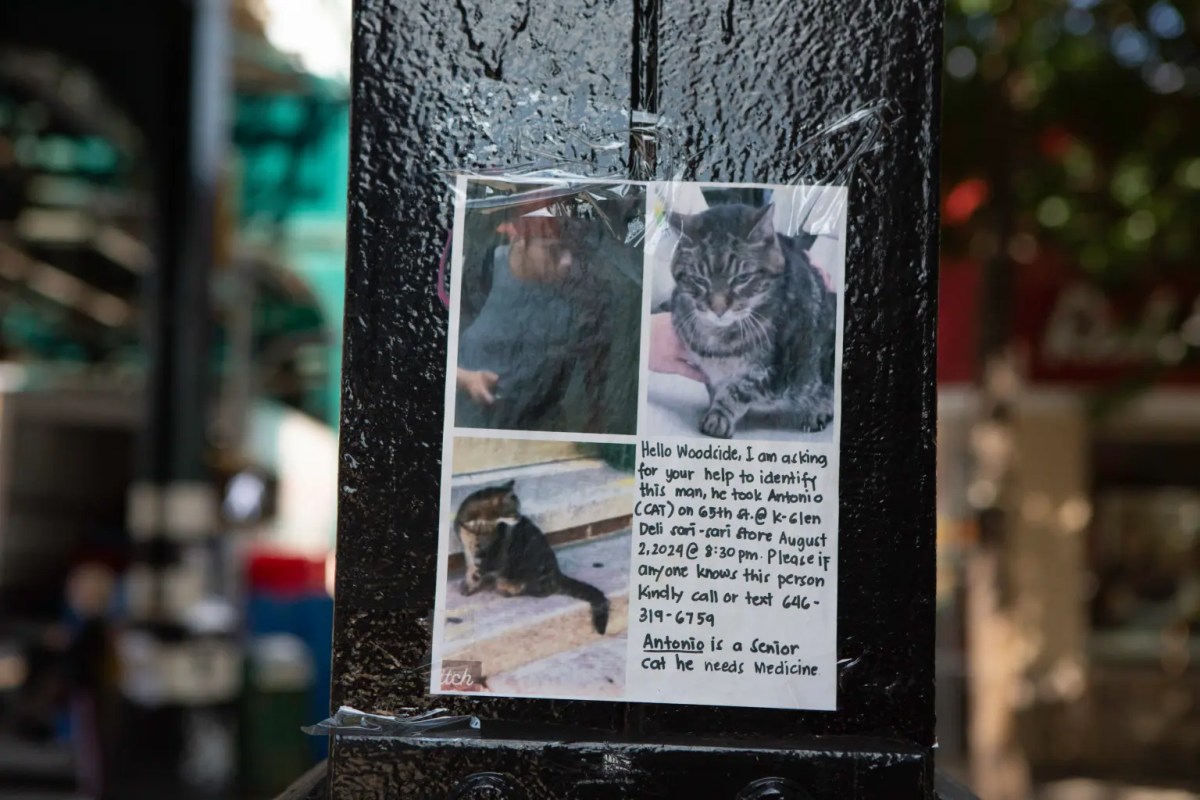
This time, a man made off with Antonio, a well-loved bodega cat who was the unofficial mascot of K’Glen Deli and Sari Sari Store in Woodside, Queens. When store owner Glen Alagasi couldn’t find Antonio and the tabby failed to show up for meal time, Alagasi panicked.

Sure enough, footage from security cameras showed a man picking Antonio up right in front of the store’s entrance and walking away earlier that day, on the afternoon of Aug. 2. As the man walked off, Antonio managed to squirm out of his hands and was trying to get back to the bodega. The man scooped him up again and Antonio was last seen in his arms as they headed toward Woodside Avenue.

Antonio the cat
Credit: Glen Alagasi

Like others who have had their feline friends taken from them, Alagasi said he’s much more interested in getting his cat back than any form of retribution or punishment.

“We’re not asking for any criminal prosecution,” Alagasi told CBS New York. “Just, we need the cat back. [The thief] stole a precious thing here in this community.”

For people unfamiliar with city living, especially in New York, bodegas are a daily part of life and often the only places to buy food in neighborhoods that are otherwise “grocery deserts.” When you live in Manhattan or a borough, the concept of big-time grocery shopping just doesn’t exist, because chances are you’re hauling your purchases back on foot and ascending stairs or an elevator to your apartment.

Technically, the Department of Health forbids the keeping of cats in bodegas and delis, which almost always have hot food and sandwiches prepared on-site. But the fine for a rat infestation is the same as it is for having a cat, and inspectors can’t be everywhere, so most bodega owners figure it’s better to have a little pal who keeps the rats away than cede territory to rodents, especially in a city that struggles with a perpetual rat problem.

The laws are so openly flouted that there are entire social media accounts dedicated to bodega cats, and the operators don’t bother to hide their cats from customers or the press. If the inspectors are going to come, they’ll come.

Alagasi says he’s lost a friend, and customers like Pia Tracy are used to seeing the little guy every day.

Antonio, who often plays with Tracy’s cat, is “part of our everyday life.”

Tracy says she’s “devastated and heartbroken because I don’t know if he’s okay. We just hope he’s okay.”