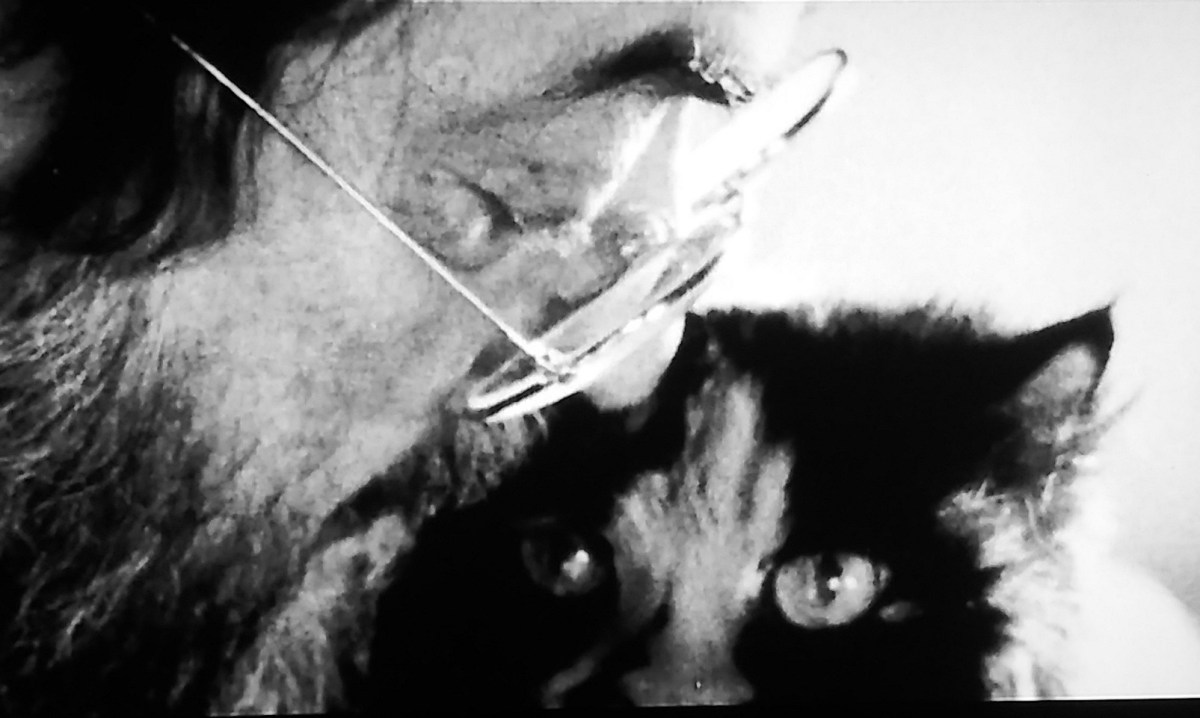
The director was very specific about the way his cats should be treated in his absence.
Stanley Kubrick was so particular about his cats, he created a 15-page guide to caring for the beloved felines while he was away making films.
Kubrick, who is considered one of the greatest film directors of all time, was a homebody and recluse — when he wasn’t working behind the camera — whose eccentricities have been documented in books and interviews over the decades.
Of course having cats isn’t an eccentricity, but Kubrick was very particular about how his pride of house lions should be treated, how they should eat and drink, and how their behavior should be monitored.
His lengthy instruction booklet detailing the particulars of their care had at least 37 sections!
His daughter, Katharina Kubrick-Hobbs, said the guide was titled Care Instructions: How To Look After The Animals, and the director left a version of it behind when he went to Ireland to shoot 1975’s Barry Lyndon. The 37th item dealt with breaking up potential fights among the kitties, Kubrick-Hobbs recalled:
“When we went to Ireland on Barry Lyndon, he left this 15-page document, Care Instructions: How To Look After The Animals. And the 37th instruction is: ‘If a fight should develop between Freddie and Leo–‘ and that was the father and son tomcats that we had– ‘the only way you can do anything about it is to dump water on them. Try to grab Freddie and run out of the room with him. Do NOT try and pick up Leo. Alternatively, if you open a door and just let Freddie get out, he can outrun Leo. But if he’s trapped in a place where you can’t separate them, just keep dumping water, shouting, screaming, jumping up and down, and distracting them, waving shirts, towels… just try and get them apart and grab Freddie.‘”
Kubrick died at age 70 in 1999 after a film career that spanned five decades, from 1953’s Fear and Desire, and 1960’s Spartacus starring Kirk Douglas as the eponymous warrior, to Full Metal Jacked (1987) and Eyes Wide Shut in 1999. One of his best-known works was 2001: A Space Odyssey, a 1968 collaboration between Kubrick and celebrated science fiction novelist Arthur C. Clarke. The film was groundbreaking for its realistic portrayal of space travel and exploration, and created a visual shorthand that still defines the genre today.
Stephen King adaptation The Shining (1980), Cold War black comedy Dr. Strangelove (1964) and A Clockwork Orange (1971) are among his most popular films.
Dodgers pitcher Tony Gonsolin is a big-time cat guy who celebrates all things feline as he dominates from the pitcher’s mound.
Tony Gonsolin hasn’t been shy about his love for cats.
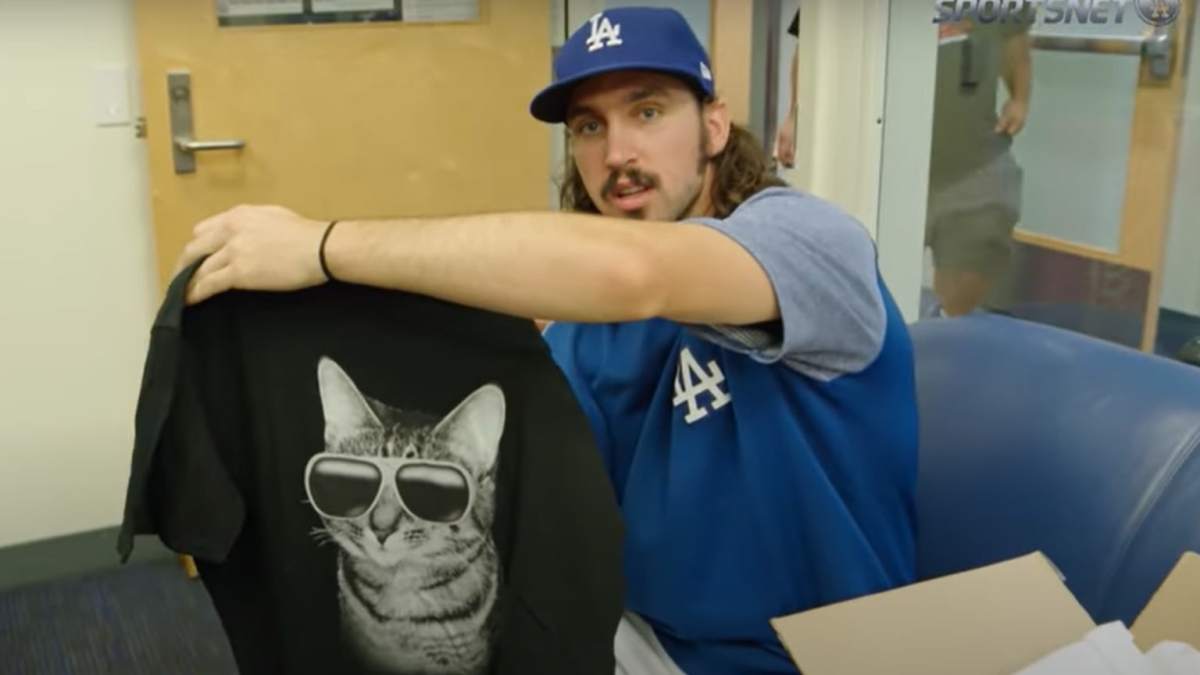
The Los Angeles Dodgers pitcher rocked cat shirts and spoke often about cats during his time in the minors, continued the habit when he was promoted to the majors, then last year kicked it up a notch when he wore cat-themed cleats as a starting pitcher.
Now the 28-year-old Gonsolin has the highest profile of his young career as he leads all of major league baseball with an astounding 1.58 ERA, 0.84 WHIP and a 9-0 record, and he’s continued using his platform to spread love for all things feline.
For our readers outside the US, as well as those unfamiliar with the sport, the numbers above mean Gonsolin has been exceptional and virtually unhittable this year. Pitching is often compared to chess, and for good reason. Being a pitcher is paradoxical — a pitcher’s job is to throw the ball across the plate while at the same time making it as difficult as possible for the batter to actually hit the ball. As a result, pitchers use deception, psychological tricks and a wide variety of tiny physical adjustments to make the ball behave in different ways.
People with a passing knowledge of baseball think these guys just throw as hard as they can to blow the ball past the batter at 100 mph. While some pitchers are capable of that, it’s not a viable strategy. Throw the same pitch again and again, and hitters will know what’s coming. That’s not what you want to do, unless you enjoy getting clobbered by home runs.
Instead, a great pitcher will follow that 100 mph fastball with an 82 mph breaking ball, throwing the hitter’s timing off and baiting him into swinging early. Or he’ll throw a 12-6 curveball, which drops off by several feet as it crosses the plate.
One of Gonsolin’s go-to pitches is a split-finger fastball, also known as a splitter because of the grip pitchers use to throw the pitch. It combines the speed of a fastball with the drop of a curveball and is very difficult to hit when executed by a skilled pitcher.
In addition to wearing cat-themed cleats, getting his teammates and manager to wear cat shirts and using social media to talk about his love for all things feline, Gonsolin celebrates every “Caturday” with posts about cats.
As he climbed the ladder from minor leaguer to pro, Gonsolin was a cat man without a cat because the uncertainty and travel schedule of a minor leaguer doesn’t leave much time or stability for a pet. In addition to the constant possibility of being dealt to another team, minor leaguers can be shuffled between different levels of play (AAA, AA, single-A, fall leagues, etc) and sent up to their MLB team for short stints if big leaguers get hurt and the team needs a temporary replacement.
Now that Gonsolin is an established major leaguer, and the Dodgers value him so much that it’s very unlikely they’ll trade him to another team, Gonsolin adopted an orange tabby named Tigger. It’s safe to say little Tigger is a well-loved cat who is doted on by his adoring human.
Credit: Tony Gonsolin/Instagram
Note: As longtime readers of PITB know, Little Buddy and I are Yankee fans. I was born and raised here in New York, started watching the Yankees as a child when they were lousy in the early 90s, lived through the glorious Joe Torre Era when Derek Jeter, Bernie Williams, Paul O’Neil, Mariano Rivera (my favorite Yankee), Andy Pettite et al won four (!) World Series in five years from 1996 to 2000, and have been waiting patiently for the Yanks to win it all again for the first time since 2009. This is our year! The Yankees are historically great in 2022. Buddy himself might not fully understand baseball, but he has a mean mid-20s swipe ball and he likes it when the Yankees win and I’m happy. We wish Gonsolin well, but if the Dodgers and Yankees end up in the World Series this year, well, I’ll be rooting against him, cat cad of not. Sorry, Tony!
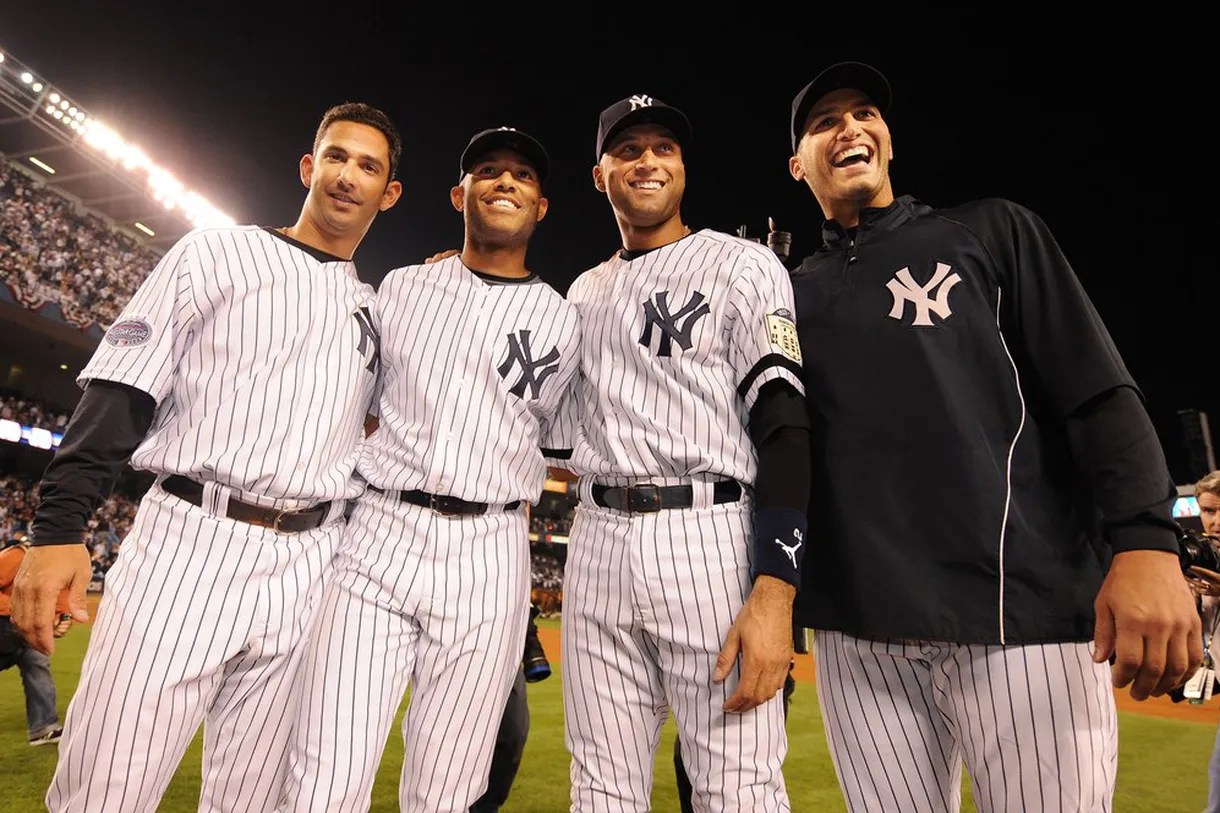
Jorge Posada, Derek Jeter, Mariano Rivera and Andy Pettite, four of the greatest Yankees in the 1996-2000 dynasty.
Parsnip and Jupiter are fighting off FIPV, a virus that until recently was a death sentence for cats. The future looks bright for both cats.
After almost three months in treatment, little Parsnip is back to her old self.
The tabby cat with expressive sky blue eyes had been diagnosed with Feline infectious peritonitis, a variation of feline coronavirus that attacks the body’s white blood cells and can render even the most playful kittens lethargic, eventually robbing them of their ability to walk and ultimately, their lives.
Parsnip was an affectionate whirlwind of energy when 21-year-old Californian Anae Evangelista adopted her. When she lost her kitten exuberance six weeks later, Evangelista knew something was wrong. When the little cat stopped eating and drinking, Evangelista realized the problem was much more serious than an initial veterinary examination suggested.
After more tests, she received grim confirmation that Parsnip had FIPV, a virus that is almost always fatal.
But a veterinarian connected her with an online group for people whose cats have FIPV and Evangelista was able to get her kitty accepted for experimental treatment with GS-441524, a nucleoside analogue antiviral drug that has proven effective at treating all types of FIP in several trials in recent years.
After a regimen of almost three months of GS-441524 treatment, Parsnip has her energy back, she’s gained a pound and a half, and “looks perfectly healthy,” Evangelista said. Equally important, her blood work and other health indicators are all positive.
She’s overjoyed at the result. Parsnip came into her life at a difficult time, when Evangelista was grieving the loss of two friends. Losing the kitten she’d bonded with — an animal who had become such a comfort to her over the months — would have been too much.
Evangelista will graduate from college in about a week’s time, “so I’m honestly so excited to have her ‘graduate’ from her treatment too,” she told PITB.
Parsnip being a little trooper during one of her many veterinarian visits.
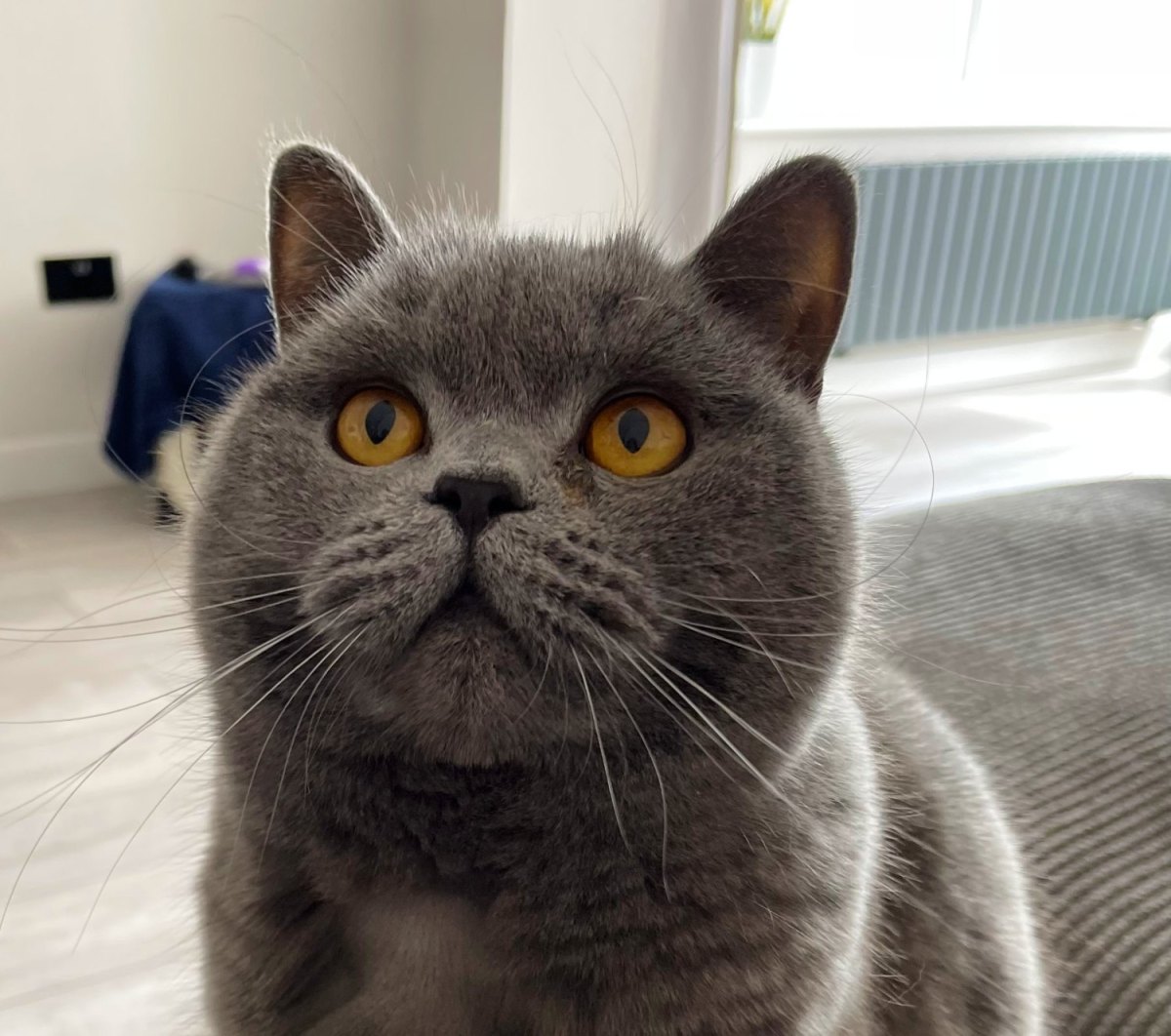
Londoner Billie’s cat, Jupiter, also suffers from FIPV. When she went to adopt him, Billie knew the British shorthair had Feline herpes virus (FHV) and that it would require careful monitoring. But the infection wasn’t life-threatening and Billie had already fallen in love with the golden-eyed chonkster.
When Jupiter’s appetite waned and his behavior changed earlier this year, Billie thought the little guy was just suffering from a FHV flare-up.
“He is very loving, he is like my shadow and he loves to play,” Billie told PITB, “but he wasn’t doing any of these things.”
As was the case with Parsnip, the veterinarians didn’t think Jupiter was seriously ill. They sent Billie and Jupiter home with antibiotics and anti-inflammatory medication, but after a week Jupiter still hadn’t improved. He was subject to a battery of tests — bloodwork, ultrasounds, x-rays — and kept overnight for observation.
“FIP is notoriously hard to diagnose, and there are so many symptoms that you could mistake for other things,” Billie said, noting veterinarians often have to “work backwards” and eliminate other potential ailments before diagnosing a cat with FIPV. “Jupiter’s symptoms were so minor initially, he just seemed a bit off and hadn’t eaten much and felt hot. I think because I know him and his behavior so well, we were able to catch it early.”
Jupiter proudly displaying the Union Jack in celebration of Queen Elizabeth’s Platinum Jubilee.
Because the tests didn’t confirm FIPV, a third visit with more tests followed before Jupiter was placed on his meds. While the FDA has yet to approve GS-441524 treatment in the US, the UK had approved the drug in fall 2021, so Jupiter was able to begin treatment right away. Like Evangelista, who paid $5,000 for the FIPV drugs, not including the initial veterinary examinations, Billie was faced with hefty bills: The three initial veterinary visits, tests and five nights of observation added up to £5,500 (about $6,930 in USD), and the medication set her back £7,500 (about $9,400).
Her family helped her pay the initial veterinary bills, her sister started a GoFundMe campaign, and her nieces began making “FIP Warrior crystal healing bracelets,” with the proceeds from sales going to Jupiter’s treatment. (A GoFundMe for Parsnip also exists, and has raised $2,060 of its $2,500 goal so far.)
So far, Jupiter is responding well to the treatment and the signs are encouraging.
Both cats will enter an 84-day observation period after their regimens. They’ll have their bloodwork monitored and will be examined several times over that stretch to make sure they’ve recovered. They’ll also be closely watched at home for any symptoms.
Evangelista and Billie said they’re heartened by the 85 percent success rate.
Despite the cost, Billie said she didn’t balk at taking care of her cat.
“Jupiter is my whole world,” Billie said. “It is just the two of us, he is my one constant and he means everything to me. He is so loving, and so sassy. He has such a little personality and I would be so lost without him.”
The founders of a startup want Buddy to be the celebrity spokescat for their new product!
Dear Buddy,
We’re a group of entrepawneurs making all natural, delicious cat treats. Unlike humans, we know what cats want, which is why our treats aren’t made from chicken, salmon or beef — they’re all-natural, 100 percent mouse!
We’ve been talking about hiring a celebrity spokescat for our company, Of Mice and Meows, and we’d like to offer you the job!
What do you say, pal? You’ll be generously compensated in catnip and snacks!
Startup In San Diego
Dear San Diego,
It says here your product is only available in 14 stores and your total revenue for the last fiscal year was $476.23.
I just don’t see the logic in your valuation. Your idea is sound, but you’re entering a crowded market, and most of all the potential reward is not worth the risk that I’ll be taking on, especially if it eats into my 16 hour sleep cycles.
In addition to the scalability question, mouse is cool, but lack of turkey is not. And for those reasons, I’m out.
Buddy’s journey ends on a high note, with the former stray getting a forever home, people who love and care for him, and a feline pal to play with.
Buddy the Philadelphia cat is home for good.
The former stray captured the hearts of people around the world when he survived a brutal attack on the front porch of a Philadelphia home, with two dogs mauling him at the urging of their teenage owners. The attack, which was captured on video, prompted worldwide outrage from animal lovers and resulted in an outpouring of help, with well-wishers flooding the Pennsylvania SPCA with more than $100,000 in donations.
Dr. Katie Venanzi was the veterinarian who performed emergency surgery on Buddy in the immediate aftermath of the attack, when his survival was doubtful.
That was back in March. Since then, Buddy’s glorious will to live carried him through those perilous first few hours and days, and he eventually healed up enough to go to a foster home.
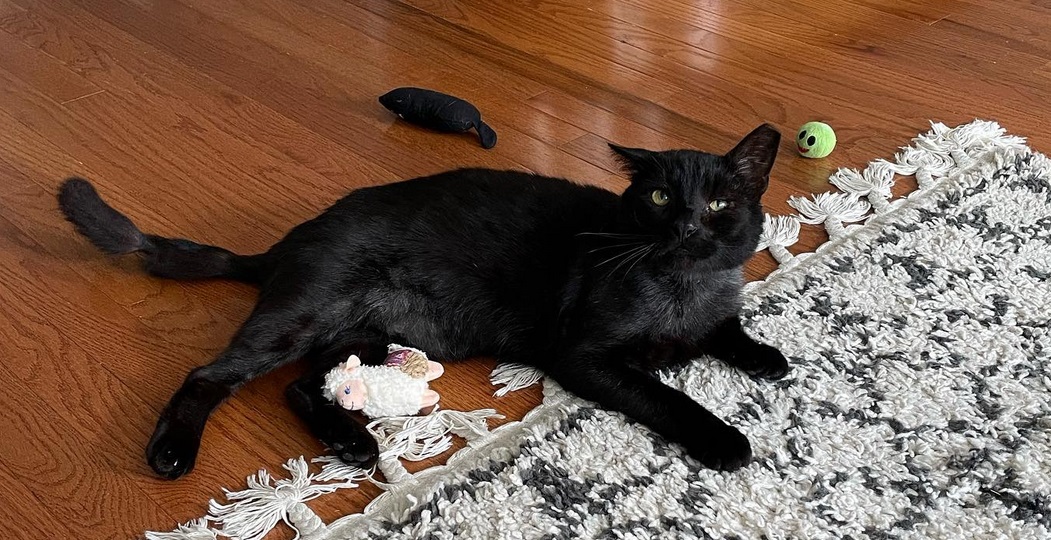
Buddy’s adjusted to the indoors, where he enjoys a perk he didn’t have during his life outside: Toys. Lots and lots of toys. Credit: Pennsylvania SPCA
Venanzi felt an emotional attachment to the little guy and offered to foster him with the hope of providing his forever home. It wasn’t clear if that would be possible: Buddy’s original family failed at making him an indoor cat because he was too accustomed to the freedom of being a stray, so they fed him and took care of him as best they could.
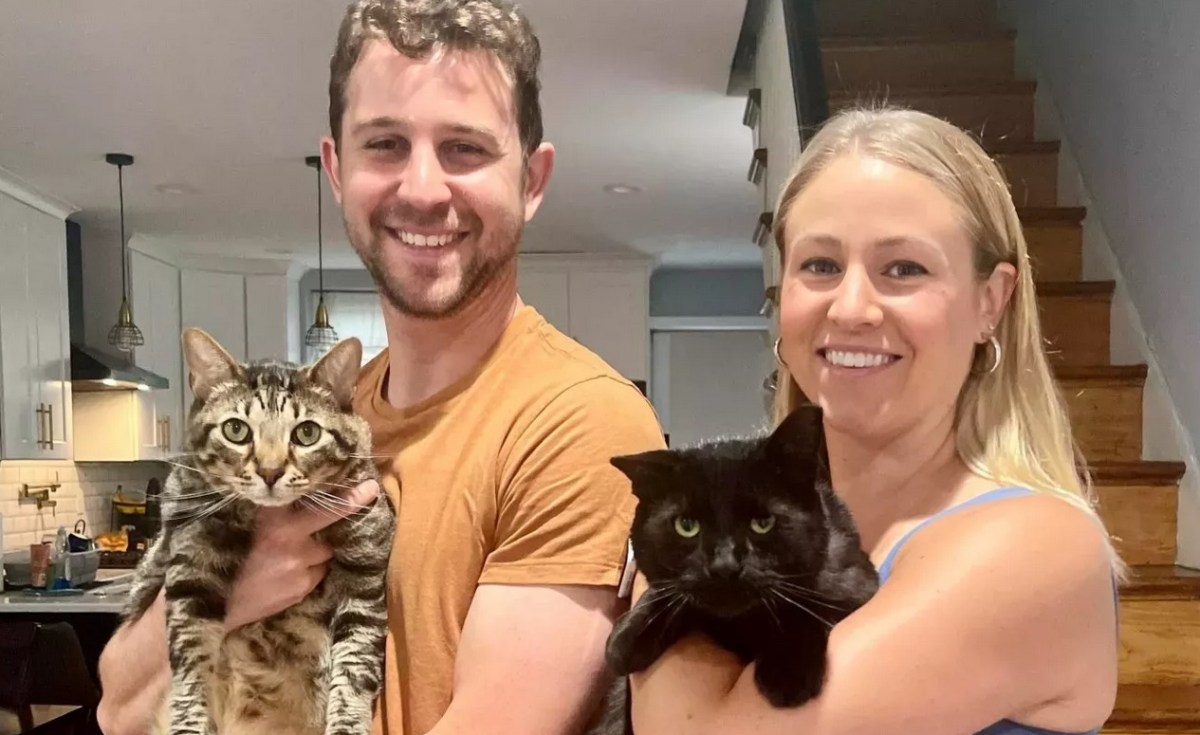
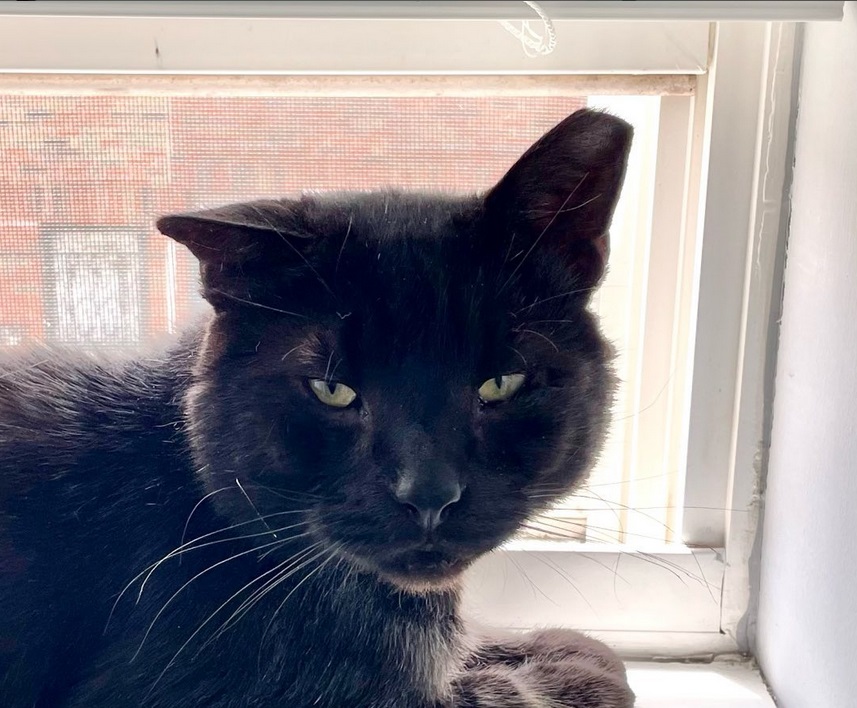
His brush with death seems to have tamed Buddy, who has adjusted to indoor life with Venanzi, her husband and their other cat, Teddy. Buddy enjoys “basking in the sun on a windowsill or watching the world go by from the front screen door,” the Pennsylvania SPCA’s Gillian Kocher said, and his new family “fell more and more in love” with him as the days and weeks went by.
“He has all the toys a cat could want, though his favorite seems to be an empty cardboard box for lounging,” she said. “He is loved, and he is home.”
With his story of perseverance and bravery, Buddy “has become a symbol of everything we do here,” Kocher said. The money left over from donations after all of Buddy’s veterinary needs were taken care of will be used to help other cats and dogs just like him who have suffered abuse and neglect.
You can support the Pennsylvania SPCA by buying a “Save Every Buddy” t-shirt or other gear on the group’s site.
Buddy has fully recovered from the wounds he suffered in March. Credit: Pennsylvania SPCA








 Pain In The Bud