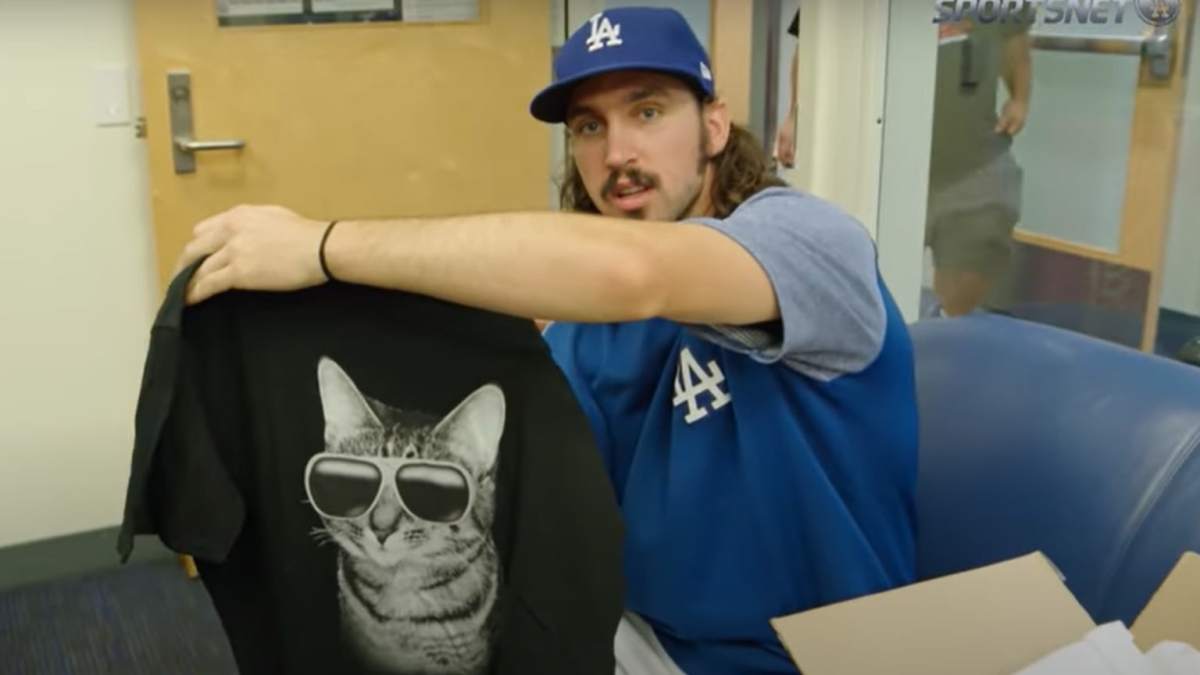
The headline is a quote from a text a man allegedly sent to his girlfriend after abusing her cat so badly that the poor kitty had to be euthanized.
The story is grotesque, tragic, and sadly not uncommon. Between 75 and 89 percent of domestic violence victims who have pets report that their partners threatened, abused or killed their companion animals, according to research from the ASPCA and SafeHouse, a non-profit that provides direct support to victims of domestic violence.
In the incident referenced above, an Indianapolis man was arrested and charged with killing a domestic animal and torturing or mutilating an animal, both felonies. The suspect, Rashawn Bentley, originally tried to stage the violence as the result of a break-in, but was undone by his own menacing texts to his girlfriend as well as photos of the injured cat, according to the local NBC affiliate, WTHR.
Just so it’s abundantly clear how we feel about this issue: if you abuse, harm or kill a cat, you’re not a man. You’re a weak, despicable, cowardly facsimile of a man whose “flex” is taking your frustrations out on an innocent animal one twentieth your size.
You should be arrested, charged with the most severe penalties under the law – even if they’re not commensurate with the horror of the crime you’ve committed – and imprisoned for years. The other inmates should know you killed a cat. You should be removed from society, because if you think taking life is an acceptable way to vent your frustrations, there’s something clearly wrong with your brain and you are a danger to animal and human alike.
Of course the majority of these attacks, especially targeting cats, are committed by men, but women aren’t off the hook here either. Some women do try to harm significant others by killing or abusing their cats, in straight relationships and relationships between women.
Ignore that study on supposedly healthy ‘vegan cats’
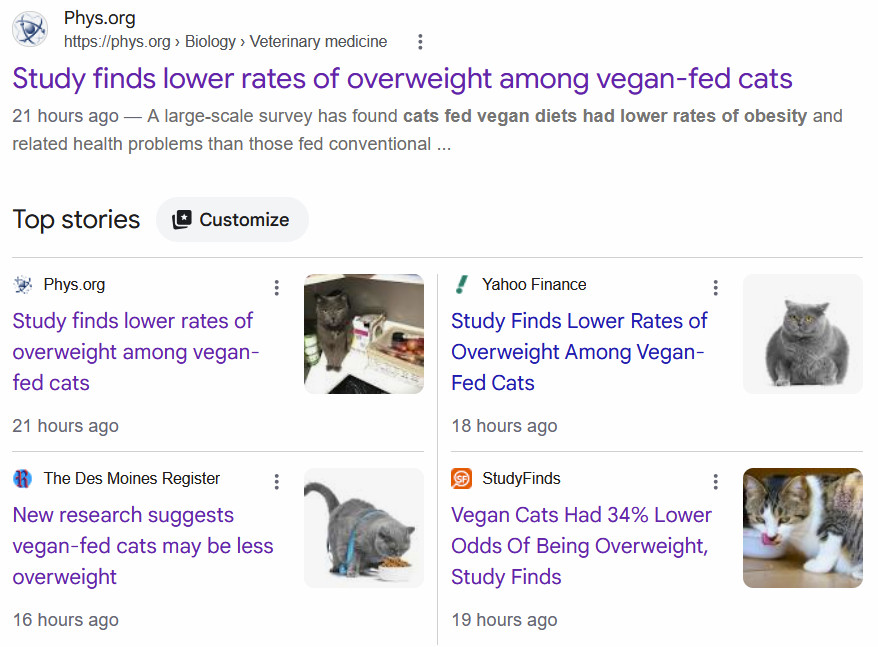
Headlines about a new study in Frontiers In Animal Science are trumpeting the supposed benefits of vegan diets for cats, who are obligate carnivores.
The media stories style the effort as a large-scale study involving more than 1,300 participants.
In reality it was an online survey that recruited cat caretakers from Facebook and recorded their subjective opinions about the health of their cats.
Everything, including reported weight, mobility, questions about potential physical problems, times fed per day, sex and neuter status, et al, was filtered through the self-selected respondents, not pulled from veterinary records. The respondents weren’t given reference illustrations or standardized criteria from which to base their subjective assessment of their cats’ weight.
There’s no way to determine if the people who participated were being honest, keeping records, guesstimating or just having a bit of fun.
To be clear, most of our criticism here is directed at the way online publications reported the results, not necessarily the authors of the survey, who chose a much more dry, cautious headline: “Impacts of a vegan diet on body weight and related health disorders in 1,305 cats: an exploratory cross-sectional survey.”
Obviously, even a jazzed-up version of that honest headline would never be used by click-chasing modern media.
Ninety percent of the people who responded were female, and 71 percent were from the UK, according to the published paper.
Then the authors kneaded the data with the usual opaquely-named practices: “exploratory regression analysis” (a data-mining technique), regression models (AI-assisted statistical technique that involves comparing existing data with the result you predicted/hope to see), sensitivity analysis (changing variables to assess their impact on the overall findings), and so on.
When all was said and done, 4.1 percent of the meat-eating cats and 3.1 percent of the vegan cats were over their ideal weights, in their humans’ estimation. Meat-eating cats were also more likely to be underweight (2.3 percent) compared to vegan cats (0.8 percent).
The conclusion? The findings were “non-significant,” the researchers wrote, along with the obligatory call for more research on the topic.
We should also point out that in addition to their classification as obligate carnivores, cats require specific proteins and nutrients (taurine, arachidonic acid, vitamins A and B12) from meat-based diets that they cannot synthesize themselves and are not found in plant-based protein. “Vegan cat food” must have those proteins and nutrients added. If cats are deprived of them, they suffer slow, painful declines that result in organ shutdown and death.
Because of their evolutionary history, cats aren’t as adept at breaking down plant-based starches and their bodies don’t produce enough of a specific enzyme (amylase) that breaks down starch and complex carbohydrates.
Human ideas of morality aren’t applicable to cats. Feed them meat.
Open comments Caturday! Although not mentioned in the headlines, today’s the day for open comments: anything off-topic, marriage proposals or modeling contracts for Buddy, updates on your own cats, suggestions on stories to cover and whatever else is on your mind. Happy Caturday!
Header image credit: Pexels