Bangkok Police ‘Arrest’ Cute But Aggressive Feline, Plus: Accused Serial Cat Killer A No-Show In Court

Police used the kitty’s mugshot to reunite her with her family. Meanwhile, a judge in California has issued a warrant for a man accused of murdering dozens of cats in his neighborhood.

When a kind passerby scooped up a lost cat and brought her to a nearby police station in Bangkok last week, police were happy to help reunite her with her family.

But the cat, whom they later learned is named Nub Tang (“Counting Money”) wasn’t particularly happy about being rescued, and she tried to chomp down on several officers who were trying to help her.

So a lieutenant who goes by the name Inspector Da online devised a novel way of making the best of the situation and reuniting Nub Tang with her family.

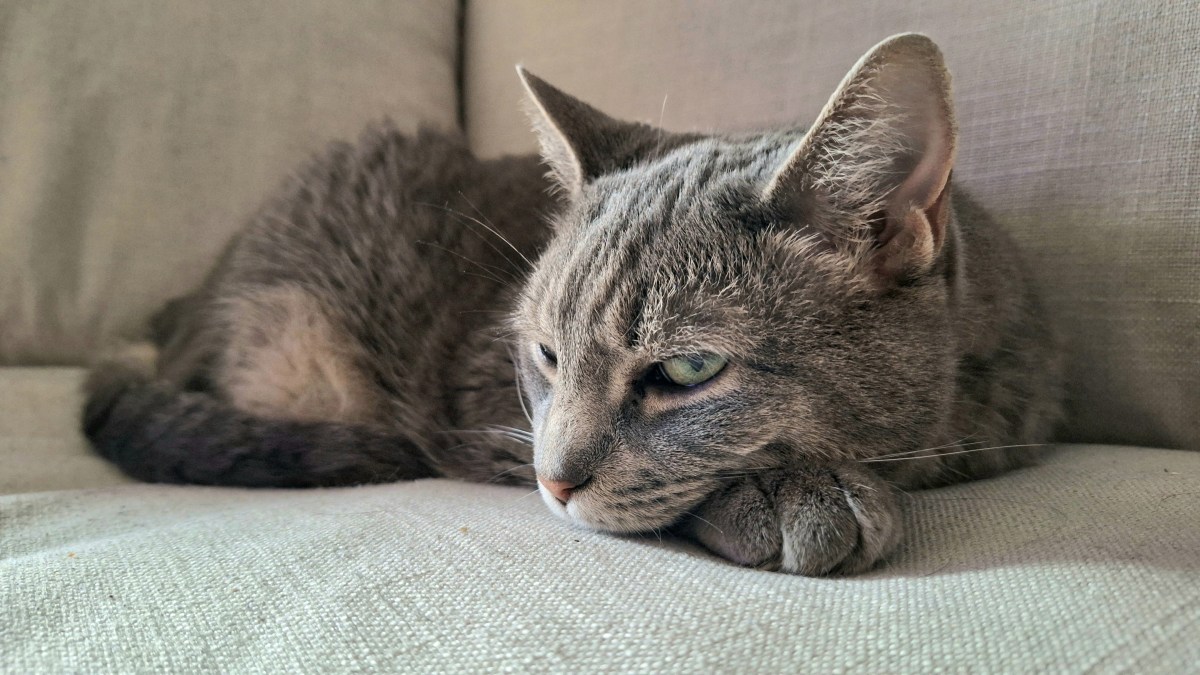
The Inspector “arrested” and “booked” Nub Tang on charges of assaulting an officer. He took a mugshot of the grumpy shorthair and took her paw prints, then posted them online.

Nub Tang even looked grumpy in her “mugshot.” Clearly, she’s a criminal.

The amusing images and story helped draw attention to the post, and the next day, after Inspector Da had taken Nub Tang home with him overnight to make sure she was comfortable and felt safe, Nub Tang’s humans saw the posts and contacted the precinct.

Inspector Da — real name Parinda Yukol Pakeesuk — happily handed the feisty feline back to her people, but not before posing for some photos with them and saying goodbye to his temporary pal.

Nub Tang has a lot of personality for such a tiny cat. Credit: Da Parinda/Facebook

Warrant issued for alleged cat killer who didn’t show for court

A California man accused of killing dozens of cats skipped out on his initial court appearance.

Police in Santa Ana arrested 45-year-old Alejandro Oliveros Acosta in April after media pressure prompted them to finally take reports of a cat killer seriously.

Neighbors had been lodging complaints and asking police to act for more than a year after pets and strays went missing. Acosta and his white pickup truck were captured on several doorbell cameras and home security cams, including one that caught a clear view of him allegedly luring and abducting a neighbor’s pet cat.

After their complaints failed to prompt action from police, people in the neighborhood turned to local media, sharing footage and information.

A local TV news report finally cranked up pressure on the cops, who arrested Acosta in late April. A search of Acosta’s home turned up the bodies of deceased neighborhood cats and evidence that Acosta had allegedly killed “dozens” of felines, a Santa Ana police spokeswoman said.

Acosta didn’t show up for a May 21 preliminary hearing. Now police are looking for him and the court has issued a warrant for his arrest.

The Santa Ana man previously posted $40,000 bail, money he will forfeit if he remains a scofflaw.

‘Petfluencers’ Make Their Cats Wear Clothes, Plus: Why A New Coat Color Has Emerged

The quest for clicks and attention is a race to the bottom, and “petfluencers” are willing to dive deep to differentiate themselves from the thousands of others trying to build an audience.

Clothes, sneakers and hats. Vitamin supplements, energy drinks and probiotics. Backpacks and costumes.

What do all those things have in common? People are buying them for their pets, not themselves, and they’re part of the reason people in the UK spent more on pets in 2024 than childcare, hobbies or dating, according to Nationwide UK.

The problem is, they’re not doing it for their pets. Experts, including veterinarians and animal behaviorists, tell The Guardian that most cats, aside from hairless varieties like Sphynx cats, don’t like wearing clothing, nor do they like wearing costumes, or taking baths with heavy perfumes and essential oils.

Influencers — or petfluencers — stage elaborate “pampering” scenes, and make their pets wear different clothes to show off their shopping “hauls.” Some pose their animals like dolls and find ways to coerce them to remain still. Audiences think it’s cute. It’s not.

As for me, I’ve got a handy chart when I’m unsure if Bud will be cool with something:

  • Make him wear clothes. Result: Get clawed to death
  • Give him baths with essential oils. Result: Get clawed to death
  • Make him wear sneakers. Result: Death by bite to the jugular
  • Force him to eat supplements or guzzle energy drinks. Result: Shredded skin and lots of blood, perhaps some light homicide.

While the animals themselves aren’t thrilled with these new trends, they probably won’t go away any time soon. There’s just too much money involved.

The average pet owner in the UK spent the equivalent of $163 per month on their companions, and only half of UK households have pets compared to 66 percent in the US. Although there’s not an apples to apples comparison of total expenses on pets per month by household in the US, Americans spend $68 a month on cats on average, according to research by ValuePenguin. For dogs, it’s about $110 a month.

‘Salty liquorice’ cats owe their unique coats to a missing snip of DNA

It’s always an interesting occasion when nature gives us something new, and the salmiak cat is definitely unprecedented in the world of feline aesthetics.

The unique cats, named after a popular liquorice candy from Finland, have a coat pattern that results from a gradient on individual strands of fur, starting out black and getting lighter toward the tip. It gives their coats a singular peppered look, and in photographs the unusual felines almost look as if they’re rendered in monochrome stippling.

Credit: Ari Kankainen
The Finnish candy the cats are named for.

The salmiak cat wasn’t the product of any breeding program, and reports in Finnish media say strays with the new coat pattern/color first emerged in 2007.

To find out how the salmiak emerged, a team of Finnish, British and American scientists sequenced the genomes of two salmiak cats. They found a mutation in genes that express coat color that resulted in a missing sequence of DNA, and they confirmed the mutation is recessive. That means to get salmiak kittens, both parents have to have the mutation.

Feeding Your Cat Flamin’ Hot Cheetos Is Not Funny

A woman taunts her cat with ultra-processed snacks, then laughs at his disgusted reaction when he gets a taste. The “cute” video has gone viral.

From the bowels of TikTok comes the latest “cute” video of an attention monger abusing her cat, this time by feeding him Flamin’ Hot Cheetos.

The user opened the bag in front of Butters the cat, waved the Cheetos in his face, held them up to his nose, then feebly protested “These are my snacks! It’s spicy!” after getting the little dude interested.

She allowed Butters to eat Cheetos from her hand and lick her fingers, and his reaction is about what you’d expect from an obligate carnivore who just ate ultra-processed food made from cheap corn filler, chili powder, cayenne pepper, and cancer-causing artificial food dyes. He’s disgusted and uncomfortable.

“You can’t have these! Let me wave them in your face and taunt you, so you know you can’t have them! Haha, isn’t that clever?”

The difference is, Butters can’t guzzle milk or water to wash the taste away, so he settles for angrily swatting at his human while she laughs at him.

The woman thought her video was so clever, she’s shared it online and is enjoying the cheap dopamine hit that comes with accumulating internet points, aka likes.

Here’s a question for people who make social media “content” at the expense of their pets: how many likes are worth destroying the trust between you and your cat(s)?

I’m sure some people think I’m a scold, but all it takes is one clown to start a viral trend, and then all of a sudden you have thousands of people, all of them desperate for validation from strangers on the internet, foisting Flamin’ Hot Cheetos and Takis on their unsuspecting cats. As a general rule, the dumbest and most abusive trends go viral.

London Under Siege As Pro-Palmerston Forces Seek To Overthrow Larry The Cat

The battle between the UK’s most prominent felines could upend the political order and engulf the realm in chaos!

LONDON — Larry the Cat patrolled his familiar route through Downing Street, nodding at the fully armored soldiers and security professionals who lined the narrow passage as if to say “Alright, then!”

The UK’s most beloved feline and de facto head of state felt it was important to personally inspect the defenses and raise the morale of his men as more reports arrived of intense fighting on the edges of the city, where Larry loyalists clashed with supporters of Palmerston, the former chief mouser at Whitehall and Larry’s longtime nemesis.

Larry vs Palmerston
Palmerston, left, and Larry, right, during one of their epic battles while Palmerston was still top cat at Whitehall.

The British public were told Palmerston “retired” in 2020 to enjoy a more leisurely life at his countryside estate, putting an end to the intense skirmishes between himself and No. 10’s chief mouser.

But it appears Palmerston’s “retirement” was but a ruse, and the calculating tuxedo has spent the past four years laying the foundations for a coup aimed at deposing Larry.

“This has come as quite a shock to us all, obviously,” Prime Minister Keir Starmer told reporters. “Larry’s primacy was always viewed as ironclad. He’s outlasted five prime ministers and will remain here long after I’m booted out of the job. A challenge to his rule is unthinkable, and we will not allow this vile Palmerston-led rebellion to endanger our nation!”

A diplomatic party led by Sir Jacob Rees-Mogg was dispatched to the Palmerstonian camp to discuss a cessation of hostilities, but the former MP was sent back tied to a donkey and smelling powerfully of feline urine.

FCO_Chief_Mouser_Palmerston
Palmerston during his Whitehall days. The tuxedo was the highest ranking feline in the UK’s foreign office.

Analysts called the rebellion the most serious threat to the UK’s political stability in centuries, warning of potential uprisings of Palmerston sympathiers in Wales and Scotland.

“As loved as Larry is, he’s come to be seen as an insider, comfortably ensconced in the halls of power,” said Nigel Bancroft, a political columnist with the Times. “Palmerston has reinvented himself as a populist fighting for the interests of the common man. That rebranding, so to speak, has allowed him to gain favor with working class citizens.”

“But make no mistake,” he added, “Palmerston is ruthless.”

The Palmerstonian loyalists delivered a letter with a list of demands to No. 10 Downing St., beginning with the voluntary resignation of Larry and his banishment to the Isle of Man.

They also warned Starmer to banish his two family cats from No. 10, clearing the way for Palmerston to assume power unchallenged.

Despite leading an uprising, Palmerston was making inroads with the public

“That Larry, he’s an okay bloke,” said Alastair Hughes of Gravesend. “But Palmerston is a cat of the people. He gets us. He’s the kind of lad you can have a pint with, know what I mean?”

No Respect! 6% Of Americans Think They Can Beat A Grizzly Bear In A Fight, 69% Think They Can Beat A Cat

A Yougov survey of Americans produced some hilarious results when respondents were asked how they’d fare in hypothetical combat.

In the opening scene of Netflix’s Afraid, a woman is using her iPad in bed when she asks her husband: “Did you know six percent of Americans believe they could beat a grizzly bear in a fight?”

I had to pause the movie right there and see if there was any truth to the claim. Sure enough, in a Yougov survey from 2021, titled “Rumble In The Jungle,” six percent of respondents — almost entirely men — said they could defeat a grizzly bear unarmed.

Grizzly bears top out at more than 2,000 pounds, can crush bowling balls with their paws and have claws the size of large knives. They’re also extraordinarily well-protected, with heavy fur and fat protecting their vital organs. If you think you can harm one unarmed, let alone kill it, well, good luck with that.

Incredibly, eight percent said they could defeat a lion, gorilla or elephant, while 17 percent thought they could take on a chimpanzee. Again, the respondents who liked their own odds against extraordinarily lethal animals were almost exclusively men. The survey doesn’t say what they were smoking when they responded.

Buddy

Domestic cats fared poorly in the imaginations of Americans: 69 percent thought they could defeat the little stinkers in hypothetical battles. Only rats fared worse, with 72 percent sure of victory in unarmed single combat.

“This is really an insult to felines,” said Buddy the Cat, a combatologist at Buddesian University. “However, we jaguars fared much better, as we were projected to win about two-thirds of hypothetical fights against other animals, including elephants, rhinos and tigers. Personally I think it’s closer to 99 percent, but I won’t protest. It’s better for us if we’re underestimated.”

He chalked human overconfidence up to the fact that people are “bizarre creatures who live in a fantasy world,” and have “an unfulfilled yearning to be something more than our servants.”

“They don’t have the claws, teeth or, like, the muscle fibers we do,” he explained. “Those advantages make it possible for me to kill a caiman with a single bite or tear an anaconda apart in seconds. Jaguar means ‘He who kills with one leap,’ did you know that? Yeah, it’s pretty badass.”