Blog Posts

UK Man Pays $22k To Have Cat Cryogenically Frozen, Hoping To Revive Her In The Future

Using a technology most commonly associated with science fiction, the UK man is banking on a technologically gleaming future where he and his cat can be revived and meet again.

A man in the UK has spent a small fortune on the possibility of reviving his dead cat.

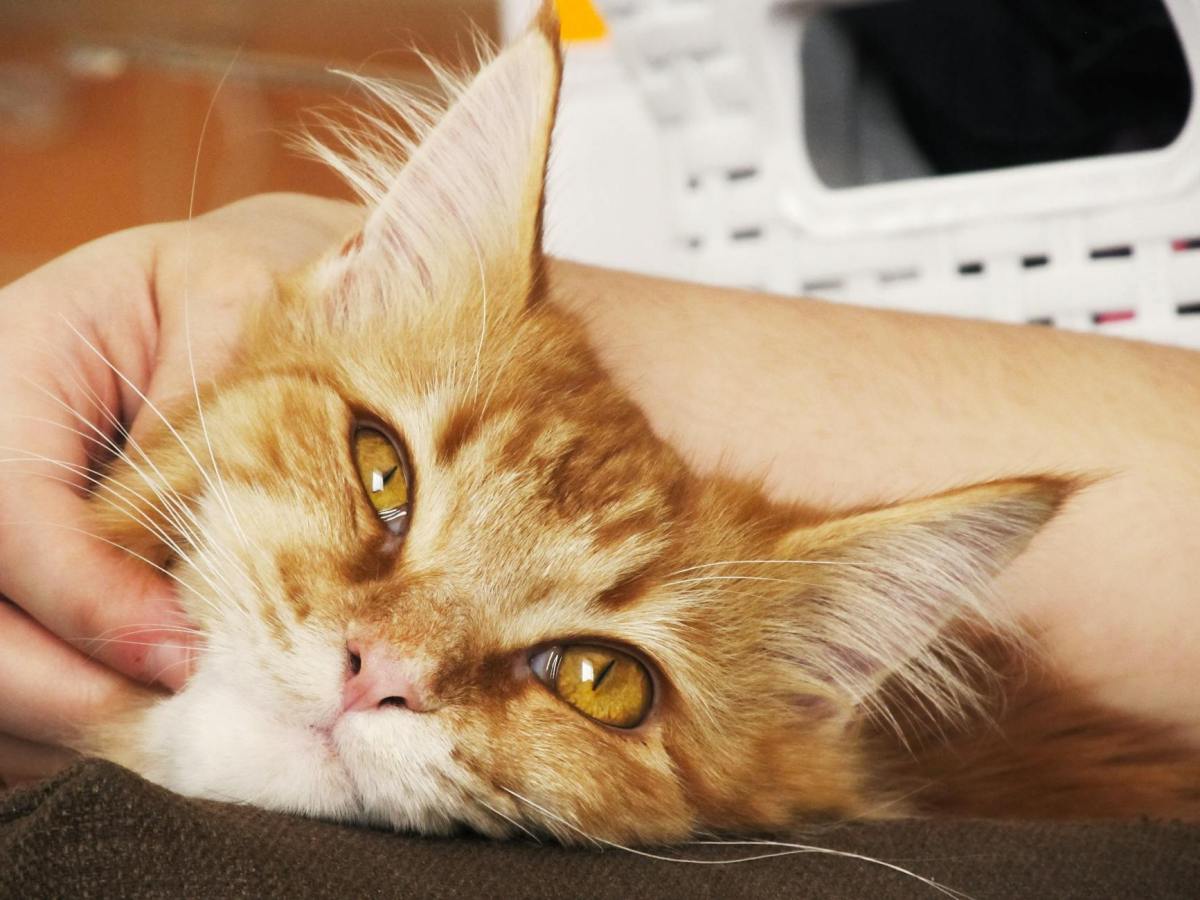
Mark McAuliffe says he was so upset when his 23-year-old cat’s health began to fail that he made arrangements with a Swiss firm to preserve her body when she passed away.

The 38-year-old adopted Bonny, a domestic shorthair, while he was a teenager, and she’s been with him for more than half his life, including his entire adulthood.

Usually when stories like this make the news, they’re about people who preserve their cat or dog’s DNA for cloning.

That’s not what’s happening here.

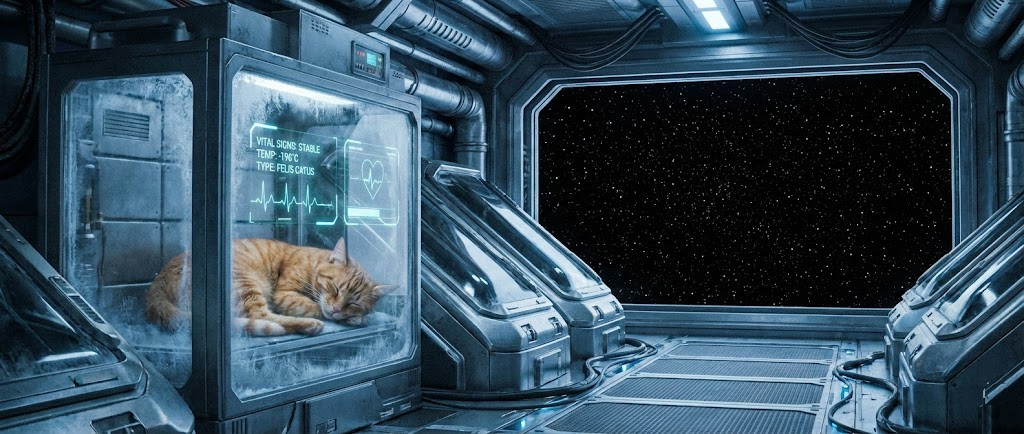
Bonny has been placed in a cryopreservation unit, which uses liquid nitrogen to freeze her entire body. Freezing a body essentially suspends it in time. Extremely cold temperatures — as close to absolute zero as possible — suspend cellular activity, including decay.

It’s called cryopreservation, and while the concept is most frequently invoked in science fiction, putting a body into cryostasis is real and within the technological capabilities of modern science.

The company McAuliffe paid to preserve his cat is Switzerland-based Tomorrow Bio, which is affiliated with the European Biostasis Foundation. The technology is used for several other purposes in the medical field, the food industry and in certain engineering applications.

McAuliffe is gambling on the future, or a version of it in which people and animals can be revived and repaired, like Lazarus in a lab. But it wouldn’t be much of a future for Bonny if her human wasn’t with her, so McAuliffe has reserved a spot for himself as well, hoping to meet her in better times.

“This cushioned the blow about Bonny’s death,” he said, “because I have got it in the back of my mind that it is not going to be the final goodbye.”
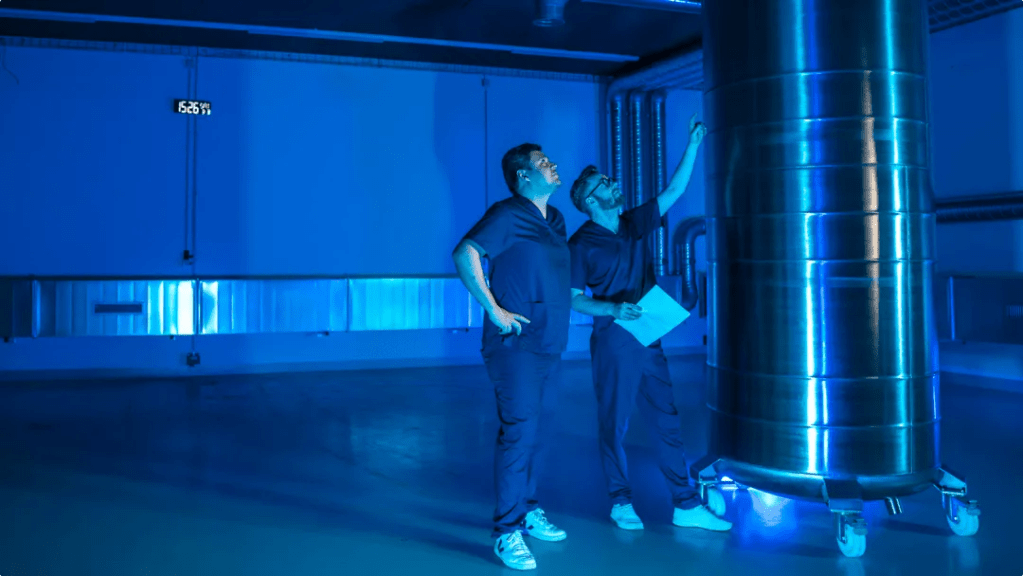
Employees of Tomorrow Bio inspect a liquid nitrogen pod. Credit: Tomorrow Bio

The European Biostasis Foundation runs the cryovaults where clients are kept. The organization told the Daily Mail that it has five “full body patients,” 15 preserved brains, two dogs and eight cats. In addition, more than 700 people have made arrangements to have their own bodies frozen upon death.

There is, of course, a hiccup.

While freezing a body is possible, thawing is not — not without destroying the body.

That’s because ice crystals form and rupture cell walls when the body is brought out of cryopreservation, no matter how slow the process.

The workaround involves using cryoprotectants, essentially a form of anti-freeze that would prevent the formation of damaging ice crystals despite the temperature.

That, however, introduces an entirely new set of problems, including the fact that cryoprotectant is toxic at the levels required for preservation.

Preserving the brain presents an entirely different set of problems, as our neurons and neural pathways begin to decay immediately after death. Our brain topology and neural connections are part of who we are, part of what makes our minds uniquely our own. Neuroscience and cryostasis technology each have a long way to go before scientists can even attempt to thaw a brain.

So by spending almost $22,000 to preserve Bony, and buying a plan to preserve himself (at a cost of $230,000), McAuliffe is banking on major breakthroughs in biology, as well as the ability to precisely control temperatures. To successfully thaw a body without destroying it, the entire body must be warmed at the same time, including all internal organs. That’s a significant technical challenge.

It’s also a gamble on the general shape of the future, placing hope that progress will continue. It assumes we won’t lapse into another dark age, that we won’t lose technology and expertise to devastating wars, plagues or other disasters that could set humanity back decades or centuries.

Finally, there’s a major hurdle that has little to do with science behind cryopreservation. It’s the simple fact that human lives are short, companies that promise centuries of operation can’t guarantee that outcome, and a lot can happen while a person sleeps away those years.

There’s a great short story by the Welsh science fiction novelist Alastair Reynolds about a wealthy man who wakes after centuries of cryosleep to find that the company who managed his crypt went bankrupt. From there it changed hands several times until it ended up in the portfolio of a corporate raider.

So the narrator, expecting to be woken to fanfare, deferential treatment and a bright technological future instead finds himself indebted and facing a reality much different and more depressing than he ever imagined.

I sympathize with McAuliffe, who obviously loves Bonny a great deal, and I see the appeal of becoming a refugee from the past, entering into a cryovault in the hope of emerging into a better future. But man, that’s a huge gamble.

In the meantime, there are plenty of cats who need homes and have a lot of love to give. Every shelter cat is a potential Buddy!
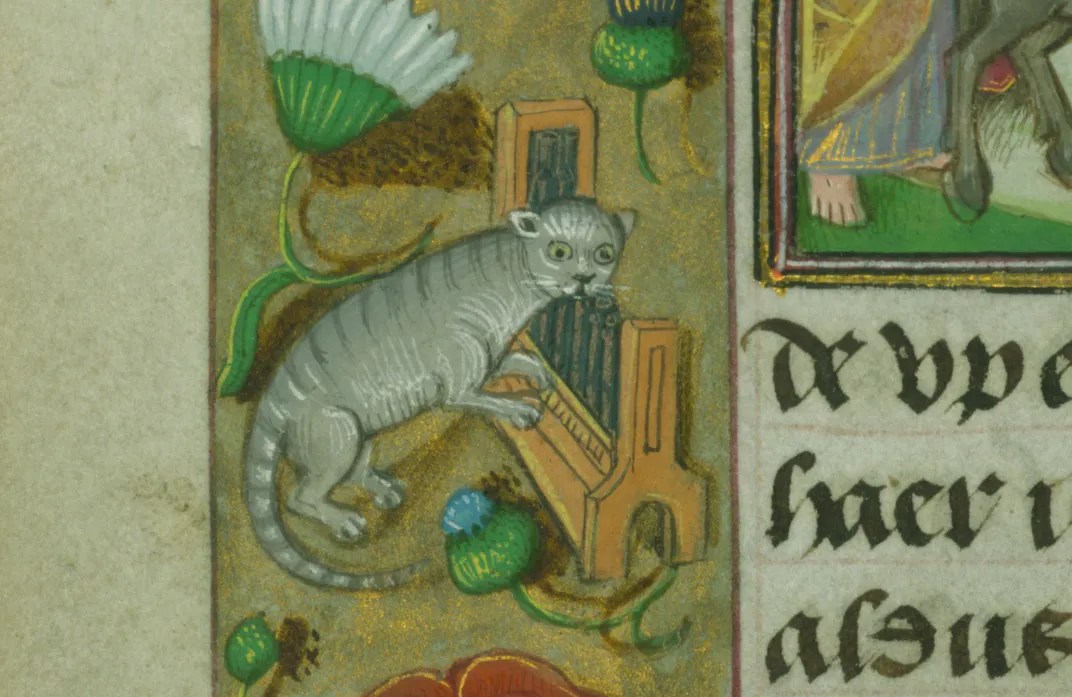
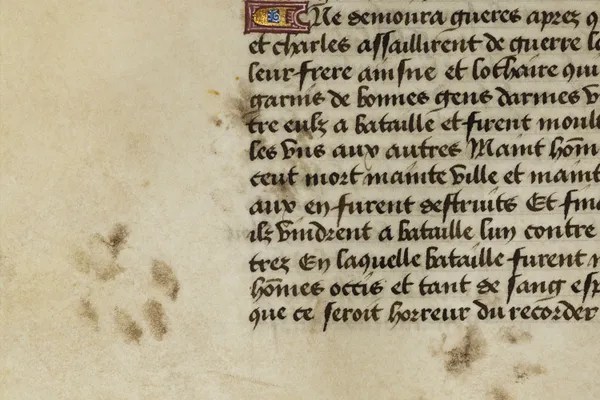
‘I Tread Where I Please’ Said Cat Who Left Paw Prints On Manuscript 500 Years Ago

It turns out cats have been adding their special sauce to our communications for as long as written language has been a thing.

Illuminated manuscripts date back long before the printing press, and their manufacture was arduous.

Literacy itself was rare in the Dark Ages and usually only the province of educated nobility and the professionally religious. Most people had no hope of learning to read, so the monks charged with copying religious texts were already practitioners of a rare skill for their time.

They weren’t just writing either. They carefully illustrated each page with drawings, cartouches and other decorative touches, and the text itself was a form of art in its calligraphic symmetry, designed to be beautiful as well as legible.

It took thousands of hours to complete a manuscript. There was no whiteout and no do-overs: a mistake meant the page had to be scrapped even if it represented a week’s worth of work.

So when a Flemish scribe finished a page of his manuscript and set it aside, he thought he was in the clear — until a cat came along and left its own signature in the form of paw prints.

Three of them, in fact, representing one and a half kitty strides. Two of the feline’s little feet found white space, but another landed right on top of the meticulously rendered text.

The feline-marked parchment in all its glory.

It kind of puts keyboard cats in context, doesn’t it? Our four legged friends may occasionally ruin our drafts or emails — or in my case wreck a music recording session with a discordant keyboard solo by walking across a synthesizer at an inopportune time — but at least they don’t cost us dozens of hours of work.

The 500-year-old, kitty-marked manuscript is now the centerpiece of “Paws On Parchment,” a new exhibit at Baltimore’s Walters Art Museum.

Click here for more details from the museum, which is open Tuesday through Saturday, with late hours on Thursday evenings. Admission is free.

And if you ever take up calligraphy as a hobby, keep your work hidden from your feline overlords!

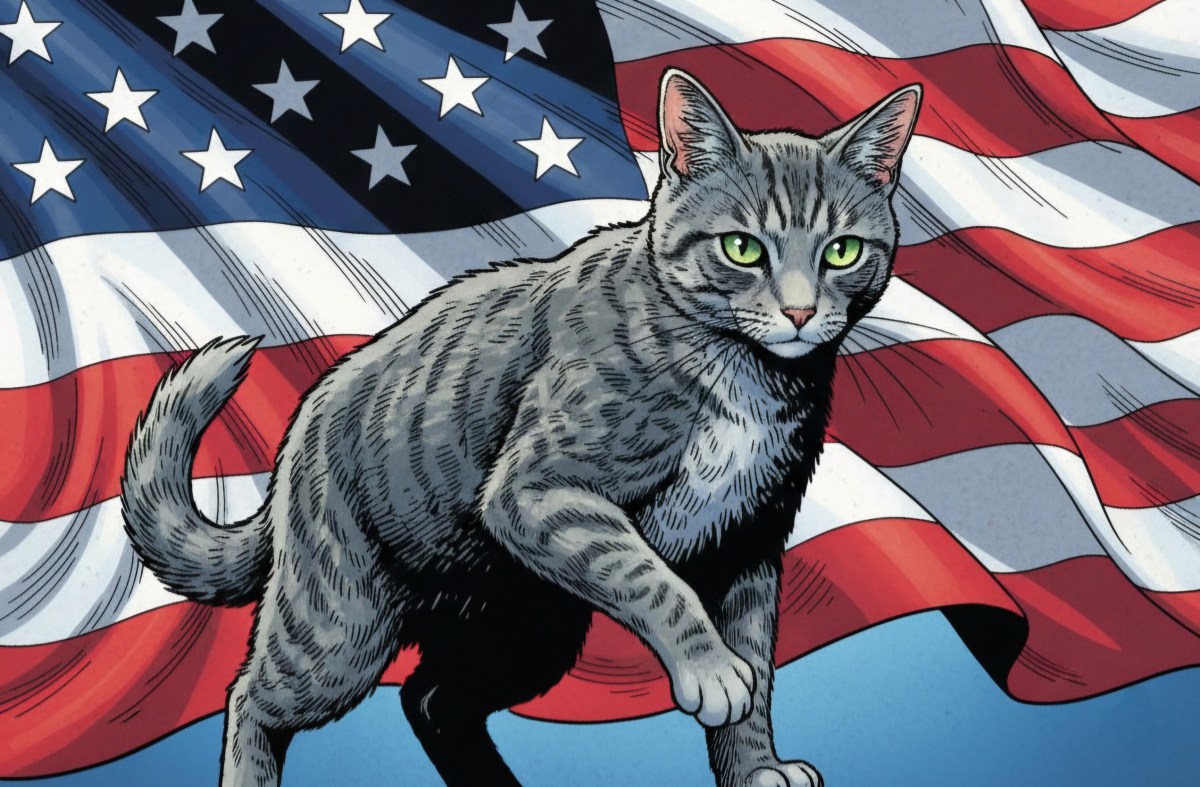
Wordless Wednesday: Buddy Reveals Patriotic New Budsden Flag

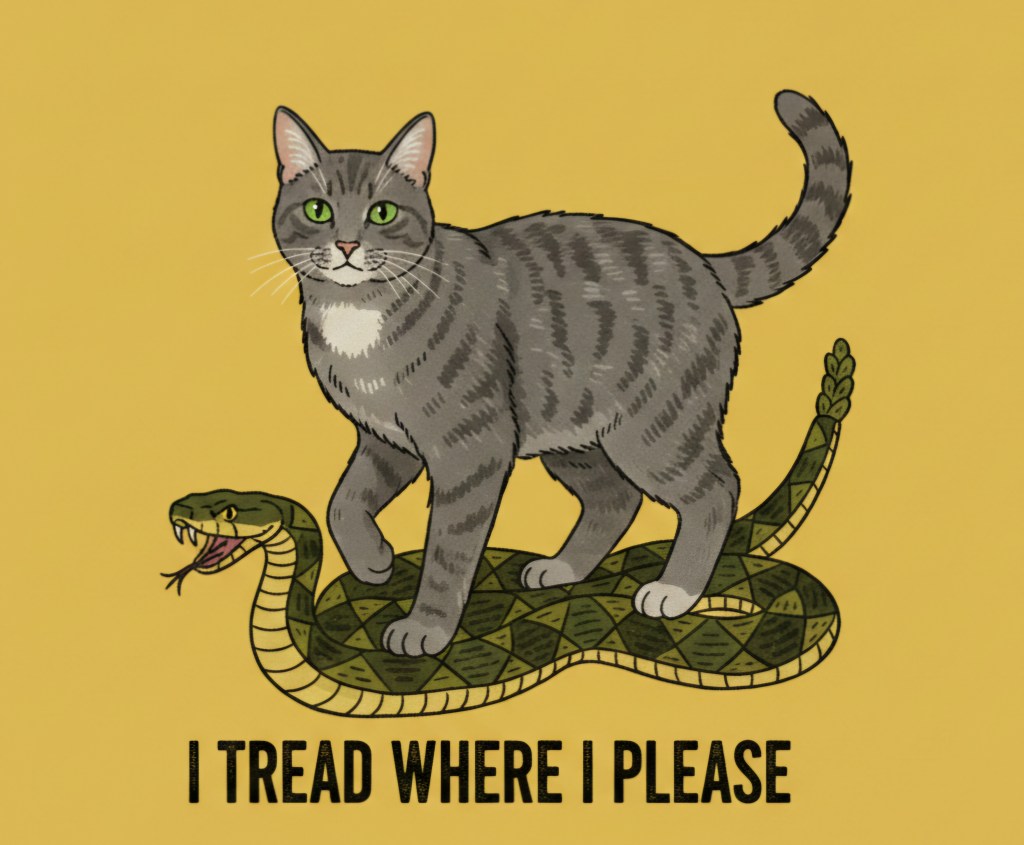
The Budsden Flag asserts Buddy’s right to tread wherever he wants.

Buddy the Cat revealed the new Budsden Flag on Wednesday, his version of the famous Gadsden Flag.

The message is simple and applies to all felines:

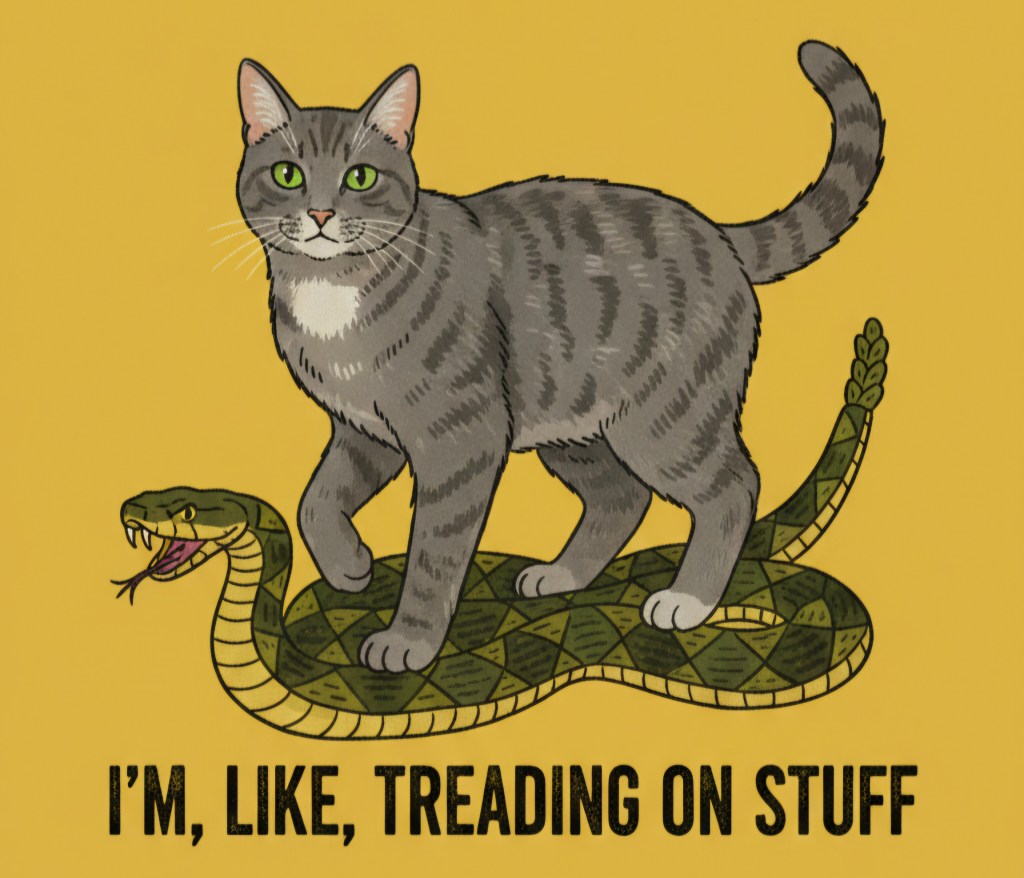
Here’s an alternate version for occasions when the treading is already in progress:

Next up: Buddy educates Americans on the proper use of the phrase “Molon lave.” Stay tuned!

Predator: Badlands Is An Epic, Surprisingly Funny Adventure, And Even Has A Breakout Character Named Bud

Badlands is a romp through a vividly realized alien world filled with danger. It’s also a film with heart.

Hollywood pumps out so much disappointing content, especially in the age of streaming, that it’s easy to become disillusioned with movies altogether.

But every once in a while there’s a film that reminds you how much fun movies can be, hitting all the right emotional notes while taking you completely out of this world for two blissful hours.

Predator: Badlands is that kind of movie. Unexpectedly funny and poignant, it also delivers the kind of action audiences have come to expect from the Predator franchise — and then some.

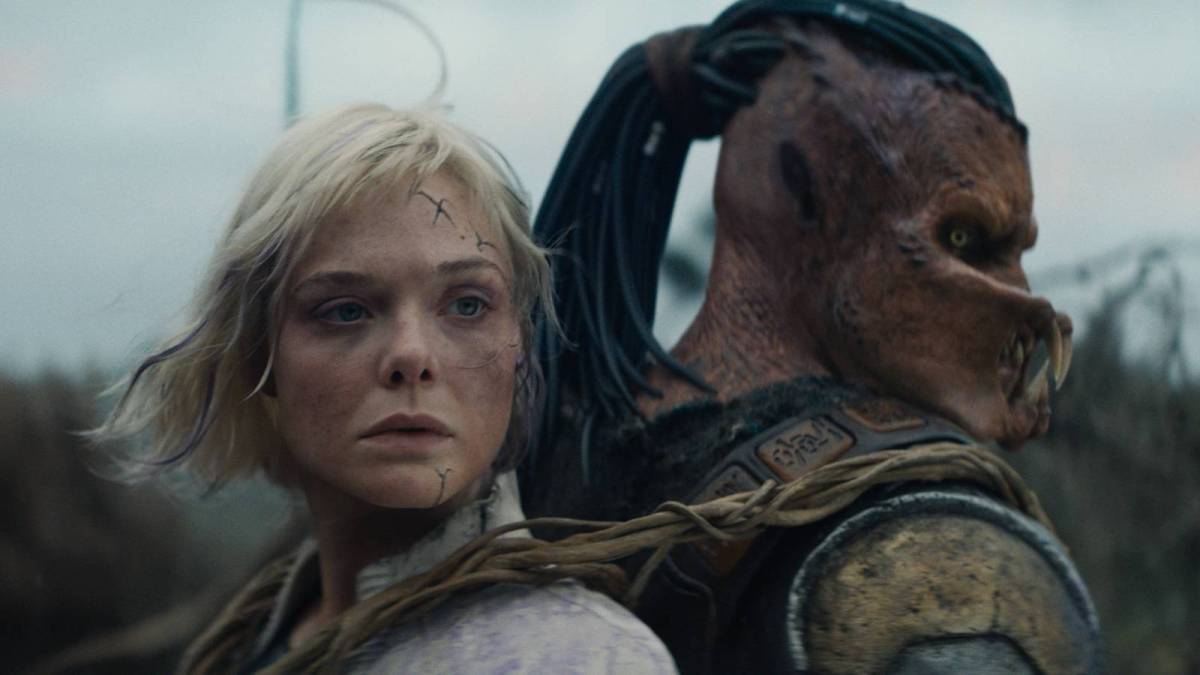
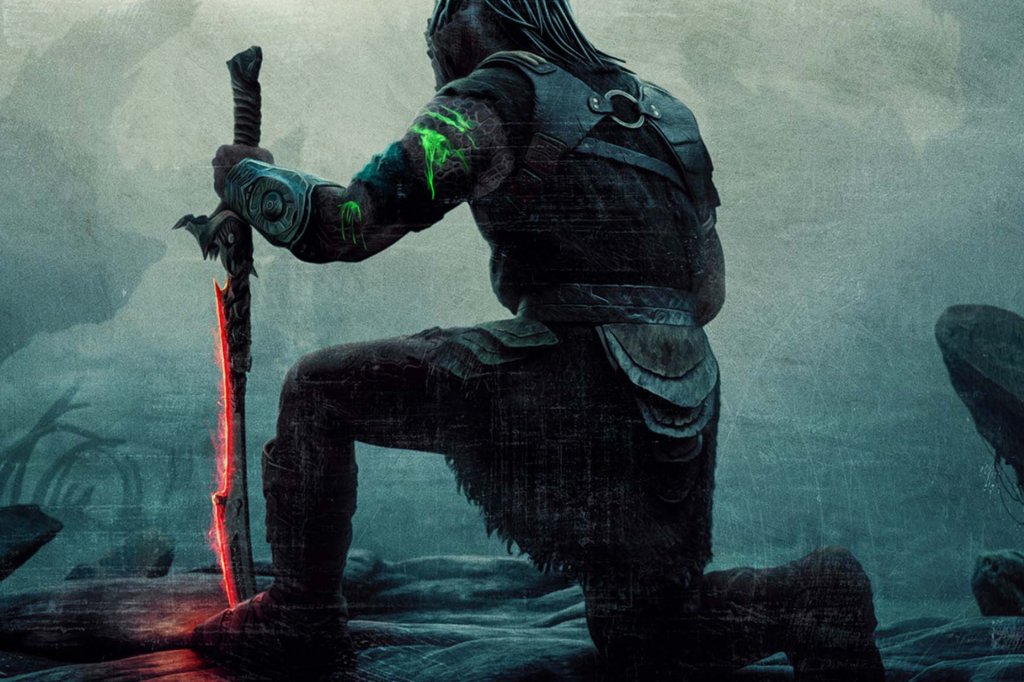
The biggest change here is that, for the first time, a Yautja (the alien species we call the Predators) is the protagonist.

Njohrr is a Yautja clan leader who believes Dek is not strong enough to earn his place in the clan.

Dek isn’t just any Yautja. He’s a youngster who is horribly wronged in the opening minutes of the film and sent to Genna, a place his species calls the “death planet” because virtually every form of life there is monstrous and spectacularly lethal.

His own death is a foregone conclusion on the brutal world until he meets two unlikely allies: Thia, a damaged synthetic (android) built by the notorious Weyland-Yutani corporation, and Bud.

Bud steals the show, but I wouldn’t dream of robbing anyone of the pleasure of experiencing Bud the way writer/director Dan Trachtenberg intended, so I will say no more.

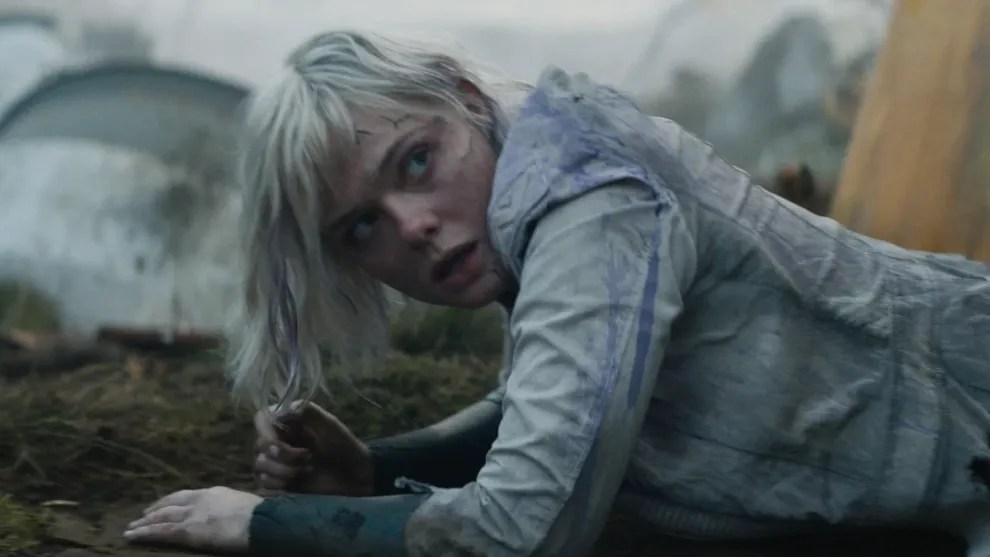
Elle Fanning and Dimitrius Schuster-Koloamatangi play Thia and Dek, respectively. Fanning adds a human element as she and Dek team up initially for survival, then out of loyalty to each other.

Badlands has a lot of heart and a script that knows just when to slice the tension. In one quiet scene after surviving an encounter with a particularly nasty creature, Thia (an energetic Elle Fanning) raves about the experience and the excitement of accompanying Dek and Bud on a hunt.

“The Dynamic Trio! Remember when we went down the tree? That monster’s mouth? I mean… Uggh. Didn’t smell great, didn’t smell great, but we got him. We got him! Thank you, seriously, for that experience. Truly amazing. Thrilling! Truly thrilling.

“What was your favorite part?” she asks the young Yautja.

“When my sword pierced the creature’s skull and its blood ran down my face,” Dek deadpans.

Dek is not invincible, and he’s without the vast majority of his arsenal, with only his trusty heat sword to defend against the hyper-aggressive fauna of Genna.

This is Trachtenberg’s second Predator film, and Badlands exists because he proved there was life still left in the franchise with 2022’s Prey.

That movie was unfortunately streamed direct to Hulu without a theatrical release, as were several big time films that year, because of a resurgent COVID wave. (Remember the Delta variant?)

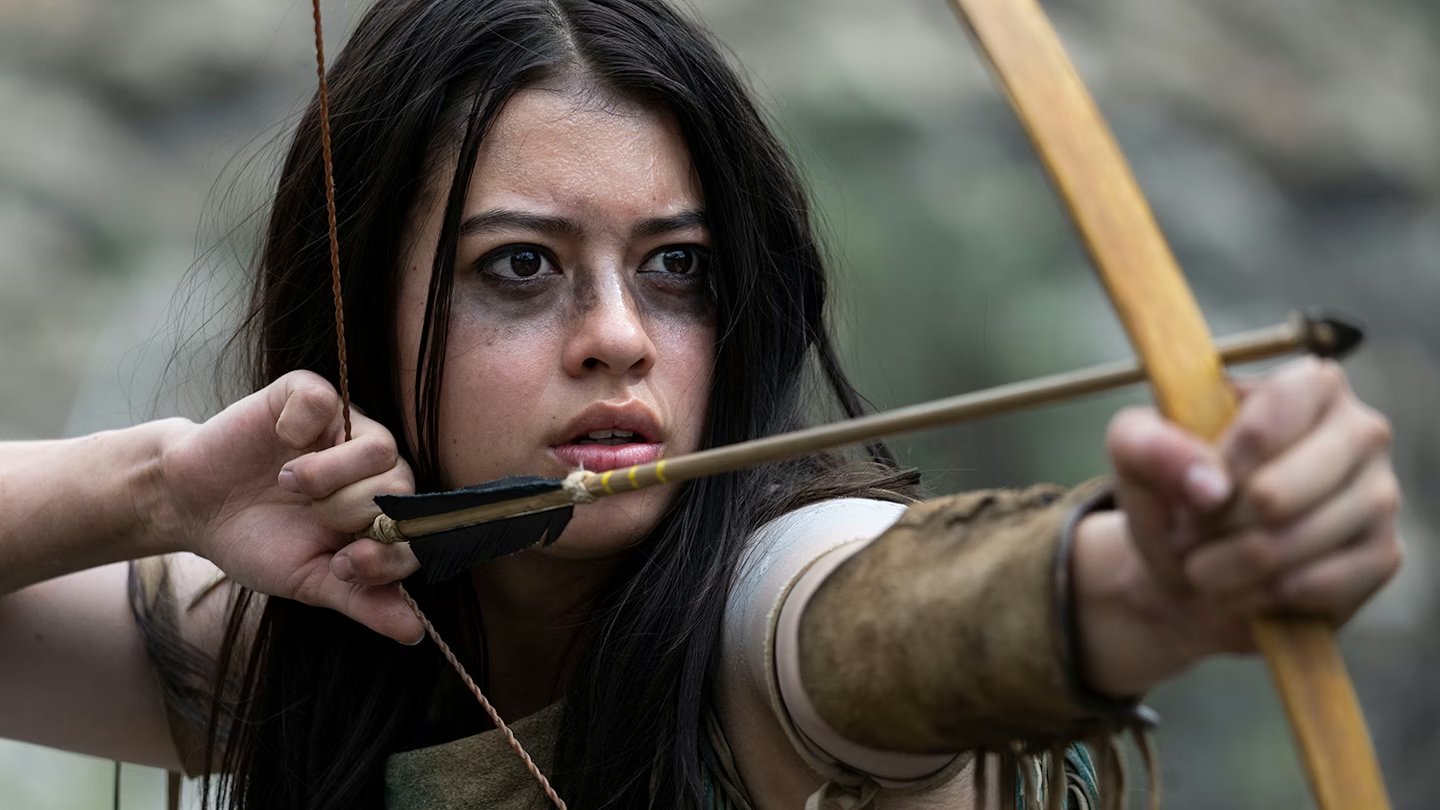
But critics and audiences, including your humble Buddesian correspondents, found a lot to like in the story of Naru (Amber Midthunder), a young Comanche woman living on the Great Plains in 1719. After encountering a Yautja, Naru warns her tribe that a mysterious and dangerous creature is stalking their lands, but they laugh at her and accuse her of telling tall tales — until they see the Yautja for themselves, at which point they don’t find it amusing anymore.

Midthunder was fantastic, and Prey balanced its historical setting with stunning action sequences and quiet character moments.

Amber Midthunder as Naru in 2022’s Prey.

In earlier installments, including Prey, the Yautja were always the antagonists. We knew they were a warrior culture, that they followed an honor code and possessed fantastically advanced technology, but for the most part the Yautja remained a blank slate aside from some non-canonical media (mostly novelizations, comics and games) that attempted to expand the universe.

Badlands demystifies the Yautja somewhat out of necessity, which is always a dangerous gamble (just ask the xenomorph of Alien fame, which lost its mystique half a dozen sequels ago), but significantly raises the emotional stakes.

Dek isn’t invincible. Circumstances have robbed him of most of his arsenal, he’s thrown into a perilous and unfamiliar world, and he’s haunted by the fresh memories of the tragedy that sets off the events of the film.

That makes it easy for the audience to identify with and root for Dek, despite the difficulty of conveying emotions with alien facial features. Dimitrius Schuster-Koloamatangi deserves credit not only for imbuing Dek with physicality, but also for getting the most he can out of the Yautja youngster’s brooding body language, howls of frustration and slowly dawning realization that he can choose his own path in life.

It may take a planet teeming with horrors to make an underdog of a Yautja, but Badlands succeeds on that count.

Predator: Badlands set a record for the franchise with a $40 million opening weekend, and pulled in $184 million total at the box office. It was made available for streaming this week. With the financial success, and the positive reviews from critics and fans alike, it’s possible we’ll see Dek, Thia and Bud continue their adventures in a sequel.

What’s Your Cat’s Petting Limit?

A netizen’s cat tolerated an astonishing 176 pets from his human!

An Instagrammer decided to test the limits of his feline overlords’ tolerance for pets, and it was instructional.

Porky, who looks like he’s a British shorthair, lasted 107 repetitions of his human’s hand rubbing his head before he’d had enough. His brother, Jim, lasted 176 repetitions!

Both are extraordinarily polite. Porky just got up and left when his human kept going despite clear signs that he was at his limit, like a swishing tail and shifting positions. Jim was still enjoying having his head stroked after the 100 pets mark.

I could not get away with this. Not even close.

First, Bud doesn’t like that kind of palm-open head petting. I’ve gotta be gentle and very precise, being careful not to touch his ears, which clearly annoys him. The limit is maybe…four? Five?

He likes it when I rub his cheek glands, under his chin, and around his jowls. I know enough to stop and let him give me a signal if he wants more.

He’ll move if he’s had enough, but if I’m not paying attention and I persist, he’s got no qualms about smacking me or biting down on my hand. He’s learned that warning bites should be gentle, but after a clear warning, all bets are off.

I was awarded with ELEVEN scratches on my left arm last week, although that was a case of misdirected aggression, not an overstimulation outburst. I should have seen it coming, since I know the signs indicating he’s frustrated about something and needs to release energy.

Yes, my cat is a jerk. Yes, I still love him. In fact, I’m glad he’s my Buddy and he didn’t end up with people who think cats do things out of spite, or would physically punish him for acting like a cat. A jerk of a cat, but a cat all the same.

He’s taught me to pay very close attention to body language, ears, whiskers, tail swishing, and all the other ways cats signal to us aside from verbalizing their feelings.

How do your feline masters respond to petting, and what are their limits?