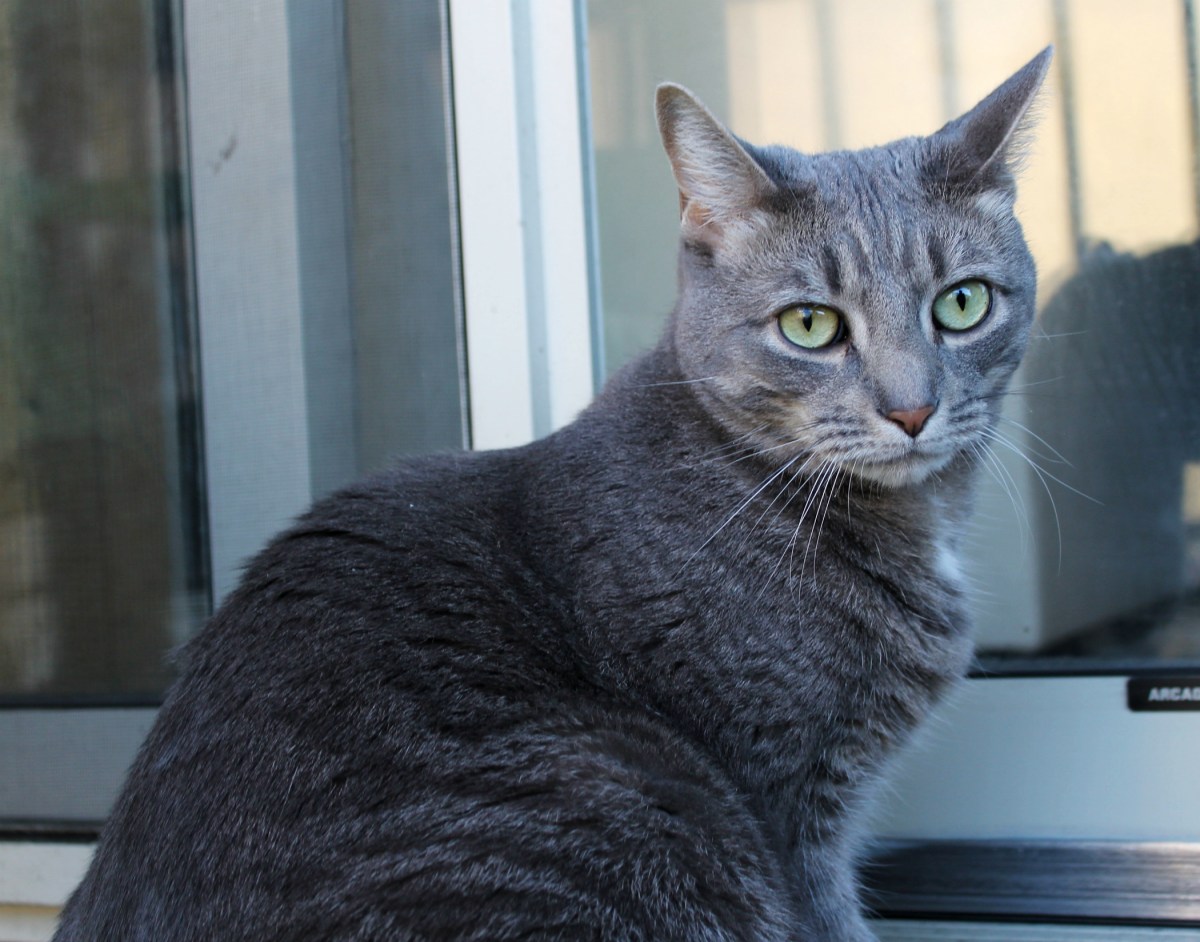
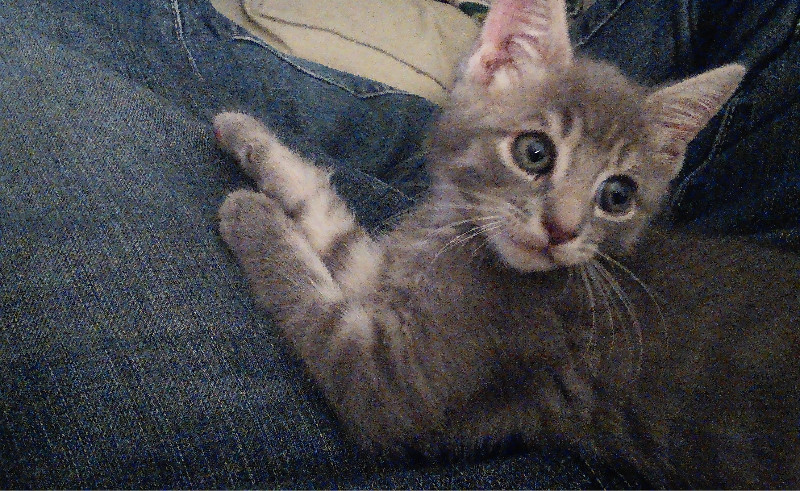
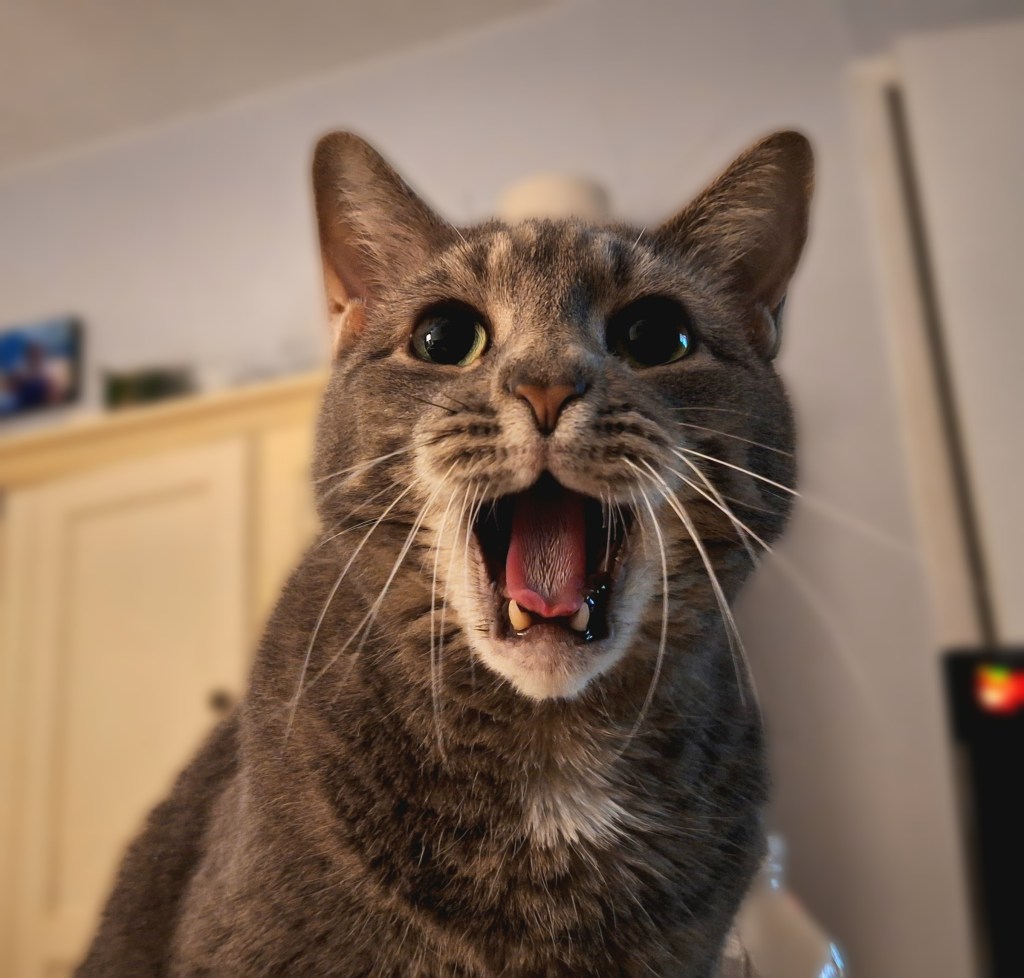
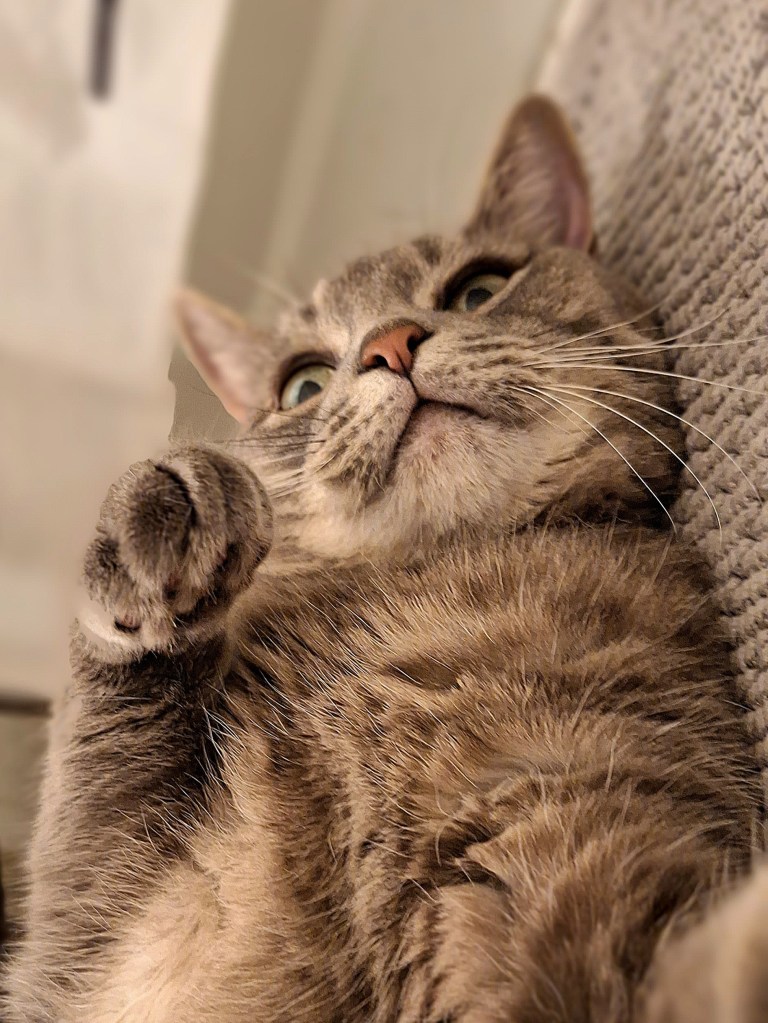
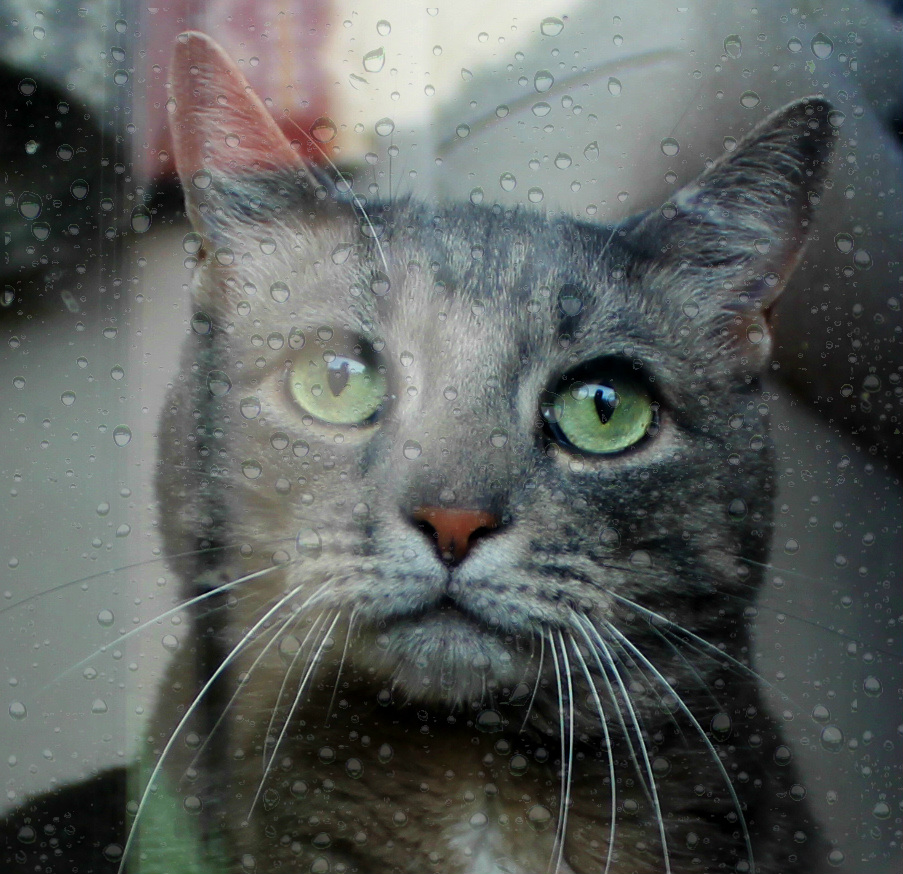
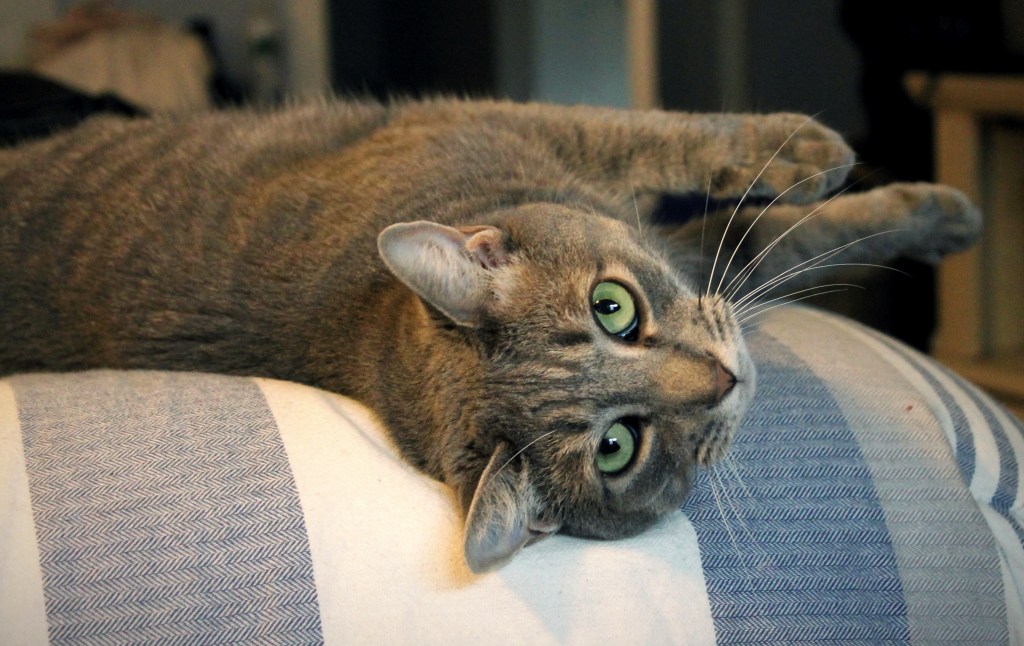
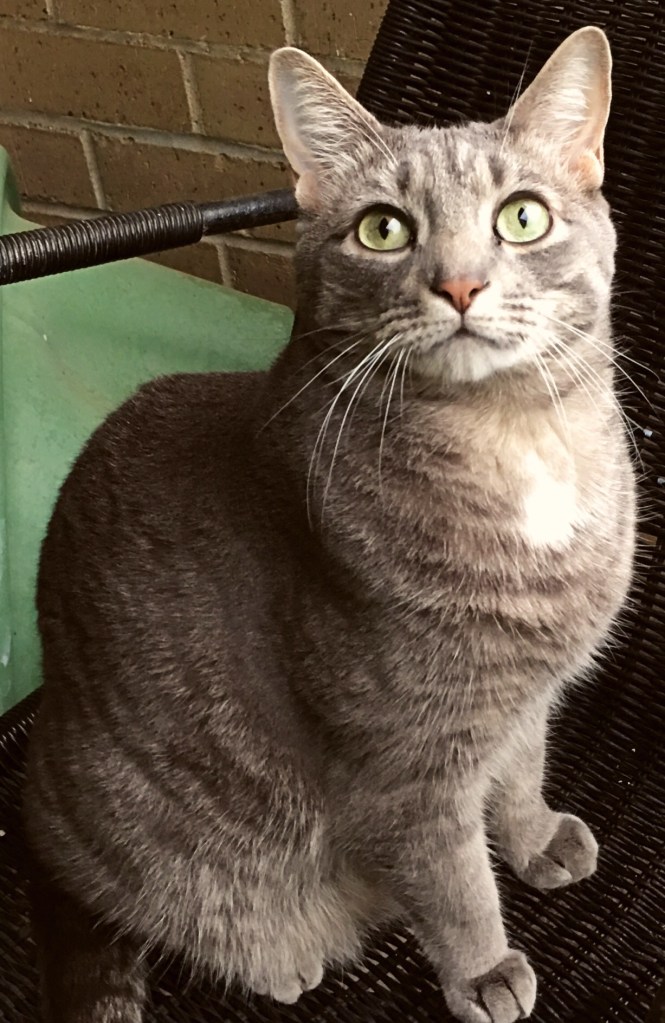
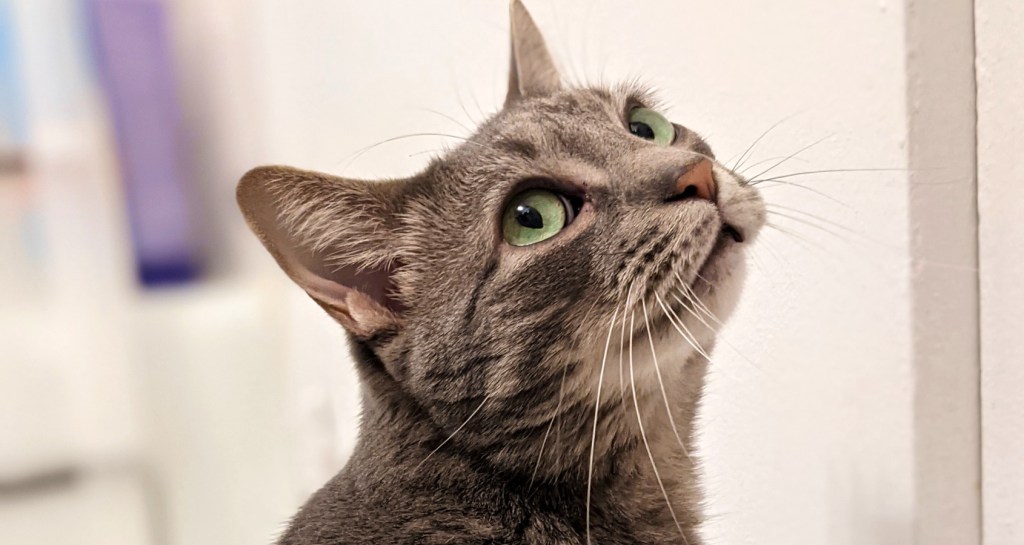
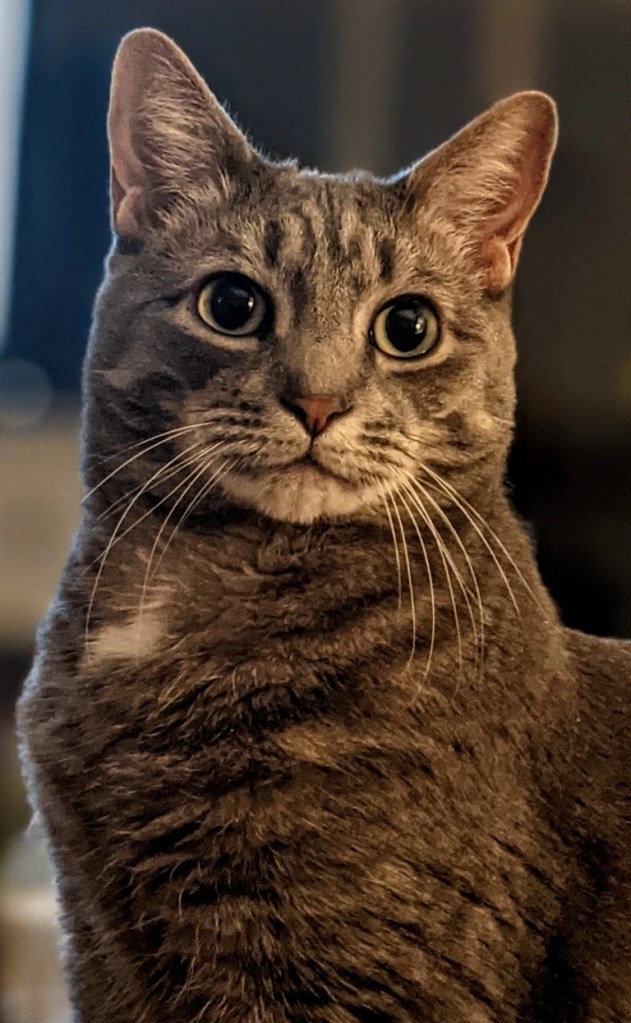
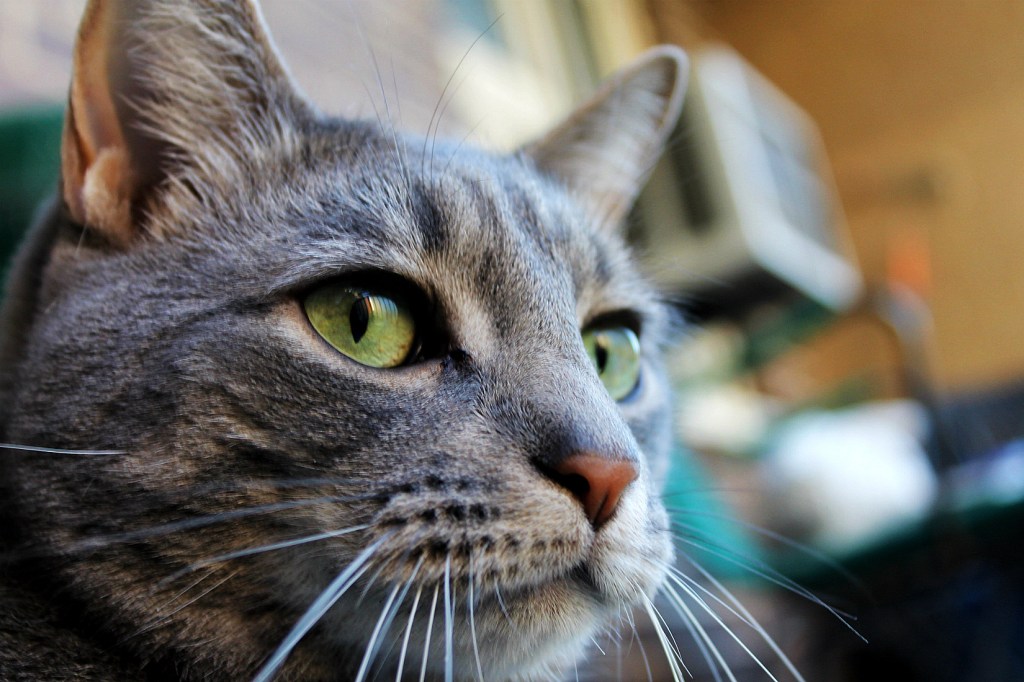
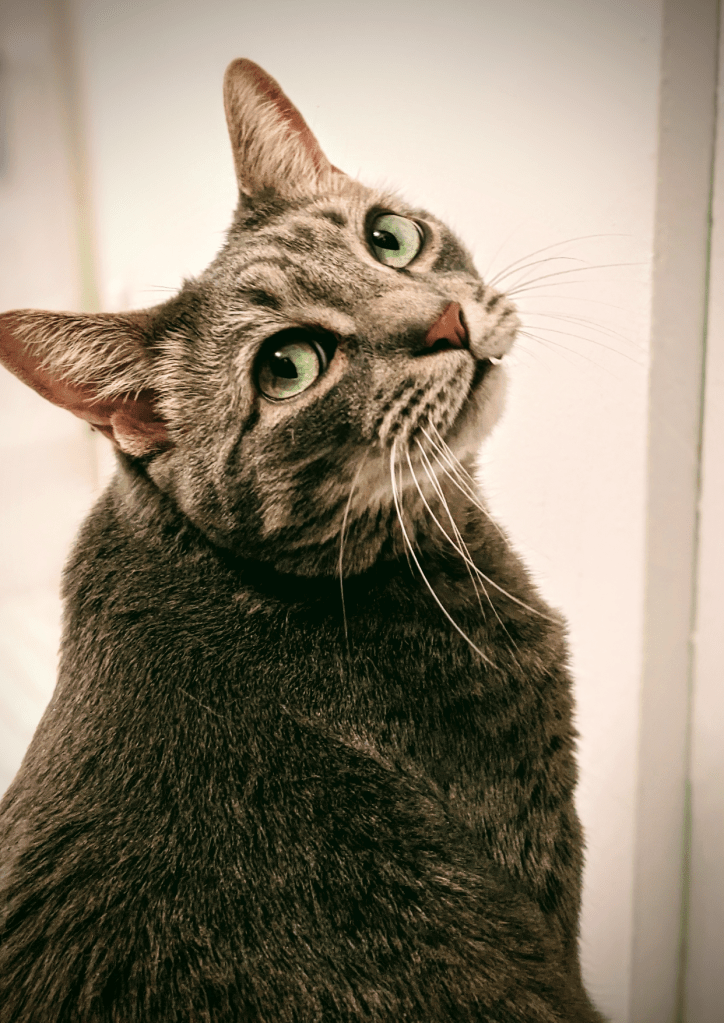
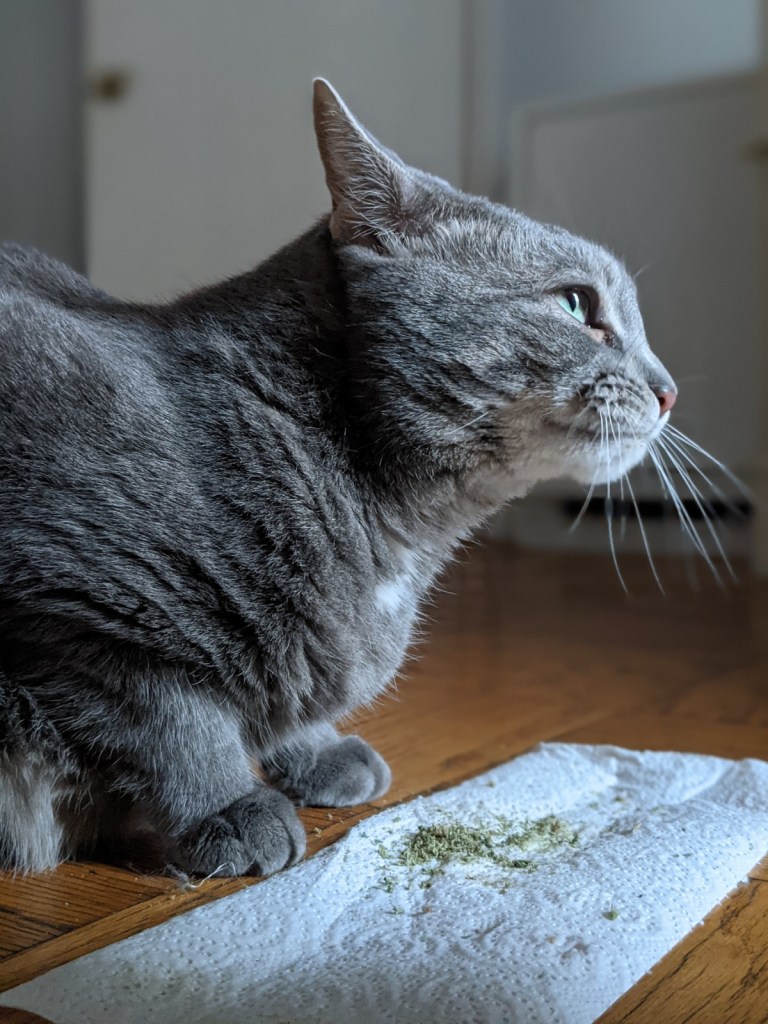
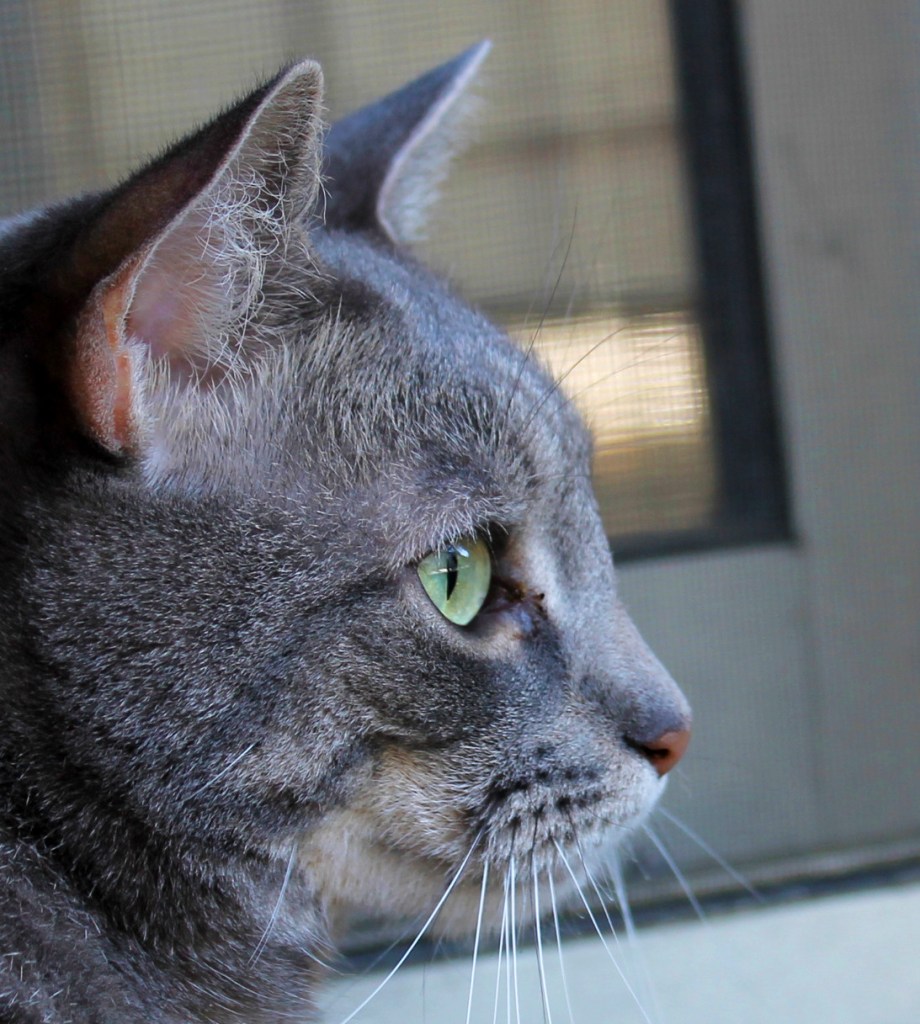
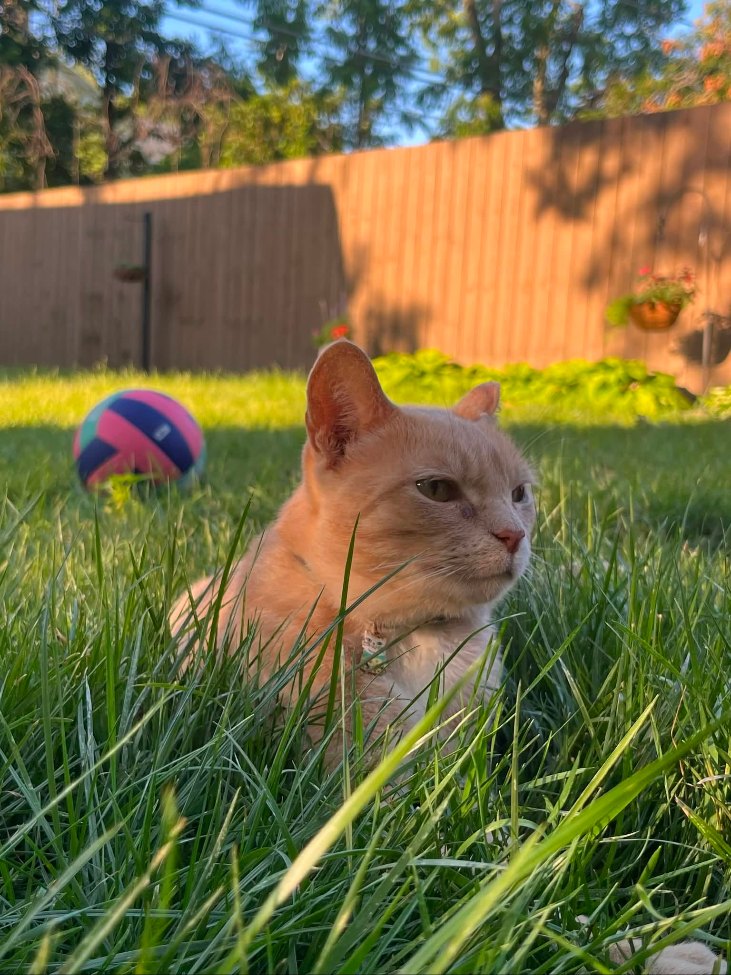
Big Buddy has cat scratch fever and Little Buddy’s reputation has been besmirched!
So I’ve got cat scratch fever from a nasty Bud-inflicted cut on my right foot.
I take full responsibility. I woke a few nights ago to Bud mmmmmmrrrrrp-ing and realized I’d been acting out my dreams and had kicked him. Of course I felt terrible, apologized with some gentle head scratches and he forgave me in a few seconds because he knows it wasn’t intentional.
And because it’s happened two or three times before. There’s something wrong with whichever brain mechanism regulates my motor function shutdown, and it goes both ways, from terrifying bouts of sleep paralysis to the aforementioned acting out of dreams.
I fell asleep again after the unfortunate kicking incident, then realized Bud had already paid me back earlier with a skin-shredding, blood-drawing scratch on the top of the offending foot, when I woke up scratching the painful and itchy cut.
I applied antibiotic ointment and have continued to do so, but my foot’s swollen and I feel a little funky. Health sites advise watching it closely and if redness spreads out, or if it’s accompanied by certain other symptoms, I should seek medical attention.
So far I’m okay.
Buddy gazes upon his meowgnificent reflection.
In the meantime this has not helped Bud’s reputation with people in my immediate orbit, including my family.
As regular readers know, Bud has an unfortunate habit of engaging in some light mauling of his cat-sitters. My friend Sue, who has my eternal gratitude for watching him many times, will no longer play with him or interact with him. She slips in, presumably with armor and a heavy oaken shield, then feeds him and makes a rapid egress.
Anyway, Bud has been dubbed “the most unaffectionate cat in the world” because of his hostility toward cat-sitters and his quick-to-the-draw paw-slapping tendencies. It hasn’t helped that other people I know have adopted cats who’ve turned out to be perfectly behaved, grateful, sweet little furballs who don’t slap people for petting them too long.
Which I think is a bit unfair considering Bud’s a very friendly cat while I am present and the majority of retaliatory slappings by Bud have occurred when people unfamiliar with feline interaction etiquette try to pet him as if he’s a dog. He gets overstimulated easily, has a low tolerance for repeated petting in the same area, and does not play nice if anyone goes for his belly or tries to pick him up.
That’s just his personality. He’s absolutely affectionate and can be a little love bug with me. He loves my brother. He’s cool with my nieces even though he knows they’re kids and can be a bit unpredictable. Of course I don’t pick him up unless absolutely necessary, I don’t rub his tummy and I know the signs when he’s close to overstimulation. There’s also years of trust between us, and I’ve been told I am an adequate servant.
I’ll be keeping a close eye on my swollen foot and jokingly told Bud I’m going to defenestrate him if I have to go to the emergency clinic, which is fine because he doesn’t know what that means! (And of course I would do no such thing. My little Buddy is an absolute angel, even when the claws come out. Obviously.)
Imagine using a version of Google translate that can only translate every seventh or eighth word without context or tone. Would it be useful at all?
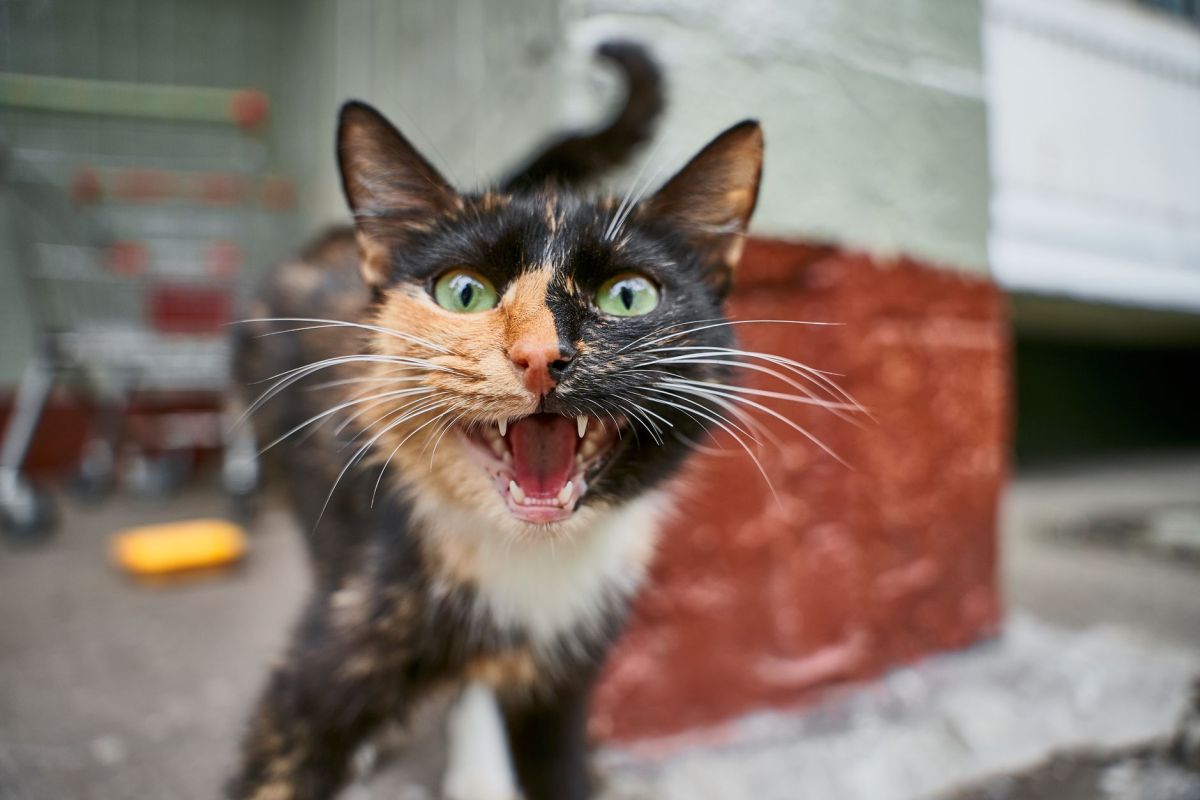
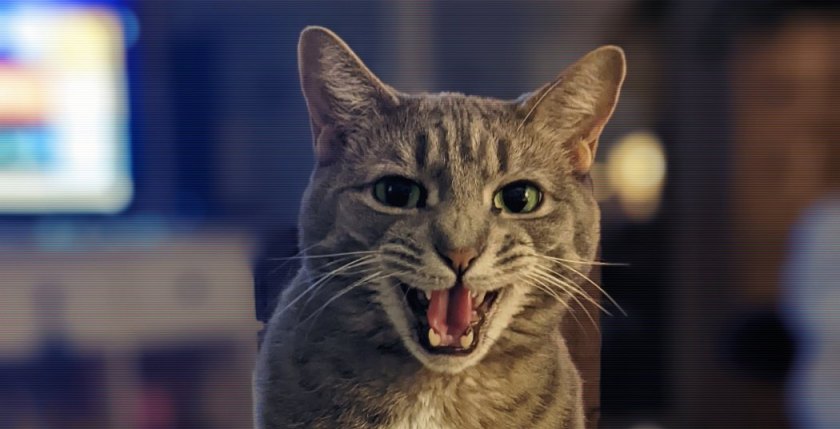
When my cat wants to play he faces me directly, at my level if possible, and leans forward, whiskers relaxed, before screeching at me at loud volume.
When he wants food he doesn’t bother with being level with me. He assumes an aggressive posture, follows me around and tries to get in my path, all before screeching at me at loud volume.
When yums are impending, he also screeches at loud volume, but his face and body language take on an anticipatory posture, and his tail pops straight up.
When he’s not feeling well, he screeches at loud volume and assumes a hunched stance, whiskers pulled back, ears at different angles, often with his tail wrapped protectively around his little body in a sort of uncomfortable version of the classic loaf.
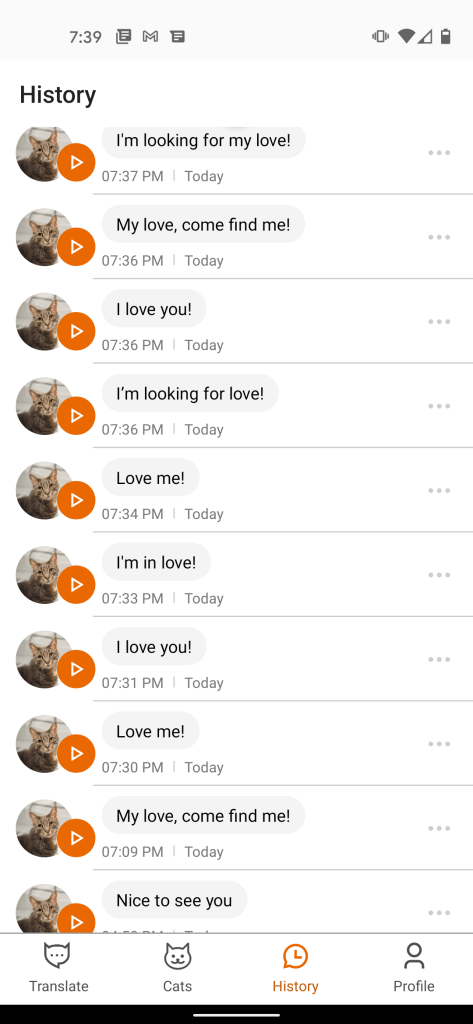
The common element is the loud screeching. An AI-powered app would have a very difficult time telling the difference between a “Feed me now, human!” screech and a “I want to play wand toy hunting games now, human!” screech, and probably wouldn’t fare much better with the “I don’t feel so good” screech. (MeowTalk did, after all, try to convince me that Buddy was serenading me with sweet nothings when he was demanding food.)
Years ago I was bullish about AI’s ability to translate meows. Given enough data, I reasoned, AI could crack the code. But that was a human way of thinking, anthropomorphizing my Bud into a furry little human whose “language” was limited to vocalizations.
It’s not.
No cat limits their communication to meows, trills and chirps, not even a vocal little dude like my Buddy.
Cat communication is multi-modal, consisting of general body language, whisker position, ear position, tail position and movement, pupil expression, fur rigidity, gait, scent-marking, scent-sharing, and for our exclusive benefit, meows. The latter are essentially a second language to them, adopted out of necessity because they realize we respond to vocalizations but are mostly oblivious to everything their tails, whiskers, fur, ears, tails, pheromones and eyes are telling us.
Now who’s supposed to be the intelligent species?
“Dude, why are you so dense? I’m shouting at you with my whiskers, my tail and my meows!”
The fact that feline communication is inherently multi-modal is the reason why talking boards and AI meow translation apps do not work. It’s like using a version of Google translate that only interprets every seventh or eighth word, stripped of all context and tone. Actually, it’s worse than that.
If you’ve spent any time on Facebook, TikTok or Youtube, chances are you’ve come across cat talking boards. They’re even more useless than the AI apps that claim to translate meows because they not only assume feline communication is a single-channel affair, they also place additional burdens on felines, like understanding human language syntax (something no animal has ever been able to do) and highly abstract concepts.
How does a cat know a question is a request for information?
How does a cat understand temporal concepts represented as abstract sounds with nothing that ties those sounds – and the buttons that correspond to them – to concepts like “yesterday,” “tomorrow” and “later”?
Hmmm, something’s off here…
In one video I viewed, a woman convinced herself that her cat’s random slapping of talking board buttons meant he wanted to discuss an animal he’d possibly seen outside a window the night before. The number of assumptions and logical leaps required to arrive at that kind of conclusion is staggering.
I want to be clear that I’m not saying studying animal communication is a futile effort. On the contrary, everything we’ve learned indicates animals – especially our domesticated companion animals and the most cognitively gifted wild species – are not only conscious and cognitive, but have rich inner lives with their own thought processes, opinions, emotions, likes and dislikes.
But cracking those codes is a serious effort that will involve a concerted effort to negate our human bias as much as possible, attempts to see the world from an animal’s perspective, and multi-modal analysis that doesn’t just consider what we can see, hear and smell, but what our pals’ sensoriums can detect.
After all, we know that cats can hear in frequencies we cannot, that they possess a sense of smell as much as 20 times more sensitive than ours. There’s ongoing research into whether animals can detect magnetic fields, and differences in vision — such as perceiving different color tones and a drastically increased sensitivity to motion — mean a very intentional means of communicating by our cat may require the equivalent of a bullhorn for us to pick up on what they’re “saying.”
One day we may learn that they consider us the dim-witted ones who cannot see, hear or smell the obvious. We may get to that point, but not through half-hearted, unscientific efforts like labeled buttons and simple algorithms.
He’s crazy, he’s a whirling ball of energy and he frequently plots to take over the world, but he’s my feline pal.
We’d only been home for a few hours and already the kitten was demanding I let him out of the bedroom.
I’d done lots of reading before bringing my new pal home to his forever abode. I was prepared for him to remain in his carrier, dash under my bed only to emerge for food and water, or cry in confusion.
He did none of those things.
Instead the tiny kitten came striding out of his carrier, surveying his new surroundings with interest, and proceeded to conquer everything in sight like a furry little Genghis Khan.
He was loud, he never stopped “talking,” and I got the distinct impression that everything that previously belonged to me now belonged to him.
“Comfy chair! Mine!” he meowed. “Oooh, a big bed! Mine! Are these bowls mine too? Of course they are. Look, toys! Mine! Hey what’s this thing with black and white keys on it? A synthesizer, you say? Well, this ‘synthesizer’ is now mine! Look at how much fun it is to run on it!”
All the advice on the internet emphasized keeping the kitten in one room for at least a couple of days so as not to overwhelm the little one. He needed to know where the essentials like his litter box, scratcher and food bowls were located, and he needed to feel safe.
But Buddy, the name I called him while trying to think of something clever — and would officially bestow on him two weeks later — had other ideas.
There was an entire apartment beyond that closed door, and it was very important for him to survey his new kingdom and claim its contents immediately!
So I reluctantly opened the door and a little ball of whirling energy came tearing out, narrating his activities in real time in a voice that sounded like a baby Elmo as he got into everything.
I realized very early on that first night that the cautious approach I’d planned on was out the window. Any restrictions recommended by internet guides were not applicable with this kitten.
The idea that he would sleep in his bed and I’d retain my own? Laughable! I was fortunate he would allow me to continue sleeping there, and only after he was tired of tormenting me. With the lights out he ruthlessly attacked my toes, tearing me out of sleep almost as soon as I lost consciousness before retreating into the darkness to cackle gleefully and do it all over again.
The human makes funny noises when I bite his feet! the tiny kitten trilled delightedly. So fun!
Enduring his relentless assaults on my feet seemed a small price to pay when I woke up on one of those first nights and found Bud fast asleep with all four paws wrapped around my right arm, clearly comforted by my presence and proximity. It would become the first of countless times when I would endure an uncomfortable position, an arm or leg going numb, or put off the call of nature to avoid disturbing my little Buddy.
That was 12 years ago and I can’t really remember what life was like before Buddy was a part of it.
He has become my best friend, my constant companion, my foil, my partner in crime, and a reliable reminder not to take life too seriously. He’s my shadow. I’ve almost forgotten what it’s like to sleep without him draped over me or borrowed between my knees.
He is, unfortunately, the primary culprit in interrupted sleep, but he doesn’t wake me because he’s hungry or thirsty. I make sure he has a bowl of dry food and fresh water before bed every night in addition to his two daily wet food meals. (And all the snacks he demands through urgent meows.)
He doesn’t conduct night time commando raids on my feet anymore either. Mercifully he grew out of that behavior within a year.
He wakes me not because he wants food or water, but because he wants to be buddies. He wants to purr contentedly as I rub the top of his head and tell him what special, handsome and good boy he is. He wants to thank me by grooming my hair and later, while I am asleep, he’ll groom his butt with his barbed tongue before grooming my face. I’m a lucky man!
He is such a major part of my life that I began writing humorous stories about his exploits and founded this blog at the request of people who wanted more Buddy.
Heck, he’s even become the context by which I define myself online. He is Little Buddy and I am Big Buddy. On this blog I cover cat-related news, post movie and game reviews and write about topics that interest me, but the primary focus has always been Buddy and his adventures, real and imagined.
In many ways it’s absurd. What kind of lunatic writes a blog glorifying his feline friend and imagining him in ridiculous scenarios, like joining Yemeni pirate crews, running his own catnip empire and maintaining a popular OnlyFans account for female admirers?
And yet with Bud, it’s appropriate. He’s crazy in the most endearing, lovable way imaginable. He’s a remarkably vocal cat who trills exuberantly when he’s happy, chats with the speed of an auctioneer when he spots birds, and screeches with unshakable determination when the treats I dispense – or their volume- disappoint him.
Schemeowtics for Buddy the Cat. Note the huge meowscles.
Perhaps most touching of all, there have been three times I’ve gotten debilitatingly ill in the last 12 years, and on each of those occasions Buddy refused to leave my side.
When I was knocked on my ass after finally getting COVID in 2023, Buddy was practically attached to me. Miraculously he did not screech or slap my face when his mealtime came and went. He just let me sleep and purred quietly as he waited for me to wake. Knowing cats were vulnerable to COVID, and having lost a relative and two neighbors to that virus, I thought if I got sick I’d find a way to quarantine myself from Bud for his sake.
That was never going to be an option, I realized in retrospect.
Cynics will say he was worried about his meal ticket, that his survival is pegged to mine. But that’s not true. While Bud has no way of knowing I have made arrangements with my family for one of them to take him if anything happens to me, ensuring he will never end up in a shelter, he misses me dearly when I go away.
I’ll never forget the way he meowed in excitement when I was in Japan and called home to Facetime while my mom was cat-sitting him. He gave me a slow-blink as if unsure if he was really seeing me on the screen, then gave a cry of joy when I blinked back before he launched into one of his usual monologues.
Likewise he always makes a big deal of my arrival back home. The first few times he actually began shaking with emotion and threw up in relief. The poor little guy, I realized, didn’t know if I was coming back. Since then he has a routine that involves pretending he’s angry at me for leaving and feigning ambivalence, which usually lasts about a half hour at most before he drops the act. Then he clings to me even more than usual for a few days.
Yet he does not have an unhealthy attachment. Like all cats, Bud opts for alone time sometimes, and when he shuffles his napping spots every two or three months there’s usually a few days when he prefers napping on the other couch, under the dinner table or on top of a heat vent. Then it’s back to his regularly scheduled lap-napping.
So if the question is “What makes your pal special?” my answer is everything. Every day with him is a gift, and I intend to appreciate every moment of it, even when he’s a royal pain in the Bud.
This post is a response to WordPress’ daily writing prompt: Share a photo of your pet and tell us one thing that makes them uniquely them.
.“I think…I’m pretty sure I’m feeling it. Oh yeah! Break out the laser pointer and the snacks!”
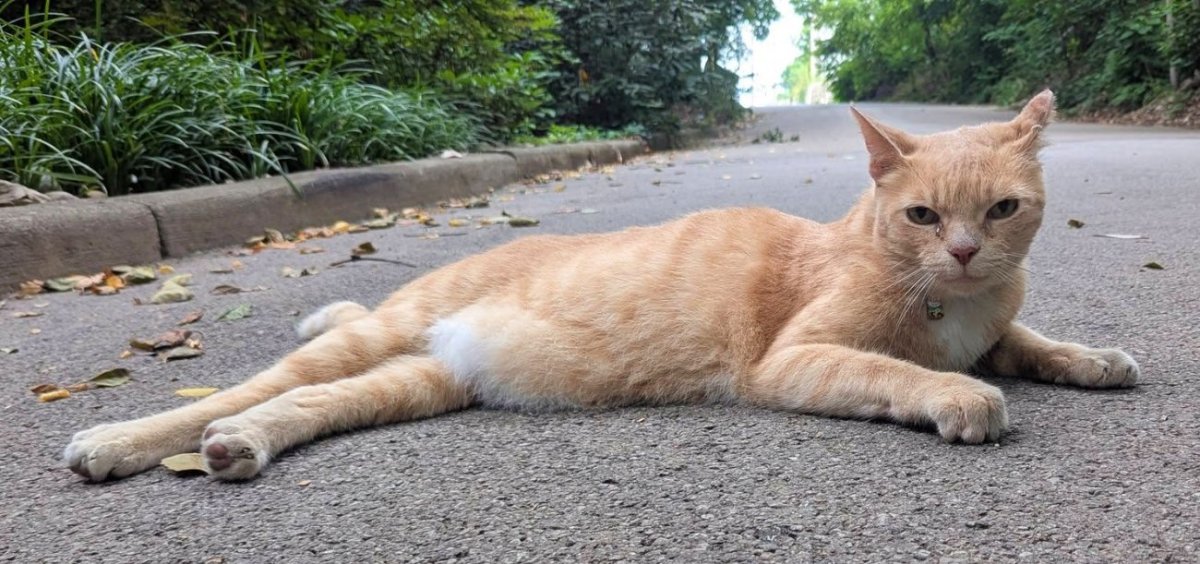
Wanderin’ Joe attends the local school, poses for annual yearbook photos, pops in to see his friends all over town, and has innumerable humans wrapped around his little paws.
He’s more popular than any human, practically ubiquitous around town, and so well-known he’s been nicknamed “mayor.”
He’s also a cat.
Wanderin’ Joe, as he’s known to locals in Clintonville, Ohio, is often spotted padding along a ravine, poking his head into homes and shops of his choosing, and hanging out in the local elementary school.
He’s the school’s unofficial mascot, loved by students and staff, and is even included in annual yearbook photos. (Previously we wrote about Ziggy, another family cat who accompanies his family’s kids to school daily and took it upon himself to pose for a yearbook photo. Who knew some cats love going to school?)
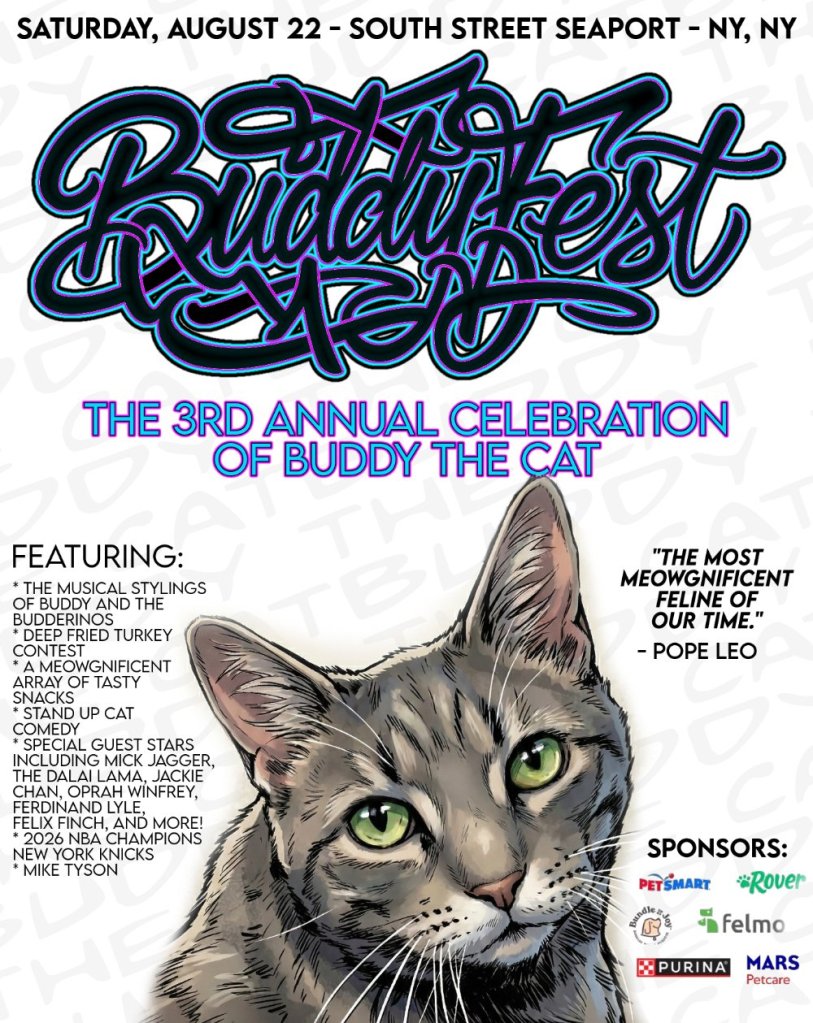
The people of Clintonville love little Joe so much that they decided to throw a festival in his honor. It’s not tied in to another event or celebrated in conjunction with a holiday. It’s an event exclusively in celebration of one very special four-legged ambassador of local good will.
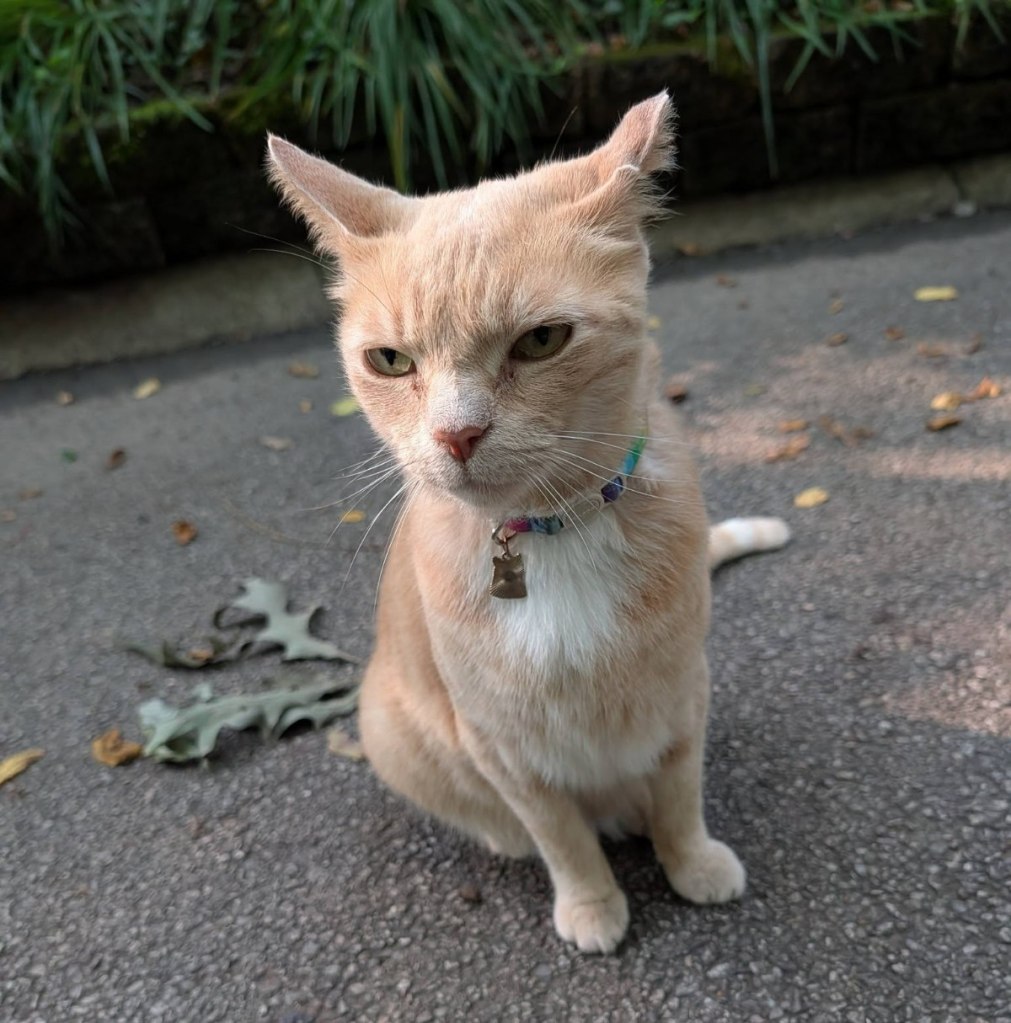
Wanderin’ Joe poses for an admirer. While Joe’s got a grumpy look, his many fans say he’s friendly, gentle and curious. Credit: Christina More via Wanderin’ Joe/Facebook
Nick Fancher, Joe’s human, said the little guy’s wanderlust began when the family began taking him on walks. At first Joe would pad along behind his human family, but then “he would run ahead of us and then let us catch up.”
“He’s precocious,” Fancher told WOSU, the local public radio station. “Like, I swear he was an explorer in another lifetime.”
Joe’s adventures are legion. Per WOSU, he’s been “adopted half a dozen times” by well-meaning people who mistook him for a stray, crashed weddings and memorial services, and did a six-month stint as a barn cat when yet another person mistook him for a stray and brought him home.
Fancher said he’s well aware Joe could be harmed, but worries his orange tabby buddy wouldn’t be happy if he was restricted to the indoors.
The Ohio man did not have a hand in promoting his pal. The festival, a Facebook page devoted to Joe sightings, and tributes like a charcoal portrait of Joe, were all the efforts of random admirers in Clintonville, a town of some 30,000 residents about eight miles north of Columbus.
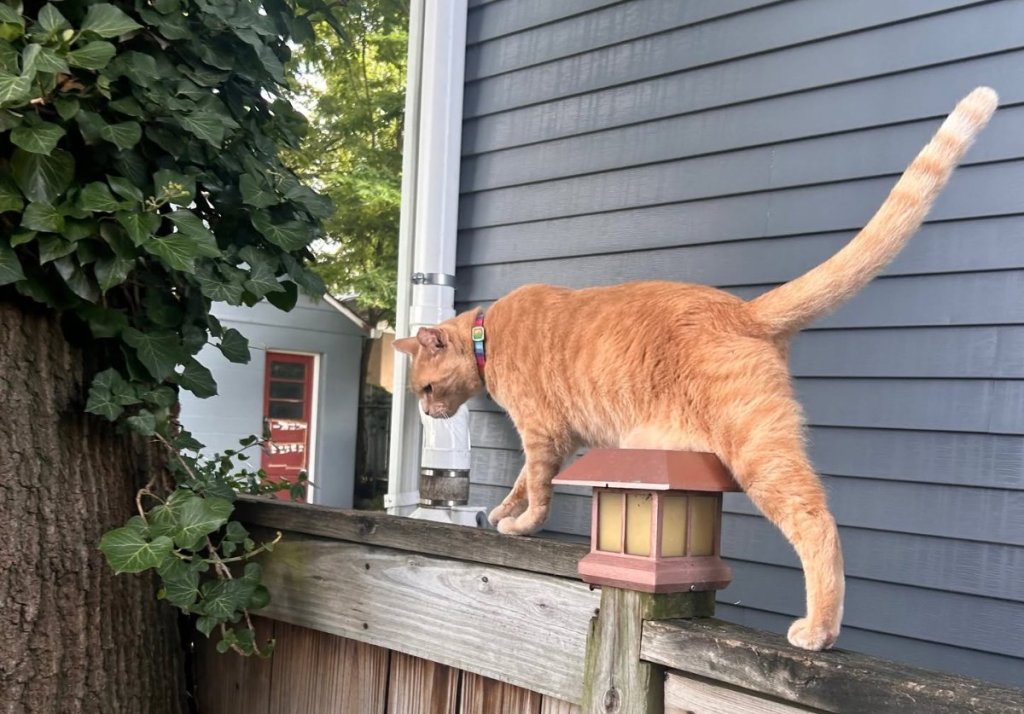
Joe exploring his neighborhood. Credit: Wanderin’ Joe/Facebook
At Joe Fest, some locals brought their own cats along, traded stories of the legendary Wanderin’ Joe over food and drink, and paid tribute to the feline himself, who graciously permitted his admirers to scratch his head and feed him snacks.
“It’s a little hard to wrap one’s head around it. It appeals to my sense of the absurd and the wonderful,” Patti Liszkay, who lives in the neighborhood, told the station. “It’s just sort of a bipartisan get together in honor of a cat. I mean, it’s gentle. It’s nice.”
Credit: Joseph Forcina via Wanderin’ Joe/Facebook
Meanwhile in an attempt to avoid hard feelings, and knowing it has long been one of Buddy’s dreams to have a festival in his honor, I had this printed out and stuck it on the fridge:
On the verge of extinction in the 1980s because of commercial whaling, humpbacks have rallied and are now spotted in increasingly larger gatherings.
Back in the 80s, whaling had brought whale species to the brink of extinction.
A gobal outcry prompted action to save Earth’s largest animals, resulting in the 1986 global ban on commercial whaling by the International Whaling Commission.
While some species continue to struggle, humpbacks are among the species that have come roaring back. Thanks to South African photographer Chris Fallows, we’ve got a prime view of a “supergathering” of some 300 humpbacks who met off the west coast of South Africa:
Fallows called it a “Manhattan skyline” of whale breath plumes, and said it’s clear evidence the species has benefited from the ban.
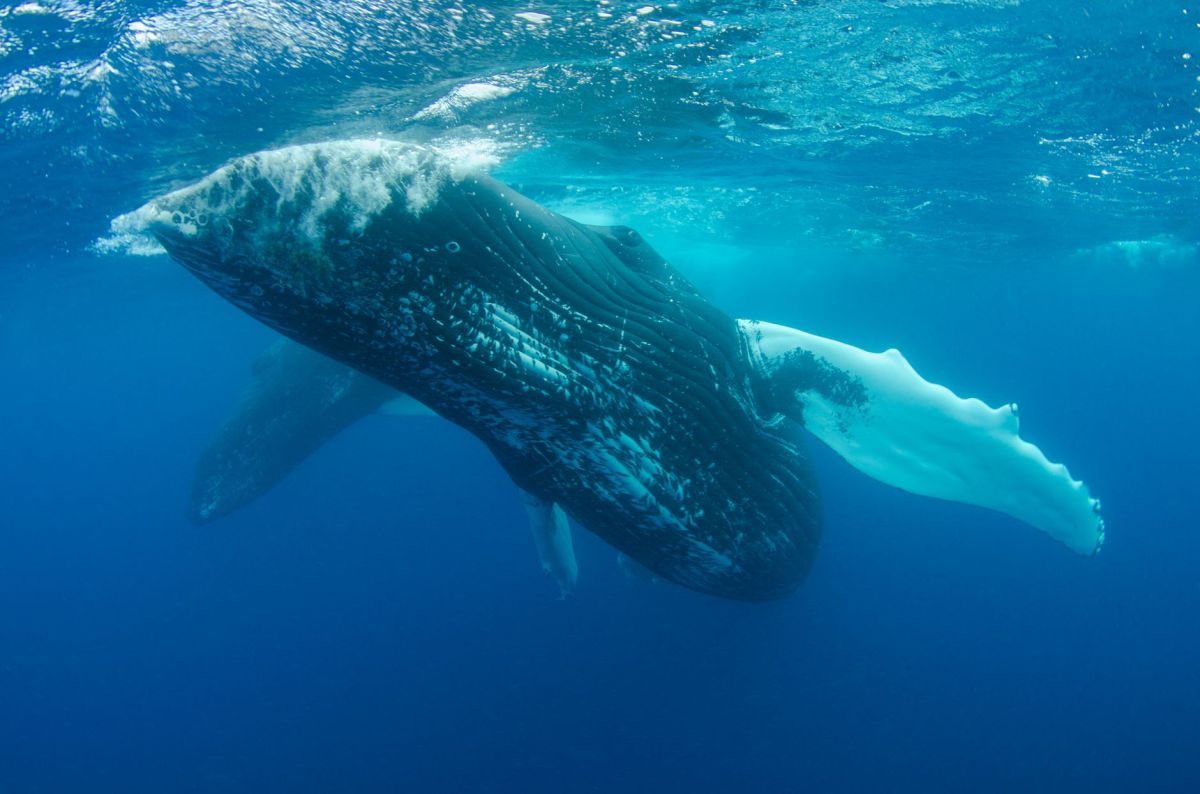
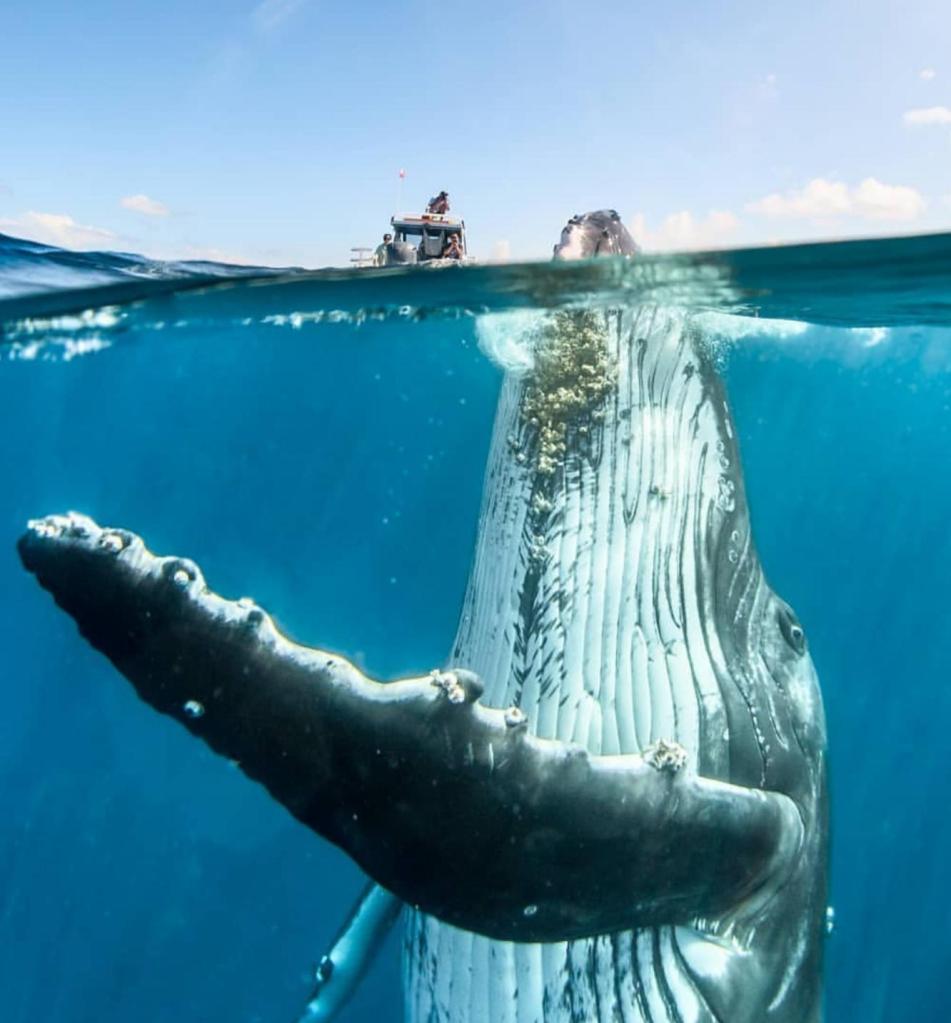
Humpback whales can grow up to 60 feet long and weigh up to 40 metric tons. They’re known for their long, haunting conversations in whalesong, with “phrases” that can last as long as 30 minutes. Despite their massive size, humpbacks are filter feeders who subsist on small fish, krill and plankton.
Photographer David Edgar captured this dramatic image of a curious humpback whale in 2019 in Tongatapu, Tonga. Credit: David Edgar